
Reviewed · HISTORICAL TOURS
Paris Walking Tour , Historical Sites .
Paris reveals itself best on foot, and this route gives you a smart cross-section of the city in three hours. You move from Saint-Germain’s church squares and literary cafés to the Seine, Île de la Cité, Jewish Le Marais, and the elegant Place des Vosges. I especially like the small group of seven and the way the walk links both famous landmarks and ordinary Paris streets.
I also like that Neda brings more than dates and monuments to the walk. Her lively explanations cover French life, current affairs, food, fashion, Jewish traditions, and even how to use the Paris Metro. The main drawback is pace: three hours is a lot of walking, and the route offers only brief stops at Saint-Sulpice and Pont Neuf before longer time in the neighborhoods.
In This Review
- Key points at a glance
- Why this route works so well in three hours
- Saint-Sulpice and the calm of Saint-Germain
- Pont Neuf and the Île de la Cité
- Le Marais, where Jewish Paris meets modern style
- Place des Vosges and the Victor Hugo connection
- Neda’s guiding style
- Price, group size, and what you receive
- Who should book this Paris walk
- Should you book it?
- FAQ
- Where does the Paris walking tour start?
- Where does the tour end?
- How long does the experience last?
- How many people can join the tour?
- What language is the tour offered in?
- Which Paris neighborhoods are included?
- Are admission tickets included?
- Is the tour accessible by public transportation?
- What is the cancellation policy?
Key points at a glance

- Five central Paris areas in one walk: Start on the Left Bank, cross the Seine, circle the Île de la Cité, then finish on the Right Bank.
- A maximum of seven people: The small size makes it easier to ask questions and keep the walk personal.
- Neda is the guide to look for: Her style is energetic, humorous, and full of practical Paris advice.
- Le Marais has several layers: See Jewish bakeries and synagogues beside independent fashion shops, galleries, and modern cafés.
- Place des Vosges gives the tour a graceful finish: Its symmetry, galleries, and Victor Hugo connection reward a slower final hour.
- A useful first-day orientation: The route helps you understand the Left Bank, island, and Right Bank before tackling Paris on your own.
Why this route works so well in three hours
Many Paris walks focus on one subject: royal monuments, literary cafés, revolutionary history, or the major sights along the Seine. This experience takes a broader view. In half a day, you get a working map of central Paris and see how sharply one neighborhood can differ from the next.
You begin at 1 Place Saint-Sulpice, in the 6th arrondissement, and end at Place des Vosges in the 4th. That makes the walk useful as an introduction to the city. You finish knowing where the Left Bank sits in relation to the island and the Right Bank, rather than simply collecting a string of photographs.
The route is also flexible in spirit. The main stops are set, but Neda’s style is conversational. She answers questions, responds to follow-up comments, and can add practical suggestions about restaurants and places to visit. One person who booked a private version even received extra restaurant and sightseeing information by text afterward.
The group limit matters here. With no more than seven people, you should have a fair chance to hear the guide and ask about the things that interest you. That is a better setup for a neighborhood walk than a large group clustered around a flag or listening device.
More Paris history walks:
- Paris: Louvre Museum Entry with History of Mona Lisa
★ 3.9 · 2,823 reviews - Paris: Dark History and Ghostly Guided Walking Tour
★ 4.7 · 1,000 reviews - Le Marais/Paris – The Historic, Trendy, Jewish, LGBT district
★ 5.0 · 341 reviews
Saint-Sulpice and the calm of Saint-Germain

The walk starts at Eglise Saint-Sulpice, the second-largest church in Paris. You get about five minutes here, so this is an introduction rather than a full church visit. The open square and the fountain of the four cardinal directions give the starting point a sense of space after the tighter streets nearby.
Saint-Sulpice sits in one of the most attractive parts of Saint-Germain-des-Prés, close to the Luxembourg Gardens. Its setting is part of the appeal. You are not beginning at a crowded monument but in a neighborhood where grand buildings, shops, food stores, and quiet corners share the same streets.
The following 35 minutes are devoted to the Saint-Germain quarter. This is where the walk shifts from one monument to the character of a neighborhood. You can expect discussion of the area’s literary and artistic connections, along with its museums, food markets, and specialty shops.
I like this part because it gives context to the Left Bank. Saint-Germain is often reduced to famous names and café culture, but the area also works as a place to eat, browse, and wander. Neda’s comments about French life help connect the polished streets to daily routines.
The short church stop may disappoint you if you want a detailed look inside Saint-Sulpice. On the other hand, keeping it brief helps the tour cover more ground. If the church is high on your list, plan to return independently rather than expecting a full guided visit.
Pont Neuf and the Île de la Cité
A five-minute stop at Pont Neuf introduces one of the city’s key crossings. Despite its name, Pont Neuf is the oldest standing bridge in Paris. Its construction was ordered by King Henri in 1577 and resumed in 1599 during the reign of Henri IV.
That small historical detail helps explain how Paris grew around the Seine. The bridge is not just a photo stop. It marks the point where the city’s Left Bank, Right Bank, and central island connect.
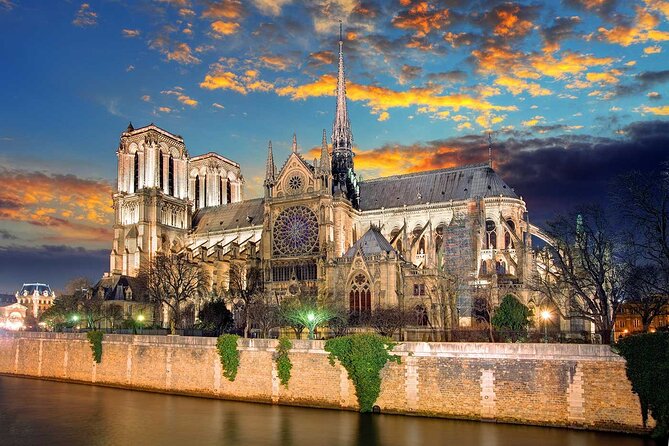
From there, the walk continues along the river and around the Île de la Cité. The route passes the flower market and the island’s major sights, including Notre-Dame de Paris and Sainte-Chapelle. The island was also the site of the fortress of the Roman governor, adding an early layer to a place now surrounded by traffic, restaurants, and ice cream shops.
This part is especially useful if you are still trying to understand Paris geographically. The Seine is the city’s best natural guide, and walking beside it makes the map easier to remember. You see how the island acts as the historic center, while the surrounding neighborhoods grew outward from it.
The schedule does not list a separate admission visit to Notre-Dame or Sainte-Chapelle. You should therefore treat them as exterior landmarks on this walk unless your guide tells you otherwise. If you want to go inside either one, set aside another time and check opening arrangements separately.
The same practical point applies to the flower market. It is part of the route, not a guaranteed shopping session. The strength here is the sequence: bridge, river, island, cathedral, chapel, and old city foundations, all within a compact section of the walk.
Le Marais, where Jewish Paris meets modern style
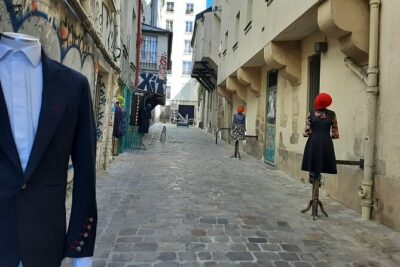
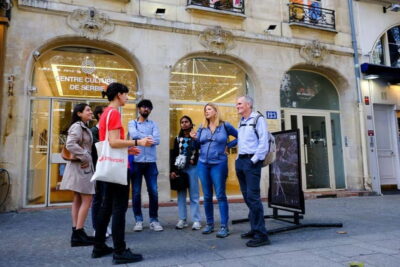
The tour spends about an hour in Le Marais, and this is one of its strongest sections. The neighborhood is known for small cobbled streets, intimate restaurants, independent fashion shops, art galleries, and museums. It also has a clear Jewish identity, with delis, bagel shops, and synagogues woven into the area.
That mixture gives Le Marais its particular character. You can move from a discussion of Jewish traditions to current Paris fashion within a few minutes. The neighborhood is not presented as a museum frozen in time. It is a place where older communities, new businesses, Sunday brunch, art, and design all occupy the same streets.
I would pay close attention here if you are interested in food. The walk points out the Jewish side of Paris through its delis and bakeries, while the broader route also introduces the city’s food shops and markets. You may leave with a few ideas for a later meal, even though the tour does not include food tastings.
The cobbled streets can make walking slower, and Le Marais is one of the livelier parts of the route. That is part of the fun, but you should not expect a silent stroll. Shops, restaurants, and narrow lanes create a more active setting than the open square at Saint-Sulpice.
This hour also shows why a local guide adds value. A map can point out a synagogue, boutique, or gallery, but it cannot easily explain how Jewish life, fashion, food, and changing city habits fit together. Neda’s approach is reported as energetic and direct, with plenty of room for questions rather than a memorized speech delivered at one speed.
More Paris walking tours:
- Paris Top Sights Half Day Walking Tour with a Fun Guide
★ 5.0 · 2,893 reviews - Montmartre Hidden Gems and Scenic Highlights Walking Tour
★ 5.0 · 2,684 reviews - Montmartre Hill French Gourmet Food and Wine Tasting Walking Tour
★ 5.0 · 2,588 reviews - Paris Île de la Cité and Notre-Dame Walking Tour With Crypt
★ 5.0 · 2,272 reviews
Place des Vosges and the Victor Hugo connection
The final hour is spent at Place des Vosges, one of the oldest and most beautiful squares in Paris. Its design is easy to read at a glance: a perfectly symmetrical space bordered by 36 buildings.
The square provides a calmer finish after the river and Le Marais. Its galleries give you reasons to look closely at the arcades and façades rather than simply crossing the space. This is a place where the architecture does much of the talking, but the guide’s historical background helps you notice the plan and proportions.
The Victor Hugo House is another highlight. The French writer, author of Les Misérables, lived on the second floor from 1832 to 1848. The tour identifies the museum, but admission is not listed as part of the experience, so plan on an outside look unless separate entry is arranged.
Spending a full hour here may feel generous if you only want a quick photograph. I see the longer stop as an advantage for people who like architecture, literature, galleries, or a quieter end to a walking route. It also gives Neda more time to answer questions and suggest what to do next.
The finish at Place des Vosges is convenient for continuing your own exploration of the Right Bank. The experience does not return you to Saint-Sulpice, so check your next destination before setting off. You can use the Metro afterward, and Neda has helped people understand the system during the walk.
Neda’s guiding style
The guide is identified as Neda in the written feedback, while the provider name is listed as Ned. Look for the booking details that identify your guide clearly. Her style comes through consistently: warm, enthusiastic, quick with humor, and willing to discuss more than old buildings.
You can expect facts about Paris and French history, but also explanations about current life in the city. That mix is valuable because it keeps the walk from becoming a string of dates. Several people specifically appreciated her ability to make them laugh, answer questions, and point out streets or places they would have missed alone.
Her practical help is another plus. She has shown people how the Paris Metro works and followed up with restaurant and sightseeing suggestions. If you have a question about food, neighborhoods, or what to do during the rest of your stay, ask it directly.
The tone is not formal or heavily scripted. That suits a small group, especially if you prefer conversation over a long lecture. It may be less appealing if you want a tightly timed architectural tour with detailed interior access at every stop.
Price, group size, and what you receive

At $96.79 per person, this is not a bargain-priced orientation walk. The value depends heavily on the small group and the guide’s personal attention. A three-hour route through five distinct parts of central Paris covers a lot of ground, and the group cap of seven gives the experience a more private feel than a standard large walking tour.
You are paying for interpretation, not admission tickets. The listed stops are free, and there is no indication that entry to Sainte-Chapelle, Notre-Dame, the Victor Hugo House, or another museum is included. If you want interior visits, budget separately and allow extra time.
For a first afternoon or morning in Paris, I think the price can make sense. The walk gives you orientation, neighborhood ideas, historical context, and practical advice in one session. It can save you from spending the first day wandering without a clear sense of how the city fits together.
The value is less convincing if you already know central Paris well or prefer to explore at your own speed. You may also find the cost high if your main goal is simply to see the outside of a few famous monuments. In that case, a self-guided walk costs much less.
The tour is offered in English and uses a mobile ticket. Confirmation arrives at booking. It is near public transportation, service animals are allowed, and most people can take part, though the three-hour walking distance and cobbled streets are worth considering for anyone with mobility concerns.
Who should book this Paris walk

I would choose this tour for a first visit, especially if you want to understand Paris before spending time at the biggest museums and monuments. It also suits repeat visitors who have seen the main sights but want more neighborhood detail, Jewish history, food culture, and local context.
Couples, solo visitors, and small families should benefit from the seven-person limit. The walk is also a good match for anyone who likes to ask questions rather than simply follow a guide from stop to stop.
You should be comfortable walking for about three hours. The route includes streets, bridges, riverbanks, open squares, and cobbled lanes. Wear sensible shoes and keep the schedule light afterward, since the final part of the tour ends across the city from the starting point.
Book at least a little ahead if your dates are fixed. The experience is booked an average of 48 days in advance, which suggests that popular dates may fill before the last minute. Free cancellation is available up to 24 hours before the start time. Cancellations or changes made later are not refunded or accepted.
Should you book it?
Book this walk if you want a personal introduction to central Paris rather than a checklist of major monuments. Neda’s energetic style, practical Metro help, and interest in both historic and modern Paris add real value, while the group cap keeps the experience manageable.
Skip it if you need extensive interior visits, dislike long walks, or already know Saint-Germain, the Île de la Cité, and Le Marais well. For most first-time visitors, though, the route offers a useful mix: grand churches, the Seine, old city history, Jewish Paris, fashion, food, and one of the city’s loveliest squares.
FAQ
Where does the Paris walking tour start?
The tour starts at 1 Place Saint-Sulpice, 75006 Paris, France.
Where does the tour end?
The tour ends at Place des Vosges, Place des Vosges, 75004 Paris, France.
How long does the experience last?
The walk lasts approximately three hours.
How many people can join the tour?
The group is limited to a maximum of seven people.
What language is the tour offered in?
The tour is offered in English.
Which Paris neighborhoods are included?
The route includes the Saint-Germain-des-Prés quarter, the area around Pont Neuf and the Île de la Cité, Le Marais, and Place des Vosges. It begins near Saint-Sulpice.
Are admission tickets included?
The listed stops have free admission. The experience does not state that entry to Notre-Dame, Sainte-Chapelle, the Victor Hugo House, or other museums is included.
Is the tour accessible by public transportation?
The experience is near public transportation.
What is the cancellation policy?
You can cancel up to 24 hours before the start time for a full refund. Cancellations or changes made less than 24 hours before the experience are not accepted and will not be refunded.
Newest additions around Paris
- Family escape Game with kids and teens on the Île de la Cité★ 4.5 · 11 reviews
- Private Photoshoot with the Iconic Eiffel Tower in Paris★ 5.0 · 11 reviews
- 2-day Private Mont Saint-Michel, 3 Loire Castles, D-Day Express★ 4.5 · 11 reviews
- Paris: Batobus Hop-On Hop-Off Cruise & Landmarks Audio Tour★ 3.0 · 11 reviews
- Paris Revolutionary Walking Tour: Iconic French Sights & Stories★ 5.0 · 11 reviews
- Kids in the Kitchen – CrOisSaNtS★ 4.0 · 11 reviews
- Guided and Private Tour of 3 hours through Paris aboard a Citroën 2cv★ 5.0 · 11 reviews
- Paris: Ghosts and Dark Stories Guided Walking Tour★ 4.1 · 11 reviews
Historical Tours, compared.
Louvre Museum Entry with History of Mona Lisa
Read our review →
Le Marais/Paris – The Historic, Trendy, Jewish, LGBT district
Read our review →
Paris City of Fashion History Private Guided Walking Tour
Read our review →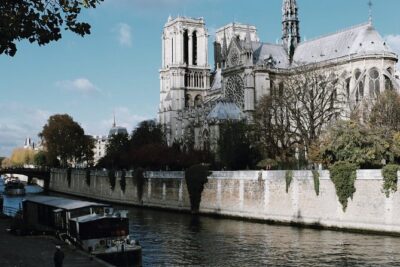
History of Paris City Center w/ Notre Dame Semi-Private 12ppl Max
Read our review →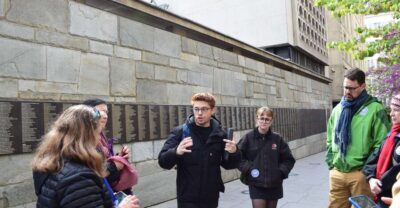
Le Marais & Montmartre Jewish History Walking Tour
Read our review →
Explore the Marais: Culture, History & Hidden Gems of Paris
Read our review →Browse the lists this tour appears in