

Reviewed · WALKING TOURS
Paris 1920: Lost Generation Writers of the Left Bank (Small Group Walking Tour)
Paris in the 1920s comes alive through addresses, cafés, and personal dramas on this small-group walk through the Left Bank. You follow Hemingway, James Joyce, Gertrude Stein, Fitzgerald, Ezra Pound, Man Ray, and lesser-known writers who helped make expatriate Paris so important.
I like the small group of no more than eight, which gives you room to ask questions, and I like Ellen’s use of a tablet loaded with photographs, film, audio clips, poems, and readings. The main consideration is that the tour is mostly about exterior locations, and the material covers many writers in a short time, so readers seeking a close study of one author may find it broad.
In This Review
- Key points to know before you book
- Why this Left Bank walk works for book lovers
- Place de la Contrescarpe sets the scene
- Rue Mouffetard and the young Hemingway
- Odeon and the first Shakespeare & Company
- Rue Servandoni and the writers near Luxembourg Gardens
- Montparnasse cafés and the complicated people behind the books
- What the tablet presentation adds
- Is $120.14 a fair price?
- Who should book this experience?
- Final call: book it for the stories, not the buildings
- FAQ
- How long is the Paris 1920 walking tour?
- Where does the tour begin?
- Where does the tour end?
- Is food or drink included?
- How many people can join the group?
- Is the tour physically demanding?
- Can I cancel for a full refund?
Key points to know before you book
- Hemingway’s first Paris flat: See the Rue Mouffetard address where the young writer first lived in Paris.
- The original Shakespeare & Company: Visit the former Odeon location tied to Sylvia Beach, James Joyce, and Ulysses.
- A media-rich presentation: Ellen uses archived images, video, audio, and literary readings to put faces and voices to the names.
- A café beginning and ending: Start with coffee near Place de la Contrescarpe and finish with a drink at a Montparnasse café or, on some departures, Harry’s New York Bar.
- A compact, literary route: Walk from the Latin Quarter through Odeon and Luxembourg Gardens toward Montparnasse.
- Room for conversation: The group limit and leisurely pace make this a good choice if you want to ask about books, relationships, politics, and Parisian literary life.
Why this Left Bank walk works for book lovers
Many literary tours point at a plaque, name a famous person, and move on. This one aims for something more personal. You see where writers lived, where they met, and how their friendships and rivalries overlapped. The route links the Latin Quarter, Odeon, Luxembourg Gardens, and Montparnasse, so the city itself becomes part of the story.
Ellen leads the tour for Visit the Hidden Paris. Her approach is conversational but packed with material. She does not rely only on street addresses. She brings along a tablet with photographs, moving images, sound recordings, poems, and passages from the writers’ work. That matters because a plain apartment façade can be hard to read as a literary landmark. A photograph of Joyce, Stein, or Hemingway in the same setting helps you picture the vanished world.
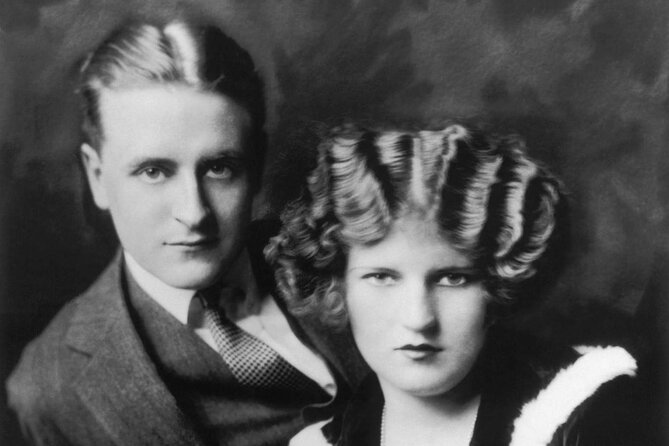
The subject reaches well beyond Hemingway. You hear about Joyce’s difficult path to publication, Fitzgerald and Zelda, Pound’s talent and political views, Stein’s influence and wartime choices, and figures such as Anaïs Nin, Alice Prin, and Djuna Barnes. That range gives the walk a wider view of the era, including women and lesser-known artists who are often left out.
The tradeoff is clear. Three hours is not enough to give every author a full biography or detailed literary criticism. Ellen has to choose key facts, relationships, and episodes. If your main interest is one writer, tell her early. The small group makes it easier to steer parts of the conversation toward Hemingway, Joyce, Stein, or another figure that matters most to you.
More Paris walking tours:
- Paris Top Sights Half Day Walking Tour with a Fun Guide
★ 5.0 · 2,893 reviews - Montmartre Hidden Gems and Scenic Highlights Walking Tour
★ 5.0 · 2,684 reviews - Montmartre Hill French Gourmet Food and Wine Tasting Walking Tour
★ 5.0 · 2,588 reviews
Place de la Contrescarpe sets the scene
The tour begins at 2 p.m. at 57 Rue Lacépède, near Place de la Contrescarpe in the Latin Quarter. The opening portion takes place in a café, where you are asked to enjoy a cup of coffee while Ellen introduces the Lost Generation and explains how the First World War shaped the writers who came to Paris afterward.
This is a smart beginning. You get a seat, a drink, and a short orientation before walking. The war is not just background decoration here. It helps explain why so many American and British writers came to Europe, why Paris attracted artists from abroad, and why their work often carried a sense of dislocation and uncertainty.
Coffee is not included in the $120.14 price, so bring a little cash or a card for your own drink. The café start also gives you a chance to ask what you most want from the walk. If you are a serious reader, use this moment to mention the authors you know best and the ones you hope to understand better.
Rue Mouffetard and the young Hemingway
The next stop is Rue Mouffetard, where Hemingway lived in his first Paris flat. This is one of the most useful stops for understanding him before the fame, medals, and carefully shaped public image. You are looking at the place connected with his early Paris years, when he was still forming his habits as a writer and finding his way into the city’s expatriate circles.
The stop is brief, about 10 minutes, and admission is free. The building is viewed from outside, so set your expectations accordingly. The value comes from the story Ellen attaches to the address and from the photographs and excerpts that help fill in what you cannot enter.
Rue Mouffetard also leads into James Joyce’s story. You learn about the place where Joyce finished Ulysses, a book that faced major opposition before publication. The connection between a physical Paris address and the struggle surrounding the novel gives this section more weight than a simple author birthplace stop.
If you have read A Moveable Feast, Hemingway’s early Paris may feel familiar. The tour can help you separate the polished memoir from the broader social world around him. You also get a useful reminder that these writers did not all move through Paris in the same way. Their friendships could be generous, competitive, affectionate, and difficult, sometimes all at once.
Odeon and the first Shakespeare & Company
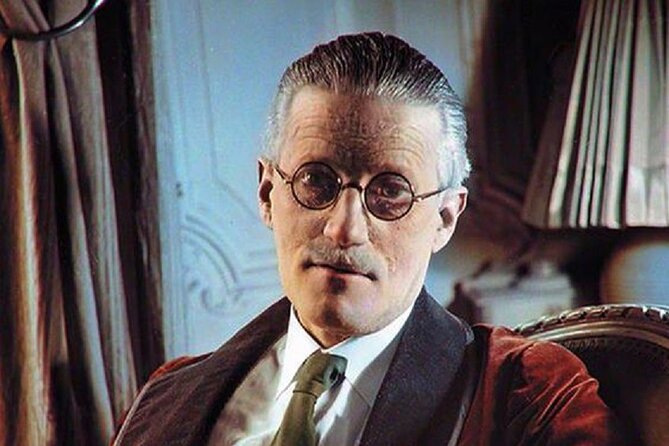
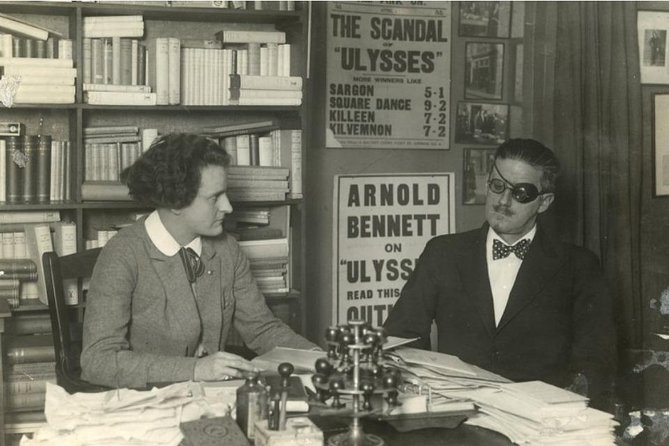
At Odeon, the group visits the original location of Shakespeare & Company. This is not the present-day bookshop on Rue de la Bûcherie, a point worth knowing before you set out. The original shop was associated with Sylvia Beach and became a second home for writers including Hemingway, Pound, Stein, and especially Joyce.
The shop’s importance goes beyond its shelves. It served as a meeting place, refuge, and literary address. Sylvia Beach supported Joyce and published Ulysses when the book faced serious resistance. Her role gives the tour a strong story about the practical work behind literary fame. Writers need printers, publishers, friends, money, and places to gather. Shakespeare & Company provided several of those things.
The stop lasts around 15 minutes. Again, this is an exterior visit rather than an indoor museum experience. You will not be browsing the original shop, but the location helps you understand how compact the Left Bank literary world was. Writers could walk between homes, cafés, bookshops, and meeting places, building friendships through repeated daily contact.
If you have time after the tour, you can visit the present Shakespeare & Company on Rue de la Bûcherie independently. The tour does not include that shop, but its modern location is an easy follow-up for readers who want to buy a book or see the name carried into present-day Paris.
A different way to spend the day in Paris:
- Paris: Louvre Museum Timed-Entrance Ticket
★ 4.6 · 71,977 reviews - Disneyland® Paris 1-Day Ticket
★ 4.6 · 49,412 reviews - Paris: Versailles Palace and Gardens Full Access Ticket
★ 4.6 · 41,579 reviews - Paris: Arc de Triomphe Rooftop Tickets
★ 4.6 · 34,264 reviews
Rue Servandoni and the writers near Luxembourg Gardens
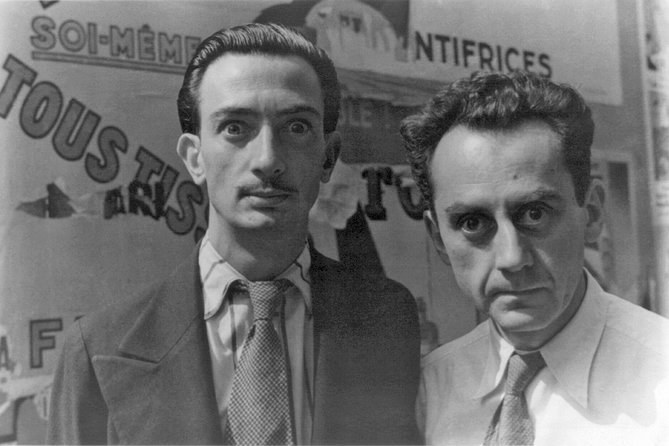
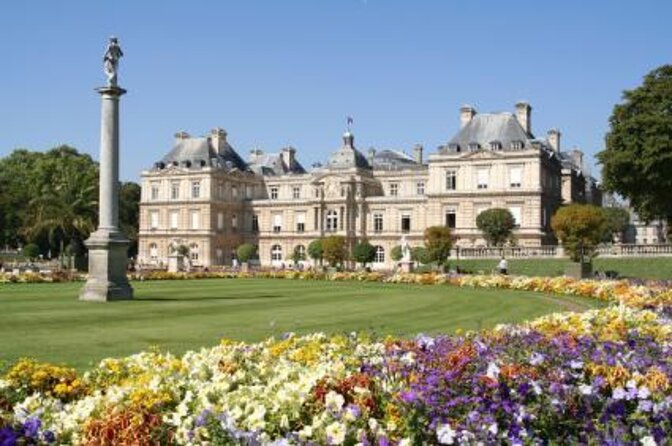
The route continues toward Rue Servandoni and the Luxembourg Gardens. This section takes about 30 minutes and brings in several homes connected with Man Ray, William Faulkner, and Hemingway, among others.
The area is useful because it shifts the focus from the best-known names to the network around them. Man Ray brings photography and visual art into the story. Faulkner shows that the expatriate scene was not limited to one style of American writing. Hemingway appears again because his life in Paris crossed several addresses and social circles.
The nearby Luxembourg Gardens offer a change of pace from narrow streets. One account of the tour describes an extended version that included the gardens and a church, taking closer to four hours. The advertised duration is about three hours, but the exact length can stretch if the conversation continues or Ellen adds an extra stop. I would avoid scheduling a tight appointment immediately afterward.
This is also the point where walking comfort matters. You need a moderate level of fitness, and much of the experience takes place on foot. The pace is generally described as leisurely, but you should still wear practical shoes. If you need a seated pause, raise the subject during the walk. The route includes café time at the beginning and a café finish, yet this is not a bus tour with regular rest stops.
Montparnasse cafés and the complicated people behind the books
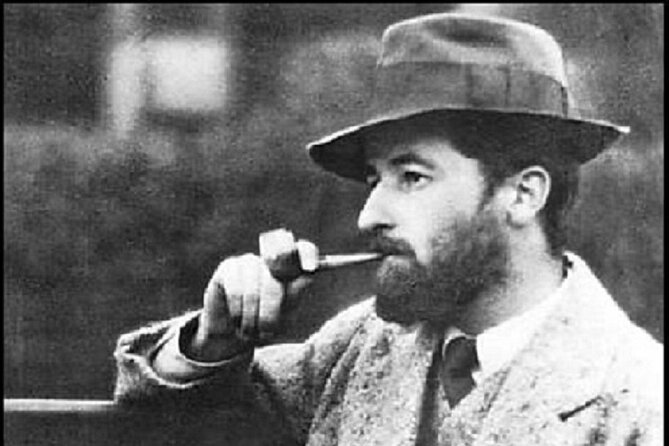
The tour ends in Montparnasse, one of the great café districts associated with 1920s writers and artists. The planned end is Le Select at 99 Boulevard du Montparnasse, though the final café may be Le Select, La Rotonde, Le Dôme, or another listed location. On some departures, the ending may instead be Harry’s New York Bar near the Opera.
A drink is not included, but the setting makes sense. You finish by talking about the people behind the books, rather than simply walking away from another address. The Fitzgeralds and their tragic end, Ezra Pound’s literary gifts and political beliefs, and Gertrude Stein’s controversial record all come into the final discussion.
This is one of the tour’s strongest features, but also one of its most opinionated sections. Ellen does not present every famous figure as a harmless cultural icon. She addresses difficult political views and morally troubling choices, including Stein’s cooperation with the Fascist-controlled regime during the Second World War. That frankness will appeal to you if you want literary history with the uncomfortable parts left in.
The treatment of Stein can vary in emphasis depending on the group. If she is central to your interest, say so. The same applies to Pound, Fitzgerald, Joyce, or the lesser-known women writers. Ellen has shown flexibility in adjusting the ending and presentation for the interests of a particular group, which is a real benefit in a maximum-eight-person setting.
What the tablet presentation adds
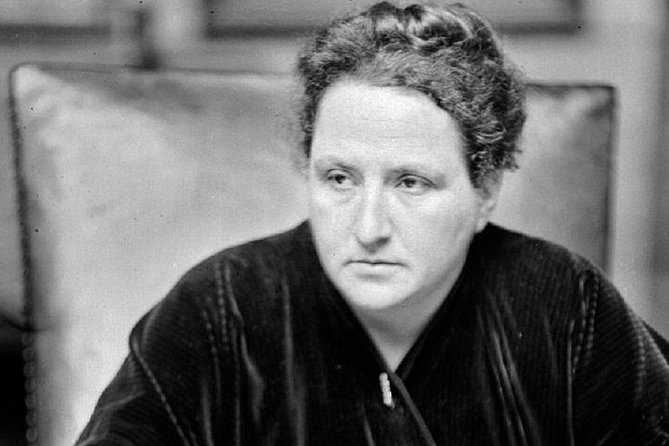
The tablet is more than a prop. It helps solve the main problem of a literary walking tour: you are often looking at buildings that have changed little in appearance but tell you nothing by themselves.
Ellen uses photographs to show the writers as they looked in Paris, not just as old portraits in a textbook. Audio clips give the material a human voice. Video and readings add mood and context. Poems and excerpts also give you a taste of the writing instead of treating literature as a list of titles.
This format is especially helpful if you know the authors only from school reading. You may recognize Hemingway, Joyce, Fitzgerald, or Stein without knowing how their lives intersected. Seeing their photographs alongside the addresses and hearing passages from their work can give you a clearer sense of the social world that shaped them.
Still, a tablet presentation is not the same as a museum collection or a scholarly seminar. The content has to keep moving because the group is walking. You will get selected stories and passages, not a full critical study of Ulysses, The Sun Also Rises, or Tender Is the Night. Read the books before or after the tour if you want the strongest payoff.
Is $120.14 a fair price?
At $120.14 per person, this is not a cheap way to see Paris. You are paying for a three-hour private-style experience in a group capped at eight, plus Ellen’s preparation and visual material. Food, drinks, transport, and any café purchases are extra.
I think the value depends heavily on your interest in the subject. If you already care about the Lost Generation, the small group and focused route make the cost easier to justify. You get a guide who can answer questions, adjust the discussion, and connect literary biography to actual places. Group discounts may also lower the per-person cost for a book club or small party.
If you are looking for a general introduction to Paris, this is not the best use of your money. The route does not include major monuments, interior admissions, or broad city commentary. It is a specialist walk. You should book it because you want to spend three hours with 1920s writers, not because you need a general sightseeing tour.
A book club could get especially good value from it. The route provides enough names and stories to generate a reading list afterward, and the mix of famous and lesser-known writers gives a group several directions to follow.
Who should book this experience?
I would choose this tour if you have read Hemingway, Joyce, Fitzgerald, Stein, Pound, or related writers and want to see the streets attached to their lives. It also suits anyone who enjoys biography, artistic friendships, literary scandals, and the less polished side of cultural history.
It works well for a couple, a small group of friends, or a book club. The format leaves more room for questions than a large walking tour. The guide’s enthusiasm and personal recommendations can also help you find more books, places, and Paris activities after the walk.
You should think twice if you dislike looking at exterior buildings or if you want long café stops throughout the route. One unhappy participant found the walk too slow and the literary treatment too general. That criticism points to a real limit: the tour covers many people, and not every stop will satisfy someone looking for academic-level detail.
The walk is offered in English. It begins near public transportation, and service animals are allowed. The meeting point is 57 Rue Lacépède, while the ending can be in Montparnasse or at Harry’s New York Bar, so check the final location before planning your next activity. The maximum is eight people, and a moderate level of fitness is advised.
Final call: book it for the stories, not the buildings
Book this tour if you want Paris to explain the writers, not just provide a backdrop for photographs. Ellen’s use of visual and audio material, her willingness to discuss difficult reputations, and the small-group format give the route more substance than a quick list of former homes.
Skip it if you want indoor attractions, frequent seated breaks, or a single-author study. For readers who have wondered what brought Hemingway, Joyce, Stein, Fitzgerald, and their circle together in Paris, this is a focused and personable way to follow the connections, with a café waiting at either end.
FAQ
How long is the Paris 1920 walking tour?
The tour lasts approximately three hours. It can run longer if the conversation continues or extra locations are added, so allow some flexibility after the scheduled finish.
Where does the tour begin?
The meeting point is 57 Rue Lacépède, 75005 Paris, near Place de la Contrescarpe in the Latin Quarter. The start time is 2 p.m.
Where does the tour end?
The planned end is Le Select at 99 Boulevard du Montparnasse, 75006 Paris. The tour may instead finish at another Montparnasse café, such as La Rotonde or Le Dôme, or at Harry’s New York Bar near the Opera.
Is food or drink included?
No. The tour begins in a café, where you are invited to enjoy a cup of coffee, and ends with an invitation to have a drink, but those purchases are not included in the tour price.
How many people can join the group?
The tour has a maximum of eight people. This small size leaves time for questions and makes it easier for the guide to respond to the group’s interests.
Is the tour physically demanding?
You should have a moderate level of physical fitness. The experience is a walking tour through several Left Bank neighborhoods, with much of the time spent on foot.
Can I cancel for a full refund?
Yes. You can cancel at least 24 hours before the local start time for a full refund. Cancellations or changes made less than 24 hours before the start are not accepted for a refund, and the tour may be rescheduled or fully refunded if its minimum group size is not met.
Newest additions around Paris
- Family escape Game with kids and teens on the Île de la Cité★ 4.5 · 11 reviews
- Private Photoshoot with the Iconic Eiffel Tower in Paris★ 5.0 · 11 reviews
- 2-day Private Mont Saint-Michel, 3 Loire Castles, D-Day Express★ 4.5 · 11 reviews
- Paris: Batobus Hop-On Hop-Off Cruise & Landmarks Audio Tour★ 3.0 · 11 reviews
- Paris Revolutionary Walking Tour: Iconic French Sights & Stories★ 5.0 · 11 reviews
- Guided and Private Tour of 3 hours through Paris aboard a Citroën 2cv★ 5.0 · 11 reviews
- Kids in the Kitchen – CrOisSaNtS★ 4.0 · 11 reviews
- Paris: Ghosts and Dark Stories Guided Walking Tour★ 4.1 · 11 reviews
Walking Tours, compared.
Paris Top Sights Half Day Walking Tour with a Fun Guide
Read our review →
Montmartre Hidden Gems and Scenic Highlights Walking Tour
Read our review →
Montmartre Hill French Gourmet Food and Wine Tasting Walking Tour
Read our review →
Paris Île de la Cité and Notre-Dame Walking Tour With Crypt
Read our review →
Montmartre Cheese, Wine & Pastry Guided Walking Tour
Read our review →
Paris in a Day: Louvre or Orsay, Eiffel Tower, City Walk & Cruise
Read our review →
Montmartre Highlights Walking Tour with a Local Guide
Read our review →
Browse the lists this tour appears in