
Reviewed · WALKING TOURS
Medieval Paris Private Walking Tour
Paris is easiest to understand when you stop treating it as one grand monument and start reading its streets. This private walk does that well, using Notre-Dame and the Latin Quarter as a map to Paris 800 years ago, then tying old churches, markets, universities, and fountains to the city you see today.
I like two things here. First, the route reaches beyond the usual postcard stops, including the Hotel de Cluny, Saint-Jacques Tower, and Fontaine des Innocents. Second, a private guide can shape the explanation around your questions. Isabella, one of the named guides, is described as especially friendly and well informed. The main consideration is the price: at $171 per person for two hours, this makes the most sense if you value personal attention and focused history over a cheaper group walk.
In This Review
- Key points
- Reading medieval Paris one street at a time
- Notre-Dame, the focal point of medieval Paris
- The Latin Quarter and the old academic city
- Hotel de Cluny and the city’s medieval memory
- Saint-Jacques Tower, a surviving piece of a lost church
- Les Halles and the Fontaine des Innocents
- The Centre Pompidou and a surprising modern link
- How the two-hour format works for you
- What $171 per person gets you
- Who will get the most from this walk
- Booking details worth checking before you go
- Should you book the Medieval Paris Private Walking Tour?
- FAQ
- How long does the Medieval Paris Private Walking Tour last?
- Where does the tour begin?
- How do I identify the guide?
- Where does the tour end?
- Which languages are available?
- Is this a private tour?
- What sites are included in the route?
- Is food or drink included?
- Does the tour operate in bad weather?
- Can I cancel for a full refund?
Key points
- Notre-Dame anchors the story: See the monument that served as the heart of medieval Paris.
- The Latin Quarter adds street-level context: Connect the university district with daily medieval life.
- The Sorbonne brings Europe’s academic past into view: Visit one of the continent’s oldest universities.
- Saint-Jacques Tower is a dramatic surviving fragment: Only the tower remains of the former Church of Saint-Jacques-de-la-Boucherie.
- Les Halles and the Fontaine des Innocents reveal commerce and public life: Learn how markets, water, and trade shaped the city.
- The Centre Pompidou gets an unexpected medieval connection: The tour finishes its historical argument by linking old Paris with modern architecture.
Reading medieval Paris one street at a time
This is not a tour built around entering a long list of attractions. It is a walking lesson in how medieval Paris was organized, where people gathered, and how much of the old city still survives in fragments.
Over two hours, your guide explains medieval culture, art, and architecture while pointing out façades that retain old symbols. Those small details matter. A cathedral tells you about religion and power, but a street façade can suggest how merchants, craftsmen, students, and residents used the city every day.
I find this approach useful if you already plan to see Notre-Dame on your own. Instead of treating it as a single famous building, you get a wider frame for understanding the neighborhoods around it. The route also helps you connect places that can otherwise feel scattered on a Paris map.
The tour is private, so you are not sharing the guide with a large group. The supplied information does not give a maximum number of people, but private format means the experience is arranged for your party rather than a general public group. That can make a real difference in narrow streets, at busy viewpoints, or when you want to stop and ask about a detail.
More Paris walking tours:
- Paris Top Sights Half Day Walking Tour with a Fun Guide
★ 5.0 · 2,893 reviews - Montmartre Hidden Gems and Scenic Highlights Walking Tour
★ 5.0 · 2,684 reviews - Montmartre Hill French Gourmet Food and Wine Tasting Walking Tour
★ 5.0 · 2,588 reviews
Notre-Dame, the focal point of medieval Paris
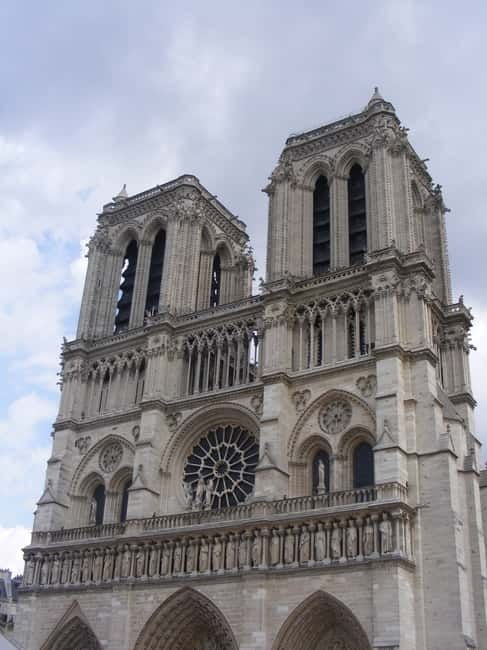
Notre-Dame is the emotional center of this walk. The cathedral was the most important monument in medieval Paris, and your guide uses it to explain the city’s religious, political, and artistic life.
You should expect the cathedral to be discussed as part of its setting, not as an isolated stop. The nearby streets and institutions help show why this part of the city carried so much weight. The tour’s subject is medieval Paris, so Notre-Dame gives the story a firm anchor before the walk moves into the Latin Quarter and other historic areas.
The information says you visit Notre-Dame, but it does not specify whether this includes an interior visit, reserved entry, or only an exterior explanation. I would book this for the historical walk rather than assume it replaces a separate cathedral visit.
That distinction is important for planning. If entering Notre-Dame is a top priority, check the exact arrangement before paying. If your main goal is to understand why the cathedral mattered and how it fit into medieval Paris, the stop remains central even without a stated entry detail.
The Latin Quarter and the old academic city
The Latin Quarter is one of the oldest parts of Paris, and this is where the tour shifts from monumental Paris to a district shaped by study, religion, and daily life.
The name itself points to the world of medieval learning, when Latin was the shared language of scholarship. Your guide brings that setting into focus by taking you toward the Sorbonne, one of Europe’s oldest universities.
I like this part of the route because it gives the Middle Ages a human scale. You are not only looking at stonework. You are considering the students, teachers, religious communities, and institutions that made this part of Paris an intellectual center.
The route is also practical for first-time visitors who want a stronger sense of place. The Latin Quarter can feel like a collection of attractive streets unless someone explains how its buildings and institutions connect. With a private guide, you can ask why a particular street or façade matters instead of simply passing through it.
The tour does not promise a formal university visit or entry into the Sorbonne. It says you go to the Sorbonne to see one of Europe’s oldest universities. Plan on an exterior stop unless the guide confirms otherwise.
Hotel de Cluny and the city’s medieval memory
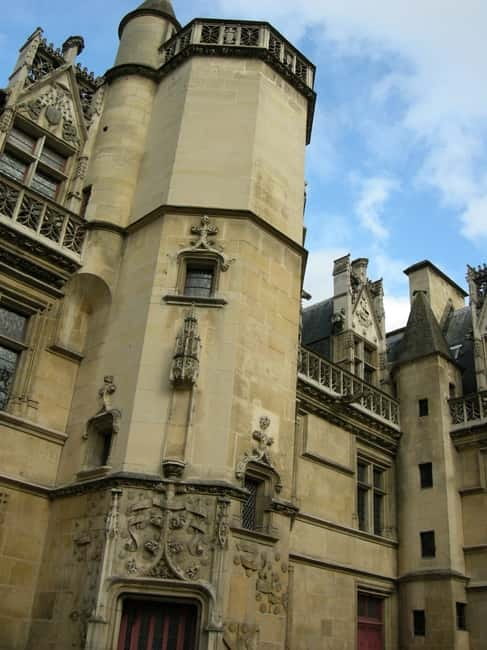
The Hotel de Cluny adds an important layer to the walk. It was once a mansion belonging to the abbots of Cluny and is now the Museum of the Middle Ages.
That change in use tells you something useful about Paris. Medieval buildings are not frozen in one moment. They can become museums, landmarks, or parts of an active neighborhood, while still carrying traces of their original purpose.
The stop should appeal to you if you like architecture and social history in equal measure. The guide discusses art and medieval design, while the building itself helps make those subjects visible. You can expect the exterior and its place in the neighborhood to support the story, but the tour does not state that museum admission is included.
If you want more time with medieval objects and gallery displays, the Museum of the Middle Ages may need a separate visit. The two-hour walk gives you a guided introduction, not enough time for a full museum program.
A few more Paris ideas to compare
- Paris: Private Photoshoot at the Eiffel Tower
★ 4.7 · 2,636 reviews - Top Private Cruises in Paris with French Champagne and surprises
★ 5.0 · 1,553 reviews - Private Paris Airport Arrival Transfer – CDG & ORLY Airports
★ 4.5 · 1,119 reviews - Paris Private Arrival Transfer from Charles de Gaulle (CDG) or Orly (ORY)
★ 4.0 · 1,084 reviews
Saint-Jacques Tower, a surviving piece of a lost church
Saint-Jacques Tower is one of the route’s most memorable examples of what remains when a larger building disappears. It is the only surviving part of the 16th-century Church of Saint-Jacques-de-la-Boucherie.
This kind of stop is valuable because Paris history is often about absence as much as survival. The tower lets you picture a church that is no longer there and understand how modern streets can preserve isolated pieces of older city life.
I would pay close attention here to the guide’s explanation of what changed and what endured. A famous cathedral is easy to recognize, but a lone tower requires context. That is where a private walk earns its keep.
The tour information does not say that you climb the tower or enter it. Treat it as a sightseeing and interpretation stop, not a guaranteed tower visit.
Les Halles and the Fontaine des Innocents
The route then moves into the commercial story of Paris. Les Halles is presented through its mercantile past, showing how trade and markets helped shape the city.
This is a useful counterweight to the grand religious and academic sites. Medieval Paris was not only cathedrals and scholars. It was also buying, selling, hauling, and gathering. A market district explains how ordinary economic activity supported the larger city.
Nearby, you see the Fontaine des Innocents, described as the oldest intact fountain in Paris. It is a small but telling stop. Public water, public space, and civic decoration all reveal how a city served people before modern infrastructure.
The fountain also suits the pace of the tour. After major monuments, a compact feature rewards careful looking. Your guide can point out why it matters, while you get a short break from the scale of Notre-Dame and the surrounding streets.
The route gives you the historical meaning of Les Halles and the fountain, but it does not include food or drinks. If you expect a market tasting or café stop, bring that expectation down. This is a walking history tour, not a food tour.
The Centre Pompidou and a surprising modern link
The final idea is one of the tour’s most unusual. You learn about the connection between medieval Paris and the modern Centre Pompidou.
The appeal is not simply seeing an old building followed by a modern one. It is the reminder that Paris keeps rebuilding, reusing, and arguing with its past. The Centre Pompidou may look far removed from medieval architecture, yet the tour asks you to consider the link between the city’s oldest traditions and its most modern expressions.
That gives the walk a useful closing note. You do not finish with the idea that medieval Paris is sealed inside a museum. Instead, you see the Middle Ages as part of the city’s continuing identity.
The information does not spell out the precise nature of the connection, so this is a good place to ask your guide for the full explanation. With someone like Isabella, who is specifically praised for sharing less familiar information, the question could become one of the most rewarding moments of the walk.
How the two-hour format works for you
Two hours is enough time for a focused introduction, but not enough for long visits at every site. The value comes from the sequence and the guide’s interpretation, not from lingering inside each monument.
Expect a steady walk through central Paris. Wear comfortable shoes and bring protection for the weather. The tour operates rain or shine, so a wet forecast does not automatically cancel the outing.
The meeting point is in front of McDonald’s at Cluny la Sorbonne Metro Station on Line 10. Look for the guide carrying a red canvas tote bag. The tour ends back at the same meeting point, which makes it easier to fit into a larger day of sightseeing.
English and French are available. When you reserve, check the starting times offered for your date. Since the walk returns to its original meeting point, you can plan another nearby activity afterward, though you should leave yourself a little breathing room rather than schedule something at the exact end time.
What $171 per person gets you
At $171 per person, this is not a budget introduction to medieval Paris. The price is easier to justify if you are traveling with a small private party and want direct access to a guide for two hours.
You are paying for a private group format and a guide who can explain the city in a way a self-guided route cannot. That matters most at places such as Saint-Jacques Tower and the Fontaine des Innocents, where the historical importance is not obvious from the outside.
The listed inclusion is the guide. Food and drinks are not included, and the information does not state that museum admission, cathedral entry, or other tickets are included. Check those details before booking if you want interior access.
For a couple or family that enjoys asking questions, the price may feel fair. For one person looking for a basic overview, a standard group walk or self-guided route would likely cost less. The 4.9 rating from 12 reviews and the operator’s recognition among the top 10 small tour operators in Europe in the 2025 Arival TourReview Spotlight Awards add confidence, but the limited number of ratings means I would still judge the booking mainly by the private format and your interest in medieval history.
Who will get the most from this walk
I would choose this tour if you want more than a checklist of Paris landmarks. It suits you especially well if you enjoy history, architecture, old universities, religious sites, and the way modern cities preserve fragments of earlier eras.
Families may like the variety. A cathedral, university, tower, market district, fountain, and modern cultural center give the guide several ways to keep the story moving.
It also works for repeat visitors. You may have already seen Notre-Dame and walked through the Latin Quarter, but the medieval symbols on façades and the story of Saint-Jacques-de-la-Boucherie can give familiar streets a new purpose.
I would be more cautious if you want a slow museum visit, a food experience, or guaranteed interior access to every major sight. The route covers many locations in two hours, so its strength is interpretation and range.
Booking details worth checking before you go
You can cancel up to 24 hours in advance for a full refund, and the reserve-now, pay-later option lets you hold a place without paying immediately. Those policies are useful if your Paris schedule is still shifting.
The guide meets you at a clear Metro location, but do not rely on the restaurant alone. Look specifically for the red canvas tote bag, and arrive ready for an outdoor walk in all weather.
The tour is offered in English or French. Because the experience is private, tell the provider your preferred language when arranging it.
Should you book the Medieval Paris Private Walking Tour?
Book it if you want a compact, personal explanation of how Paris grew from a medieval center into the city you see now. Notre-Dame gives you the grand opening, while the Latin Quarter, Sorbonne, Hotel de Cluny, Saint-Jacques Tower, Les Halles, and Fontaine des Innocents fill in the less obvious parts.
I especially like the emphasis on places that many visitors pass without understanding. The guide’s focus on overlooked symbols and the unusual medieval connection to the Centre Pompidou gives this walk more substance than a simple landmark circuit.
Skip it if $171 per person feels too high for a two-hour outdoor tour or if you mainly want entry to Notre-Dame and museums. For a private party that values thoughtful explanations, flexible questions, and a direct route through old Paris, it is a strong choice.
FAQ
How long does the Medieval Paris Private Walking Tour last?
The tour lasts two hours.
Where does the tour begin?
Meet your guide in front of McDonald’s at the Cluny la Sorbonne Metro Station on Line 10.
How do I identify the guide?
Look for a guide carrying a red canvas tote bag.
Where does the tour end?
The walk ends back at the original meeting point.
Which languages are available?
The tour is offered in English and French.
Is this a private tour?
Yes. The activity is arranged for a private group.
What sites are included in the route?
The route includes Notre-Dame Cathedral, the Latin Quarter, the Hotel de Cluny, the Sorbonne, Saint-Jacques Tower, Les Halles, and the Fontaine des Innocents. It also explains the connection between the Middle Ages and the Centre Pompidou.
Is food or drink included?
No. Food and drinks are not included.
Does the tour operate in bad weather?
Yes. The tour operates rain or shine.
Can I cancel for a full refund?
Yes. You can cancel up to 24 hours in advance for a full refund.
Newest additions around Paris
- Family escape Game with kids and teens on the Île de la Cité★ 4.5 · 11 reviews
- Private Photoshoot with the Iconic Eiffel Tower in Paris★ 5.0 · 11 reviews
- 2-day Private Mont Saint-Michel, 3 Loire Castles, D-Day Express★ 4.5 · 11 reviews
- Paris: Batobus Hop-On Hop-Off Cruise & Landmarks Audio Tour★ 3.0 · 11 reviews
- Paris Revolutionary Walking Tour: Iconic French Sights & Stories★ 5.0 · 11 reviews
- Guided and Private Tour of 3 hours through Paris aboard a Citroën 2cv★ 5.0 · 11 reviews
- Kids in the Kitchen – CrOisSaNtS★ 4.0 · 11 reviews
- Paris: Ghosts and Dark Stories Guided Walking Tour★ 4.1 · 11 reviews
Walking Tours, compared.
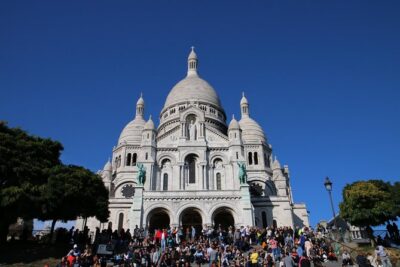
Paris Top Sights Half Day Walking Tour with a Fun Guide
Read our review →
Montmartre Hidden Gems and Scenic Highlights Walking Tour
Read our review →
Montmartre Hill French Gourmet Food and Wine Tasting Walking Tour
Read our review →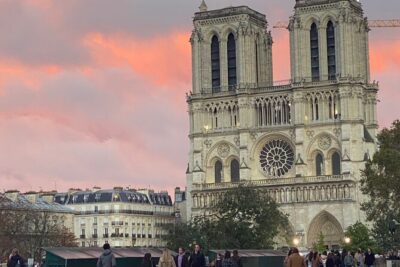
Paris Île de la Cité and Notre-Dame Walking Tour With Crypt
Read our review →
Montmartre Cheese, Wine & Pastry Guided Walking Tour
Read our review →
Paris in a Day: Louvre or Orsay, Eiffel Tower, City Walk & Cruise
Read our review →
Montmartre Highlights Walking Tour with a Local Guide
Read our review →
Browse the lists this tour appears in