
Reviewed · HISTORICAL TOURS
Historic Paris Walking Tour in English
Paris can feel like a grand museum with traffic, cafés, and people getting somewhere fast. This 150-minute historic walk gives you a useful first map of the city, linking royal power, revolution, art, religion, and the Seine in one clear story. You’ll see major sights such as Notre-Dame, the Louvre, Pont des Arts, and the Tuileries Gardens.
I like the strong storytelling and the easy central meeting point at Hotel de Ville. I also like the balance between famous landmarks and big ideas, from medieval Paris to Napoleon and the modern boulevards. The main consideration is pace: two and a half hours on foot can feel long in cold, hot, or wet weather, and the tour focuses on outside views rather than confirmed interior visits.
In This Review
- Key points to know before booking
- Why this walk works as a first look at Paris
- Hotel de Ville and the medieval roots of Paris
- Notre-Dame and Sainte-Chapelle: faith, power, and survival
- The Louvre: palace before museum
- Pont des Arts and the Seine views
- Tuileries Gardens and the making of modern Paris
- Storytelling, humor, and guide quality
- Price, timing, and practical value
- Who should book this Paris walk
- Should you book it?
- FAQ
- Where does the Historic Paris Walking Tour meet?
- How long does the tour last?
- What language is the tour conducted in?
- Does the tour include hotel pickup and drop-off?
- Are entrance tickets to the Louvre, Notre-Dame, or Sainte-Chapelle included?
- What is included in the price?
Key points to know before booking
- Paris in one connected story: Follow the city from its Gallic beginnings and Roman conquest through royal rule, revolution, Napoleon, and 19th-century rebuilding.
- Major sights without separate entrance tickets: See Notre-Dame, Sainte-Chapelle, the Louvre, Pont des Arts, the Tuileries Gardens, boulevards, and bridges from the outside.
- Guides who lean into storytelling: Thomas, Harry, Tom, Yazid, Francesca, and others have been praised for humor, warmth, art history, and keeping different ages engaged.
- A useful first-day activity: The walk helps you understand the city before choosing which museums, churches, and neighborhoods deserve more of your time.
- A modest price for a long introduction: At $31 per person, the cost is reasonable for a live English tour lasting 150 minutes, especially if you value context over a quick photo stop.
- Simple meeting arrangements: Meet outside the Hotel de Ville metro station at exit 5, look for the yellow umbrella, and arrive 10 minutes early.
Why this walk works as a first look at Paris
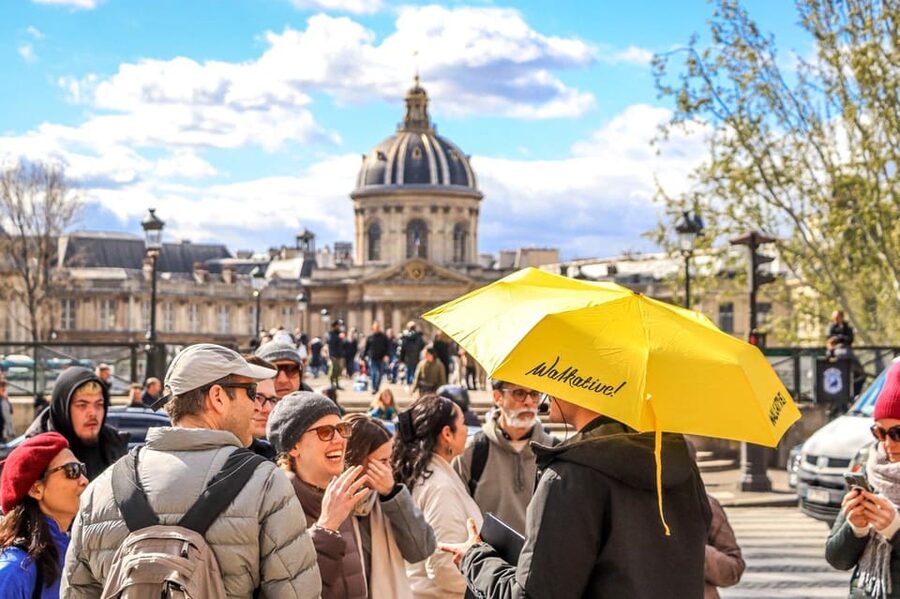
The best part of this experience is not any single monument. It is the way the guide connects them. Paris is easier to understand when Notre-Dame, the Louvre, the Seine, and the broad boulevards are treated as chapters in one long argument about power, faith, money, art, and public life.
You begin near Hotel de Ville, a sensible place for a central Paris walk. From here, the city’s story can move between medieval streets, royal buildings, grand bridges, and later avenues. You are not simply ticking off sights. You are learning why Paris became France’s political, religious, artistic, and intellectual center.
I especially like the way the tour brings in the people behind the stone. You can expect stories about Quasimodo, Napoleon, Hitler, the French Revolution, love, revenge, and the theft of the Mona Lisa. That mix gives the walk enough drama for first-time visitors without requiring you to arrive as a history expert.
The English-language format also matters. Several guides, including Thomas, Harry, Tom, Yazid, and Francesca, have been praised for clear explanations, humor, enthusiasm, and an ability to keep a mixed group involved. The exact guide is not guaranteed, but the repeated emphasis on engaging presentation is useful when you are choosing between a silent audio guide and a live walk.
More Paris history walks:
- Paris: Louvre Museum Entry with History of Mona Lisa
★ 3.9 · 2,823 reviews - Paris: Dark History and Ghostly Guided Walking Tour
★ 4.7 · 1,000 reviews - Le Marais/Paris – The Historic, Trendy, Jewish, LGBT district
★ 5.0 · 341 reviews
Hotel de Ville and the medieval roots of Paris
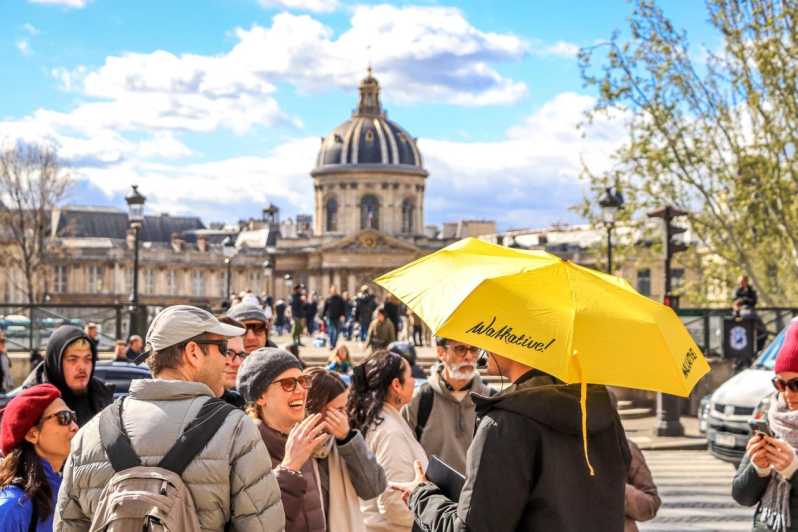
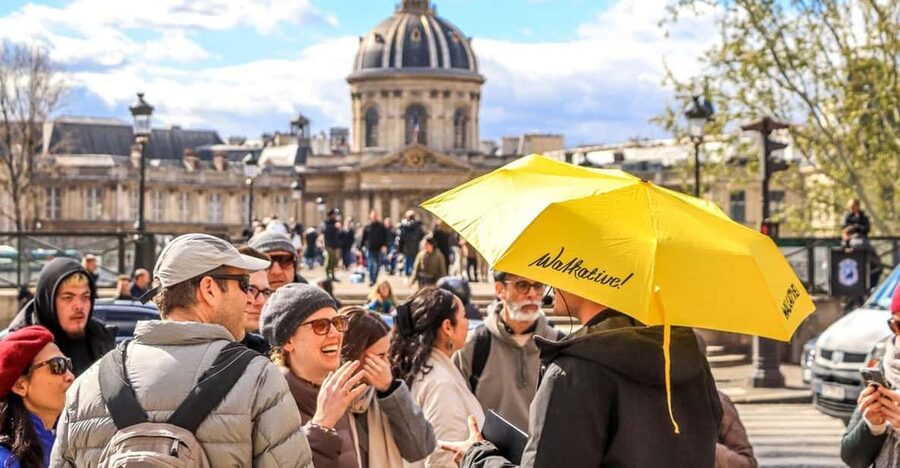
The meeting point is outside the metro at Hotel de Ville, exit 5. Look for a yellow umbrella, and arrive 10 minutes before the starting time. That small detail matters in central Paris, where several exits and busy streets can make a last-minute meeting needlessly stressful.
The opening discussion sets up Paris before its famous monuments appeared. The city began on marshy ground beside the Seine, associated with the Gallic tribe known as the Parisii. Rome later took control after a violent conflict, and Paris eventually became a capital of the Franks in the sixth century.
That early background gives the river a larger role. The Seine was not just a pretty view for painters and photographers. It helped shape trade, settlement, defense, and the city’s growth. As you walk, the river and its bridges help explain why Paris developed into a powerful center rather than remaining a small provincial town.
The guide’s narrative also covers medieval Paris as a major European city. At one point, the city had around 200,000 people, making it the largest in Europe during the medieval period. The Sorbonne later reinforced Paris as a center of learning, adding intellectual weight to its political and religious importance.
This is where a live guide earns the fee. Dates alone are easy to forget. A good explanation shows how the same city changed hands, changed beliefs, and kept reusing its old streets and buildings.
Notre-Dame and Sainte-Chapelle: faith, power, and survival
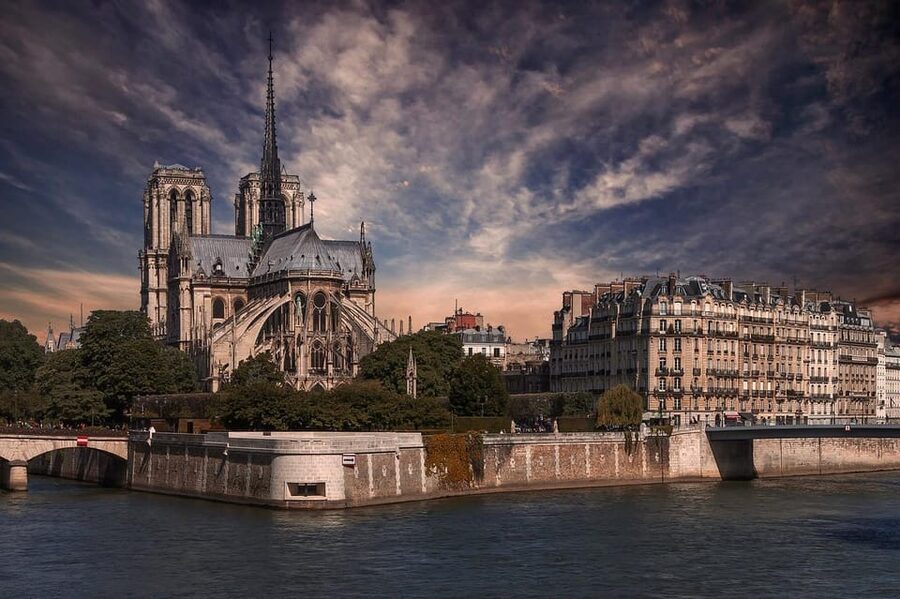
Notre-Dame Cathedral is one of the central sights associated with the walk. The tour covers its place in Parisian history and brings in the stories that have made the cathedral part of popular culture, including Quasimodo.
You should expect an exterior-focused stop unless your booking details specifically state that interior entry is included. The supplied tour information does not include admission tickets or guaranteed access inside the cathedral. That is not a flaw in a street tour, but it is important to know before you book.
Notre-Dame works especially well as a history lesson because it represents several layers of Paris at once. It is a religious building, a national symbol, a work of architecture, and a reminder that the city has repeatedly faced war, political upheaval, and loss. A guide can point out details you might otherwise pass without noticing.
Sainte-Chapelle is also named among the sights. Its connection to royal power and medieval faith gives the walk another angle. Again, the tour description confirms that you will see and hear about it, but it does not promise an interior visit. If stained glass is high on your list, plan a separate ticketed visit rather than assuming this walk includes entry.
The value here is context. You can return later with a better sense of what you are looking at and why these buildings mattered to French kings, church leaders, and ordinary Parisians.
The Louvre: palace before museum
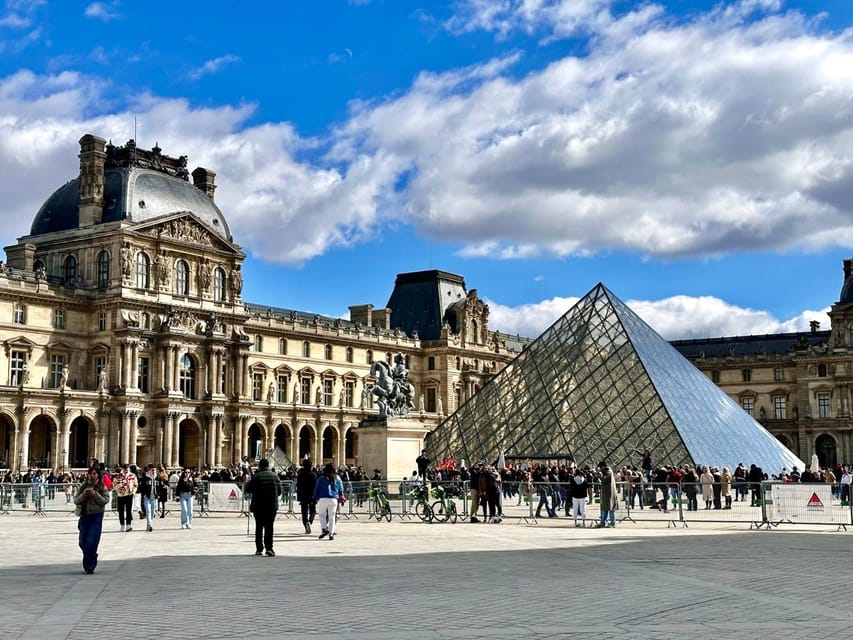
The Louvre is presented not only as one of the world’s great art museums but also as a former palace. That distinction is one of the most useful things to learn before visiting. Many people arrive thinking mainly of the Mona Lisa, then find themselves overwhelmed by the size of the building and its collections.
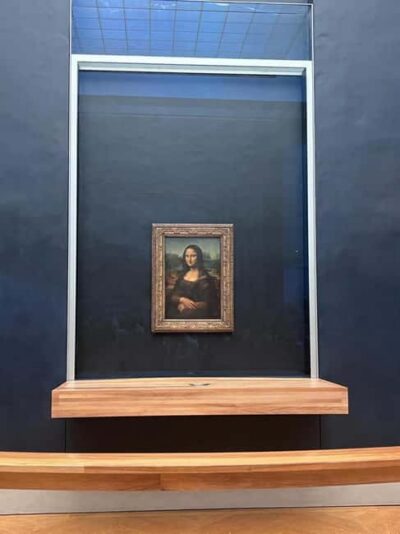
This walk gives you the building’s broader story. The Louvre’s importance began with royal power, long before it became a public museum. The guide also tells the story of the Mona Lisa theft, described as one of the most daring art thefts in history. It is a memorable way to show that the museum’s fame comes from both its masterpieces and the strange human stories around them.
Do not confuse this stop with a museum tour. No Louvre admission is listed, and the walk does not promise time inside the galleries. That makes the experience a good choice if you want a clear introduction before booking a separate museum visit. It is less suitable if your main goal is to study paintings in detail.
I like this division of labor. A street tour can explain the Louvre’s role in French history, while a dedicated museum visit lets you spend hours with the art. Trying to do both in a single 150-minute walk would leave you with neither a proper tour nor enough time for the collection.
More Paris walking tours:
- Paris Top Sights Half Day Walking Tour with a Fun Guide
★ 5.0 · 2,893 reviews - Montmartre Hidden Gems and Scenic Highlights Walking Tour
★ 5.0 · 2,684 reviews - Montmartre Hill French Gourmet Food and Wine Tasting Walking Tour
★ 5.0 · 2,588 reviews - Paris Île de la Cité and Notre-Dame Walking Tour With Crypt
★ 5.0 · 2,272 reviews
Pont des Arts and the Seine views
Pont des Arts provides a natural pause between the city’s grand institutions. Bridges in Paris are not merely ways to cross the water. They frame views, connect neighborhoods, and reveal how closely the city’s public life has always been tied to the Seine.
From here, you can appreciate the relationship between the Louvre, the river, and the central districts. The stop also gives the group a change of scenery after heavier material about wars, religion, and revolution. A strong guide uses such places to keep the walk moving rather than turning it into a long lecture.
The tour’s larger story includes Paris during the Enlightenment, when new ideas in science and philosophy challenged old systems of authority. It also covers the poverty and inequality that helped fuel the French Revolution. Those themes can feel abstract in a classroom, but they become more tangible when you hear them while standing among the institutions and public spaces that shaped the city.
You may also hear about the repeated uprisings associated with Paris. The 19th-century redesign of the city, with broad boulevards, parks, sewers, and aqueducts, was not only a public works project. It also made barricade building harder and allowed authorities to control movement more easily. That is an unusually useful explanation for why central Paris looks so orderly and monumental in places.
Tuileries Gardens and the making of modern Paris
The Tuileries Gardens offer one of the tour’s calmer settings. Their formal paths and open views help you see the city as a planned royal and public space rather than a random collection of old buildings.
The gardens also connect neatly to the Louvre and the history of French rulers. This is where stories about Napoleon fit naturally. The tour uses his rise to power as part of the wider account of how the Revolution ended the monarchy, then opened the way for a new political order under an ambitious military leader.
The Tuileries are also practical for visitors. You may want to return after the walk for a slower stroll, a picnic, or a rest between museum visits. The tour does not provide food or wine, but the discussion of French cuisine gives you a fitting reminder that Paris is experienced at the table as much as on the pavement.
The 19th-century transformation of Paris is another strong theme. The Eiffel Tower is named as a symbol of modernization and the 1889 Universal Exposition. Parisians initially protested against it, only to embrace it over time. That story neatly captures the city’s habit of arguing with change before turning it into a symbol.
Storytelling, humor, and guide quality
The strongest praise for this experience centers on the guides’ delivery. Tom is described as informative and especially helpful for a first visit. Yazid is associated with art history, warmth, and enthusiasm. Harry is praised as a strong storyteller who makes the past feel close, while Francesca is noted for teaching a lot and pointing out sights that are easy to miss.
Thomas is also singled out for combining detailed history with humor. His approach is described as suitable for serious history fans and people with only a passing interest in kings, wars, and revolutions. That balance is important because a walking group rarely shares one level of enthusiasm.
One guide used illustrations to support the explanation, which can help when discussing buildings, people, or vanished parts of the city. You should not assume every guide will use the same materials, but the overall format is clearly built around a prepared narrative rather than casual sightseeing.
The group may include fewer than 20 people, though group size can vary. A group of that scale is usually large enough to create a social atmosphere but small enough to hear a live guide without feeling like part of a slow-moving crowd. The walk is described as good exercise but not strenuous, although the full 150 minutes still calls for comfortable shoes.
Price, timing, and practical value
The listed price is $31 per person. For two and a half hours with a live English-speaking guide and a carefully built historical narrative, I consider that fair value. You are paying for interpretation and structure, not entrance tickets, transport, food, or hotel pickup.
The comparison to make is simple. If you only want quick exterior photographs, you can walk this part of Paris on your own for free. If you want the city’s sights placed into a readable story, $31 can save you time and help you decide which places deserve a longer visit.
The tour operates on a pay-as-you-wish format, with the booking amount covering the reservation fee and the guide’s payment. This means you should not treat the experience as a standard free walk with an entirely separate tip expected at the end. The amount paid at booking handles the stated reservation and guide costs.
You can cancel up to 24 hours before the activity for a full refund, and you can reserve now and pay later. Starting times vary, so check availability before choosing a date. Hotel pickup and drop-off are not included, so you need to reach Hotel de Ville independently.
Weather deserves a little thought. A crisp February morning can be excellent for seeing the monuments with fewer seasonal distractions, but cold weather changes the comfort level of a long outdoor walk. In summer, the open spaces and direct sun can also affect how enjoyable the route feels. Bring water and dress for the forecast.
Who should book this Paris walk
I would put this near the top of the list for a first day in Paris. It gives you orientation, a historical framework, and a short list of places to revisit. It also suits solo visitors, since the live format makes it easy to settle into a group without needing to arrange a private guide.
History fans should enjoy the range, from Gallic and Roman Paris to medieval religion, the Enlightenment, the Revolution, Napoleon, and 19th-century planning. Art lovers will appreciate the Louvre and Mona Lisa stories, but should book a separate museum visit if they want extended time with paintings.
Families and mixed-age groups can also find the format accessible. The stories about Quasimodo, theft, revolution, love, and revenge add enough drama to keep the material from becoming a list of dates. The main limitation is the lack of guaranteed interior access, so this is an introduction rather than a complete visit to Notre-Dame, Sainte-Chapelle, or the Louvre.
Should you book it?
Book this tour if you want a well-organized introduction to central Paris and prefer a guide’s story to wandering between monuments without context. The mix of major sights, political history, art stories, and practical orientation gives you a useful start, especially on your first day.
Skip it if you want museum entry, a slow photography walk, or a route with little historical explanation. For most visitors who can comfortably walk for 150 minutes, the $31 price is a sensible way to understand why Paris looks, feels, and argues the way it does.
FAQ
Where does the Historic Paris Walking Tour meet?
Meet outside the Hotel de Ville metro station at exit 5. Look for the yellow umbrella and arrive 10 minutes before the activity begins.
How long does the tour last?
The walking tour lasts 150 minutes, or two and a half hours. Starting times depend on availability.
What language is the tour conducted in?
The tour is conducted in English with a live English-speaking guide.
Does the tour include hotel pickup and drop-off?
No. Hotel pickup and drop-off are not included, so you must make your own way to Hotel de Ville.
Are entrance tickets to the Louvre, Notre-Dame, or Sainte-Chapelle included?
No entrance tickets are listed as included. The experience covers the history and sights from the walking route, so you should not assume that interior entry is part of the tour.
What is included in the price?
The price includes an expert local guide and a carefully prepared narrative. The $31 booking amount covers the reservation fee and the guide’s payment under the pay-as-you-wish tour format.
Newest additions around Paris
- Family escape Game with kids and teens on the Île de la Cité★ 4.5 · 11 reviews
- Private Photoshoot with the Iconic Eiffel Tower in Paris★ 5.0 · 11 reviews
- 2-day Private Mont Saint-Michel, 3 Loire Castles, D-Day Express★ 4.5 · 11 reviews
- Paris: Batobus Hop-On Hop-Off Cruise & Landmarks Audio Tour★ 3.0 · 11 reviews
- Paris Revolutionary Walking Tour: Iconic French Sights & Stories★ 5.0 · 11 reviews
- Guided and Private Tour of 3 hours through Paris aboard a Citroën 2cv★ 5.0 · 11 reviews
- Kids in the Kitchen – CrOisSaNtS★ 4.0 · 11 reviews
- Segway tour Capital sites★ 5.0 · 11 reviews
Historical Tours, compared.
Louvre Museum Entry with History of Mona Lisa
Read our review →
Le Marais/Paris – The Historic, Trendy, Jewish, LGBT district
Read our review →
Paris City of Fashion History Private Guided Walking Tour
Read our review →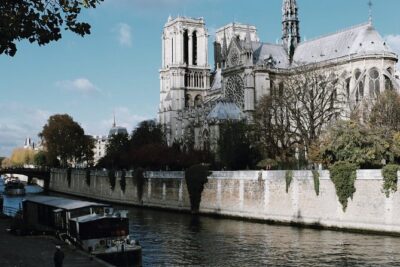
History of Paris City Center w/ Notre Dame Semi-Private 12ppl Max
Read our review →
Le Marais & Montmartre Jewish History Walking Tour
Read our review →

Browse the lists this tour appears in