
Reviewed · WALKING TOURS
Haussmannian Paris 2-Hour Private Walking Tour
Paris looks grand in a way that is hard to explain until you understand Haussmann’s vast rebuilding plan. On this private two-hour walk, you trace that plan from the Opéra Garnier and Boulevard Haussmann to Park Monceau, with a guide explaining how much of the city was cleared and rebuilt in the 19th century.
I like the focus on city planning and architecture, rather than another greatest-hits stroll. I also like the private format, which gives you room to ask questions about buildings, streets, and Parisian life. The main drawback is the price: at $176 per person, this is best value for a small private group, not a lone budget visitor.
In This Review
- Key points at a glance
- Why Haussmannian Paris is worth two hours
- Meeting at Métro Opéra and Café de la Paix
- Opéra Garnier, the grand opening lesson
- Boulevard Haussmann and the logic of the new city
- Galeries Lafayette, shopping as architecture
- Jacquemart-André and Saint Augustin
- Park Monceau, the city’s elegant green pause
- Picasso’s drinking dens and the human side of the route
- How much value do you get for $176?
- Who should book this private walk?
- Should you book the Haussmannian Paris tour?
- FAQ
- How long is the Haussmannian Paris walking tour?
- What is the price?
- Where does the tour meet?
- How will I recognize the guide?
- What languages are available?
- Is this a private tour?
- Is the tour wheelchair accessible?
- What sights are included in the walk?
- Are food and drinks included?
- What happens if it rains?
Key points at a glance
- Start at Café de la Paix: Meet your guide in front of this famous café at Métro Opéra. Look for the red canvas tote bag.
- Opéra Garnier anchors the walk: This landmark shows the theatrical, lavish side of 19th-century Paris.
- Boulevard Haussmann explains the plan: You see how wide streets, grand façades, and orderly blocks changed the capital.
- Galeries Lafayette adds a modern contrast: The elegant department store remains part of the area’s shopping and architectural story.
- Park Monceau finishes the route: This refined green space offers a change from stone façades and busy avenues.
- Private guiding keeps it personal: English and French tours are available, and guides such as Tina and Hanna have earned praise for clear explanations and useful Paris tips.
Why Haussmannian Paris is worth two hours
The most useful idea on this tour is that Haussmannian Paris is not simply a style of pretty buildings. It is the result of a huge government-backed effort to reshape the city.
In the 19th century, most of Paris was flattened and rebuilt, with only two neighborhoods left outside the main intervention. The goal was an orderly, functional, attractive capital. That meant wider streets, clearer routes, grand apartment façades, improved movement through the city, and carefully planned public spaces.
The cost was high. Older buildings and streets disappeared, along with pieces of medieval Paris that can never be recovered. That tension gives the walk more weight. You are not just admiring cream-colored façades. You are looking at a bold act of urban change that improved some parts of daily life while erasing much of the old city.
I like this subject because it changes the way you see Paris after the tour. A broad avenue no longer looks accidental. A repeated line of balconies starts to look like part of a citywide design. A grand corner building reveals a plan rather than just decoration.
The experience lasts two hours, so it is long enough to build a clear picture without taking over your day. It is also private, which matters here. Architecture tours work best when you can stop to ask why a street is shaped a certain way, or why one building feels grander than the next.
More Paris walking tours:
- Paris Top Sights Half Day Walking Tour with a Fun Guide
★ 5.0 · 2,893 reviews - Montmartre Hidden Gems and Scenic Highlights Walking Tour
★ 5.0 · 2,684 reviews - Montmartre Hill French Gourmet Food and Wine Tasting Walking Tour
★ 5.0 · 2,588 reviews
Meeting at Métro Opéra and Café de la Paix
The walk begins at Métro Opéra, in front of Café de la Paix. This is a practical meeting point because the Opéra area is one of the clearest places to see the ambition of Haussmann’s Paris.
Your guide carries a red canvas tote bag, a small but useful detail when you are standing near a busy station and café. The tour is offered in English or French, so choose the language that lets you follow architectural terms and historical explanations with ease.
Guides named Tina and Hanna have received especially warm praise for their friendly manner, clear teaching, and useful advice for the rest of a Paris stay. One account of Hanna’s guiding noted the combination of city planning, urban history, architecture, and practical Paris tips. That is exactly the mix I would want from this walk.
The tour operates rain or shine. Bring shoes suited to city pavement and a light rain layer if the forecast looks uncertain. Since food, snacks, and drinks are not included, plan a coffee or meal before or after the walk rather than expecting a refreshment stop as part of the experience.
Opéra Garnier, the grand opening lesson
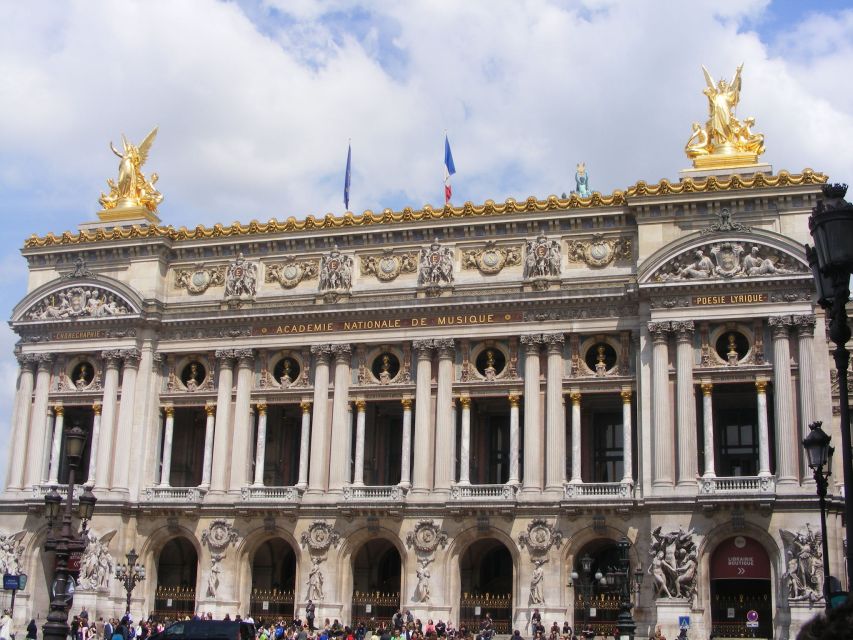
The Opéra Garnier is the natural first major sight. It is one of the defining buildings of the period and is often described as one of Europe’s most beautiful buildings. Even if you have no interest in opera, the exterior makes the point quickly.
This is 19th-century Paris at full volume: formal, theatrical, richly decorated, and designed to impress. The building helps you understand why the Haussmannian project can feel excessive. The city was not aiming for quiet restraint. It wanted ceremony and power on a grand scale.
I would pay close attention to the relationship between the opera house and the surrounding streets. The building is not an isolated monument. It belongs to a larger scheme of avenues, sight lines, public movement, and prestigious addresses.
The tour is a walking experience, so the emphasis is on the outside setting and the wider urban story. The supplied details do not promise an interior visit to the opera house. If you want to see the inside, check separately rather than assuming admission is part of the walk.
Boulevard Haussmann and the logic of the new city
From the opera area, the route explores Boulevard Haussmann, named for the official who directed the transformation. This is where the tour’s main lesson becomes easy to read.
Look for the repeated height and rhythm of the buildings. Haussmannian streets tend to feel unified because the façades follow shared rules, even when individual buildings use different stonework and decoration. The result is a city that feels planned from a distance but still offers plenty of detail when you look closely.
The broad boulevard also helps explain the practical goals of the rebuilding. The new streets made movement easier and created a stronger sense of order. They made Paris more open and legible than the maze of many older streets.
That improvement came with a human cost. Entire streets and buildings were lost. A good guide should keep both sides in view: the beauty and efficiency of the new Paris, along with the destruction required to create it.
This is where I would ask questions. How much of the original street pattern survived? Which parts of Paris escaped the work? What changed for residents and shopkeepers? A private tour gives you a better chance to shape the discussion around your own interests than a large group walk.
A few more Paris ideas to compare
- The Père Lachaise Cemetery: Guided 2-Hour Small-Group Tour
★ 4.7 · 1,065 reviews - Paris: 2-Hour Perfume Creation Workshop
★ 4.8 · 731 reviews - Paris Louvre: 2-Hour Private Tour for Groups or Families
★ 4.6 · 639 reviews - Paris Montmartre: 2-Hour City Tour in German
★ 4.9 · 299 reviews
Galeries Lafayette, shopping as architecture
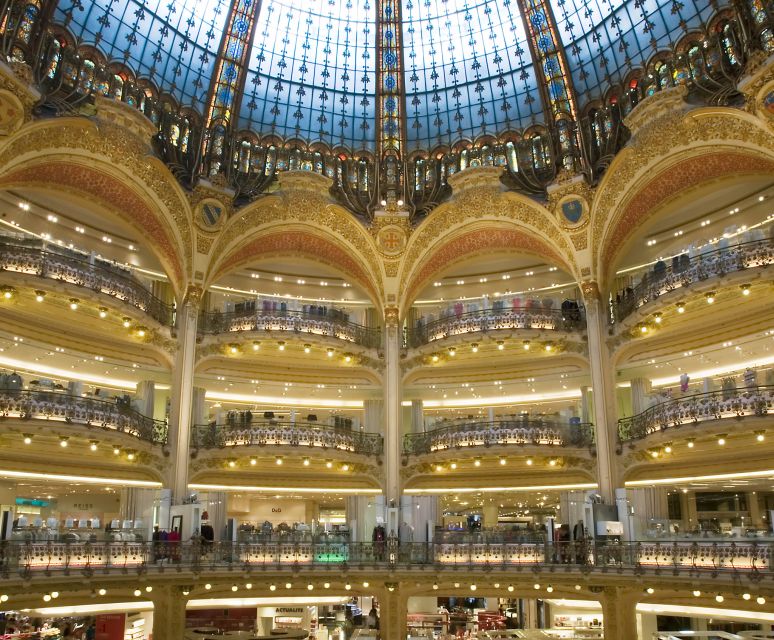
Galeries Lafayette is presented as one of the most elegant shopping malls in Paris, but that description does not quite capture why it belongs on an architecture walk. The store is part of the grand commercial world that developed alongside the new boulevards.
The Haussmann area was designed not only for traffic and government buildings, but also for shopping, display, and fashionable city life. Galeries Lafayette shows how the rebuilt city became a place to browse, buy, and be seen.
Even if you are not shopping, the building adds a useful change of pace. Opéra Garnier represents formal culture and spectacle. Galeries Lafayette brings in commerce and everyday city activity, though on a grand scale.
You should keep your expectations clear. The tour includes the site as part of the guided walk, but the information provided does not promise dedicated shopping time or a shopping allowance. If you want to browse the store at length, save time before or after the scheduled two hours.
Jacquemart-André and Saint Augustin
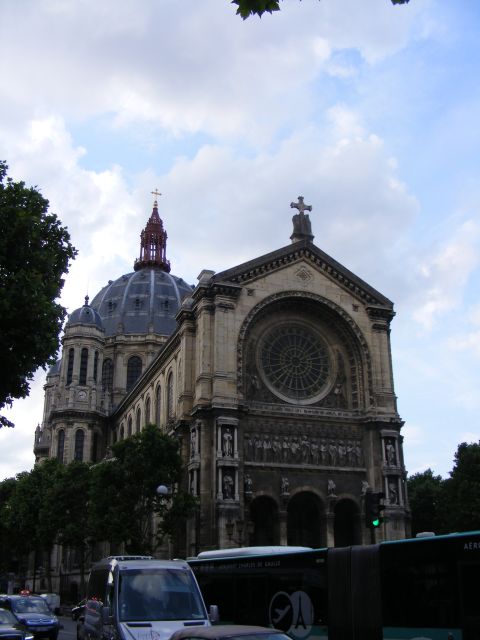
The route also takes in the Museum of Jacquemart-André, a lavish villa from the period, and the Church of Saint Augustin, described as an architectural marvel. These stops broaden the story beyond the main boulevard.
The Jacquemart-André building helps you see how wealthy Parisians expressed themselves during this period. Its opulent character fits the taste of an era that favored display, scale, and carefully arranged grandeur. It gives the Haussmannian story a domestic and private side, rather than leaving it focused only on public avenues.
Saint Augustin adds a religious building to the architectural mix. Its presence shows that Haussmannian Paris was not just about apartments and department stores. Churches, cultural buildings, private villas, parks, and commercial streets all formed part of the rebuilt capital.
The tour’s format is especially useful at places like these because a façade can otherwise pass in a few seconds. Your guide can point out why the building matters and connect it to the larger changes around it. The exact time spent at each stop may vary, so do not expect a long interior visit at every site.
Park Monceau, the city’s elegant green pause
Park Monceau provides the route’s strongest change of mood. After the avenues, stone façades, shops, and monumental buildings, the park gives you room to consider how planned greenery fit into the new Paris.
It is described as the city’s most elegant park, and that language reflects the refined character of the area. The park is not merely a patch of grass between streets. It is part of the careful arrangement of open spaces that made the rebuilt city more pleasant and more prestigious.
I like the park as a later stop because it gives the walk a natural pause. You can compare the controlled formality of the boulevards with the more relaxed feeling of a public garden. It also helps explain why urban planning is about more than roads and buildings. Parks affect how a city feels at street level.
The visit is still a walking tour, not a picnic or a long rest stop. You will see the park as part of the route, with the guide tying it back to the city’s design. If you want to sit and linger, allow extra time after the tour.
Picasso’s drinking dens and the human side of the route
One of the more unusual highlights is the chance to discover drinking places associated with Picasso and other artists. This detail brings the tour down from official plans and grand façades to the social life that filled them.
The Haussmannian city was not only made of officials, wealthy families, shoppers, and churchgoers. Cafés and bars gave artists and writers places to meet, talk, work, and build friendships. The mention of Picasso adds a cultural thread without turning the entire walk into an art tour.
The available information does not name the specific establishments or promise a drink inside one of them. Think of this as a storytelling part of the route, not an included tasting stop. Food and drinks cost extra.
Still, it is a welcome detail. A city can be understood through its plans, but it is remembered through the people who used its streets. Stories about artists and favorite cafés make the architectural subject feel less distant.
How much value do you get for $176?
At $176 per person, this is a premium walking tour. The price is easier to justify if you are booking for a private group and want a focused guide for your own questions. It is harder to justify if you are alone, mainly want photographs, or already know Haussmannian Paris well.
The value comes from interpretation, not admission tickets. The stated inclusion is a guided walking tour, while food, snacks, and drinks are not included. You are paying for a guide who can connect Opéra Garnier, Boulevard Haussmann, Galeries Lafayette, Jacquemart-André, Saint Augustin, Park Monceau, and the café stories into one clear subject.
I would choose this tour early in a Paris visit. The ideas carry into the rest of your sightseeing, and the guide may provide useful suggestions for your stay. Several high ratings focus on the quality of the teaching, the stories, and the overall planning rather than on a single landmark.
The award recognition for Paris in person, which placed the company among the top 10 small tour operators in Europe in 2025 from a field of 26,000 companies, adds confidence in the operator’s standing. It does not remove the need to judge the price against your own budget, but it helps explain why this is not priced like a basic group stroll.
Who should book this private walk?
I would recommend it to you if architecture, urban design, and Parisian history interest you more than a fast checklist of famous sights. It also suits repeat visitors who have already seen the Eiffel Tower, Louvre, and Notre-Dame and want a different way to read the city.
First-time visitors can enjoy it too, especially if you want a strong introduction to the central Paris streets around Opéra. The private format may be helpful for couples, families, or friends who prefer to ask questions without keeping up with a large group.
The two-hour length works well before dinner, an evening performance, or another museum visit. The route includes several major sights, but you should not treat it as a substitute for full visits inside those buildings.
I would think twice if your main goal is shopping, interior access, or a food-focused outing. Galeries Lafayette appears in the route, but shopping time is not the main point. Drinks are not included, and the café references are part of the cultural story.
Wheelchair accessibility is listed, which makes the experience worth considering if access is important to you. Since the tour runs in all weather and takes place outdoors, check the forecast and plan clothing accordingly.
Should you book the Haussmannian Paris tour?
Book it if you want to understand why Paris looks so consistently grand. The strongest parts are the clear urban-planning theme, the range of buildings and public spaces, and the chance to ask a private guide about details you would otherwise walk past.
The tour earns its price best when shared by a private group and booked for the beginning of your stay. Guides such as Tina and Hanna appear to bring warmth, strong explanations, and practical advice to the walk.
Skip it if you want a cheap overview, a long museum visit, or a meal included. But if the thought of seeing Opéra Garnier, Boulevard Haussmann, Park Monceau, and the city’s old artist cafés as parts of one bold plan appeals to you, these two hours can sharpen your whole view of Paris.
FAQ
How long is the Haussmannian Paris walking tour?
The tour lasts two hours.
What is the price?
The listed price is $176 per person.
Where does the tour meet?
Meet at Métro Opéra, in front of Café de la Paix.
How will I recognize the guide?
The guide will be carrying a red canvas tote bag.
What languages are available?
The tour is available in English and French.
Is this a private tour?
Yes. The experience is organized for a private group.
Is the tour wheelchair accessible?
Yes, wheelchair accessibility is listed for this activity.
What sights are included in the walk?
The route includes Opéra Garnier, Boulevard Haussmann, Galeries Lafayette, the Museum of Jacquemart-André, the Church of Saint Augustin, and Park Monceau. It also includes stories about cafés associated with Picasso and others.
Are food and drinks included?
No. Food, snacks, and drinks are not included.
What happens if it rains?
The tour operates rain or shine.
Newest additions around Paris
- Private Photoshoot with the Iconic Eiffel Tower in Paris★ 5.0 · 11 reviews
- Family escape Game with kids and teens on the Île de la Cité★ 4.5 · 11 reviews
- 2-day Private Mont Saint-Michel, 3 Loire Castles, D-Day Express★ 4.5 · 11 reviews
- Paris: Batobus Hop-On Hop-Off Cruise & Landmarks Audio Tour★ 3.0 · 11 reviews
- Paris Revolutionary Walking Tour: Iconic French Sights & Stories★ 5.0 · 11 reviews
- Guided and Private Tour of 3 hours through Paris aboard a Citroën 2cv★ 5.0 · 11 reviews
- Kids in the Kitchen – CrOisSaNtS★ 4.0 · 11 reviews
- Paris: Ghosts and Dark Stories Guided Walking Tour★ 4.1 · 11 reviews
Walking Tours, compared.
Paris Top Sights Half Day Walking Tour with a Fun Guide
Read our review →
Montmartre Hidden Gems and Scenic Highlights Walking Tour
Read our review →
Montmartre Hill French Gourmet Food and Wine Tasting Walking Tour
Read our review →
Paris Île de la Cité and Notre-Dame Walking Tour With Crypt
Read our review →
Montmartre Cheese, Wine & Pastry Guided Walking Tour
Read our review →
Paris in a Day: Louvre or Orsay, Eiffel Tower, City Walk & Cruise
Read our review →
Montmartre Highlights Walking Tour with a Local Guide
Read our review →
Browse the lists this tour appears in