
Reviewed · WALKING TOURS
Harlem in Paris : the Birth of Jazz in France (Small Group Walking Tour)
Paris once offered Black American artists a stage, a paycheck, and a measure of freedom that was hard to find elsewhere. This tour brings that story to life in Pigalle, where Josephine Baker, Louis Armstrong, and Django Reinhardt once moved through clubs, cafés, and recording rooms. Guide Ellen uses photos, recordings, and video before leading you through the streets.
I like two things here: the focus reaches beyond famous names to figures such as Eugene Bullard, Valaida Snow, and Alberta Hunter, and the tablet-based presentation helps you picture people and places that have mostly vanished. The main drawback is that much of the experience is seated, and several stops are now closed clubs or ordinary buildings.
In This Review
- Key points about Harlem in Paris
- Why Black American artists came to Paris
- Place Blanche and Josephine Baker’s first Paris triumph
- Rue Mansart, Armstrong’s meals and Django Reinhardt
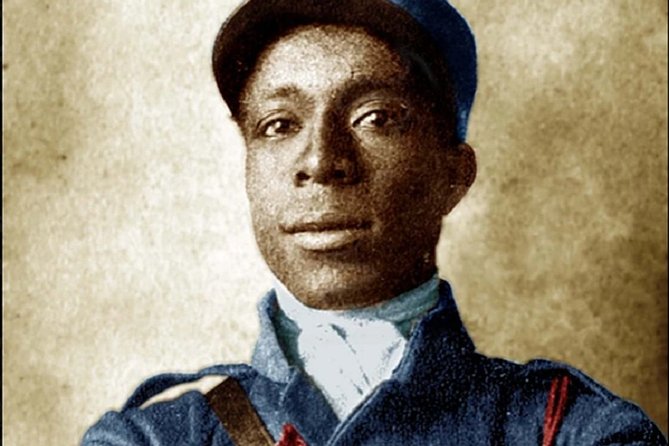
- Rue Pierre-Fontaine and the remarkable Eugene Bullard
- Place Blanche’s jazz ladies
- Rue Victor Massé and Alberta Hunter’s second act
- What the two-and-a-half-hour format feels like
- The value of the $107.84 price
- Who should book this Pigalle jazz tour?
- Practical details before you go
- Should you book Harlem in Paris?
- FAQ
- Where does the Harlem in Paris tour start?
- Where does the tour finish?
- How long is the tour?
- How much walking is involved?
- Is food or drink included?
- Can I cancel for a full refund?
Key points about Harlem in Paris
- Josephine Baker’s Paris story: Learn how the 18-year-old dancer arrived in 1925 and became an instant sensation in the Revue Nègre.
- A seated introduction with music: Photos, videos, documents, and recordings provide the background before the walk begins.
- Former Pigalle jazz clubs: See locations linked to Zelli’s, the Grand Duc, Chez Josephine, and other old venues.
- Lesser-known artists: Meet Eugene Bullard, Valaida Snow, Bricktop, and Alberta Hunter alongside the better-known stars.
- About two kilometers on foot: The route is manageable, but expect roughly an hour of walking mixed with indoor presentation time.
- Private format: Only your own group participates, with the pace shaped around your party.
Why Black American artists came to Paris
The tour opens at Artemisia Montmartre, 11 Rue Fromentin, at 2 pm. The setting has a strong connection to Pigalle’s old nightlife, and the first part takes place indoors with Ellen presenting the social and musical background.
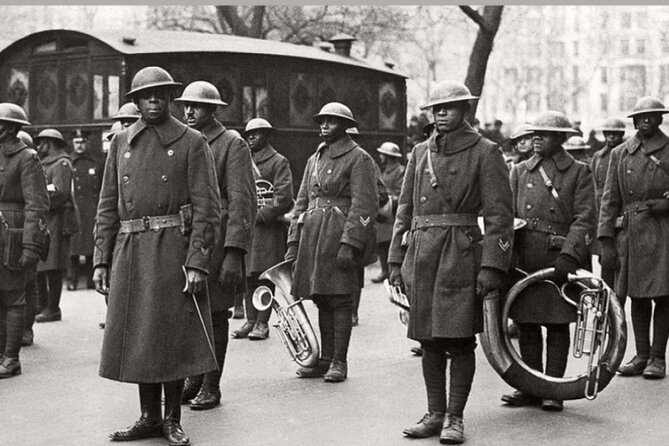
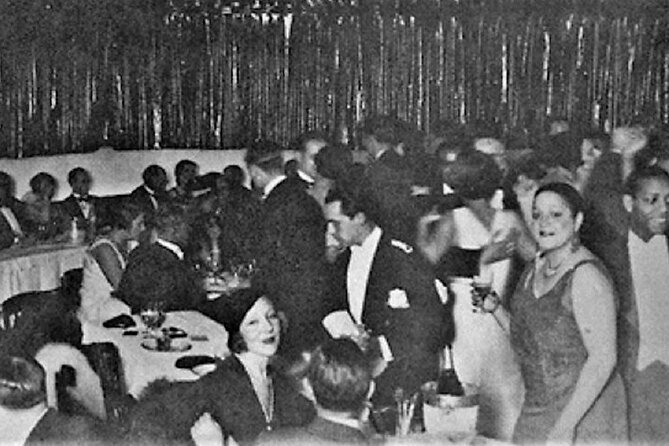
You are not simply handed a list of club names. The presentation explains how Black Americans came to France and how jazz crossed the Atlantic after the First World War. Music, photographs, and video clips give the subject a human scale. You hear the sounds connected to the era while looking at the performers who shaped it.
This is an important part of the experience because the street walk alone cannot show you what has disappeared. Old clubs are now closed, vacant, or absorbed into other buildings. Without visual material, you would mostly be looking at modern façades and trying to imagine the past.
The opening presentation can take close to an hour, based on the tour format described by the operator. That means this is not a fast-paced walk with a guide pointing at plaques. It is part small history lesson, part illustrated talk, and part neighborhood walk. If you prefer to keep moving from the first minute, this may feel slow. If you want context before seeing the sites, it gives the walk a clear purpose.
Ellen is the guide named in the available information, and her preparation is a major part of the experience. She uses a tablet in the street as well as indoors, showing original photographs, documents, and recordings. The result is more personal than a standard architecture tour because you are asked to connect present-day Paris with the performers who worked here.
More Paris walking tours:
- Paris Top Sights Half Day Walking Tour with a Fun Guide
★ 5.0 · 2,893 reviews - Montmartre Hidden Gems and Scenic Highlights Walking Tour
★ 5.0 · 2,684 reviews - Montmartre Hill French Gourmet Food and Wine Tasting Walking Tour
★ 5.0 · 2,588 reviews
Place Blanche and Josephine Baker’s first Paris triumph
The first outdoor stop is Place Blanche, close to the former location of Chez Josephine. The club is tied to Josephine Baker, known in France as the Black Venus. She later became a French citizen and lived in France from 1925 until her death in 1975.
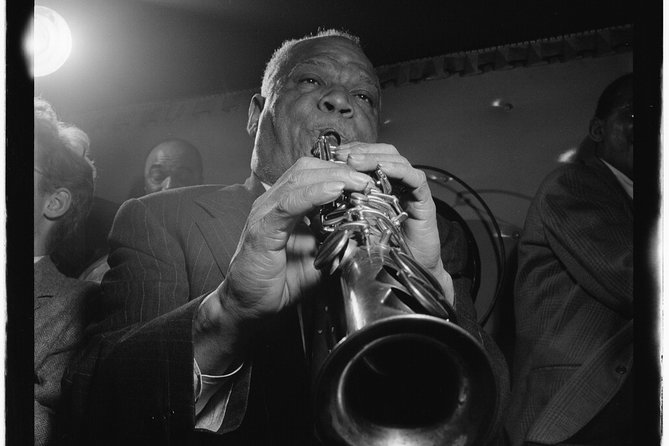
Baker arrived in France in 1925 as a dancer with the New York Syncopated Orchestra. She traveled with the young clarinet player Sidney Bechet and soon took the lead in the Revue Nègre, a daring production commissioned by the Théâtre des Champs-Élysées.
The details matter. Baker was only 18, and the show used 13 dancers and 12 musicians. Her dancing caused an immediate sensation in Paris, turning her into an icon almost overnight. Ellen uses this story to show how jazz in France was not just a musical import. It was tied to dance, theater, fashion, race, and the public appetite for something new.
The stop itself is brief, about 10 minutes, and admission is free because this is an exterior visit. You will not be touring Baker’s original club as a functioning venue. The value comes from the explanation and the old images, which help you see why this stretch of Pigalle mattered.
Rue Mansart, Armstrong’s meals and Django Reinhardt
On Rue Mansart, the focus shifts to Louis Armstrong and the everyday side of a jazz career. You stop outside a bistro where Armstrong reportedly ate after rehearsals at a recording studio nearby.
The story includes his fondness for choucroute, a dish of sausage and cabbage, and his meeting with Django Reinhardt, the great French Gypsy jazz guitarist. It is a small detail, but it brings Armstrong down from the level of legend. Great musicians still needed a meal after rehearsal, and a local restaurant could become the place where major musical friendships began.
This stop also shows that jazz was not confined to concert halls. It lived in restaurants, clubs, recording rooms, and informal encounters. Paris supplied the settings, while visiting American artists and local musicians shaped one another’s work.
Again, you are looking at an exterior location, not entering a preserved Armstrong museum. Keep your expectations realistic. The tour is about connecting a living neighborhood to its former musical life, not finding a perfectly restored jazz venue at every corner.
Rue Pierre-Fontaine and the remarkable Eugene Bullard
Rue Pierre-Fontaine brings you to the former site of Zelli’s, one of the most famous cabarets in 1920s Paris. It became popular for its avant-garde jazz, and its story opens the door to one of the tour’s most striking figures: Eugene Jacques Bullard.
Bullard was the son of a formerly enslaved man from Martinique. During the First World War, he fought for France and became the first African American fighter pilot in history. He flew 30 missions, brought down two German aircraft, and earned promotion to corporal along with the nickname Black Jacques.
After the war, Bullard learned drums and worked as a musician at Zelli’s. He later became its manager. With backing from Joe Zelli, he opened the Grand Duc, a nightclub serving hot jazz and soul food. The club became one of Paris’s popular nightlife spots.
This is exactly the kind of story that gives the tour its value. Bullard was not only a performer. He was a soldier, pilot, drummer, manager, and club owner. His life shows how Black Americans in Paris could build careers across several fields, even while facing prejudice and limited opportunities elsewhere.
The stop lasts about 10 minutes. Since the original club is no longer operating in its old form, Ellen’s photographs and narration carry much of the experience. You will need to use your imagination, but the combination of place and personal story makes this one of the strongest sections.
A different way to spend the day in Paris:
- Paris: Louvre Museum Timed-Entrance Ticket
★ 4.6 · 71,977 reviews - Disneyland® Paris 1-Day Ticket
★ 4.6 · 49,412 reviews - Paris: Versailles Palace and Gardens Full Access Ticket
★ 4.6 · 41,579 reviews - Paris: Arc de Triomphe Rooftop Tickets
★ 4.6 · 34,264 reviews
Place Blanche’s jazz ladies
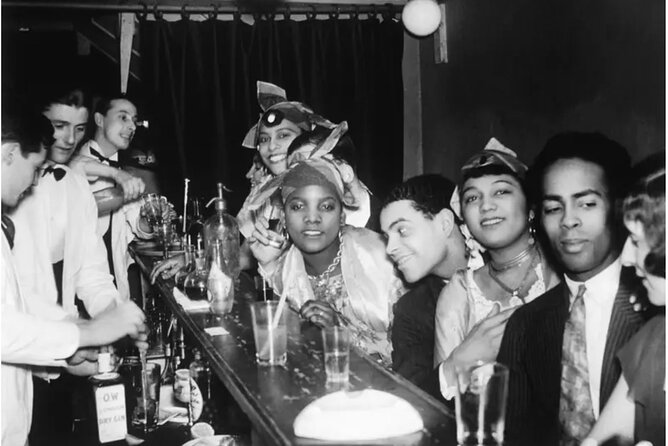
At another stop around Place Blanche, the tour turns to women who helped shape Parisian nightlife. This section introduces Bricktop and Valaida Snow, two performers whose careers reached far beyond a single club.
Bricktop arrived in Paris with only $24. She built a career that earned her the title Queen of Pigalle and brought her into contact with royalty and celebrities. Her story is a useful counterpoint to the familiar image of male bandleaders. Women were not simply singers or dancers in the background. Some became club owners, hosts, business figures, and cultural stars in their own right.
Valaida Snow had an extraordinary range. Louis Armstrong called her the second-best trumpet player in the world, and she could also play seven other instruments, sing, dance, and command an audience. She became a major European star in the 1930s.
Her wartime story gives the tour a darker turn. While performing in Denmark in 1940, Snow was arrested by the Nazis. A prisoner exchange eventually freed her, but she returned to the United States deeply damaged by the experience. She later recovered enough to continue her jazz career.
Allow about 20 minutes here. The longer stop is justified because these are layered stories, not quick name checks. You hear about talent, business, fame, war, and survival. Ellen’s use of music and images helps you understand Snow as a full performer rather than a forgotten name in a timeline.
Rue Victor Massé and Alberta Hunter’s second act
The final listed stop is on Rue Victor Massé, outside a club that closed after the Covid period. This is a useful reminder that the Pigalle nightlife district has changed. Some old venues have vanished, and even more recent clubs may not survive.
Here you hear about Alberta Hunter, a gifted blues singer whose career connected Harlem and Paris during the Jazz Age. Hunter left music in the 1940s and worked as a nurse for 20 years. At 83, she was persuaded to perform again and relaunched her singing career, becoming a star once more.
Her story gives the tour a strong final note. It is not only about youth, glamour, and the 1920s. It is also about reinvention. Hunter’s career shows that an artist’s best-known chapter does not have to be the last one.
The stop takes about 10 minutes. As with the other locations, you will not find a working club preserved for inspection. The setting is a prompt for the story, while Ellen supplies the detail and the audio material.
What the two-and-a-half-hour format feels like
The advertised duration is about 2 hours and 30 minutes. The route covers roughly two kilometers, with the outdoor portion taking about an hour according to the tour information. The rest is spent in the opening presentation and at the stops.
That split is important. The title says walking tour, but this is not two and a half hours of continuous walking. You begin seated, watching a presentation and listening to music. That approach works well for a topic where many original interiors no longer exist.
The walk itself passes through Pigalle and nearby streets, including Place Blanche, Rue Mansart, Rue Pierre-Fontaine, and Rue Victor Massé. Expect city pavements, regular neighborhood activity, and short pauses outside former venues. The route is described as manageable for most people, and one family used it with a stroller. Service animals are allowed, and the meeting area is near public transport.
Because the tour is private, only your own group takes part. That can make a real difference. You can ask questions about a musician, pause over a photograph, or move at a comfortable pace without waiting for a large crowd. Group discounts are available, which may improve the per-person value for a family or small party.
The value of the $107.84 price
At $107.84 per person, this is not a bargain walk. You are paying for a specialized subject, a private format, and a prepared audio-visual presentation rather than a simple neighborhood stroll.
I think the cost makes the most sense for a jazz fan, a traveler interested in Black cultural history, or someone who has already seen the standard Paris sights and wants a more focused afternoon. Ellen’s research and material are central to the experience. You are not only being shown addresses. You are given stories, images, recordings, and connections among performers, clubs, war service, food, and Parisian nightlife.
The price is harder to justify if you mainly want outdoor sightseeing. Several venues are closed, gone, or vacant, and the walking distance is modest. A dissatisfied participant found too much time was spent indoors and wanted a longer route. That is a fair concern, especially if you expect a traditional walking tour.
Food and drinks are not included, though the opening setting and the bistro story add useful atmosphere. Hotel transfers are not included. You meet at Artemisia Montmartre and finish at Place Pigalle, so plan your own way to and from those points.
Who should book this Pigalle jazz tour?
You should consider it if you enjoy:
- Jazz, blues, cabaret, or the cultural life of 1920s and 1930s Paris
- Josephine Baker and the wider Black American presence in France
- Personal stories about artists who are less familiar than Armstrong and Baker
- Small private tours with room for questions
- Photos, video, and music used as part of a talk
- Exploring Pigalle through social and musical history rather than only its nightlife reputation
Families can also find plenty here, especially if older children enjoy music and true stories. The material is serious in places, particularly the accounts of war and imprisonment, but the presentation gives younger listeners something concrete to follow.
You may want a different tour if you dislike seated introductions, want to enter historic interiors, or expect a long walk through many neighborhoods. This route stays focused on Pigalle and covers a limited area. It is best understood as a historical presentation paired with a short walking route.
Practical details before you go
The tour is offered in English and starts at 2 pm. Confirmation is sent when you book. The experience needs good weather, and it also requires a minimum number of participants. If poor weather or low enrollment causes cancellation, you are offered another date or experience, or a full refund.
You can cancel for a full refund up to 24 hours before the start time. Changes or cancellations inside that window are not accepted for a refund. Cutoff times use Paris local time.
Wear shoes you can walk in, but do not prepare for a strenuous hike. The bigger preparation is mental: come ready to look at present-day buildings and imagine their former use. The tablet material is not a minor extra. It helps bridge the gap between a closed club on a modern street and the musicians who once filled it.
Should you book Harlem in Paris?
Book it if you want a focused, personal look at how jazz and Black American performers shaped Paris. The strongest parts are Ellen’s prepared presentation, the music and images, and the unusual stories of Eugene Bullard, Valaida Snow, Bricktop, and Alberta Hunter.
Skip it if you want a mostly outdoor walk or preserved clubs you can enter. The route is short, and the city has erased much of the original nightlife scene. For the right audience, that absence is part of the lesson: you see what remains, then use the stories to rebuild the lost Pigalle of the jazz age.
FAQ
Where does the Harlem in Paris tour start?
The tour starts at Artemisia Montmartre, 11 Rue Fromentin, 75009 Paris, France, at 2 pm.
Where does the tour finish?
The tour ends at Place Pigalle in Paris.
How long is the tour?
The experience lasts approximately 2 hours and 30 minutes.
How much walking is involved?
The route covers about two kilometers of walking, with the outdoor walk taking roughly an hour. The tour also includes seated presentation time.
Is food or drink included?
No. Food and beverages are not included in the tour price.
Can I cancel for a full refund?
Yes. You can cancel at least 24 hours before the start time for a full refund. Poor weather or failure to meet the minimum number of participants may also lead to an alternative date or a full refund.
Newest additions around Paris
- Family escape Game with kids and teens on the Île de la Cité★ 4.5 · 11 reviews
- Private Photoshoot with the Iconic Eiffel Tower in Paris★ 5.0 · 11 reviews
- Paris Revolutionary Walking Tour: Iconic French Sights & Stories★ 5.0 · 11 reviews
- 2-day Private Mont Saint-Michel, 3 Loire Castles, D-Day Express★ 4.5 · 11 reviews
- Paris: Batobus Hop-On Hop-Off Cruise & Landmarks Audio Tour★ 3.0 · 11 reviews
- Guided and Private Tour of 3 hours through Paris aboard a Citroën 2cv★ 5.0 · 11 reviews
- Kids in the Kitchen – CrOisSaNtS★ 4.0 · 11 reviews
- Paris: Ghosts and Dark Stories Guided Walking Tour★ 4.1 · 11 reviews
Walking Tours, compared.
Paris Top Sights Half Day Walking Tour with a Fun Guide
Read our review →
Montmartre Hidden Gems and Scenic Highlights Walking Tour
Read our review →
Montmartre Hill French Gourmet Food and Wine Tasting Walking Tour
Read our review →
Paris Île de la Cité and Notre-Dame Walking Tour With Crypt
Read our review →
Montmartre Cheese, Wine & Pastry Guided Walking Tour
Read our review →
Paris in a Day: Louvre or Orsay, Eiffel Tower, City Walk & Cruise
Read our review →
Montmartre Highlights Walking Tour with a Local Guide
Read our review →
Browse the lists this tour appears in