
Reviewed · LOUVRE MUSEUM TOURS
Skip-the-Line Louvre Museum Tour with Artist
The clever part of this Louvre visit is not simply getting inside faster. It is having a working artist as your guide, someone who can explain why a painted fold, a shadow, or a carefully twisted body matters. In a museum with more than 35,000 works, that kind of focus can save you from wandering in circles.
I like the tiny group of no more than six and the way the tour links Greek sculpture with Renaissance painting. I also like the family-friendly teaching style. Guides including Blerta have been praised for making art clear to children and teens, while still giving adults plenty to think about.
The main drawback is the price: $246 per person for two hours is a serious splurge. You also need to meet away from the Louvre, and the tour is not suitable for wheelchair users. For a short first visit, though, the reserved entry and expert guidance may make the cost easier to justify.
In This Review
- Key points at a glance
- Why an artist makes the Louvre easier to understand
- Meeting at the Kiosque des Noctambules
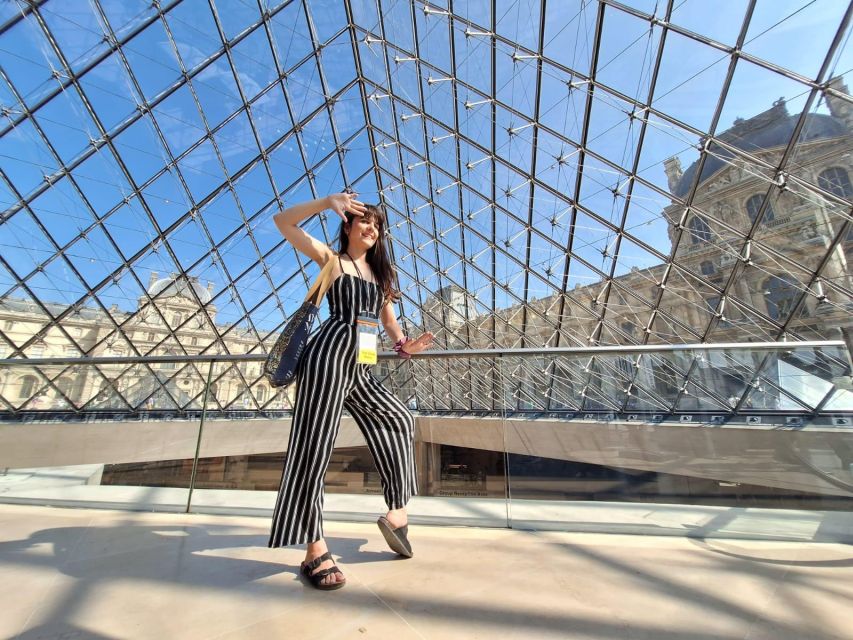
- Reserved entry and the Louvre Pyramid
- Greek Antiquity: Nike and Venus de Milo
- Italian Renaissance and the Mona Lisa
- A two-hour route that stays personal
- What the $246 price really buys
- Who should book this Louvre experience
- Booking details worth knowing
- Should you book it?
- FAQ
- Where does the Louvre tour meet?
- Does the tour include Louvre admission?
- How long does the tour last?
- Which artworks are included?
- Which languages are available?
- Is the tour suitable for wheelchair users?
Key points at a glance
- A certified artist leads the way: You get practical explanations of artistic technique, not only dates and names.
- The group stays very small: Tours are limited to six people, with a private group option available.
- Major Louvre sights fit into two hours: Expect the Mona Lisa, Venus de Milo, Nike, and selected works from Greek Antiquity through the Italian Renaissance.
- Meet at a distinctive Paris landmark: The starting point is the Kiosque des Noctambules by Jean-Michel Othoniel, across from the Comédie Française.
- Reserved entry matters: You use a separate entrance rather than joining the ordinary public line.
- It works well for families: Guides have adapted explanations for children and teens and answered specific questions along the way.
Why an artist makes the Louvre easier to understand

The Louvre can be thrilling for about ten minutes, then confusing for the next two hours. Its size is the problem. Without a plan, you can spend your visit searching for famous works, following signs, and missing the visual clues that make those works important.
This tour gives you a short, guided route through the museum’s major themes. Instead of treating each object as an isolated attraction, your guide helps you see how artists handled the human body, movement, light, religious subjects, expression, and space.
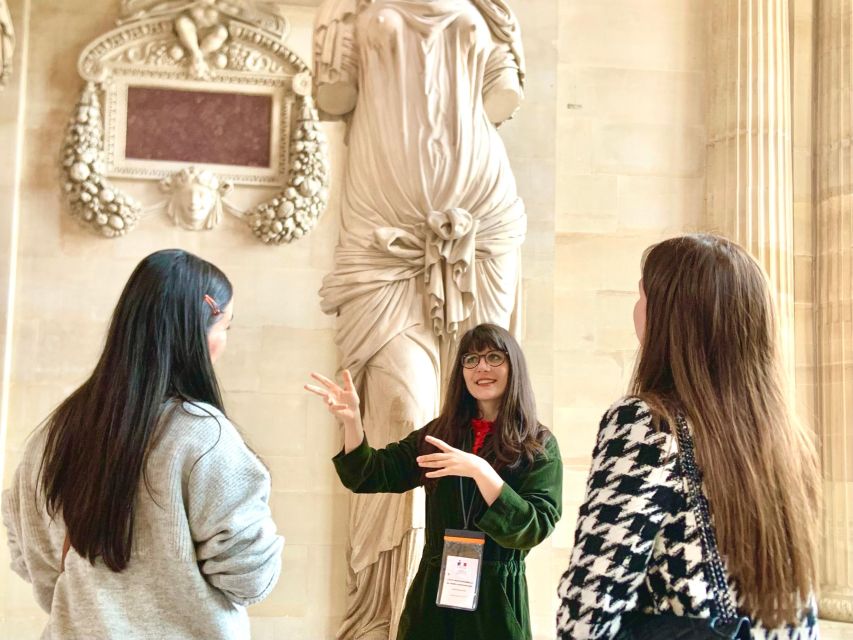
That artist’s eye is the real selling point. A standard museum guide may tell you who made a painting and when. A painter can also point out how the work was built: how a figure is positioned, how fabric appears to flow, or how light directs your attention.
I especially like that the explanations are intended for all levels. You do not need an art degree or a shelf full of museum books. If you are new to art, you get a way into the subject. If you already know the famous names, you may notice details you would otherwise walk past.
The guides named in the supplied material include Blerta, Berta, Arianna, and Assgan. Blerta receives the most frequent praise, particularly for her warm manner, clear English, strong command of art, and ability to adjust the route to a family’s interests. Since guides can vary by departure, confirm the assigned guide and language when booking.
More ways into the Louvre:
- Paris: Louvre Museum Timed-Entrance Ticket
★ 4.6 · 71,977 reviews - Paris: Louvre Guided Tour with Reserved Access & Boat Cruise
★ 4.3 · 16,353 reviews - Louvre Museum Masterpieces Guided Tour with Access
★ 4.5 · 12,023 reviews
Meeting at the Kiosque des Noctambules
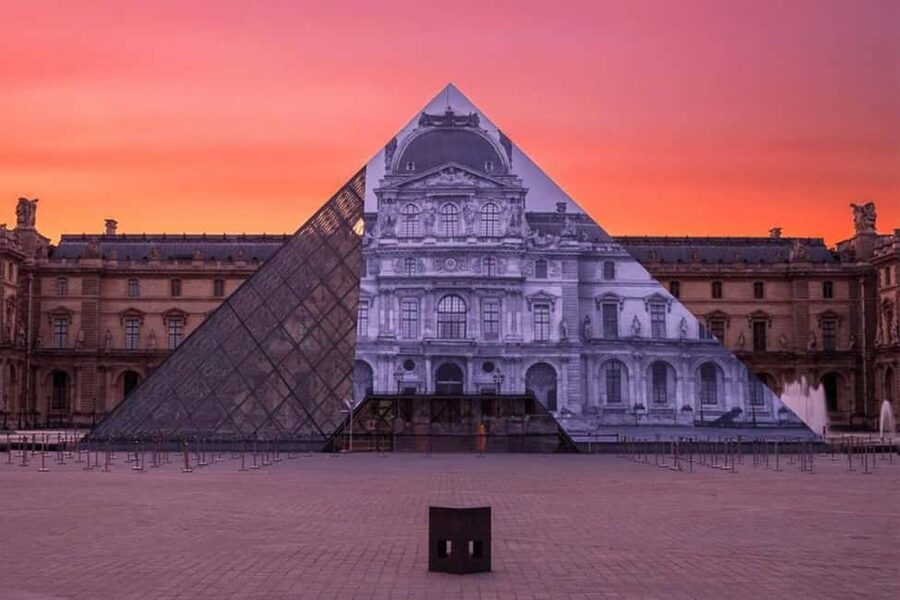
This tour does not begin at the Louvre entrance. You meet at the Kiosque des Noctambules, a colorful Murano glass bead sculpture by Jean-Michel Othoniel, across from the Comédie Française.
That detail matters. The Louvre has several entrances and open spaces, and arriving at the wrong place can turn a calm start into a frantic search. Give yourself enough time to reach the meeting point, find the sculpture, and identify your guide.
The easiest public transport reference is Palais Royal, Musée du Louvre metro station, using the Place Colette exit. You then meet the group before walking onward to the museum.
This meeting point also gives you a pleasant beginning in central Paris. You are not standing under the Louvre Pyramid trying to spot one person among a crowd. Instead, you gather at a recognizable artwork near one of the city’s historic theater landmarks.
Bring your passport or identity card. A copy is accepted according to the tour information. Wear comfortable shoes and carry a reusable water bottle, but do not bring food or drinks into the museum. Weapons and sharp objects are not allowed.
Reserved entry and the Louvre Pyramid
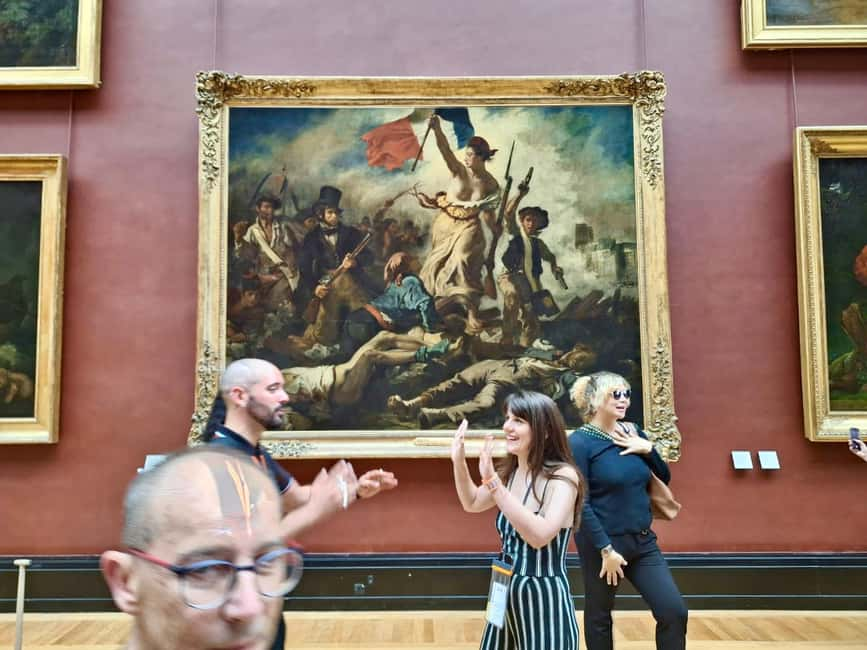
From the meeting point, the tour continues to the Louvre Pyramid and into the museum. The entry ticket is included, and the group uses a separate entrance for reserved access.
Skip-the-line wording should not be treated as a promise that every security check disappears. You still need to follow museum entry procedures, and busy periods can affect the pace. The benefit is that you avoid the ordinary public line, which can be a major advantage when your Paris schedule is tight.
One person specifically valued the separate entry during a period of extra security and heavy waiting times. That is a useful reminder of the ticket’s practical value. You are not only paying for information. You are also buying a better chance of spending your limited Louvre time inside the galleries.
The Pyramid itself is a fitting starting point. It is the modern gateway to a former royal palace, and the tour quickly shifts from contemporary architecture to centuries of art. That contrast helps set up the central idea of the visit: the Louvre is not one single museum experience but a long sequence of artistic periods and royal collections.
Greek Antiquity: Nike and Venus de Milo
The route traces art from Greek Antiquity toward the Italian Renaissance. That broad sweep gives your visit a simple structure instead of a random list of famous rooms.
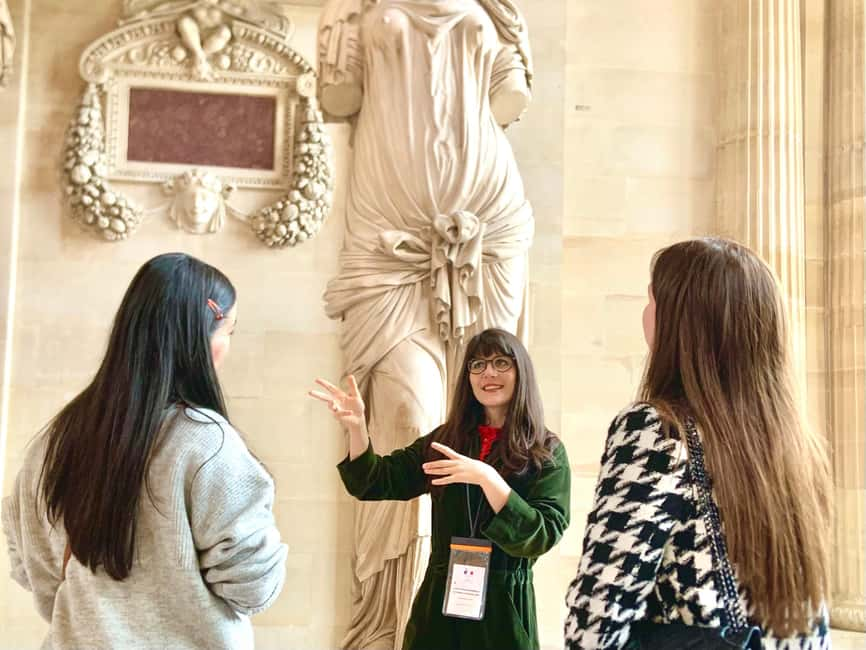
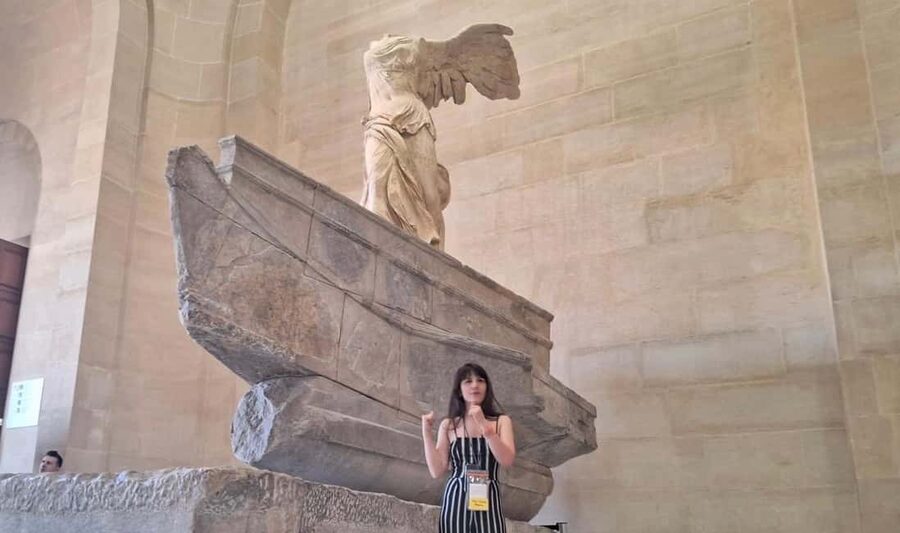
Two major stops are the Nike of Samothrace and the Venus de Milo. Nike is especially useful for an artist-led explanation because movement is central to the sculpture. You can look closely at the body, wings, and sweeping folds of fabric and consider how stone can suggest wind, speed, and force.
The sculpture is not merely a figure to photograph. Your guide can help you read the way the body is arranged and explain how flowing lines lead your eye through the work. This is the kind of observation that makes the visit more active. You are not just asking if you like the statue. You are asking how it creates its effect.
The Venus de Milo offers a different lesson. It invites questions about proportion, balance, idealized beauty, and the way a missing element can shape our response to an ancient sculpture. The value of a guide here is context. You get a clearer sense of why the work has held attention for so long, rather than simply joining the crowd around it.
The tour cannot give you every ancient object in the Louvre. That is a strength, not a weakness. Two hours require choices, and a selective route lets you spend more time looking at a few important works.
More Paris museums to visit:
- Paris: Orsay Museum Entry Ticket
★ 4.7 · 25,647 reviews - Paris: Louvre Museum Entry Ticket With Host and River Cruise
★ 4.6 · 9,926 reviews - Les Invalides: Napoleon’s Tomb & Army Museum Entry
★ 4.6 · 9,185 reviews - Louvre Museum – Exclusive Guided Tour (Entry Included)
★ 5.0 · 6,296 reviews
Italian Renaissance and the Mona Lisa
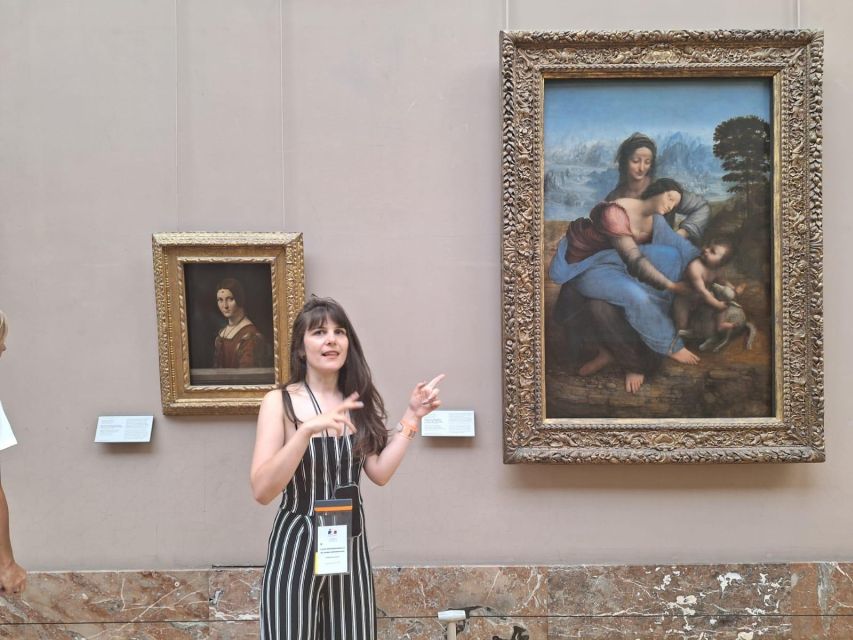
The Italian Renaissance section brings the focus from sculpted bodies to painted surfaces, religious subjects, portraiture, and new ways of suggesting space and emotion.
The Mona Lisa is the obvious star, but the artist-guide approach can help you move past the usual questions about her smile. You might look at the sitter’s pose, the relationship between the face and the background, the handling of light, and the way Leonardo da Vinci creates an uncertain, almost shifting expression.
The guide’s job is not to force one interpretation on you. It is to give you tools for making your own. That personal approach was a repeated strength of this tour. The most effective explanations invite you to notice something first, then add the historical or technical context.
Expect crowds around the Mona Lisa. The painting is protected and viewed behind a barrier, so an up-close encounter does not mean standing alone with it. You will still share the room with many other people. A guide helps by keeping the stop purposeful and helping you see what deserves attention once you reach the front area.
The same applies to other famous works. You may have only a short time with each one, but you gain a framework for looking. One family, for instance, focused on the use of light and dark in religious paintings and continued discussing those ideas after the tour. That is a good measure of success: the museum keeps working on your mind after you leave.
A two-hour route that stays personal
Two hours is short for the Louvre, but it is long enough for a first orientation. The guide leads you through selected galleries rather than trying to cover the entire collection.
A small group changes the feel of the visit. With six people or fewer, you have a better chance of hearing the explanation, asking a question, and staying close to the guide. You are not relying only on a large group’s headsets and hoping to catch the important point.
Audio headsets are provided when available. They can help in crowded rooms, though the intimate group size remains more important than the equipment. You should still stay alert to the guide’s position and keep the group together.
The pace appears designed to cover a good amount of physical space without turning into a race. Several past guests described learning a lot while moving through many galleries, and one guide adjusted the route to reduce stairs for people with mobility concerns. That does not change the formal accessibility limit, however: the experience is not suitable for wheelchair users.
Families receive particular attention. Guides have worked successfully with children from roughly 11 to 16 and have answered questions about specific artworks. If your children usually lose interest in museums, tell the guide what catches their attention. A personal question can become the thread that carries them through the rest of the tour.
What the $246 price really buys
At $246 per person, this is not a budget Louvre ticket. The fee includes museum admission, the shared guided tour, and an artist-guide. Pickup and drop-off are not included.
The value depends on your priorities. If you have several days in Paris and enjoy exploring museums at your own pace, you may prefer a standard ticket and a self-guided visit. You can spend less and stay longer.
If you have only a short window, the calculation changes. The Louvre’s scale makes lost time expensive. Reserved entry can reduce the wait, and an artist-guide can take you directly to major works while explaining what you are seeing. You are paying for efficiency, interpretation, and a small group, not just admission.
I would consider it most worthwhile for first-time Louvre visitors, families, people who feel unsure about art, and anyone who wants to see the essential works without planning a route through the museum’s huge collection.
The price is harder to defend if you already know exactly which rooms you want to visit, prefer long quiet stops, or plan to spend half a day inside. A two-hour tour gives you a strong beginning, but it cannot replace a full museum day.
Who should book this Louvre experience
This tour suits you if you want a clear introduction rather than an exhaustive survey. It is especially useful when the thought of navigating the Louvre feels more tiring than exciting.
I would also choose it for a family trip. The guides have shown an ability to keep younger visitors involved, explain difficult ideas in plain language, and make room for personal interests. That matters more than simply ticking off the Mona Lisa.
Art students, painters, and serious museum fans may appreciate the technical angle, though you should remember that the tour is aimed at a general audience. The explanations are accessible rather than highly specialized.
This is not the right choice for wheelchair users. It may also disappoint anyone expecting a private, unhurried relationship with each artwork. Even a small group is still moving through a major public museum, and famous rooms can be crowded.
English, French, and Albanian are available. A private group option is also offered, which may make sense if you want the guide’s attention focused entirely on your own party.
Booking details worth knowing

The tour lasts two hours, with starting times dependent on availability. Free cancellation is allowed up to 24 hours in advance for a full refund, and you can reserve now while paying later.
The meeting point is outside the Louvre, at the Kiosque des Noctambules. Plan that first walk carefully. Bring identification, comfortable shoes, and water in a reusable bottle. Food and drinks are not permitted inside, and sharp objects and weapons are prohibited.
Because the guide is central to the experience, check the available language and, if possible, the guide assigned to your departure. Blerta has been especially praised for clear explanations, humor, family skills, and the ability to adapt a route. Other named guides include Arianna and Assgan, so the exact personality of the tour may differ.
Should you book it?
Book this tour if you want the Louvre’s essential works explained by an artist, value reserved entry, and prefer a small group to wandering alone. The experience is strongest when you want to understand how art works, not simply stand beside famous objects for a photograph.
Skip it if $246 feels too high, you want several hours of independent exploration, or you need wheelchair access. For everyone else, the combination of a carefully chosen route, a maximum of six people, and a guide who can discuss technique makes this a practical splurge for a first Louvre visit.
FAQ
Where does the Louvre tour meet?
You meet at the Kiosque des Noctambules by Jean-Michel Othoniel, across from the Comédie Française. The nearest metro reference is Palais Royal, Musée du Louvre, using the Place Colette exit.
Does the tour include Louvre admission?
Yes. The experience includes entry tickets to the Louvre Museum and a shared guided tour.
How long does the tour last?
The tour lasts two hours. Starting times depend on availability.
Which artworks are included?
The route includes major Louvre highlights such as the Mona Lisa, Venus de Milo, and Nike. It traces art from Greek Antiquity through the Italian Renaissance.
Which languages are available?
Live guiding is available in Albanian, English, and French.
Is the tour suitable for wheelchair users?
No. The experience is listed as not suitable for wheelchair users. Comfortable shoes are recommended, and you should bring a passport or identity card, with a copy accepted.
More Skip the Line in Paris
- Versailles: Skip-the-Line Tour of Palace with Gardens Access
★ 4.7 · 9,778 reviews - Versailles: Skip-the-Line Guided Palace Tour and Full Access
★ 4.6 · 5,214 reviews - Louvre Museum: Skip-the-Line Small Group Guided Tour
★ 4.6 · 3,960 reviews - From Paris: Versailles Skip-the-Line Tour & Gardens Access
★ 4.7 · 3,011 reviews
Newest additions around Paris
- Family escape Game with kids and teens on the Île de la Cité★ 4.5 · 11 reviews
- Private Photoshoot with the Iconic Eiffel Tower in Paris★ 5.0 · 11 reviews
- 2-day Private Mont Saint-Michel, 3 Loire Castles, D-Day Express★ 4.5 · 11 reviews
- Paris: Batobus Hop-On Hop-Off Cruise & Landmarks Audio Tour★ 3.0 · 11 reviews
- Paris Revolutionary Walking Tour: Iconic French Sights & Stories★ 5.0 · 11 reviews
- Guided and Private Tour of 3 hours through Paris aboard a Citroën 2cv★ 5.0 · 11 reviews
- Kids in the Kitchen – CrOisSaNtS★ 4.0 · 11 reviews
- Paris: Ghosts and Dark Stories Guided Walking Tour★ 4.1 · 11 reviews
Louvre Museum Tours, compared.

Louvre Guided Tour with Reserved Access & Boat Cruise
Read our review →
Louvre Museum Masterpieces Guided Tour with Access
Read our review →
Louvre Museum Entry Ticket With Host and River Cruise
Read our review →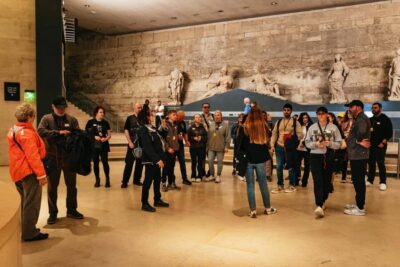
Priority Access Louvre with Host -Direct to Mona Lisa
Read our review →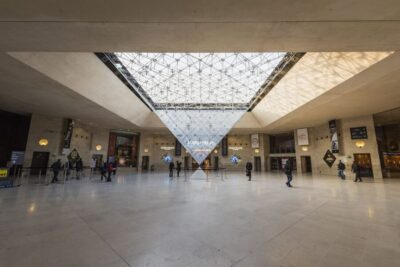
Mona Lisa & Louvre Masterpieces Tour with Reserved Access
Read our review →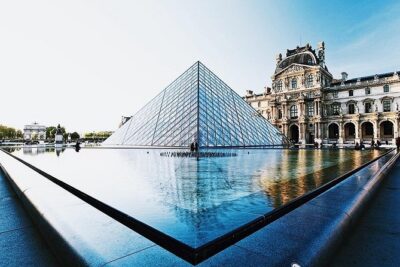
Louvre Museum – Exclusive Guided Tour (Entry Included)
Read our review →
Louvre Reserved Ticket and River Cruise Combo
Read our review →Browse the lists this tour appears in