
Reviewed · HISTORICAL TOURS
Private Half Day Historic Tour
Paris begins on a small island in the Seine, and this private walk follows that story outward. You start on Île de la Cité, cross into the Latin Quarter, pass Sainte-Chapelle and Hôtel de Ville, then finish among the cafés and arcades of Place des Vosges.
I like the small private format, which lets your guide adjust the pace and answer your questions. I also like the useful extras: a city map, bottled water, restaurant recommendations, and even help with reservations. The main consideration is the price, especially for one or two people, since the $422.39 fee covers up to three guests.
In This Review
- Key points to know
- Starting Paris where the city began
- Crossing into the cobbled Latin Quarter
- Place Saint-Michel and the architecture of the Left Bank
- Sainte-Chapelle, the Palais de Justice, and the Conciergerie
- Hôtel de Ville and the changing face of Paris
- Entering the Marais, from aristocratic quarter to fashionable district
- Rue des Rosiers and the Pletzl
- Finishing beneath the arcades at Place des Vosges
- What the private format adds
- How to prepare for four hours on foot
- Who will get the most from this walk
- Should you book the Private Half Day Historic Tour?
- FAQ
- How long does the Private Half Day Historic Tour last?
- What time does the tour start?
- Where does the tour begin?
- Where does the tour end?
- How many people can join the private tour?
- What language is the tour offered in?
- What is included in the tour?
- Is coffee included?
- Does the tour run in bad weather?
- Can I cancel for a full refund?
Key points to know
- Paris in one clear route: Follow the city’s story from its earliest settlement on Île de la Cité to the aristocratic Marais.
- A private guide for your group: No strangers join you, so the walk can feel more personal and easier to manage.
- A useful first morning: The tour helps you get your bearings before exploring Paris on your own.
- Seven neighborhoods and landmarks: See the Latin Quarter, Place Saint-Michel, Sainte-Chapelle, Hôtel de Ville, the Marais, Rue des Rosiers, and Place des Vosges.
- Practical help included: You receive bottled water, a Paris map, restaurant suggestions, and reservation assistance.
- Plan for steady walking: The route lasts about four hours, takes place rain or shine, and calls for comfortable shoes.
Starting Paris where the city began
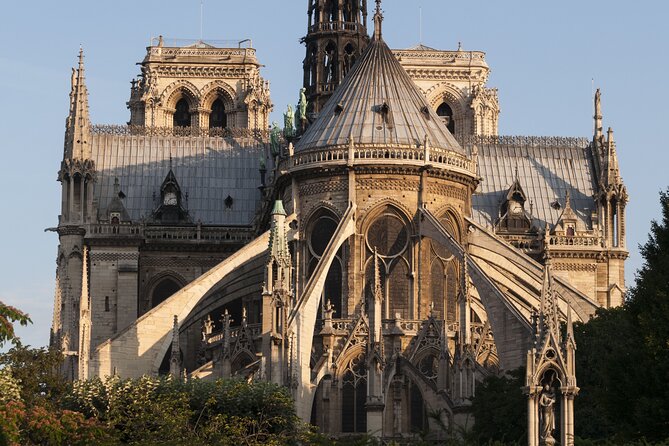
The morning starts at 9:30 a.m. outside Le Saint-Regis at 6 Rue Jean du Bellay, in the 4th arrondissement. From there, your guide leads you onto Île de la Cité, the island most closely tied to the birth of Paris.
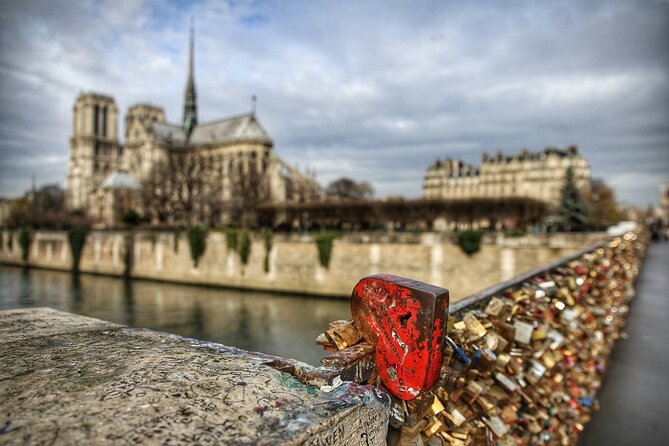
This is a smart place to begin. The Parisii people, a fishing tribe, lived here before the city grew across both banks of the Seine. The island is small, but it holds an outsized place in Parisian history. Notre Dame Cathedral is its best-known landmark, and even a look around the cathedral area gives you a useful sense of how the river shaped the city.
You spend about 30 minutes here. That is enough time for an introduction and some orientation, but not enough for a detailed visit to every landmark. This experience is a walking history tour, not a cathedral or museum tour, so do not expect extended interior visits to Notre Dame or other sights unless your guide specifically arranges something separately.
I especially like this opening for first-time visitors. Paris can seem like a collection of grand façades and famous names until someone explains how the island, river crossings, and nearby districts fit together. Once you understand that basic layout, the rest of your stay becomes easier.
More Paris history walks:
- Paris: Louvre Museum Entry with History of Mona Lisa
★ 3.9 · 2,823 reviews - Paris: Dark History and Ghostly Guided Walking Tour
★ 4.7 · 1,000 reviews - Le Marais/Paris – The Historic, Trendy, Jewish, LGBT district
★ 5.0 · 341 reviews
Crossing into the cobbled Latin Quarter
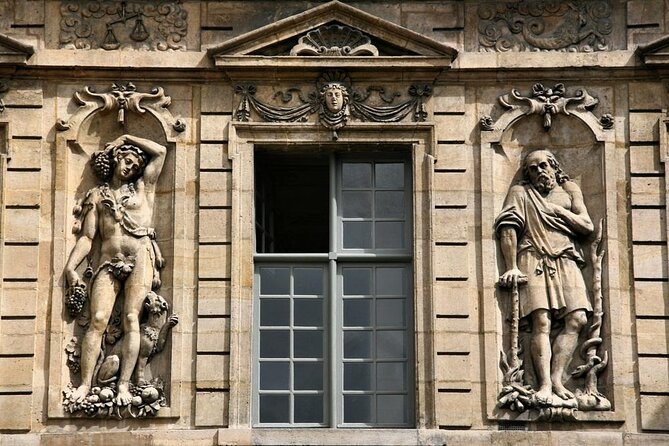
The route then crosses to the Left Bank and enters the Latin Quarter, the historic district around the Sorbonne and the older streets of Paris. The walk takes about 30 minutes and focuses on medieval Paris and the character of the Left Bank.
Expect cobbled lanes and a more intimate scale than the grand boulevards elsewhere in the city. The Latin Quarter has long attracted artists, writers, students, and intellectuals, giving it a different feel from the former royal and aristocratic districts across the river.
Your guide’s role matters here. Without context, the narrow streets can blur into one another. With a private guide, you can ask why the neighborhood developed as it did, how the Left Bank differs from the Right Bank, and which streets are worth revisiting later.
The cobblestones and uneven surfaces are also worth noting. They add atmosphere, but they can be tiring or awkward for anyone who has trouble walking on irregular pavement. Comfortable shoes are not a minor suggestion on this route.
Place Saint-Michel and the architecture of the Left Bank
The next stop is Fontaine Saint-Michel, set on one of Paris’s most attractive squares. You spend roughly 30 minutes taking in the fountain and the surrounding Haussmannian-style architecture.
This stop works well as a visual break after the narrower Latin Quarter streets. The architecture here is broader and more formal, with the kind of carefully planned urban scale that many people associate with modern Paris.
It is also a useful place to pause and ask questions. The tour connects the medieval street plan of the Latin Quarter with the later architectural changes that reshaped Paris. You are not simply moving from one photo stop to another. You are seeing how the city changed over time.
That said, 30 minutes at each stop does not mean every location receives a full guided lecture. The timing is approximate, and the walk between sites forms part of the experience. If you have a particular interest in architecture, the history of Paris, or the Haussmann period, tell your guide at the start so the conversation can lean in that direction.
Sainte-Chapelle, the Palais de Justice, and the Conciergerie
Crossing back over the Seine brings you to Sainte-Chapelle and the Palais de Justice. The tour also covers the Conciergerie, connecting this part of the island with the political and legal history of Paris.
Sainte-Chapelle is known for its medieval design and remarkable stained glass. The surrounding Palais de Justice and Conciergerie add another layer, linking the area to the old seat of royal power and later chapters of French history.
The schedule allows about 30 minutes here. The stated experience focuses on learning about the buildings and their history rather than guaranteeing admission inside. The itinerary lists admission as free for the stop, but you should not assume that a timed interior visit or a separate ticket is included.
This is one of the places where a guide can save you from a rushed, disconnected look. The buildings are close together, but their stories span centuries. A clear explanation helps you understand why this small section of the island matters so much.
A few more Paris ideas to compare
- Paris: Private Photoshoot at the Eiffel Tower
★ 4.7 · 2,636 reviews - Top Private Cruises in Paris with French Champagne and surprises
★ 5.0 · 1,553 reviews - Private Paris Airport Arrival Transfer – CDG & ORLY Airports
★ 4.5 · 1,119 reviews - Paris Private Arrival Transfer from Charles de Gaulle (CDG) or Orly (ORY)
★ 4.0 · 1,084 reviews
Hôtel de Ville and the changing face of Paris
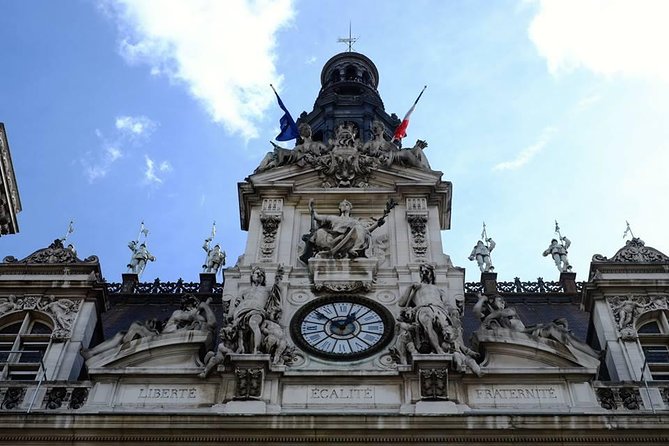
From Sainte-Chapelle, you continue toward Hôtel de Ville, crossing the Seine into the heart of the city. This stop takes about 30 minutes and highlights the shift in architecture as you move toward Renaissance Paris.
Hôtel de Ville is Paris’s city hall and one of the city’s major civic landmarks. The route uses it as a bridge between the older island districts and the Marais. Pay attention to how the buildings and streets change as you walk. The point is not just the building itself, but the transition from one part of Paris to another.
The tour is especially useful here because the route gives you a basic mental map. You begin on the island, move to the Left Bank, return to the Right Bank, and then head east into the Marais. For a first morning in Paris, that orientation has real value.
You are walking rather than riding between these sites. That means you see the distances and connections for yourself, although it also means the experience depends on your comfort with four hours of movement.
Entering the Marais, from aristocratic quarter to fashionable district
The Marais is the longest-feeling part of the route, even though the listed stop lasts about 30 minutes. This neighborhood has passed through several phases: aristocratic quarter, area of decline, and now one of Paris’s most popular districts for shopping, food, and strolling.
Window shopping is part of the experience as you make your way through the neighborhood. You will see a mix of old streets, historic buildings, boutiques, and cafés. The contrast is part of the appeal. The Marais does not present one single version of Paris. Its past and present sit close together.
I like this stop because it leaves you with practical options for the rest of your trip. You can return for an unhurried walk, browse the shops, or use the guide’s food recommendations to plan a meal. The tour includes restaurant recommendations and reservations, which can be especially helpful if you want advice tied to your route.
Still, the Marais can feel busy and commercial in places. If you are looking only for quiet medieval lanes, this portion may be less peaceful than expected. Its value comes from seeing how an old district continues to change.
Rue des Rosiers and the Pletzl

The walk continues to Rue des Rosiers, the center of Paris’s Jewish Quarter, known as the Pletzl. You spend around 30 minutes learning about the local Jewish community and walking through one of the Marais’s most recognizable streets.
This is an important part of the route because it broadens the story beyond kings, churches, and grand civic buildings. The neighborhood has a strong cultural identity, and the guide can help place it within the wider history of Paris.
Rue des Rosiers also gives you another view of the Marais. Instead of seeing only its fashionable shops and historic mansions, you encounter a district shaped by community life, migration, faith, and food traditions.
Be respectful here. This is a living neighborhood, not a stage set. The best approach is to listen, observe, and let the guide explain the community’s place in Paris. The stop is short, but it can add real depth to a tour otherwise centered on major landmarks.
Finishing beneath the arcades at Place des Vosges
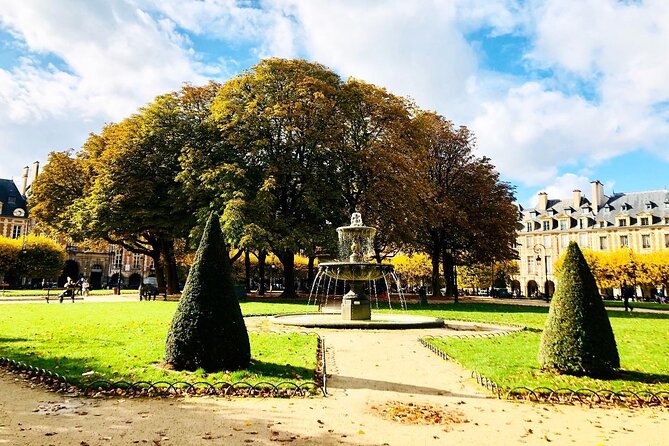
The final stop is Place des Vosges, where the tour ends after about four hours. This square is one of Paris’s oldest planned public spaces and is lined with cafés and bistros.
It is a satisfying finish. After crossing the river and walking through several districts, you end somewhere designed for sitting, eating, and taking stock. The square’s regular arcades and calm proportions provide a clear contrast to the narrow streets of the Latin Quarter and the busy commercial parts of the Marais.
Because the tour ends here, you can continue exploring independently. You may choose a café, walk farther into the Marais, or use the map and recommendations from your guide to plan the next part of your day. A good tour should leave you with more confidence, not just a folder of facts, and this ending supports that.
Coffee is not included, so plan to pay separately if you want a break at the square. That is not a major flaw, but it is useful to know before you arrive.
What the private format adds
The fee is $422.39 per group of up to three people. That works out to about $140.80 per person for three guests, $211.20 per person for two, or the full amount if you are alone.
That is a serious price for a four-hour walking tour. The value depends on what you want from a guide. If you are happy reading about Paris and finding the landmarks yourself, a private tour may not make financial sense. If you want personal attention, a flexible pace, and a clear introduction without joining a large group, the cost is easier to justify.
The private setup is also useful for families and multigenerational groups. One family with children aged seven and ten found that guide Eden combined facts about buildings with a playful search for Space Invaders, and also helped the family understand the Metro. That kind of practical orientation can save time later.
The company’s guides include April, Eden, and Simone. Their roles may vary by date, so confirm who will lead your tour when booking. The strongest pattern across the experiences connected with this company is personal service: guides taking photos, answering many questions, tailoring walks to interests, and sending follow-up recommendations such as a good cheese shop.
That extra attention is not guaranteed in identical form on every departure, but it gives you a useful idea of the guiding style to expect.
How to prepare for four hours on foot
This is a rain-or-shine tour. Wear shoes that can handle cobblestones and bring clothing suited to the forecast. Bottled water is provided, and a Paris map is included, but you should still arrive ready to walk continuously.
The tour is offered in English and uses a mobile ticket. It begins in central Paris and finishes at Place des Vosges, so plan your later schedule around that endpoint rather than expecting to return to your hotel.
Most people can participate, and service animals are allowed. The route is near public transportation, which makes both the starting point and the finish practical to reach. The supplied details do not promise hotel pickup, private vehicle transport, or skip-the-line entry, so treat this as a guided walking experience.
For a first day, I would avoid booking a major timed attraction immediately after the tour. The walk may run approximately four hours, and the pace can vary with questions, street conditions, and the group’s interests.
Who will get the most from this walk
I would choose this tour if you are visiting Paris for the first time and want a strong city overview before setting out alone. It covers a useful cluster of central districts without trying to cram in every famous sight.
It also suits couples, solo visitors, and small families who value conversation. The private format gives you room to ask basic questions without feeling self-conscious, and it lets the guide explain the city at a level that suits your group.
Repeat visitors can benefit too, especially if you have already seen the biggest monuments and want a better sense of how the central neighborhoods connect. The route is not an offbeat expedition, but the community-focused stop on Rue des Rosiers and the shift through the Marais add more than a standard highlights loop.
I would look elsewhere if you want extensive interior sightseeing, a food tasting, or transportation between landmarks. Coffee is not included, and the route offers orientation and interpretation rather than a full museum experience.
Should you book the Private Half Day Historic Tour?
Book it if you want a personal first look at Paris and are willing to pay for private attention. The route is well chosen: Île de la Cité gives you the starting point, the Latin Quarter supplies medieval atmosphere, and the Marais brings the story into present-day Paris.
The best reason to book is not the number of stops. It is the chance to understand how the city fits together while walking with a guide who can adjust the experience to your questions. The map, water, dining help, and practical advice add value after the tour ends.
Skip it if your main goal is the lowest possible price or long visits inside famous monuments. For everyone else, especially a small group arriving in Paris for the first time, this is a polished and useful way to get your bearings.
FAQ
How long does the Private Half Day Historic Tour last?
The tour lasts approximately four hours.
What time does the tour start?
The tour starts at 9:30 a.m.
Where does the tour begin?
You meet your guide at Le Saint-Regis, 6 Rue Jean du Bellay, 75004 Paris, France.
Where does the tour end?
The tour ends at Place des Vosges, Pl. des Vosges, 75004 Paris, France.
How many people can join the private tour?
The price covers one private group of up to three people.
What language is the tour offered in?
The tour is offered in English.
What is included in the tour?
The tour includes a guide, a map of Paris, bottled water, restaurant recommendations, and reservation assistance.
Is coffee included?
No. A coffee break is not included in the tour price.
Does the tour run in bad weather?
Yes. Tours operate rain or shine, so dress accordingly.
Can I cancel for a full refund?
Yes. You can cancel at least 24 hours before the experience start time for a full refund. Cancellations or changes made less than 24 hours before the start time are not accepted for a refund.
Newest additions around Paris
- Family escape Game with kids and teens on the Île de la Cité★ 4.5 · 11 reviews
- Private Photoshoot with the Iconic Eiffel Tower in Paris★ 5.0 · 11 reviews
- 2-day Private Mont Saint-Michel, 3 Loire Castles, D-Day Express★ 4.5 · 11 reviews
- Paris: Batobus Hop-On Hop-Off Cruise & Landmarks Audio Tour★ 3.0 · 11 reviews
- Paris Revolutionary Walking Tour: Iconic French Sights & Stories★ 5.0 · 11 reviews
- Guided and Private Tour of 3 hours through Paris aboard a Citroën 2cv★ 5.0 · 11 reviews
- Kids in the Kitchen – CrOisSaNtS★ 4.0 · 11 reviews
- Paris: Ghosts and Dark Stories Guided Walking Tour★ 4.1 · 11 reviews
Historical Tours, compared.
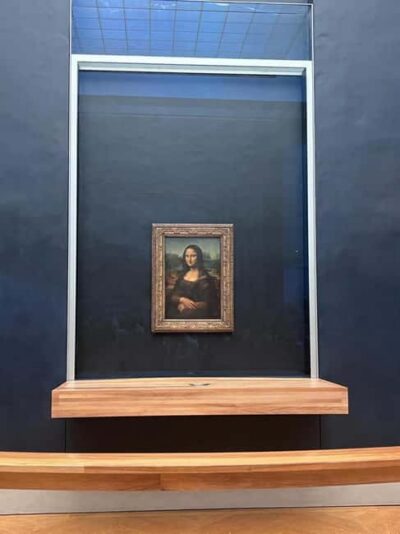
Louvre Museum Entry with History of Mona Lisa
Read our review →
Le Marais/Paris – The Historic, Trendy, Jewish, LGBT district
Read our review →
Paris City of Fashion History Private Guided Walking Tour
Read our review →
History of Paris City Center w/ Notre Dame Semi-Private 12ppl Max
Read our review →
Le Marais & Montmartre Jewish History Walking Tour
Read our review →

Browse the lists this tour appears in