Reviewed · PRIVATE
Paris WW2 The German Occupation Small group or Private tour
Paris can look almost untouched until a guide points to a bullet scar, an ordinary doorway, or a grand hotel and explains what happened there. This walking tour with Chris Pollard turns central Paris into the setting for a complicated story of occupation, resistance, collaboration, anti-Semitism, and Liberation. I like the small maximum of 10 people, and I like that Chris adapts the discussion instead of racing through a fixed script.
The main consideration is pace. This is usually a 3 to 3.5-hour outdoor walk, with a great deal of explanation and time on your feet. The route may stretch to about two miles, and people who want a brisk overview of famous sights may find the detail and open-ended questions more than they expected.
In This Review
- Key points to know before booking
- A serious war story on familiar Paris streets
- Starting at Palais Royal and the Louvre
- Rue de Rivoli and the machinery of occupation
- Place Vendôme, the Ritz, and Coco Chanel
- Secret networks and the first French resistance
- Jeu de Paume and the stolen art of Paris
- Place de la Concorde and the Liberation
- How the flexible format affects your day
- Small groups, private tours, and the price
- Who should book this Paris Occupation walk?
- General Occupation tour or private Shoah tour?
- Should you book Chris Pollard’s tour?
- FAQ
- Where does the tour begin?
- Where does the general group tour end?
- Does the standard tour visit the Shoah Memorial?
- How long does the tour last?
- How large is the group?
- Is the itinerary fixed?
- Which sites may be included?
- Does the tour enter the Louvre or Jeu de Paume?
- Is there a minimum number of people?
- What happens if the tour is canceled?
Key points to know before booking
- Meet at Palais Royal Metro Exit 5: The starting point is Place Colette, opposite the Comédie-Française, not Tuileries station.
- Walk through central Paris: The route generally runs from the Louvre and Palais-Royal area toward Place de la Concorde.
- Expect a flexible itinerary: Chris may spend longer at sites that interest your group, so the exact order and number of stops can change.
- See occupation sites in plain sight: Stops can include the Meurice, Place Vendôme, the Ritz, Jeu de Paume, Rue Rouget de Lisle, and German headquarters around Concorde.
- Small group format: Semi-private tours allow up to 8 to 10 people, while private tours offer a more personal route and timing.
- The Holocaust is covered, but not in full: The general tour explains the road to the Final Solution in France, while a separate private tour can focus solely on the Shoah.
A serious war story on familiar Paris streets
This is not a museum tour with neat rooms arranged by year. It is a walking conversation about people, power, fear, money, ideology, and survival, with Paris providing the setting.
That approach matters because the Occupation was not one simple story of Germans against French resisters. You will hear about German military control, French government policy, collaborationist groups, resistance networks, Jewish persecution, ordinary civilian life, and the divisions within each side. Chris works to explain why people acted as they did, not only where an event took place.
He uses photographs, books, and other visual material to bring names and faces into the discussion. That can be especially useful when several political and military figures appear in a short period. You are not simply asked to remember dates. You are given a framework for understanding how Paris changed from 1940 to Liberation.
The tour is rated 4.7 out of 5, with 95 percent of participants recommending it. More important than the number is the consistent pattern: the strongest praise centers on Chris’s preparation, clear explanations, personal attention, and ability to link separate stories into one larger account.
A few more Paris ideas to compare
- Paris: Private Photoshoot at the Eiffel Tower
★ 4.7 · 2,636 reviews - Top Private Cruises in Paris with French Champagne and surprises
★ 5.0 · 1,553 reviews - Private Paris Airport Arrival Transfer – CDG & ORLY Airports
★ 4.5 · 1,119 reviews
Starting at Palais Royal and the Louvre
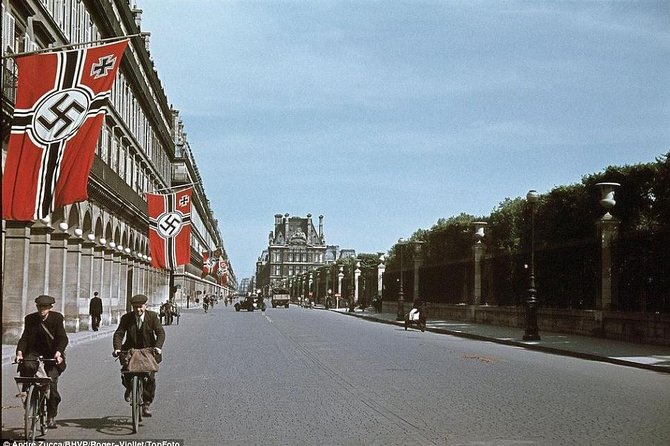
You meet Chris at Place Colette, beside Exit 5 of Palais Royal Metro and opposite the Comédie-Française Theatre. This is a useful starting point because it places you between the Louvre, the Palais-Royal, Rue de Rivoli, and the western route toward Concorde.
The opening section sets the stage. Chris discusses the political and social conditions that shaped France before the war, then moves into the German invasion, the creation of the Occupation, and the split between occupied France and the Vichy-controlled zone.
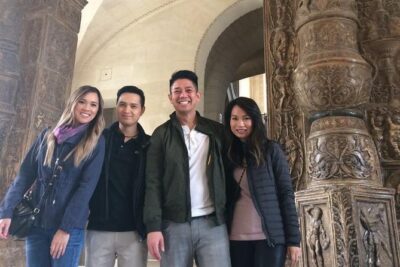
The Louvre appears mainly from the outside. That is worth knowing before you book. You are not entering the museum or examining a gallery collection as part of the standard walk. Instead, the building helps explain Nazi control, looted art, German administration, and the way major Paris institutions fitted into the wartime city.
This opening can feel dense, especially if you want to get moving quickly. On the other hand, the background makes later stops far easier to follow. You will understand why certain hotels became headquarters, why collaboration took different forms, and why the French response changed as the occupation continued.
Rue de Rivoli and the machinery of occupation
The Rue de Rivoli section is the heart of the walk. It contains several sites, but the value lies in the connections between them.
You might stop near the first secret Gestapo headquarters in Paris, the headquarters of France’s largest collaborationist group, and other less obvious addresses. These locations show that Nazi power relied on offices, police networks, political allies, hotels, courts, and information channels, not just soldiers in uniform.
The Hotel Meurice served as the German Army headquarters for Paris. Its elegant setting creates one of the tour’s most striking contrasts. You are standing among luxury architecture while hearing about military orders, occupation policy, and the decisions made inside.
Chris also discusses the Continental Hotel, another major hotel controlled by the German Army. These places help you picture the physical structure of German rule. Paris was not merely occupied in a vague sense. It was administered from specific buildings, by identifiable institutions and people.
The route encourages questions. If someone asks about economics, French politics, German aims, or the relationship between military authority and collaborationist groups, Chris may follow that thread before returning to the route. That freedom is a strength for curious history students, though it can make the presentation feel less tightly organized.
Place Vendôme, the Ritz, and Coco Chanel
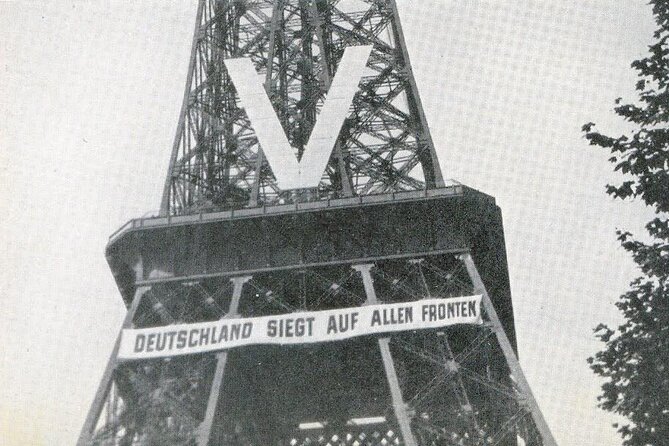
At Place Vendôme, the story shifts toward the social and political world surrounding the Ritz.
The Ritz was associated with Coco Chanel during the Occupation, and Chris explains her connection to the hotel. The site also became a meeting place for an anti-Nazi current within the German forces. The same address can therefore open several different discussions: celebrity, privilege, German officers, French society, and resistance to Hitler from within the German system.
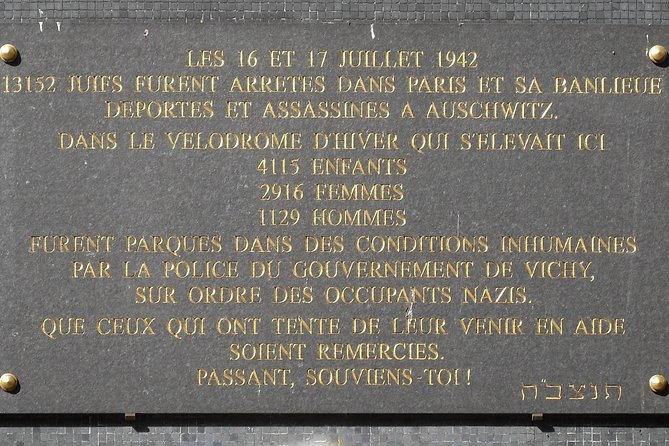
The tour also uses this area to explain how the Final Solution was introduced into France. That is a serious subject, and the route does not treat it as a quick dramatic detail. You will hear about the conditions faced by Jewish people in Paris and occupied France during the years before deportations and mass murder reached their French phase.
This portion may be particularly valuable if you know the broad outline of the Holocaust but want to understand how French institutions and French society fitted into the process. It also shows why the subject deserves more time than a passing stop on a general Occupation walk.
A different way to spend the day in Paris:
- Paris: Louvre Museum Timed-Entrance Ticket
★ 4.6 · 71,977 reviews - Disneyland® Paris 1-Day Ticket
★ 4.6 · 49,412 reviews - Paris: Versailles Palace and Gardens Full Access Ticket
★ 4.6 · 41,579 reviews - Paris: Arc de Triomphe Rooftop Tickets
★ 4.6 · 34,264 reviews
Secret networks and the first French resistance
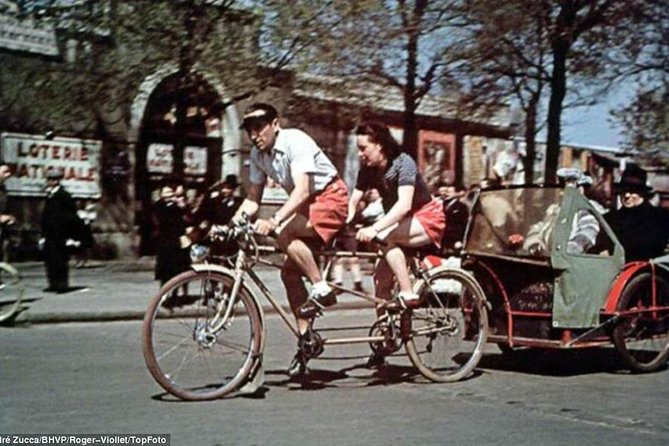
Among the less familiar addresses is the Société Maurice Duclos, linked with the earliest Allied spy network in France and secret radio work. A quiet doorway or street can carry as much weight as a famous monument here.
Rue Rouget de Lisle marks another important point. Chris presents it as the place where organic French resistance began in October 1940. That wording is important because resistance was not a single, tidy organization from the start. It developed through separate groups, political beliefs, personal courage, military contacts, intelligence work, and changing public attitudes.
You will hear about the difference between early resistance activity and the later networks that formed as people understood the Germans were not leaving soon. The discussion also places the resistance within the wider French population. Most people were trying to survive shortages, restrictions, fear, and uncertainty. A smaller number actively resisted, while others collaborated or accommodated the authorities.
That human focus is one of the tour’s strongest features. Chris does not reduce the period to heroes and villains. He examines motives and pressures, while still treating persecution and collaboration with the seriousness they require.
Jeu de Paume and the stolen art of Paris
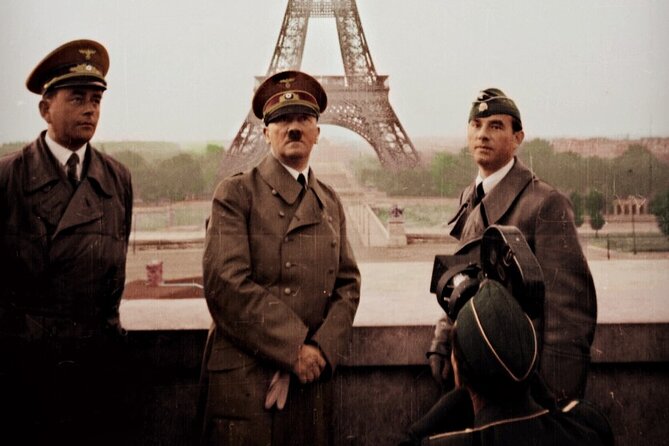
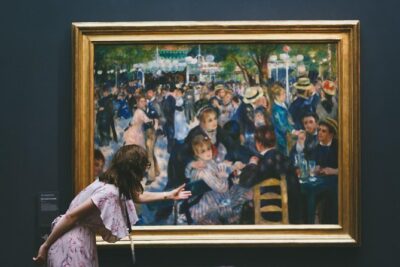
The Jeu de Paume is one of the tour’s most memorable stops. During the Occupation, the Nazis used this building to store, sort, process, and move looted art before sending it to Germany.
You may know the famous story of Nazi art theft from films and books, but standing at the place where works were handled gives the subject a sharper edge. The discussion connects military occupation with theft, private collections, anti-Semitic policy, and the destruction of cultural ownership.
This is also a good example of how the tour differs from a standard Paris highlights walk. You are not visiting the Jeu de Paume for an exhibition. You are using its wartime role to understand how the Occupation reached into homes, businesses, families, and cultural life.
Place de la Concorde and the Liberation
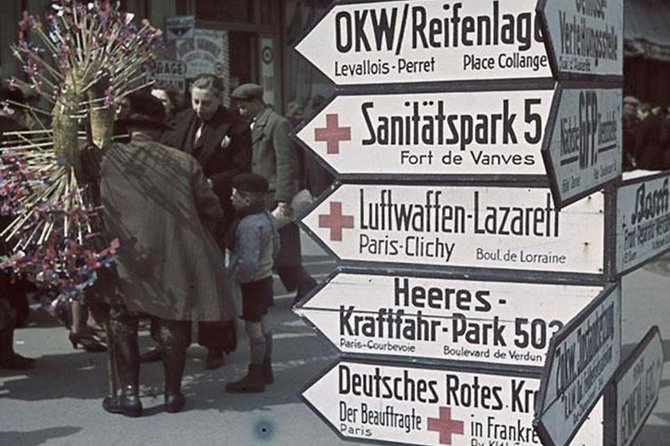
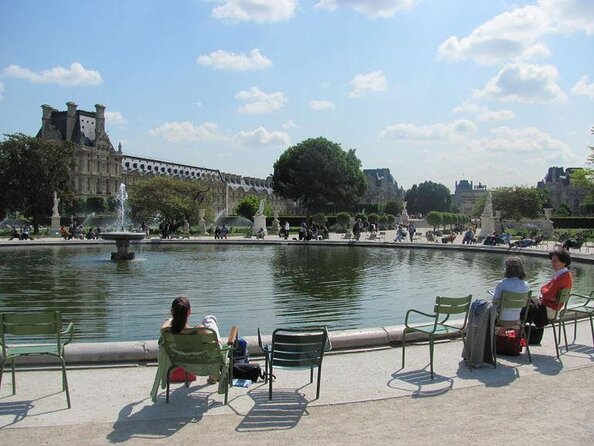
The route usually ends around Place de la Concorde, with the total tour lasting about three to three and a half hours. The square is an ideal final setting because it carries layers of French history far beyond the Second World War.
Originally called Place Louis XV, it became associated with the French Revolution, including the executions of Louis XVI and Marie Antoinette. You will also see the Luxor Obelisk, the Hotel de Crillon, the former Naval Ministry, and the Grand Palais.
During the Occupation, the Hotel de Crillon and Naval Ministry were important German headquarters. The Grand Palais was the only building in Paris actually destroyed during the Occupation and Liberation. Around the square, Chris points out bullet holes and less obvious marks left by the fighting.
These details can be easy to miss if you are simply crossing the square for a museum or shopping street. The final section brings the story back to the city itself: German control, the uprising, the fight for Paris, and the physical traces left behind.
The standard general tour ends around Concorde. It does not usually continue to the Shoah Memorial in the Marais. A Marais finish and the Holocaust memorial belong to a specifically requested private Shoah tour, not the regular general route.
How the flexible format affects your day
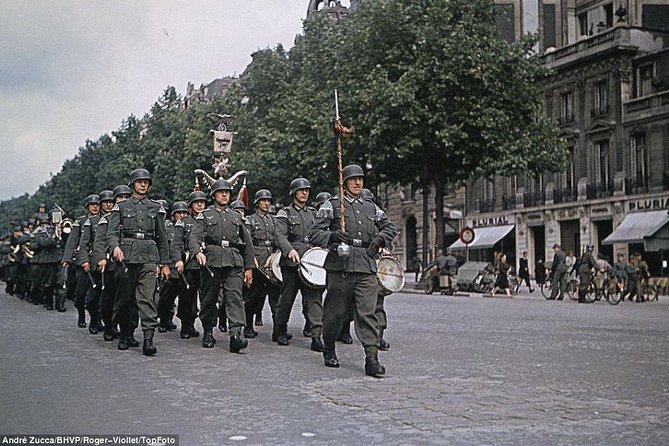
The itinerary is intentionally not fixed in the way a bus route or museum circuit is fixed. Chris may adjust the number of stops, the order, and the amount of time spent at each place according to the group’s questions and interests.
That can be excellent if you want to ask why Vichy adopted certain policies, how the German Army differed from Nazi party organizations, or how resistance groups worked. It also means you should not expect every listed site on every departure.
The guide asks questions as well as answering them, which keeps the group involved. Private bookings allow even more adjustment, including a personalized itinerary, flexible start times, and different meeting points.
The tradeoff is organization. One critical account described the talk as wandering and lasting longer than expected, with too little attention to breaks in cold, windy weather. Most of the available feedback praises the extra time and detailed answers, but you should still tell Chris in advance if you need a firm end time or regular sitting breaks.
Small groups, private tours, and the price
The listed price is about $108.84 per person. For a 3 to 3.5-hour specialist tour, that is not bargain walking-tour pricing. You are paying for a small group, a guide who focuses on one narrow and serious subject, visual aids, and the chance to shape the conversation.
The semi-private format is limited to four separate groups, with about 8 to 10 people maximum. That is small enough for questions without the feel of a large flag-following crowd.
A private tour may offer better value for families, serious history readers, or anyone with a clear interest in the resistance, the Holocaust, the Liberation, Chanel, military administration, or French collaboration. Chris contacts private clients about their interests and can prepare the route around them.
The tour usually needs at least four people to run. Bookings made less than two weeks before the date may only be accepted if the minimum has already been reached, and the guide can cancel up to 24 hours before departure if numbers fall below the minimum. You receive a full refund if the guide cancels, and poor weather can also lead to a new date or full refund.
Who should book this Paris Occupation walk?
I would choose this experience if you want more than dates and famous names. It suits adults, families with older teenagers, history students, and people heading onward to Normandy who want stronger context for France during the war.
The tour can work for someone with only a general interest, but you should enjoy listening for several hours and asking questions. It is not built around entering museums, café stops, or a quick checklist of monuments.
Bring water and dress for extended time outdoors, with layers in cool weather. One private participant described walking roughly two miles over four hours and standing for long periods. Chris can make room for sitting when needed, but you should raise mobility concerns before the tour rather than assume the route will include scheduled breaks.
General Occupation tour or private Shoah tour?
The general walk covers anti-Semitism, Vichy policy, the treatment of Jewish people, and the steps that led to the Final Solution in France. It also discusses Jewish participation in resistance activity.
That is important material, but the general route has many other subjects to cover. If the Holocaust is your main reason for coming, ask about the private Shoah-focused tour. A dedicated experience gives the subject the time and care it needs, rather than trying to fit it into a wider account of military and political occupation.
The same logic applies to the resistance or Liberation. The general walk introduces both, while a private tour can give one subject more space.
Should you book Chris Pollard’s tour?
Book it if you want a serious, personal account of wartime Paris and are happy to spend several hours outdoors listening, thinking, and asking questions. Chris Pollard’s preparation, visual material, flexibility, and passion are the main reasons to choose it.
Skip it if you want a short, tightly timed introduction or a simple route from one monument to the next. Also think carefully about the minimum group requirement and your comfort with a walk that can run longer when the conversation takes off.
For history-minded visitors, this can be one of the most worthwhile uses of half a day in Paris. You will leave Place de la Concorde seeing familiar streets differently, with a clearer sense of how occupation worked and how much of the story was hidden in ordinary places.
FAQ
Where does the tour begin?
Meet at Place Colette, at Palais Royal Metro Exit 5, opposite the Comédie-Française Theatre.
Where does the general group tour end?
The regular tour usually ends around Place de la Concorde.
Does the standard tour visit the Shoah Memorial?
No. The general group tour does not normally continue to the Shoah Memorial or finish in the Marais. Those arrangements may be requested as part of a private Shoah-focused tour.
How long does the tour last?
The tour generally lasts about three to three and a half hours. Private tours may be adjusted around the requested schedule.
How large is the group?
The maximum is 10 people. Semi-private bookings are limited to four separate groups per tour, with about 8 to 10 people overall.
Is the itinerary fixed?
No. The route and number of stops can change according to the group’s questions and interests. The usual area runs from Palais Royal and the Louvre toward Place de la Concorde.
Which sites may be included?
Possible stops include the Louvre exterior, Hotel Meurice, Place Vendôme and the Ritz, Société Maurice Duclos, Rue Rouget de Lisle, the Continental Hotel, Jeu de Paume, and Place de la Concorde.
Does the tour enter the Louvre or Jeu de Paume?
The supplied information describes these as exterior or historical sites on the walking route. Admission tickets are not listed as included.
Is there a minimum number of people?
Yes. All small-group tours require at least four people to run.
What happens if the tour is canceled?
If the minimum is not met or poor weather prevents the tour, you can be offered another date or experience, or receive a full refund. You can also cancel for a full refund up to 24 hours before the start time.
Newest additions around Paris
- Family escape Game with kids and teens on the Île de la Cité★ 4.5 · 11 reviews
- Private Photoshoot with the Iconic Eiffel Tower in Paris★ 5.0 · 11 reviews
- Paris: Batobus Hop-On Hop-Off Cruise & Landmarks Audio Tour★ 3.0 · 11 reviews
- Paris Revolutionary Walking Tour: Iconic French Sights & Stories★ 5.0 · 11 reviews
- 2-day Private Mont Saint-Michel, 3 Loire Castles, D-Day Express★ 4.5 · 11 reviews
- Guided and Private Tour of 3 hours through Paris aboard a Citroën 2cv★ 5.0 · 11 reviews
- Kids in the Kitchen – CrOisSaNtS★ 4.0 · 11 reviews
- Paris: Ghosts and Dark Stories Guided Walking Tour★ 4.1 · 11 reviews
Private, compared.
Top Private Cruises in Paris with French Champagne and surprises
Read our review →
Private Paris Airport Arrival Transfer – CDG & ORLY Airports
Read our review →
Paris Private Arrival Transfer from Charles de Gaulle (CDG) or Orly (ORY)
Read our review →
Private Montmartre Food Tour with Wine, Cheese & Pastries
Read our review →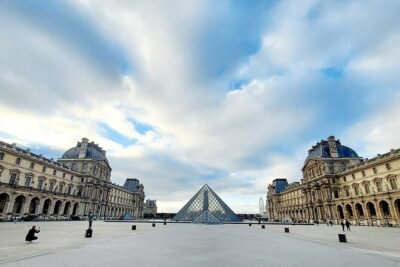
Louvre Museum Timed Entry Ticket – Optional Private Guide
Read our review →