
Reviewed · PARIS CATACOMBS TOURS
Paris: Small-Group Catacombs Tour with Skip-the-Line Entry
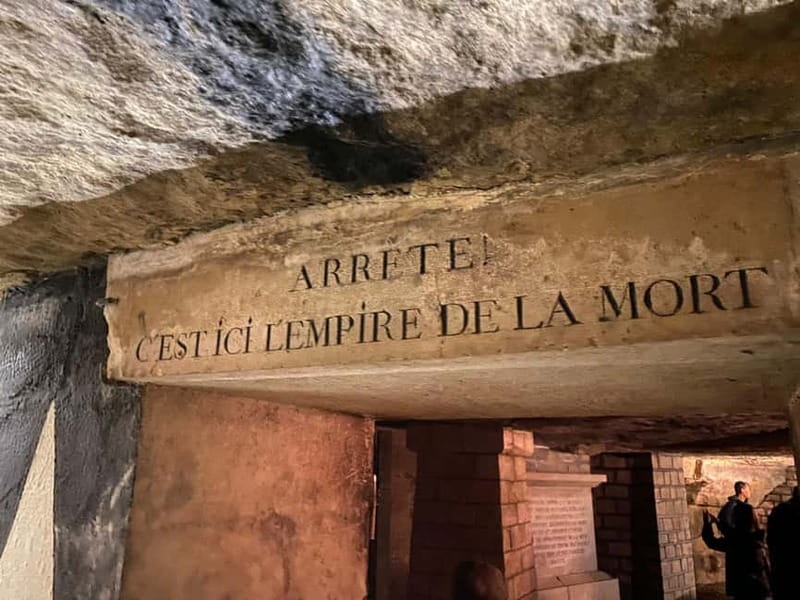
Beneath Paris’s grand boulevards sits a city of limestone tunnels and carefully arranged human bones. This small-group Catacombs tour takes you down 133 steps, past skulls and bones from roughly six million Parisians, and into areas closed to the standard public route.
I like two things right away: the group is limited to six people, and the guide does more than point at piles of bones. Guides such as Maria, Remi, Leo, Michelle, and Melvin have explained everything from quarrying and burial practices to wartime bunkers, French Resistance activity, and cataphile graffiti. The drawback is clear: at $227 per person, this is a costly 90-minute visit, and the steep staircase and narrow passages are not ideal for everyone.
In This Review
- Key points to know before booking
- Why the Paris Catacombs feel different from a normal museum
- Meeting at 1 Avenue du Colonel Henri Rol-Tanguy
- The 133-step descent sets the mood
- Small groups make the guide the main attraction
- Bone-lined galleries and The Barrel
- The quarry beneath the city
- War, revolution, and the doorman who disappeared
- Cataphiles, graffiti, and the unofficial underground
- Is $227 a fair price?
- Who should book this Catacombs tour?
- Final verdict: book it for access and storytelling
- FAQ
- How long does the Paris Catacombs tour last?
- How large is the tour group?
- Is skip-the-line entry included?
- What language is the tour conducted in?
- Where does the tour meet?
- Where does the tour end?
- Does the tour include restricted areas?
- Are hotel pickup, food, and drinks included?
- What is the cancellation policy?
Key points to know before booking
- Six-person maximum: A tiny group makes it easier to hear stories and ask questions, though a rare exception may be made to keep companions together.
- 133-step descent: You begin underground by walking down a steep staircase, then continue through narrow tunnels.
- Restricted areas included: The tour goes beyond the ordinary public route, with access to additional sections of the Catacombs.
- A guide adds real context: You learn why the tunnels were quarried, why bodies were moved here, and how the underground city figured in wartime Paris.
- Not just a wall of bones: Look for religious designs, heart shapes, The Barrel, graffiti, and the grave of Philibert Aspairt.
- The price buys time and access: At $227, the value depends on how much you care about a small group, a live guide, and areas not open on a regular visit.
Why the Paris Catacombs feel different from a normal museum
Paris is usually presented through churches, cafés, grand avenues, and royal palaces. The Catacombs offer a very different view of the city, one shaped by quarrying, overcrowded cemeteries, engineering problems, and the uneasy care given to the dead.
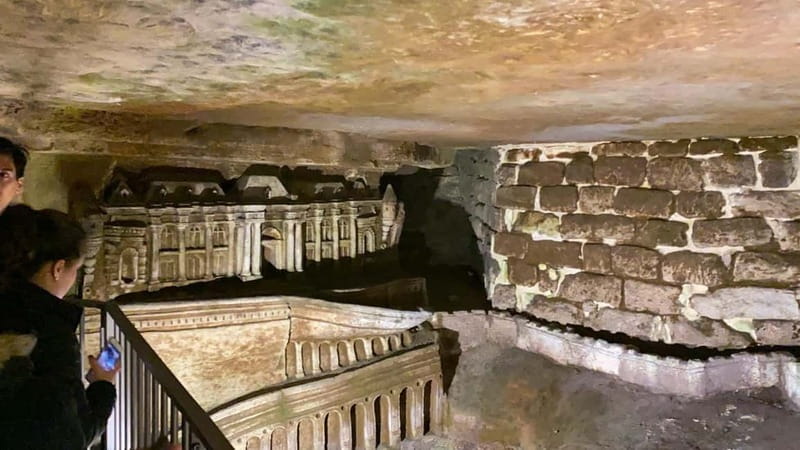
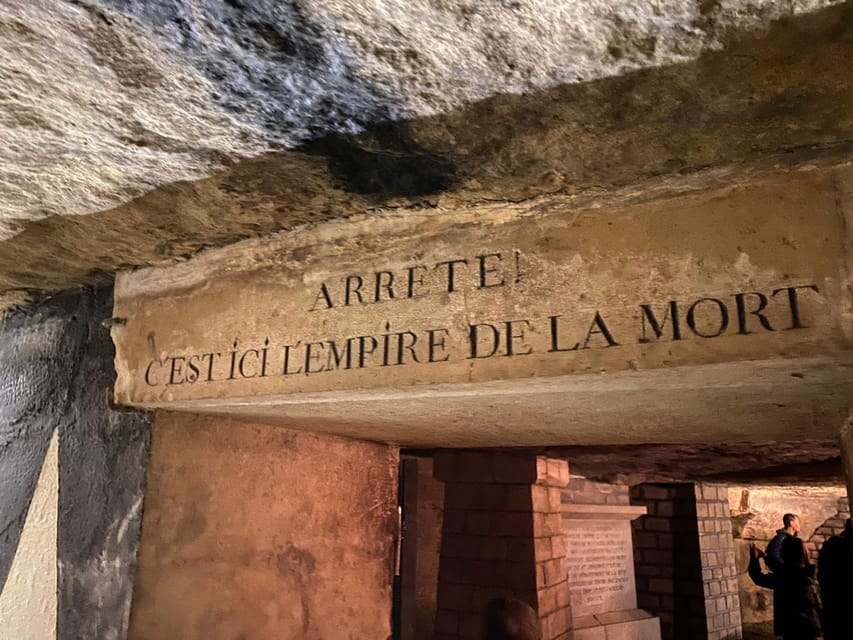
The tunnels began as limestone quarries in the 13th century. Paris used this stone in important buildings, including Notre Dame. As the city grew, its underground passages became a practical problem and later an answer to another problem: where to put the dead.
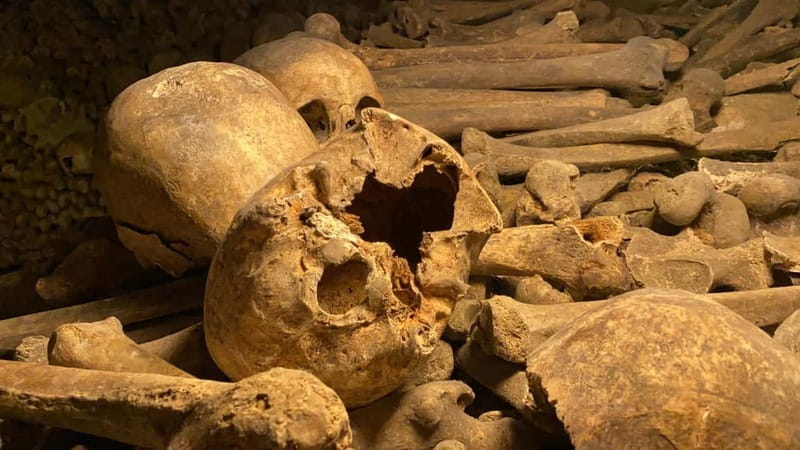
During the 1780s, bad weather contributed to serious cemetery conditions. Bodies were moved underground, and the former quarries became a vast ossuary. The remains were later arranged into walls and designs, creating the bone-lined spaces that give the Catacombs their unsettling look today.
That background matters. Without it, you may see only skulls, femurs, and dim stone corridors. With a good guide, you can connect the bones to the city above, from medieval construction to public health and the practical limits of a crowded capital.
More Catacombs tickets and tours:
- Paris: Catacombs Entry & Seine River Cruise with Audio Guide
★ 4.4 · 1,150 reviews - Paris: Catacombs, Audio Guide, and River Cruise Option
★ 4.6 · 966 reviews - Paris: Catacombs Ticket and Seine River Cruise
★ 4.1 · 853 reviews
Meeting at 1 Avenue du Colonel Henri Rol-Tanguy
The meeting point is in front of the Catacombs’ main entrance at 1 Avenue du Colonel Henri Rol-Tanguy. Your guide holds a LivTours sign, and the tour ends at the same location.
Give yourself enough time to find the entrance. One participant had trouble spotting the guide because the sign was small and not held prominently. That is an easy problem to avoid: arrive early, stay near the main entrance, and actively look for the LivTours sign rather than assuming the guide will spot you first.
The starting location is also identified with the House Veterans of the 2nd Armored Division. You do not receive hotel pickup or drop-off, and food and drink are not included, so plan this as a stand-alone activity within your Paris day.
The 133-step descent sets the mood
The first physical test is the staircase. You walk down 133 steps before reaching the underground route. It is not a casual lift ride into an exhibit, and the descent immediately tells you that this will be a different kind of Paris attraction.
The staircase is worth taking seriously if you have knee problems, difficulty with steep steps, or discomfort in confined spaces. The information provided does not promise accessibility assistance, so you should contact the operator before booking if stairs are a concern.
Once below ground, the passages are narrow. The setting is dark, enclosed, and filled with human remains. This may sound obvious, but the atmosphere is not softened for comfort. Children can enjoy the tour, and one family brought children aged 10 and 16, but you should decide for yourself how they handle death, skeletons, and stories involving lost people.
Small groups make the guide the main attraction
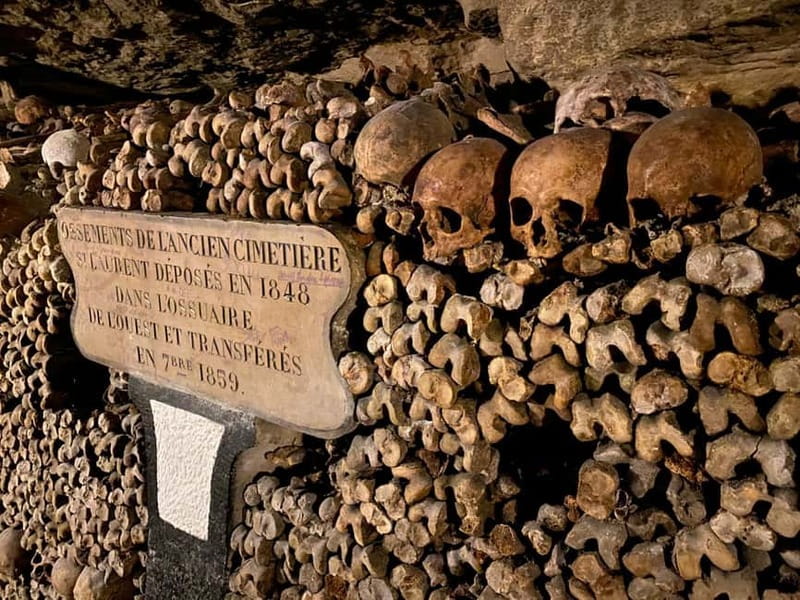
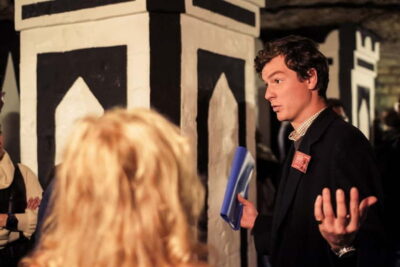
The six-person limit is more than a marketing detail. In a place where corridors can be tight and the subject matter deserves explanation, a small group lets you stay close to the guide and ask questions without shouting over a crowd.
The guide is the difference between an organized walk through tunnels and a meaningful tour of Paris beneath Paris. The English-speaking guides named in the feedback include Maria, Remi, Leo, Lavinia, Alex, Melvin, Michelle, and Angelo. Individual guides vary, but the strongest pattern is clear: visitors valued passion, clear storytelling, good pacing, and the ability to explain small details.
Leo, also identified as Eleonore, pointed out details that could help distinguish bones by age and sex, and discussed signs of disease. Maria used illustrations and stories to make the route easier to understand. Remi added historical photographs and offered a lively explanation of the tunnels. Alex was praised for giving the right amount of information without turning the visit into an information dump.
That is exactly what you want here. The Catacombs contain plenty to see, but the displays do not explain every political, medical, and architectural connection on their own. A guide can tell you where to focus your attention and keep the visit moving at a sensible pace.
A few more Paris ideas to compare
- Versailles: Skip-the-Line Tour of Palace with Gardens Access
★ 4.7 · 9,778 reviews - Versailles: Skip-the-Line Guided Palace Tour and Full Access
★ 4.6 · 5,214 reviews - Louvre Museum: Skip-the-Line Small Group Guided Tour
★ 4.6 · 3,960 reviews - From Paris: Versailles Skip-the-Line Tour & Gardens Access
★ 4.7 · 3,011 reviews
Bone-lined galleries and The Barrel
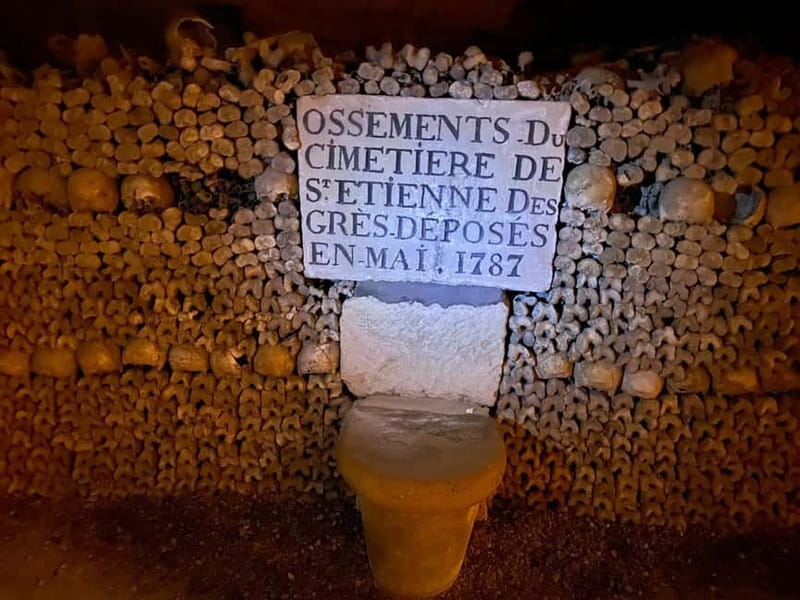
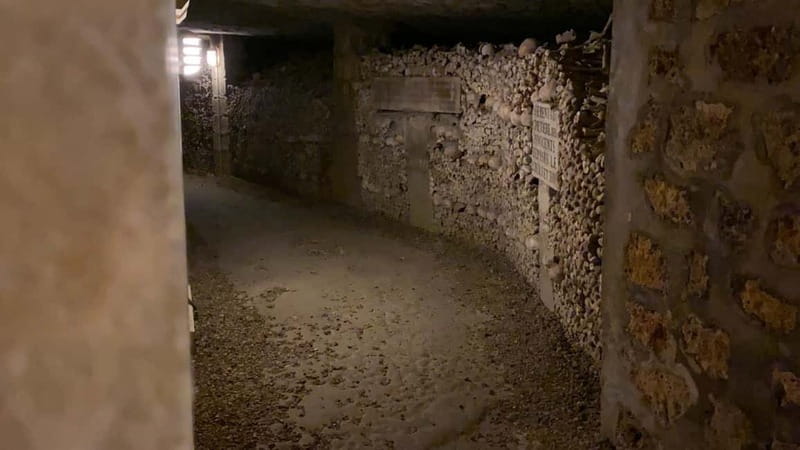
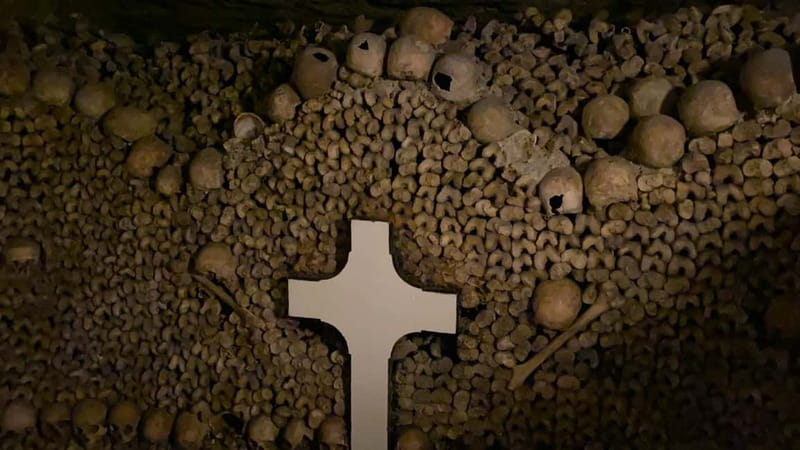
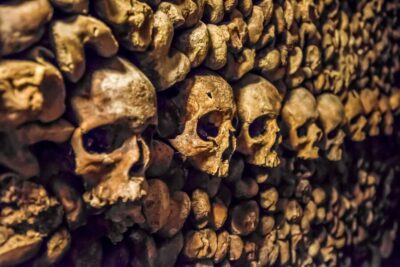
The most famous sections are lined with bones arranged in patterns. Workers used skulls and long bones to create walls and decorative designs. Some sections include religious imagery and heart shapes, which gives the ossuary an unsettling blend of devotion, order, and theatrical display.
The arrangement can feel almost decorative until you remember what each bone represents. A guide can help you look beyond the visual shock and understand how the remains were organized. You may also hear about differences among the bones, including clues linked to age, sex, and disease.
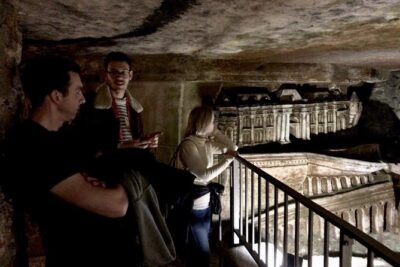
In the Crypt of the Passion, watch for The Barrel. This striking structure is made from skeletal remains and is one of the tour’s most memorable sights. It is also the sort of detail that can slip past you on a hurried self-guided visit, especially when your attention is fixed on the larger walls of bones.
The tour gives you time to look rather than simply ushering you past. Still, the duration is only 1.5 hours, so do not expect every passage or story connected with the Catacombs. The route has to balance atmosphere, explanation, and movement through a regulated underground site.
The quarry beneath the city
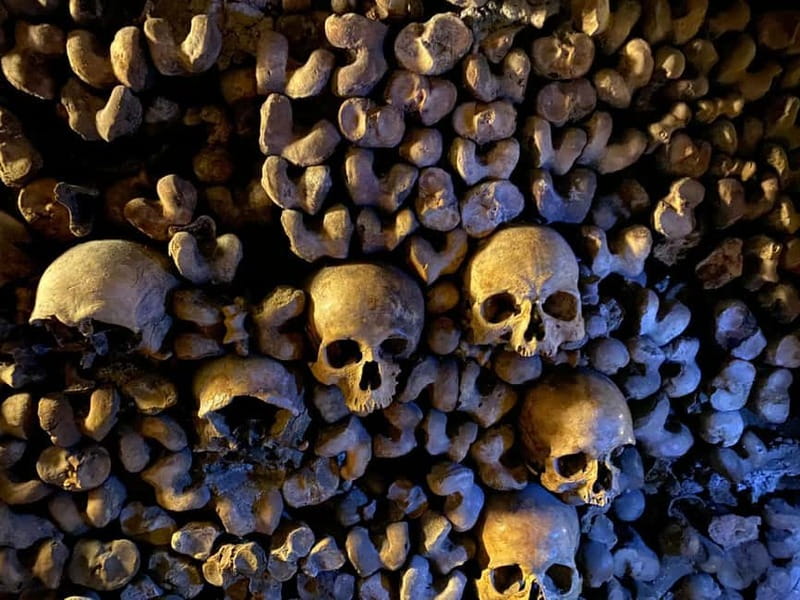
The Catacombs are not simply a burial site. They began as a working network of limestone quarries, and that construction story helps explain the shape of the tunnels.
Your guide explains how 13th-century quarrying supplied stone for Parisian buildings. This is a useful correction to the idea that the underground passages were built solely to house the dead. The burial use came later, when the existing spaces offered a solution to the city’s cemetery troubles.
I find this part especially valuable for anyone interested in how cities work. Paris’s monuments were not created in isolation. Their stone came from the ground beneath the city, and those same underground spaces later became part of Paris’s public health and burial story.
The narrow tunnels also make the scale of the network hard to grasp. The full maze is described as roughly 200 miles long, although this tour covers only a small, controlled section. That number gives you a sense of how much lies beyond the route, without suggesting that you will walk through the entire underground city.
War, revolution, and the doorman who disappeared
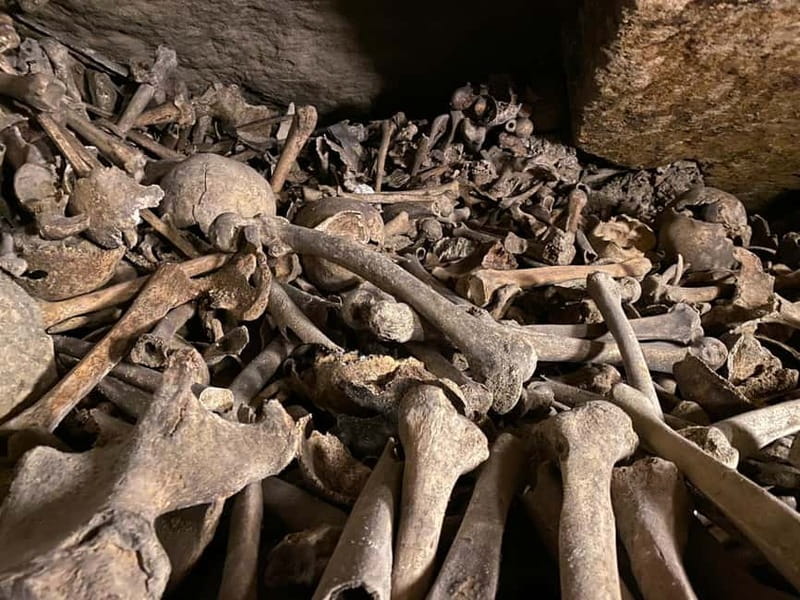
The Catacombs also served purposes far beyond quarrying and burial. During World War II, parts of the underground network were used as wartime bunkers by both the German Wehrmacht and the French Resistance.
That detail gives the tunnels a second layer of tension. You are not only walking among the dead. You are also in a place that could shelter people, conceal movement, and support military activity during one of Europe’s darkest periods.
Your guide also connects the Catacombs with the French Revolution. The supplied details do not set out every event or location tied to the Revolution, so expect an overview rather than a complete underground seminar. The value is in seeing how the tunnels fit into the wider story of Paris.
Ask about Philibert Aspairt, the Catacombs’ 18th-century doorman who died underground. His grave is one of the more personal stories along the route, and it gives a name and a human thread to a place otherwise defined by anonymous remains.
Cataphiles, graffiti, and the unofficial underground
Modern Paris has its own underground culture. Cataphiles have used the unofficial tunnel network for raves, swimming parties, and other gatherings. Their activity has caused plenty of trouble, and it is separate from the regulated Catacombs route.
You may spot graffiti left by cataphiles during the tour. These marks add a modern layer to a place often treated as frozen in the past. They also show that the underground is not merely a preserved historical exhibit. It remains part of the city’s imagination and, in restricted areas, part of its unofficial life.
Do not confuse this guided tour with permission to explore unauthorized tunnels. The tour’s restricted-area access is arranged through the experience, and you should stay with the guide and follow all site rules.
Is $227 a fair price?
At $227 per person, this tour costs much more than a basic entry ticket or a self-guided visit. The question is not simply if the Catacombs are worth seeing. They are a distinctive part of Paris. The question is how much you value the added access and instruction.
You are paying for four main things:
- Skip-the-line entry through a separate entrance
- A live English-speaking guide
- A group capped at six people
- Access to restricted areas not included in the general route
The small group is the strongest value point. A large group can make an underground visit feel rushed and impersonal, while six people allow the guide to respond to questions and point out details. The restricted areas also help justify the premium, especially if you have already seen many major Paris sights and want something less standard.
Still, the price is steep. If you mainly want to see the famous bone-lined corridors and do not need interpretation, a less expensive visit may suit you better. If you want the stories, the wartime context, the cataphile details, and additional sections, the cost becomes easier to defend.
The 90-minute length helps in another way. The tour is long enough to feel substantial but short enough to fit beside another Paris plan. Do not schedule it without allowing time to reach the meeting point and get your bearings afterward.
Who should book this Catacombs tour?
I would recommend it to you if you like history with a darker edge, enjoy unusual city sights, or prefer a guide who can explain what you are seeing. It also works well for families with older children who are comfortable with skeletons and stories about death.
This is a good choice for a return visit to Paris. You get a side of the city that the usual museum-and-monument circuit does not show. It can also suit first-time visitors who want one unusual activity among more traditional sightseeing stops.
I would think twice if you dislike enclosed spaces, steep staircases, or macabre displays. The tour does not offer hotel transport, food, or drink, and the high price makes it a poor fit for a tight budget.
For the best chance of a smooth start, arrive early at the main entrance, look carefully for the LivTours sign, wear comfortable shoes, and be ready for stairs and narrow corridors.
Final verdict: book it for access and storytelling
Book this tour if you want more than a walk past bones. The six-person format, restricted-area access, and strong English-speaking guides make the experience far more informative than simply following an audio guide through the public route.
Skip it if the $227 price feels uncomfortable or if you only want a quick look at the ossuary. For the right audience, though, this is one of Paris’s most unusual history outings, with enough detail to stay with you long after you return to street level.
FAQ
How long does the Paris Catacombs tour last?
The tour lasts 1.5 hours. Starting times vary, so check availability when you book.
How large is the tour group?
The group is limited to six participants. On rare occasions, an exception may be made to keep people traveling together from being split up.
Is skip-the-line entry included?
Yes. Skip-the-line entry through a separate entrance is included in the tour.
What language is the tour conducted in?
The live tour guide speaks English.
Where does the tour meet?
Meet in front of the Catacombs’ main entrance at 1 Avenue du Colonel Henri Rol-Tanguy in Paris. Your guide will hold a LivTours sign.
Where does the tour end?
The activity ends back at the meeting point.
Does the tour include restricted areas?
Yes. The tour includes exclusive access to restricted areas that are not part of the standard public visit.
Are hotel pickup, food, and drinks included?
No. Hotel pickup and drop-off, food, and drinks are not included.
What is the cancellation policy?
You can cancel up to 24 hours in advance for a full refund. You can also reserve now and pay later.
Newest additions around Paris
- Private Photoshoot with the Iconic Eiffel Tower in Paris★ 5.0 · 11 reviews
- Family escape Game with kids and teens on the Île de la Cité★ 4.5 · 11 reviews
- 2-day Private Mont Saint-Michel, 3 Loire Castles, D-Day Express★ 4.5 · 11 reviews
- Paris: Batobus Hop-On Hop-Off Cruise & Landmarks Audio Tour★ 3.0 · 11 reviews
- Paris Revolutionary Walking Tour: Iconic French Sights & Stories★ 5.0 · 11 reviews
- Guided and Private Tour of 3 hours through Paris aboard a Citroën 2cv★ 5.0 · 11 reviews
- Kids in the Kitchen – CrOisSaNtS★ 4.0 · 11 reviews
- Paris: Ghosts and Dark Stories Guided Walking Tour★ 4.1 · 11 reviews
Paris Catacombs Tours, compared.
Catacombs Entry & Seine River Cruise with Audio Guide
Read our review →
Catacombs, Audio Guide, and River Cruise Option
Read our review →

Catacombs of Paris Semi-Private VIP Restricted Access Tour
Read our review →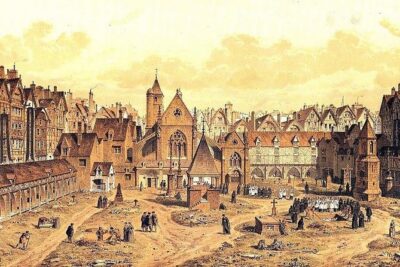
Browse the lists this tour appears in