
Reviewed · LOUVRE MUSEUM TOURS
Paris: Skip-the-Line Louvre Highlights Tour with Mona Lisa
The Louvre can swallow an entire day and still leave you feeling lost. This two-hour highlights tour gives you a sensible route through its vast galleries, with the Mona Lisa, Venus de Milo, Winged Victory, and Michelangelo’s Slaves as the main prizes.
I like the art historian guides, who turn famous paintings into stories rather than names on a checklist. I also like the skip-the-line entry and personal headsets, which save time and let you hear the explanation even when the galleries are crowded.
The main drawback is that Mona Lisa viewing can be a squeeze, and the advertised two hours includes the time needed to enter, pass security, check bags, and move through the building. You see the Louvre’s headline works, not every room worth exploring.
In This Review
- What makes this Louvre tour worth considering
- Meeting the guide at the Arc du Carrousel
- Entering the Louvre without wasting your morning
- The Louvre building is part of the lesson
- Venus de Milo and the ancient sculpture route
- Mona Lisa: famous, crowded, and still worth seeing
- Michelangelo’s Slaves and the power of sculpture
- Why the guide makes the difference
- Choosing the 9:30 AM departure
- Is $67 a fair price?
- Who should book this experience?
- Tips for getting more from the two hours
- Should you book the Louvre highlights tour?
- FAQ
- Where does the Louvre tour meet?
- Is this the Arc de Triomphe on the Champs-Élysées?
- How early should I arrive?
- How long does the experience last?
- Is the tour conducted in English?
- What works of art are included?
- Can I stay at the Louvre after the tour?
- Is the tour suitable for wheelchairs, strollers, or people with mobility impairments?
What makes this Louvre tour worth considering
- The 9:30 AM tour has a maximum of six people, making it the best choice for a more personal visit.
- The route covers four major artistic landmarks: Mona Lisa, Venus de Milo, Winged Victory, and Michelangelo’s Slaves.
- Your guide handles the Louvre’s confusing layout, so you spend less time searching for the right staircase or gallery.
- Headsets keep the commentary clear while you walk through busy rooms.
- You can stay at the museum after the guided portion, giving you time to revisit a favorite work or explore on your own.
- The $67 price pays for time and orientation, not just admission. That value is strongest on a first Louvre visit.
Meeting the guide at the Arc du Carrousel
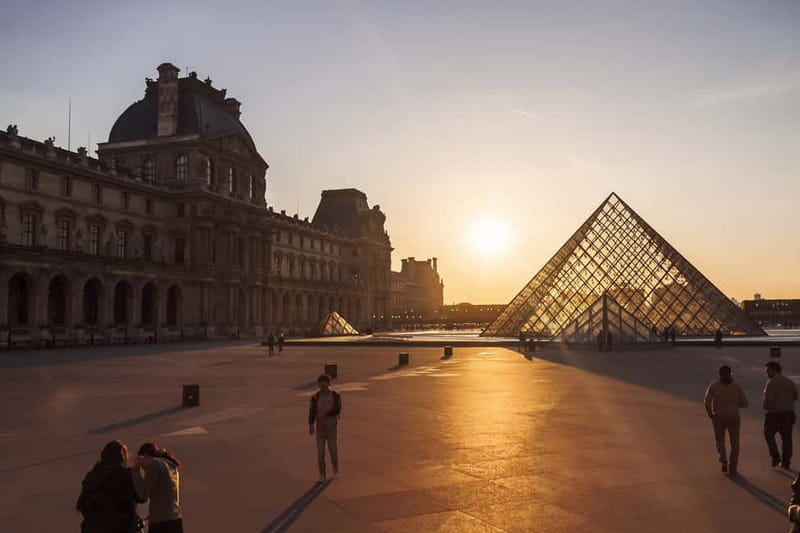
Your tour starts at the Arc de Triomphe du Carrousel, the smaller triumphal arch directly in front of the Louvre. This is not the Arc de Triomphe at the top of the Champs-Élysées, a mistake that would put you far from the meeting point.
Arrive 15 minutes early. Look for the statue on the left side when you face the arch, next to the Arc du Carrousel and opposite the Louvre pyramid at the entrance to the Tuileries Gardens. The guide carries a green Walks sign.
This meeting point can be harder to spot than expected. The sign may be small, and the open space around the arch has plenty of people and tour groups. I would not arrive at the last minute. Give yourself time to identify the statue and confirm that you have found the right guide.
The tour ends back at the meeting point, with a drop-off at either the Arc du Carrousel or the Louvre Museum. There is no hotel pickup, so plan your route to the arch before leaving your accommodation.
More ways into the Louvre:
- Paris: Louvre Museum Timed-Entrance Ticket
★ 4.6 · 71,977 reviews - Paris: Louvre Guided Tour with Reserved Access & Boat Cruise
★ 4.3 · 16,353 reviews - Louvre Museum Masterpieces Guided Tour with Access
★ 4.5 · 12,023 reviews
Entering the Louvre without wasting your morning
The skip-the-line ticket is one of the strongest practical reasons to book this experience. The Louvre has several checkpoints and a huge flow of people, so a guided entrance can protect a short Paris schedule from being eaten by queues.
Skip-the-line does not mean you walk straight from the street to the Mona Lisa. You still need to pass the museum’s entry procedures, and the group may stop for toilets or bag checks. That is why part of the two-hour visit is spent getting fully inside and moving into the galleries.
The tour description gives a two to three hour duration, while the guided visit is described as two hours. In practice, plan your morning around the full time range. One important detail is that some people find the actual gallery time closer to an hour and a half once entry and practical stops are counted.
That is not necessarily a flaw. The Louvre is a working museum with security rules, and the guide cannot control every delay. Still, you should not book this tour expecting two uninterrupted hours of art discussion.
The Louvre building is part of the lesson
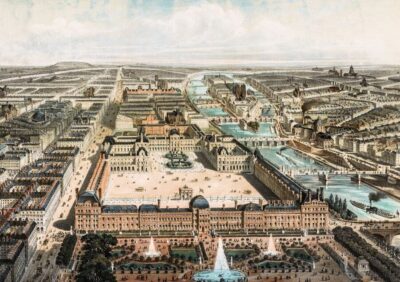
The Louvre is more than a container for paintings and sculpture. The building began as a royal fortress and later became a palace, and the tour includes its opulent stonework, decorated rooms, and elaborate frescoes.
As you walk between the artworks, the guide explains how royal dramas and changing rulers shaped the building. This helps you understand why the Louvre feels so grand and why getting from one gallery to another can take time.
I like this part of the visit because it gives the museum a physical story. You are not simply marching from one famous object to the next. The rooms themselves show how France’s royal and artistic ambitions grew over time.
The building is also tiring. You walk at a moderate pace through large public galleries, often stopping in crowded spaces. Comfortable shoes are essential, and you should carry only what you need.
Venus de Milo and the ancient sculpture route
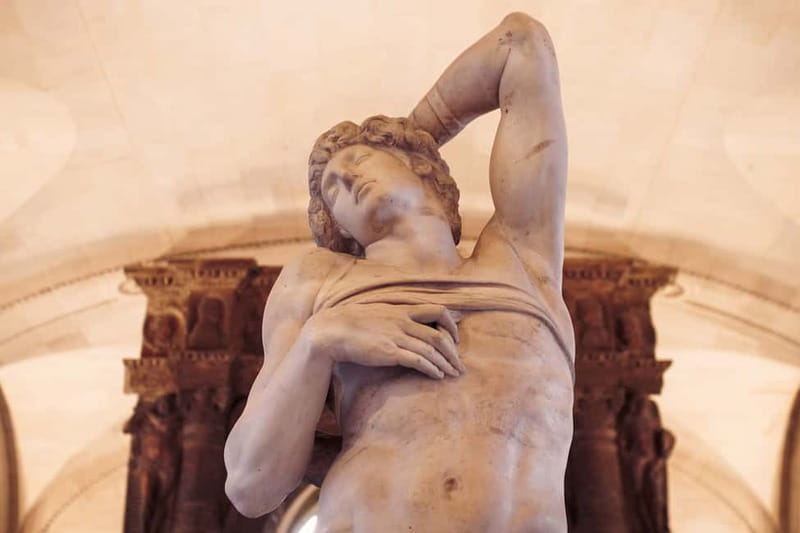
The Venus de Milo is one of the Louvre’s essential stops. This ancient Greek statue has become a symbol of classical beauty, but a guide can point out details that are easy to miss when you are surrounded by a crowd and focused on taking a photograph.
The tour also leads you to the Winged Victory of Samothrace, a second-century BC sculpture placed dramatically at the top of a grand staircase. Its position matters. You see the figure from a distance as you approach, then watch the shape and movement change as you get closer.
The work is often described as the greatest masterpiece of Hellenistic sculpture. That claim is big, but the statue earns attention through its sense of motion and the way its wings and drapery seem shaped by wind.
These stops give the tour a useful balance. The Mona Lisa is a Renaissance painting, while Venus de Milo and Winged Victory belong to the ancient world. You get a quick look at different periods and forms without needing an art degree.
A few more Paris ideas to compare
- Versailles: Skip-the-Line Tour of Palace with Gardens Access
★ 4.7 · 9,778 reviews - Versailles: Skip-the-Line Guided Palace Tour and Full Access
★ 4.6 · 5,214 reviews - Louvre Museum: Skip-the-Line Small Group Guided Tour
★ 4.6 · 3,960 reviews - From Paris: Versailles Skip-the-Line Tour & Gardens Access
★ 4.7 · 3,011 reviews
Mona Lisa: famous, crowded, and still worth seeing
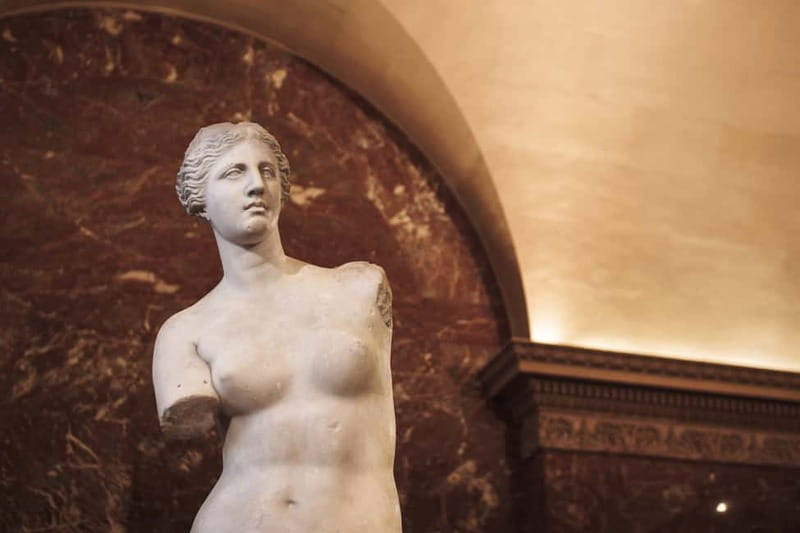
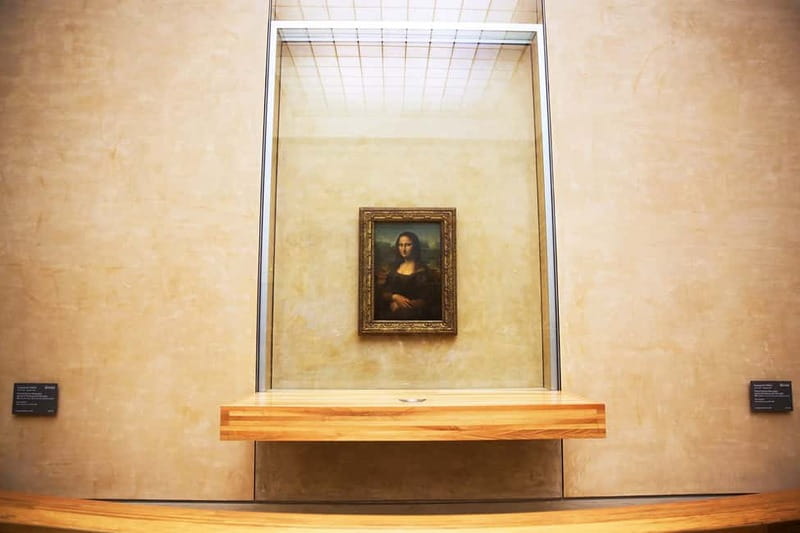
The Mona Lisa is the tour’s headline attraction, and your guide explains why Leonardo da Vinci’s small portrait has become one of the most important paintings in the world. You learn about the painting’s mystery, its reputation, and the details that keep people looking.
Be realistic about the viewing conditions. The room can be packed, and getting close to the painting may be difficult. A guide cannot remove the crowd or guarantee a quiet look. Museum staff control the viewing area, and your time in front of the painting may be brief.
Still, there is value in having the guide frame the experience before you see it. Without context, the Mona Lisa can become a quick photograph followed by confusion about why the work is so famous. With an explanation of da Vinci’s methods, the sitter’s expression, and the painting’s place in art history, the visit has more meaning.
One practical benefit of the tour is that you do not have to find the Mona Lisa yourself. The Louvre’s scale and signs can make the route seem obvious until you are standing at the wrong end of a long corridor.
Michelangelo’s Slaves and the power of sculpture
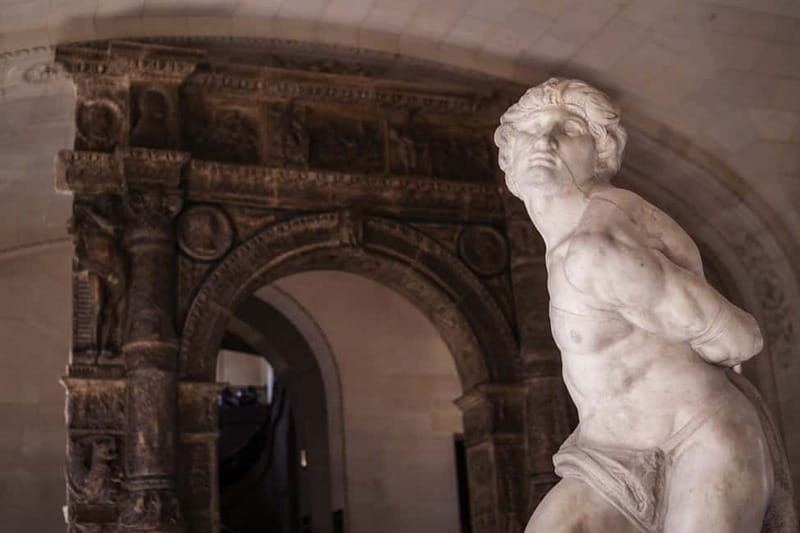
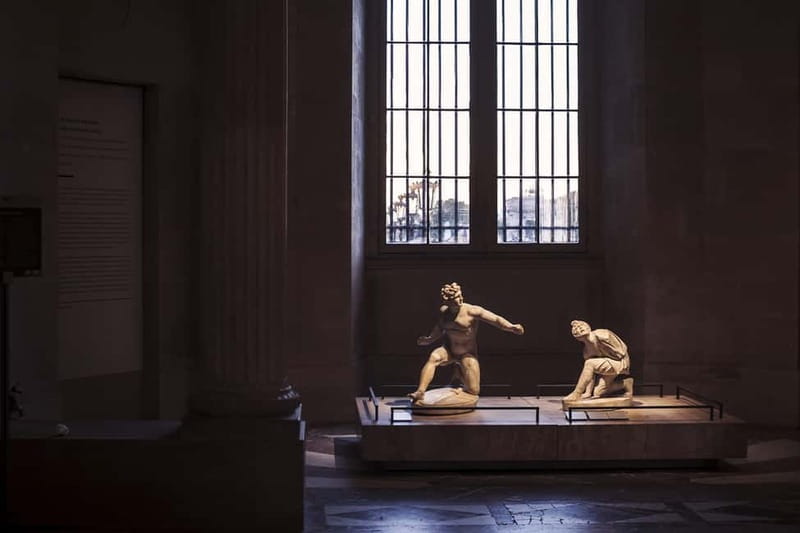
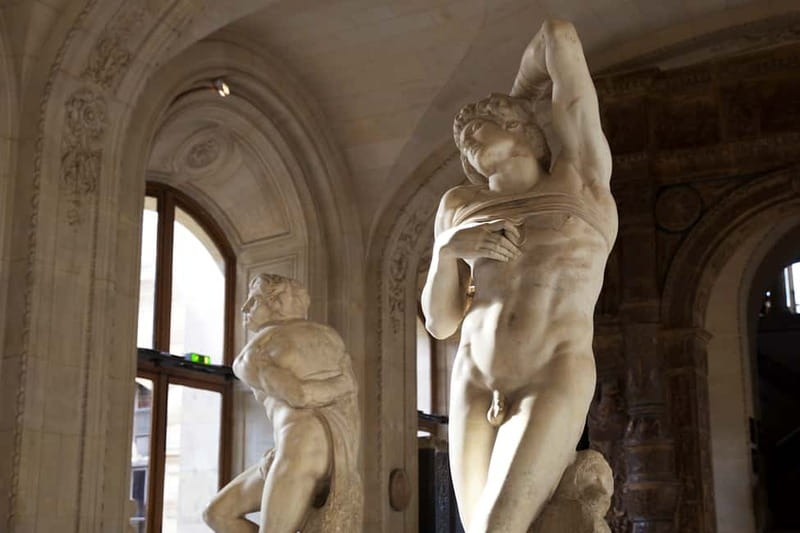
Michelangelo’s Slaves add another important stop. The unfinished figures show the sculptor’s handling of the stone and create a different experience from the polished surfaces of the Venus de Milo.
A guide can help you look at what is present and what appears incomplete. The rough stone is not simply a sign that the work was abandoned. It becomes part of the way you think about Michelangelo’s process and the human forms emerging from the material.
This is one of the places where a good guide matters most. You can admire the figures alone, but a clear explanation gives you a way to read the sculpture. The tour is not just pointing out famous names. It connects the works to artists, technique, and changing ideas about beauty.
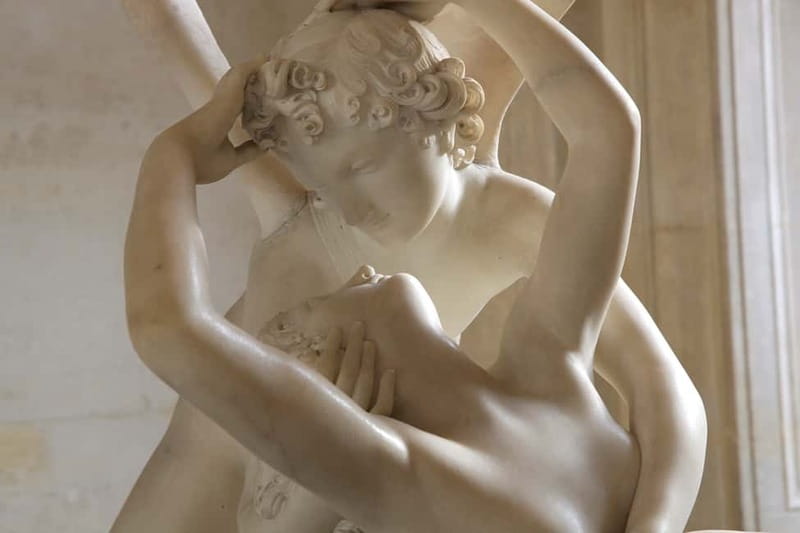
The route also includes artists such as Antonio Canova, Théodore Géricault, Eugène Delacroix, and Jacques-Louis David. You may not spend equal time with each one, but their work helps fill out the story of French and European art beyond the three most famous objects.
Why the guide makes the difference
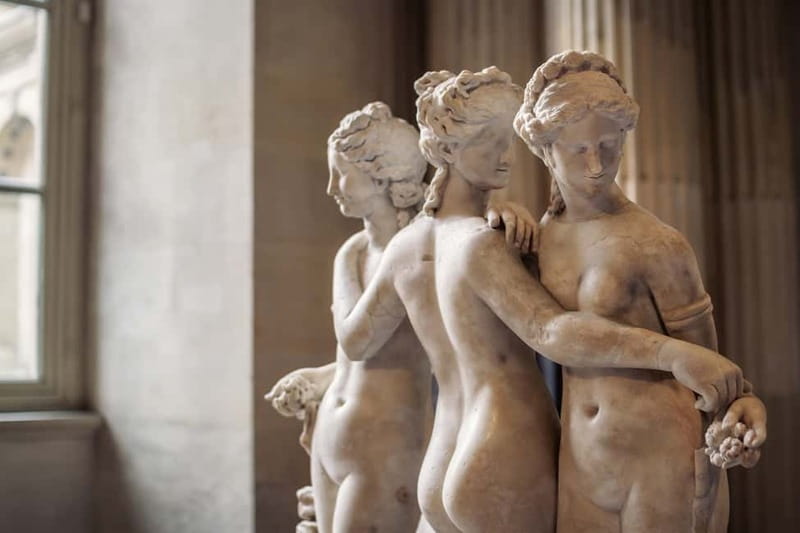
The strongest part of this experience is the human explanation. Guides such as Adam, Laurence, Rosaria, Nancy, Lee, Abby, Alberto, Avi, Violeta, Nazali, and Clare have been praised for clear delivery, humor, energy, and strong art knowledge.
Your guide may use a lively style, or may focus more quietly on visual details. The important point is that the tour depends heavily on the individual leading it. A strong guide keeps the pace moving, answers questions, and chooses details that make each work easier to understand.
The personal headset is a practical help. Louvre galleries can be noisy, and a guide speaking to a group without audio equipment is easy to lose. With the headset, you can stand at a slight distance, look at the artwork, and still follow the explanation.
There is a small tradeoff. Headsets keep the group together, but they can make the experience feel less spontaneous than wandering alone. For a first visit, I consider that a fair exchange because the museum is so large and the route is easy to lose.
Choosing the 9:30 AM departure
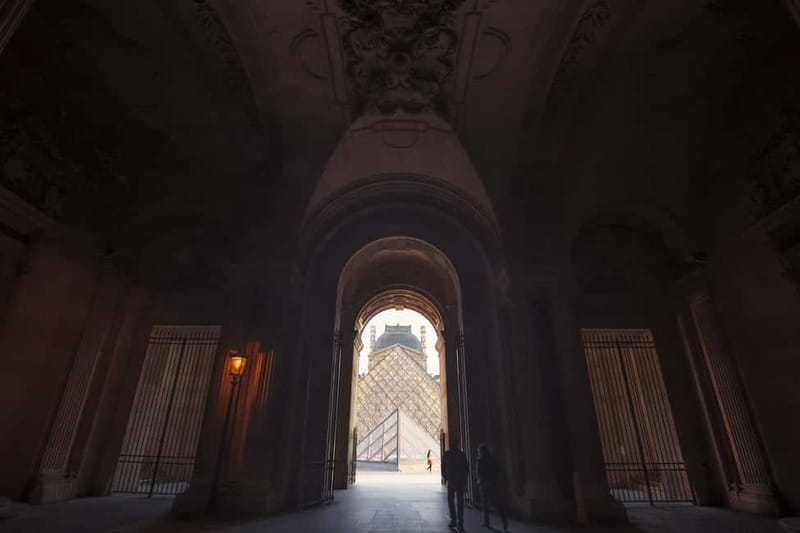
If you have a choice, I would look first at the 9:30 AM departure. This time is limited to a maximum of six people, which can make it easier to ask questions, hear the guide, and stay close to the group.
A small group also helps at the most crowded works. It does not guarantee a private viewing, but the guide can communicate more directly and keep the visit from feeling like a large procession.
Later departures may suit your schedule, but they can feel less intimate. One afternoon departure begins at 3:45 PM, and that timing leaves less room to explore the museum before closing compared with an earlier start. Check the available starting times carefully before booking.
If your party has more than six people, ticketing availability may require the group to split up. That is worth knowing if you are traveling with a large family or several friends. You may not all enter or tour together.
Is $67 a fair price?
At $67 per person, this is not the cheapest way into the Louvre. You are paying for the admission ticket, a local English-speaking guide, skip-the-line access, headsets, and a planned route through a museum that can be overwhelming on your own.
I think the price is fair for a first visit, especially if you have only a few hours in Paris. The guide saves you from spending precious time finding the major works and gives you enough context to appreciate them. That combination is more useful than admission alone.
The value is weaker if you already know the Louvre well or want to spend an entire day with one department. This tour moves at a set pace and focuses on headline works. You will not have much time for a slow study of a lesser-known painting or a long visit to a single collection.
The tour can be a good first step: see the main works with a guide, then continue alone after the guided portion. One person specifically valued having time to explore independently afterward. That is the best way to make the $67 work harder.
Who should book this experience?
I would recommend it to first-time Louvre visitors, short-stay visitors, families who want a clear plan, and anyone uneasy about navigating a huge museum. It also suits people who enjoy art more when someone explains the story, technique, and setting.
You need to walk at a moderate pace without difficulty. The experience is not suitable for wheelchair users, people with mobility impairments, or strollers. Oversize luggage, large bags, and baby strollers are not allowed, so arrive prepared to travel light.
This is an English-language tour. If you need another language, this is not the right choice based on the available information.
You also need to provide the full first and last names of everyone in your party, including children, when booking. Missing names may lead to cancellation, so treat this as a required part of the reservation rather than a minor formality.
Tips for getting more from the two hours
Arrive early enough to find the statue and green sign without stress. Keep your passport or ID card with you, wear comfortable shoes, and avoid bringing a large bag.
Expect the Mona Lisa room to be crowded. Listen to the explanation, take your look, and resist judging the entire museum by how close you get to one painting.
Pay attention to the transitions between rooms. The guide’s route through the building is part of the service, and the palace interiors add context that you would miss if you treated the museum as a string of isolated objects.
At the end, ask yourself which work you want to revisit. If time and museum rules allow, staying on after the tour gives you a chance to return to a favorite sculpture or explore another gallery at your own pace.
Areas of the Louvre can close without warning, and strikes may affect access. The guide may need to change the route on the day. That flexibility is useful, but no tour can promise every listed work will be available.
Should you book the Louvre highlights tour?
Book it if you want the Louvre’s essential works without spending a full day planning your own route. The combination of skip-the-line entry, headsets, and a strong art historian guide gives you a practical introduction to a famously confusing museum.
Choose the 9:30 AM option if possible, especially for a party of six or fewer. The small group and earlier start give you the best chance of a focused visit.
Skip it if you prefer complete freedom, already know the museum, or want to concentrate on collections beyond the headline pieces. For most first-time visitors, though, $67 is a reasonable price for saving time and understanding what you are looking at.
FAQ
Where does the Louvre tour meet?
Meet at the statue next to the Arc de Triomphe du Carrousel in front of the Louvre, opposite the pyramid and at the entrance to the Tuileries Gardens. When facing the arch, use the winged statue on the left.
Is this the Arc de Triomphe on the Champs-Élysées?
No. The meeting point is the Arc de Triomphe du Carrousel beside the Louvre, not the Arc de Triomphe de l’Étoile on the Champs-Élysées.
How early should I arrive?
Arrive 15 minutes before the scheduled start time so you can find the guide and green Walks sign without rushing.
How long does the experience last?
The activity lasts about two to three hours, and the guided Louvre visit is described as two hours. Entry procedures, security, bag checks, and practical stops can use part of that time.
Is the tour conducted in English?
Yes. The live guide and tour are in English.
What works of art are included?
The route includes the Mona Lisa, Venus de Milo, Winged Victory of Samothrace, and Michelangelo’s Slaves. The guide also discusses works and artists including Canova, Géricault, Delacroix, and David.
Can I stay at the Louvre after the tour?
Yes. The guided portion ends back at the meeting point, and you may have time to continue exploring the museum on your own.
Is the tour suitable for wheelchairs, strollers, or people with mobility impairments?
No. The experience is not suitable for wheelchair users, people with mobility impairments, or strollers. You should be able to walk at a moderate pace without difficulty.
Newest additions around Paris
- Family escape Game with kids and teens on the Île de la Cité★ 4.5 · 11 reviews
- Private Photoshoot with the Iconic Eiffel Tower in Paris★ 5.0 · 11 reviews
- 2-day Private Mont Saint-Michel, 3 Loire Castles, D-Day Express★ 4.5 · 11 reviews
- Paris: Batobus Hop-On Hop-Off Cruise & Landmarks Audio Tour★ 3.0 · 11 reviews
- Paris Revolutionary Walking Tour: Iconic French Sights & Stories★ 5.0 · 11 reviews
- Guided and Private Tour of 3 hours through Paris aboard a Citroën 2cv★ 5.0 · 11 reviews
- Kids in the Kitchen – CrOisSaNtS★ 4.0 · 11 reviews
- Paris: Ghosts and Dark Stories Guided Walking Tour★ 4.1 · 11 reviews
Louvre Museum Tours, compared.

Louvre Guided Tour with Reserved Access & Boat Cruise
Read our review →
Louvre Museum Masterpieces Guided Tour with Access
Read our review →
Louvre Museum Entry Ticket With Host and River Cruise
Read our review →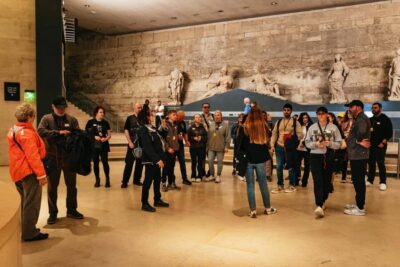
Priority Access Louvre with Host -Direct to Mona Lisa
Read our review →
Mona Lisa & Louvre Masterpieces Tour with Reserved Access
Read our review →
Louvre Museum – Exclusive Guided Tour (Entry Included)
Read our review →
Louvre Reserved Ticket and River Cruise Combo
Read our review →Browse the lists this tour appears in