
Reviewed · LOUVRE MUSEUM TOURS
Paris: Skip-the-Line Louvre Highlights Guided Tour
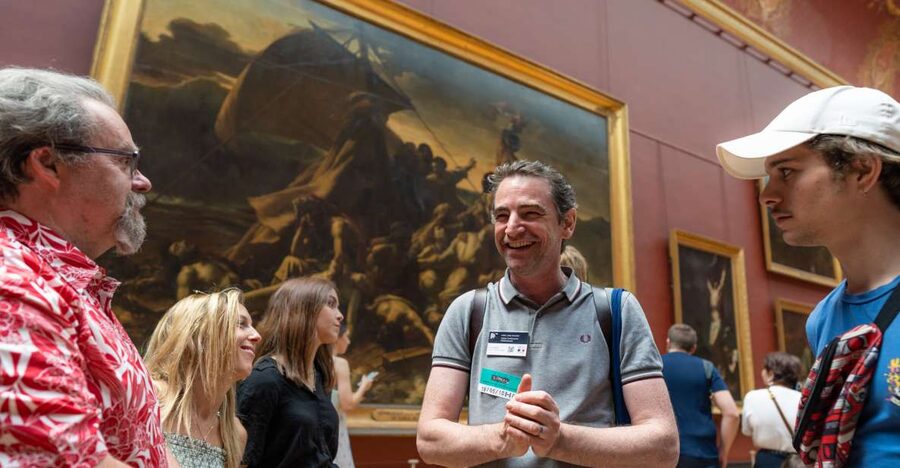
The Louvre’s greatest challenge is not finding the Mona Lisa. It’s finding your way through nearly 10 miles of galleries without losing half a day. This tour takes you straight to the museum’s major works, then adds enough background to make the paintings and sculptures more than famous names on a checklist. The small group, limited to six people, is a major advantage.
I like the expert-led route and the chance to stay inside after the guided portion ends. Guides such as John, Claire, Will, Astrid, and Caroline have been praised for clear explanations, art-history insight, and keeping children engaged. The main drawback is the price: $137 per person for 1.5 hours is a serious fee, especially when the museum can still be crowded once you enter.
In This Review
- Key points at a glance
- Why a guided Louvre visit helps
- Meeting at the Arc de Triomphe du Carrousel
- Moving through the Louvre’s essential works
- The Mona Lisa
- Winged Victory of Samothrace
- Venus de Milo
- French paintings and Napoleon’s coronation
- The French Crown Jewels
- Egyptian antiquities
- Napoleon III’s apartments
- Michelangelo and lesser-known works
- How the 1.5-hour route feels
- What the skip-the-line ticket really saves
- Is $137 a fair price?
- Practical planning for bags, identification, and access
- Who will get the most from this Louvre tour?
- Should you book the Paris Louvre Highlights Guided Tour?
- FAQ
- How long is the Louvre guided tour?
- Where does the tour begin?
- Where does the activity end?
- Is the ticket included?
- Can I stay in the Louvre after the tour?
- What language is the tour offered in?
- What should I bring to the Louvre?
Key points at a glance
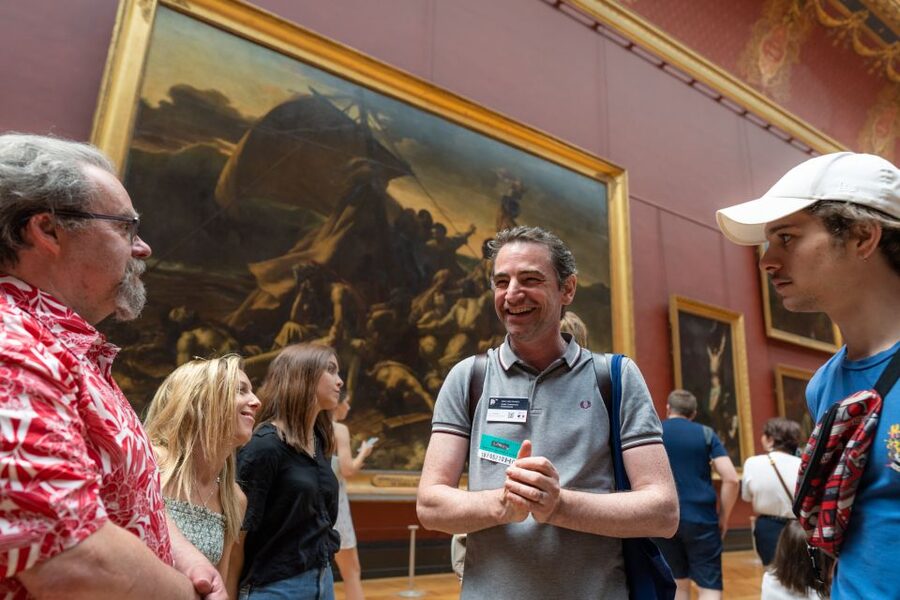
- Six people maximum: A small group makes it easier to hear the guide and ask questions in crowded rooms.
- The classic Louvre highlights: You’ll see the Mona Lisa, Winged Victory, Venus de Milo, French Crown Jewels, Napoleon III’s apartments, and major French paintings.
- A guide who handles the maze: The Louvre was not built as a museum, and its long, awkward routes can be confusing without help.
- English-language instruction: The tour is led by a live, accredited local guide in English.
- More museum time afterward: Once the guided service ends, you can continue exploring until closing time if you wish.
- Plan for security and bags: Passport or ID is required, and luggage or bags larger than 55 by 35 by 20 centimeters are not allowed.
Why a guided Louvre visit helps

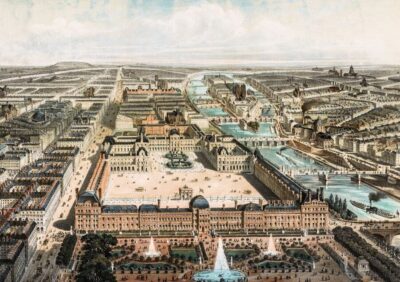
The Louvre began as a fortress and later became a royal palace, so its floor plan makes little sense if you approach it like a modern museum. Long wings, grand staircases, changing gallery numbers, and multiple historic sections can turn a first visit into a tiring march.
A good guide gives you a route and a reason to follow it. Instead of simply pointing out famous objects, the guide can explain why they matter, how they fit into the museum’s past, and what details to notice before the crowd carries you onward.
That is especially useful if you have only a short time in Paris. You will not see everything in 90 minutes, but you can see the Louvre’s essential works without spending your limited museum time searching for them.
The small-group format matters here. With up to six participants, the guide can usually keep the group together more easily than a large tour, and you have a better chance of asking about a particular painting or sculpture. Several guides, including John Edward, Herve, Christina, and Will, have been praised for combining art knowledge with a friendly, engaging manner.
More ways into the Louvre:
- Paris: Louvre Museum Timed-Entrance Ticket
★ 4.6 · 71,977 reviews - Paris: Louvre Guided Tour with Reserved Access & Boat Cruise
★ 4.3 · 16,353 reviews - Louvre Museum Masterpieces Guided Tour with Access
★ 4.5 · 12,023 reviews
Meeting at the Arc de Triomphe du Carrousel
The tour begins at the Arc de Triomphe du Carrousel, at 75001 Paris. This is the smaller triumphal arch near the Louvre and the Tuileries, not the much larger Arc de Triomphe at the top of the Champs-Elysees.
Give yourself time to find the correct arch. Paris has more than one triumphal monument, and arriving at the wrong one can create an unnecessary sprint before your start time. Your confirmation should be checked carefully for the meeting instructions and departure time.
The activity ends back at the meeting point. That detail is useful when planning the rest of your day, although you can remain in the museum after the guided service if you want to keep exploring. There is no hotel pickup or drop-off, so you handle your own way to and from the Louvre.
Moving through the Louvre’s essential works
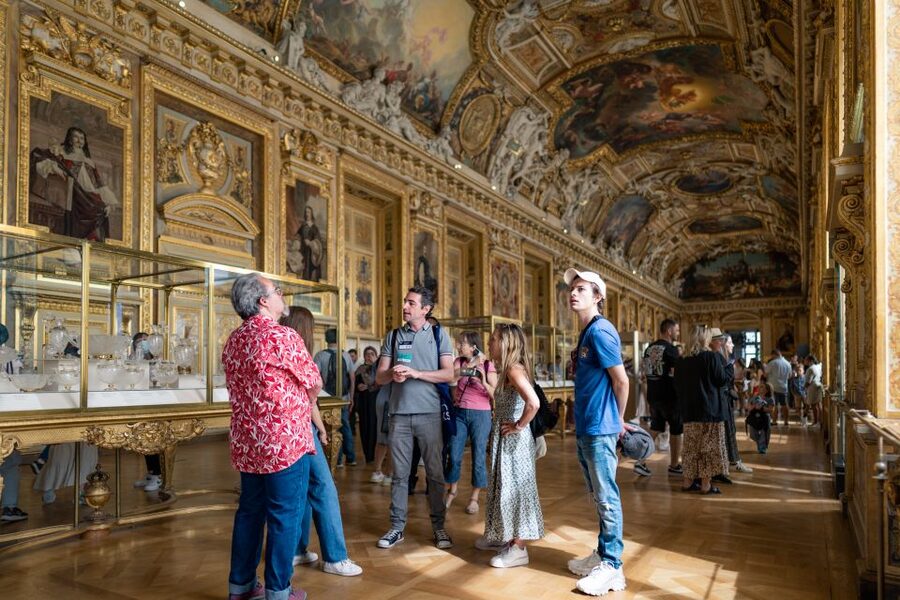
The exact order can change with gallery access and crowd conditions, but the route is built around the Louvre’s best-known rooms and works. The guide’s job is not simply to name them. It is to help you understand what you are seeing before moving on.
The Mona Lisa
The Mona Lisa is usually the biggest crowd magnet, and the time spent approaching the painting can feel out of proportion to its size. A guide makes that wait more useful by explaining Leonardo da Vinci’s work, the painting’s reputation, and the details that have helped make it so famous.
You should expect other people around you. The skip-the-line entry helps you reach the museum faster, but it does not create a private viewing area inside. One useful feature of a guide is knowing how to position the group, manage the approach, and keep the visit focused rather than letting the crowd dictate the whole experience.
Do not expect a quiet, solitary moment with the painting. Think of this stop as a chance to see an important work with context, then move on to the many other rooms that are easier to miss.
A few more Paris ideas to compare
- Versailles: Skip-the-Line Tour of Palace with Gardens Access
★ 4.7 · 9,778 reviews - Versailles: Skip-the-Line Guided Palace Tour and Full Access
★ 4.6 · 5,214 reviews - Louvre Museum: Skip-the-Line Small Group Guided Tour
★ 4.6 · 3,960 reviews - From Paris: Versailles Skip-the-Line Tour & Gardens Access
★ 4.7 · 3,011 reviews
Winged Victory of Samothrace
Winged Victory is one of the Louvre’s great sculptural showpieces. Its placement at the top of the Daru staircase gives it a dramatic setting, and the sculpture’s movement becomes clearer as you approach it from below.
This is the kind of work that benefits from a guide’s explanation. You may notice the sweeping fabric and strong forward motion, but an art historian can direct your eye to the way the sculpture uses the staircase, posture, and missing elements to create its effect.
The stop also helps you understand that the Louvre is not only a collection of famous paintings. Its sculptures, architecture, and grand circulation spaces are part of the experience.
Venus de Milo
The Venus de Milo is another essential stop. Its fame can make it easy to glance, take a photograph, and leave, but the guide can give you a framework for looking at its pose, scale, and presentation.
As with the Mona Lisa, the room may be crowded. The value here is not a long private viewing. It is the chance to see the sculpture as part of a guided sequence rather than wandering past it without understanding why it has such a powerful place in popular culture.
French paintings and Napoleon’s coronation
The Louvre’s large-format canvases need room to breathe, and the guide can help you read the composition when you are standing among many other people. Liberty Leading the People and The Coronation of Napoleon are especially useful examples of how French artists used scale, gesture, costume, and historical drama.
These paintings also add balance to a route dominated by universally famous objects. You get a better sense of French art and politics, rather than leaving with only three names in your notebook.
A guide can point out smaller details that are easy to miss in a large canvas. You might notice figures, symbols, or choices of presentation that make more sense once someone explains the setting and purpose of the work.
The French Crown Jewels
The French Crown Jewels offer a different kind of spectacle. The objects are smaller than the monumental paintings and sculptures, but their materials, craftsmanship, and connection to royal power give the collection a distinct appeal.
This section is a good reminder that the Louvre covers far more than Western painting. Depending on the route and access on the day, your guide may connect the jewels with the royal palace that once occupied the site.
Egyptian antiquities
The Egyptian collection reaches back thousands of years and gives the tour a wider time span than the French galleries alone. A guide can help you place the objects within the larger story of ancient art and explain why the Louvre’s collection is so broad.
You should not expect to cover every Egyptian gallery in a short highlights tour. The point is to see selected pieces and understand how much more the museum contains beyond its headline attractions.
Napoleon III’s apartments
The apartments of Napoleon III are among the Louvre’s most lavish rooms. Their furniture, decoration, and formal arrangement show the building’s later life as a palace and a seat of power.
I particularly like this part of the route because it changes the pace. After crowded galleries and famous masterpieces, the ornate salons let you look at the Louvre as a historic residence, not only as a museum.
These rooms also explain the building’s awkward design. The Louvre was adapted over centuries, and the grand apartments make that past visible in a way a modern white-walled gallery cannot.
Michelangelo and lesser-known works
The tour includes sculptural works by Michelangelo and other pieces that you might pass without noticing on your own. That is one of the strongest reasons to book a guide rather than follow a printed list of famous objects.
The guide may show you a work that was not on your original must-see list, then explain why it deserves attention. The most useful guides do not treat the Louvre as a race from one celebrity object to the next. They use the famous pieces as anchors and add smaller discoveries along the way.
How the 1.5-hour route feels
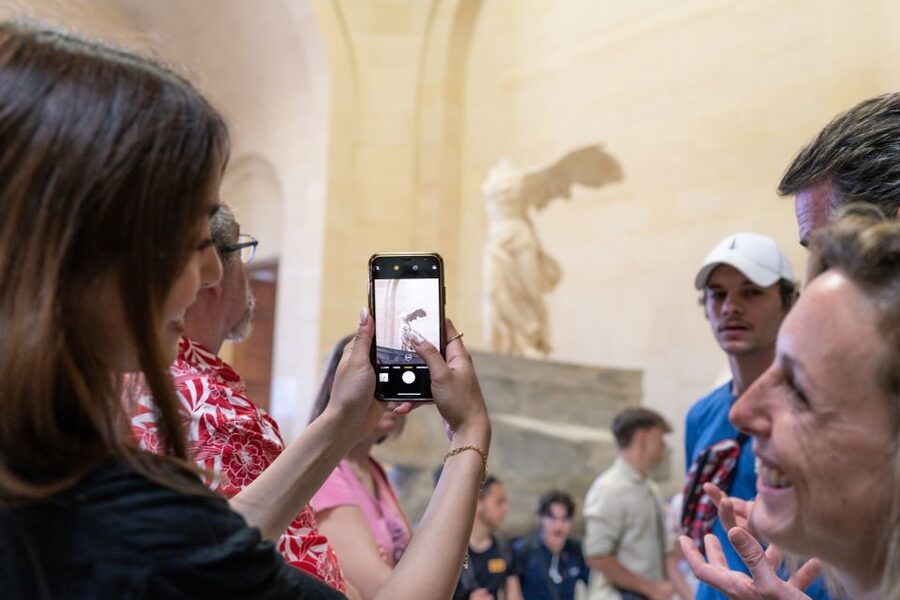
A 90-minute tour is a brisk introduction. You will walk, stop, listen, and move on. It is long enough to build a basic map of the museum and see major highlights, but too short for a relaxed look at every room.
That pace suits a first-time visit with limited time in Paris. It also works well if you plan to spend the rest of the day elsewhere and want a clear introduction rather than an all-day art program.
The supplied activity details also refer to a 3-hour guided option. Since the stated duration is 1.5 hours and starting times can vary, check the exact option before paying. A 3-hour route would give the guide more time for side galleries, questions, and slower viewing, while the shorter format is better for a tight schedule.
Several guides have been praised for pacing. Astrid was noted for a well-paced, informative tour, while John Edward was praised for using waiting time productively. That matters at the Louvre, where a short pause near a famous work can otherwise feel like dead time.
What the skip-the-line ticket really saves
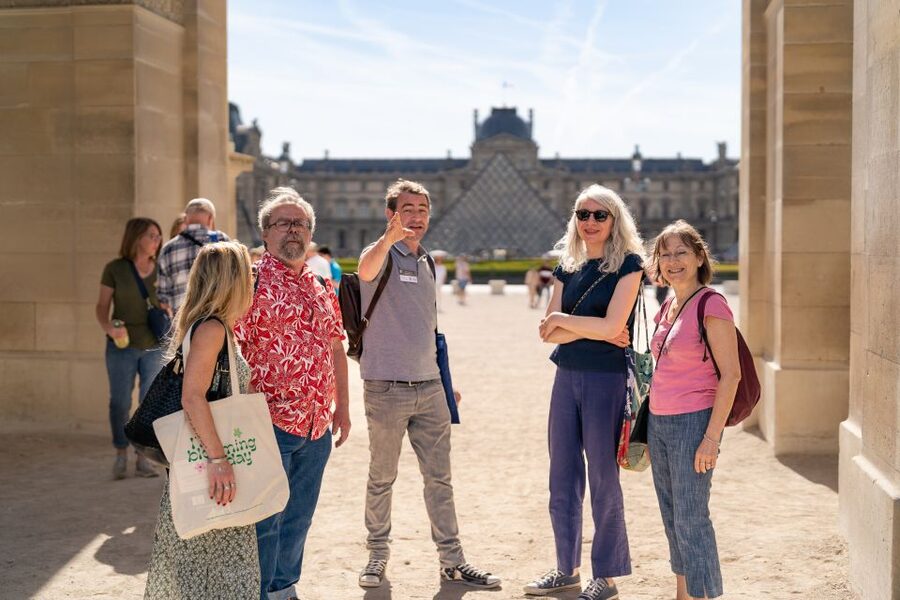
Pre-reserved entry tickets are included, and the tour lets you skip the ticket line. This is useful because the Louvre’s entrance process can consume valuable time, especially when you have planned a short visit.
Skip-the-line does not mean skip every delay. Security checks remain, and increased security measures can affect lines. Once inside, the Mona Lisa and other famous rooms may still be crowded.
One participant specifically noted that a more expensive timed ticket would not have removed the crowd inside the museum. That is a fair warning. You are paying to simplify entry and gain a route through the collection, not to receive a private Louvre.
The real saving is mental as much as physical. You do not need to spend your first hour deciding which wing to enter or trying to match a map to a confusing corridor. For some people, that guidance is worth more than the minutes saved at the entrance.
Is $137 a fair price?
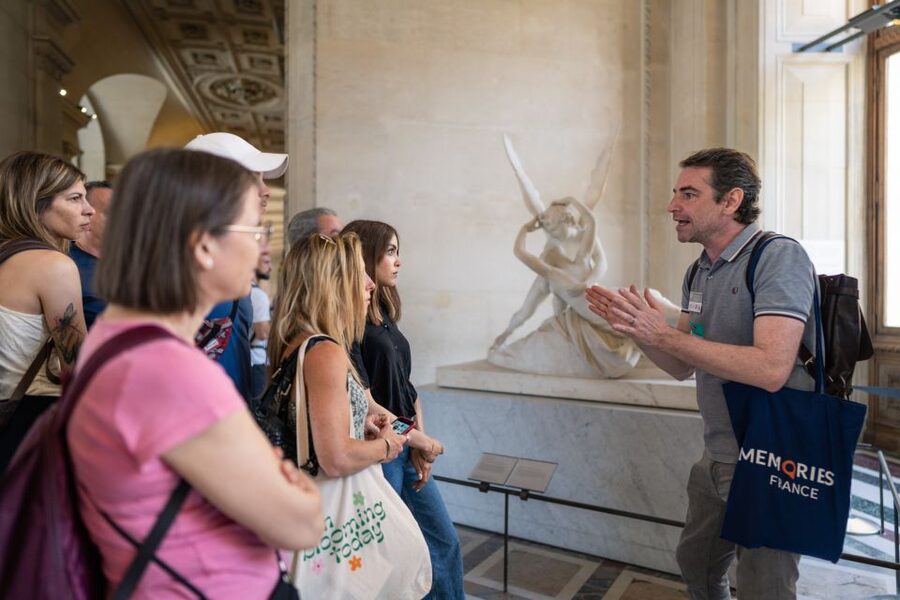
At $137 per person, this is not a budget museum visit. You are paying for the pre-reserved ticket, a fully guided tour, an accredited local guide, and a group capped at six people.
The value is strongest for a first Louvre visit, a short stay in Paris, or anyone who finds major museums tiring to plan. A strong guide can turn a huge collection into a readable story and help you see works you might otherwise miss.
The value is weaker if you already know the Louvre well, prefer wandering alone, or have several hours to study the museum at your own speed. You will still face crowds, and the guided portion is short compared with the size of the building.
Guide quality is central to the price. The strongest experiences described by name involved guides such as Megan, John, Claire, Caroline, Will, Christina, Herve, Astrid, and Humberto. Their praised strengths were clear English, art-history training, warmth, good pacing, and the ability to keep families and teenagers interested.
You cannot choose a particular guide from the information provided, so treat those names as examples of the level you may receive, not a guarantee. The important feature is the small group and the live English instruction.
Practical planning for bags, identification, and access
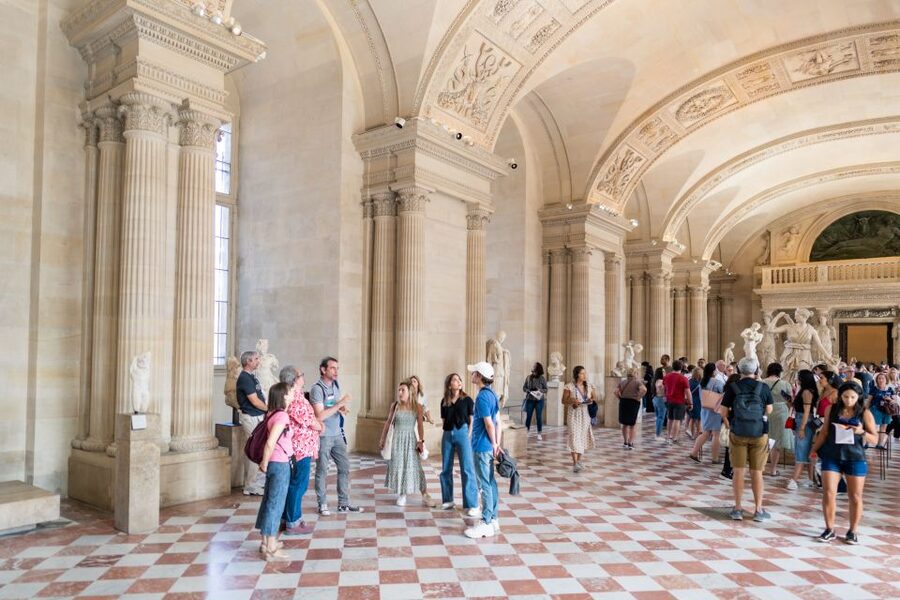
Bring a passport or identity card. You should also travel light. Luggage and large bags are not allowed, and any item exceeding 55 by 35 by 20 centimeters cannot enter the museum.
That rule can affect your schedule. Do not arrive with a suitcase and assume you can take it inside, especially if you are going directly from a hotel or train station. A small day bag is the safer choice.
The activity information is inconsistent about wheelchair access. One section says the tour is wheelchair accessible, while another says it is not suitable for wheelchair users. Confirm current access arrangements with the provider before booking if this affects you.
The tour is offered in English only, with a live local guide. Cancellation is free up to 24 hours before the activity, and the reserve-now, pay-later option can help if your Paris plans are still changing.
Who will get the most from this Louvre tour?
I would choose this tour for:
- First-time Louvre visitors who want the essential works without planning a route.
- Couples or families who want explanations rather than a self-guided checklist.
- Parents bringing teenagers, since several guides have been praised for making the art engaging for younger people.
- People with only a short window in Paris.
- Repeat visitors who want a fresh art-history perspective and a few works beyond the usual three highlights.
- Anyone who dislikes large tour groups and wants a better chance to hear the guide.
I would think twice if you want a quiet, unhurried museum session. The Louvre remains crowded, and a highlights route cannot give every gallery the time it deserves.
Should you book the Paris Louvre Highlights Guided Tour?
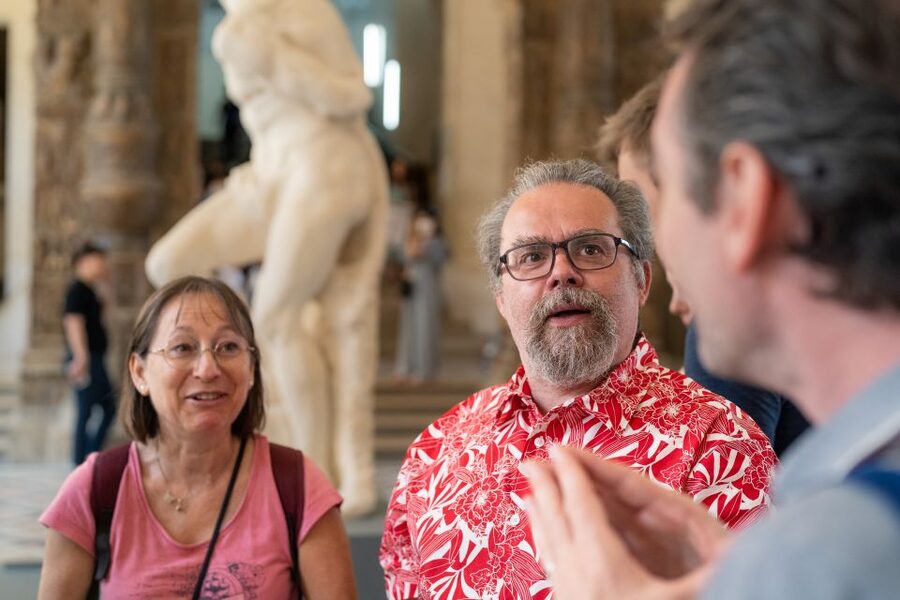
Book it if the Louvre feels intimidating, your Paris schedule is tight, or you want the famous works explained by an art specialist. The combination of pre-reserved entry, a six-person limit, and the option to stay after the tour gives you both structure and flexibility.
Skip it if $137 feels too steep for a short guided visit or if you already have a detailed Louvre plan. You can spend that money elsewhere and explore independently, but you will need to handle the museum’s confusing layout and enormous choice yourself.
For most first-time visitors, I see this as a high-cost but practical introduction. Go in expecting crowds, a brisk route, and a better understanding of what you are seeing, not a private viewing of the Mona Lisa.
FAQ
How long is the Louvre guided tour?
The stated duration is 1.5 hours. The activity information also refers to a 3-hour guided option, so check the available choice and starting time when booking.
Where does the tour begin?
The meeting point is the Arc de Triomphe du Carrousel, 75001 Paris, France.
Where does the activity end?
The activity ends back at the meeting point.
Is the ticket included?
Yes. Pre-reserved Louvre entry tickets are included with the small-group guided tour.
Can I stay in the Louvre after the tour?
Yes. You can continue exploring the museum at your own pace after the guided service, until closing time if you wish.
What language is the tour offered in?
The tour is offered in English with a live local guide.
What should I bring to the Louvre?
Bring a passport or identity card. Do not bring luggage or oversized bags. Items larger than 55 by 35 by 20 centimeters are not permitted in the museum.
Newest additions around Paris
- Family escape Game with kids and teens on the Île de la Cité★ 4.5 · 11 reviews
- Private Photoshoot with the Iconic Eiffel Tower in Paris★ 5.0 · 11 reviews
- 2-day Private Mont Saint-Michel, 3 Loire Castles, D-Day Express★ 4.5 · 11 reviews
- Paris: Batobus Hop-On Hop-Off Cruise & Landmarks Audio Tour★ 3.0 · 11 reviews
- Paris Revolutionary Walking Tour: Iconic French Sights & Stories★ 5.0 · 11 reviews
- Guided and Private Tour of 3 hours through Paris aboard a Citroën 2cv★ 5.0 · 11 reviews
- Kids in the Kitchen – CrOisSaNtS★ 4.0 · 11 reviews
- Segway tour Capital sites★ 5.0 · 11 reviews
Louvre Museum Tours, compared.

Louvre Guided Tour with Reserved Access & Boat Cruise
Read our review →
Louvre Museum Masterpieces Guided Tour with Access
Read our review →
Louvre Museum Entry Ticket With Host and River Cruise
Read our review →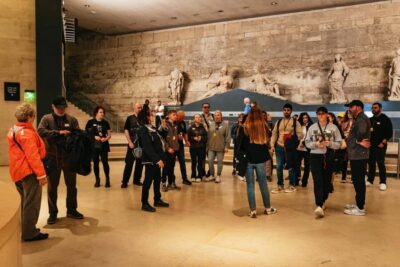
Priority Access Louvre with Host -Direct to Mona Lisa
Read our review →
Mona Lisa & Louvre Masterpieces Tour with Reserved Access
Read our review →
Louvre Museum – Exclusive Guided Tour (Entry Included)
Read our review →
Louvre Reserved Ticket and River Cruise Combo
Read our review →Browse the lists this tour appears in