
Reviewed · LE MARAIS TOURS
Paris Marais Quarter 2-Hour Private Walking Tour
The Marais tells Paris’s story in fast-forward: a drained medieval swamp became an aristocratic quarter, a Jewish center, a neglected slum, and now one of the city’s most sought-after districts. I like that this private two-hour walk connects famous sights with lesser-known corners, instead of treating the neighborhood as a string of pretty façades. I also like the focus on the Pletzl, the historic Jewish quarter, which gives the tour a stronger cultural center than a standard architecture stroll.
The main drawback is time. Two hours is enough for a sharp introduction, but not enough for long visits inside every site or much time for food, shopping, and museums. At $176 per person, the price makes the most sense for a small private group that values personal attention and a guide who can adjust the pace.
In This Review
- Key points at a glance
- Why the Marais makes a strong two-hour introduction to Paris
- Starting at Étienne Marcel and the old Les Halles
- From medieval Paris to the Centre Pompidou
- Hôtel de Ville and the public face of Paris
- The Pletzl and Rue Pavée synagogue
- Hôtel de Sully and the Marais at its grandest
- Place des Vosges, the elegant heart of the route
- Finishing at Place de la Bastille
- How the $176 price works for a private group
- Which kind of visitor will enjoy this walk most
- Practical details that shape the day
- Should you book the Paris Marais private walk?
- FAQ
- Where does the Paris Marais walking tour meet?
- How long does the tour last?
- Is this a private tour?
- What languages are available?
- Which places are included on the route?
- Does the tour include food or drinks?
- Do tours operate in bad weather?
- Can I cancel for a full refund?
- Can I reserve now and pay later?
Key points at a glance
- Les Halles sets the scene: Begin near the former heart of Paris’s enormous central food market.
- The Pletzl adds human depth: Explore the Jewish quarter and see the synagogue on Rue Pavée.
- Place des Vosges is the visual high point: This elegant square shows the Marais at its aristocratic best.
- The route links old and new Paris: The medieval city helps explain why the modern Pompidou Centre feels at home here.
- Your guide shapes the experience: English, French, and Serbo-Croatian tours are available for private groups.
- The meeting point is easy to identify: Meet at Métro Étienne Marcel and look for the red canvas tote bag.
Why the Marais makes a strong two-hour introduction to Paris
Many Paris walks focus on one era or one famous monument. This one works differently. The Marais is a compact area where layers of the city sit close together, so a single street can lead you from medieval Paris to Renaissance power, Jewish heritage, royal ambition, urban decline, and modern art.
The neighborhood began as marshland. Once the land was drained, it became suitable for settlement and gradually moved toward the center of city life. That early transformation gives the tour a useful starting point: Paris was not simply built on ideal ground. It was altered, repaired, and reshaped over centuries.
I especially like this approach if you have already seen the Eiffel Tower, the Louvre, and Notre-Dame. The Marais offers a more local-scale picture of Paris. You are not standing before one giant monument. You are reading the city through streets, squares, civic buildings, religious sites, and changing uses.
The route also gives you a helpful way to understand the Marais today. Its polished streets and fashionable reputation are only one chapter. The district has had periods of high status, neglect, and renewal. A good guide can make those changes feel connected rather than random.
More Le Marais walks:
- Award-Winning Paris French Bakery Experience — Le Marais, 4th Arr
★ 4.5 · 1,186 reviews - Paris Le Marais Food Tour With 10+ Tastings, Cheese, Wine & More
★ 5.0 · 985 reviews - Paris Le Marais District Original Food and Wine Tasting Tour
★ 4.5 · 880 reviews
Starting at Étienne Marcel and the old Les Halles
The meeting point is at Métro Étienne Marcel, with your guide carrying a red canvas tote bag. That detail matters in a busy city. You have a simple visual marker, and the metro location gives the walk a practical starting point.
From here, the tour heads toward Les Halles, once the largest market in Paris. The market was a major source of food and daily movement for the city. Its importance was not only commercial. Places where food arrives, gets sold, and moves into homes often reveal how a city functions.
Today, Les Halles is not the same market district it once was, so this part of the walk depends on explanation as much as visual remains. Your guide helps you picture the old market and understand why the area mattered. I find that useful because it turns an ordinary urban starting point into a lesson about Parisian life.
The nearby Fontaine des Innocents adds another layer. It is one of the route’s historic markers, and its presence helps show how public fountains once served a practical role as well as an ornamental one. You should expect a stop for context and orientation rather than a long formal visit.
From medieval Paris to the Centre Pompidou
The Centre Pompidou is one of Paris’s most recognizable modern buildings, with its exposed structural and service elements. On this walk, it is not treated as an isolated modern-art stop. Instead, the guide connects it to the older city around it.
That link is one of the tour’s most interesting ideas. Modern Paris did not replace the medieval city in one clean sweep. New buildings, new uses, and new cultural institutions were placed among older streets and neighborhoods. The Pompidou Centre makes more sense when you see it as part of that ongoing change.
You may not have time for a museum visit during a two-hour walking tour, and admission is not included. Still, an exterior explanation can be valuable, especially if you plan to return later for the art collections. The walk helps you see the building as part of the Marais rather than as a separate attraction.
This is also a good point to notice the tour’s balance. It does not stay trapped in the past. The Marais is presented as a neighborhood that keeps changing, and the Pompidou Centre provides a clear modern counterpoint to older streets and buildings.
Hôtel de Ville and the public face of Paris
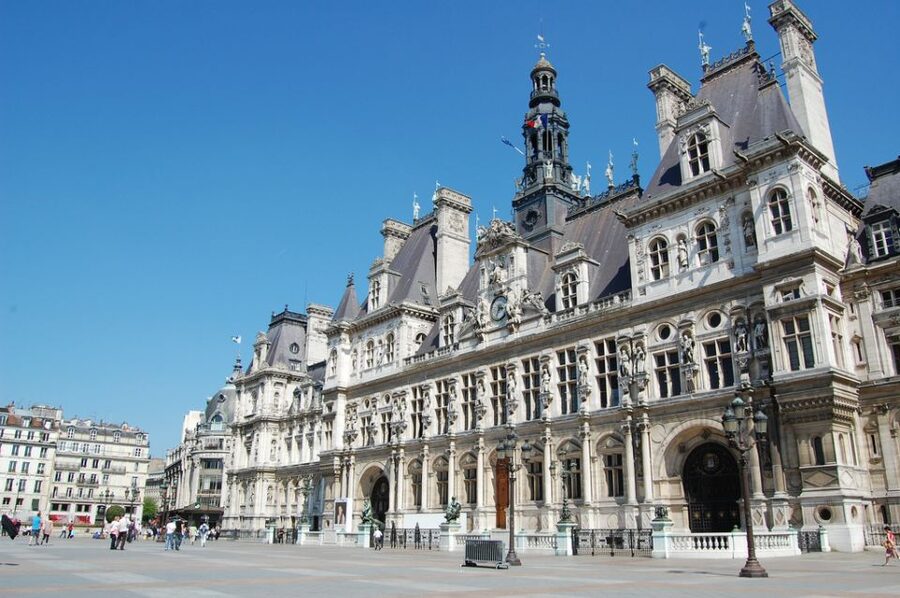
The Hôtel de Ville, or City Hall, brings the route to one of Paris’s grand civic spaces. Its opulent Renaissance style shows how public authority was presented through architecture. This is not simply an office building. It was designed to project importance.
Your guide can help place the building in the wider story of Paris’s government and civic life. That context is particularly helpful if you tend to notice architecture but are less certain about the political meaning behind it.
The stop also changes the mood of the walk. Les Halles introduces commerce, while the Hôtel de Ville introduces administration and public power. Within a short distance, you see how different institutions shaped the city.
Because this is a walking tour rather than a building tour, you should not expect an interior visit to City Hall. The value is in the setting, the exterior, and the explanation of why the building belongs in the story of the Marais.
More Paris walking tours:
- Paris Top Sights Half Day Walking Tour with a Fun Guide
★ 5.0 · 2,893 reviews - Montmartre Hidden Gems and Scenic Highlights Walking Tour
★ 5.0 · 2,684 reviews - Montmartre Hill French Gourmet Food and Wine Tasting Walking Tour
★ 5.0 · 2,588 reviews - Paris Île de la Cité and Notre-Dame Walking Tour With Crypt
★ 5.0 · 2,272 reviews
The Pletzl and Rue Pavée synagogue
The Pletzl is the emotional center of the walk for many people. Its name comes from a Yiddish word meaning small place or square, and it refers to the historic heart of Paris’s Jewish community. The quarter remains an important part of the Marais today.
This section gives the tour a human dimension that architecture alone cannot provide. You learn how the neighborhood developed as a place of community, worship, family life, and daily commerce. The focus is not just on old buildings. It is on the people and traditions that gave the streets their identity.
The synagogue on Rue Pavée is one of the named stops. It helps anchor the story in a specific place. Your guide can explain its role and point out details you might pass without noticing on your own.
I would pay close attention here and allow the guide to set the tone. The history of Jewish Paris includes both endurance and periods of severe hardship. A short tour cannot cover every chapter, but a thoughtful explanation can help you understand why the Pletzl remains important.
This is also one reason a private guide can be worth the higher price. A private format gives you room to ask questions about the neighborhood’s culture, religious buildings, and changing identity. The guides listed for this experience include Alexandre, Caroline, Boris, Fabienne, Anja, and Yvana. Past guests specifically praised Alexandre, Caroline, Boris, Fabienne, and Yvana for clear explanations, warm manners, and the ability to adapt the presentation to different ages.
Hôtel de Sully and the Marais at its grandest
Hôtel de Sully shows the Marais during its period of prestige. The term hôtel here refers to a grand private mansion, not a modern hotel. These residences reflect the time when aristocratic families and powerful figures made the district their home.
The building helps explain the Marais’s first high point. The neighborhood was once fashionable and close to royal power, with a courtly atmosphere that can be hard to imagine from its later reputation.
I like this stop because it prevents the Marais from being reduced to one identity. It was not always a working district, a Jewish quarter, or a fashionable shopping area. It moved through several social roles, and Hôtel de Sully gives you a concrete example of wealth and status.
You should see this as an exterior and historical stop within a larger route. The two-hour schedule is designed to connect places, not give you extended time inside each one. If grand residences are your main interest, you may want to return later with more time.
Place des Vosges, the elegant heart of the route
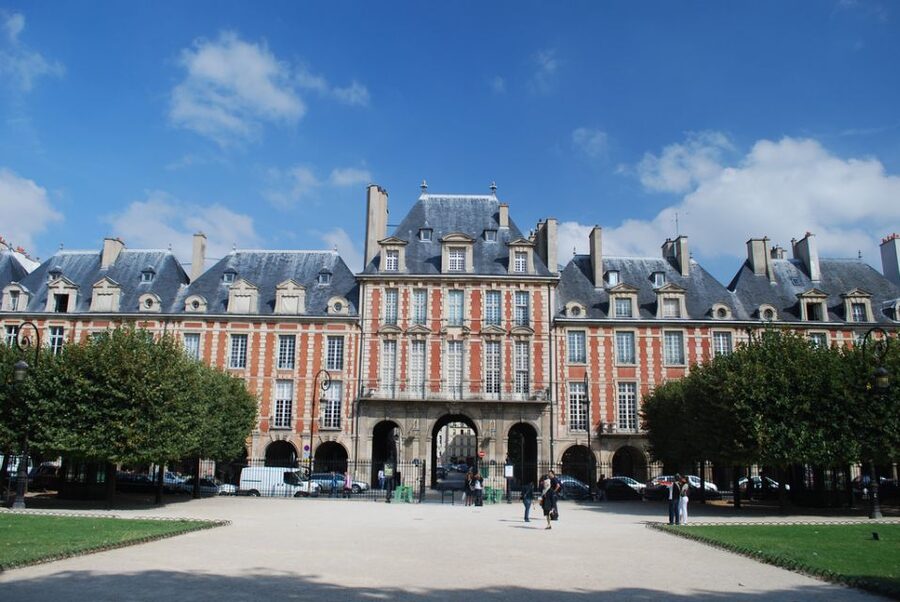
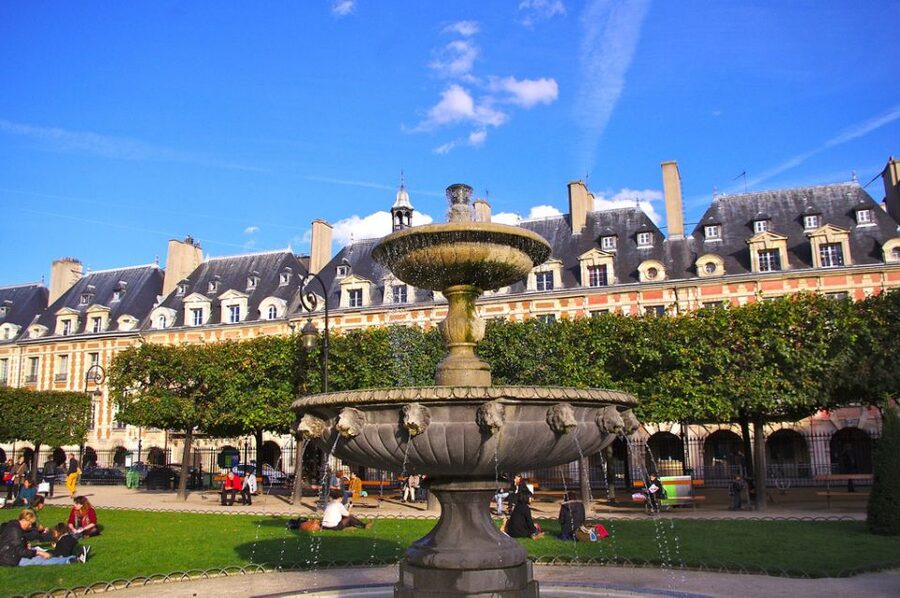
Place des Vosges is often considered one of the most beautiful squares in Paris, and it is easy to see why. Its regular design, arcaded ground floors, and harmonious buildings create a rare sense of order in a city that often feels wonderfully irregular.
After the busier city streets, the square provides a calmer visual pause. It also shows the Marais at its most refined. The guide can explain how the square fits into the district’s aristocratic past and why it remains one of the essential places to see in the neighborhood.
The square is a strong photo stop, but try not to treat it as scenery alone. Its design reflects planning, status, and the desire to create a controlled urban setting. It is a useful contrast with the market energy of Les Halles and the community-focused streets of the Pletzl.
Place des Vosges can also help you decide how to spend the rest of your day. If you like elegant architecture and historic neighborhoods, you may want to stay in the Marais after the tour. The walk ends at Place de la Bastille, but the route gives you enough orientation to continue exploring on your own.
Finishing at Place de la Bastille
The tour concludes at Place de la Bastille, a site tied to one of the defining events of the French Revolution. The former prison is gone, but the square remains a powerful symbol of political change.
This ending widens the story again. You begin with a former food market, move through civic buildings, Jewish community streets, aristocratic residences, and a royal square, then finish at a place associated with revolution. That range is the chief strength of the itinerary.
The Bastille area can feel less intimate than the lanes around Place des Vosges, so the final stop is more about historical meaning than visual charm. You finish with a clearer sense of how Paris changed through conflict and political upheaval.
For a two-hour walk, the route covers a lot. Wear comfortable shoes and expect to stay outdoors in changing weather, since tours operate rain or shine. Bring your own water or snack if needed, as food, beverages, and snacks are not included.
How the $176 price works for a private group
The listed price is $176 per person. That is a serious cost for two hours, especially when there are no meals, museum tickets, or other admissions included.
The price becomes easier to justify when you value a private group and direct access to a guide. You are paying for a planned route through a historically dense neighborhood, live commentary in your chosen language, and the chance to ask questions without being part of a large public group.
It is a particularly sensible choice for a family or group with mixed ages and interests. One French family described a group ranging from age six to seventy-five, with the guide adjusting the presentation so everyone could follow. That sort of flexibility is difficult to get on a fixed group walk.
The tour provider, Paris in person private tours, was also selected among the top 10 small tour operators in Europe in the 2025 Arival TourReview Spotlight Awards. That recognition does not guarantee that every guide will suit every personality, but it is a useful sign that the company is established in the small-tour field.
If you are a solo visitor trying to keep costs low, $176 per person may feel excessive. If several people share the private experience, the personal format offers better value, especially when you want history explained clearly rather than simply following a route and taking photographs.
Which kind of visitor will enjoy this walk most
I would recommend this tour to you if you want Paris explained through its neighborhoods rather than only through headline monuments. It suits first-time visitors who want a strong orientation to the Marais and repeat visitors who want more social and cultural context.
It is also a good match for families. The route includes visual variety, short historical stories, open squares, and different kinds of buildings. The guide can adjust the level of detail for children and older family members.
You should consider it if the Pletzl interests you. Many general Paris walks give Jewish history only a passing mention. Here, the Pletzl and Rue Pavée synagogue are central stops, not side notes.
You may prefer another format if you want museum interiors, a food tasting, or a relaxed café break. The tour is a continuous two-hour walk, and the included service is guiding only.
English, French, and Serbo-Croatian are available. Confirm the language you need when booking, particularly if your group depends on a specific language for children or older relatives.
Practical details that shape the day
The walk lasts two hours, with starting times based on availability. Since the route is outdoors and operates in all weather, check the forecast and dress for walking rather than sightseeing from a vehicle.
Meet at Métro Étienne Marcel and look for the red canvas tote bag. That simple identifier should make the meeting easier, but allow a little time to find the exact metro exit and gather your group.
Free cancellation is available up to 24 hours before the tour for a full refund. You can also reserve now and pay later, which is useful if your Paris schedule is still shifting.
The rating is 4.8 from 29 reviews, and the strongest pattern in the written feedback is clear explanation combined with personal attention. Names that appear repeatedly in the praise include Alexandre, Caroline, Boris, Fabienne, Anja, and Yvana. The most useful takeaway is not that every guide has the same style, but that the company has a record of guides who can explain architecture, history, and culture in an approachable way.
Should you book the Paris Marais private walk?
Book it if you want a compact, private introduction to one of Paris’s most layered neighborhoods, especially if the Pletzl, Place des Vosges, and the relationship between old and modern Paris appeal to you.
Think twice if you want a low-cost walk, a food experience, or enough time to enter several buildings. At $176 per person, this is a premium two-hour orientation, not a full-day sightseeing package.
For a family, a couple with a strong interest in history, or a small group that wants to ask its own questions, I think the private format can earn its price. You will leave with a clearer map of the Marais and several good ideas for where to return on your own.
FAQ
Where does the Paris Marais walking tour meet?
The meeting point is at Métro Étienne Marcel. Your guide will be carrying a red canvas tote bag.
How long does the tour last?
The guided walking tour lasts two hours.
Is this a private tour?
Yes. The activity is for a private group.
What languages are available?
The live guide can conduct the tour in English, French, or Serbo-Croatian.
Which places are included on the route?
The route includes Les Halles, Fontaine des Innocents, Centre Pompidou, Hôtel de Ville, the Pletzl area, the synagogue on Rue Pavée, Hôtel de Sully, Place des Vosges, and Place de la Bastille.
Does the tour include food or drinks?
No. Food, snacks, and beverages are not included.
Do tours operate in bad weather?
Yes. Tours operate rain or shine.
Can I cancel for a full refund?
Yes. You can cancel up to 24 hours in advance for a full refund.
Can I reserve now and pay later?
Yes. The booking option allows you to reserve your place and pay later, keeping your plans flexible.
More 2-Hour Experiences in Paris
- The Père Lachaise Cemetery: Guided 2-Hour Small-Group Tour
★ 4.7 · 1,065 reviews - Paris: 2-Hour Perfume Creation Workshop
★ 4.8 · 731 reviews - Paris Louvre: 2-Hour Private Tour for Groups or Families
★ 4.6 · 639 reviews - Paris Montmartre: 2-Hour City Tour in German
★ 4.9 · 299 reviews
Newest additions around Paris
- Family escape Game with kids and teens on the Île de la Cité★ 4.5 · 11 reviews
- Private Photoshoot with the Iconic Eiffel Tower in Paris★ 5.0 · 11 reviews
- 2-day Private Mont Saint-Michel, 3 Loire Castles, D-Day Express★ 4.5 · 11 reviews
- Paris: Batobus Hop-On Hop-Off Cruise & Landmarks Audio Tour★ 3.0 · 11 reviews
- Paris Revolutionary Walking Tour: Iconic French Sights & Stories★ 5.0 · 11 reviews
- Guided and Private Tour of 3 hours through Paris aboard a Citroën 2cv★ 5.0 · 11 reviews
- Kids in the Kitchen – CrOisSaNtS★ 4.0 · 11 reviews
- Paris: Ghosts and Dark Stories Guided Walking Tour★ 4.1 · 11 reviews
Le Marais Tours, compared.

Award-Winning Paris French Bakery Experience — Le Marais, 4th Arr
Read our review →
Paris Le Marais Food Tour With 10+ Tastings, Cheese, Wine & More
Read our review →
Paris Le Marais District Original Food and Wine Tasting Tour
Read our review →
Paris Bike Tour Hidden Secrets in the Latin Quarter & Le Marais neighborhoods
Read our review →
Food and Wine Tasting Walking Tour in Le Marais
Read our review →
Le Marais District & Jewish Quarter Guided Walking Tour 12ppl Max
Read our review →
Le Marais/Paris – The Historic, Trendy, Jewish, LGBT district
Read our review →
Paris Le Marais Food & Wine Tour with Eating Europe
Read our review →Browse the lists this tour appears in