
Reviewed · LOUVRE MUSEUM TOURS
Paris: Louvre Museum Skip-The-Line Tour
The clever idea here is to make the Louvre’s enormous collection manageable by following the changing story of European art. In two hours, you move from early Renaissance experiments to the drama of Romanticism, with famous names such as Leonardo, Botticelli, David, and Delacroix along the way. The museum is huge, so a clear theme matters.
I like the private-group format, which gives your guide room to adjust the pace and respond to your interests. I also like the focus on how artists moved from Medieval religious traditions toward Humanism, grand Neoclassical order, and Romantic emotion. The main drawback is time: two hours is enough for a strong introduction, not a full Louvre visit.
In This Review
- Key points
- Why a two-hour Louvre plan can work
- Meeting at the Arc de Triomphe du Carrousel
- Early Renaissance art, Botticelli, and Mantegna
- The Louvre’s grandest scale: Veronese and the Venetian tradition
- Neoclassical order and David’s imperial spectacle
- Romanticism, storms of emotion, and revolution
- What the guides add to the visit
- Is $294 a fair price for two hours?
- Practical fit for families, first visits, and art lovers
- Should you book this Louvre tour?
- FAQ
- How long does the Louvre tour last?
- Where is the meeting point?
- Is entrance to the Louvre included?
- Which languages are available?
- Is this a private tour?
- Is the Louvre tour wheelchair accessible?
- Can I bring a large suitcase or bag?
- Are food and drinks included?
Key points
- A focused art-history route: The tour links Renaissance, Neoclassicism, and Romanticism instead of treating the Louvre as a random list of famous objects.
- Major works in one visit: Expect the Nike of Samothrace, Mona Lisa, Marriage at Cana, Raft of Medusa, Liberty Leading the People, and more.
- A private group: Your guide can adapt the discussion to your interests, including family needs and the pace of teenagers.
- Skip-the-line entry: You avoid the ticket line, a useful advantage when your Paris schedule is tight.
- A meeting point that is easy to identify: Find the Arc de Triomphe du Carrousel and look for the guide carrying a red canvas tote.
- A two-hour commitment: This works well as a first look at the Louvre, but you may want extra time afterward for rooms not included in the route.
Why a two-hour Louvre plan can work
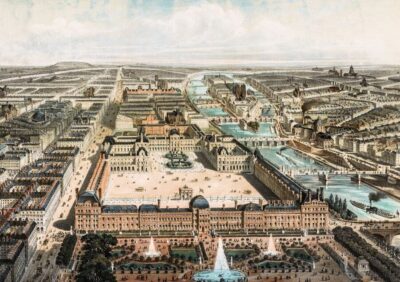
The Louvre is not simply a large museum. It is a former royal palace filled with several centuries of art and architecture. Trying to cover it all in one visit can leave you tired and unsure of what you actually saw.
This tour takes a more sensible approach. Instead of racing after every famous object, it follows three major artistic periods: the Renaissance, Neoclassicism, and Romanticism. That gives you a thread to follow as you walk through the galleries.
You begin with the Renaissance and its shift in artistic thinking. The early Renaissance brought a growing interest in the human figure, the natural world, light, and the ideas of classical Greece and Rome. Your guide also places this change beside the move from the Medieval period toward Humanism, when artists and thinkers paid greater attention to human experience and individual expression.
That context is useful because many Louvre paintings can look impressive but distant when seen without a frame of reference. A guide can point out why a particular body, gesture, use of light, or architectural setting mattered at the time.
The private format is especially useful here. A group with art students may want more detail about technique. A family with teenagers may need a quicker pace and sharper stories. One family managed the museum with two teenage boys and found the guide attentive and adaptable. That kind of flexibility is a real benefit in a museum where fatigue can arrive before the best paintings do.
More ways into the Louvre:
- Paris: Louvre Museum Timed-Entrance Ticket
★ 4.6 · 71,977 reviews - Paris: Louvre Guided Tour with Reserved Access & Boat Cruise
★ 4.3 · 16,353 reviews - Louvre Museum Masterpieces Guided Tour with Access
★ 4.5 · 12,023 reviews
Meeting at the Arc de Triomphe du Carrousel
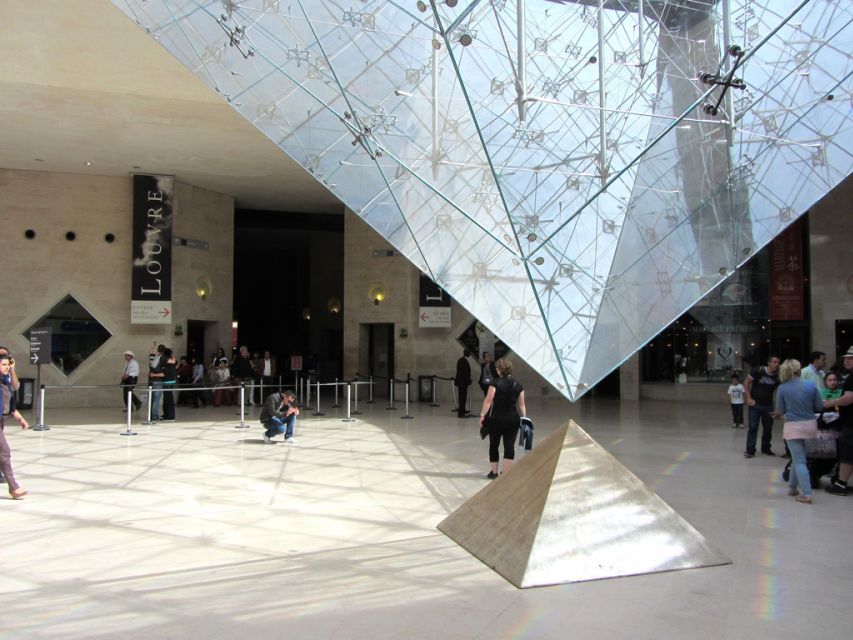
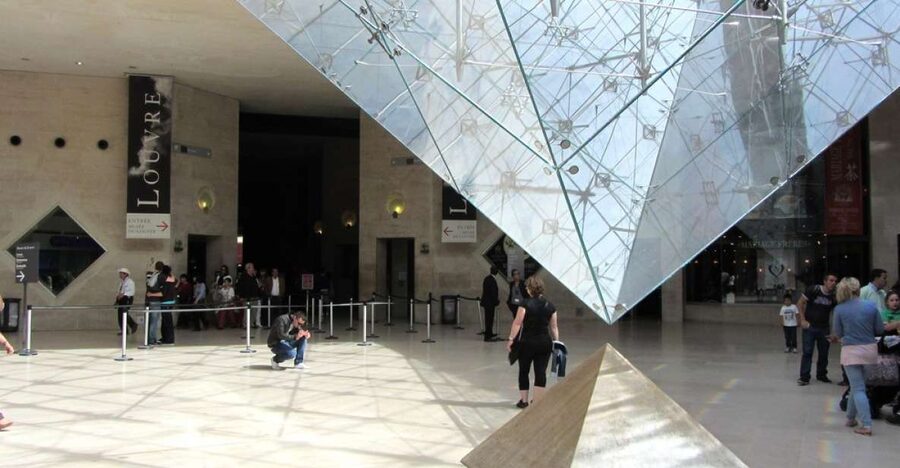
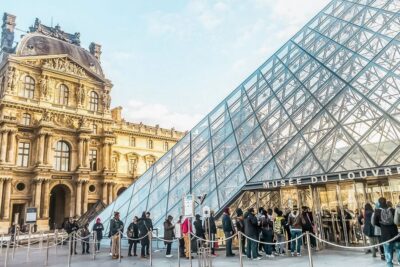
The meeting point is the Arc de Triomphe du Carrousel, the smaller triumphal arch near the Louvre, not the better-known Arc de Triomphe at the top of the Champs-Elysees. Take care with that distinction. Paris has more than one triumphal arch, and arriving at the wrong one could ruin a short tour.
Look for a guide carrying a red canvas tote bag. That is the clearest identification detail provided for the meeting. Since the Louvre area can be crowded and confusing, allow enough time to reach the exact spot before the scheduled start.
Your ticket includes skip-the-line entrance to the museum, but that does not mean you should arrive at the last second. Museum security and entry procedures can still take time. Oversize luggage is not allowed, and items larger than 55 by 35 by 20 centimeters cannot enter the museum. Bring only what you need for the visit.
The tour operates rain or shine. That matters less once you are inside, but it makes the meeting plan important on a wet day. The location is outdoors, so dress for the weather while keeping your bag within the museum limit.
Early Renaissance art, Botticelli, and Mantegna
The Renaissance portion gives the tour its strongest art-history foundation. You learn how artists began to move beyond the visual language of the Medieval world and toward a renewed interest in classical ideas, human anatomy, space, and individual identity.
One featured work is Botticelli’s fresco Venus and the Three Graces Presenting Gifts to a Young Woman. Botticelli is often associated with elegant lines and graceful mythological figures, but this fresco also opens a useful discussion about the Renaissance interest in classical subjects and human beauty.
The work is a good reminder that Renaissance art was not limited to portraits of saints or scenes from the Bible. Ancient mythology, allegory, and courtly ideals all entered the picture. Your guide can help you read the figures and gestures rather than simply admire the surface.
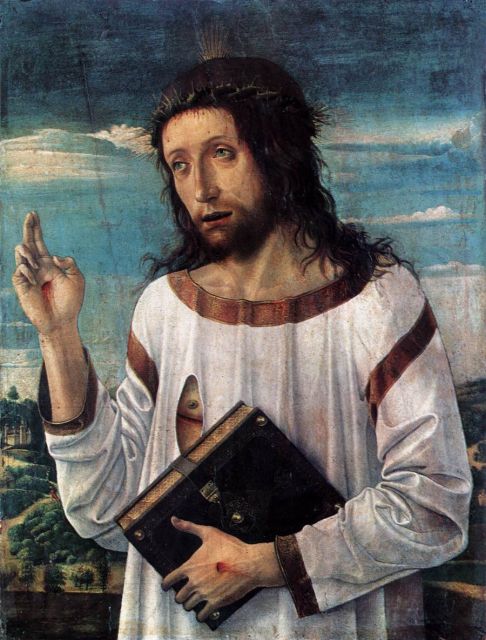
Mantegna’s Saint Sebastian adds another angle. The painting is tied to the early Renaissance and the development of Florentine art in the tour’s presentation. Saint Sebastian was a familiar religious subject, but Renaissance artists used such figures to explore the body, perspective, and emotional presence.
This is one place where a private guide can make a difference. You can ask why a familiar subject looks different from one painting to another, or how an artist balanced religious purpose with an increasing interest in the physical world.
The route also includes Venetian painting by Bellini. Venetian artists were especially important for color and atmosphere, and Bellini gives the tour a useful contrast with the more linear approach often linked to Florentine art. You may find the comparison between Florence and Venice more helpful than a simple parade of artist names.
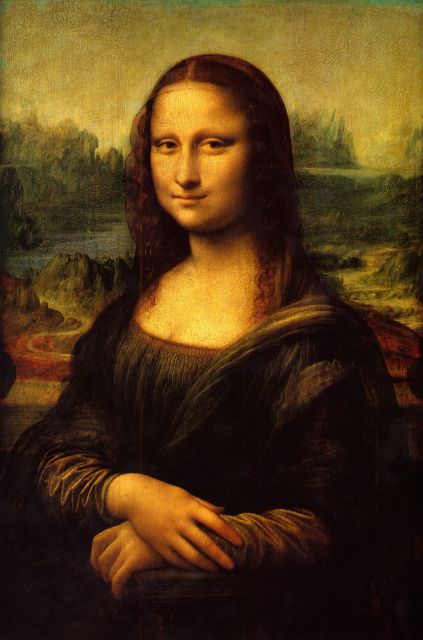
The itinerary also includes Leonardo da Vinci, represented by works such as the Mona Lisa. The painting draws crowds for obvious reasons, but the guide’s role is to give you more than a quick glance at a famous face. Look for the treatment of expression, the soft transitions of light, and the way the figure is set against the background.
The Mona Lisa is one of the busiest points in the Louvre. You may have limited time in front of it, and the viewing area can feel crowded. A guide helps you understand what to look for before you reach the painting, so your brief moment is more useful.
The Louvre’s grandest scale: Veronese and the Venetian tradition
Paolo Veronese’s The Marriage at Cana is the largest painting in the Louvre. Its size alone makes it memorable, but scale is not the whole story.
The painting presents a biblical wedding feast with a huge cast of figures, elaborate architecture, rich costume, and layers of activity. The subject gives your guide a chance to explain how Venetian painters used color, pageantry, and spectacle to create a grand public image.
Because the canvas is so large, it can be hard to take in from close range. Step back when possible and let your eyes move around the composition. A guide can direct your attention to details that disappear when you look only at the central event.
The work also helps connect the Renaissance section to the larger story of the tour. You see how art became more confident in its use of space, human movement, decorative display, and worldly settings.
If you prefer quiet contemplation of one painting, two hours may feel quick here. If you want a clear introduction to important works, the brisk movement is a fair trade. The tour is built around selected highlights, not long periods seated in one gallery.
More Paris museums to visit:
- Paris: Orsay Museum Entry Ticket
★ 4.7 · 25,647 reviews - Paris: Louvre Museum Entry Ticket With Host and River Cruise
★ 4.6 · 9,926 reviews - Les Invalides: Napoleon’s Tomb & Army Museum Entry
★ 4.6 · 9,185 reviews - Louvre Museum – Exclusive Guided Tour (Entry Included)
★ 5.0 · 6,296 reviews
Neoclassical order and David’s imperial spectacle
The next major period is Neoclassicism, which looked back to the art and ideals of ancient Greece and Rome. The style often favored clear lines, controlled poses, moral themes, and carefully organized compositions.
Jacques-Louis David’s The Oath of the Horatii is an excellent example. The scene presents duty and sacrifice with strong gestures and a firm structure. The men reach toward the swords while the women react with grief, creating a clear contrast between public duty and private sorrow.
This is a painting that rewards a little explanation. At first glance, the gestures may seem theatrical. In context, that drama is part of the point. Neoclassical art used historical and ancient subjects to present ideas about courage, civic responsibility, and self-control.
David’s The Coronation of Napoleon shows a different side of the same period. The painting is monumental, detailed, and designed to project authority. It is also a useful reminder that official art does not merely record an event. It shapes how power wants to be seen.
Your guide can help you compare the two David paintings. The Oath of the Horatii presents a moral lesson through ancient Rome. The Coronation of Napoleon presents modern political power through ceremony, costume, and scale. Seeing them together makes the Neoclassical section more than a style label.
This part of the tour suits visitors who like history tied to art. You do not need formal art training. The paintings offer clear entry points through gesture, costume, composition, and political meaning.
Romanticism, storms of emotion, and revolution
Romanticism shifts the mood. Instead of the strict control of Neoclassicism, Romantic artists often emphasized emotion, violence, suffering, movement, and dramatic light.
The most powerful example on this route is Theodore Gericault’s The Raft of the Medusa. The painting depicts survivors of a shipwreck and uses a sweeping arrangement of bodies to build tension. You can read the scene from despair in the foreground toward hope in the distance, though the hope is uncertain.
The painting is physically large and emotionally demanding. It does not offer an easy heroic story. Your guide can explain how the subject related to a real contemporary disaster and why the work caused such a strong response.
Eugene Delacroix’s Liberty Leading the People commemorates the July Revolution of 1830. Liberty appears as a symbolic figure moving forward over the fallen, carrying the French flag. The painting combines political event, allegory, and Romantic movement.
It is one of the Louvre’s best-known images, and its meaning can be flattened when seen only as a national symbol. Look at the varied figures around Liberty and the way Delacroix brings ordinary people into the scene. The painting is about an uprising, but it is also about how a nation imagines collective action.
Ingres’ Une Odalisque adds a quieter, more controlled kind of drama. The elongated nude and unusual pose create a sense of artifice rather than ordinary anatomy. This gives you a useful comparison with the forceful movement of Gericault and Delacroix.
By the end of the route, you have seen a clear progression. Renaissance artists explore the human figure and the classical past. Neoclassical artists impose order and moral structure. Romantic artists break open that order with emotion, conflict, and movement.
What the guides add to the visit
The guide is central to the experience. The tour is offered in English, French, and Serbo-Croatian, and it is operated as a private group. That is a better setup for questions than a large group moving from one famous work to the next.
Boris has led some tours, and his approach includes broad historical context and an unusual focus on how artists used the sun and light in different periods. If he is assigned to your group, ask him to develop that comparison. Light is a useful way to connect Botticelli, Leonardo, Venetian painting, David, and the Romantics.
Other guide feedback points to clear explanations, patience, and the ability to adjust the visit to family interests. Those qualities matter more than a long list of facts. At the Louvre, the best guide is not the person who talks without pause. It is the person who helps you notice something you would otherwise miss.
You should also tell the guide what interests you at the start. The stated route is broad, so a private group may be able to spend more time on Renaissance painting, French history, portraits, or the most famous works. The exact amount of customization is not specified, so treat it as a possibility rather than a promise.
Is $294 a fair price for two hours?
At $294 per person, this is an expensive Louvre visit. The price needs to be judged against what you value: private guiding, skip-the-line entry, and a focused introduction rather than a basic museum ticket.
For one person or a couple, the cost may feel steep for two hours. You are paying for a private-group experience and a guide’s attention, not just access to the galleries. If you are short on time in Paris or feel overwhelmed by the Louvre, that structure may save you from wandering without a plan.
The value improves for a family or small group that can share the private format. Parents with teenagers, in particular, may appreciate a guide who can keep the route moving while still explaining the major works. The tour can also suit people who want to ask questions in their own language.
The main limitation remains duration. The Louvre holds far more than this route can cover. You will see selected highlights, but you should not expect every major department, Ancient Egypt, Greek sculpture, decorative arts, and 19th-century painting in one sitting.
The ticket line benefit is useful, but it does not turn the Louvre into a quick attraction. You still need to manage museum security, crowds, and the walking required between galleries.
Practical fit for families, first visits, and art lovers
I would consider this tour a good fit for a first Louvre visit if you want structure and explanation. It gives you a way to understand several periods without spending half a day deciding which corridor to enter.
Families can benefit from the private format. A guide can keep the conversation moving and avoid giving every person the same long lecture. The experience has already worked well for a group with two teenage boys, which suggests that the format can handle mixed attention spans.
It also suits visitors who like history and visual comparison. You will not simply see isolated masterpieces. You will compare Florence and Venice, religious and mythological subjects, public ceremony and personal suffering, order and emotional force.
You may want a different plan if your main goal is to spend a long time with one collection. The two-hour route is selective and active. It is less suitable for someone who wants an unhurried study of Egyptian artifacts, Greek sculpture, or lesser-known paintings.
The museum is wheelchair accessible, which removes one practical concern for many visitors. Food and beverages are not included, so plan those separately before or after the visit.
Should you book this Louvre tour?
Book it if you want a private guide, a clear two-hour route, and the major works explained through the story of Western art. The strongest reasons are the focused period-by-period structure, the chance to ask questions, and the help of a guide such as Boris, if he is assigned to your group.
Think twice if $294 per person feels hard to justify or if you want a full-day museum visit. You will see important highlights, but the Louvre cannot be fully covered in two hours.
For a first visit, a family group, or anyone who would rather understand ten major works than rush past fifty, this is a practical choice. Arrive at the Arc de Triomphe du Carrousel on time, keep your bag under the museum limit, and treat the tour as an introduction. Then use any remaining energy to explore on your own.
FAQ
How long does the Louvre tour last?
The tour lasts two hours.
Where is the meeting point?
Meet at the Arc de Triomphe du Carrousel. The guide will carry a red canvas tote bag.
Is entrance to the Louvre included?
Yes. A skip-the-line entrance ticket to the Louvre is included.
Which languages are available?
The live tour guide is available in English, French, and Serbo-Croatian.
Is this a private tour?
Yes. The activity operates as a private group.
Is the Louvre tour wheelchair accessible?
Yes. The tour is listed as wheelchair accessible.
Can I bring a large suitcase or bag?
No. Oversize luggage is not allowed. Items larger than 55 by 35 by 20 centimeters cannot enter the museum.
Are food and drinks included?
No. Food and beverages are not included.
More Skip the Line in Paris
- Versailles: Skip-the-Line Tour of Palace with Gardens Access
★ 4.7 · 9,778 reviews - Versailles: Skip-the-Line Guided Palace Tour and Full Access
★ 4.6 · 5,214 reviews - Louvre Museum: Skip-the-Line Small Group Guided Tour
★ 4.6 · 3,960 reviews - From Paris: Versailles Skip-the-Line Tour & Gardens Access
★ 4.7 · 3,011 reviews
Newest additions around Paris
- Family escape Game with kids and teens on the Île de la Cité★ 4.5 · 11 reviews
- Private Photoshoot with the Iconic Eiffel Tower in Paris★ 5.0 · 11 reviews
- 2-day Private Mont Saint-Michel, 3 Loire Castles, D-Day Express★ 4.5 · 11 reviews
- Paris: Batobus Hop-On Hop-Off Cruise & Landmarks Audio Tour★ 3.0 · 11 reviews
- Paris Revolutionary Walking Tour: Iconic French Sights & Stories★ 5.0 · 11 reviews
- Guided and Private Tour of 3 hours through Paris aboard a Citroën 2cv★ 5.0 · 11 reviews
- Kids in the Kitchen – CrOisSaNtS★ 4.0 · 11 reviews
- Paris: Ghosts and Dark Stories Guided Walking Tour★ 4.1 · 11 reviews
Louvre Museum Tours, compared.
Louvre Guided Tour with Reserved Access & Boat Cruise
Read our review →
Louvre Museum Masterpieces Guided Tour with Access
Read our review →
Louvre Museum Entry Ticket With Host and River Cruise
Read our review →
Priority Access Louvre with Host -Direct to Mona Lisa
Read our review →
Mona Lisa & Louvre Masterpieces Tour with Reserved Access
Read our review →
Louvre Museum – Exclusive Guided Tour (Entry Included)
Read our review →
Louvre Reserved Ticket and River Cruise Combo
Read our review →Browse the lists this tour appears in