

Reviewed · LOUVRE MUSEUM TOURS
Paris: Louvre Guided Tour with Skip-the-Line Entry Tickets
The Louvre is so large that a first visit can feel like being handed a map of a small city and told to find the Mona Lisa. This two-hour guided tour gives you a clear route through the museum, with time focused on major works rather than random wandering.
I like the separate entry route, which can save precious time, and I like having an English-speaking guide explain why the art matters instead of simply pointing at famous paintings. The guide also brings together works from different periods, so you can see how styles changed over time.
The main concern is the pace. A recent rating of 3.5 out of 5 from 73 ratings reflects a mixed experience, and one guest found it hard to hear and keep up when the group split apart. Security can also take longer during peak season, so skip-the-line does not mean instant entry.
In This Review
- Key points at a glance
- Why a guided Louvre visit helps
- Meeting at the Arc du Caroussel
- What skip-the-line entry really means
- The first galleries and the sweep of time
- Winged Victory of Samothrace
- Facing the Mona Lisa
- The guide’s role and group pace
- Staying after the guided portion
- Who should book this Louvre tour
- Practical details before you reserve
- Should you book it?
- FAQ
- Where does the Louvre guided tour meet?
- How long does the tour last?
- Is the guide available in English?
- Does the tour include skip-the-line entry?
- Which Louvre artworks are specifically included?
- Can I stay in the Louvre after the guided tour?
- What should I bring to the museum?
Key points at a glance
- Meet at the Arc du Caroussel: Your tour begins outside the Louvre at this central landmark.
- Two hours with an English-speaking guide: Expect a focused highlights route, not a full museum visit.
- See the Mona Lisa and Winged Victory: These are the headline works, with other major pieces along the way.
- Follow art across centuries: The guide connects ancient civilizations, the Renaissance, and later periods.
- Continue inside afterward: The stated arrangement allows you to stay after the guided portion, but reentry details should be confirmed if you leave.
- Bring light luggage and good shoes: Bags over 55 x 35 x 20 centimeters are not allowed.
Why a guided Louvre visit helps
The Louvre is not just a large museum. It is a former royal palace with galleries spread through several wings and floors. Even a strong map cannot tell you which objects are worth your limited time, or why one painting matters beside another.
That is where this experience earns its place. Your guide supplies a route and a story. Instead of treating the Mona Lisa as an isolated celebrity, the tour places it within the broader development of European art. You also hear about techniques, artists, and the events that shaped the works.
That structure matters most if this is your first Louvre visit. You can spend an entire day here and still see only a fraction of the collection. A short guided visit gives you a workable first look, then lets you decide where to return on your own.
The tour is conducted in English. No guide name is provided in the booking information, so you cannot request a particular person. The guide is described as prepared and friendly, but your experience will depend on the person leading your group and how well the group stays together.
More ways into the Louvre:
- Paris: Louvre Museum Timed-Entrance Ticket
★ 4.6 · 71,977 reviews - Paris: Louvre Guided Tour with Reserved Access & Boat Cruise
★ 4.3 · 16,353 reviews - Louvre Museum Masterpieces Guided Tour with Access
★ 4.5 · 12,023 reviews
Meeting at the Arc du Caroussel
The meeting point is the Arc du Caroussel, the triumphal arch in the open area near the Louvre. This is an important detail because the museum has several entrances and the surrounding courtyards can be confusing, especially at busy times.
Give yourself enough time to locate the guide before the start. You will need your passport or identity card, and comfortable shoes are a wise choice. The Louvre involves plenty of standing and walking, even during a short visit.
Look for clear instructions in your booking confirmation about the exact meeting spot and arrival time. The supplied information names the Arc du Caroussel but does not provide a precise meeting-side detail or a recognizable guide uniform.
Once the group is assembled, the guide leads you toward the separate entry route. This is the practical advantage of the ticket arrangement. You avoid the ordinary long entry line, although everyone still has to pass through security.
What skip-the-line entry really means
Skip-the-line access is valuable at the Louvre, particularly when visitor numbers are high. It removes one major source of wasted time and gets you moving toward the galleries faster than a standard queue.
It does not bypass security. During peak season, the checkpoint can still take longer because many people are entering at once. Think of the ticket as a way to avoid the main admission queue, not as a promise that you will walk straight indoors at your booked time.
This distinction is worth keeping in mind when planning another Paris activity afterward. The tour lasts two hours, but the complete experience may take longer once you add meeting time, security, and the movement of a group through crowded corridors.
At $87 per person, the ticket is priced above ordinary museum admission, but you are paying for the guide and the simpler entry process as well. The value is strongest if you want help choosing what to see and prefer not to manage the Louvre alone. It is weaker if you enjoy moving independently or already know exactly which galleries you want.
The first galleries and the sweep of time
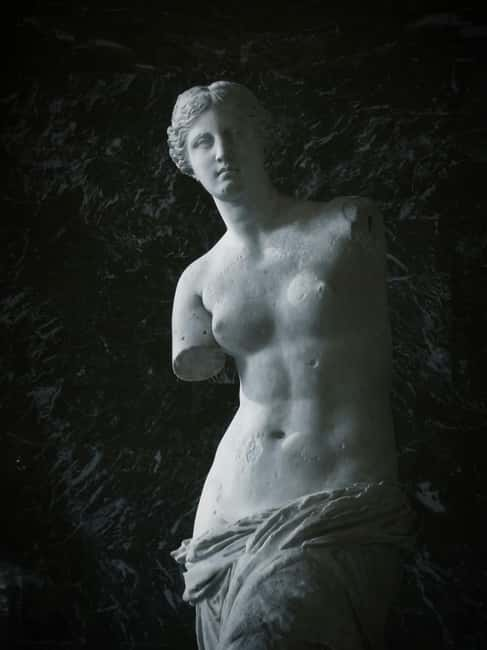
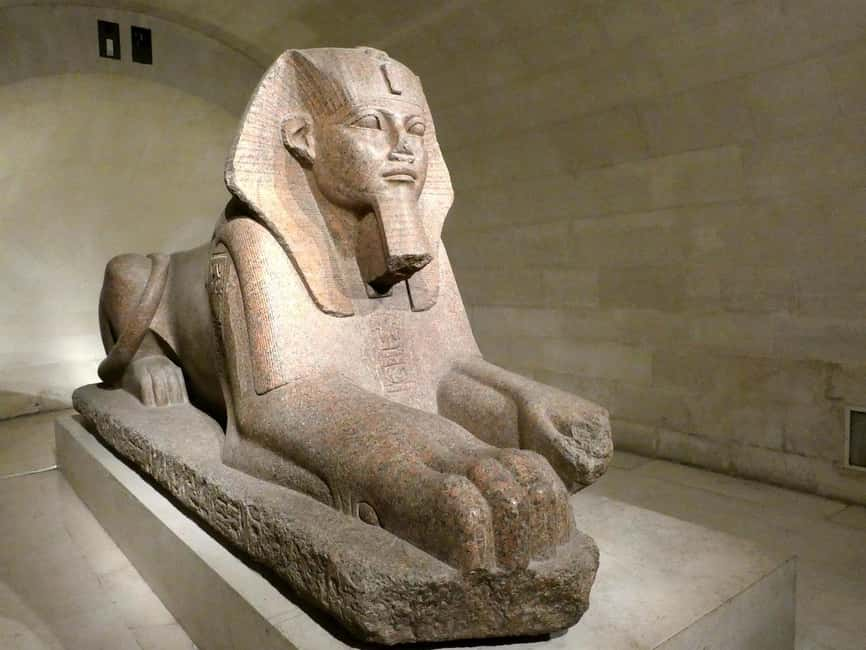
The guide’s central task is to connect works from different periods. You can expect the route to move from ancient civilizations toward European art, with explanations of how materials, subjects, and artistic goals changed.
The Louvre’s collection spans many centuries, so even a short tour can show sharp contrasts. Ancient objects may emphasize gods, rulers, burial, or public power. Later European works put more weight on religious scenes, portraiture, human emotion, and the study of the natural world.
A good guide does not need to give a lecture at every stop. The useful moments are the comparisons: how a pose changes, how light is used, why a figure looks idealized, or how an artist’s technique reflects the period. The supplied tour description promises this kind of context, including stories about artists and the historical setting around their work.
You should not expect to see every major department. Two hours is enough for a carefully chosen route, not a complete survey of the museum. The benefit is focus. The drawback is that the guide’s choices may not match your personal interests.
If you care most about Egyptian antiquities, French Romantic painting, sculpture, or another specific section, check the route details before booking. The advertised highlights are broad, and no complete stop-by-stop gallery list is provided.
A few more Paris ideas to compare
- Versailles: Skip-the-Line Tour of Palace with Gardens Access
★ 4.7 · 9,778 reviews - Versailles: Skip-the-Line Guided Palace Tour and Full Access
★ 4.6 · 5,214 reviews - Louvre Museum: Skip-the-Line Small Group Guided Tour
★ 4.6 · 3,960 reviews - From Paris: Versailles Skip-the-Line Tour & Gardens Access
★ 4.7 · 3,011 reviews
Winged Victory of Samothrace
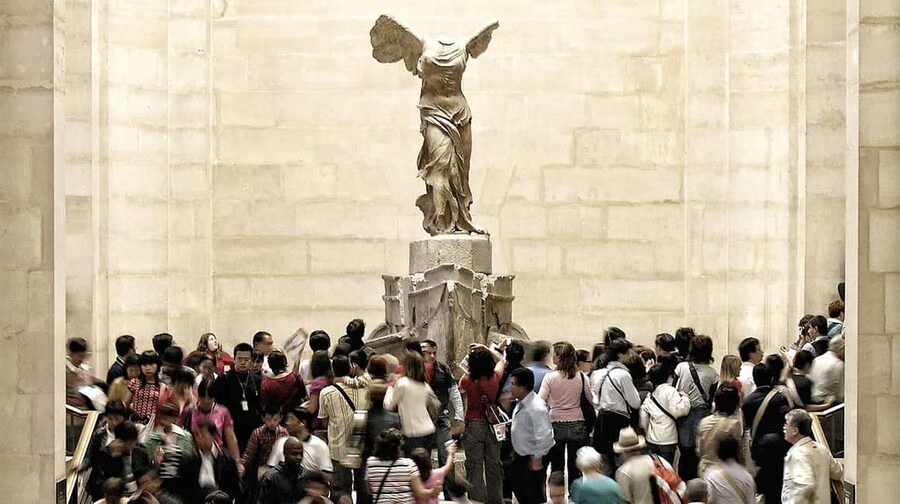
Winged Victory of Samothrace is one of the tour’s major stops. The monumental marble figure is displayed at the top of a grand staircase, where its forward motion and spread wings make the work feel especially dramatic.
This is a useful place to hear how sculpture can suggest movement even when the material itself is fixed. The statue’s missing head and arms do not prevent it from commanding attention. Instead, the surviving body, wings, and drapery carry the sense of wind and arrival.
Your guide can help you look beyond the first impression. Notice how the clothing appears pressed by air, how the figure relates to the staircase, and how the setting changes the way you experience the work. You will probably not linger alone for a long time here because the route continues, but it is one of the stops that makes a guided explanation worthwhile.
The area can be crowded. Stay close enough to hear, and do not assume the group will pause in one tight circle. One recent guest found the group kept breaking up and said listening required real effort. That is a practical warning, not a minor complaint: at a famous museum, a good explanation is of little use if you cannot hear it.
Facing the Mona Lisa
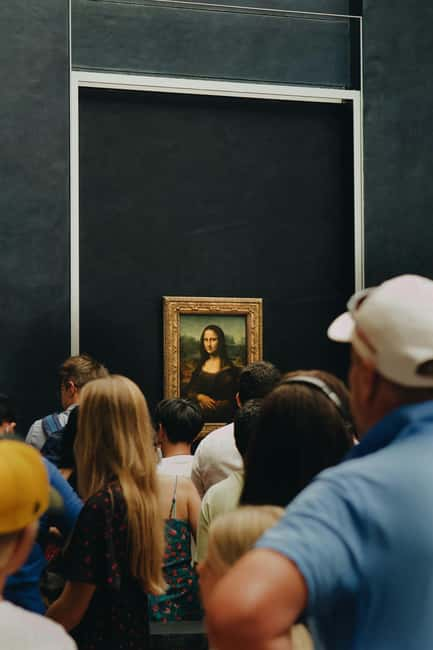
The Mona Lisa is the stop most people have in mind when they book a Louvre tour. The painting is small compared with the room and the attention around it, so your expectations should be realistic.
You will see the work, but you may share the space with a large crowd. The guide can explain the painting’s fame, the sitter, Leonardo’s methods, and the details that have made the portrait so closely studied. The real value is learning how to look at it, rather than simply arriving, taking a quick photograph, and moving on.
The supplied information specifically names the Mona Lisa as part of the route. It does not promise a fixed amount of viewing time, a private viewing area, or a quieter entrance to the room.
Keep your group in sight before and after this stop. Large rooms, barriers, and slow-moving crowds can separate people quickly. If you lose the guide, listen for the meeting instructions and avoid wandering off to another gallery without telling someone.
Photography and filming rules also matter. Photography and filming are strictly prohibited in the temporary exhibition room. The information does not say that the same rule applies to every Louvre gallery, so follow the signs and your guide’s instructions rather than assuming cameras are always allowed.
The guide’s role and group pace
This is not an audio guide. You are expected to follow a live English-speaking guide and take part in a shared walk through the museum.
That format works well when you want to ask questions. You can request clarification, compare two works, or ask for help understanding a period that feels unfamiliar. It also gives the visit a human rhythm, which many people prefer to a recorded commentary.
The tradeoff is group size and sound. The exact group size is not supplied, and that makes it difficult to predict how intimate the experience will feel. One guest reported difficulty hearing the guide and keeping up as the group divided.
I would treat this as a walking tour rather than a relaxed gallery visit. Stay near the guide, move when the group moves, and tell the guide if you need a moment. Comfortable clothes and shoes will help, but they will not solve every issue created by crowding.
A recent rating praised the guide as well prepared and friendly, while another rating described downtime during the tour. That suggests the pace may not be perfectly even. You could have periods of active explanation followed by movement, waiting, or regrouping.
Staying after the guided portion
The stated arrangement allows you to remain in the Louvre after the two-hour guided tour. This can make the experience much more useful because the guided route gives you orientation, then you can spend extra time with a department that caught your interest.
For example, you might want to return to a work you saw quickly, continue through another set of galleries, or simply slow down after the group has finished. The chance to stay is a meaningful part of the value, especially if your schedule allows a longer museum visit.
There is an important caution. One guest was told that returning to see more art would be possible after leaving with the guide, but then could not reenter without a ticket purchased directly from the Louvre website or counter. The official information says you can stay after the guided tour, which is different from leaving and coming back later.
So plan to remain inside if you want extra museum time. Do not build your day around exiting for lunch and reentering unless the guide or ticket terms clearly confirm that option.
Who should book this Louvre tour

I would recommend this experience to a first-time Louvre visitor who wants the famous works explained and values a simpler entry route. It is also a good match for someone with only a few hours who would rather follow a sensible path than spend the first hour studying a map.
Families and mixed-interest groups may also find the format useful because the guide can supply a shared starting point. Art students or experienced museum visitors may prefer a more specialized tour, since the route is designed around broad highlights rather than one department.
You should think twice if you dislike group pacing, need guaranteed quiet, or want to explore in complete freedom. The exact group size is not listed, and the reported trouble hearing the guide is the clearest weakness in the available feedback.
At $87, I see this as a convenience and orientation purchase. You are not buying a full Louvre education in two hours. You are buying help with the first visit, access through a separate route, and the chance to spend your limited time on major works.
Practical details before you reserve
Bring a passport or identity card. The booking information also advises comfortable shoes and comfortable clothing, both sensible for a museum visit involving security, walking, and standing.
Do not bring luggage larger than 55 x 35 x 20 centimeters. If you are carrying a large backpack, suitcase, or oversized shopping bag, you may face a problem at entry.
The activity is offered in English and lasts two hours. Starting times vary, so check availability for your chosen date. Free cancellation is available up to 24 hours before the start for a full refund, and the reserve-now-pay-later option lets you hold a place without paying immediately.
The provider is HISTORY GROUP 1. No transportation is included, and the meeting point is the Arc du Caroussel, so you arrange your own way to the Louvre area.
Should you book it?
Book this tour if you want to see the Mona Lisa and Winged Victory of Samothrace with a guide, avoid the standard entry line, and gain a quick sense of how the Louvre’s art developed across time.
Skip it if you want a quiet, highly specialized, or entirely independent museum visit. The mixed 3.5 rating, the report of a group that was hard to hear, and the uncertain reentry situation all call for realistic expectations.
My practical choice would be to book it for a first Louvre visit, keep your luggage small, arrive early at the Arc du Caroussel, stay close to the guide, and remain inside after the tour if you want more art. That approach gives you the best chance of getting solid value from the $87 price.
FAQ
Where does the Louvre guided tour meet?
The meeting point is the Arc du Caroussel.
How long does the tour last?
The guided tour lasts two hours.
Is the guide available in English?
Yes. The activity includes a live English-speaking guide.
Does the tour include skip-the-line entry?
Yes. It includes entry through a separate route that avoids the regular long admission line. You still need to pass through security, and checkpoints may take longer during peak season.
Which Louvre artworks are specifically included?
The tour specifically includes the Mona Lisa and the Winged Victory of Samothrace, along with other major works selected by the guide.
Can I stay in the Louvre after the guided tour?
The activity information says you can stay in the Louvre after the guided tour. If you leave, do not assume you can return, since reentry may require a ticket purchased directly from the Louvre website or counter.
What should I bring to the museum?
Bring a passport or identity card, comfortable shoes, and comfortable clothes. Items larger than 55 x 35 x 20 centimeters are not permitted. Photography and filming are strictly prohibited in the temporary exhibition room.
Newest additions around Paris
- Family escape Game with kids and teens on the Île de la Cité★ 4.5 · 11 reviews
- Private Photoshoot with the Iconic Eiffel Tower in Paris★ 5.0 · 11 reviews
- 2-day Private Mont Saint-Michel, 3 Loire Castles, D-Day Express★ 4.5 · 11 reviews
- Paris: Batobus Hop-On Hop-Off Cruise & Landmarks Audio Tour★ 3.0 · 11 reviews
- Paris Revolutionary Walking Tour: Iconic French Sights & Stories★ 5.0 · 11 reviews
- Guided and Private Tour of 3 hours through Paris aboard a Citroën 2cv★ 5.0 · 11 reviews
- Kids in the Kitchen – CrOisSaNtS★ 4.0 · 11 reviews
- Paris: Ghosts and Dark Stories Guided Walking Tour★ 4.1 · 11 reviews
Louvre Museum Tours, compared.

Louvre Guided Tour with Reserved Access & Boat Cruise
Read our review →
Louvre Museum Masterpieces Guided Tour with Access
Read our review →
Louvre Museum Entry Ticket With Host and River Cruise
Read our review →
Priority Access Louvre with Host -Direct to Mona Lisa
Read our review →
Mona Lisa & Louvre Masterpieces Tour with Reserved Access
Read our review →
Louvre Museum – Exclusive Guided Tour (Entry Included)
Read our review →
Louvre Reserved Ticket and River Cruise Combo
Read our review →Browse the lists this tour appears in