
Reviewed · SEINE RIVER CRUISES
Paris: Hop-On Hop-Off Seine Cruise Pass with 9 Stops
The clever part of this Paris sightseeing pass is that the Seine becomes your moving walkway. For $27 per person, you can trade crowded streets and Metro stairs for a heated boat, then step off near the Eiffel Tower, Louvre, Notre-Dame, or one of six other stops.
I like the freedom to start at any of the nine piers and the fact that your 24 or 48 hours begin only when you first scan the ticket. I also like the terrace, which gives you a fresh angle on Paris landmarks and better photo opportunities than a street-level bus.
The main catch is that this is a river shuttle, not a narrated sightseeing cruise. You get an interactive webapp in five languages, but there is no regular onboard audio, and the glass-covered boat can feel hot on sunny days.
In This Review
- Batobus highlights at a glance
- Why the Seine route works so well
- Starting at the Eiffel Tower
- Musée d’Orsay and the art along the Left Bank
- Saint-Germain-des-Prés and old café Paris
- Notre-Dame and the Latin Quarter
- Jardin des Plantes and the Cité de la Mode
- Hôtel de Ville and the Marais
- The Louvre from Pont Royal or Pont du Carrousel
- Place de la Concorde and grand Paris views
- Invalides and Pont Alexandre III
- The boat ride itself: comfort, views, and limits
- The webapp replaces a traditional audio guide
- Is $27 good value for Paris?
- Who should choose Batobus?
- Should you book this Seine pass?
- FAQ
- Where can I board the Batobus?
- How long is the Batobus pass valid?
- Can I use the pass more than once?
- Is there an audio guide on the boat?
- Are the boats heated?
- Can I bring a stroller?
- Can I bring luggage or large bags?
- Is the Batobus suitable for wheelchair users?
Batobus highlights at a glance
- Nine useful Seine stops: Reach the Eiffel Tower, Musée d’Orsay, Saint-Germain-des-Prés, Notre-Dame, Jardin des Plantes, Hôtel de Ville, Louvre, Place de la Concorde, and Invalides.
- A ticket that starts when you use it: Scan your pass when you first board, then use it for 24 or 48 consecutive hours.
- A full river loop takes about two hours: Use the entire circuit first to get oriented, or hop off at stops that match your plans.
- Heated glass-covered boats: The enclosed cabin works well in cool weather, while the terrace offers open-air views and photographs.
- Multilingual help on your phone: The interactive webapp provides monument information and ideas near each stop in English, French, Italian, Spanish, and German.
- Easy relief from city streets: The boat gives your feet a break and avoids road traffic, though it is not suitable for wheelchair users.
Why the Seine route works so well
Paris is compact around the river, but its major sights are not always easy to connect on foot. The Batobus route links several of the city’s best-known districts in one simple circuit, and the ride itself becomes part of your sightseeing rather than dead time between museums.
I would use it in one of two ways. With a 24-hour pass, make a full loop early in your day so you can understand the route and see the monuments from the water. Then choose two or three stops for longer visits.
With a 48-hour pass, you can take the slower approach. Spend the first day around the Louvre, Orsay, and Saint-Germain, then use the second day for the Eiffel Tower, Notre-Dame, Invalides, or a relaxed river ride. The longer pass is especially useful if you dislike rushing through museums.
The boats generally arrive about every 20 to 25 minutes, though you should still allow extra time when planning a museum reservation or timed visit. A full circuit takes roughly two hours, so do not assume that hopping off at the next pier will always be quick.
More Seine cruises to compare:
- Paris: Seine Cruise & Crepe Tasting near the Eiffel Tower
★ 4.4 · 11,231 reviews - Paris: Seine River Panoramic Views Dinner Cruise
★ 4.3 · 10,611 reviews - Paris: Eiffel Tower Access by Elevator & Seine River Cruise
★ 4.6 · 7,329 reviews
Starting at the Eiffel Tower
The main starting point is Port de la Bourdonnais, directly by the Eiffel Tower. It is a strong place to begin because you can combine one of Paris’s essential sights with your first look at the Batobus route.
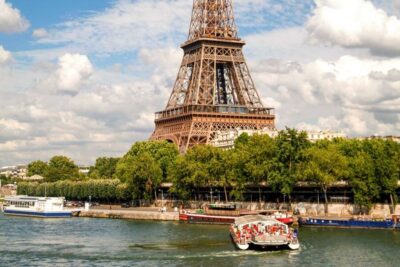
From the boat, the tower appears in a different frame than it does from the Champ de Mars. The river gives you room to see its full height, and the terrace is the best place for photographs if it is not too crowded.
Nearby, the Cité de l’Architecture museum presents French architectural heritage from the 12th to the 18th century. It is a useful choice if you want more than the standard Eiffel Tower visit, though the tower itself can easily consume much of your morning.
The Eiffel Tower stop is also a practical first or last stop. The opening schedule is based on first and last departures from here, so check the current timetable before relying on a late return.
Musée d’Orsay and the art along the Left Bank
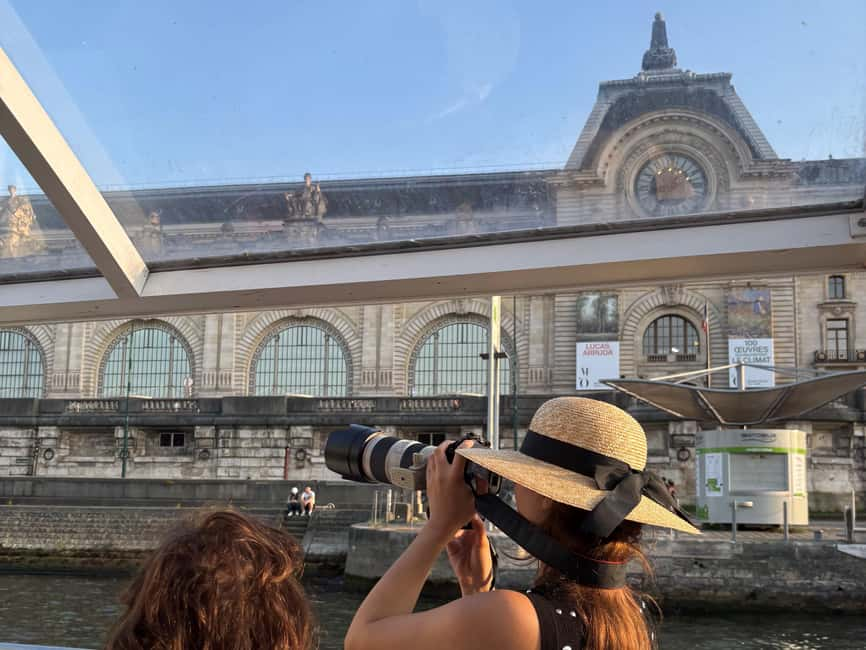
Quai de Solférino puts you close to the Musée d’Orsay, one of the most convenient Batobus stops for a major museum. The former railway station is known for works by Monet, Renoir, and Van Gogh, along with a large collection of 19th-century art.
This stop works well for a museum-heavy day. You can arrive by boat, spend several hours indoors, and then continue along the Seine without retracing your steps through central Paris.
The practical drawback is time. If you are visiting the Orsay properly, you will not be back at the pier in 30 minutes. The pass is most useful here because it removes the need to plan another form of transport after your museum visit.
Saint-Germain-des-Prés and old café Paris
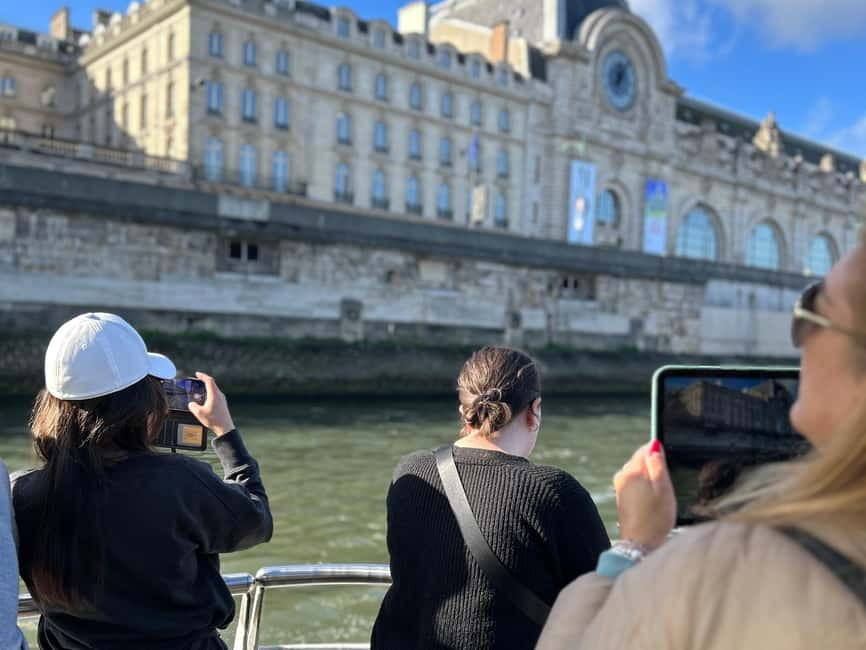
The Saint-Germain-des-Prés stop is at Quai Malaquais, near the Institut de France and the literary quarter around Café de Flore and Les Deux Magots. This is a good place to leave the river and wander rather than rush straight to another monument.
You can spend an hour or more on the nearby streets, browse bookshops, and stop for coffee or a meal. The area offers the kind of ordinary Paris pause that a strict monument-to-monument schedule often misses.
This pier is also useful for linking the river to the Left Bank. Remember that the attraction is the neighborhood itself, not a single entrance directly beside the boat. Wear comfortable shoes, since the point of getting off here is to explore on foot.
More hop-on hop-off bus tickets:
- Paris: Big Bus Hop-On Hop-Off Tour with Optional Cruise
★ 4.4 · 13,279 reviews - Paris: Tootbus Hop-on Hop-off with optional river cruise
★ 4.3 · 11,924 reviews - Paris Big Bus Hop-On Hop-Off Tour with Optional River Cruise
★ 4.0 · 6,534 reviews - Paris: Big Bus Panoramic Night Tour by Open-Top Bus
★ 4.4 · 4,168 reviews
Notre-Dame and the Latin Quarter
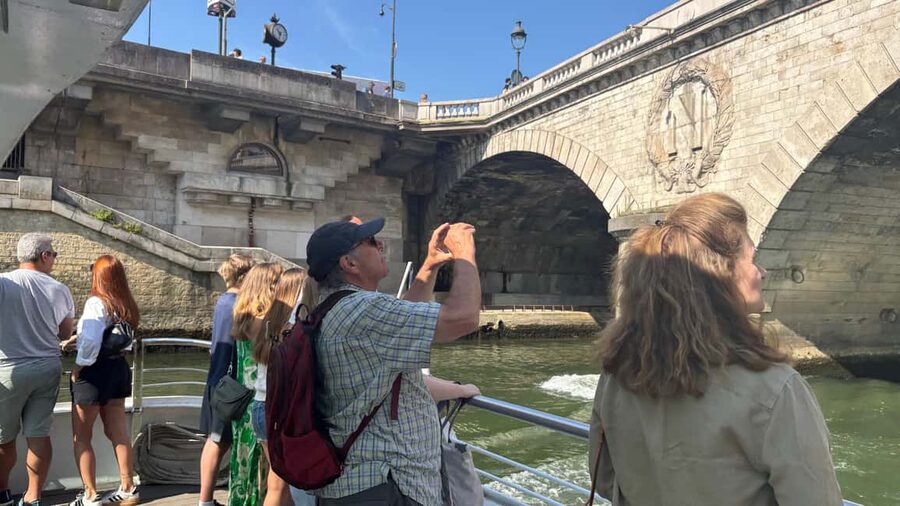
Quai de Montebello is the Batobus stop for Notre-Dame Cathedral. From here, you can admire the cathedral and continue into the Latin Quarter, where cafés, bookshops, and student life fill the streets nearby.
The stop is well placed for a longer break. A French breakfast near Notre-Dame can turn this into one of the most pleasant parts of your day, especially if you arrive early and want a slower start.
Notre-Dame is only one part of the area. You can also use the pier as a base for walking through the Latin Quarter before boarding again. Check any current cathedral entry arrangements separately, since the pass provides river transport and does not include admission to attractions.
Jardin des Plantes and the Cité de la Mode
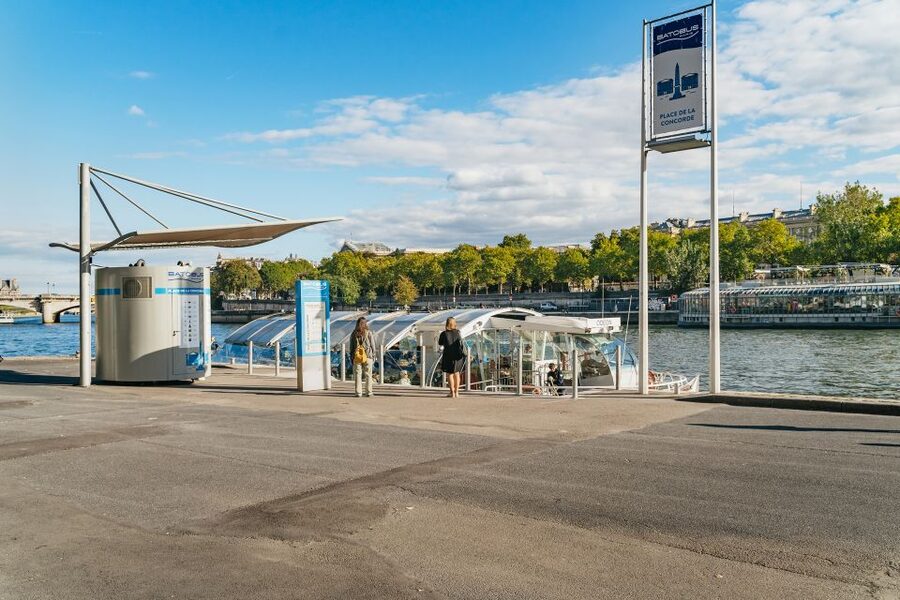
At Quai Saint-Bernard, the Jardin des Plantes stop opens onto Paris’s main botanical garden. It is a welcome change after the grand museums and formal squares, with room to pause and walk at an easier pace.
The nearby Cité de la Mode et du Design offers a more contemporary contrast. This stop is less essential if you have only a few hours in Paris, but it is valuable for a second day or for anyone who wants a break from the most famous sights.
I would not choose this as your first stop if the Eiffel Tower, Louvre, and Notre-Dame are your priorities. It makes more sense when you have extra time, children who need space to move, or an interest in gardens and modern design.
Hôtel de Ville and the Marais
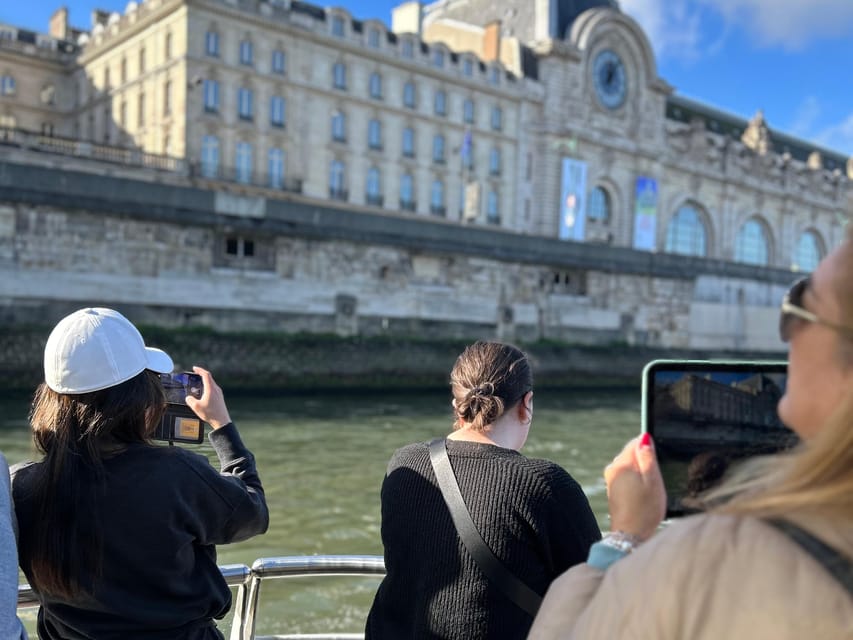
The Hôtel de Ville pier is at Pont d’Arcole, close to Paris City Hall. From here, you can walk toward the Pompidou Centre or explore the Marais, a district known for galleries, boutiques, cafés, and older streets.
This is one of the route’s most flexible stops. It can serve an art-focused visit, a shopping walk, or a relaxed neighborhood wander. It also gives you a useful alternative to the more tightly packed tourist areas around the Louvre and Notre-Dame.
Give yourself time before returning to the pier. The Marais is easy to enter but less easy to rush through, and a short walk can quickly become a full afternoon. Keep an eye on the next boat time if you have a fixed dinner booking.
The Louvre from Pont Royal or Pont du Carrousel
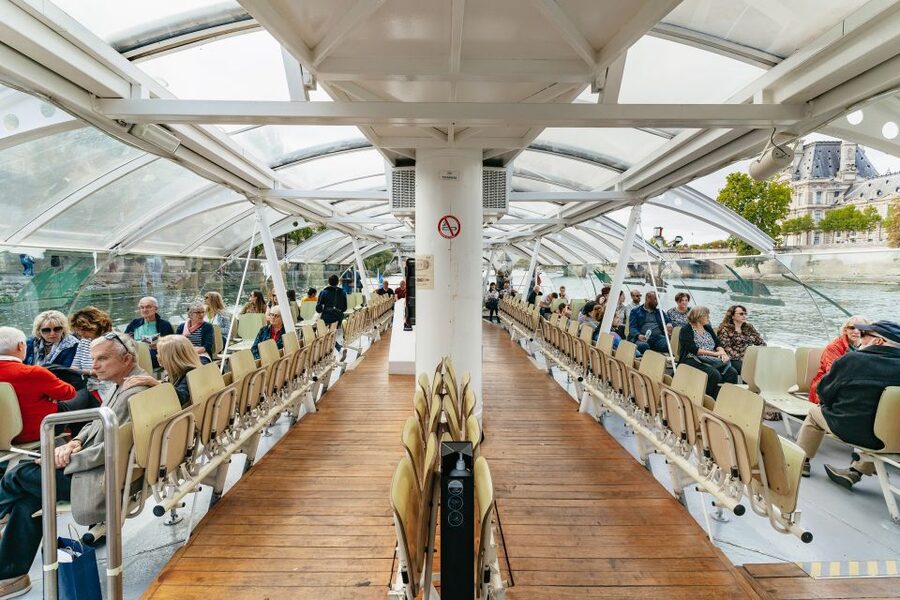
The Louvre stop, served at Quai du Louvre, is one of the strongest reasons to choose Batobus. You are near one of the world’s largest museums, and arriving by river makes the approach feel calmer than reaching it through city traffic.
The Louvre is too large for a quick visit. If you want to see the Mona Lisa, ancient collections, sculpture, and major Renaissance works, plan several hours and treat the museum as your main activity for that part of the day.
The river pass does not include museum admission, so factor that cost and time into your budget. The real value here is transportation and the chance to rest your feet after the museum, not a shortcut through the Louvre itself.
Place de la Concorde and grand Paris views
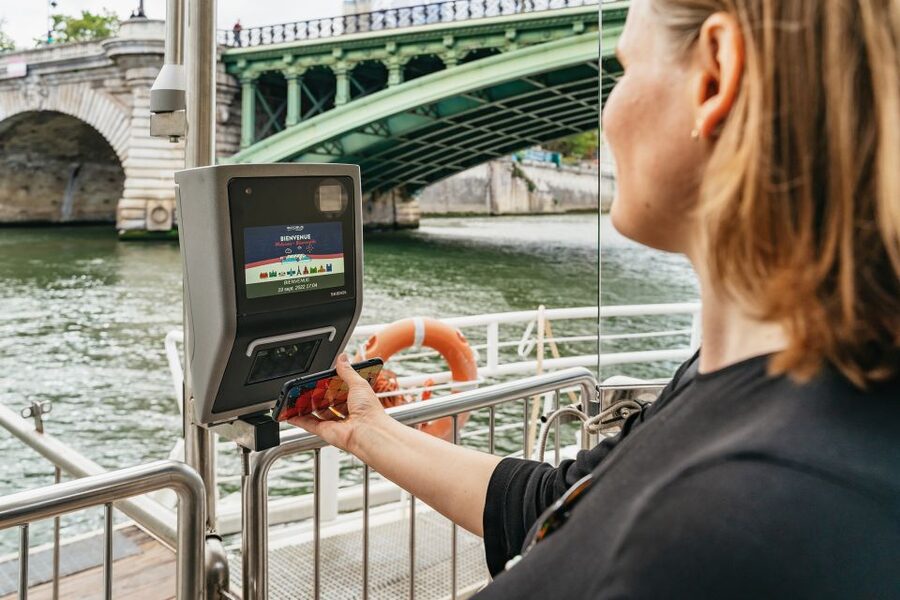
The Place de la Concorde stop brings you to one of Paris’s broadest and most impressive squares. From here, you can walk toward the luxury shops of Avenue Montaigne or visit the Grand Palais and Petit Palais.
This stop suits a short walking visit because several major sights sit within the same central area. It also connects well with the Champs-Élysées, though the distances can feel longer than they appear on a map.
The square is better for open views and architecture than for a quiet break. If you want a slower café stop, Saint-Germain or the Latin Quarter may fit your day better.
Invalides and Pont Alexandre III
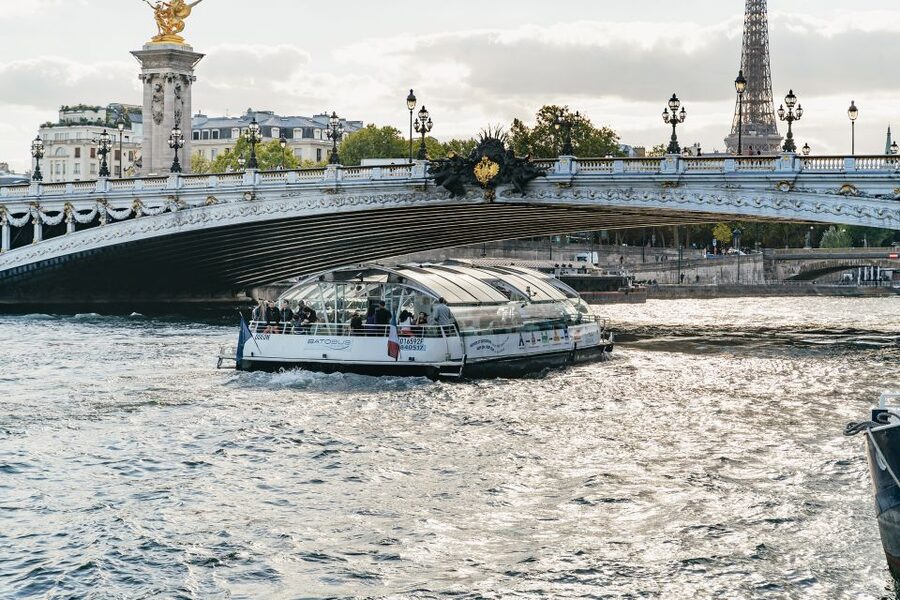
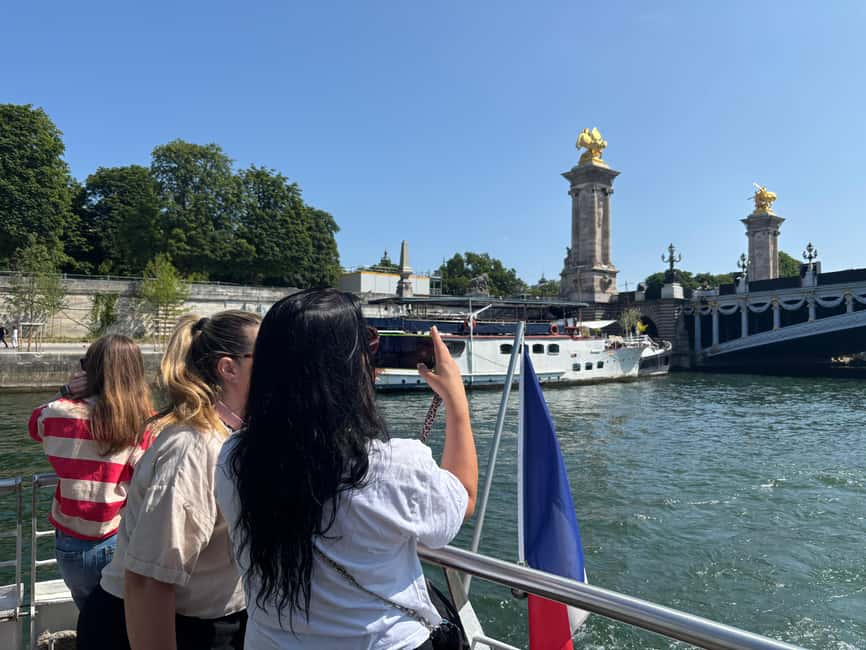
The Invalides stop is at Port des Invalides, near the Hôtel des Invalides and the Pont Alexandre III. The Invalides complex includes Napoleon’s tomb, while the bridge offers some of the most elaborate riverfront views in Paris.
This is an excellent place to use the terrace camera. From the water, the bridge’s decoration and long span are easier to appreciate as a whole, and the city’s grand avenues open out behind it.
You can make this a focused history stop or pair it with a walk toward the grand palaces near the Seine. It is also a good final stop before returning toward the Eiffel Tower, depending on your plans and the boat direction.
The boat ride itself: comfort, views, and limits
The boats have heated interiors and glass covering, which makes the service useful in cooler months. Winter rides can be genuinely pleasant when the boat is warm, and the enclosed cabin provides shelter from rain.
The terrace is important because the glass can be reflective or blurry, especially when the roof needs cleaning. You will get the clearest photographs outside, although seating and space may be limited when the boat is busy.
Summer brings the opposite problem. Several details about hot weather point to a cabin that can become stuffy under the glass, with little shade. On a warm day, use the terrace when possible, and do not count on the boat as a cool refuge for a long uninterrupted ride.
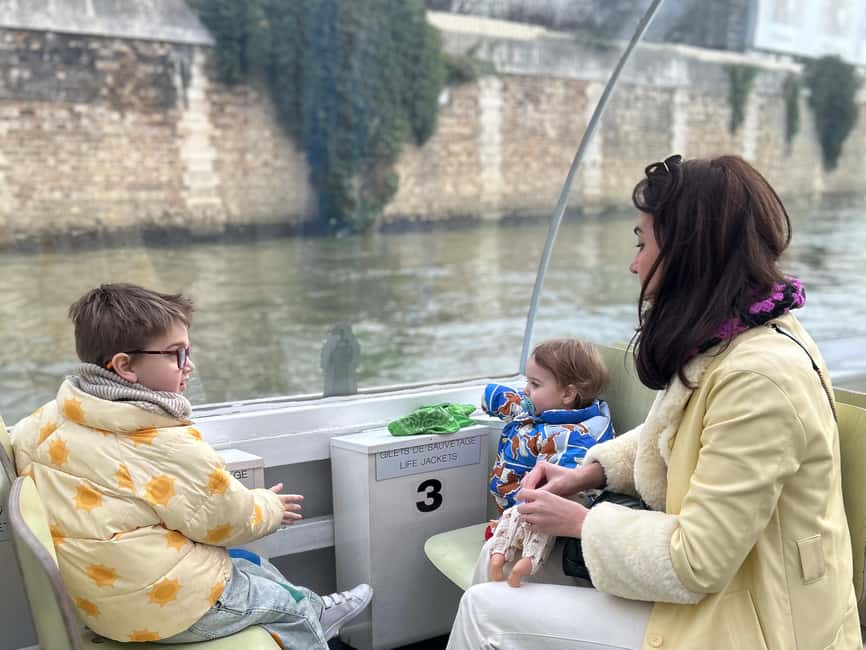
Busy departures can also affect comfort. Families with children and fold-up pushchairs use the service, and finding a seat may take patience. Fold-up baby carriages are allowed, but large bags and luggage are not.
The webapp replaces a traditional audio guide
The interactive webapp is available in English, French, Italian, Spanish, and German. It explains monuments and suggests things to do near each stop, so you can use the boat ride to plan your next walk.
Bring a charged smartphone. There is no regular audio commentary, so you will miss much of the historical context if you board without preparing your phone.
I would download or open the webapp before leaving your hotel and keep your ticket easy to access. You must scan the ticket each time you board, not just on the first ride, and the pass begins when you first use it.
This setup suits independent visitors who prefer to choose what interests them. If you want a guide speaking continuously about every building, choose a dedicated narrated cruise instead.
Is $27 good value for Paris?
At $27 per person, the pass can be good value if you use it as transport and sightseeing together. A single full circuit gives you a river cruise, while several stop-offs can replace some Metro or taxi journeys between central attractions.
The value improves with a 48-hour pass, especially if you plan to visit major museums and neighborhoods at an unhurried pace. You can ride in the morning, walk for several hours, and return to the river when your feet need a break.
The value is weaker if you only want one scenic cruise. A standard sightseeing cruise may suit you better if you do not need hop-on access or if your schedule allows only a short ride.
The pass can be used up to 30 days after the booked date, according to the supplied conditions, which gives you some flexibility. The advertised seasonal schedule for November 3, 2025 through March 31, 2026 lists departures from 10 a.m. to 5 p.m. Monday through Thursday and 10 a.m. to 7 p.m. Friday through Sunday. Check the operating hours for your own dates before booking.
Who should choose Batobus?
I would recommend it for first-time Paris visitors who want a simple route between the main sights. It also works well for families, since children get a break from walking and the river ride adds variety without another complicated transfer.
It is a sensible option for anyone who dislikes Metro stairs. Some older visitors with mobility concerns have found the boat gentler than the subway, but the service is officially not suitable for wheelchair users, so check your needs carefully before booking.
The 48-hour version suits photographers, museum lovers, and anyone staying in Paris for several days. The 24-hour option is enough for a carefully planned day with a full loop and a few selected stops.
I would be less keen on it for a tight schedule built around timed entries. Boats are frequent, but river transport is not as predictable as walking a short distance, and a full circuit takes time.
Should you book this Seine pass?
Book it if you want flexible sightseeing with a built-in rest stop. The combination of nine central piers, attractive river views, a terrace, and a pass that lasts a full 24 or 48 hours makes it a useful way to organize Paris without living underground on the Metro.
Choose the 48-hour option if your budget allows and you want room for long museum visits, meals, and neighborhood walks. Choose 24 hours if you mainly want to connect the Eiffel Tower, Orsay, Louvre, and Notre-Dame in one sightseeing day.
Skip it if you need wheelchair access, insist on live historical narration, or want only a short cruise with no stop-offs. For everyone else, bring a charged phone, keep your bags small, and use the boat as both a scenic ride and a practical link between Paris’s best-known sights.
FAQ
Where can I board the Batobus?
You can board at any of nine stops: Tour Eiffel at Port de la Bourdonnais, Musée d’Orsay at Quai de Solférino, Saint-Germain-des-Prés at Quai Malaquais, Notre-Dame at Quai de Montebello, Invalides at Port des Invalides, Jardin des Plantes at Quai Saint-Bernard, Hôtel de Ville at Quai de l’Hôtel de Ville, Louvre at Quai du Louvre, and Place de la Concorde at Port des Champs-Élysées.
How long is the Batobus pass valid?
You can choose a 24-hour or 48-hour consecutive pass. Its validity begins when you first board and scan the ticket.
Can I use the pass more than once?
Yes. You can hop on and off at the nine stops during the valid 24 or 48-hour period. You must scan the ticket each time you board.
Is there an audio guide on the boat?
There is no regular onboard audio commentary. An interactive webapp provides information about monuments and nearby activities in English, French, Italian, Spanish, and German.
Are the boats heated?
Yes. The boats have heated, glass-covered interiors and a terrace. The enclosed area can feel hot in warm weather, while the terrace provides more open-air viewing.
Can I bring a stroller?
Baby carriages are allowed, but they must fold up. Non-folding strollers are not allowed.
Can I bring luggage or large bags?
No. Luggage and large bags are not allowed on board.
Is the Batobus suitable for wheelchair users?
The activity is listed as not suitable for wheelchair users. Some passengers with mobility concerns have found it easier than using the Metro, but wheelchair users should not rely on this service.
Newest additions around Paris
- Family escape Game with kids and teens on the Île de la Cité★ 4.5 · 11 reviews
- Private Photoshoot with the Iconic Eiffel Tower in Paris★ 5.0 · 11 reviews
- 2-day Private Mont Saint-Michel, 3 Loire Castles, D-Day Express★ 4.5 · 11 reviews
- Paris: Batobus Hop-On Hop-Off Cruise & Landmarks Audio Tour★ 3.0 · 11 reviews
- Paris Revolutionary Walking Tour: Iconic French Sights & Stories★ 5.0 · 11 reviews
- Guided and Private Tour of 3 hours through Paris aboard a Citroën 2cv★ 5.0 · 11 reviews
- Kids in the Kitchen – CrOisSaNtS★ 4.0 · 11 reviews
- Paris: Ghosts and Dark Stories Guided Walking Tour★ 4.1 · 11 reviews
Seine River Cruises, compared.
Seine Cruise & Crepe Tasting near the Eiffel Tower
Read our review →
Eiffel Tower Access by Elevator & Seine River Cruise
Read our review →
3-Course-Dinner Cruise on the Seine with live music
Read our review →
Bateaux Parisiens Seine River Gourmet Dinner & Sightseeing Cruise
Read our review →

3-Course Gourmet Dinner Cruise on Seine River
Read our review →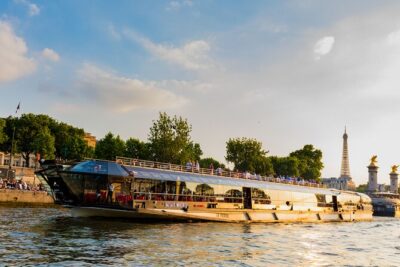
Bateaux Mouches Dinner Cruise on the Seine River in Paris
Read our review →Browse the lists this tour appears in