Reviewed · TOURS
Paris: French Revolution Tour Relive the 14th July 1789
Paris makes the French Revolution feel grand and distant. This walk brings it down to street level. You move through Faubourg Saint Antoine, the working district where artisans, laborers, and angry Parisians helped push events toward the storming of the Bastille, then finish at the square that carries that memory today.
I like two things right away: the route shows you a side of Paris many sightseeing plans skip, and Robin explains how ordinary people lived, not just what famous leaders did. The main consideration is scope. In 90 minutes, the tour concentrates on the build-up to 14 July 1789 rather than offering a full account of the Revolution, the Reign of Terror, or Napoleon.
In This Review
- Key points
- Why Faubourg Saint Antoine matters
- Reading the neighborhood before 14 July 1789
- La Folie Titon and the first important stop
- Passage de Lhomme and the quieter side of Paris
- From working district to Place de la Bastille
- Robin’s storytelling and teaching style
- What you really learn in 90 minutes
- Who should book this walk
- Price, timing, and practical value
- How this compares with a standard Bastille visit
- Should you book the Paris French Revolution Tour?
- FAQ
- How long does the French Revolution tour last?
- How much does the tour cost?
- Where does the tour start?
- Where does the tour finish?
- Which places are included on the route?
- Which languages are available?
- How large is the group?
- Can I cancel or pay later?
Key points
- Street-level history: Connect political crisis with workshops, food prices, social class, and working life in Faubourg Saint Antoine.
- A less familiar Paris route: Walk through La Folie Titon, Passage de Lhomme, and other quieter corners away from the usual monuments.
- A strong guide-led experience: Robin is a history professor whose clear storytelling and use of old images help make the past easier to picture.
- A compact 90-minute format: You get a focused history lesson without giving up half a day of sightseeing.
- Small-group conversation: The group is kept small, with published limits ranging from 10 to 15 people, so questions and discussion are part of the walk.
- A useful Bastille finish: End at Place de la Bastille, a natural point for continuing your Paris day.
Why Faubourg Saint Antoine matters
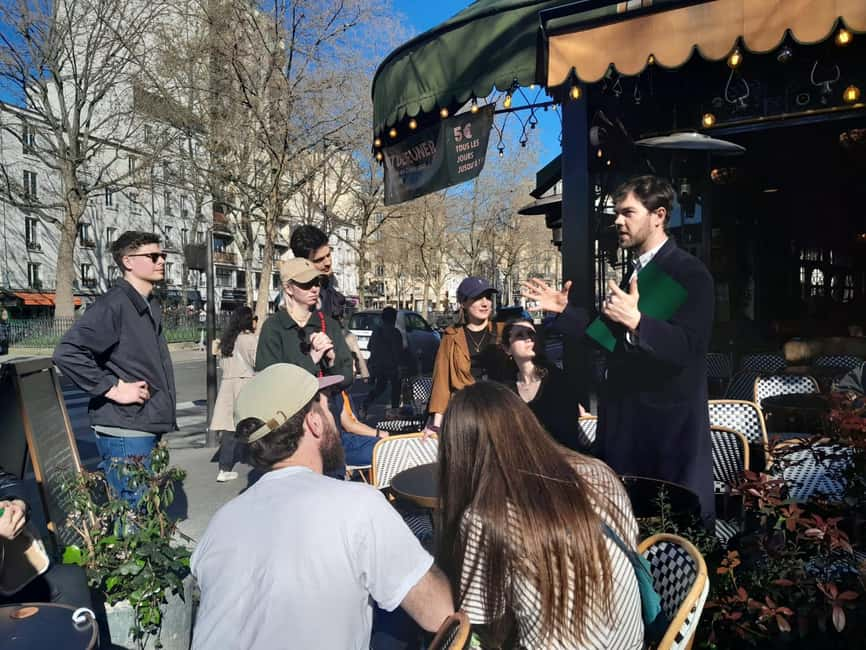
The best feature of this Paris French Revolution tour is its starting point. Instead of opening at a famous royal palace or a museum display, it begins in the area around Faubourg Saint Antoine, close to the everyday world of the people who made the Revolution possible.
That choice changes the story. You are not simply told that Paris was angry in 1789. You see the kind of neighborhood where that anger took shape. The district was linked to skilled trades and artisan life, and the walk uses its streets to explain the gap between the privileged orders and the people who paid taxes, worked with their hands, and struggled with rising costs.
I appreciate this approach because the Revolution was not only a story of kings, ministers, and speeches. It was also about food, work, housing, status, and the feeling that the system no longer served most people. The route helps you connect those large forces to a real Paris neighborhood.
The meeting point is between Café les Blouses Blanches and Mon Café, at 1 Place du Dr Antoine Béclère. Bring the exact address with you and allow a little time to find the guide, since the meeting point is described by nearby cafés rather than by a major monument.
More of the most booked days out in Paris:
- Paris: Louvre Museum Timed-Entrance Ticket
★ 4.6 · 71,977 reviews - Disneyland® Paris 1-Day Ticket
★ 4.6 · 49,412 reviews - Paris: Versailles Palace and Gardens Full Access Ticket
★ 4.6 · 41,579 reviews
Reading the neighborhood before 14 July 1789
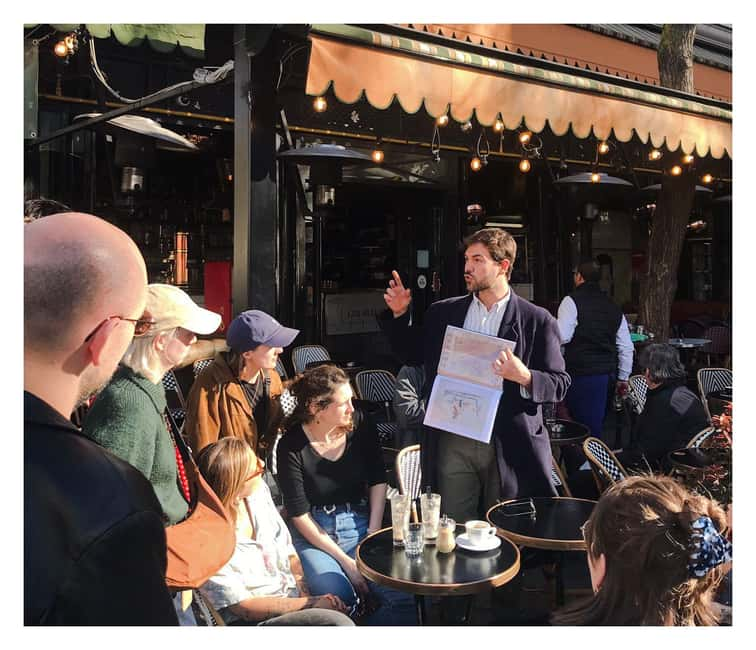
The walk is built around the events leading to Bastille Day, but it does not treat 14 July as an isolated explosion. Robin sets up the pressure first. You learn why the population was frustrated and how local conditions helped create the mood for revolt.
That wider explanation is one of the tour’s strongest points. Several people have found the social background especially useful, and I can see why. A quick retelling of the Bastille attack can make it sound like a single dramatic episode. This route explains how the crisis grew, why the working population mattered, and how a neighborhood could become part of a national turning point.
Robin’s teaching background also fits the subject well. He has been described as a history professor, and his method appears to favor questions, exchanges, and clear explanations over a nonstop speech. You should expect an active walk rather than a lecture delivered at you.
He also uses images to help you picture what the area looked like in the eighteenth century. That is valuable in modern Paris, where later construction can hide the original setting. Old views and visual references give you a way to compare the streets around you with the city that existed before the Revolution.
La Folie Titon and the first important stop
La Folie Titon is one of the named stops, and it gives the tour a specific place for discussing the unrest in the Faubourg Saint Antoine area. The appeal is not a grand surviving monument. It is the connection between an ordinary-looking urban setting and the pressure building in 1789.
This is the kind of stop that rewards close attention. You might otherwise walk past without realizing that the location fits into the story of the Revolution. Robin points out the historical clues and explains what happened in terms that connect the site to working life and neighborhood politics.
I like this style of sightseeing because it asks you to look twice. Paris is full of celebrated monuments, but its historical meaning is often spread across side streets, façades, passages, and small details. A guide who can identify those details gives you a better understanding than a route that simply moves from one famous building to the next.
Do not expect La Folie Titon to provide a large museum-style display or a preserved battlefield scene. The value is in the explanation. Without the guide, the place may seem quiet and unremarkable. With the story, it becomes evidence of how the Revolution was rooted in the city’s populated districts.
Passage de Lhomme and the quieter side of Paris
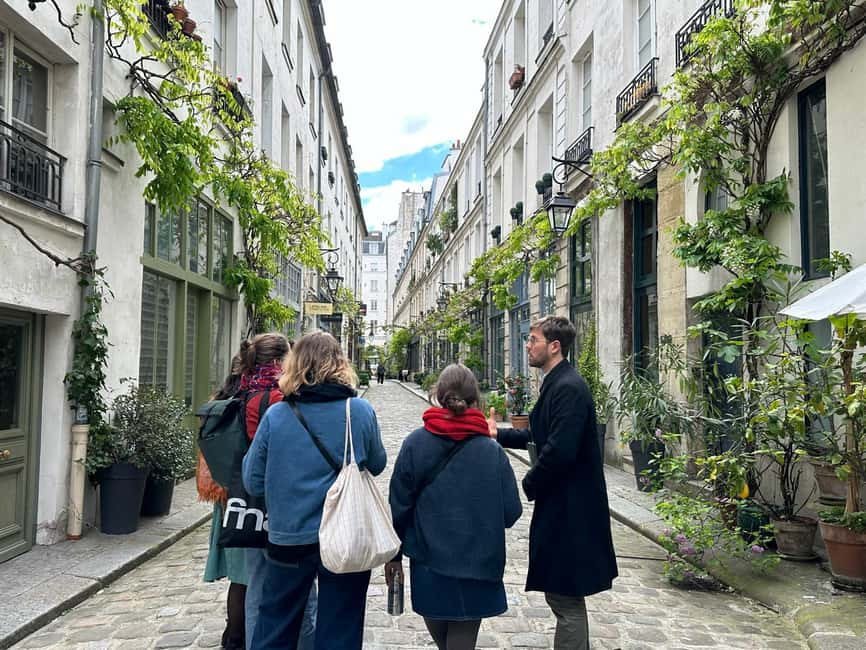
Passage de Lhomme is another named point on the route. Its inclusion reinforces the tour’s focus on lesser-known corners rather than the postcard version of Paris.
A passage can feel more intimate than a broad avenue or monumental square. Here, the setting helps you imagine how people moved through the neighborhood and how older traces can survive in the middle of a modern city. Robin uses the stop to point out details you might miss on your own, including architectural features and clues connected with the area’s past.
This is also where the tour earns its price. At $37 per person, you are paying for a focused guide, not entry to a major attraction. If you enjoy history, the value comes from learning how to read the city. You leave with a better eye for small features and a clearer sense of why this district mattered.
The limitation is that the route may be less rewarding if you want only famous sights or dramatic photo opportunities. Passage de Lhomme is about context and observation. I would choose this walk for its story, not because every stop is visually spectacular.
A different way to spend the day in Paris:
- Paris: Arc de Triomphe Rooftop Tickets
★ 4.6 · 34,264 reviews - Paris: Orsay Museum Entry Ticket
★ 4.7 · 25,647 reviews - Paris: Evening River Cruise with Music
★ 4.4 · 22,721 reviews - Paris: Eiffel Tower Entry Ticket with Optional Summit Access
★ 4.4 · 20,035 reviews
From working district to Place de la Bastille
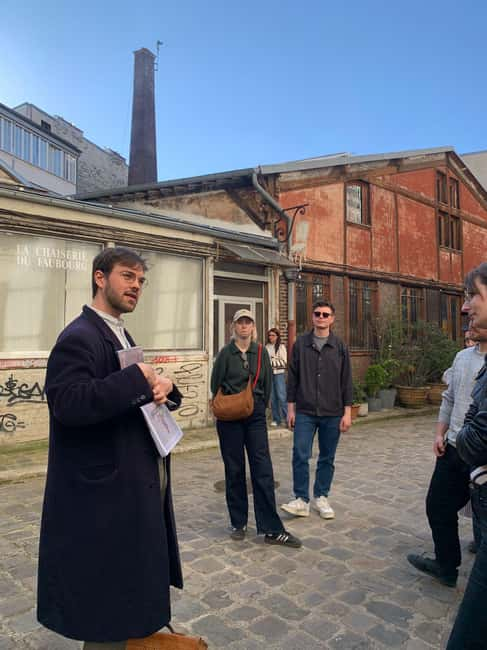
The route continues through additional lesser-known points before reaching a viewpoint and ending at 28 Place de la Bastille. The itinerary describes several stops as hidden, secret, or traditional village locations, but it does not provide their individual names. That means the guide’s interpretation is an important part of what you receive.
The viewpoint offers time for a photo and another chance to connect the city you see now with the events being discussed. I would not book this expecting a formal monument-by-monument tour. Instead, think of it as a walking history lesson in which the streets, passages, and neighborhood layout serve as the classroom.
The final arrival at Bastille gives the story a satisfying physical endpoint. The square is one of the most recognizable places linked with the French Revolution, and finishing there helps tie the quieter local sites to the event most people already know.
It is worth keeping expectations precise. The tour reaches the Bastille story and explains the forces behind the uprising, but it does not appear to continue through every later stage of the Revolution. One person specifically wished for a longer follow-up covering the Reign of Terror and Napoleon. I agree that this would be useful, but the focused scope is also why the walk fits comfortably into 90 minutes.
Robin’s storytelling and teaching style
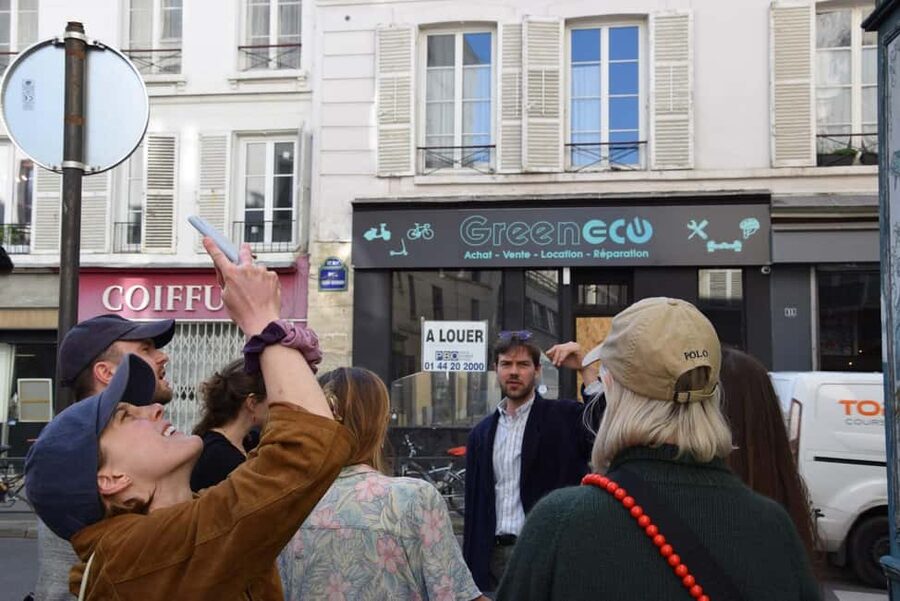
The guide can make or break a history walk, and Robin receives especially strong praise for his delivery. His strengths are not just subject knowledge. He is also described as funny, friendly, clear, and willing to involve the group.
That combination matters. French revolutionary history can become a blur of dates, factions, and political terms. Robin’s approach appears to keep the story connected to people and places. He explains social conditions, adds lesser-known details, and brings the past into the present without making the subject feel like a dry school lesson.
I also like that the tour encourages questions. A small group of up to 10 participants is stated in one part of the booking information, while another group limit says a maximum of 12 to 15 people. Either way, this is designed as a small-group experience rather than a large procession. Check the final group limit when booking if that detail matters to you.
The guide speaks English, French, and German. That gives you a choice of language, though you should confirm the available language for your selected departure.
What you really learn in 90 minutes
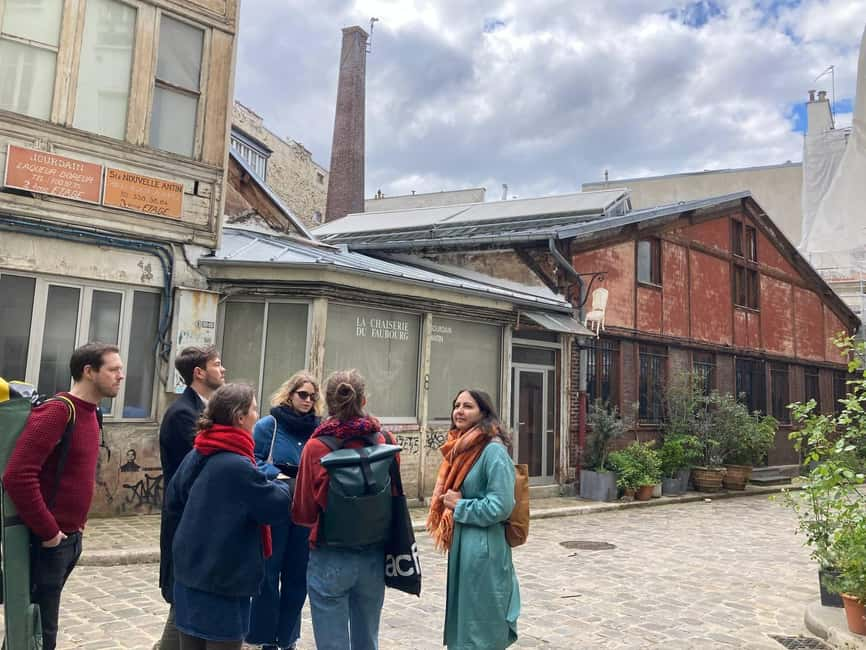
The title promises the 14th of July 1789, and the walk follows that day and the forces leading up to it. You get an overview of how the crisis developed, why the artisan district mattered, and how the Bastille became a symbol of popular action.
The strongest educational feature is the link between local life and national change. You learn not just that the people revolted, but what conditions made revolt possible. You also get a better sense of how Paris was divided by occupation, income, and neighborhood.
The tour does not appear to offer a full chronological course from the start of the Revolution through Napoleon. If you want the Reign of Terror, the rise of Napoleon, or a broad survey of all revolutionary sites, you will need another tour or a museum visit to fill in those chapters.
For a first introduction, though, the narrow focus works. I often prefer a short walk that explains one place properly to a long route that races through an entire city. You can use what you learn here to make later visits to central Paris more meaningful.
Who should book this walk
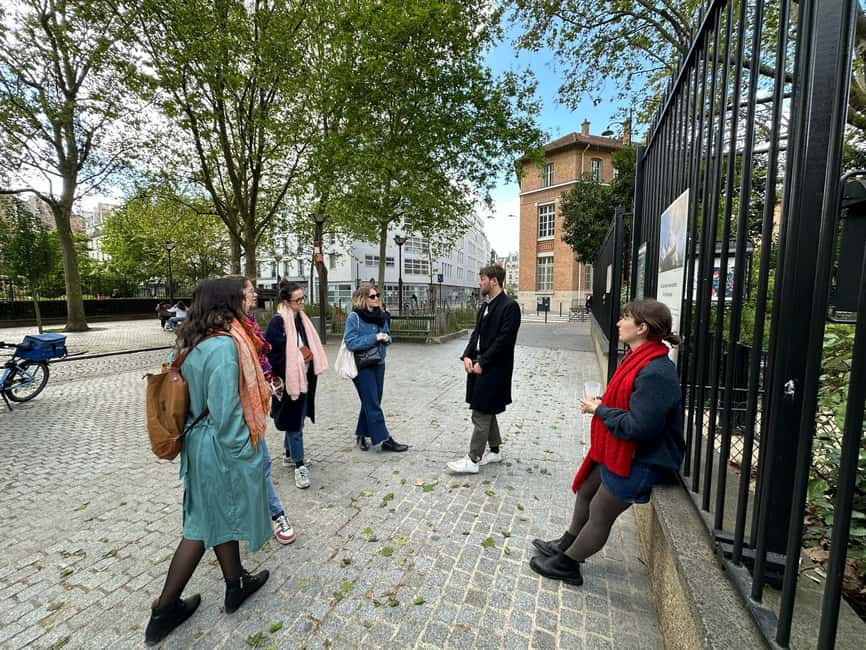
I would recommend this tour most strongly to history fans, repeat visitors to Paris, and anyone who has already seen the major monuments and wants a more local route. It is also a smart choice for visitors who want to understand the French Revolution through working-class Paris rather than through royal interiors alone.
You do not need to be an expert. Robin’s role is to make the subject accessible, and the group format gives you room to ask for clarification. The tour suits adults and older children who can manage a 90-minute walk and enjoy listening, asking questions, and noticing details.
I would be less likely to choose it for a first-time visitor with only one day in Paris and a long list of essential sights. The route does not center on the Louvre, Notre-Dame, the Eiffel Tower, or other headline attractions. It is best treated as a deliberate choice, not a general introduction to all of Paris.
The walk can also work well early in your stay. One useful tip is to schedule it near the beginning of your visit if you plan to see other historical areas afterward. The social and political background can give later sightseeing more meaning.
Price, timing, and practical value
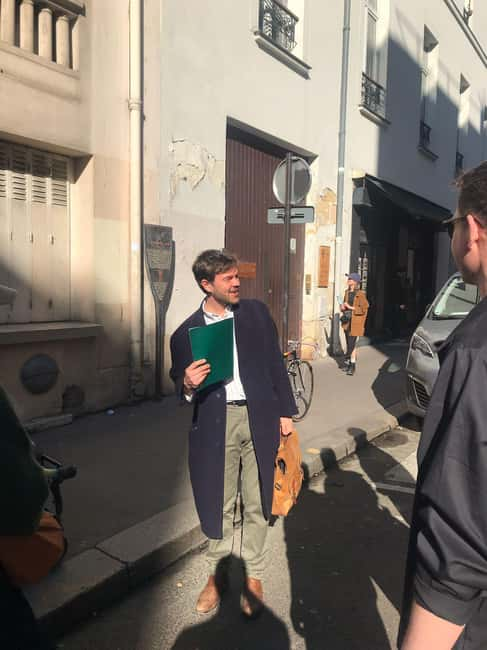
At $37 per person, the price is fair for a 90-minute guided walk with no additional fees. You are not paying for admission to a monument, so the value depends on how much you want expert interpretation and local context.
For me, the small group is the key. A limit of around 10 to 15 people makes it easier to hear the guide, stop at smaller sites, and ask questions. It also keeps the experience personal without the cost of a private tour.
The walk lasts approximately an hour and a half. Wear comfortable shoes and plan for outdoor walking, since the experience moves between neighborhood streets and public places. The supplied details do not give a full accessibility description, so ask the provider directly if you need information about surfaces, steps, or mobility requirements.
The starting location is at 1 Place du Dr Antoine Béclère, between Café les Blouses Blanches and Mon Café. The tour finishes at 28 Place de la Bastille, which is useful because you can continue exploring the area, stop for food, or connect with public transport from there.
Free cancellation is available up to 24 hours before the start for a full refund. You can also reserve now and pay later, which helps if your Paris schedule is still shifting.
How this compares with a standard Bastille visit
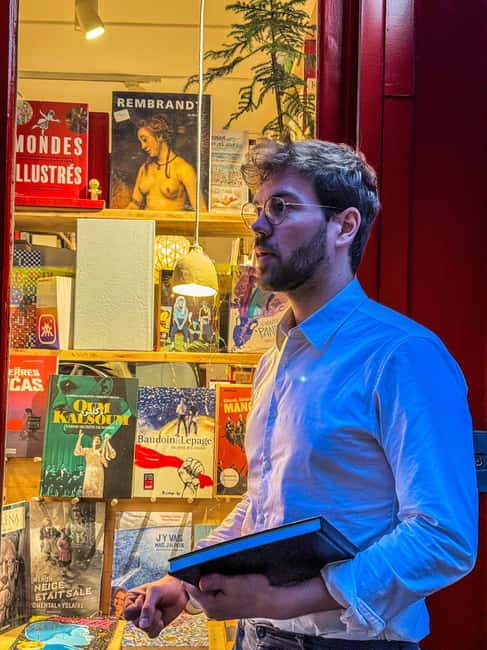
A quick visit to Place de la Bastille gives you the name, the column, and the modern city around it. This tour gives you the road to that story.
The difference is context. You spend time in Faubourg Saint Antoine, La Folie Titon, Passage de Lhomme, and other points that do not usually appear on a first-time sightseeing list. You learn how the district’s people and conditions helped shape the events, then arrive at Bastille with a stronger sense of what the square represents.
I would not see the tour as a replacement for visiting major museums or reading a full account of the Revolution. It is a complement. The walk helps you understand the human and local scale, while a museum can supply documents, portraits, weapons, and a longer timeline.
The route is especially useful for repeat visits. Even people who work near Faubourg Saint Antoine have found new details and explanations in the area. That tells you something important about the tour’s appeal: it is not just for someone seeing Paris for the first time.
Should you book the Paris French Revolution Tour?
Book it if you want a focused, story-led walk through a less familiar Paris district, especially if the origins of the French Revolution interest you. Robin’s academic background, clear delivery, old images, and willingness to answer questions give the experience more substance than a quick sightseeing loop.
Skip it if you need a broad tour of every Revolutionary-era site or if you prefer grand monuments to neighborhood history. The walk ends around the 1789 uprising and does not cover the later Revolution and Napoleon in full.
For $37, I see this as a strong-value choice for history-minded visitors. Schedule it early in your Paris stay, arrive ready to walk, and pay attention to the small details. By the time you reach Place de la Bastille, the familiar name should feel much less familiar, and much more human.
FAQ
How long does the French Revolution tour last?
The tour lasts approximately 90 minutes.
How much does the tour cost?
The listed price is $37 per person.
Where does the tour start?
The meeting point is at 1 Place du Dr Antoine Béclère, between Café les Blouses Blanches and Mon Café.
Where does the tour finish?
The tour finishes at 28 Place de la Bastille.
Which places are included on the route?
Named highlights include Faubourg Saint Antoine, La Folie Titon, Passage de Lhomme, and Place de la Bastille. The route also includes additional lesser-known stops and a viewpoint.
Which languages are available?
The live tour guide is available in English, French, and German.
How large is the group?
The activity is described as a small-group tour. The supplied details give limits ranging from 10 participants to 12 to 15 participants, so check the group size for your selected booking.
Can I cancel or pay later?
You can cancel up to 24 hours in advance for a full refund. The reserve-now, pay-later option lets you book without paying immediately.
Newest additions around Paris
- Family escape Game with kids and teens on the Île de la Cité★ 4.5 · 11 reviews
- Private Photoshoot with the Iconic Eiffel Tower in Paris★ 5.0 · 11 reviews
- 2-day Private Mont Saint-Michel, 3 Loire Castles, D-Day Express★ 4.5 · 11 reviews
- Paris: Batobus Hop-On Hop-Off Cruise & Landmarks Audio Tour★ 3.0 · 11 reviews
- Paris Revolutionary Walking Tour: Iconic French Sights & Stories★ 5.0 · 11 reviews
- Guided and Private Tour of 3 hours through Paris aboard a Citroën 2cv★ 5.0 · 11 reviews
- Kids in the Kitchen – CrOisSaNtS★ 4.0 · 11 reviews
- Paris: Ghosts and Dark Stories Guided Walking Tour★ 4.1 · 11 reviews
Tours, compared.
Louvre Guided Tour with Reserved Access & Boat Cruise
Read our review →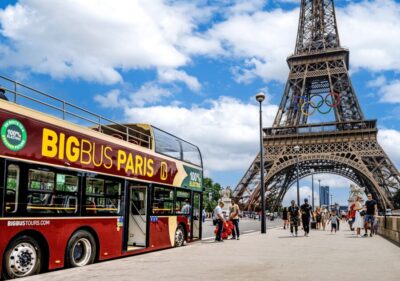
Big Bus Hop-On Hop-Off Tour with Optional Cruise
Read our review →
Louvre Museum Masterpieces Guided Tour with Access
Read our review →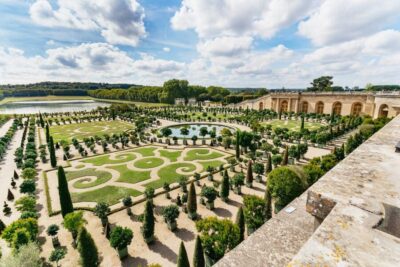
Skip-the-Line Tour of Palace with Gardens Access
Read our review →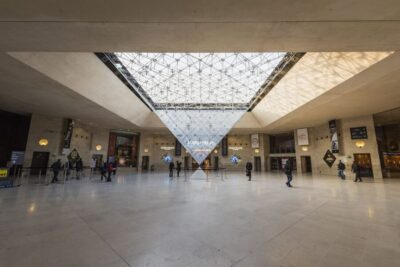
Mona Lisa & Louvre Masterpieces Tour with Reserved Access
Read our review →
Paris Big Bus Hop-On Hop-Off Tour with Optional River Cruise
Read our review →
Louvre Museum – Exclusive Guided Tour (Entry Included)
Read our review →