
Reviewed · LOUVRE MUSEUM TOURS
Louvre Museum: Skip-the-Line Guided Tour
The Louvre is too large for a casual wander if your time is short. This two-hour guided tour takes you straight to major works such as the Mona Lisa, Venus de Milo, and Nike of Samothrace, while giving you a useful map of the museum.
I like the fast-track entry, especially on a crowded Paris day, and I like that the guided portion ends with time to continue on your own. Guides including Julie, Anne, Emmanuel, and Olivier have been praised for lively explanations and good crowd control.
The main drawback is price: $146 per person is far more than solo museum admission. The tour also moves quickly, and the Louvre’s crowds can make even famous paintings feel less personal.
In This Review
- Key Points Before You Book
- Why a Guide Helps Inside the Louvre
- Fast-Track Entry and the Meeting Point
- The Louvre’s Famous Three
- The Mona Lisa
- The Venus de Milo
- The Nike of Samothrace
- Egyptian and Near Eastern Antiquities
- Greek, Etruscan, and Roman Works
- Raphael, Michelangelo, Leonardo, and French Painting
- Two Hours at the Right Pace
- What You Get for $146
- Continuing Alone After the Guide Leaves
- Who Should Book This Louvre Tour
- FAQ
- How long does the Louvre guided tour last?
- Is museum admission included?
- Which Louvre works are included?
- Can I stay in the Louvre after the guided tour?
- What should I bring?
- Is the tour suitable for wheelchair users?
- Should You Book It?
Key Points Before You Book
- Fast-track entry saves precious Paris time: You avoid the regular ticket line, though security checks and meeting-point instructions still matter.
- The route covers the Louvre’s famous essentials: Expect the Mona Lisa, Venus de Milo, Nike of Samothrace, and selected Egyptian, Near Eastern, Greek, Etruscan, and Roman works.
- Guides make the giant museum manageable: Guides such as Julie, Anne, Emmanuel, and Olivier have earned praise for clear explanations, humor, and efficient routing.
- You can stay after the tour: Once the two-hour guided visit ends, you may continue exploring independently.
- Small groups can improve the experience: Private and small-group formats are available, and past groups have ranged from very small parties to six people.
- Pack light: Bags larger than 55 by 35 by 20 centimeters are not allowed, and the tour is not suitable for wheelchair users.
Why a Guide Helps Inside the Louvre
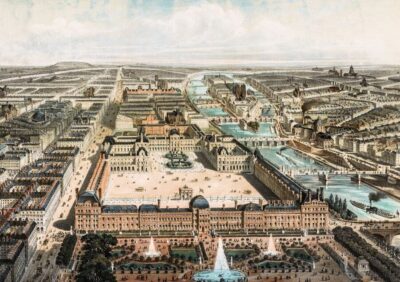
The Louvre is not simply a large art museum. It is a former royal palace built around a 12th-century fortress, with collections that reach from antiquity to major European painting. The museum opened in 1793 after the royal collections had already been displayed there since 1682.
That scale changes the way you visit. Without a plan, you can spend a surprising amount of time finding the right staircase, gallery, or wing. A guide gives you a route and a reason to stop at each work, which is especially useful if this is your first visit.
You will not see all 6,000 paintings in two hours. That is not a flaw in the tour. It is the only sensible approach for a short visit. The guide selects famous works and explains why they matter, rather than sending you into a maze with a map and good intentions.
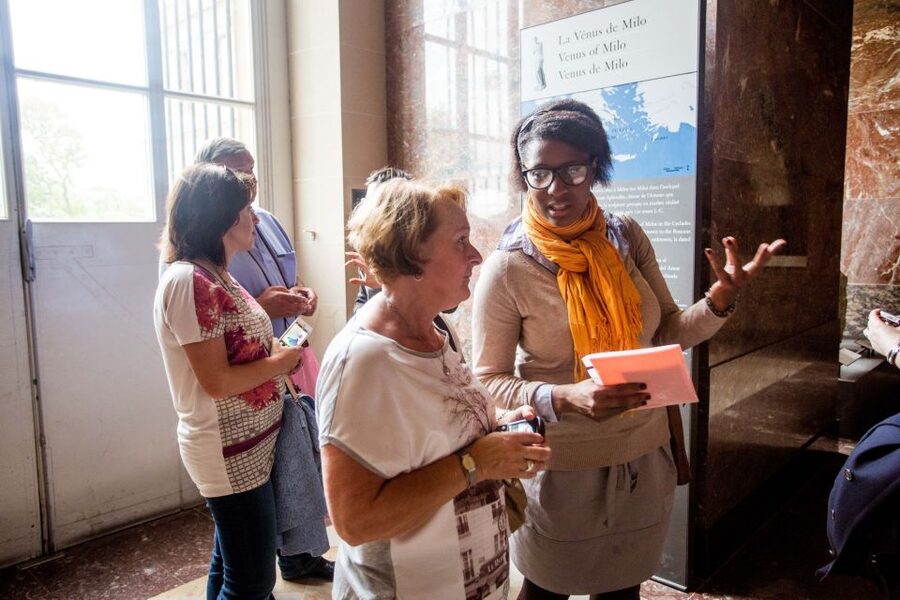
The strongest praise for this experience goes to the guides. Julie was described as passionate about the Louvre, its art, and Paris. Anne kept a nine-year-old engaged while also slowing the pace for a family member with an injured foot. Olivier was praised for an organized route and explanations that made the two hours pass quickly.
That personal touch matters in a place where the crowds can make art feel distant. A guide can help you look at a work for a few focused minutes instead of merely taking a photograph and moving on.
More ways into the Louvre:
- Paris: Louvre Museum Timed-Entrance Ticket
★ 4.6 · 71,977 reviews - Paris: Louvre Guided Tour with Reserved Access & Boat Cruise
★ 4.3 · 16,353 reviews - Louvre Museum Masterpieces Guided Tour with Access
★ 4.5 · 12,023 reviews
Fast-Track Entry and the Meeting Point
The experience includes museum admission, a licensed English-speaking guide, and fast-track entrance. The meeting point can vary based on the option you book, so read your confirmation carefully and allow time to find it.
Fast-track does not mean that every part of entry disappears. The museum can still require security checks, and the group must enter according to the Louvre’s procedures. Still, skipping the normal ticket line can be valuable, particularly during busy periods.
One past group arrived on a day with disruptions and was brought inside quickly by the guide. That is the sort of help you are paying for here: not only access, but someone who knows how to move through a crowded, complicated building.
Bring a passport or identity card. Do not bring luggage or large bags. Any item over 55 by 35 by 20 centimeters is not permitted inside the museum. This rule is easy to overlook, so pack only what you need for the visit.
The Louvre has limited toilet facilities in some areas. One guide ended the guided portion near toilets, which proved useful. That is a small detail, but it can matter to families and anyone planning a tight day of sightseeing.
The Louvre’s Famous Three
The tour’s headline works are the Mona Lisa, Venus de Milo, and Nike of Samothrace. These are the pieces most first-time visitors want to see, and the route is designed to get you to them without wasting time.
The Mona Lisa
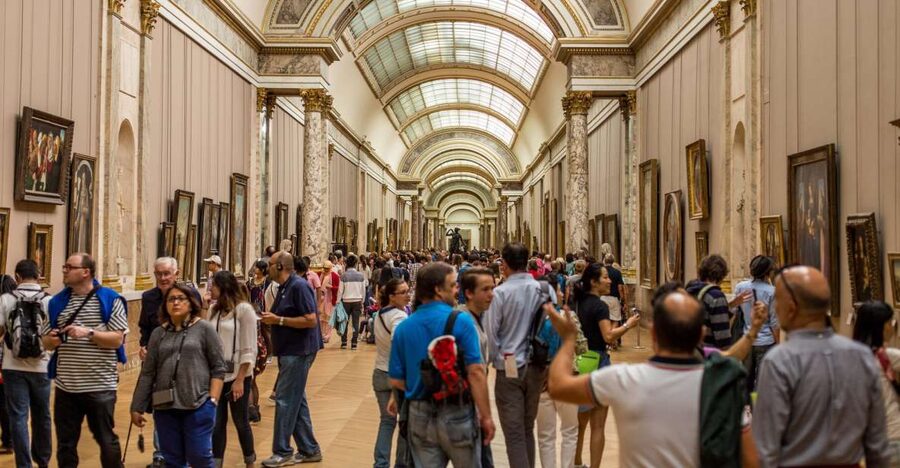
The Mona Lisa is the Louvre’s most famous resident, and it draws a crowd. Expect a busy viewing area rather than a quiet art-room moment. You may have only a short chance to look before the flow of people carries you onward.
A guide helps you use that brief moment well. Instead of staring at the painting while wondering what you should notice, you can hear context about Leonardo da Vinci and the work’s place in art history. The tour is not meant to give you a long, private viewing. It gives you a practical way to see the painting and understand why it has such power over the museum’s daily traffic.
Keep your expectations sensible. The Mona Lisa is relatively small, and the room can feel crowded. The value here is reaching it efficiently and having an informed explanation, not escaping the crowds entirely.
More Louvre Museum museums to visit:
- Paris: Louvre Museum Entry Ticket With Host and River Cruise
★ 4.6 · 9,926 reviews - Louvre Museum – Exclusive Guided Tour (Entry Included)
★ 5.0 · 6,296 reviews - Paris: Louvre Museum Hosted Entry and Mona Lisa Audioguide
★ 4.6 · 5,235 reviews - Paris: Louvre Museum Tour Mona Lisa & Iconic Masterpieces
★ 4.7 · 4,536 reviews
The Venus de Milo
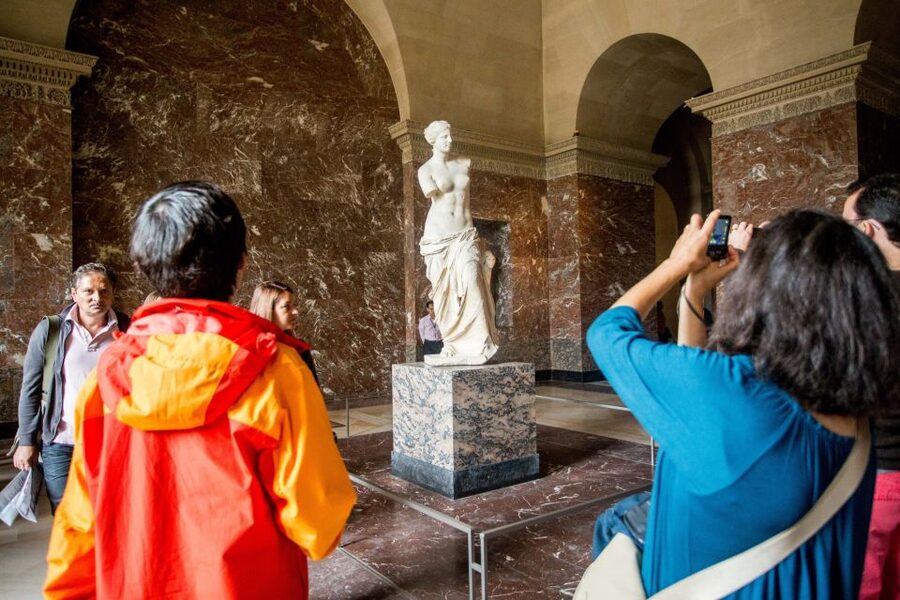
The Venus de Milo gives you a very different experience. This ancient Greek statue is displayed as a major sculptural centerpiece, and its missing arms have helped make it one of the world’s best-known works.
Your guide can point out how the statue is presented and place it within the Louvre’s Greek collection. Sculpture also rewards a slower look than a quick photograph, though the two-hour schedule means you will need to keep moving.
The Nike of Samothrace
The Nike of Samothrace is one of the Louvre’s most dramatic sights. The marble figure is positioned at the top of a grand staircase, making the approach part of the experience. The statue’s wings, movement, and high placement give it a powerful sense of arrival.
This is an ideal stop for a guide because the setting affects how you see the work. You are not looking at an isolated object in a case. You are seeing a monumental sculpture framed by architecture and stairs. A good explanation helps you notice the relationship between the figure and the space around it.
Egyptian and Near Eastern Antiquities
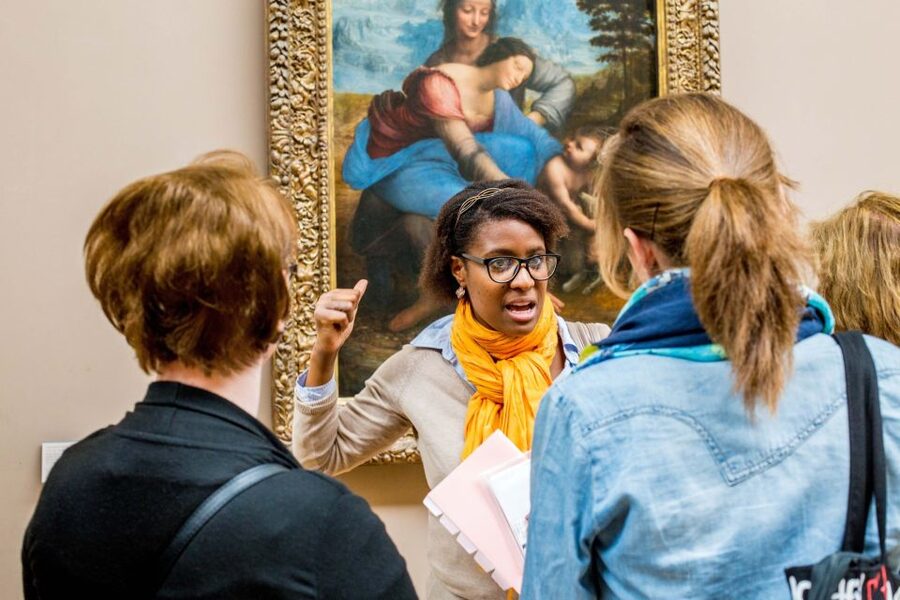
The tour also reaches older collections, including Egyptian and Near Eastern antiquities dating as far back as 4000 BC. These galleries add needed breadth to a visit that might otherwise become a march toward three famous European works.
Egyptian objects can be difficult to read without context. A guide helps explain what you are seeing and why these pieces matter, giving you a better sense of the age and purpose of the collection. The Near Eastern material offers another change of pace, with objects connected to some of the earliest civilizations represented in the museum.
This section may be especially useful if you are more interested in archaeology than painting. One participant described being less focused on art and more drawn to museums, dinosaurs, and aquariums, yet found the two-hour highlights route a good fit. That is a useful lesson: you do not need to be an art specialist to enjoy the Louvre, but you may appreciate having someone keep the visit focused.
The tour cannot cover every ancient gallery. It gives you selected examples and a broad introduction. If Egyptian or Near Eastern history is your main reason for visiting, plan to stay afterward and return to those rooms independently.
Greek, Etruscan, and Roman Works
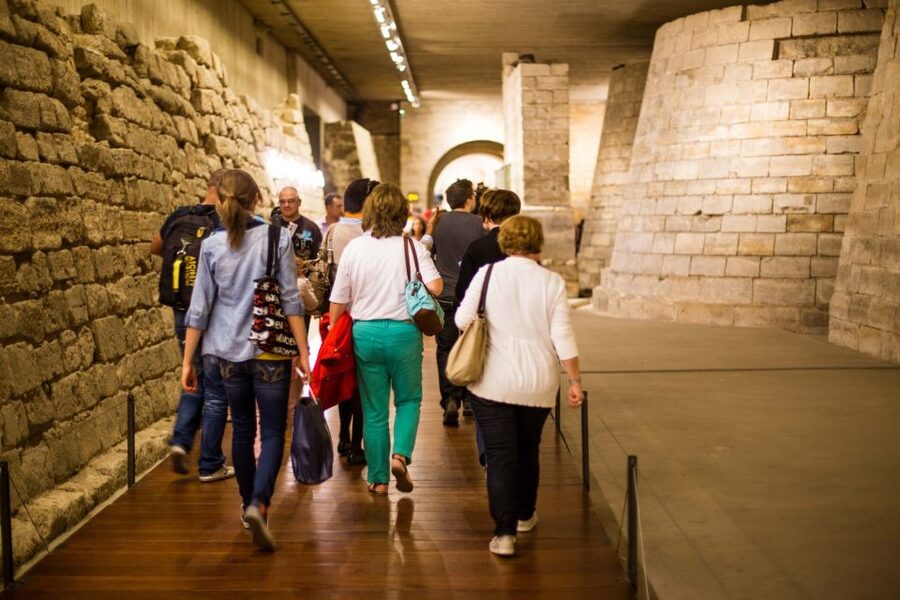
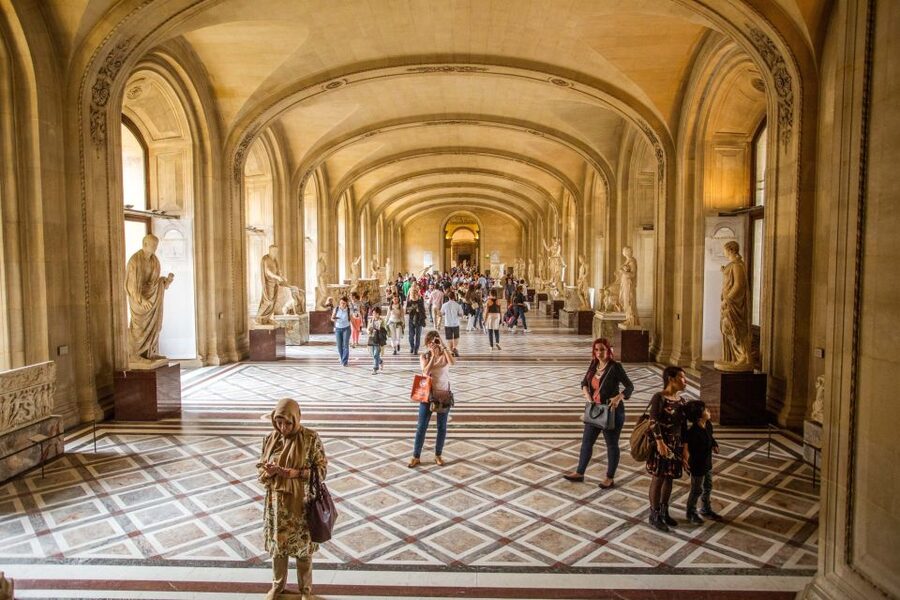
The Louvre’s ancient Mediterranean collections include Greek, Etruscan, and Roman relics. Along with the Venus de Milo and Nike of Samothrace, these works show how sculpture and visual culture developed across different societies.
The benefit of a guide is comparison. You can begin to see differences in style, subject, materials, and purpose instead of treating every marble figure as simply another statue. A strong guide also answers questions as they arise, which can turn a quick museum stop into a clearer picture of how art changed over time.
This part of the route will appeal to visitors who want more than a checklist of famous names. It also provides a break from the packed Mona Lisa area. The main limitation is time. If a particular ancient collection catches your attention, make a note of its location and return after the guided visit.
Raphael, Michelangelo, Leonardo, and French Painting
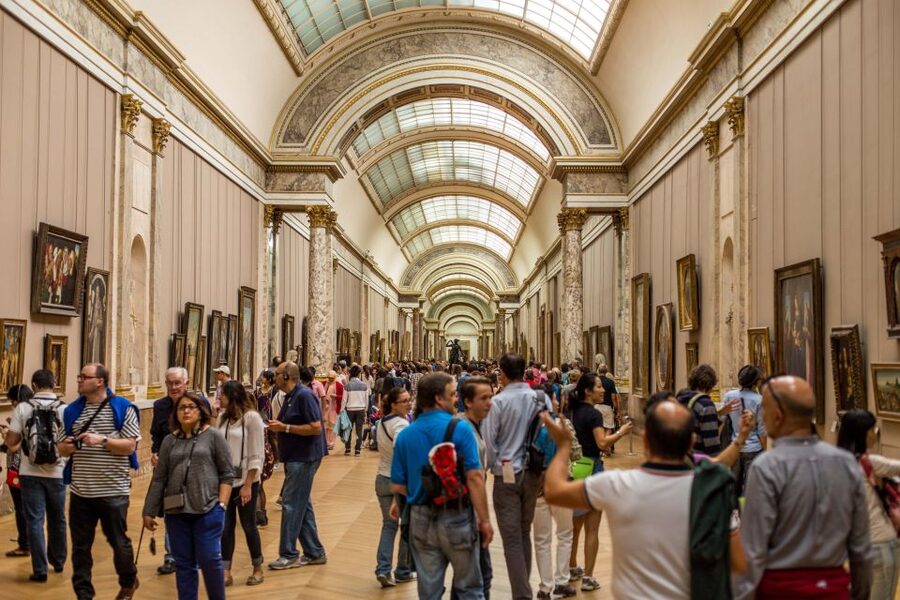
The tour includes works connected with Raphael, Michelangelo, Leonardo da Vinci, French painting, and Italian painting. The supplied details also refer to French and Italian Impressionists, along with the Louvre’s wider collection.
The precise order can vary, since the meeting point and route may depend on the option booked and conditions inside the museum. You should think of this as a highlights tour, not a fixed lesson covering every period in equal detail.
Leonardo’s presence is central because of the Mona Lisa, but the larger value comes from seeing that the Louvre is not a one-painting museum. Raphael and Michelangelo broaden the Italian story, while French works connect the collection to the country that built, used, and later opened the palace to the public.
The guide’s commentary is important here. A painting may look impressive, but a short explanation about its subject, technique, or influence can give you a better reason to remember it. Olivia was praised for showing how particular works helped change art history, which is exactly the sort of connection that makes a short tour worthwhile.
Two Hours at the Right Pace
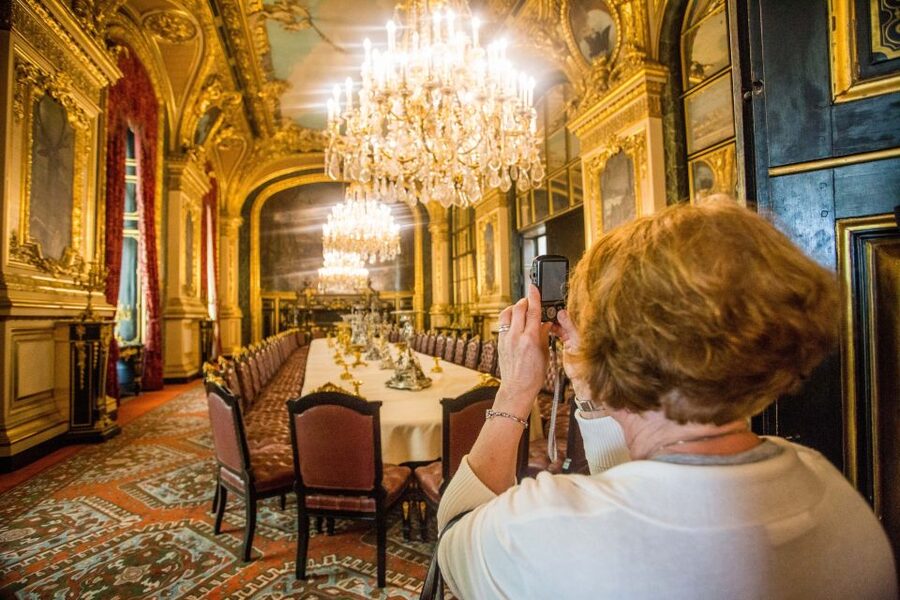
Two hours is enough for an introduction, not a complete Louvre visit. You will cover a lot of ground, and the pace may feel brisk if you want to linger at every stop.
The tradeoff is sensible. You see the museum’s main landmarks, hear explanations, and leave with a clear idea of where to return. One small group stayed for nearly three hours, but the advertised duration is two hours, so do not build a strict schedule around extra time.
Headsets may be used, and one family found that theirs worked well. This is useful in crowded rooms, where standing close to the guide is not always possible. Small groups are easier to keep together, and past groups included only a few people. Private tours are also available if you want more control over pace and questions.
Families should think about the children in their party. Anne kept a nine-year-old involved, showing that the right guide can make a museum visit work for children. Still, the Louvre is large and crowded, and two hours of art stops may be tiring for younger children. A private format can help because the guide may be able to adjust the pace more easily.
The tour is not suitable for wheelchair users. That is an important limitation to consider before booking.
What You Get for $146
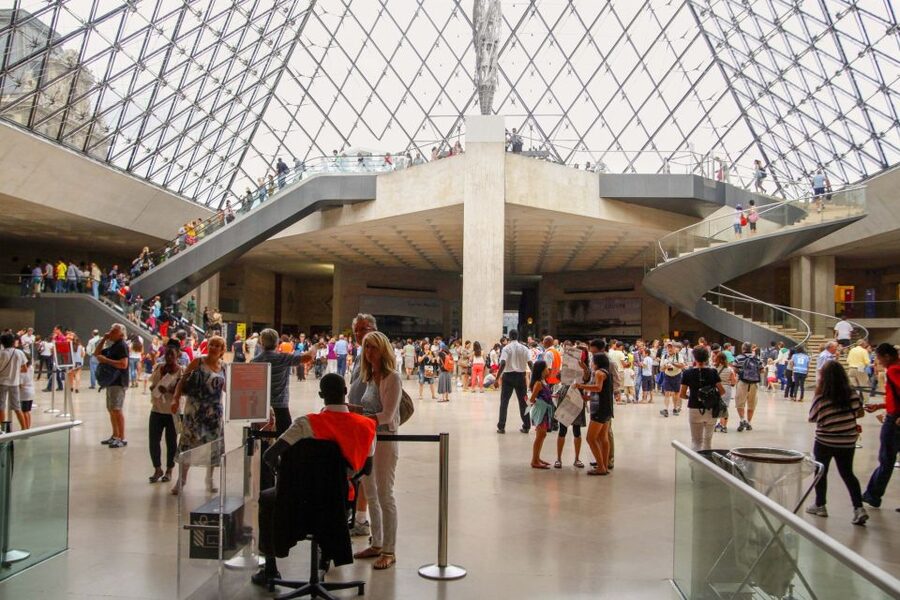
At $146 per person, this is not a budget way to enter the Louvre. The cost is several times higher than solo admission, so the value depends on what you need from the visit.
You are paying for three things: fast-track access, a licensed guide, and a planned route through a very large museum. If you are in Paris for only a few days, saving time can have real value. Missing an hour in a ticket queue may mean losing time that could be spent at Sainte-Chapelle, along the Seine, or in another neighborhood.
You are also paying for interpretation. If you would happily spend hours studying the Louvre map and reading about each work, independent entry will cost less. If you want someone to lead you directly to the major sights and explain them in plain language, the extra cost is easier to justify.
Small-group or private options affect the value. A private tour costs more than a larger group, but it can work well for families, mixed interests, or anyone who wants to ask frequent questions. One family found the private format worth the extra money because the guide adjusted the pace for a child and an injured family member.
The tour has free cancellation up to 24 hours before the start time, and you can reserve now and pay later. Those policies make it easier to fit the visit into a changing Paris schedule, though you should still confirm the exact start time and meeting point for your chosen option.
Continuing Alone After the Guide Leaves
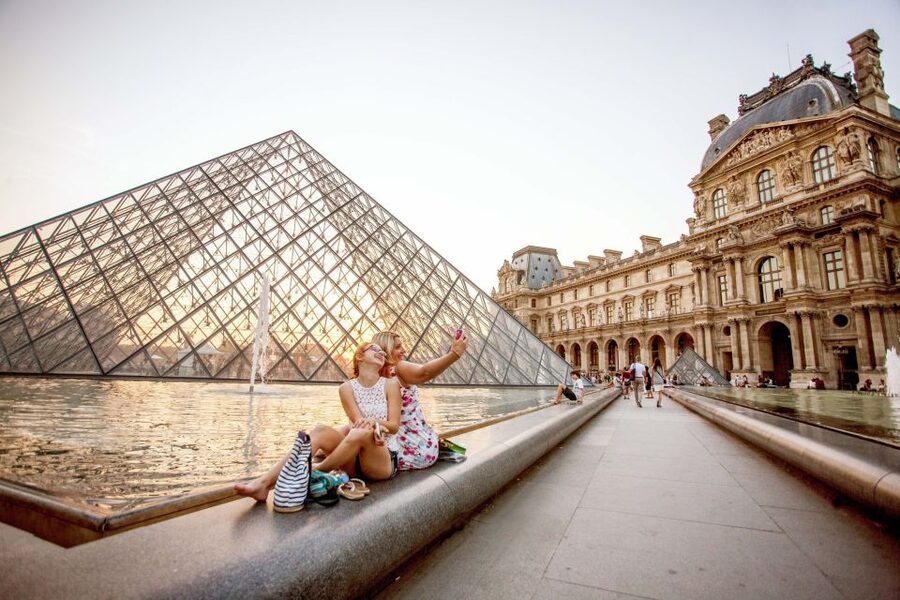
The guided portion ends after about two hours, but you can continue exploring the museum on your own. This is one of the experience’s best features.
The guide gives you a starting framework. Afterward, you can return to a favorite painting, spend more time in the Egyptian galleries, or visit rooms that were not part of the highlights route. You are no longer trying to understand the entire building at once.
Use the final part of the tour to ask where to go next. Guides have helped groups finish near useful facilities and can point you toward the next area. You should also keep your belongings in mind, since large bags are not allowed and any items placed in storage need to be collected according to the museum’s procedures.
If you have a full afternoon, this format works better than a guided tour that rushes you out immediately. If you have only two hours available, it still gives you the main sights in a controlled visit.
Who Should Book This Louvre Tour
I would recommend this tour to first-time Louvre visitors who want to see the major works without spending hours finding them. It also suits anyone who values explanation more than the lowest possible price.
Families can benefit from the private or small-group options, especially if children or mobility concerns require a slower pace. The guide’s ability to keep a nine-year-old engaged is encouraging, but the museum’s crowds and size still demand realistic expectations.
This is also a good choice for visitors who are not devoted art fans. You can see the essential works in two hours, learn why they matter, and leave before museum fatigue takes over.
Independent visitors may prefer a cheaper ticket if they already know the Louvre well or want to spend an entire day in one collection. The $146 price is hard to defend if your only goal is entry. It makes more sense when fast access, route planning, and live commentary are all important to you.
FAQ
How long does the Louvre guided tour last?
The advertised duration is two hours. Some visits may run longer, but you should plan around the stated two-hour schedule.
Is museum admission included?
Yes. The price includes the Louvre entrance fee, fast-track entrance, and a licensed English-speaking guide.
Which Louvre works are included?
The tour highlights the Mona Lisa, Venus de Milo, and Nike of Samothrace. It also includes selected Egyptian, Near Eastern, Greek, Etruscan, Roman, French, and Italian works.
Can I stay in the Louvre after the guided tour?
Yes. You can continue exploring the museum on your own after the guided portion ends.
What should I bring?
Bring a passport or identity card. Do not bring luggage or large bags, and remember that items larger than 55 by 35 by 20 centimeters are not permitted.
Is the tour suitable for wheelchair users?
No. The experience is listed as not suitable for wheelchair users.
Should You Book It?
Book this Louvre tour if you want a fast, guided introduction and do not mind paying a premium for saved time and direction. The best parts are the efficient route, the famous works, and the chance to keep exploring afterward.
Skip it if you prefer a quiet, self-directed museum day or are watching every euro. The Louvre will still be crowded, and two hours will only cover a fraction of its rooms.
For a first visit, though, this is a practical way to get your bearings, see the essential masterpieces, and avoid losing half your Paris day to a confusing palace-sized museum.
More Skip the Line in Louvre Museum
- Louvre Museum: Skip-the-Line Small Group Guided Tour
★ 4.6 · 3,960 reviews - Paris: Skip-the-Line Louvre Highlights Tour with Mona Lisa
★ 4.7 · 908 reviews - Louvre Museum Skip the Line Entry with Introduction to Mona Lisa
★ 3.0 · 576 reviews - Skip The line Louvre Museum Ticket and Guided Tour
★ 4.5 · 227 reviews
Newest additions around Louvre Museum
- Louvre Museum : Kids-Friendly Private Tour with Entry Tickets★ 4.5 · 12 reviews
- Louvre Private Tour With Hotel Pickup★ 4.5 · 12 reviews
- Louvre Late Opening Guided Tiny Group Tour★ 5.0 · 13 reviews
- VIP Paris in a Day: Montmartre, Louvre, Île de la Cité, Cruise★ 5.0 · 13 reviews
- Paris Louvre and Orsay Museums Masterpieces Private Day Tour★ 4.5 · 13 reviews
- Paris Louvre : Private Treasure Hunt for Families or groups★ 3.9 · 14 reviews
- Louvre Half-Day Private Tour★ 5.0 · 14 reviews
- Loire Valley Castles Chenonceau Amboise & Da Vinci Small Group★ 4.0 · 14 reviews
Louvre Museum Tours, compared.

Louvre Guided Tour with Reserved Access & Boat Cruise
Read our review →
Louvre Museum Masterpieces Guided Tour with Access
Read our review →
Louvre Museum Entry Ticket With Host and River Cruise
Read our review →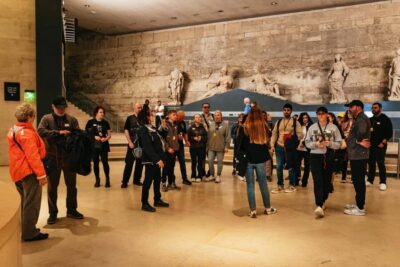
Priority Access Louvre with Host -Direct to Mona Lisa
Read our review →
Mona Lisa & Louvre Masterpieces Tour with Reserved Access
Read our review →
Louvre Museum – Exclusive Guided Tour (Entry Included)
Read our review →
Louvre Reserved Ticket and River Cruise Combo
Read our review →Browse the lists this tour appears in