
Reviewed · LE MARAIS TOURS
Le Marais District & Jewish Quarter – Exclusive Guided Walking Tour
The most rewarding part of this walk is the way it connects several versions of Paris in one compact neighborhood. You move from a Jesuit church and aristocratic mansions to the Jewish quarter, wartime memory, trendy shops, Centre Pompidou, and the city’s grand administrative heart.
I like the strong historical range and the small-group format. Guides such as Eden, Hugo, François, Alasdair, and Agustina are praised for clear explanations, humor, and the ability to make old buildings and difficult history feel human. I also like that the route includes corners you could easily miss on your own, including the Jardin des Rosiers and the courtyard of Hôtel de Sully.
The main consideration is that this is a walking and commentary tour, not an indoor museum or synagogue visit. The Musée Carnavalet and Centre Pompidou appear from outside, and security rules prevent entry into synagogues. If you want more time inside museums or a fuller account of modern Jewish life, you may need to add your own visits afterward.
In This Review
- Key points to know before booking
- Why Le Marais works so well for a walking tour
- Saint-Paul-Saint-Louis begins the story
- Hôtel de Sully reveals aristocratic Marais
- Place des Vosges is the visual centerpiece
- Rue des Francs Bourgeois puts old Paris beside new Paris
- Musée Carnavalet offers Paris history from the outside
- Rue des Rosiers and the Pletzl bring Jewish Paris into focus
- Jardin des Rosiers remembers wartime courage
- Centre Pompidou changes the architectural mood
- Hôtel de Ville and Saint-Gervais close the route
- The guides make the difference
- Private pricing and group value
- Who should take this walk
- Should you book the Marais and Jewish Quarter tour?
- FAQ
- How long does the Le Marais and Jewish Quarter tour last?
- Where does the tour start?
- Where does the tour end?
- Is the tour private?
- Is the tour offered in English?
- Does the tour include museum admission?
- Can you enter synagogues during the tour?
- Does the tour run in bad weather?
Key points to know before booking
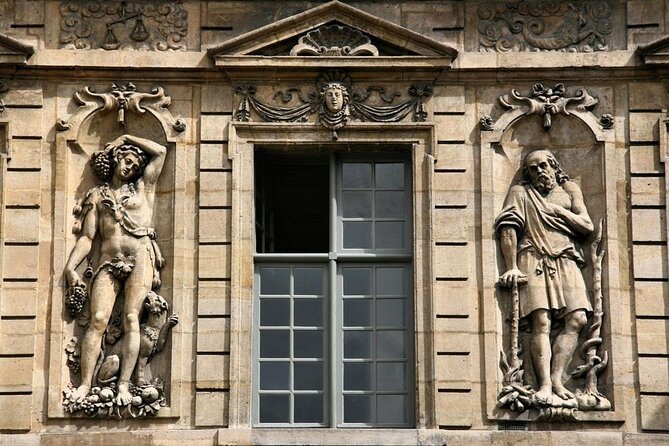
- Royal Paris in a small area: See Saint-Paul-Saint-Louis, Hôtel de Sully, Place des Vosges, and grand private mansions built for the nobility.
- Jewish history is central: Walk Rue des Rosiers, the Pletzl, and the Jardin des Rosiers, with discussion of community life and the French Resistance.
- Private and semi-private choices: The standard private option gives your group its own guide, while the lower-cost semi-private choice does not.
- A useful 2.5-hour length: The route covers many major sights without taking up a full morning or afternoon.
- Strong guide-led experience: Eden, Hugo, François, Alasdair, and Agustina are singled out for clear, lively presentations.
- Outdoor sightseeing only: Museum and synagogue interiors are not included, so dress for rain, wear good shoes, and bring water.
Why Le Marais works so well for a walking tour
Le Marais can look like a shopping district at first glance. Rue des Francs Bourgeois is lined with fashion stores, cafés, and polished historic façades. Walk a few steps farther, though, and the neighborhood opens into old courtyards, noble town houses, churchyards, Jewish bakeries, memorial gardens, and streets that preserve several centuries of Parisian life.
That changing character is the reason I would take this tour early in a Paris visit. You get a framework for the neighborhood before returning on your own for lunch, shopping, museums, or a slower wander. The guide’s commentary helps explain why a graceful mansion sits beside a modern storefront, and why the Marais feels both old and current.
The walk lasts about two and a half hours. That is long enough for a useful narrative, but short enough to fit around another Paris plan. You should still expect steady walking on city streets, so comfortable shoes matter. The route runs in all weather, and no large bags or suitcases are allowed.
The meeting point is at Saint-Paul in the 4th arrondissement. The tour ends in Le Marais, around the Hôtel de Ville area. There is no hotel pickup or drop-off, so plan to reach the starting point by public transport, taxi, or Uber.
More Le Marais walks:
- Award-Winning Paris French Bakery Experience — Le Marais, 4th Arr
★ 4.5 · 1,186 reviews - Paris Le Marais Food Tour With 10+ Tastings, Cheese, Wine & More
★ 5.0 · 985 reviews - Paris Le Marais District Original Food and Wine Tasting Tour
★ 4.5 · 880 reviews
Saint-Paul-Saint-Louis begins the story
The first major stop is the Église Saint-Paul-Saint-Louis, a 17th-century church built by the Jesuits. Its design drew inspiration from the Gesù church in Rome, giving the guide a good opening for explaining how religious orders, royal power, and new architectural ideas shaped Paris.
You spend roughly ten minutes here, so this is not a full church study. Instead, it gives you a visual anchor and an introduction to the Marais as a district that grew in importance beyond the older center of Paris.
The opening church visit also sets the tone for the tour. You are not simply moving from famous photo stop to famous photo stop. The point is to connect architecture with the people and institutions that used these buildings.
Hôtel de Sully reveals aristocratic Marais
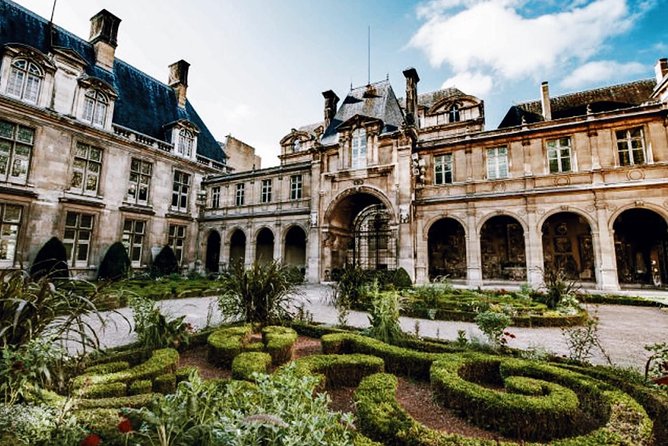
From the church, the route continues to the courtyard and garden of Hôtel de Sully. Built between 1624 and 1630, this grand town house reflects the Renaissance and Baroque styles that shaped the Marais during its period of royal favor.
The courtyard is one of those places that is easy to miss if you are hurrying down the street. A guide helps you notice the layout, decoration, and scale of these private residences. The Marais was once home to the nobility, and hôtels particuliers like this one show how elite families brought their own architecture into the city.
The visit is brief, about ten minutes, but it provides an important contrast with the Jewish quarter later in the walk. You see both the powerful families who built large residences and the communities who made their lives in the surrounding streets.
Place des Vosges is the visual centerpiece
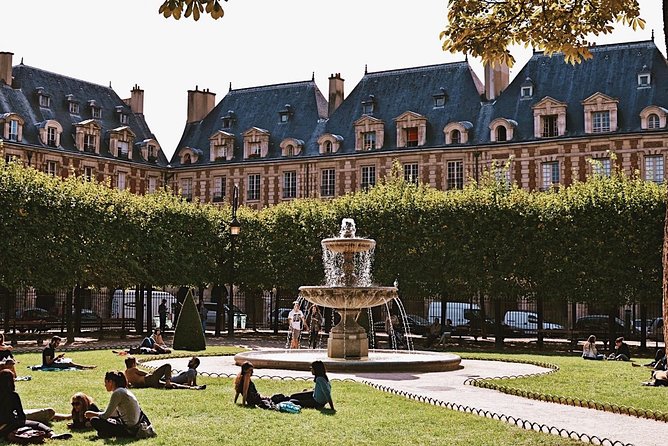
Place des Vosges is the tour’s grandest pause. It is known as the oldest planned square in Paris, with a symmetrical arrangement of red-brick façades, stone details, arcades, and tree-lined space.
I would not rush this stop. The tour allocates about ten minutes, which is enough for an explanation and a quick look around, but you may want to return later if you enjoy architecture or people-watching. The square has a calm, ordered feel that differs from the busier shopping streets nearby.
The guide can also use Place des Vosges to explain the Marais at its most prestigious. This was not an accidental collection of streets. It was a planned royal development that helped make the district fashionable for Parisian elites.
More Paris walking tours:
- Paris Top Sights Half Day Walking Tour with a Fun Guide
★ 5.0 · 2,893 reviews - Montmartre Hidden Gems and Scenic Highlights Walking Tour
★ 5.0 · 2,684 reviews - Montmartre Hill French Gourmet Food and Wine Tasting Walking Tour
★ 5.0 · 2,588 reviews - Paris Île de la Cité and Notre-Dame Walking Tour With Crypt
★ 5.0 · 2,272 reviews
Rue des Francs Bourgeois puts old Paris beside new Paris
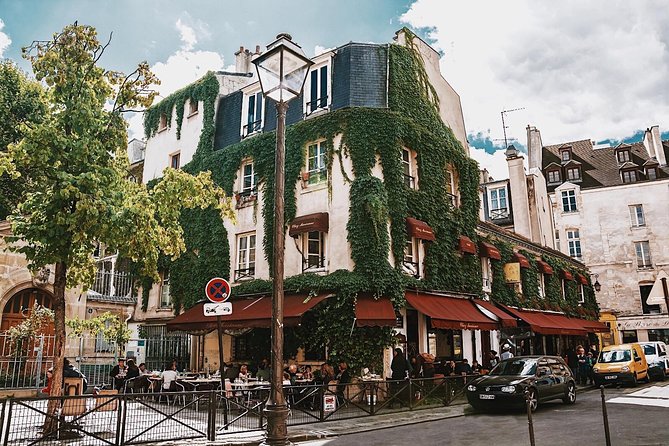
Rue des Francs Bourgeois brings you back into the daily life of the neighborhood. It is one of the Marais’s better-known shopping streets, with fashion boutiques and busy sidewalks set against historic buildings.
This is a useful stop because the Marais is not a preserved museum district. It has changed with the city. You see modern retail and restaurants occupying spaces that once belonged to older trades, residences, and institutions.
The street also leads you toward more hôtels particuliers, the former homes of wealthy families. Some have become museums, including the Musée Carnavalet. The guide’s role here is to point out details you might otherwise pass without noticing.
Musée Carnavalet offers Paris history from the outside
The Hôtel Carnavalet is one of the uncommon Renaissance buildings still found in Paris, and the nearby Musée Carnavalet focuses on the city’s past. The tour does not include museum admission, and this stop is mainly an exterior introduction.
That limitation is worth noting. If you want to see rooms, objects, and exhibits about Paris, set aside a separate visit. The museum can add real value after the walking tour because you will already understand the Marais’s place in the city.
For this tour, the building works as a reminder that the neighborhood contains more than one story. Royal power, urban growth, architecture, community life, and political change all meet within a few blocks.
Rue des Rosiers and the Pletzl bring Jewish Paris into focus
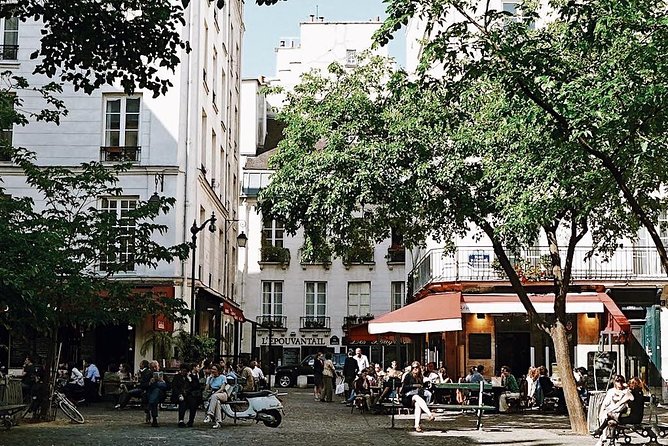
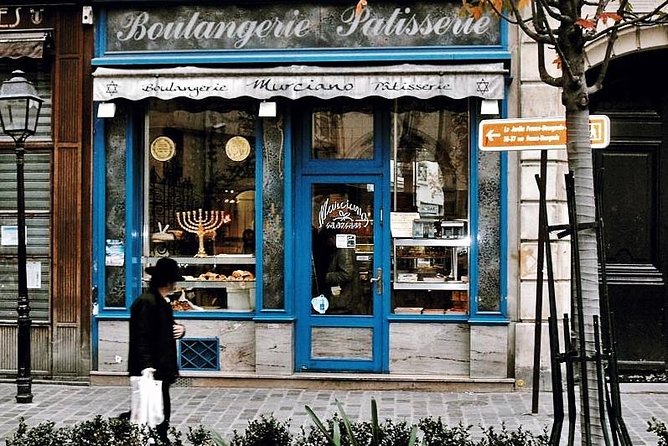
The walk then turns toward Rue des Rosiers, at the center of the Marais’s Jewish quarter. This area is often called the Pletzl, a Yiddish word for little place. Here, bakeries, boutiques, and food shops give the street a distinct character.
The Jewish history is not a minor add-on to the route. It is one of the main reasons to choose this experience over a general Marais stroll. You learn how the Jewish community helped shape the district during the 18th and 19th centuries, and how its presence continues to affect the area’s identity.
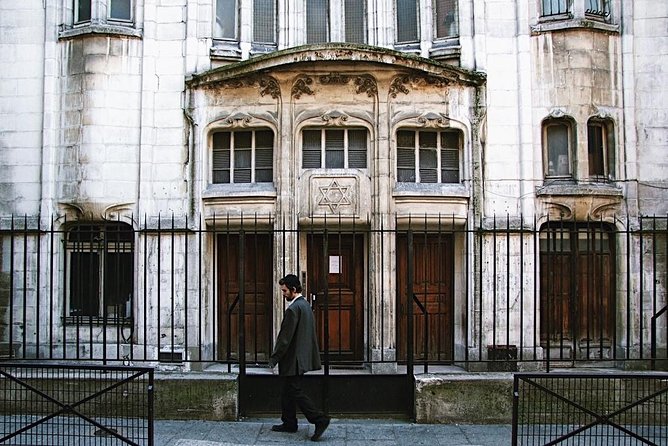
The tour does not include entry into synagogues. Access is restricted for security reasons, so you should book this walk for its streets, buildings, stories, and context rather than for religious interiors.
One useful question to ask your guide is how the neighborhood’s past relates to Jewish life in Paris today. The route gives a good foundation, but the amount of attention to present-day life can vary. If modern community life is especially important to you, make that clear at the start.
Jardin des Rosiers remembers wartime courage
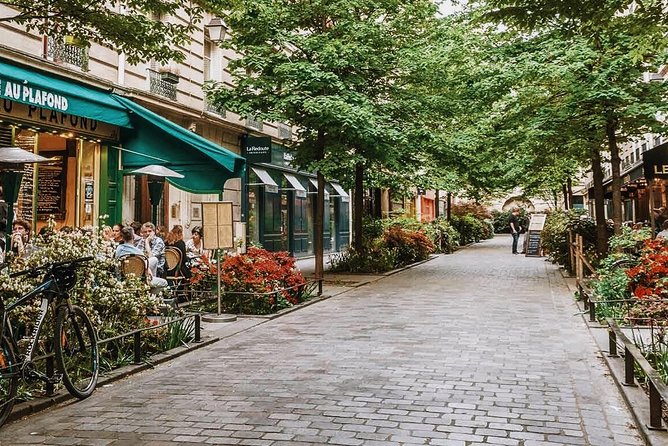
The Jardin des Rosiers, also called the Jardin des Rosiers Joseph-Migneret, is a small garden tucked between old buildings and shops. It is easy to miss without someone directing you through the neighborhood.
The garden honors Joseph Migneret, a school principal who hid dozens of students in his home during the Second World War. He was eventually arrested and killed. This is a quiet, serious stop, and it adds a personal scale to the tour’s discussion of Jewish Paris and the French Resistance.
I value this kind of pause because it keeps the past from becoming a list of dates and architectural labels. The story is tied to one person, one school community, and one dangerous act of courage. Give the guide room to explain it rather than treating the garden as a quick photo stop.
Some people may want a longer discussion of wartime history. The tour touches this subject within a broad neighborhood walk, so it cannot cover every detail of the Occupation, deportation, Resistance, and postwar years.
Centre Pompidou changes the architectural mood
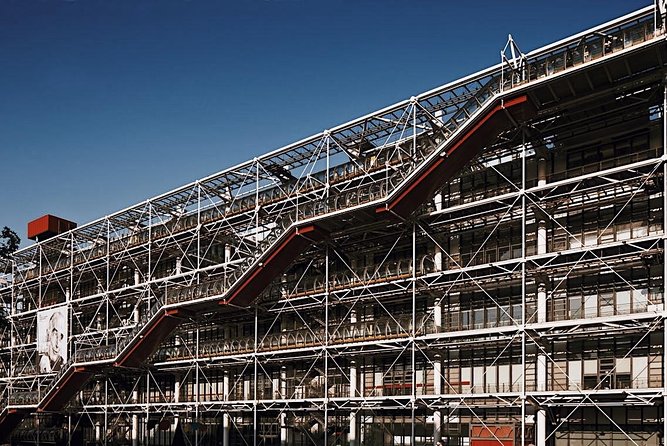
Near the end of the route, you reach Centre Pompidou, the famous contemporary museum with its high-tech exterior. Its exposed pipes, structural elements, and bold color scheme make it a sharp break from the stone façades and formal squares earlier in the walk.
The center was conceived as a multicultural complex bringing different forms of art and literature together. The guide uses it to show how Paris continued to rethink public culture and architecture long after the royal Marais had faded.
Admission is not included. You see the building from outside, and that is enough to understand its visual impact, but you will need a separate ticket if you want the museum’s collections and exhibitions.
This final contrast is one of the route’s strengths. In one afternoon, you can see a Jesuit church, a 17th-century aristocratic mansion, a planned royal square, a Jewish neighborhood, and a modern cultural center. The variety makes the tour feel broader than its short distance suggests.
Hôtel de Ville and Saint-Gervais close the route
The walk ends near Hôtel de Ville, Paris’s city hall. The municipality has been headquartered here since 1357, making the site useful for discussing the city’s long civic and political life.
Next door, you catch a glimpse of the Église Saint-Gervais-Saint-Protais. It is described as the first example of French Baroque style in Paris. The church served as a parish church until 1975 and is now linked to the Monastic Fraternities of Jerusalem.
These closing stops bring the story back to public institutions and religious life. You finish not in a quiet residential lane, but at one of the city’s major civic spaces. From here, you can continue exploring the Marais or make your way toward other parts of central Paris.
The guides make the difference
The most consistent strength of this experience is the guide. Eden is praised for combining detailed French and Jewish history with a warm personality. Hugo is described as clear, funny, well organized, and easy to understand in English. François is singled out for making the walk interactive while handling serious subjects with care.
Alasdair is noted for keeping the presentation engaging even in the rain. Agustina is praised for adjusting the tour to the group. These details matter because a neighborhood walk depends less on admission tickets than on how well the guide reads the pace, answers questions, and explains what you are seeing.
You may receive a different guide, so do not book on the assumption that one named person is guaranteed. The important pattern is the type of guiding offered: strong background in French history, attention to architecture, Jewish history woven into the route, and an easy English presentation.
The tour has earned a 4.9 rating from 154 reviews, with 98 percent of customers recommending it. Those numbers do not remove the need to consider your own interests, but they match the tour’s clear strengths: guide quality, organization, and the amount of information packed into two and a half hours.
Private pricing and group value
The listed price is $59.69 per person. That is a reasonable price if you value a dedicated guide and want a structured introduction to a complicated neighborhood. It is especially sensible for a family or small group that would rather ask questions freely than follow a large crowd.
Pay close attention to the booking choice. The private walking tour includes a guide exclusively for your group. The Save! Book Semi-Private option costs less but does not include a guide reserved only for you. The exact value depends on your group size and how much privacy and flexibility matter.
There are no included museum admissions, hotel transfers, or gratuities. Most of the route’s sights are free to view from the street, which keeps the tour focused on walking and interpretation. If you want Musée Carnavalet or Centre Pompidou, budget separate admission and time.
Group discounts are available. Since the tour is often booked about 40 days ahead, I would reserve early if you need a particular date or want the private format.
Who should take this walk
I recommend it most strongly for a first visit to Paris, a first visit to the Marais, or a return visit when you want more context than shopping streets provide. It suits adults and older children who can manage steady city walking and listen to historical explanation for several hours.
It is also a good choice for anyone interested in architecture, Jewish Paris, the French Resistance, royal history, or the way an old district changes over time. The guide can bring together subjects that otherwise require several separate books or museum visits.
You may prefer another plan if you want a food tour, extensive museum time, synagogue interiors, or a slow photography walk. The route is full of stops, but most are short, and the tour’s value comes from the story connecting them.
Dress for the forecast. The tour runs rain or shine, so bring an umbrella in wet weather, a hat in summer, water, and comfortable shoes. National celebrations can alter the route, and no refund or discount is offered when an alternative route is required.
Should you book the Marais and Jewish Quarter tour?
Book it if you want a clear, lively introduction to one of Paris’s most layered districts and you value a guide who can connect architecture with Jewish history, wartime memory, and modern city life. The route is varied, the time commitment is manageable, and the private option can be good value for a small group.
I would not book it expecting museum entry or a full course on contemporary Jewish Paris. Instead, use it as a well-organized first pass. Afterward, return to Rue des Rosiers for more time, visit Musée Carnavalet or Centre Pompidou on your own, and explore the lanes with a better sense of what you are seeing.
Free cancellation is available until 24 hours before the start time. The tour is offered in English, confirmation arrives at booking, and mobile contact details with the country code are required.
FAQ
How long does the Le Marais and Jewish Quarter tour last?
The walking tour lasts approximately 2 hours and 30 minutes.
Where does the tour start?
The tour starts at Saint-Paul, 75004 Paris, France.
Where does the tour end?
The tour ends in Le Marais, near the Hôtel de Ville area.
Is the tour private?
The private option is for your group only and includes a guide exclusively for you. The Save! Book Semi-Private option does not include a guide reserved only for your group.
Is the tour offered in English?
Yes. The experience is offered in English.
Does the tour include museum admission?
No. Admission to the Musée Carnavalet and Centre Pompidou is not included. The tour mainly views these sites from outside.
Can you enter synagogues during the tour?
No. The tour does not include synagogue entry because access is restricted for security reasons.
Does the tour run in bad weather?
Yes. The tour operates in all weather conditions, so you should dress appropriately and bring an umbrella if rain is expected.
Newest additions around Paris
- Family escape Game with kids and teens on the Île de la Cité★ 4.5 · 11 reviews
- Private Photoshoot with the Iconic Eiffel Tower in Paris★ 5.0 · 11 reviews
- Paris: Batobus Hop-On Hop-Off Cruise & Landmarks Audio Tour★ 3.0 · 11 reviews
- Paris Revolutionary Walking Tour: Iconic French Sights & Stories★ 5.0 · 11 reviews
- 2-day Private Mont Saint-Michel, 3 Loire Castles, D-Day Express★ 4.5 · 11 reviews
- Guided and Private Tour of 3 hours through Paris aboard a Citroën 2cv★ 5.0 · 11 reviews
- Kids in the Kitchen – CrOisSaNtS★ 4.0 · 11 reviews
- Paris: Ghosts and Dark Stories Guided Walking Tour★ 4.1 · 11 reviews
Le Marais Tours, compared.

Award-Winning Paris French Bakery Experience — Le Marais, 4th Arr
Read our review →
Paris Le Marais Food Tour With 10+ Tastings, Cheese, Wine & More
Read our review →
Paris Le Marais District Original Food and Wine Tasting Tour
Read our review →
Paris Bike Tour Hidden Secrets in the Latin Quarter & Le Marais neighborhoods
Read our review →
Food and Wine Tasting Walking Tour in Le Marais
Read our review →
Le Marais District & Jewish Quarter Guided Walking Tour 12ppl Max
Read our review →
Le Marais/Paris – The Historic, Trendy, Jewish, LGBT district
Read our review →
Paris Le Marais Food & Wine Tour with Eating Europe
Read our review →Browse the lists this tour appears in