Reviewed · TOURS
Behind the Scenes of a Boulangerie: French Bakery Tour in Paris
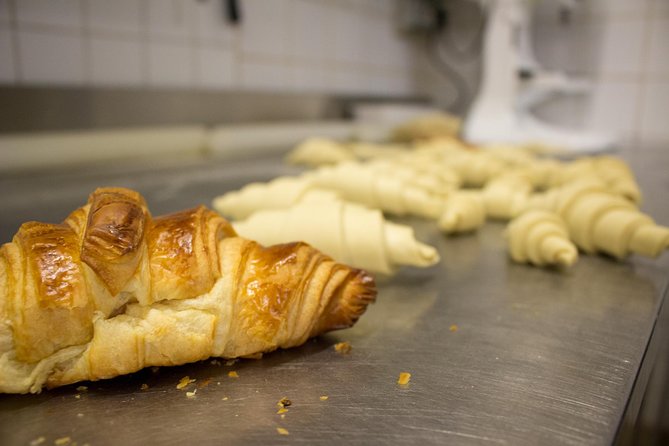
The best part of this one-hour visit is the chance to watch a real Parisian boulangerie at work, not a staged cooking studio. You see bakers shaping dough, handling machines, and turning out baguettes and pastries in a compact production space. I like the close look at a daily craft and the fresh baguette and croissant you take away. The main catch is simple: you watch more than you bake.
I also like the small group size, capped at eight, and the friendly English interpretation. Guides such as Marie, Mariette, and Vincent have helped explain the bakers’ work and answer questions. The tight bakery floor can feel crowded, and the floor may be slippery, so wear practical shoes and do not expect to make a full loaf from scratch.
In This Review
- Key points to know before you book
- Entering a real Montmartre boulangerie
- How a French baguette is made
- Croissants, pastries, and the sweet side of the kitchen
- A small group makes a difference
- What the hour actually feels like
- The fresh baguette and croissant payoff
- Is the price fair for one hour?
- Practical tips for a smoother visit
- Who will enjoy this bakery visit most?
- Should you book the Montmartre bakery tour?
- FAQ
- How long is the French bakery tour?
- Where does the tour begin?
- Is the tour offered in English?
- How many people can join the tour?
- Do I receive bread and pastries?
- Can children take part?
- Is hotel pickup included?
- Can I cancel for a refund?
Key points to know before you book
- You enter a working bakery in Montmartre: This is an independent production unit, not a large factory or a tourist kitchen.
- The focus is on watching and learning: You see baguette and pastry production, with limited chances to help.
- Your take-home treats are part of the appeal: The experience includes one fresh baguette and one croissant.
- The group stays small: A maximum of eight people makes it easier to see the baker and ask questions.
- Children from age six can join: Young children need an adult with them, and several families found the visit engaging.
- Plan for a compact work area: The bakery is busy and close-set, with little room to move around.
Entering a real Montmartre boulangerie
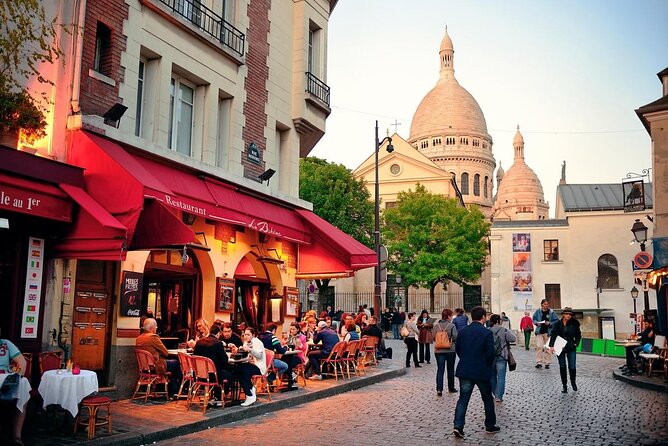
You begin at Le Grenier à Pain Caulaincourt, at 127 Rue Caulaincourt in the 18th arrondissement. This puts you in Montmartre, a neighborhood known for its steep streets, old buildings, and strong local identity. The exact bakery address is sent after booking, so read your confirmation carefully and allow enough time to reach the meeting point.
The visit lasts about one hour. That is short enough to fit before lunch, after a morning at Sacré-Coeur, or between other Montmartre plans. It is also long enough to see several stages of production without turning the visit into a full baking course.
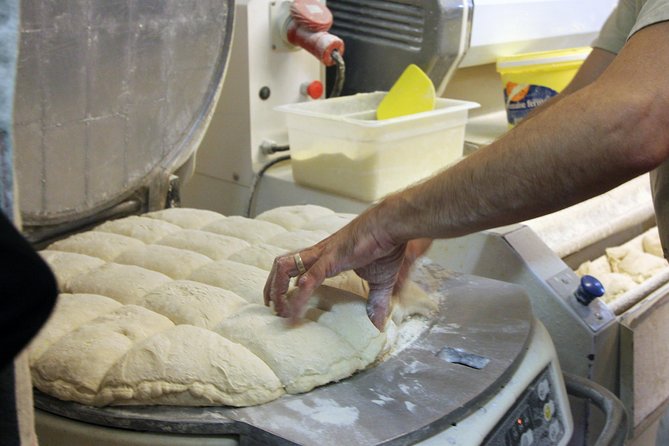
Once inside, your English-speaking guide brings you into the kitchen and production areas. The bakery continues its normal work while you watch. You may see staff preparing dough, shaping baguettes, arranging pastries, and using the bakery machinery. The setting matters: you are seeing bread made for daily sale, not a demonstration designed only for a tour group.
That working setting brings both the charm and the limitation. The staff are focused on production, so the pace is set by the bakery. You may need to stand close, wait for a clear view, or shift position as people work. The space is compact enough that even a small group can feel in the way.
More of the most booked days out in Paris:
- Paris: Louvre Museum Timed-Entrance Ticket
★ 4.6 · 71,977 reviews - Disneyland® Paris 1-Day Ticket
★ 4.6 · 49,412 reviews - Paris: Versailles Palace and Gardens Full Access Ticket
★ 4.6 · 41,579 reviews
How a French baguette is made
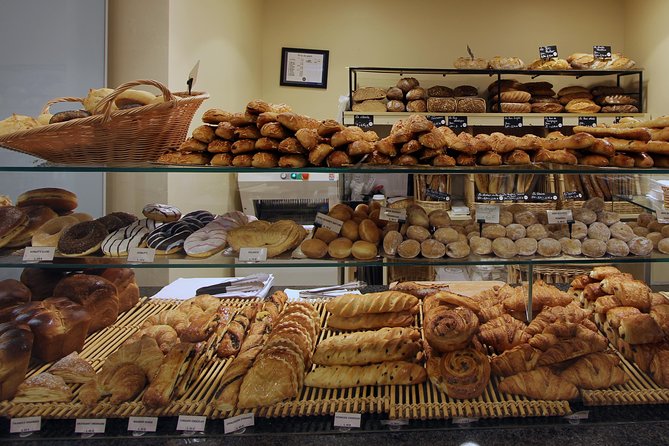
The central subject is the baguette. Your guide explains the ingredients, the basic stages, and the techniques used to shape and bake this familiar French staple. You also learn about rules connected with baguettes, along with some of the customs and standards that make French bread different from ordinary packaged bread.
The baker demonstrates how the equipment works. This gives you a useful look at the practical side of baking, where timing, temperature, dough handling, and machinery all need to work together. One especially striking detail from the visit is the scale of production: one baker was reported to be making around 2,500 baguettes in a morning.
That number helps put the craft in context. A small shop may look simple from the street, yet its back room can support a serious daily operation. You get to see how bakers work efficiently while still handling bread as a skilled trade.
Some visits include small chances to help. One baker allowed participants to make the release cuts on the baguettes they took home. Another group had the chance to help briefly with parts of the process. These moments are welcome, but they are not guaranteed as a formal part of the tour.
If your main goal is to knead dough, shape several loaves, and bake your own bread, this is not the right product. The hands-on element varies, and the basic format remains a bakery visit rather than a workshop.
Croissants, pastries, and the sweet side of the kitchen
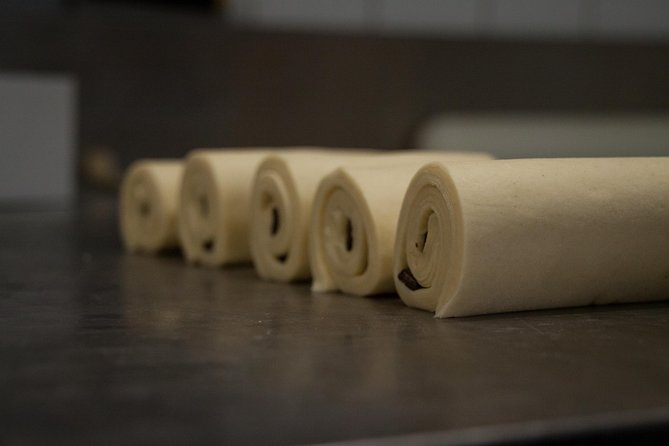
The tour is not limited to bread. Your guide also explains how cakes and pastries are prepared, and you may move through the pastry production area to see staff assembling sweet goods. This gives you a broader picture of French baking than a baguette-only demonstration.
The pastry side can be especially appealing to children. There is something easy to understand about watching dough become a finished croissant or seeing trays of pastries prepared for the shop. The guides explain the work in plain terms and may interpret questions for French-speaking bakery staff.
Some groups receive small pastry samples in addition to the included baguette and croissant. The exact samples can vary, but the tasting adds a pleasant finish. One visit included a croissant, a pastry sample, and warm bread. Another included a range of small pastry tastes.
The important point is to separate the included items from occasional extras. The stated inclusions are one freshly baked French baguette and one freshly baked croissant. Small tastings may be offered, but you should not count on a particular pastry assortment.
A small group makes a difference
The tour accepts no more than eight people. That limit is useful in a bakery where space is already tight. A group of three or four can get a better view and ask more questions than a large coach group could.
The guide’s role is important because not every bakery worker speaks English. The English-speaking guide explains the process and interprets questions and answers when needed. Guides named in past visits include Marie, Mariette, and Vincent, though the guide assigned to your session can differ.
The strongest part of the guiding is the human explanation around the work. You are not just watching a machine move dough. You hear about the baker’s routine, the skills involved, and the practical choices behind French bread and pastries.
The experience can be less satisfying if you already bake bread often. Some visitors found the information basic, especially if they already understood fermentation, shaping, or baking methods. For a first look at French bread production, though, the level should be more approachable.
A different way to spend the day in Paris:
- Paris: Arc de Triomphe Rooftop Tickets
★ 4.6 · 34,264 reviews - Paris: Orsay Museum Entry Ticket
★ 4.7 · 25,647 reviews - Paris: Evening River Cruise with Music
★ 4.4 · 22,721 reviews - Paris: Eiffel Tower Entry Ticket with Optional Summit Access
★ 4.4 · 20,035 reviews
What the hour actually feels like
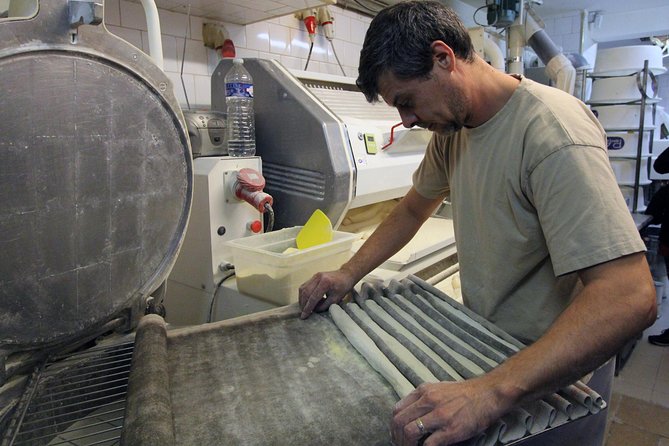
A typical visit moves between explanation, observation, and questions. You watch the baker handle dough and demonstrate machinery. You see baguettes being prepared and pastries assembled. The guide fills in the background and shares bread-making tips.
The hour can feel full because the bakery keeps working while you are there. It can also feel light if you expected a structured class with a recipe, individual ingredients, and a finished product made by you.
I would think of it as a behind-the-scenes snapshot, not a lesson in home baking. You gain a clearer idea of the work involved and see professional bakers operate at close range. You do not leave with the skill to reproduce a full French bakery menu after one hour.
The atmosphere is usually warm and friendly. Bakery staff have been willing to explain their work, and guides have answered questions with patience. Still, the work area may be noisy, crowded, or difficult to hear at times. If you need a quiet, polished presentation, this informal setting may test your patience.
The fresh baguette and croissant payoff
At the end, you take home a fresh baguette and croissant. This is more than a small souvenir. It gives the visit a tasty finish and lets you enjoy the products while they are still fresh.
If you are staying in an apartment, the treats make an easy breakfast or snack. If you have more sightseeing ahead, carry them carefully. A warm baguette can be awkward to pack, but it is exactly the sort of useful, edible memory that fits Paris better than another trinket.
The quality and temperature can vary with the timing of your visit. Some groups received warm bread directly from the oven, while another reported not receiving the promised baguette and croissant. That omission appears to have been an error, since both items are listed as included. If something is missing, ask your guide before leaving.
You may also receive pastry samples. The combination of tasting and take-home bread makes the value easier to see, especially for families. It does not erase the fact that the tour is only an hour and mostly observational, so your expectations should match the format.
Is the price fair for one hour?
No price is supplied here, so I cannot judge the cost in euros. I can still explain how to weigh the value.
You are paying for access to a working bakery, a small group, an English-speaking guide, interpretation, and fresh food to take away. That is worthwhile if you want an experience you cannot easily arrange on your own. A bakery shop lets you buy a baguette, but it does not normally let you enter the production rooms and watch the process.
The value drops if you measure the activity by instruction time. You are not guaranteed to mix dough, shape a loaf, or bake your own croissant. If the price is close to that of a full cooking class, choose the class instead. If it is priced as a short cultural visit with food included, the balance looks better.
Families may find the cost easier to justify because the visit is short and suitable for children aged six and up. It adds variety to a museum-heavy day. Bread fans and home bakers should decide based on curiosity: beginners will likely gain more than experienced bread makers.
Practical tips for a smoother visit
Meet at the stated location and check the post-booking message for the exact bakery address. The experience ends back at the meeting point, and hotel pickup and drop-off are not included.
Wear shoes with good grip. The bakery floor has been described as very slippery, and flour or food traces may get onto clothing. Choose clothes you do not mind wearing in a working kitchen.
Do not book this activity if you have sensitive airborne food allergies. The bakery is an active production space, and the tour provider specifically warns against the experience for people with this concern.
Children are welcome from age six, but an adult must accompany them. The close quarters mean you will need to keep an eye on younger children, especially near equipment and slippery floors.
The tour requires a minimum number of participants. If that number is not reached, the provider may cancel after confirmation and offer another date or a full refund. Free cancellation is available up to 24 hours before the start time. Within 24 hours, refunds are not provided and changes are not accepted.
Who will enjoy this bakery visit most?
I would recommend it to you if you want to see a normal Paris bakery from the inside, enjoy learning through observation, and like the idea of eating fresh bread afterward. It works particularly well for families, first-time visitors curious about French food, and anyone who wants a break from churches and museums.
It is also a good fit for people who enjoy small, local operations. The bakery is independent, and the bakers work as artisans rather than as performers in a factory-style attraction. That does not make the visit polished or roomy, but it gives it a more genuine feel.
I would hesitate if you want a true baking class. The experience may include a small task, such as scoring your own baguette, but you should not expect to prepare a full recipe. Experienced home bakers may also find the explanations too elementary.
Should you book the Montmartre bakery tour?
Book it if the words watch the craft up close sound better to you than make your own pastry. The setting, small group, friendly guides, and fresh baguette and croissant create a memorable one-hour stop, especially when the bread comes warm from the oven.
Skip it if you want guaranteed hands-on work, a spacious teaching kitchen, or a detailed technical lesson. This is a short window into a working boulangerie. Go with that expectation, wear safe shoes, and you will have a much better chance of enjoying it.
FAQ
How long is the French bakery tour?
The tour lasts approximately one hour.
Where does the tour begin?
The stated meeting point is Le Grenier à Pain Caulaincourt, 127 Rue Caulaincourt, 75018 Paris, France. The exact bakery address is sent after you make your reservation.
Is the tour offered in English?
Yes. The experience is offered in English, and the guide explains the bakery’s work and helps interpret questions for French-speaking staff.
How many people can join the tour?
The tour has a maximum of eight participants.
Do I receive bread and pastries?
Yes. The experience includes one freshly baked French baguette and one freshly baked croissant. Small pastry samples may also be offered.
Can children take part?
Yes. Children aged six and older can participate, and children must be accompanied by an adult.
Is hotel pickup included?
No. Hotel pickup and drop-off are not included. The activity begins and ends at the meeting point.
Can I cancel for a refund?
You can cancel at least 24 hours before the start time for a full refund. Cancellations or changes made less than 24 hours before the start time are not refunded.
Newest additions around Paris
- Family escape Game with kids and teens on the Île de la Cité★ 4.5 · 11 reviews
- Private Photoshoot with the Iconic Eiffel Tower in Paris★ 5.0 · 11 reviews
- 2-day Private Mont Saint-Michel, 3 Loire Castles, D-Day Express★ 4.5 · 11 reviews
- Paris: Batobus Hop-On Hop-Off Cruise & Landmarks Audio Tour★ 3.0 · 11 reviews
- Paris Revolutionary Walking Tour: Iconic French Sights & Stories★ 5.0 · 11 reviews
- Guided and Private Tour of 3 hours through Paris aboard a Citroën 2cv★ 5.0 · 11 reviews
- Kids in the Kitchen – CrOisSaNtS★ 4.0 · 11 reviews
- Paris: Ghosts and Dark Stories Guided Walking Tour★ 4.1 · 11 reviews
Tours, compared.
Louvre Guided Tour with Reserved Access & Boat Cruise
Read our review →
Big Bus Hop-On Hop-Off Tour with Optional Cruise
Read our review →
Louvre Museum Masterpieces Guided Tour with Access
Read our review →
Skip-the-Line Tour of Palace with Gardens Access
Read our review →
Mona Lisa & Louvre Masterpieces Tour with Reserved Access
Read our review →
Paris Big Bus Hop-On Hop-Off Tour with Optional River Cruise
Read our review →
Louvre Museum – Exclusive Guided Tour (Entry Included)
Read our review →