
Reviewed · VERSAILLES DAY TRIPS
Versailles: Marie Antoinette Petit Trianon & Estate Tour
Marie Antoinette’s Versailles is not the glittering Hall of Mirrors. It is the small Petit Trianon, the English-style gardens, and the rustic Queen’s Hamlet where she tried to escape court ceremony. This 150-minute tour takes you into that private world, with an English-speaking guide and a Petit Train ride back to the main palace.
I like the way the tour explains the queen through her surroundings, not just through royal gossip. I also like the practical route: you walk out to the estate, then save your legs with the train ride back. The main drawback is clear: this is a walking tour, and the schedule can feel hurried if you want a long, quiet look at each place.
In This Review
- Key points to know before booking
- Why Petit Trianon tells a different Marie Antoinette story
- Meeting at La Flottille by the Grand Canal
- The 10-minute walk to Marie Antoinette’s domain
- One hour inside Petit Trianon
- Walking through the English gardens
- The Queen’s Hamlet and its Normandy-inspired cottages
- The Petit Train ride back to Versailles
- Is $58 good value for 150 minutes?
- Who should take this tour?
- Should you book the Petit Trianon tour?
- FAQ
- How long does the tour last?
- Where does the tour begin?
- Does the tour include Versailles garden admission?
- Is the Queen’s Hamlet visit inside the cottages?
- Is the tour wheelchair accessible?
- Can I cancel the booking?
Key points to know before booking
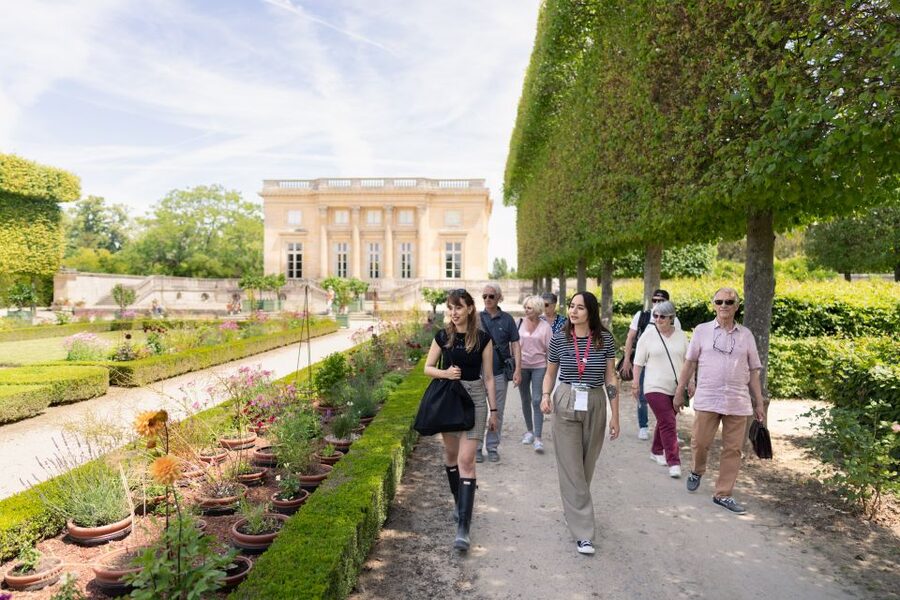
- The Petit Trianon feels personal: This smaller palace gives you a better sense of Marie Antoinette’s private taste than the grand State Apartments do.
- The Queen’s Hamlet is an exterior visit: You will see the rustic cottages, gardens, and pastoral setting, but the guided visit focuses on the outside.
- The full route takes 150 minutes: Plan on roughly 10 minutes on foot, two one-hour guided visits, and a 20-minute Petit Train ride.
- Comfortable shoes matter: The estate is larger than many first-time visitors expect, with substantial walking between the palace and hamlet.
- The guide makes a major difference: Guides named in past bookings include Ivan, Valerie, Josephine, Sophie, Stephanie Fouret, and Val, with especially strong praise for clear storytelling and care with families.
- You need access to the Versailles grounds: The tour begins by the Grand Canal, not at the palace entrance, so allow time to reach La Flottille.
Why Petit Trianon tells a different Marie Antoinette story
The Palace of Versailles presents royal power in its largest and most formal form. Petit Trianon does the opposite. It is a smaller retreat, set away from the main palace, where Marie Antoinette could step out of the strict routine of court life.
The story begins with Louis XVI giving Marie Antoinette a diamond-encrusted key to the palace. The key was more than a fine object. It represented permission to have a place of her own, protected from the constant ritual and scrutiny of Versailles.
That context is what gives this tour its value. You are not simply adding another building to a palace day. You are seeing the contrast between public royalty and private comfort. The grand palace was built for display. Petit Trianon was meant to feel more controlled and personal.
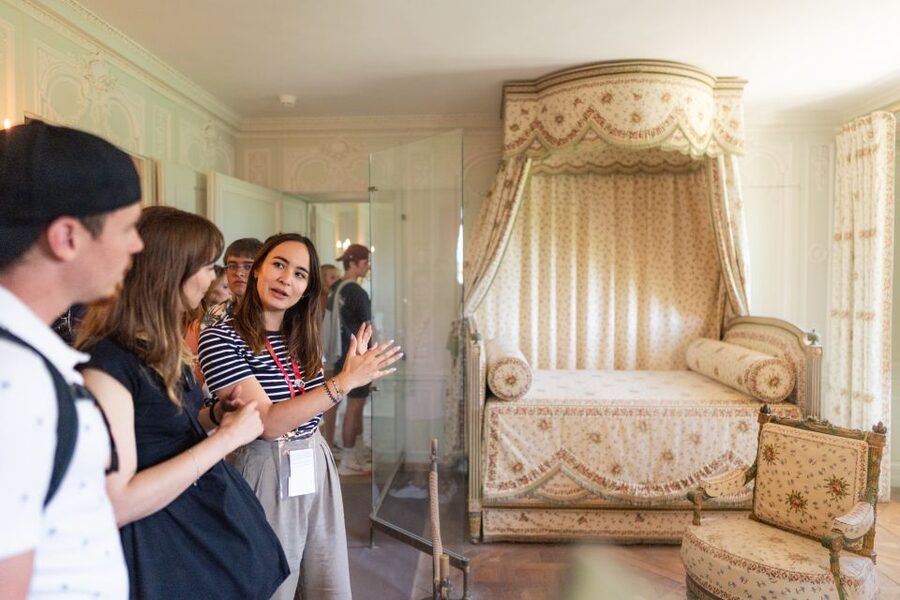
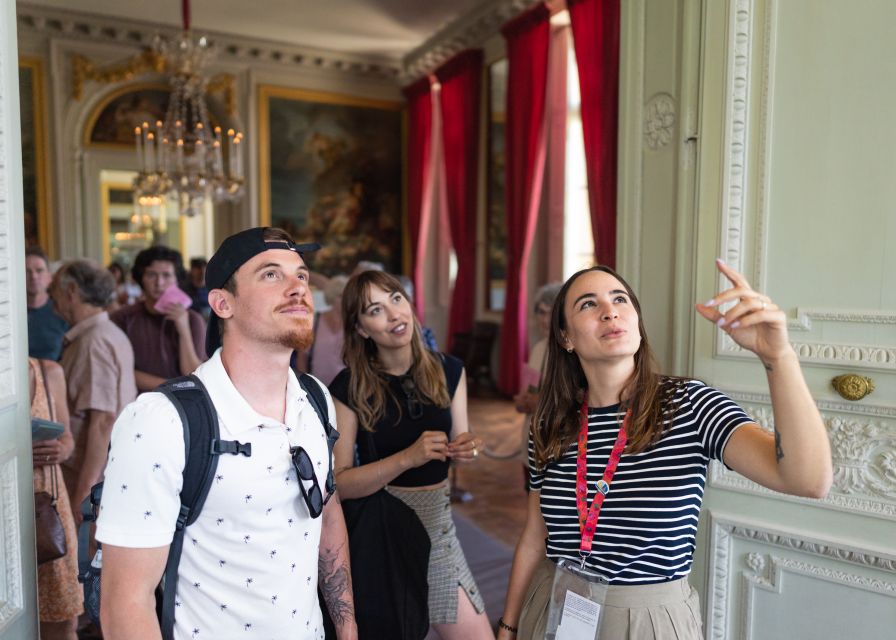
Inside, the furniture and decoration reflect Marie Antoinette’s own preferences and the work of craftsmen she favored. The rooms are smaller and more restrained than the ceremonial apartments, so details matter more here. Listen closely to the guide, since the palace itself is not enormous and the tour moves through it in about an hour.
The interior may feel modest if you expect another Hall of Mirrors. That is also the point. The appeal lies in the change of scale. You can better understand why this retreat mattered because it does not overwhelm you with gold, ceremony, and huge crowds.
More Versailles trips from Paris:
- Paris: Versailles Palace and Gardens Full Access Ticket
★ 4.6 · 41,579 reviews - Versailles: Skip-the-Line Tour of Palace with Gardens Access
★ 4.7 · 9,778 reviews - From Paris: Versailles Palace & Gardens with Transportation
★ 4.6 · 6,222 reviews
Meeting at La Flottille by the Grand Canal
The meeting point is in front of La Flottille, a restaurant beside the Grand Canal at the bottom of the Versailles gardens. From the palace terrace, you can see the canal and then walk toward it while keeping to the right side of the gardens.
The guide is supposed to wear a guide card on an orange lanyard. Even so, give yourself time to identify the right person. One past booking found the meeting point hard to manage until the guide sent a message describing what she was wearing.
The starting location matters because it is not at the palace’s main front entrance. If you have spent the morning touring the palace, you must make your way down through the gardens to the canal. That walk can take longer than expected, especially on a busy day.
The official instructions say you need a ticket to enter the Versailles gardens before reaching the gate for the Domain of Marie Antoinette. One past booking found a way into the surrounding park on foot from Boulevard de la Reine without buying garden admission, using pedestrian access and walking toward the canal. Since access rules can change, check current instructions before relying on that option.
If you already plan to see the palace and formal gardens, this is not much of a problem. If you are booking only this tour, budget extra time for entry, orientation, and the walk to La Flottille. Do not arrive at the palace gates at the last minute and assume the guide is waiting there.
The 10-minute walk to Marie Antoinette’s domain
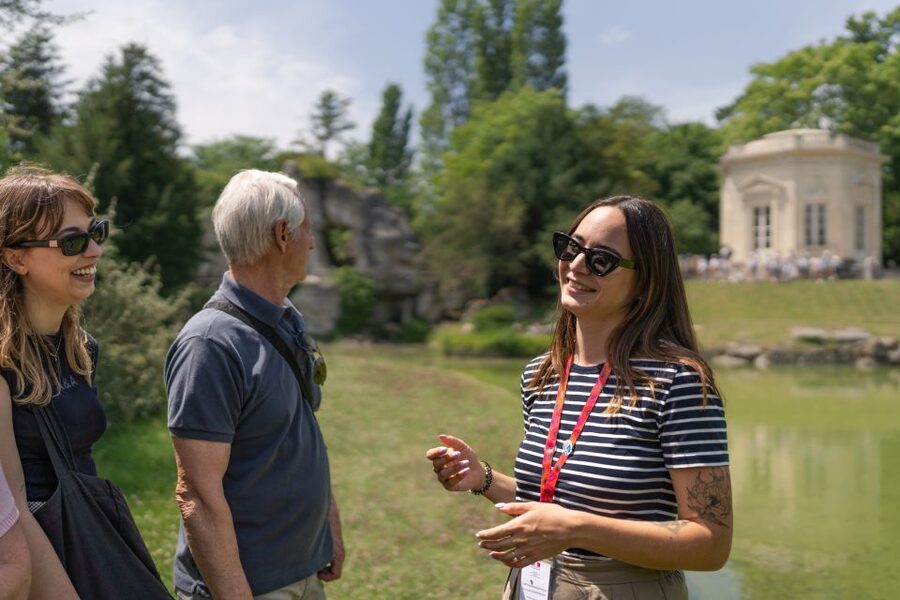
After meeting your guide, you walk for about 10 minutes toward Petit Trianon. This is a gentle opening, but it is only the start of the walking involved.
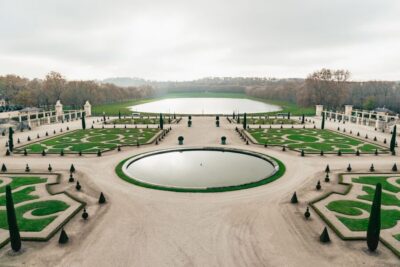
Your guide uses the route to place the private estate in context. The setting is notably different from the main palace grounds. The formal gardens near Versailles emphasize symmetry and royal control. The area around Petit Trianon feels less rigid, with winding paths, planted gardens, and a more informal mood.
A headset is provided when appropriate. That is useful outdoors, where it can be easy to lose a guide’s voice while walking in a group. It also lets you look around instead of staying close to the guide every second.
The tour is in English, and past guides have included Ivan, Valerie, Josephine, Sophie, Stephanie Fouret, and Val. The strongest part of the guiding is the human detail: how Marie Antoinette used the estate, why the setting appealed to her, and how her private choices differed from the formal expectations of court.
One past booking felt there was too much small talk and not quite enough subject matter. That is worth keeping in mind. Guide quality can shape the tour, and the pace may not suit you if you want a long scholarly lecture at each stop.
One hour inside Petit Trianon
The guided visit inside Petit Trianon lasts about an hour. This is the most important part of the tour if your main interest is Marie Antoinette herself.
You will see a private palace rather than a full royal residence. The furnishings and decoration are presented as an expression of the queen’s taste, with attention to the craftsmen she preferred. The setting helps explain her desire for a refuge from the formal life of Versailles.
I like this stop because it makes Marie Antoinette easier to picture as a person living within an exhausting system. That does not erase the power and privilege she held, but it adds useful balance to the usual image of a queen surrounded by ceremony.
Listen for the difference between privacy and isolation. Petit Trianon was still part of a royal estate, and Marie Antoinette remained a queen. Yet the smaller rooms and sheltered setting gave her more control over who entered and how the space was used.
The limitation is size. One past booking felt there was little to see inside the little palace compared with the gardens and hamlet. If you want room after room of grand decoration, you may find this stop brief. If you enjoy architecture, furnishings, and the story of private royal life, the smaller scale works in its favor.
The guide’s storytelling becomes especially helpful here. Josephine was praised for answering detailed questions and connecting many parts of Marie Antoinette’s life. Ivan was singled out for keeping children engaged after a tiring day at Versailles. Those details matter because the palace itself cannot carry the entire visit. The explanation gives the rooms their meaning.
A different way to spend the day in Paris:
- Paris: Louvre Museum Timed-Entrance Ticket
★ 4.6 · 71,977 reviews - Disneyland® Paris 1-Day Ticket
★ 4.6 · 49,412 reviews - Paris: Arc de Triomphe Rooftop Tickets
★ 4.6 · 34,264 reviews - Paris: Orsay Museum Entry Ticket
★ 4.7 · 25,647 reviews
Walking through the English gardens
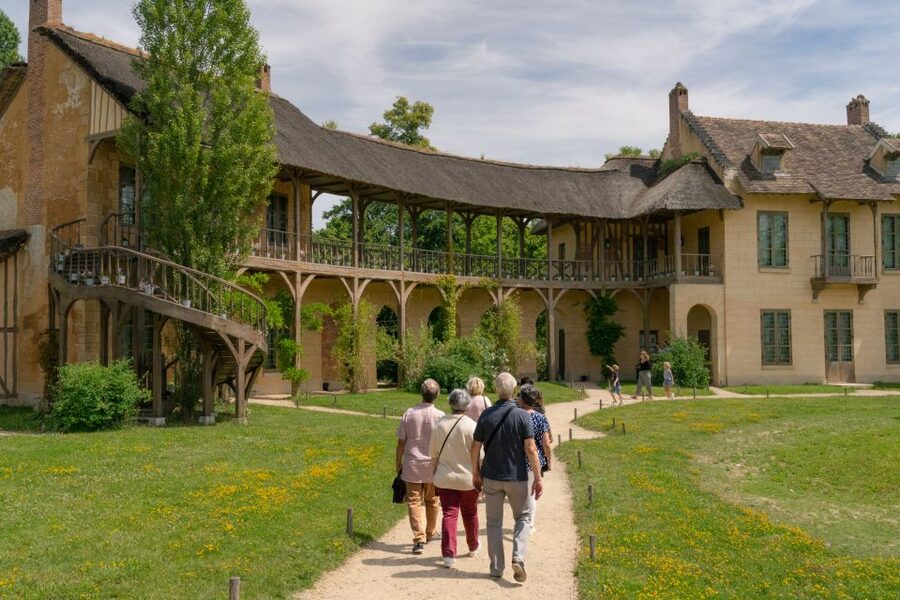
From Petit Trianon, the tour continues through Marie Antoinette’s private gardens. These are not meant to impress you with the strict geometry of the main Versailles gardens. Their appeal comes from a freer, more relaxed design and the feeling of a retreat.
The gardens show how the queen wanted to spend time away from formal court routines. You follow paths through the estate and see the setting where she could enjoy a less ceremonial version of royal life.
This is a good place to slow down mentally, even if the group is moving at a set pace. Look beyond the palace itself. The space between buildings is part of the story, since Marie Antoinette’s escape depended on distance from the main court.
The garden walk also explains why comfortable shoes are essential. The tour is not a short visit from one doorway to another. You will cover ground across a large estate, and some people have found the entire area bigger than expected.
The schedule allows about an hour for the Queen’s Hamlet portion, including the route through the estate. That sounds generous until you account for walking, explanations, photo pauses, and group movement. If you want to linger at every view, you may feel pressed.
The Queen’s Hamlet and its Normandy-inspired cottages
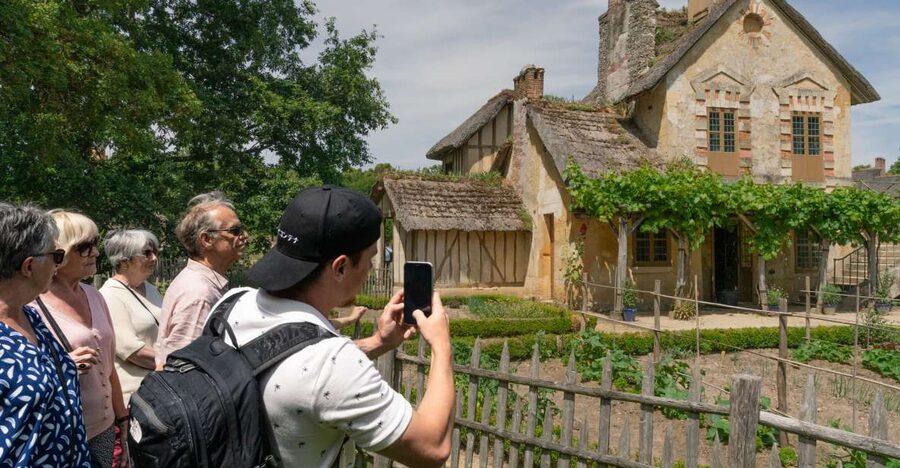
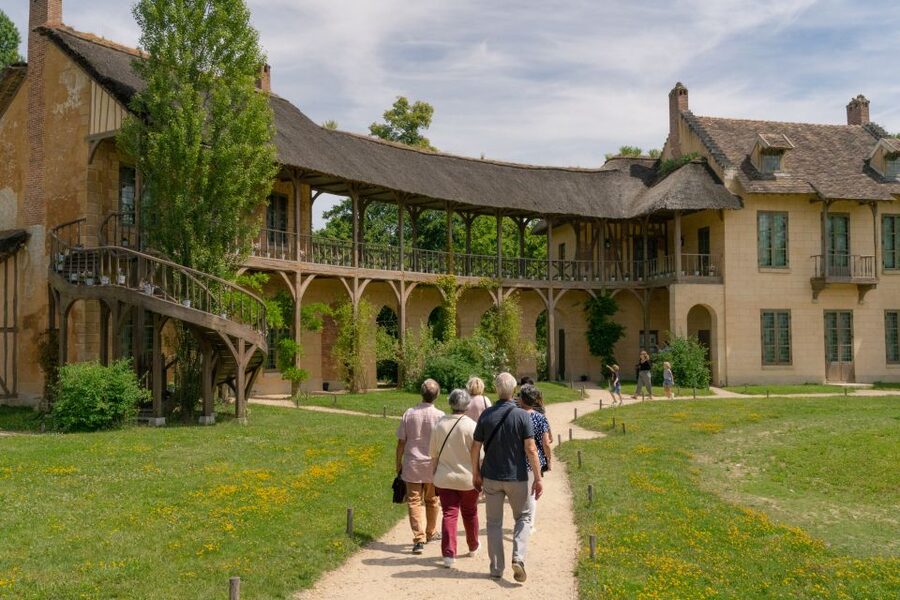
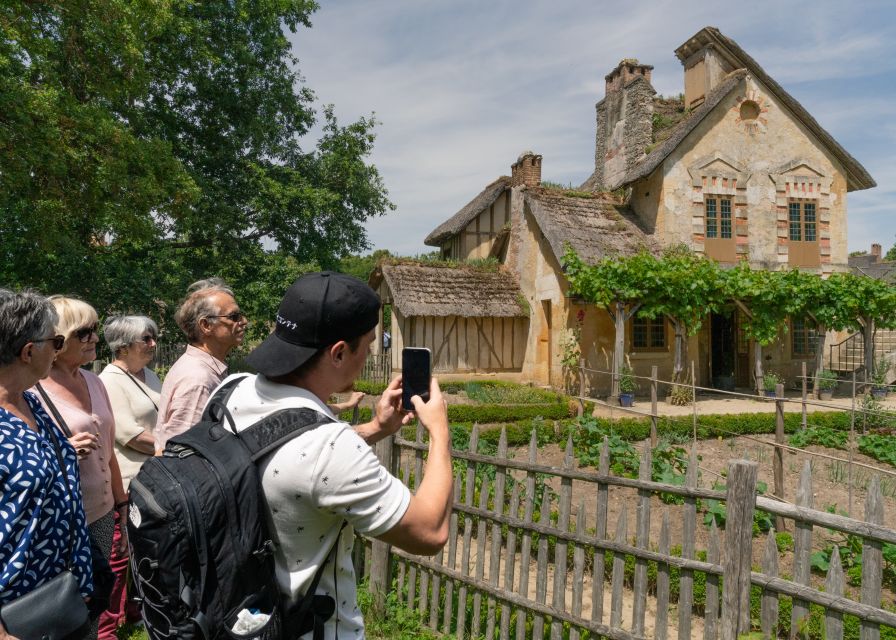
The Queen’s Hamlet is one of the most unusual parts of Versailles. Marie Antoinette commissioned a rustic village with thatched cottages, designed to evoke Normandy. There was even a dairy herd, and the queen enjoyed the informal atmosphere and cleaner country air.
This is not a real farming village. It was a royal version of rural life, built for pastoral amusements within the grounds of Versailles. That contrast is worth considering. The hamlet offered simplicity as scenery, but it also reveals how deeply removed court life was from ordinary rural work.
The buildings are charming, and the setting feels far removed from the palace’s formal rooms. You can see why this section often becomes the favorite part of the visit. It gives you a strong visual change after the interior of Petit Trianon.
The guided visit here focuses on the exterior. You should not expect a full tour of cottage interiors. The value is in the arrangement of the hamlet, the thatched roofs, the gardens, and the story of how Marie Antoinette used the space.
I find this stop especially useful because it avoids treating the queen’s retreat as a simple fairy tale. The hamlet was pretty and carefully planned, but it was also an artificial rural setting created for royalty. A good guide can hold both ideas at once.
Families may enjoy this section more than the formal palace rooms. Ivan was praised for keeping children interested during a long Versailles day, and the open setting gives a guide more room to use stories and humor. Still, younger children must be ready for walking rather than a ride or activity at this stage.
The Petit Train ride back to Versailles
At the end, you take the Petit Train for about 20 minutes back to the Palace of Versailles. This is a practical finish, not just a decorative extra.
By this point, you will have walked from the canal to Petit Trianon, toured the palace, crossed the gardens, and reached the hamlet. The train reduces the return walk and gives you a chance to rest while seeing more of the grounds.
The ride also makes the route easier for people who want to explore the private estate but do not want to walk all the way back to the main palace. It does not remove the walking at the start or between the two main stops, so do not book this expecting a low-effort outing.
The tour ends at the Palace of Versailles. That is convenient if you are continuing your day nearby or need to return toward the main palace area. It also means you can combine the tour with a palace visit before or after, though the timing deserves care.
Is $58 good value for 150 minutes?
At $58 per person, this is not the cheapest way to see Versailles. You are paying for an English-speaking guide, access to a more specialized part of the estate, headsets when needed, and the convenience of the Petit Train return.
The value is strongest if you have already seen the main palace or plan to see it separately. The tour adds places that many people miss when they stop at the State Apartments and the formal garden viewpoint. You get a focused explanation of Marie Antoinette’s private domain instead of trying to find and interpret it on your own.
The value is weaker if you want a long, unhurried visit. The two guided sections are each scheduled for about an hour, and the whole experience lasts 150 minutes. One past booking felt the tour was rushed and shorter than three hours. You should view this as a guided introduction to the estate, not an entire afternoon of free exploration.
Garden admission is separate. The tour does not include hotel pickup or drop-off. Factor those costs and the time needed to reach the meeting point into your budget.
Who should take this tour?
I would choose this tour if you have a strong interest in Marie Antoinette, royal interiors, garden design, or the less formal side of Versailles. It also suits you if you have already seen the main palace and want a more focused second visit.
Families can do well here, particularly with a lively guide. Ivan’s ability to keep tired children engaged is a useful sign, but the route still requires patience and walking.
This is less suitable if you use a wheelchair, since the tour is not wheelchair accessible. It may also disappoint you if your main goal is the grandest interiors, because Petit Trianon is intentionally smaller and the Queen’s Hamlet is toured from the outside.
Bring comfortable shoes and allow plenty of time before the start. The official duration is 150 minutes, but your Versailles day will involve more walking than that once you reach the meeting point and move around the grounds.
Cancellation is flexible up to 24 hours before departure for a full refund, and you can reserve now and pay later. Those terms help if your Versailles plans are still shifting, but they do not solve the practical need to arrive on time.
Should you book the Petit Trianon tour?
Book it if you want to understand Marie Antoinette through the places she chose for privacy, comfort, and pastoral escape. The Petit Trianon, English gardens, and Normandy-style hamlet give you a very different Versailles from the palace’s ceremonial rooms.
Skip it if you have limited time, dislike walking, or want to spend every minute inside grand interiors. For most people who have a full morning for Versailles, this makes a strong follow-up, especially because the Petit Train saves some energy on the return.
The best reason to book is the combination of setting and guiding. Guides such as Josephine, Valerie, Ivan, and Stephanie Fouret have brought strong personal attention to the visit, from keeping children involved to helping in an emergency. The quality can vary, but the format gives a good guide plenty to work with.
FAQ
How long does the tour last?
The activity lasts 150 minutes. The planned route includes about 10 minutes of walking, one hour inside Petit Trianon, one hour at the Queen’s Hamlet, and a 20-minute Petit Train ride back to Versailles.
Where does the tour begin?
It begins in front of La Flottille, the restaurant beside the Grand Canal at the bottom of the Versailles gardens. The guide should be wearing a guide card on an orange lanyard.
Does the tour include Versailles garden admission?
No. Garden admission is not included. The official instructions say you need a ticket to enter the gardens and reach the gate for Marie Antoinette’s domain, though pedestrian access through the surrounding park may sometimes be possible. Check current access arrangements before you go.
Is the Queen’s Hamlet visit inside the cottages?
The guided visit to the Queen’s Hamlet is outdoors. You will see the rustic cottages, gardens, and pastoral setting, but the tour does not include a stated interior visit to the cottages.
Is the tour wheelchair accessible?
No. The tour is not suitable for wheelchair users.
Can I cancel the booking?
Yes. You can cancel up to 24 hours in advance for a full refund. The reserve-now-and-pay-later option also lets you hold a place without paying immediately.
Newest additions around Paris
- Family escape Game with kids and teens on the Île de la Cité★ 4.5 · 11 reviews
- Private Photoshoot with the Iconic Eiffel Tower in Paris★ 5.0 · 11 reviews
- 2-day Private Mont Saint-Michel, 3 Loire Castles, D-Day Express★ 4.5 · 11 reviews
- Paris: Batobus Hop-On Hop-Off Cruise & Landmarks Audio Tour★ 3.0 · 11 reviews
- Paris Revolutionary Walking Tour: Iconic French Sights & Stories★ 5.0 · 11 reviews
- Guided and Private Tour of 3 hours through Paris aboard a Citroën 2cv★ 5.0 · 11 reviews
- Kids in the Kitchen – CrOisSaNtS★ 4.0 · 11 reviews
- Paris: Ghosts and Dark Stories Guided Walking Tour★ 4.1 · 11 reviews
Versailles Day Trips, compared.
Versailles Palace and Gardens Full Access Ticket
Read our review →
Skip-the-Line Tour of Palace with Gardens Access
Read our review →
Versailles Palace & Gardens with Transportation
Read our review →
Skip-the-Line Guided Palace Tour and Full Access
Read our review →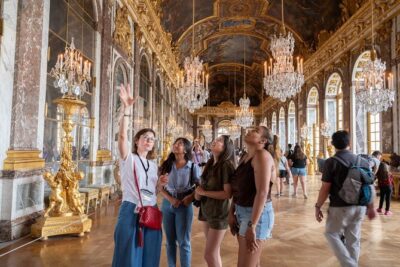
Versailles Palace and Gardens Tour from Paris
Read our review →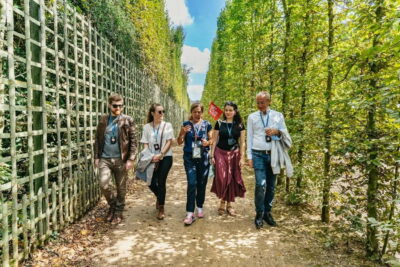
Versailles Skip-the-Line Tour & Gardens Access
Read our review →
Versailles Palace Bike Tour with Market & Marie-Antoinette hamlet
Read our review →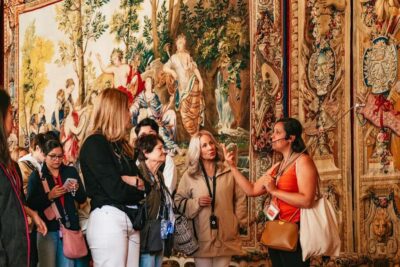
Versailles Guided Tour with Skip-the-Line Entry
Read our review →Browse the lists this tour appears in