
Reviewed · LOUVRE MUSEUM TOURS
The Essential Louvre Masterpieces Tour – Limited to Six Guests
The Louvre can swallow an entire day before you find the Mona Lisa. This six-person maximum tour gives you a clear path through the museum’s biggest sights, with an English-speaking guide explaining what you are seeing instead of leaving you to wander through miles of grand rooms.
I like two things right away: the route connects ancient sculpture to the Italian Renaissance, and the tiny group lets you ask questions without shouting across a crowd. I also like the choice of morning or afternoon departure. The catch is the price, $192.36 per person, which is a serious outlay for two and a half hours, especially if you qualify for free museum admission.
In This Review
- Key points to know before booking
- Why a small Louvre tour makes sense
- Starting beneath the Louvre’s famous pyramid
- The Louvre’s fortress beginnings
- Greek sculpture and the Venus de Milo
- Roman sculpture and the Etruscan collection
- Winged Victory and an original Louvre room
- Crossing into the Italian Renaissance
- The Mona Lisa without letting it take over
- How much value do you get for $192.36?
- Which guide might suit your group?
- Morning or afternoon, and who should book
- Should you book The Essential Louvre Masterpieces Tour?
- FAQ
- How long does The Essential Louvre Masterpieces Tour last?
- How many people can join the tour?
- Is museum admission included?
- What language is the tour offered in?
- Which Louvre works are included?
- Can children join the tour?
- Can I cancel for a full refund?
Key points to know before booking
- See the Louvre’s essential works in one focused route: The visit includes the Venus de Milo, Winged Victory of Samothrace, and Mona Lisa, along with Greek, Roman, Etruscan, Egyptian, and Renaissance art.
- Six people is the hard group limit: A small party makes it easier to hear the guide, ask questions, and move through crowded galleries.
- Guides bring an art-history background: Lily, Violette, Adam, Ivana, Lu, Tina, Barbara, Erell, Ahmed, Abbie, and Gary are among the guides praised for clear explanations and strong museum knowledge.
- The tour teaches you how to look: Guides explain symbolism, style, color, historical setting, and the differences between Greek and Roman sculpture.
- Morning and afternoon options help with planning: You can fit the visit around meals, jet lag, or another Paris sight.
- Plan for a walking-heavy visit: Strollers and pushchairs cannot be accommodated on the semi-private tour, and large backpacks or luggage are not allowed inside the Louvre.
Why a small Louvre tour makes sense
The Louvre is not merely large. Its former palace layout can make a first visit feel like a maze, with grand staircases, long corridors, and collections spread across several wings. A guide gives you a route and a reason for each stop.
That matters most if you have only one visit, only a few hours, or children who mainly want to see the Mona Lisa. Ivana, for example, is praised for keeping both adults and children involved, including a 14-year-old and an 11-year-old. She adjusted the explanations to the family rather than delivering one stiff lecture.
A group of six also changes the rhythm. You can stop to ask why a figure’s pose matters, how a painting’s color survived for centuries, or why one sculpture feels Greek while another is Roman. Gary used questions to make one visitor look closely at details instead of simply listening to a list of dates.
The trade-off is that six is a maximum, not a guarantee of a private visit. You may share the guide with other people, though some bookings end up as a one-on-one or couple’s tour when the group is small. A private upgrade is available if you want total control over the pace and route.
More ways into the Louvre:
- Paris: Louvre Museum Timed-Entrance Ticket
★ 4.6 · 71,977 reviews - Paris: Louvre Guided Tour with Reserved Access & Boat Cruise
★ 4.3 · 16,353 reviews - Louvre Museum Masterpieces Guided Tour with Access
★ 4.5 · 12,023 reviews
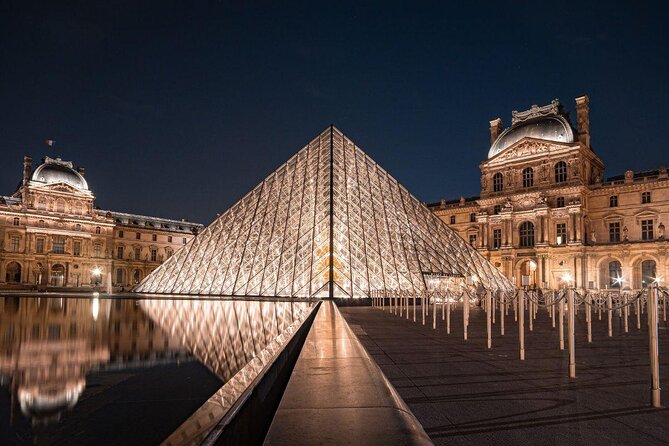
Starting beneath the Louvre’s famous pyramid
Meet at 8 Place du Carrousel, 75001 Paris. The tour ends at the Louvre, so you will need to arrange your own way back to your hotel or next stop. The museum is near public transportation, but hotel pickup and drop-off are not included.
Your guide handles the museum entry, and the adult admission ticket is included. The listed museum ticket value is €28. Small groups can also move through entry procedures more easily than large escorted groups. Violette was praised for getting a small party inside quickly while large lines waited for tickets.
Still, do not treat the tour as a way to skip every possible queue. Museum security, crowd levels, and entrance conditions can change. Arrive at the stated meeting point on time, with your booking confirmation ready on your phone.
The Louvre does not allow large backpacks or luggage. Keep your belongings light, and do not bring a stroller or pushchair on the semi-private tour. You should also expect a fair amount of walking and standing, so a moderate level of fitness is needed.
The Louvre’s fortress beginnings
Before the famous paintings and marble statues, the Louvre was a fortress. The building later became a royal palace and then a public museum, and the guide uses the architecture to explain how those changes shaped the institution you see today.
One especially worthwhile part of the route is a look at the original foundations and moat. You might otherwise hurry past these remains while searching for the Mona Lisa, but they give you a sense of the building’s earlier defensive purpose.
Barbara also explains how the glass pyramid relates to the museum’s wings. That is a useful bit of orientation because the pyramid is not just a photo stop. It is the central entry point to an enormous complex of galleries, and understanding the layout helps you make sense of the route.
The historical introduction keeps the visit from becoming a simple parade of famous names. You begin to see the Louvre as a place that changed purpose over many centuries, not just as a grand container for art.
Greek sculpture and the Venus de Milo
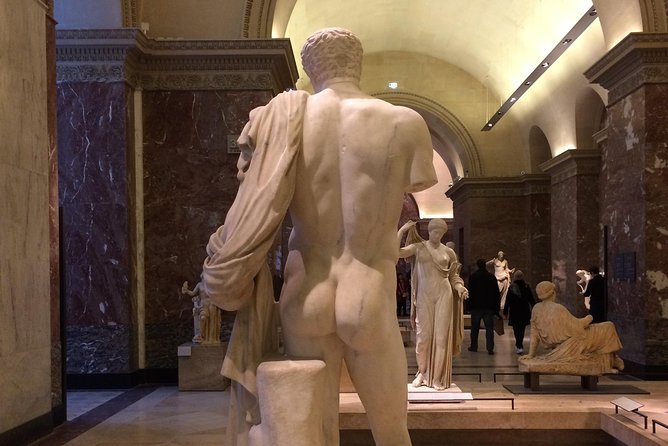
The ancient sculpture section is one of the tour’s strongest teaching stretches. Your guide compares Greek and Roman work, pointing out differences in style, treatment of the body, and artistic purpose.
The Venus de Milo is the headline stop. The statue is famous, but a guide can help you look beyond the missing arms and the surrounding crowd. You will consider the figure’s posture, idealized form, and place within the tradition of Greek sculpture.
The value here is context. Without it, you see a celebrated marble woman and take a photograph. With it, you can begin to recognize why the work matters and how it differs from later Roman copies or adaptations.
This is also one point where the small group helps. The Venus de Milo draws attention, and the room can feel crowded. Six people are easier to gather around a guide than a large tour, though you should still expect other museum visitors nearby.
A different way to spend the day in Paris:
- Disneyland® Paris 1-Day Ticket
★ 4.6 · 49,412 reviews - Paris: Versailles Palace and Gardens Full Access Ticket
★ 4.6 · 41,579 reviews - Paris: Arc de Triomphe Rooftop Tickets
★ 4.6 · 34,264 reviews - Paris: Orsay Museum Entry Ticket
★ 4.7 · 25,647 reviews
Roman sculpture and the Etruscan collection
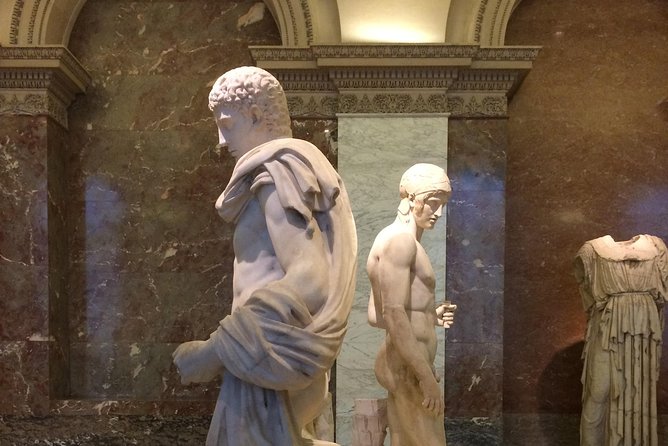
After Greek sculpture, the route moves into Roman works. This comparison is practical rather than abstract. Your guide helps you examine how Roman artists handled inherited Greek ideals and how their own artistic concerns changed the appearance and purpose of sculpture.
That side-by-side approach is useful for anyone who knows the names of famous works but has trouble telling periods apart. You are not expected to arrive with an art-history background. The guide builds the comparison around visible details.
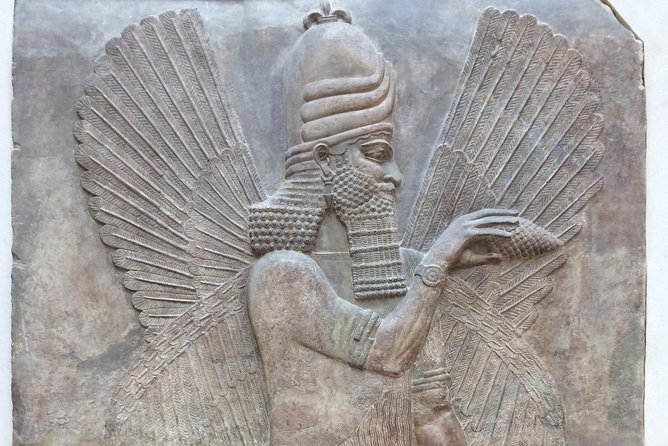
The itinerary then reaches the Etruscan collection. This is a welcome change from a tour that races only toward the three most photographed objects. Etruscan art is less familiar to many people, so the guide’s explanation gives you a chance to see a part of the Louvre you might miss alone.
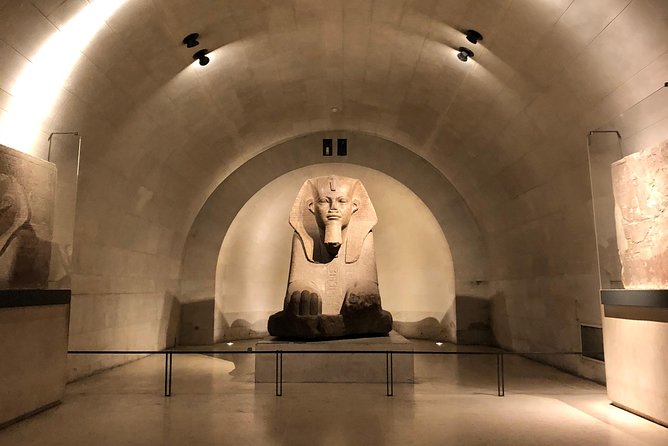
An Egyptian sphinx is also included in the broader route described by the guides. It adds another point of comparison and helps show how many ancient cultures are represented inside the museum. You will not see everything in these collections, but you will get a guided sample with a clear connection between styles.
Winged Victory and an original Louvre room

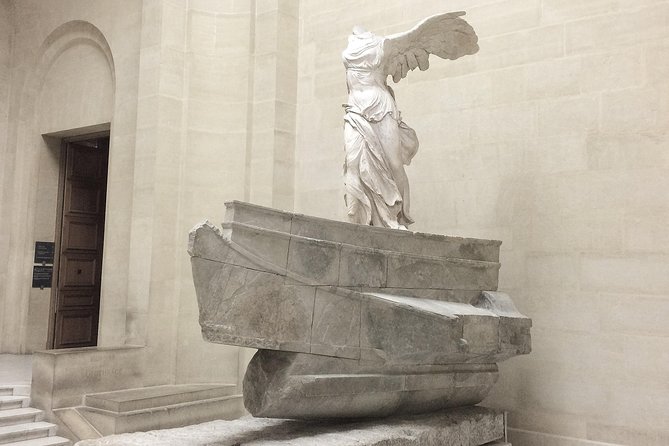
The ancient portion reaches its high point at the Winged Victory of Samothrace. Set dramatically at the top of the Daru staircase, the statue is one of the Louvre’s most powerful encounters, even though the figure has no head or arms.
Your guide can direct your attention to movement, fabric, wings, and the way the sculpture interacts with its setting. It is a good reminder that sculpture is not only about a complete body or a smooth surface. Position, motion, and architecture all affect what you see.
The route also includes one of the few rooms left in its original condition. This gives the museum visit a different texture. Instead of looking only at objects removed from their past settings, you get a glimpse of the Louvre as a former royal residence.
That room may be especially valuable if you want more than a checklist of masterpieces. It links the building’s history with its art collection and offers a pause between the ancient galleries and the Renaissance rooms.
Crossing into the Italian Renaissance
The shift to the Italian Renaissance shows how quickly artistic priorities can change. After the stylized power of ancient sculpture, you begin to see new attention to observation, human expression, space, and painting technique.
Your guide explains this development as you move toward Leonardo da Vinci and the Mona Lisa. That gradual transition is better than appearing suddenly in front of the painting with no sense of how it fits into the larger story.
Several guides are praised for giving historical context rather than only naming artists. Lily explains symbolism and interpretations in individual works. Tina can speak to both serious art students and people who do not consider themselves artistic. Gary encourages you to study a detail and form your own response before he offers his explanation.
This teaching style makes the tour useful for mixed groups. An art teacher may want technique and symbolism, while a child may need a story or a question to keep the visit alive. The best part of the format is that a small group gives the guide room to adjust.
The Mona Lisa without letting it take over
The Mona Lisa is the finish line for many people, and the tour makes sure you see it. You should expect a popular room and a crowd gathered around the painting. The guide helps you reach the work, understand its place in the route, and move on to the rest of the Louvre rather than spending the whole visit waiting for one image.
That is important because the Mona Lisa is only one painting in a museum filled with sculpture, decorative arts, ancient objects, and major works from different periods. The route builds toward Leonardo, but it does not reduce the Louvre to a single celebrity.
Guides also help with practical navigation. Abbie is praised for getting a couple through the galleries efficiently, showing them the major works and guiding them back out without leaving them lost in the corridors. That kind of help is worth a great deal in a building where a wrong turn can cost half an hour.
If the Mona Lisa is your only priority, you may not need a two-and-a-half-hour art tour. If you want to understand why the painting matters and what else the Louvre offers, the guided route is a better fit.
How much value do you get for $192.36?
At $192.36 per person, this is not a bargain museum admission. You are paying for the adult ticket, a trained English-speaking guide, a semi-private group, and a carefully chosen route through one of Europe’s hardest museums to navigate.
The price makes the most sense in three situations. First, you have only one day or one Louvre visit and want to use your time well. Second, you care about art but do not want to prepare a museum route yourself. Third, you are traveling with family members of different ages or interests and need someone who can keep everyone engaged.
A family of four pays a substantial total, but the small group can be easier than trying to manage a huge museum alone. A couple pays more than it would for a standard entry ticket, yet the ability to ask questions and avoid getting turned around may justify the difference.
The value is weaker if you qualify for free admission. Visitors under 18 and residents of the European Economic Area under 26 can enter free with valid identification and proof of residency. Since the tour price includes an adult ticket, check how your eligibility affects the booking value before paying.
You also should not expect food, drinks, or hotel transportation. Plan a meal separately. Marly’s, outside the museum overlooking the courtyard, is one nearby option noted by a tour participant, but it is described as a premium choice rather than a budget stop.
Which guide might suit your group?
The guide matters a lot on this experience. Assignments can vary, so you may not be able to choose a specific person, but the names most often praised include:
- Lily: Strong on symbolism, historical perspective, and making individual paintings come alive.
- Violette: A historian by education and fluent in four languages, with a reputation for clear English, crowd management, and personal attention.
- Adam: Engaging and interactive, using questions to keep people looking and thinking. He is particularly well suited to visitors who want more than standard facts.
- Ivana: A good choice for families, with a friendly approach that works for children and adults.
- Barbara: Covers the Louvre’s fortress beginnings, pyramid, galleries, and art techniques, including why old colors can remain strong.
- Lu, Tina, Erell, Ahmed, and Abbie: Each is praised for clear explanations, strong art knowledge, navigation, or thoughtful attention to the group.
Do not book only because of a hoped-for guide assignment. The real advantage is the format: a small group, an expert English-speaking guide, and a route built around the Louvre’s major works.
Morning or afternoon, and who should book
The morning tour is a good fit if you want to make the Louvre the day’s main cultural event. You can start with fresh legs and use lunch afterward to discuss what you saw. An afternoon tour may work better if you prefer a slower morning or want to pair the museum with another Paris activity.
I would choose this tour for a first-time Louvre visit, a short Paris stay, families with older children, and anyone who feels uneasy about navigating a huge museum. It is also a strong option for repeat visitors who want a more thoughtful route than simply returning to the Mona Lisa.
I would hesitate if you prefer to wander alone, need a stroller, carry large luggage, or want a full-day museum visit. Two and a half hours is enough for highlights, not for a serious survey of the Louvre’s many departments.
Free cancellation is available when you cancel at least 24 hours before the start time. Changes made inside that window are not accepted, and the minimum group requirement means the provider may offer another date or a full refund if the activity cannot run.
Should you book The Essential Louvre Masterpieces Tour?
I would book it if you want the Louvre to make sense quickly. The Venus de Milo, Winged Victory, and Mona Lisa are the obvious draws, but the strongest reason to go is the connection among the fortress remains, ancient sculpture, Etruscan art, Renaissance painting, and the museum’s grand rooms.
The price is high, but the six-person limit and guide-led navigation address the Louvre’s two biggest problems: scale and crowds. Check your museum-admission eligibility first, arrive light, and treat the tour as a focused introduction rather than a complete visit.
For a first Louvre experience, especially with children or limited time, this is a sensible splurge. For independent museum regulars who already know the building, the cost may be harder to justify.
FAQ
How long does The Essential Louvre Masterpieces Tour last?
The tour lasts approximately 2 hours and 30 minutes.
How many people can join the tour?
The semi-private tour has a maximum of six people.
Is museum admission included?
Yes. The adult museum entrance ticket, listed as €28, is included in the tour price.
What language is the tour offered in?
The experience is offered in English and includes an expert English-speaking guide.
Which Louvre works are included?
The route includes the Venus de Milo, Roman sculptures, the Etruscan collection, Winged Victory of Samothrace, an original-condition Louvre room, Italian Renaissance works, and the Mona Lisa. Guides may also show an Egyptian sphinx and the Louvre’s original foundations and moat.
Can children join the tour?
The tour information does not set a minimum age. Free museum admission applies to visitors under 18 with valid identification.
Can I cancel for a full refund?
Yes, if you cancel at least 24 hours before the experience start time. Cancellations made less than 24 hours in advance are not refunded, and changes inside that period are not accepted.
Newest additions around Paris
- Family escape Game with kids and teens on the Île de la Cité★ 4.5 · 11 reviews
- Private Photoshoot with the Iconic Eiffel Tower in Paris★ 5.0 · 11 reviews
- Paris Revolutionary Walking Tour: Iconic French Sights & Stories★ 5.0 · 11 reviews
- 2-day Private Mont Saint-Michel, 3 Loire Castles, D-Day Express★ 4.5 · 11 reviews
- Paris: Batobus Hop-On Hop-Off Cruise & Landmarks Audio Tour★ 3.0 · 11 reviews
- Guided and Private Tour of 3 hours through Paris aboard a Citroën 2cv★ 5.0 · 11 reviews
- Kids in the Kitchen – CrOisSaNtS★ 4.0 · 11 reviews
- Paris: Ghosts and Dark Stories Guided Walking Tour★ 4.1 · 11 reviews
Louvre Museum Tours, compared.

Louvre Guided Tour with Reserved Access & Boat Cruise
Read our review →
Louvre Museum Masterpieces Guided Tour with Access
Read our review →
Louvre Museum Entry Ticket With Host and River Cruise
Read our review →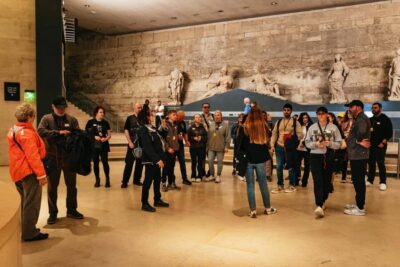
Priority Access Louvre with Host -Direct to Mona Lisa
Read our review →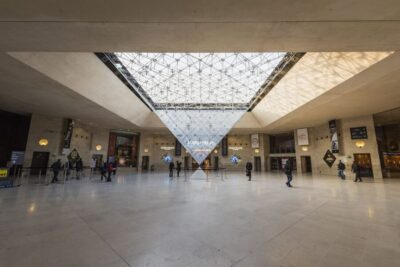
Mona Lisa & Louvre Masterpieces Tour with Reserved Access
Read our review →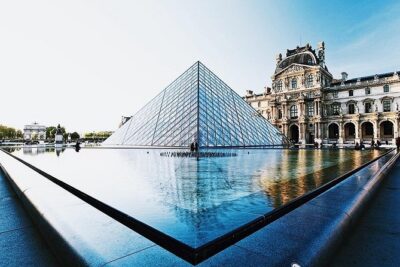
Louvre Museum – Exclusive Guided Tour (Entry Included)
Read our review →
Louvre Reserved Ticket and River Cruise Combo
Read our review →Browse the lists this tour appears in