
Reviewed · LOUVRE MUSEUM TOURS
Small-Group Louvre Museum Masterpieces Tour with Access
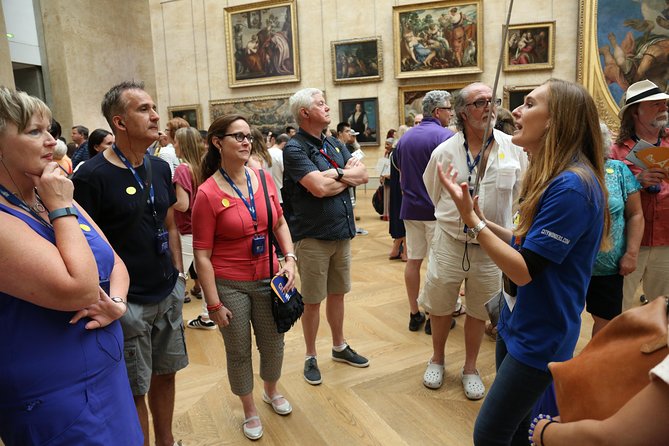
The Louvre can swallow an entire day before you find the Mona Lisa. This three-hour highlights tour gives you a useful route through the palace, from its medieval foundations to famous paintings, sculpture, and royal treasure. Guides such as Maryam, Florence, Hamish, Nazli, and Severine have been praised for clear explanations, good pacing, and an ability to steer small groups through thick crowds.
I like the 12-person limit, which makes it easier to hear the guide and ask questions. I also like that your museum time does not end when the tour does. You can remain inside and continue on your own, a valuable bonus in a museum this huge.
The main caution is physical and logistical. Expect many stairs, long periods standing, heavy crowds, and a meeting point that can be easy to miss. A few groups were also combined into much larger groups when a guide became ill, so the small-group promise has had occasional exceptions.
In This Review
- Key points before you book
- Why a guided first visit helps at the Louvre
- Meeting at the Arc de Triomphe du Carrousel
- Medieval foundations: the Louvre before the masterpieces
- Venus de Milo and Winged Victory
- The Apollo Gallery and royal crowns
- Canova’s Psyche and Cupid
- Delacroix and Liberty Leading the People
- Michelangelo and the Italian sculpture rooms
- Leonardo da Vinci and the Mona Lisa crowd
- What happens after the three-hour route
- Guides, group size, and the occasional exception
- Is $118.27 a fair price?
- Who should book this Louvre experience?
- Should you book it?
- FAQ
- How long does the Louvre masterpieces tour last?
- What language is the tour offered in?
- What is the maximum group size?
- What is included in the price?
- Can I stay inside the Louvre after the tour?
- Where does the tour begin?
- Where does the tour end?
- Is hotel pickup included?
- Can I cancel for a full refund?
Key points before you book
- A focused Louvre route: See medieval foundations, the Venus de Milo, Apollo Gallery, Canova, Delacroix, Michelangelo, Leonardo, and other major works.
- Small group of 12 or fewer: This is meant to feel more personal than a large museum procession.
- English-speaking art historian guide: The best guides, including Florence, Hamish, Nazli, and Severine, add art context without turning every stop into a lecture.
- Reserved museum access: The €22 adult entrance ticket and €70 group reservation fee are included in the stated price.
- Stay after the tour: Once the guided portion ends, you can continue exploring the Louvre at your own pace.
- Plan for crowds and stairs: The Mona Lisa area can be packed, and the route moves through a large, demanding building.
Why a guided first visit helps at the Louvre
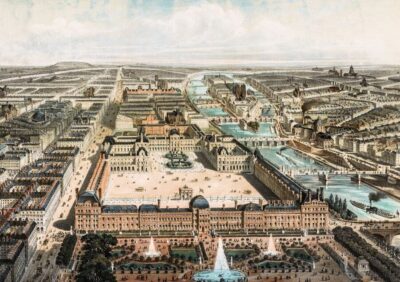
The Louvre is not simply a museum with a lot of rooms. It is a former royal residence, a maze of wings, courtyards, galleries, staircases, and long corridors. You can spend an hour looking at a map and still miss the room you wanted.
That is why I see this tour as a first orientation rather than a complete Louvre visit. In about three hours, your guide selects a manageable group of works and links them to French history, royal power, mythology, and changing ideas about art. You will not see everything. You will see enough to understand how the place fits together, then decide where to return.
The small group matters here. With 12 people or fewer, you have a better chance of staying close to the guide and hearing the explanations through the noise. Audio headsets are included, which helps when another group is gathered nearby or when you are standing several rows back from a painting.
The experience is offered in English, with morning or afternoon options advertised. The supplied meeting time is 10:30 a.m., so check your confirmation carefully for the exact departure time and arrival instructions. Do not treat the start time as a suggestion. A late arrival can mean missing the group entirely.
More ways into the Louvre:
- Paris: Louvre Museum Timed-Entrance Ticket
★ 4.6 · 71,977 reviews - Paris: Louvre Guided Tour with Reserved Access & Boat Cruise
★ 4.3 · 16,353 reviews - Louvre Museum Masterpieces Guided Tour with Access
★ 4.5 · 12,023 reviews
Meeting at the Arc de Triomphe du Carrousel
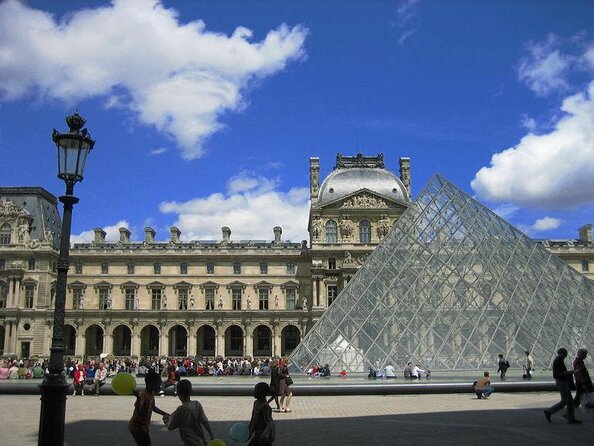
The tour begins at the Arc de Triomphe du Carrousel, at Place du Carrousel, 75001 Paris. This is close to the Louvre, but the open space and several nearby entrances can make it confusing, especially if you are rushing.
Plan to arrive early. The meeting instructions refer to a City Wonders representative holding a small blue flag, but finding the correct person has been difficult for some people. Give yourself extra time to locate the guide, gather your group, and clear security.
The meeting point is near public transportation, and the tour ends at the Louvre itself. Hotel pickup and drop-off are not included. Bring your mobile ticket and make sure the name and time on your confirmation match the tour you booked.
Security can cause delays even when everyone arrives on time. The museum has mandatory checks, and the guide cannot control the speed of that line. A patient attitude helps, but arriving early remains your best practical move.
Medieval foundations: the Louvre before the masterpieces
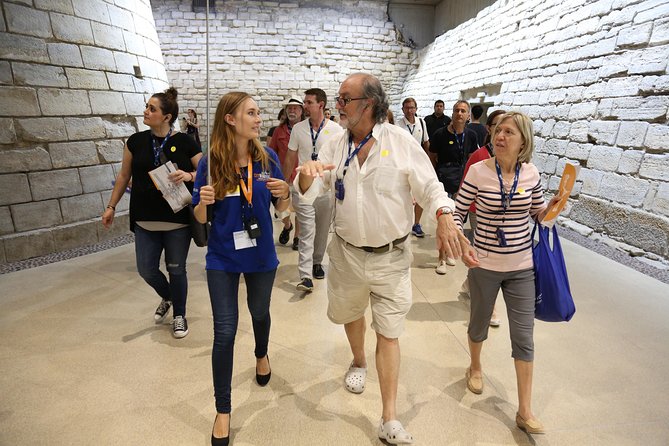
The tour begins beneath the grandeur of the museum by looking at the Louvre’s medieval foundations. This is one of the smartest opening stops because it gives you a sense of place before the famous art begins.
The Louvre started as a fortified structure, then changed into a royal residence before becoming a public museum. Seeing the older foundations helps you understand why the building feels so irregular. It was not designed all at once as a museum. It grew, shifted, and was adapted over centuries.
Your guide uses this part of the visit to connect architecture with power. The Louvre was a fortress, palace, and symbol of French rule before it became the art institution you see today. That context makes the later royal galleries and imperial objects easier to understand.
Do not expect a long architectural tour. The focus remains on the major artworks, so this is an introduction rather than a full study of the building. Still, it is a useful reminder that you are walking through a former seat of power, not just a collection of galleries.
Venus de Milo and Winged Victory
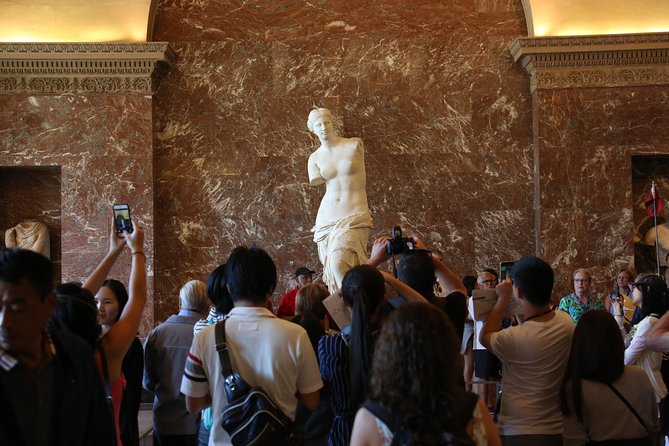
The Venus de Milo is one of the tour’s central stops. The ancient Greek statue is famous partly because of its missing arms, which leave room for speculation and make the sculpture feel less fixed than many complete statues.
Your guide can help you look beyond the famous name. Pay attention to the figure’s posture, the turn of the body, and the way the drapery appears to fall. In a crowded gallery, it is easy to take a quick photograph and move on. A short explanation gives you a reason to stay with the sculpture for a few extra moments.
Winged Victory of Samothrace is another major highlight. The statue appears to surge forward even though the head and arms are missing. Its placement on a grand staircase also changes the way you see it. You approach from below, then move around it as the sweeping wings and wet-looking fabric come into view.
These are exactly the sort of works that benefit from a guide. You already know their names, but the guide gives you a way to look at them. The downside is crowding. Popular sculptures can be surrounded by tour groups, school groups, and independent visitors, so you may not get a quiet, solitary encounter.
More Paris museums to visit:
- Paris: Orsay Museum Entry Ticket
★ 4.7 · 25,647 reviews - Paris: Louvre Museum Entry Ticket With Host and River Cruise
★ 4.6 · 9,926 reviews - Les Invalides: Napoleon’s Tomb & Army Museum Entry
★ 4.6 · 9,185 reviews - Louvre Museum – Exclusive Guided Tour (Entry Included)
★ 5.0 · 6,296 reviews
The Apollo Gallery and royal crowns
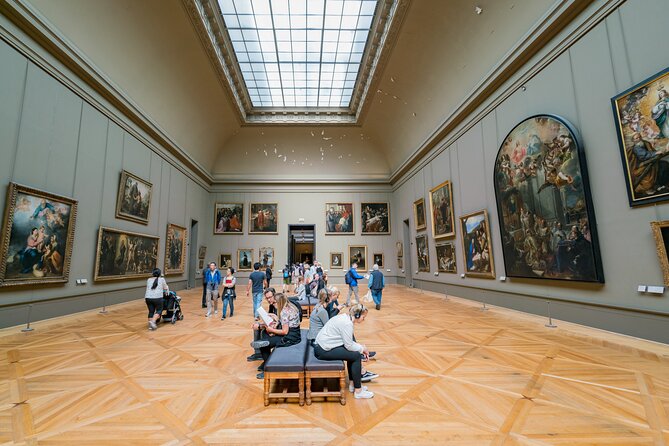
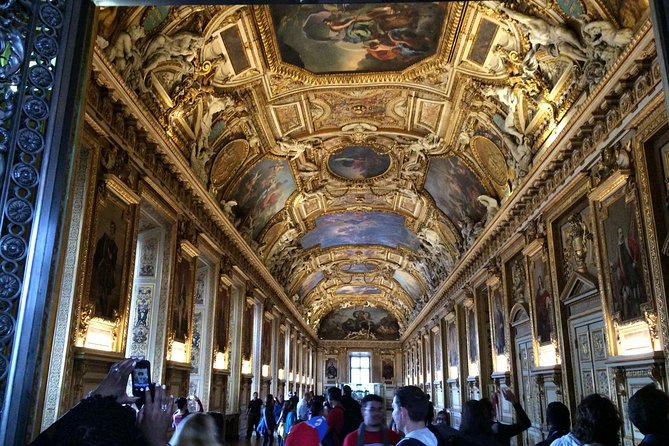
The Apollo Gallery offers a change of mood. Instead of concentrating on ancient sculpture or famous paintings, the tour brings you into a glittering royal interior filled with decorative objects and crowns associated with Napoleon and King Louis XV.
This gallery makes the relationship between art and authority plain. These objects were designed to display rank, wealth, and control. Your guide connects the pieces with stories about the leaders who owned or used them, giving the room more life than a simple list of dates and materials.
The Apollo Gallery is also visually different from the better-known painting rooms. Look up as well as ahead. The ornament, ceiling decoration, and formal design are part of the experience. You are not only viewing objects in cases. You are seeing them in a setting built to impress.
The stories about Napoleon and Louis XV add human drama, but the tour does not promise a detailed study of every crown or royal figure. This is a stop for broad context and visual impact, not a specialist history seminar.
Canova’s Psyche and Cupid
Antonio Canova’s Psyche and Cupid brings the itinerary into the world of myth and romance. The sculpture captures the moment when Cupid reaches toward Psyche, and the composition makes the figures seem to form a soft, flowing circle.
This is a good place to notice how a sculptor creates emotion in stone. The tenderness comes from the pose, the hands, the tilt of the heads, and the controlled balance of the bodies. Your guide can point out how the sculpture rewards you for walking around it rather than viewing it only from the front.
The stop also breaks up the political and historical material. After medieval fortifications, royal crowns, and French leaders, the story turns to love, beauty, and myth. That variety keeps the route from feeling like a march through one narrow subject.
You should expect a concise explanation, not a complete account of Canova’s career. That is appropriate for a highlights route. If this sculpture catches your interest, note the room and return after the formal tour.
Delacroix and Liberty Leading the People
Eugène Delacroix’s Liberty Leading the People gives the tour a strong French political note. The painting shows Liberty moving over a barricade with people from different parts of society following her. It refers to the July Revolution of 1830 and became one of the most recognizable images of French resistance.
A good guide will help you separate the painting’s historical event from its later symbolic power. The woman at the center is not a straightforward portrait of one person. She is an allegorical figure, mixing an actual political moment with an ideal of freedom.
This is also a useful stop for understanding Romantic painting. The work is dramatic, crowded, and emotional. Its movement and strong contrasts are a long way from the calm balance of classical sculpture.
Crowds can make large paintings hard to view. You may need to stand behind other people or shift position as groups move through. Audio headsets help you follow the guide, but they cannot create space around the artwork. If you want a longer look, plan to return after the guided portion.
Michelangelo and the Italian sculpture rooms
The Italian sculpture hall introduces Michelangelo and gives you another chance to compare different approaches to the human figure. The route does not present the entire history of Italian sculpture, but it brings you face to face with work linked to one of the central names in Western art.
This section is especially useful if you are unsure how to look at sculpture. Your guide may draw your attention to the body’s weight, the tension in the pose, the unfinished quality of the surface, or the relationship between physical strength and emotion.
The museum route can be physically tiring here. The Louvre has many stairs, and the pace may feel brisk if you have a bad knee or other mobility concern. One guide, Toni, was especially attentive to a slower-moving member of the group, pointing out benches and finding an elevator toward the exit. That kind of care depends on the individual guide, so tell the guide at the start if you need a slower pace or a rest.
Most people can participate, but you should be realistic about the building. Comfortable shoes, water before entering, and an honest conversation with the guide will help.
Leonardo da Vinci and the Mona Lisa crowd
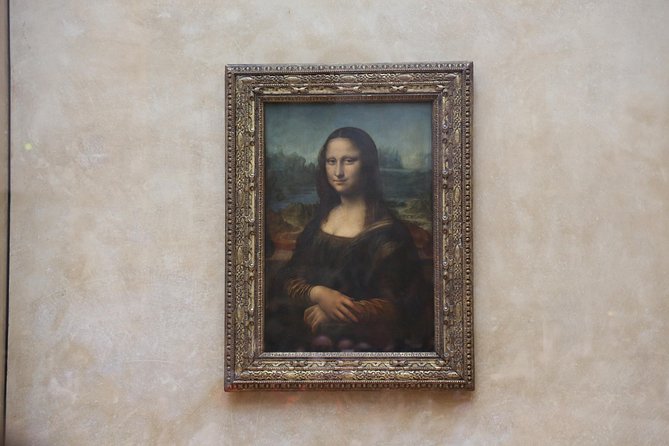
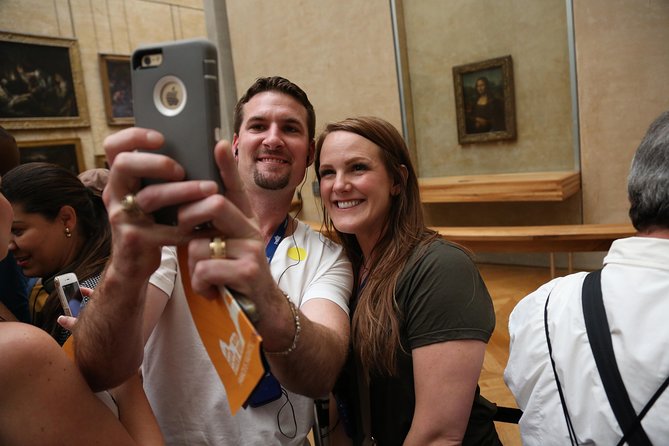
The Mona Lisa is the stop most people have in mind, and the experience is likely to be the most crowded part of the tour. Expect a busy room, a line or clustered viewing area, and limited time at the front.
A guide is useful because the Mona Lisa can be strangely anticlimactic without context. You are looking at a relatively small portrait while a large crowd presses in around it. Your guide explains Leonardo’s technique, the uncertain expression, and the reasons the painting became such a powerful cultural symbol.
Some guides are especially good at handling this moment. Nazli, for example, used a distinctive paddle to remain visible and worked through the crowd so the group could reach a good viewing position. Even then, do not expect a private encounter. The crowd is part of the current reality of seeing the painting.
The tour also includes several other Leonardo works. That is a real advantage. You can compare the Mona Lisa with other paintings instead of treating it as an isolated celebrity. If your main goal is to study Leonardo closely, the tour will feel too brief. If your goal is to see the essential works and understand why they matter, it gives you a solid starting point.
What happens after the three-hour route
The guided tour lasts about three hours, but your Louvre visit does not have to end when the guide says goodbye. You can remain in the museum and explore at your own pace.
I consider this one of the strongest parts of the arrangement. The guided route handles the major orientation, so you can spend your remaining time following your own interests. Return to a painting that caught your attention, seek out another wing, or simply revisit the rooms without trying to navigate the entire building from scratch.
Do not expect to cover the Louvre fully in one day. Even after three guided hours, you will have seen only a small portion of the collection. The point is to leave with a mental map and a list of places worth finding next.
This extra time also softens the tour’s brisk pace. If you felt rushed at the Mona Lisa or a sculpture gallery, you have a chance to return. It is also when you can take a break, provided you follow the museum’s rules and remain inside the permitted areas.
Guides, group size, and the occasional exception
The strongest part of this experience is the guide. Maryam, Addie, Hamish, Florence, Toni, Maxim, Nazli, Omar, and Severine have each been singled out for different strengths, including clear English, humor, art knowledge, patience, and calm crowd management.
That variety means your exact experience depends on who leads your departure. The best guides keep the stories short enough to hold your attention, use nearby works to explain the famous ones, and make sure the group stays together. Florence and Severine, in particular, were praised for combining enthusiasm with attention to the people in the group.
The stated maximum is 12 people. That is the right size for a crowded museum. You can hear the guide, move through doorways without taking over the room, and get more direct answers.
There have been exceptions. When a guide became ill, two groups were combined into one group of 25. That is a serious change, not a minor inconvenience, since it makes it harder to see the art and keep up. The company issued partial refunds in those cases, but you should still understand the risk before paying a premium for a small group.
Is $118.27 a fair price?
The listed price is $118.27 per person. Included in that amount are the English-speaking guide, the small group, audio headsets, the adult museum ticket valued at €22, and the €70 group reservation fee.
The value depends on what you want from the Louvre. If you are comfortable researching a route, waiting through entry procedures, and finding major works on your own, you can spend less by visiting independently. You will also have more control over your pace.
I think the price is easier to justify for a first visit, a short stay in Paris, or anyone who finds enormous museums tiring. The guide saves you from spending your best museum hours lost between wings. The included entry arrangements also remove part of the guesswork.
Still, this is not a private tour, and the Mona Lisa will not be a calm, empty viewing. If the group becomes larger than promised, the value drops quickly. Book it for structure, interpretation, and a practical first route, not for exclusivity.
Who should book this Louvre experience?
This tour suits you if you want to see the essential works without planning a museum strategy yourself. It is particularly useful for first-time visitors, families who need momentum, and anyone who wants art explained in plain English.
Children can enjoy it if they like stories and can manage three hours. One family found that children aged 9 and 11 stayed interested throughout, helped by the guide’s art and history stories. That does not mean every child will love the pace, but the mix of sculpture, crowns, revolution, mythology, and Leonardo gives the guide several ways to keep young minds engaged.
You should think twice if you have significant mobility limitations, dislike crowds, or want to linger over a small number of works. The route includes many stairs and may move quickly. Also reconsider it if you are likely to arrive late, since finding the group after departure can be difficult.
Should you book it?
Book this tour if the Louvre feels intimidating and you want a well-planned introduction with an English-speaking guide. The best version of the experience gives you major works, useful stories, a manageable group, and time to continue alone afterward.
Skip it if you prefer quiet galleries, long close study, or complete control of your route. For most first visits, though, the combination of reserved access, headsets, a three-hour route, and post-tour museum time makes this a practical way to meet the Louvre without trying to conquer the whole palace in one breath.
FAQ
How long does the Louvre masterpieces tour last?
The guided experience lasts approximately three hours.
What language is the tour offered in?
The tour is offered in English and includes an English-speaking expert guide.
What is the maximum group size?
The stated maximum is 12 people. On rare occasions, groups have been combined because of guide illness, creating a much larger group.
What is included in the price?
The price includes the English-speaking guide, a €22 adult museum entrance ticket, a €70 group reservation fee, audio headsets, and the small-group experience.
Can I stay inside the Louvre after the tour?
Yes. You can continue exploring the Louvre at your own pace after the guided portion ends.
Where does the tour begin?
The meeting point is the Arc de Triomphe du Carrousel at Place du Carrousel, 75001 Paris.
Where does the tour end?
The tour ends at the Musée du Louvre.
Is hotel pickup included?
No. Hotel pickup and drop-off are not included.
Can I cancel for a full refund?
You can cancel for a full refund if you do so at least 24 hours before the experience start time. Changes or cancellations made less than 24 hours in advance are not accepted for a refund.
Newest additions around Paris
- Family escape Game with kids and teens on the Île de la Cité★ 4.5 · 11 reviews
- Private Photoshoot with the Iconic Eiffel Tower in Paris★ 5.0 · 11 reviews
- 2-day Private Mont Saint-Michel, 3 Loire Castles, D-Day Express★ 4.5 · 11 reviews
- Paris: Batobus Hop-On Hop-Off Cruise & Landmarks Audio Tour★ 3.0 · 11 reviews
- Paris Revolutionary Walking Tour: Iconic French Sights & Stories★ 5.0 · 11 reviews
- Guided and Private Tour of 3 hours through Paris aboard a Citroën 2cv★ 5.0 · 11 reviews
- Kids in the Kitchen – CrOisSaNtS★ 4.0 · 11 reviews
- Paris: Ghosts and Dark Stories Guided Walking Tour★ 4.1 · 11 reviews
Louvre Museum Tours, compared.

Louvre Guided Tour with Reserved Access & Boat Cruise
Read our review →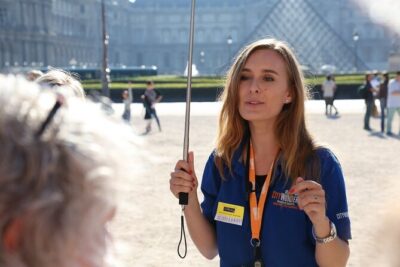
Louvre Museum Masterpieces Guided Tour with Access
Read our review →
Louvre Museum Entry Ticket With Host and River Cruise
Read our review →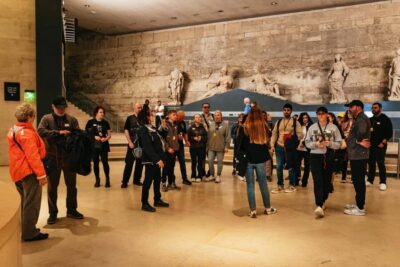
Priority Access Louvre with Host -Direct to Mona Lisa
Read our review →
Mona Lisa & Louvre Masterpieces Tour with Reserved Access
Read our review →
Louvre Museum – Exclusive Guided Tour (Entry Included)
Read our review →
Louvre Reserved Ticket and River Cruise Combo
Read our review →Browse the lists this tour appears in