
Reviewed · CYCLING TOURS
Private Secrets of Paris Bike Tour
Paris reveals its best stories when you leave the grand boulevards behind. This private bike ride begins near the Eiffel Tower, follows the Seine past famous monuments, then turns toward the Roman Arena and the quieter corners of the Latin Quarter. Along the way, your guide points out odd little clues to the city’s past, including a Salvador Dali sundial and a cannonball lodged in a mansion wall.
I like the mix of major sights and overlooked details. You get views of the monuments that define Paris, but the main point is learning to notice what most people walk past. I also like the private format and the guides’ strong storytelling. Names praised in the feedback include Harrison, Aaron, Paul, Jason, Sonia, and Gil, with repeated approval for clear explanations and lively delivery.
The main thing to consider is the riding. This is not a gentle park cycle. You cover about 12 kilometers, or 7.5 miles, with some small hills and occasional traffic, and the tour runs in rain or shine. The supplied information also gives both three hours and three and a half hours as the duration, so confirm the exact start time and length when booking.
In This Review
- Key points at a glance
- Starting near the Eiffel Tower and Seine
- Leaving the standard sightseeing route
- The Roman Arena in the Latin Quarter
- The Latin Quarter beyond the cafés
- The Pantheon and the people remembered there
- Historic walls and the small clues of old Paris
- What the guides do best
- Three hours, private format, and the $294 cost
- Who should book this ride?
- Final verdict: a smart ride for curious cyclists
- FAQ
- Where does the Paris bike tour meet?
- How long does the tour last?
- What language is the tour offered in?
- Is this a private tour?
- What sights are included?
- How far do you ride?
- Do I need to be an experienced cyclist?
- Are bikes and helmets provided?
- Are children allowed on the tour?
- What happens if it rains?
- Can I cancel for a refund?
- Do I need to pay when I book?
Key points at a glance
- The Roman Arena brings ancient Paris into view: See a surviving reminder of the city’s Roman era in the Latin Quarter.
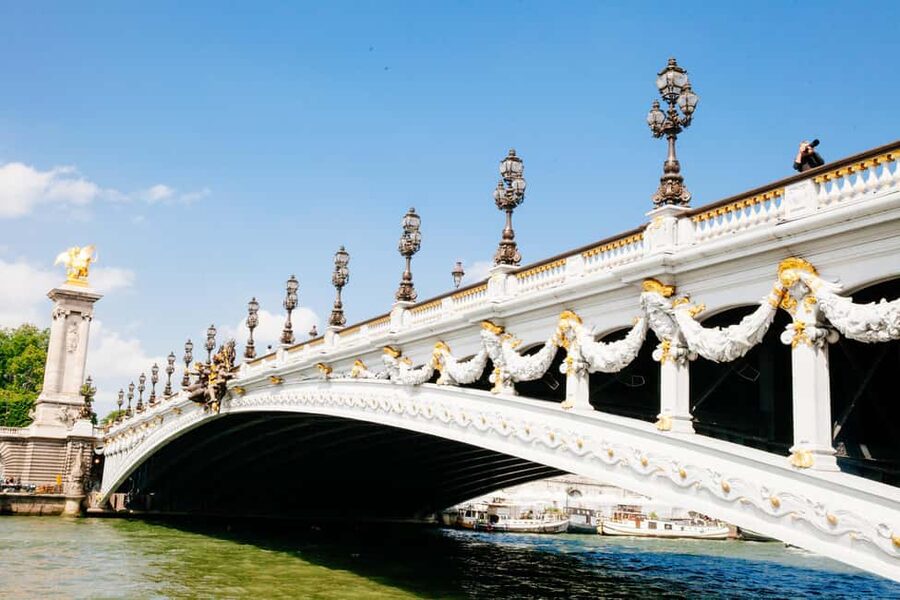
- The route mixes icons with curious details: Ride by the Seine and major monuments before seeking out a Dali sundial and a cannonball in a wall.
- The Pantheon adds national scale: Learn about one of Paris’s most imposing monuments and the figures associated with it.
- The private group makes questions easy: You can ask your guide to slow down, explain a point, or adjust the conversation to your interests.
- City-riding experience is essential: Expect roads shared with cars, modest hills, and a fairly substantial distance.
- English-language guides focus on stories: Past guides have been praised for clear communication, humor, energy, and making complicated history easy to follow.
Starting near the Eiffel Tower and Seine
The meeting point is near the Dupleix Metro station on line 6. That makes the beginning fairly straightforward if you are staying in western or central Paris, but allow time to find the office and get settled before the departure.
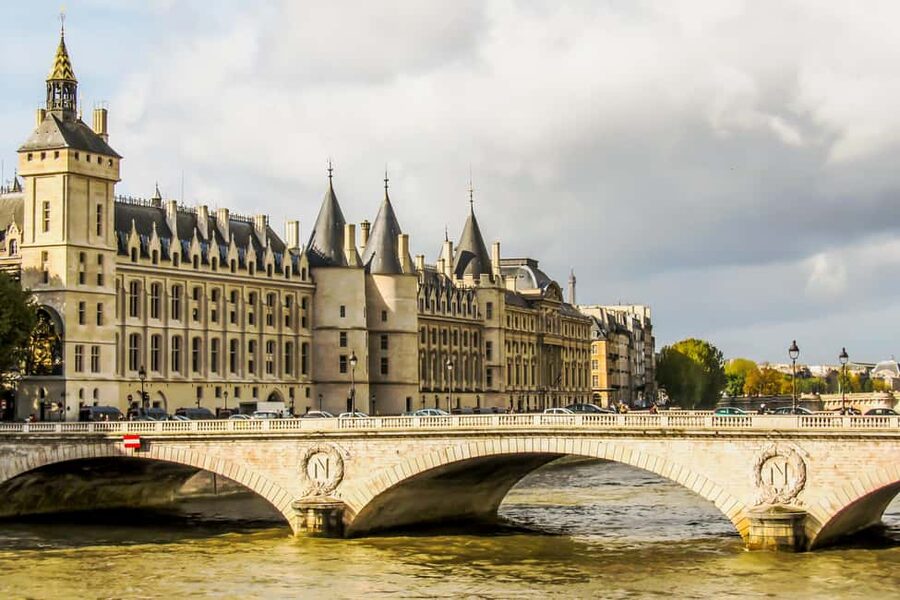
The ride starts in familiar Paris. From the Eiffel Tower area, you head toward the River Seine and pass major monuments from the saddle. This opening section helps you get your bearings quickly. You are not simply being taken to obscure corners with no sense of the wider city. Instead, the route connects the famous Paris of postcards with the older, stranger city tucked behind it.
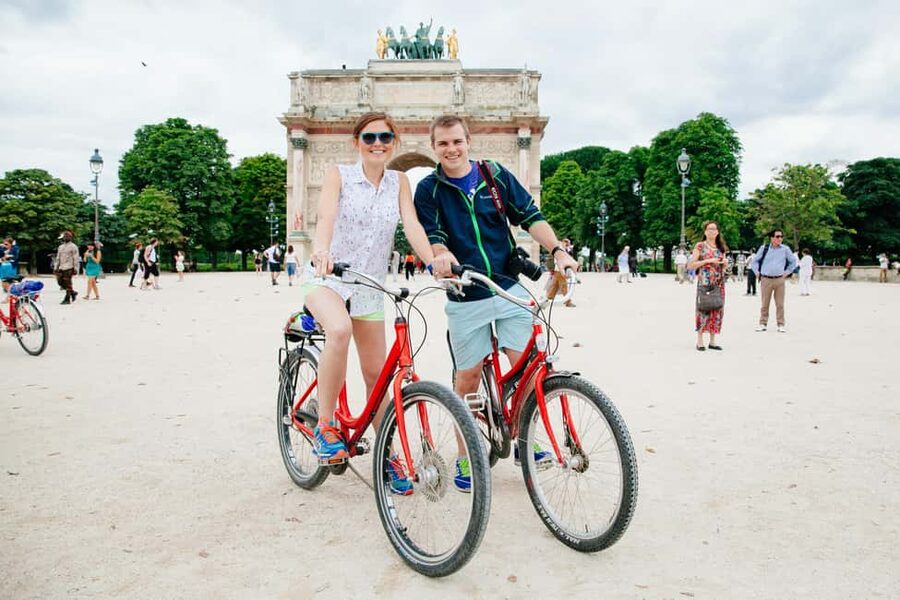
Cycling gives you a useful middle ground. You cover more ground than you would on foot, yet you can still stop for a story or a close look. You also avoid the sealed-in feeling of a bus. You hear the city, see the streets at eye level, and move through different neighborhoods at a human pace.
The tradeoff is traffic. The ride sometimes uses roads with cars, so you need to be comfortable signaling, watching your surroundings, and keeping a steady line. If you have only ridden on quiet bike paths, this may feel demanding. If you regularly cycle in cities, the route should be a more natural fit.
A few more Paris ideas to compare
- Versailles Palace Bike Tour with Market & Marie-Antoinette hamlet
★ 5.0 · 2,680 reviews - Paris: Charming Nooks and Crannies Bike Tour
★ 4.8 · 2,585 reviews - From Paris: Versailles Bike Tour w/ Palace, Gardens, & Picnic
★ 5.0 · 2,150 reviews
Leaving the standard sightseeing route
The heart of the tour begins when the route turns away from the most familiar monuments. The phrase secrets of Paris should not lead you to expect a parade of completely unknown attractions. You will still see parts of central Paris that are well known. The difference is the scale of the stories.
A guide might point to a detail on a building, an old section of wall, or a feature that is easy to miss when you are focused on the next major sight. The Dali sundial is a good example. It is an unusual piece of public art that rewards a guide who knows where to look and can explain why it matters.
The cannonball in the wall offers a different kind of history. It is a physical trace of conflict, fixed in place rather than described only in a book. Details like this make Paris feel less polished and more human. You begin to see the city as a collection of surviving clues, not just grand façades.
This is where the private setup earns its keep. You can ask why a wall survives, what period a building belongs to, or how a particular event changed the street around it. A good guide can shape the conversation around your interests instead of delivering the same pace and script to a large crowd.
The Roman Arena in the Latin Quarter
The ancient Roman Arena is one of the most distinctive stops. Paris is often presented through medieval churches, royal residences, revolutionary sites, and grand nineteenth-century boulevards. The arena reaches farther back, to the period when the city was known as Lutetia.
You can expect a reminder that Paris did not begin with the Eiffel Tower or even with the medieval center. The arena is a surviving fragment of the Roman city, and its presence in a modern neighborhood gives the Latin Quarter an extra layer. Basketball courts and ordinary city life occupy the site today, making the ruins part of the living city rather than an isolated archaeological display.
Your guide’s explanation matters here. A bare stone wall can be easy to overlook if you do not know what you are seeing. With context, the remains become evidence of an entirely different Paris, one shaped by Roman planning and public entertainment.
The stop also shows why a bike is practical for this itinerary. The arena is not the only point of interest, and the tour connects it with other places across central Paris. You get a wider sense of the Latin Quarter without spending the whole day walking from one end to the other.
The Latin Quarter beyond the cafés
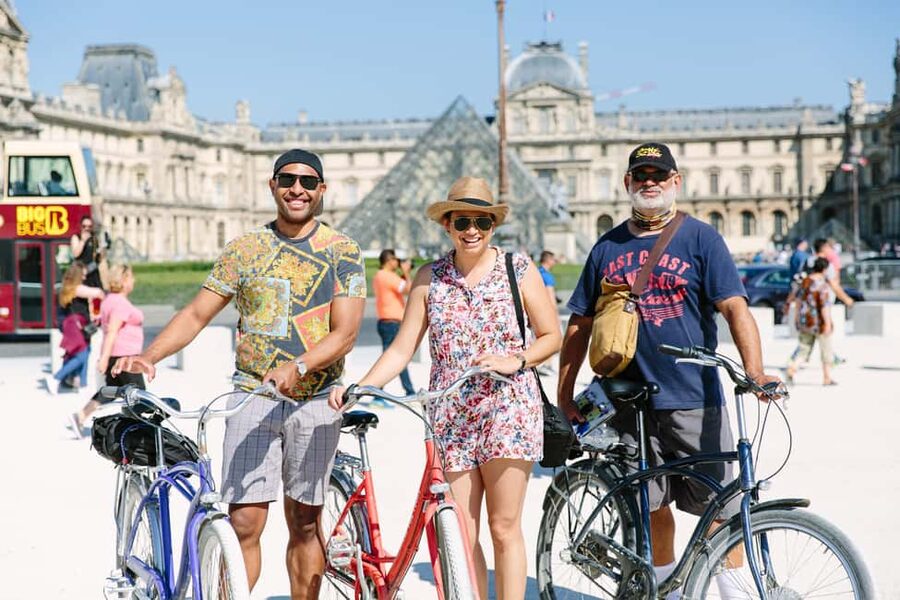
The Latin Quarter has a famous public face, with busy streets, cafés, bookshops, and student associations. This tour looks for the quieter evidence of its past. Expect old walls, unusual building details, and places where several periods of Paris meet in a small area.
I especially like this kind of sightseeing because it trains you to look up, look around, and question what you see. A guide can explain how a wall relates to an earlier age or why an apparently ordinary corner has a story. You do not need to be a specialist in French history. The best feedback about guides such as Aaron, Harrison, and Jason points to a useful skill: making complicated subjects clear without flattening them into a list of dates.
The Latin Quarter is also a good setting for the tour’s style. It has enough famous sights to provide structure, but plenty of smaller details to reward close attention. If you have already visited Paris once or twice, this part may give you a fresh way to read a familiar district.
Keep your expectations sensible. The tour does not promise entry to every site, and the supplied details do not specify interior visits. The appeal is the route, the explanations, and the chance to see historic traces in context. If your priority is spending a long time inside museums or monuments, a museum-focused tour will serve you better.
A different way to spend the day in Paris:
- Paris: Louvre Museum Timed-Entrance Ticket
★ 4.6 · 71,977 reviews - Disneyland® Paris 1-Day Ticket
★ 4.6 · 49,412 reviews - Paris: Versailles Palace and Gardens Full Access Ticket
★ 4.6 · 41,579 reviews - Paris: Arc de Triomphe Rooftop Tickets
★ 4.6 · 34,264 reviews
The Pantheon and the people remembered there
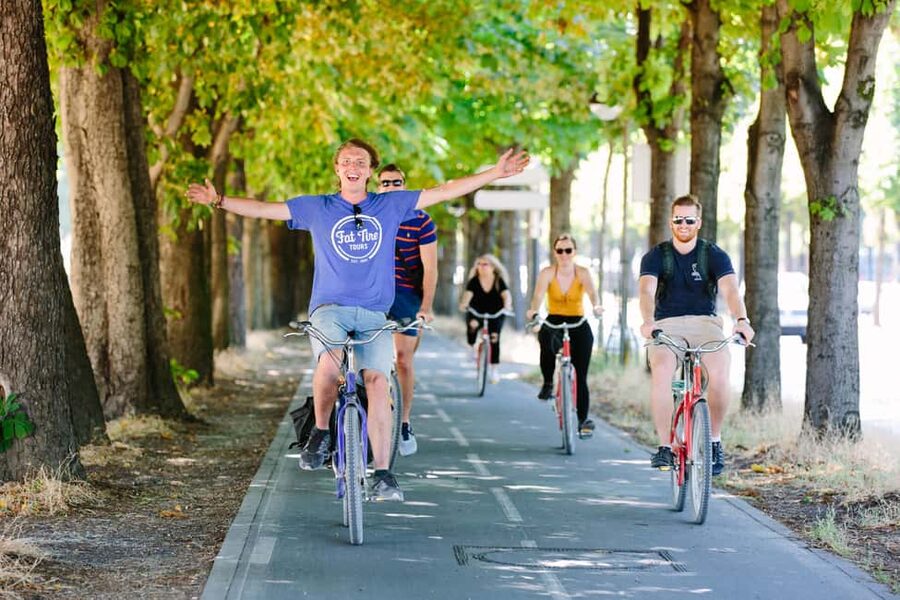
The Pantheon gives the ride a grand architectural pause. Its scale and classical design make it one of the most commanding monuments in this part of Paris. The building is also tied to the national memory of France, with major figures associated with the site.
A guide can use the Pantheon to explain more than its appearance. It offers a way to discuss how France chooses to honor writers, scientists, political figures, and other people judged important to the country. You may already know the building from photographs, but hearing its role explained beside the structure gives the stop more weight.
The tour information does not promise a visit inside, so plan on seeing and discussing the monument from the route unless your guide tells you otherwise. That is not a flaw, but it is worth knowing before you book. The value here comes from placing the Pantheon within the wider story of Paris, not from a timed interior visit.
This is also a likely point where a private guide can make a difference. If your group is interested in French politics, literature, architecture, or the Revolution, say so. The guide can spend more time on the subjects that hold your attention, provided the schedule allows.
Historic walls and the small clues of old Paris
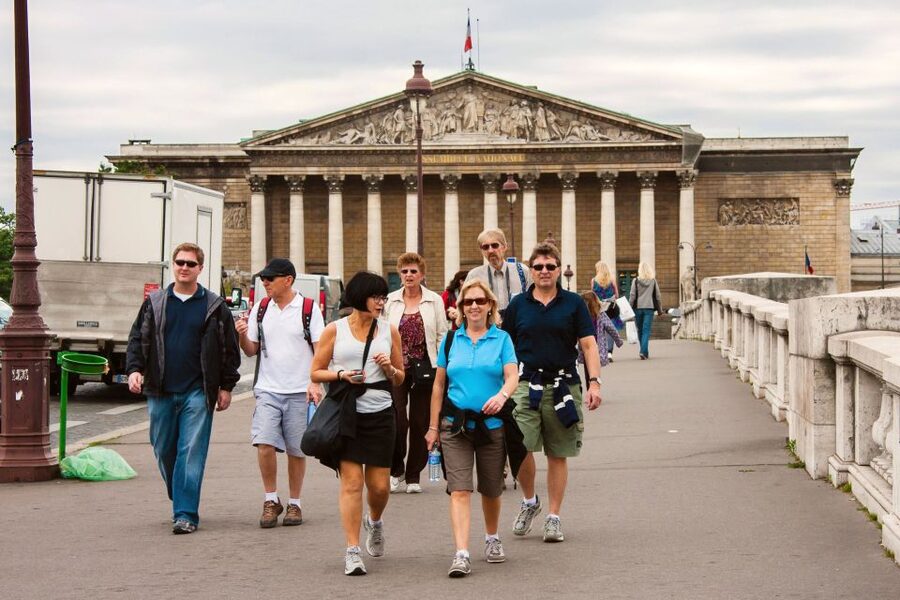
The tour’s wall stops are less grand than the Pantheon, yet they may be more memorable. Paris has repeatedly rebuilt itself, and bits of earlier city life remain in walls, façades, and odd pieces of stone. You may pass a stretch of masonry without giving it a second look. A guide turns it into a dated piece of evidence.
The cannonball is a particularly useful example of the route’s character. It is a small, physical reminder that the city has experienced violence and political upheaval. You do not need a long lecture to appreciate it. The object does the work, while the guide supplies the setting.
The Salvador Dali sundial adds a lighter note. Not every stop is ancient or solemn. Paris also has modern art tucked into its streets, and the sundial helps broaden the idea of what counts as a city secret. The route appears designed to keep changing tone: Roman remains, national monuments, old walls, and playful art.
That variety helps during a three-hour ride. You are less likely to feel as if every stop repeats the same lesson. Still, the pace may feel brisk if you want extended photography at each place. A bike tour has to keep moving, especially when it covers 12 kilometers.
What the guides do best
The most consistent praise is for the guides’ communication and storytelling. Harrison was singled out for a clear style, strong command of the subject, and thoughtful answers. Aaron was described as personable and entertaining, while Jason was praised for energy, clarity, and the ability to keep younger members of a group involved.
Those qualities matter more than a memorized list of facts. Paris has complicated political and cultural stories, and a guide who can explain the basics before adding detail makes the experience easier to follow. The feedback also points to guides who invite questions rather than treating the tour as a one-way speech.
Several names appear in older feedback, including Paul, Sonia, Gil, and Jason. The comments connected with those guides praise humor, enthusiasm, and the ability to tell a story rather than merely recite information. Because guide assignments can change, you should not book on the assumption that one particular person will lead your ride. You can, however, expect the company to place emphasis on an English-language live guide.
One caution: some of the supplied feedback refers to French Revolution walking tours rather than this bike route. That means it is useful evidence about guide presentation and historical storytelling, but not proof of the exact cycling conditions or every stop on this itinerary. Judge the ride itself by the stated distance, traffic, hills, and weather policy.
Three hours, private format, and the $294 cost
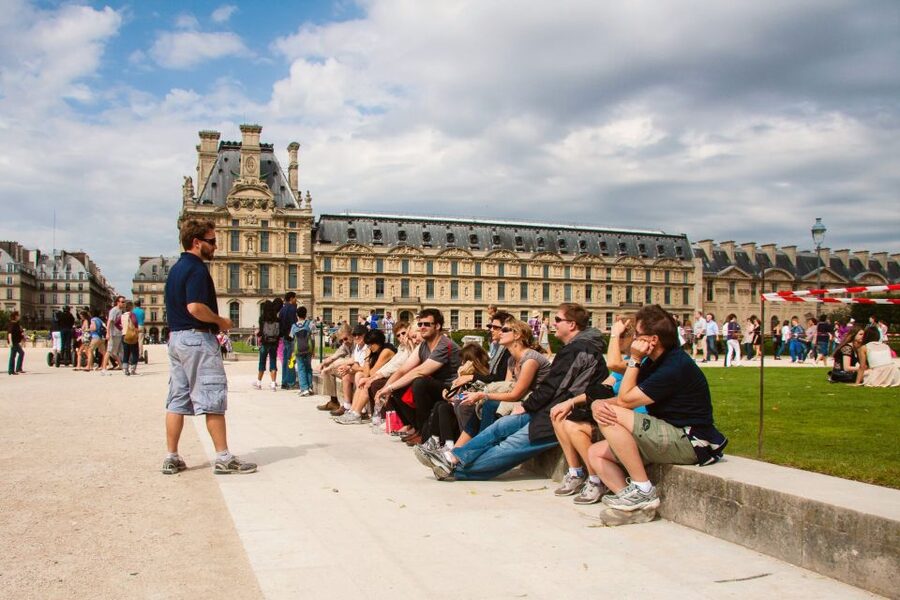
At $294 per person, this is an expensive sightseeing activity. The price makes the most sense for a small private group that values personal attention and wants one guide for the whole ride. If two people book together, the per-person cost buys a very tailored experience, but it will still be a significant part of a Paris budget.
The private format can be good value for families with older children, couples, or friends who want to set the tone themselves. You can ask more questions, avoid waiting for a large group, and tell the guide if you need a short pause. The tour does not recommend children under 12, and the cycling demands make that age guidance worth taking seriously.
For a larger private group, the cost may feel easier to justify because the benefit of a dedicated guide is shared. The key question is not simply how many sights you see. It is whether you want a guide to connect them and reveal details you would likely miss on your own.
The duration needs a little checking. The activity details state three hours, while the route description refers to three and a half hours. That difference can affect your lunch plans, museum reservations, and energy level. Confirm the exact duration when you select a departure time.
You can reserve now and pay later, which helps if your Paris schedule is still moving. Cancellation is free up to 24 hours before departure for a full refund. Those terms reduce the risk, but they do not change the need to check the weather and your own cycling plans.
Who should book this ride?
I would choose this tour if you already know the main Paris sights and want a fresh look at the city. It also suits first-time visitors who prefer to get an overview by bike before returning to selected monuments on foot.
You should be comfortable riding in an urban setting. The route includes traffic, small hills, and 7.5 miles of cycling. Bring weather-appropriate clothing, and remember that the tour operates in rain or shine. A passport or identity card and a credit card are listed among the items to bring.
The tour is a good match for:
- Adults and older children who ride confidently in city traffic
- Couples or families who want a private guide
- History-minded visitors who enjoy small physical clues
- Repeat Paris visitors looking beyond the standard checklist
- People who prefer stories and neighborhood context to long interior visits
I would skip it if you want a slow, flat, traffic-free ride, or if you dislike cycling in uncertain weather. It is also not the best choice for anyone hoping to spend most of the time inside the Pantheon or another monument.
Final verdict: a smart ride for curious cyclists
Book the Private Secrets of Paris Bike Tour if you want to connect the Eiffel Tower area, the Seine, the Latin Quarter, the Roman Arena, the Pantheon, and less obvious city details in one guided outing. The strongest reason to go is the storytelling. The guides associated with the experience have been praised for clear English, warmth, humor, and making history easy to follow.
The $294 price is high, so I would book it for a private group that will ask questions and value a custom conversation. Confirm whether your booking lasts three or three and a half hours, and be honest about your cycling ability. If you can handle city riding and want Paris to feel like a place of surviving clues rather than a parade of famous façades, this is a worthwhile splurge.
FAQ
Where does the Paris bike tour meet?
The meeting point is near the tour office by the Eiffel Tower area. The closest Metro station is Dupleix on line 6.
How long does the tour last?
The activity information states three hours, while the route description refers to three and a half hours. Confirm the exact duration and starting time when booking.
What language is the tour offered in?
The live guided tour is offered in English.
Is this a private tour?
Yes. The booking is for a private group with a private guide.
What sights are included?
The route includes views along the River Seine and major Paris monuments, as well as the Roman Arena, the Latin Quarter, the Pantheon, historic walls, a Salvador Dali sundial, and a cannonball set in a mansion wall.
How far do you ride?
The route covers about 12 kilometers, or 7.5 miles.
Do I need to be an experienced cyclist?
You should be experienced riding in a city. The route sometimes shares the road with cars and includes some small hills.
Are bikes and helmets provided?
Yes. Bike use and a helmet are included.
Are children allowed on the tour?
Children under 12 are not recommended for this tour.
What happens if it rains?
The tour operates rain or shine. Bring clothing suitable for the expected weather.
Can I cancel for a refund?
You can cancel up to 24 hours in advance for a full refund.
Do I need to pay when I book?
You can reserve now and pay later, so no payment is required at the time of booking under that option.
Newest additions around Paris
- Family escape Game with kids and teens on the Île de la Cité★ 4.5 · 11 reviews
- Private Photoshoot with the Iconic Eiffel Tower in Paris★ 5.0 · 11 reviews
- 2-day Private Mont Saint-Michel, 3 Loire Castles, D-Day Express★ 4.5 · 11 reviews
- Paris: Batobus Hop-On Hop-Off Cruise & Landmarks Audio Tour★ 3.0 · 11 reviews
- Paris Revolutionary Walking Tour: Iconic French Sights & Stories★ 5.0 · 11 reviews
- Kids in the Kitchen – CrOisSaNtS★ 4.0 · 11 reviews
- Guided and Private Tour of 3 hours through Paris aboard a Citroën 2cv★ 5.0 · 11 reviews
- Paris: Ghosts and Dark Stories Guided Walking Tour★ 4.1 · 11 reviews
Cycling Tours, compared.
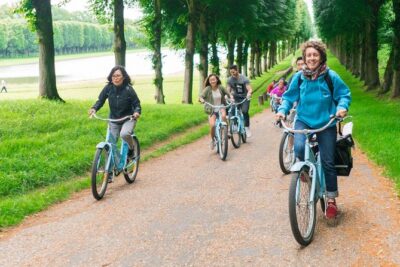
Versailles Palace Bike Tour with Market & Marie-Antoinette hamlet
Read our review →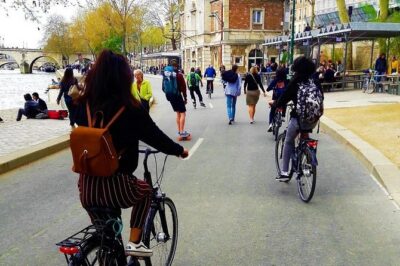
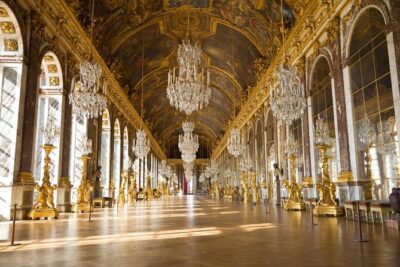
Versailles Bike Tour w/ Palace, Gardens, & Picnic
Read our review →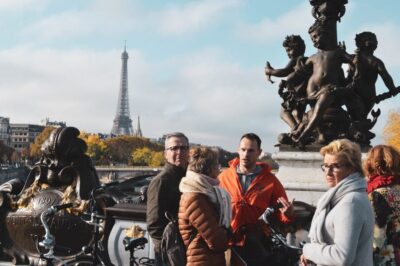
Paris Local Districts and Stories Off the Beaten Track Guided Bike Tour
Read our review →
Highlights of Paris Bike Tour w/ a Local Guide (English or Dutch)
Read our review →Browse the lists this tour appears in