
Reviewed · PARIS
Paris: VR Experience “L’Horizon de Khéops”
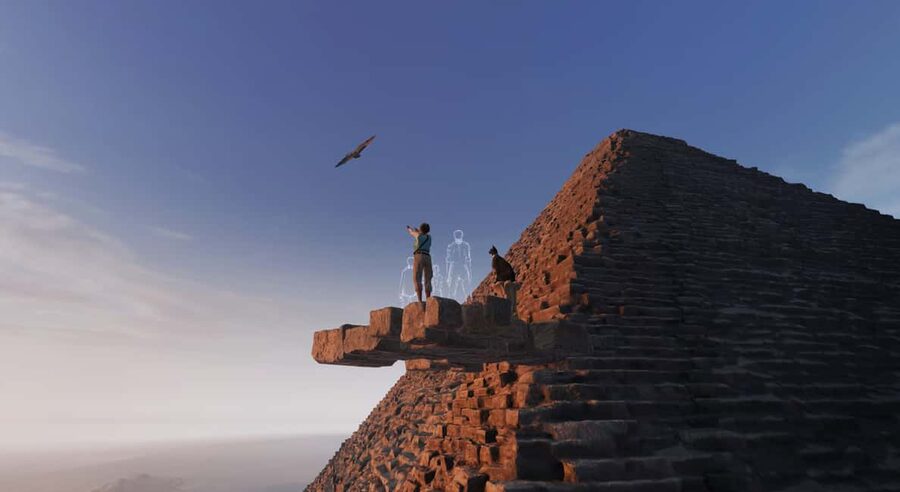
The most striking part of L’Horizon de Khéops is the freedom to walk through ancient Giza instead of simply watching a screen. You begin as a giant avatar on the sands, pass the Sphinx, and finish at the Great Pyramid as night falls. It turns Egypt’s monuments into a shared, moving adventure.
I like the realistic 3D scenes and the way the experience mixes culture with play. I also like the large 1,000-square-meter floor, which gives you room to move rather than keeping you planted in a chair. The main drawback is time: the VR portion lasts 45 minutes, and some scenes may leave you wishing you had longer to look around.
In This Review
- Key points about L’Horizon de Khéops
- Walking into ancient Giza without leaving Paris
- From mastabas to the Sphinx
- The Pyramid of Khéops at night
- How realistic is the technology?
- The one-hour schedule and $37 price
- Who should choose this Paris VR experience?
- French or English guidance
- Booking flexibility and practical planning
- How it compares with other Paris attractions
- Should you book L’Horizon de Khéops?
- FAQ
- Where does L’Horizon de Khéops take place?
- How long does the experience last?
- How much does it cost?
- What does the VR journey include?
- What will I see during the experience?
- Is the experience available in English?
- Is L’Horizon de Khéops wheelchair accessible?
- Are children allowed to participate?
- Can I cancel my booking?
Key points about L’Horizon de Khéops
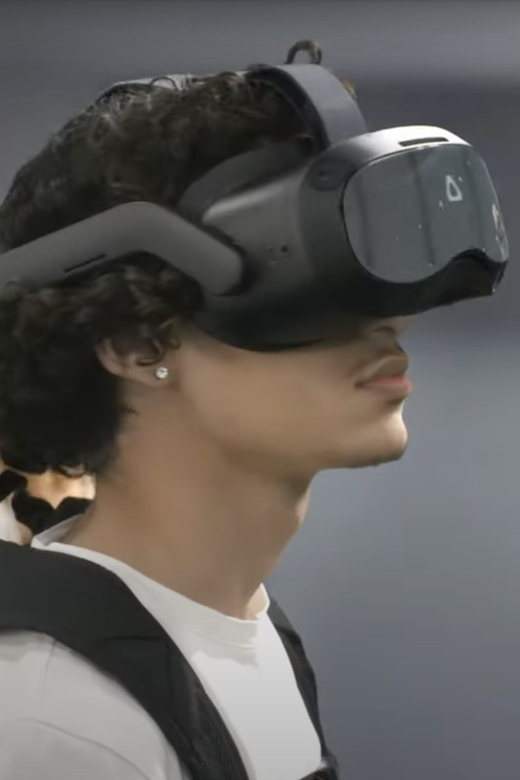
- Walk through Giza as a giant avatar: You move freely across a virtual recreation of the necropolis rather than viewing it from one fixed spot.
- Follow the route from sunrise to nightfall: The story begins at dawn, visits the Sphinx and pyramid area, then ends with a nighttime VIP visit.
- See more than the famous pyramids: Mastabas and other spaces connected with ancient Egyptian burial practices form part of the setting.
- A 1,000-square-meter VR floor: The generous space matters because the activity is built around walking and shared movement.
- French and English support: A host or greeter is available in either language.
- A short, focused cultural outing: The full visit takes about one hour, with 45 minutes using the headset.
Walking into ancient Giza without leaving Paris
L’Horizon de Khéops gives you a quick trip to Egypt without the long flight, heat, crowds, or physical climb associated with a real pyramid visit. It is not a replacement for seeing Giza in person. It is a theatrical, educational way to picture the site and its surrounding monuments.
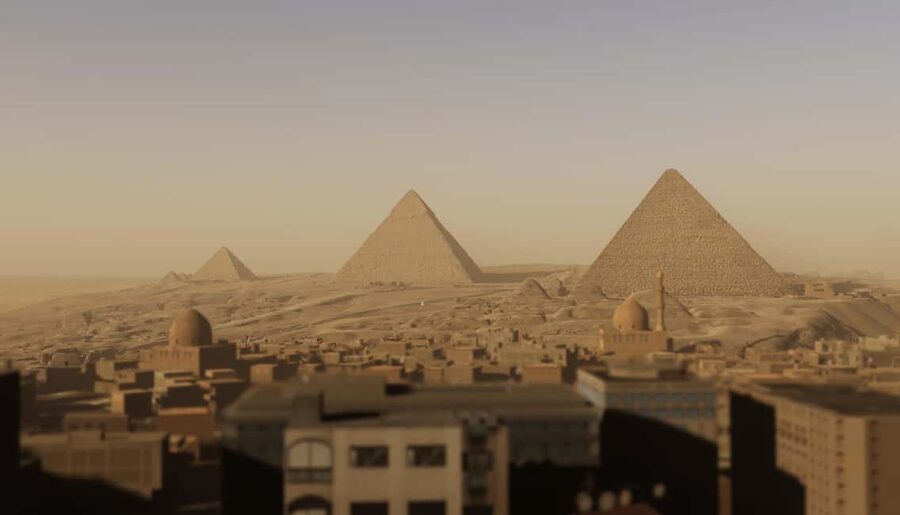
The action begins as the sun rises over the Giza Necropolis. The three Great Pyramids form the main setting, but the experience also places you among mastabas, tombs built for members of royal families and the inner circles of monarchs. That detail helps widen your view beyond the familiar pyramid postcard.
You are not simply watching ancient Egypt unfold. With a headset on, you walk across the virtual sand alongside a guide and other participants. The sense of scale is part of the fun: you start as a giant avatar, which lets you take in the setting in a way a normal museum display cannot match.
I find that idea especially useful for people who have trouble judging the size of ancient monuments from photographs. A pyramid can look flat on a page. In VR, the changing distance between you, the Sphinx, the mastabas, and the pyramid gives the site a clearer sense of proportion.
The technology also creates a shared outing. You are moving through the same virtual space as the rest of your group, not watching a private film with everyone else sitting silently. That makes this a good choice for families with older children, couples, or friends who want an activity they can discuss afterward.
More of the most booked days out in Paris:
- Paris: Louvre Museum Timed-Entrance Ticket
★ 4.6 · 71,977 reviews - Disneyland® Paris 1-Day Ticket
★ 4.6 · 49,412 reviews - Paris: Versailles Palace and Gardens Full Access Ticket
★ 4.6 · 41,579 reviews
From mastabas to the Sphinx
The opening section sets the tone with a broad view of the Giza Plateau. The sunrise is more than a pretty effect. It gives the journey a clear beginning and places the monuments in a setting that feels connected, rather than presenting them as separate digital objects.
The mastabas are an important touch. Many people know the three main pyramids and the Sphinx, but fewer picture the wider cemetery around them. By including tombs associated with royal families and officials, the experience gives you a better sense that Giza was a huge funerary complex, not just three isolated structures.
You then head toward the Sphinx. This is likely to be one of the most memorable moments for first-time visitors, since the statue is familiar but difficult to understand from a single photograph. A virtual walk lets you approach it as an object in space and see it in relation to the surrounding plateau.
The educational side is strongest when the visual effects support the story. The script is described as well made and culturally enriching, so you should expect more than a flashy digital ride. Still, keep your expectations in check. The 3D quality is good, but it is a current VR production rather than a perfect replacement for reality.
That limitation is worth noting because VR can make you forget where you are, but it cannot reproduce every detail of stone, sky, dust, or distance. The payoff comes from the combination of scale, movement, sound, and storytelling. If you approach it as a guided historical simulation, it offers good value. If you expect photographic perfection, the technology may feel less convincing in places.
The Pyramid of Khéops at night
The route eventually brings you to the foot of the Great Pyramid, also known as the Pyramid of Khéops. The change from morning light to nightfall gives the experience a natural arc and makes the final part feel like a special appointment.
The promised VIP visit is a strong story device. Instead of ending with a distant view of the pyramid, the experience presents the monument as the climax of your route. The evening setting also changes the mood from open exploration to something more private and dramatic.
Because the VR session lasts only 45 minutes, the itinerary has to keep moving. That is good for pace, especially if you prefer a clear narrative to an open-ended digital world. It also means you may not have much time to pause and examine every scene.
One useful tip is to treat the first few minutes as orientation. Get comfortable with the headset and pay attention to the guide’s directions before the scenery becomes busy. The large floor gives you room to walk, but you will enjoy the experience more if you keep aware of the people sharing the space.
The route is designed for movement, not strenuous exercise. The supplied information does not describe climbs or physical challenges, so I would think of it as an active standing experience rather than a workout. If you prefer seated museum visits, this format may feel more demanding than a standard exhibition.
How realistic is the technology?
The strongest praise focuses on realism, the script, and the cultural content. The scenes are realistic enough to create a convincing sense of ancient Egypt, and the visual quality supports the story rather than distracting from it.
At the same time, one clear point of feedback is that the 3D image may improve in future years. That is a fair way to view the technology. You are paying for a polished VR experience, not a real-time archaeological reconstruction with unlimited visual detail.
The best moments will probably be the ones where scale and movement matter most. Walking toward the Sphinx, crossing the sand, and approaching the pyramid can make the setting feel much larger than a conventional screen. Small details may not always look as sharp as they would in a film or photograph.
I appreciate that the attraction aims to be educational as well as entertaining. A purely visual VR ride might be fun for a few minutes, but the script gives the visit purpose. You get a guided route through an important ancient site, with enough context to make the monuments easier to understand.
The experience also works for people who already know a little about Egypt. You may not learn every fact connected with Giza, but seeing the site arranged around you can help connect familiar names and images. For a first introduction, it offers a lively starting point. For an Egyptology specialist, it is better treated as a visual supplement than a full lesson.
A different way to spend the day in Paris:
- Paris: Arc de Triomphe Rooftop Tickets
★ 4.6 · 34,264 reviews - Paris: Orsay Museum Entry Ticket
★ 4.7 · 25,647 reviews - Paris: Evening River Cruise with Music
★ 4.4 · 22,721 reviews - Paris: Eiffel Tower Entry Ticket with Optional Summit Access
★ 4.4 · 20,035 reviews
The one-hour schedule and $37 price
The listed price is $37 per person, and the full activity takes about one hour. Of that hour, 45 minutes are spent in the VR experience. That leaves a fairly compact visit, which can be useful during a busy Paris schedule.
I consider the price reasonable if you value the combination of a large walking area, a guided story, and cultural content. You are not paying for a long day out. You are paying for a concentrated attraction that can fit between museums, meals, or other plans.
The value is less clear if you compare it with a traditional museum ticket alone. Museums can give you more time and real objects to examine. L’Horizon de Khéops gives you scale, movement, and a sense of being placed inside the site. The two formats serve different purposes.
A score of 4.9 from 16 ratings suggests a very strong early response, and the most repeated strengths are worth taking seriously: realistic images, a good script, a moving sense of time travel, and a welcoming reception. The small number of ratings means I would not treat the number as a guarantee for every visitor, but the pattern of praise is consistent.
The experience may be especially good value on a rainy day in Paris. It gives you an indoor activity with a clear start and end, and it does not require the patience or energy of a long museum visit. It also offers something different from the city’s usual churches, galleries, and historic streets.
Who should choose this Paris VR experience?
I would recommend L’Horizon de Khéops most strongly to:
- First-time Egypt visitors: You get a visual introduction to Giza before making a future trip, or a taste of the site if Egypt is not on your itinerary.
- Families with children aged eight and older: The giant-avatar format adds a playful element, while the story gives the activity educational value.
- Museum fans who want a change of pace: The visit combines historical content with movement and digital effects.
- Couples and friends: The shared virtual setting gives you something to experience together rather than simply taking turns at an exhibit.
- Visitors with a tight Paris schedule: One hour is easy to fit into a day.
I would be more cautious if you have heart problems or epilepsy, since the activity specifically lists both as unsuitable. Children under eight cannot take part. If you are sensitive to headsets or virtual environments, the attraction’s 45-minute duration may still feel long, even though it is shorter than many standard tours.
The venue is wheelchair accessible, which makes the large open floor more useful for people who need step-free access. The information provided does not describe every movement or operating detail, so it is sensible to confirm any particular access needs before booking.
French or English guidance
A host or greeter is available in French or English. That matters because this is a guided story, not simply a headset with scenery and no explanation. Choose the language in which you can follow historical details most easily.
No individual guide names are provided, so you should not expect to book a named historian or Egypt specialist. The main role is to help you follow the route, understand what you are seeing, and move safely through the shared area.
The language choice also helps families and mixed-language groups plan. If one person is comfortable in French and another in English, check the available session details before booking so everyone can follow the same presentation.
Booking flexibility and practical planning
You can cancel up to 24 hours before the activity for a full refund. You can also reserve now and pay later, which is useful when your Paris plans are still changing.
Starting times vary, so check availability for the day you want. Since the activity lasts one hour, allow enough time to arrive without rushing, especially if you are pairing it with a meal or another timed attraction.
The experience is provided by Eclipso Paris. The supplied details do not include a precise street address or transport directions, so confirm the venue location on your booking before setting out. The broader location is listed as Ile-de-France, France.
Keep the nature of the visit in mind when planning the rest of your day. The virtual route finishes after 45 minutes, but you may want a little breathing room before your next appointment. A VR attraction is easy to schedule, but arriving late can matter more when the experience runs in fixed sessions.
How it compares with other Paris attractions
Paris has plenty of indoor attractions, including museums, illusion spaces, theatrical tours, and interactive exhibitions. L’Horizon de Khéops is the better choice when you want a clear historical story and the feeling of walking through a distant place.
A conventional museum gives you original objects, labels, and freedom to set your own pace. This VR experience gives you a guided sequence, a giant sense of scale, and a stronger sense of motion. I would not choose one as a direct replacement for the other.
It also differs from a walking tour. You will not be exploring the real streets of Paris or learning about local neighborhoods. Instead, you spend your hour in a controlled indoor setting while a virtual Giza surrounds you.
That makes it a useful choice on a wet or cold day, or when your group wants something less familiar than another historic building. The attraction is about Egypt, but it can still fit neatly into a Paris sightseeing plan because it is short and focused.
Should you book L’Horizon de Khéops?
Book it if you want a well-paced VR visit to ancient Egypt with a cultural script, a large walking area, and a memorable route from sunrise to nightfall. The Sphinx, mastabas, and nighttime approach to the Great Pyramid give the hour a stronger shape than a collection of unrelated digital scenes.
At $37, I see the value in the combination of entertainment and historical setting, especially for families and groups who want to do something together. Just remember that the headset experience lasts 45 minutes, the 3D images are good rather than flawless, and some sections may leave you wanting more time.
Skip it if you dislike headsets, need a long and detailed museum visit, or have heart problems or epilepsy. For everyone else, this is a compact Paris activity that offers a fresh way to picture Giza without pretending that a virtual pyramid is the same as the real one.
FAQ
Where does L’Horizon de Khéops take place?
The experience is located in Ile-de-France, France, and is provided by Eclipso Paris. The supplied activity details do not include a specific street address.
How long does the experience last?
The full activity takes about one hour. The virtual reality portion lasts 45 minutes.
How much does it cost?
The listed price is $37 per person.
What does the VR journey include?
You receive a virtual reality headset and walk through a 1,000-square-meter space during the 45-minute experience.
What will I see during the experience?
The route begins at sunrise over the Giza Necropolis, includes the Great Pyramids, mastabas, and the Sphinx, and ends with a VIP visit at the foot of the Pyramid of Khéops at nightfall.
Is the experience available in English?
Yes. A host or greeter is available in French and English.
Is L’Horizon de Khéops wheelchair accessible?
Yes, the activity is listed as wheelchair accessible.
Are children allowed to participate?
Children under eight years old are not permitted to take part.
Can I cancel my booking?
Yes. You can cancel up to 24 hours in advance for a full refund. You can also reserve now and pay later.
Newest additions around Paris
- Family escape Game with kids and teens on the Île de la Cité★ 4.5 · 11 reviews
- Private Photoshoot with the Iconic Eiffel Tower in Paris★ 5.0 · 11 reviews
- 2-day Private Mont Saint-Michel, 3 Loire Castles, D-Day Express★ 4.5 · 11 reviews
- Paris: Batobus Hop-On Hop-Off Cruise & Landmarks Audio Tour★ 3.0 · 11 reviews
- Paris Revolutionary Walking Tour: Iconic French Sights & Stories★ 5.0 · 11 reviews
- Guided and Private Tour of 3 hours through Paris aboard a Citroën 2cv★ 5.0 · 11 reviews
- Kids in the Kitchen – CrOisSaNtS★ 4.0 · 11 reviews
- Paris: Ghosts and Dark Stories Guided Walking Tour★ 4.1 · 11 reviews