
Reviewed · MUSEUMS
Paris: Street Art Open-Air Museum Bike Tour
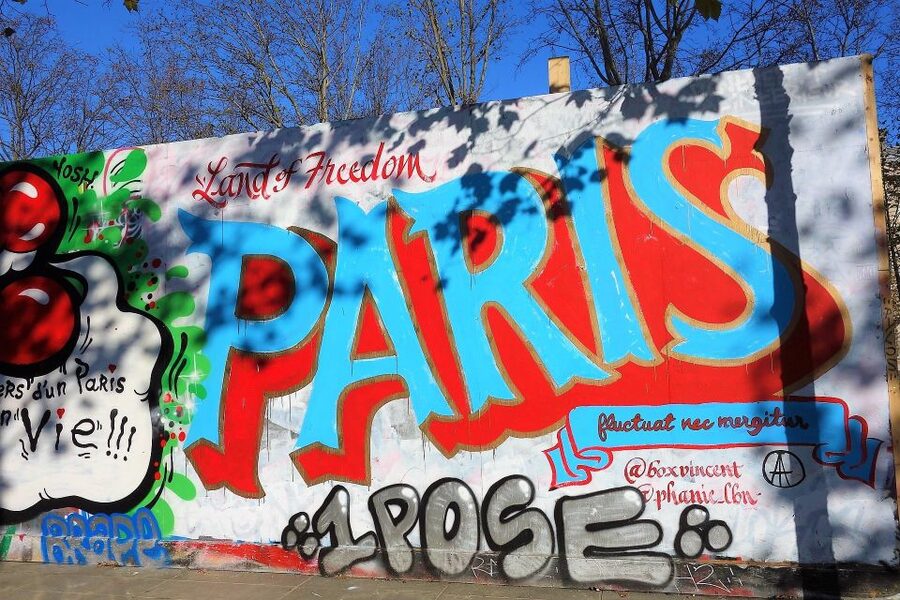
Paris’s ZAC Paris 13 is a sharp break from the usual postcard city. Here, tall apartment blocks become giant canvases, with 40-meter murals by artists such as Tristan Eaton, Invader, Faile, Shepard Fairey, and Conor Harrington. You reach this modern district by bicycle, which makes the trip between artworks part of the fun rather than dead time.
I like the small-group format, since a guide can stop to explain the artists and give you time to take photographs. I also like the coffee stop at Station F, the giant startup incubator, followed by a look at Big Mamma’s collection of themed restaurants. The main caution is simple: Paris weather can turn a pleasant ride into a wet one, and some bicycles may not be in perfect mechanical shape.
In This Review
- Key points to know before you book
- Why ZAC Paris 13 makes a good art stop
- Starting at Hôtel de Ville
- The ride from central Paris to the modern district
- Reading the giant murals
- Station F and the coffee break
- Big Mamma’s 10-restaurant setting
- What the guide adds
- Bicycles, weather, and comfort
- Is $54 a fair price?
- Who should book this ride?
- My booking advice
- FAQ
- Where does the Paris street-art bike tour begin?
- Which Metro station should I use?
- How long does the tour last?
- Is the tour conducted in English?
- Are food and drinks included?
- Do I need to be able to ride a bicycle?
- Is the tour suitable for wheelchair users or people under 140 centimeters?
Key points to know before you book
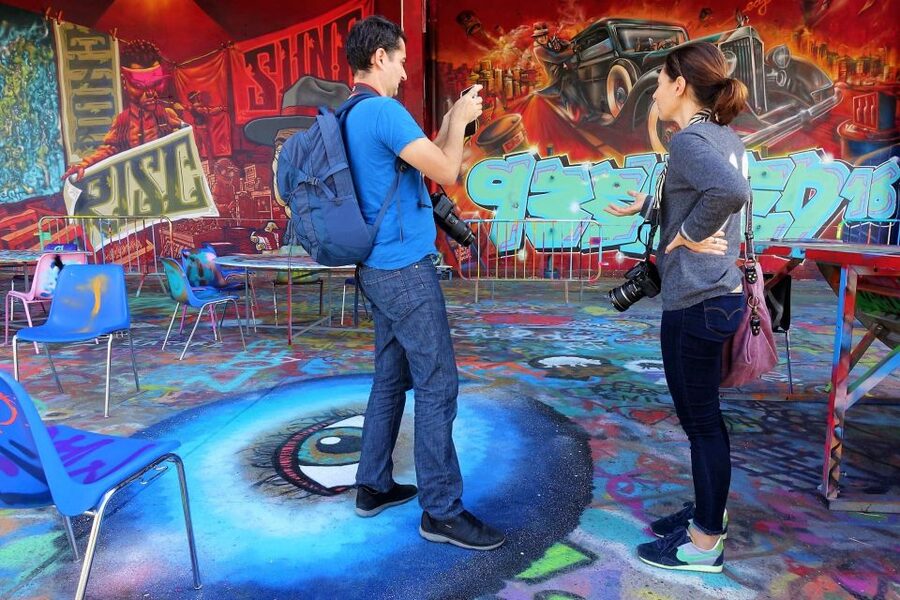
- Forty-meter murals turn ZAC Paris 13 into an outdoor art route rather than a standard gallery visit.
- World-famous artists represented along the way may include Invader, Banksy, Shepard Fairey, Hush, INTI, and DFace.
- Station F coffee stop adds a look at Paris’s modern business and creative scene.
- Three and a half hours on a bicycle gives you a broad view of the district, not just a single mural.
- Hôtel de Ville meeting point is easy to reach by Metro lines 1 and 11, using Avenue Victoria exit 4.
- Basic cycling ability is essential, and the tour is not suitable for wheelchair users, people with mobility impairments, or anyone below 140 centimeters.
Why ZAC Paris 13 makes a good art stop
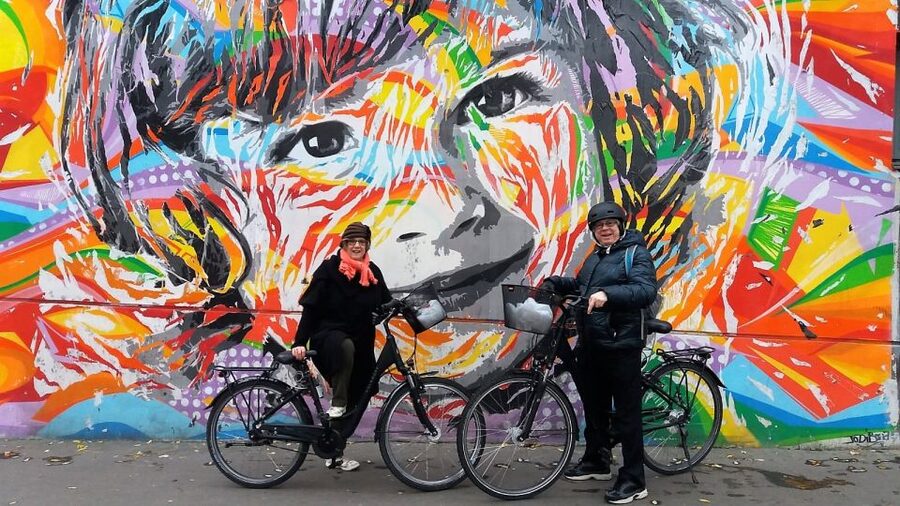
Paris is famous for stone façades, grand boulevards, and centuries-old museums. ZAC Paris 13 offers something else: a planned modern neighborhood where large-scale architecture and street art were designed to share the same space.
The district is known for its tall, unusual buildings. Their blank outer walls give artists room to work at a scale that is hard to find in central Paris. A mural here is not a small piece tucked beside a doorway. It can stretch many stories high and dominate an entire block.
That scale changes how you see the art. From the ground, you look up at figures, faces, animals, and patterns that were made to be read from a distance. Your bicycle lets you move from one wall to the next without spending much of the tour walking between separated sites.
You may photograph work associated with Tristan Eaton, Invader, Faile, Btoy, DFace, Shepard Fairey, Cryptik, Hush, Conor Harrington, and INTI. Banksy may also appear, though that possibility should not be treated as a promise. The exact route and works can change.
A few more Paris ideas to compare
- Versailles Palace Bike Tour with Market & Marie-Antoinette hamlet
★ 5.0 · 2,680 reviews - Paris: Charming Nooks and Crannies Bike Tour
★ 4.8 · 2,585 reviews - From Paris: Versailles Bike Tour w/ Palace, Gardens, & Picnic
★ 5.0 · 2,150 reviews
Starting at Hôtel de Ville
The tour begins in front of Paris City Hall, a large area where it is easy to wait in the wrong place. Follow the instructions carefully. Your guide waits by the elevator leading to the underground parking area where the bikes are stored and carries a red umbrella.
The simplest Metro route is Hôtel de Ville on lines 1 or 11. Use exit 4, marked Avenue Victoria. The parking elevator is about 20 meters from that exit.
Give yourself extra time. Traffic jams can be serious, and the meeting point is not the sort of place where you want to arrive with only two minutes to spare. The Metro is described as the safest and fastest way to reach the start. Citymapper can help estimate your arrival time using different transport options.
Once you meet the guide, you receive a bicycle and, if needed, a poncho. The information does not promise a particular bicycle style or advanced equipment, so dress for an ordinary city ride rather than a sporty cycling event.
The ride from central Paris to the modern district
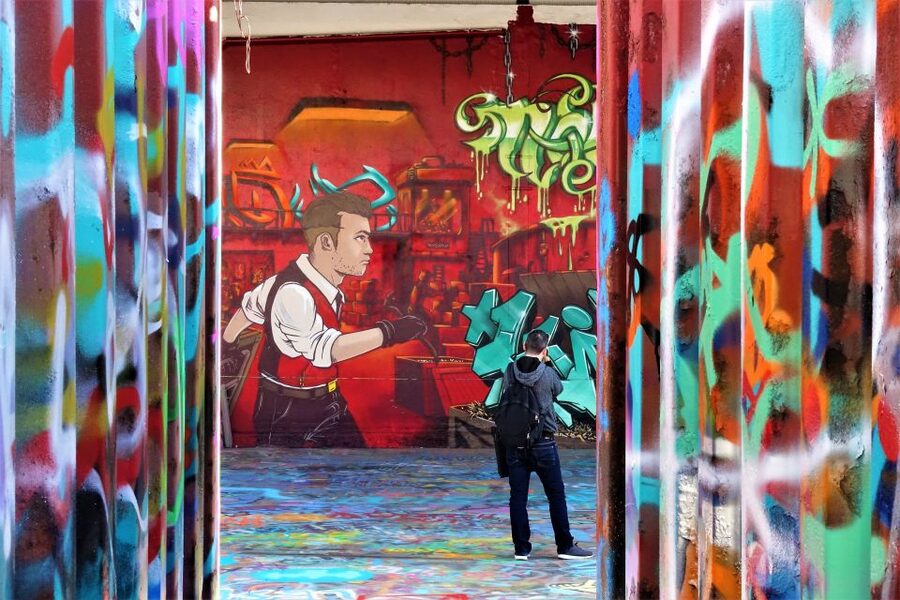
The route connects the traditional center with one of the city’s newer quarters. That transition is part of the appeal. You begin near a major historic landmark, then trade grand civic architecture for newer buildings and large public artworks.
This is not a fast cycling workout. The route is described as manageable for people who ride slowly and at an easy pace. That said, you still need to control a bicycle for several hours. The tour is not suitable if you cannot ride, and it excludes people under 140 centimeters, wheelchair users, and people with mobility impairments.
A small group makes a difference on city streets. You can stay closer to the guide, hear explanations more clearly, and stop without the delays of a large crowd. The exact group size is not stated, so do not book expecting a private tour. Small-group conditions are advertised, but the number of participants may vary.
The bicycle also gives you a practical advantage. Walking from one end of the district to another could make the art feel scattered. On two wheels, the route has a natural rhythm: ride, stop, look up, take photographs, and move on.
Reading the giant murals
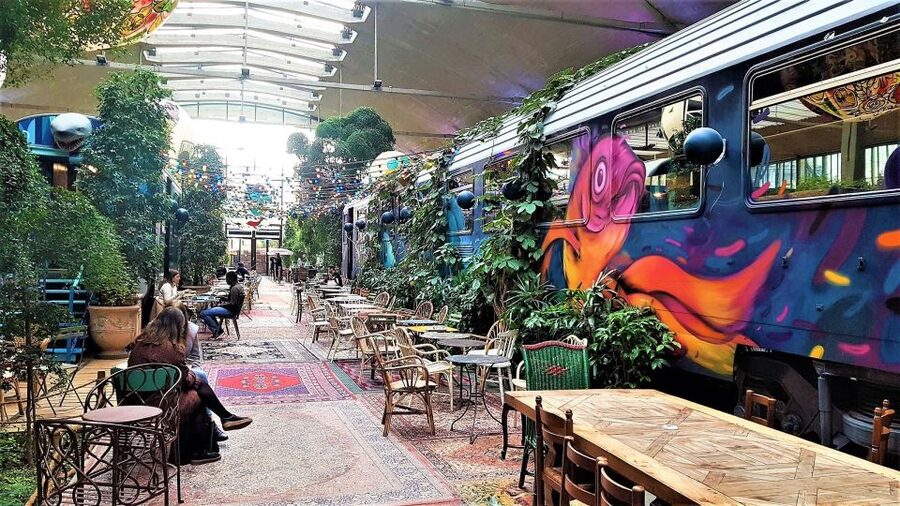
The best part of the tour is not simply collecting photographs. It is learning how the works relate to the buildings around them.
A 40-meter fresco can look abstract from street level. Your guide can help you notice the artist’s use of color, the scale of the figures, and the way a mural responds to the building’s shape. Some works may feel playful, others political or dreamlike. The list of artists points to a broad mix of styles rather than one uniform Parisian look.
Invader’s work is usually associated with small mosaic figures placed around cities, so the contrast between that kind of compact piece and a huge façade is interesting. Shepard Fairey is known for bold graphic imagery, while artists such as INTI and Conor Harrington bring very different visual moods. You do not need to know the artists in advance. The guide’s explanations are there to give the walls some context.
The district’s street art is largely approved and planned. That can be a plus if you want large pieces that are easy to find and photograph. It can also be a drawback if you are looking for the rougher, illegal side of graffiti, with layers of tags, political messages, and a stronger sense of urban history.
One person who enjoyed the tour still found Paris’s approved street art less compelling than Berlin’s more illicit work. That is a fair distinction. This experience is best understood as a public art and architecture tour with street-art roots, not as a search for hidden tags in neglected alleys.
A different way to spend the day in Paris:
- Paris: Louvre Museum Timed-Entrance Ticket
★ 4.6 · 71,977 reviews - Disneyland® Paris 1-Day Ticket
★ 4.6 · 49,412 reviews - Paris: Versailles Palace and Gardens Full Access Ticket
★ 4.6 · 41,579 reviews - Paris: Arc de Triomphe Rooftop Tickets
★ 4.6 · 34,264 reviews
Station F and the coffee break
After the mural route, you stop for coffee inside Station F, described as the world’s largest startup incubator. This changes the tone of the outing. Instead of looking only at paintings, you get a glimpse of the place where new companies, designers, and technology workers gather.
Food and drinks are not included, so budget separately for the coffee. The stop is valuable because it offers a place to pause after cycling and gives the tour a wider theme: modern Paris as a center for art, architecture, business, and creative work.
Do not expect a historic café with old mirrors and marble-topped tables. Station F is a contemporary working environment. If your idea of Paris is all cafés, churches, and 19th-century streets, this stop adds useful contrast.
The coffee break also gives you a chance to ask the guide about the murals you have seen. That informal pause may be especially useful if you want to remember artist names or choose your favorite pieces for photographs.
Big Mamma’s 10-restaurant setting
The tour also takes in Big Mamma’s flagship complex, described as a vessel containing 10 themed restaurants. This is another modern addition to the route, and it fits the neighborhood’s creative, large-scale character.
The stop is mainly about seeing the setting rather than receiving a meal. Food and drinks are excluded, and the tour does not promise a dining reservation or a full restaurant visit. If you want to eat there, treat it as a separate plan and allow enough time after the cycling tour.
For some people, this will be a fun final flourish. For others, it may feel less connected to street art than the mural stops. I would see it as part of the area’s design culture and social energy, not as a major attraction on the same level as the giant frescoes.
What the guide adds
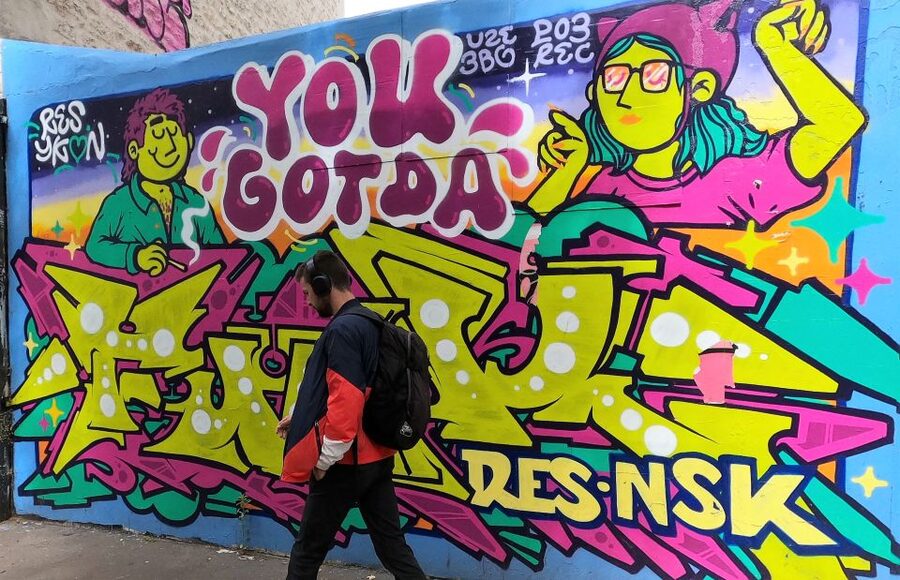
The guide is important here. Without context, the tour could become a sequence of impressive walls and quick photographs. With a good explanation, you get a sense of who made each work, what makes the style different, and why the district became a major outdoor art site.
The strongest feedback about the guiding emphasizes clear explanations, a professional manner, and a friendly approach. One person who rode slowly found the route comfortable and said the guide explained many details. That is encouraging if you prefer a relaxed pace rather than a demanding ride.
The tour language is English. The published information does not list French, German, Dutch, or other language options. If you need another language, confirm before booking.
Guiding quality can always vary by departure. Still, this is the sort of experience where the guide’s enthusiasm matters more than fancy equipment. The murals are large and easy to see. The added value comes from knowing what you are looking at.
Bicycles, weather, and comfort

The tour provides a bicycle, guide, and ponchos. You do not need to arrange your own rental, which keeps the morning or afternoon simple.
The bicycles have not always been perfect. A mechanical issue was reported with a chain slipping in second gear. That does not mean every bicycle has a problem, but it is sensible to test the gears and brakes before leaving the meeting point. Tell the guide at once if anything feels wrong. A small adjustment at the start is better than an irritating ride later.
Rain is another real consideration. The ponchos help, but they do not turn a wet bicycle ride into a dry one. Bad weather can affect how long you want to stop outside, how easy it is to photograph murals, and how much you enjoy the ride.
Check the forecast and wear practical clothing. You are not given a promise of indoor alternatives if conditions worsen. In fair weather, the route should be far more pleasant, especially when you can stop beneath the murals and take your time.
Is $54 a fair price?
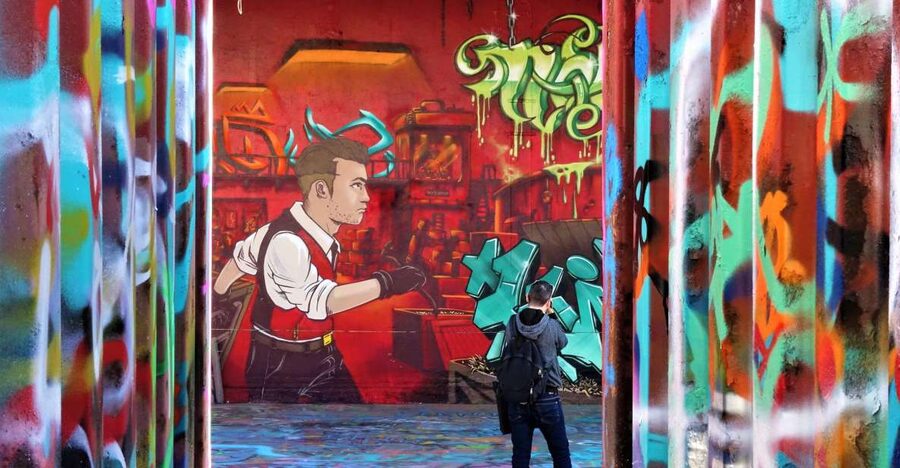
At $54 per person, this is not the cheapest way to see public art in Paris. You could explore parts of the city on foot for free, and Station F or Big Mamma can be visited independently.
The price makes more sense if you value the bicycle, the route planning, and the guide’s explanations. You are paying to connect a spread-out set of murals without figuring out the route yourself. The bicycle also lets you cover more ground in 210 minutes than you could comfortably walk.
The included coffee stop is not a free drink, since food and beverages are excluded. Think of it as a scheduled pause in an interesting setting, not part of the meal cost.
For a first visit to Paris, the tour is best as a supplement to the classic sights. It will not replace the Louvre, the Eiffel Tower, or a walk along the Seine. For a repeat visit, or for anyone who has already seen the main monuments, it offers a different side of the city at a reasonable half-day price.
Who should book this ride?
I would recommend it to you if you enjoy contemporary art, photography, modern architecture, and easy city cycling. It suits curious visitors who want a guided route and are happy to spend several hours outdoors.
It is also a good pick for anyone who likes seeing how a city is changing. ZAC Paris 13 does not present old Paris. It shows a newer, more experimental side, where architects and artists are given room to work at a very large scale.
I would hesitate if your main goal is gritty underground graffiti. The art here is often sanctioned and commissioned, so it may feel polished compared with Berlin or other cities known for illegal street art.
You should also skip it if you cannot ride a bicycle confidently, dislike changing weather, or have mobility needs that make ordinary cycling unsuitable. The route may be relaxed, but it is still a bicycle tour, not a sightseeing vehicle.
My booking advice
Book this tour if you want a guided introduction to Paris’s large-scale street art and like the idea of reaching the murals by bicycle. The combination of ZAC Paris 13, Station F, and Big Mamma gives you more than a gallery visit, and the 3.5-hour length provides enough time to see a substantial part of the district.
Skip it if you want historic Paris, independent graffiti hunting, or a fully indoor activity. Before paying, check the forecast, allow extra time for the Hôtel de Ville meeting point, and inspect the bicycle before setting off. Free cancellation up to 24 hours before departure and the reserve-now, pay-later option make the booking less risky if your schedule is still shifting.
FAQ
Where does the Paris street-art bike tour begin?
It begins in front of Paris City Hall at Hôtel de Ville. Meet the guide by the elevator leading to the underground parking area where the bikes are stored. The guide carries a red umbrella.
Which Metro station should I use?
Use Hôtel de Ville station on Metro lines 1 and 11. Take exit 4, called Avenue Victoria. The parking elevator is about 20 meters from the exit.
How long does the tour last?
The tour lasts 210 minutes, or about three and a half hours.
Is the tour conducted in English?
Yes. The listed live-guide language is English.
Are food and drinks included?
No. The bicycle, guide, and ponchos are included, but food and drinks are not. You stop for coffee at Station F, so plan to pay separately.
Do I need to be able to ride a bicycle?
Yes. You must be able to cycle to participate. The tour is not suitable for people who cannot ride a bike.
Is the tour suitable for wheelchair users or people under 140 centimeters?
No. It is not suitable for wheelchair users, people with mobility impairments, or people under 140 centimeters tall.
More Paris museums to visit
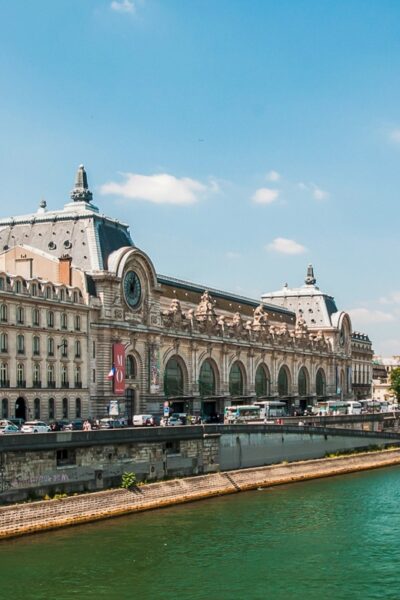
- Paris: Orsay Museum Entry Ticket
★ 4.7 · 25,647 reviews - Louvre Museum Masterpieces Guided Tour with Access
★ 4.5 · 12,023 reviews - Paris: Louvre Museum Entry Ticket With Host and River Cruise
★ 4.6 · 9,926 reviews - Les Invalides: Napoleon’s Tomb & Army Museum Entry
★ 4.6 · 9,185 reviews
Newest additions around Paris
- Family escape Game with kids and teens on the Île de la Cité★ 4.5 · 11 reviews
- Private Photoshoot with the Iconic Eiffel Tower in Paris★ 5.0 · 11 reviews
- 2-day Private Mont Saint-Michel, 3 Loire Castles, D-Day Express★ 4.5 · 11 reviews
- Paris: Batobus Hop-On Hop-Off Cruise & Landmarks Audio Tour★ 3.0 · 11 reviews
- Paris Revolutionary Walking Tour: Iconic French Sights & Stories★ 5.0 · 11 reviews
- Guided and Private Tour of 3 hours through Paris aboard a Citroën 2cv★ 5.0 · 11 reviews
- Kids in the Kitchen – CrOisSaNtS★ 4.0 · 11 reviews
- Paris: Ghosts and Dark Stories Guided Walking Tour★ 4.1 · 11 reviews
Museums, compared.
Louvre Museum Masterpieces Guided Tour with Access
Read our review →
Louvre Museum Entry Ticket With Host and River Cruise
Read our review →
Les Invalides: Napoleon’s Tomb & Army Museum Entry
Read our review →
Louvre Museum – Exclusive Guided Tour (Entry Included)
Read our review →
Louvre Museum Hosted Entry and Mona Lisa Audioguide
Read our review →
Louvre Museum Tour Mona Lisa & Iconic Masterpieces
Read our review →Browse the lists this tour appears in