
Reviewed · CYCLING TOURS
Paris: Small Group Highlights E-Bike Guided Tour
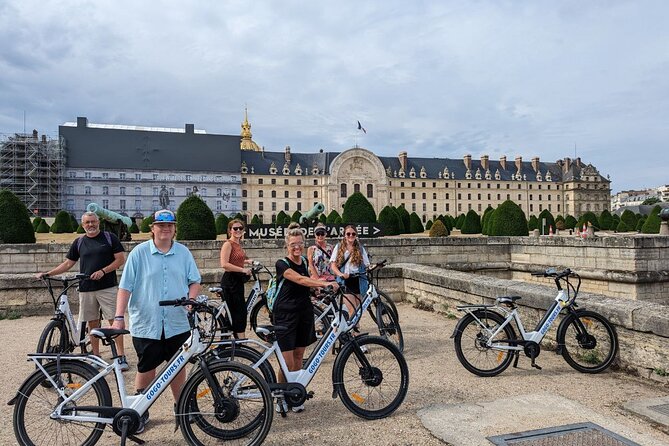
Paris reveals itself quickly from an e-bike. In about two and a half hours, you can move from Napoleon’s tomb at Invalides to the Eiffel Tower, with grand bridges, palaces, broad avenues, and famous squares between them. It is a smart way to get your bearings fast, especially on a first afternoon in the city.
I like the efficient route and the human touch. You get an e-bike and helmet, while guides such as George, Jack, Fadwa, Kenza, and Arthur have been praised for clear stories, good pacing, and patience with nervous riders. I also like the flexibility: some guides adjust the route or shorten the ride when weather or road closures get in the way.
The main consideration is traffic. You ride on city streets, not in a sealed-off park, and one rider noted that traffic-light habits did not always feel strict. The group can reach 25 people, so the experience may feel less personal at full size unless you choose the private upgrade.
In This Review
- Key points to know before booking
- Why an e-bike works so well for Paris highlights
- Starting at Invalides and the military heart of Paris
- Pont Alexandre III, Petit Palais, and Grand Palais
- Place de la Concorde and the Champs-Elysées
- Meeting the Arc de Triomphe at street level
- The Eiffel Tower as the grand finish
- What the guides add to the experience
- Group size, private upgrades, and riding comfort
- Who should book this Paris e-bike tour?
- Timing, weather, and practical value
- Should you book it?
- FAQ
- How long does the Paris e-bike tour last?
- Where does the tour start and finish?
- What is included in the tour price?
- Is the tour offered in English?
- How many people can join the group?
- What happens if the weather is poor?
Key points to know before booking
- A fast central Paris route: Cover Invalides, Pont Alexandre III, the Grand and Petit Palais, Place de la Concorde, the Champs-Elysées, the Arc de Triomphe, and the Eiffel Tower.
- Electric assistance matters: The e-bikes make a long sightseeing route easier, especially when you want to save your legs for museums and evening walks.
- Guide quality shapes the ride: George, Jack, Fadwa, Kenza, Arthur, Hugo, and others have been praised for history, humor, safety, and flexibility.
- You ride with traffic: The guides help manage the route, but you still need to feel comfortable cycling on Paris streets.
- Good for families and teenagers: A 13-year-old and 16-year-old reportedly enjoyed the ride, and several families found it an easy way to see the main sights.
- Weather can change the plan: The experience requires good weather, and poor conditions can lead to a new date or a full refund.
Why an e-bike works so well for Paris highlights
Paris is walkable, but the major sights spread farther apart than a map suggests. Invalides, the Champs-Elysées, the Arc de Triomphe, and the Eiffel Tower form a long route on foot. By bicycle, you spend less time crossing ordinary blocks and more time near the places you came to see.
The electric motor is the useful part, not a gimmick. You still pedal, but the bike helps keep the pace steady. That makes the ride approachable for people who do not want a hard workout. One guide reportedly slowed the group for anxious riders, while another gave up a working bike when a child’s bike kept switching off. Those details matter more than speed.
The tour is also a good orientation tool. You see how the Seine, major avenues, military monuments, exhibition halls, and royal spaces fit together. Afterward, you can decide which places deserve a longer visit on foot or inside a museum.
The tradeoff is depth. Five-minute stops are enough for a story, photographs, and a look around, but not a full visit. You will not explore the Military Museum, climb the Arc de Triomphe, or enter the Eiffel Tower during this ride.
A few more Paris ideas to compare
- Versailles Palace Bike Tour with Market & Marie-Antoinette hamlet
★ 5.0 · 2,680 reviews - Paris: Charming Nooks and Crannies Bike Tour
★ 4.8 · 2,585 reviews - From Paris: Versailles Bike Tour w/ Palace, Gardens, & Picnic
★ 5.0 · 2,150 reviews
Starting at Invalides and the military heart of Paris
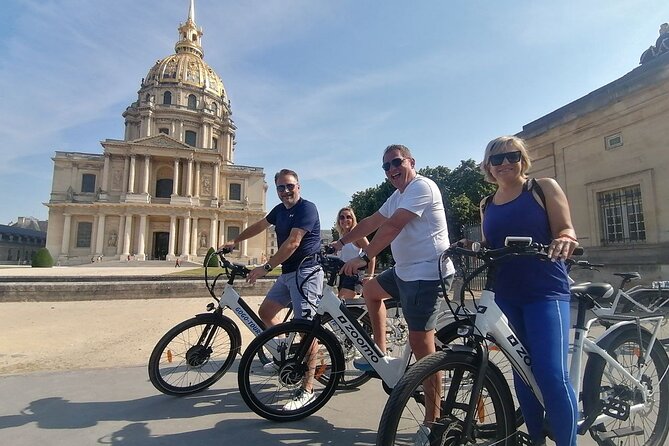
The meeting point is 101 Avenue de la Bourdonnais, in the 7th arrondissement. The ride begins near one of Paris’s most imposing complexes, Les Invalides, commissioned by Louis XIV in 1670 to house and care for wounded soldiers.
Your stop here lasts about five minutes. That is enough to frame the golden dome in a photograph and hear why the building was created. The site also contains the Military Museum and Napoleon’s tomb, but admission is not included, so this tour gives you an outside introduction rather than an indoor visit.
I like beginning here because it gives the ride a clear historical anchor. Les Invalides is not just a pretty facade. It connects the city to France’s military past and to Napoleon, whose influence appears again later at the Arc de Triomphe.
If you want to visit the museum or tomb, plan separate time. Do not expect to fit that visit into the two-and-a-half-hour ride.
Pont Alexandre III, Petit Palais, and Grand Palais
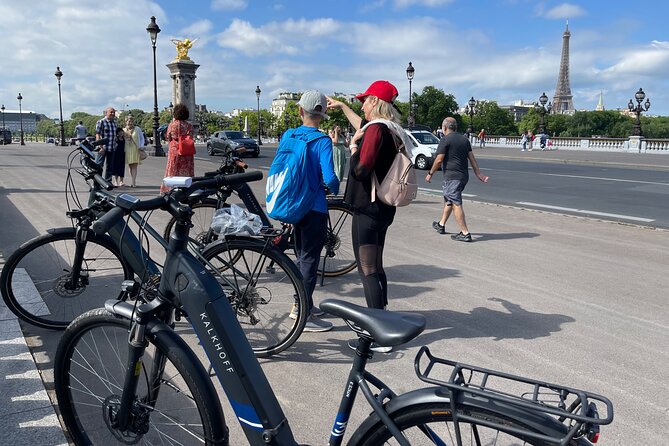
The route continues toward the Seine and the ornate Pont Alexandre III. Built for the World Fair held in Paris, this bridge is one of the city’s most decorated crossings. Its sculptural details and wide views make it a natural photo stop.
The bridge stop is listed at about five minutes, so pay attention when the guide gathers the group. You will get a short explanation and time for pictures, but not a leisurely stroll across every section.
Next come the Petit Palais and Grand Palais, both linked to the 1900 Universal Exhibition. The Petit Palais became a museum in 1902, while the Grand Palais was built as a showcase for French art and remains one of the city’s grand exhibition buildings.
This part of the route shows Paris at its most ceremonial. Wide avenues, formal architecture, and exhibition halls create a very different feeling from the tight streets around neighborhood cafes. I find this especially useful for first-time visitors because you see several major monuments without stopping for long stretches.
The drawback is that these buildings are easy to admire only from outside. If art is a main reason for your visit, save time for a separate museum outing.
Place de la Concorde and the Champs-Elysées
Place de la Concorde is one of Paris’s largest public squares, set between the Champs-Elysées and the Tuileries Gardens. Its scale is impressive from a bicycle. The square also carries a difficult political past, making it one of the city’s most evocative spaces.
The guide’s short talk helps turn an open traffic-heavy area into a place with meaning. You may find the stop less relaxed than a quiet garden visit, since this is a major part of the city’s road network.
From there, the ride passes along the Champs-Elysées. Louis XIV commissioned the avenue, and Napoleon later ordered the Arc de Triomphe after French military victories. The boulevard is famous, but it is also busy and commercial, so seeing it by bike gives you a useful sense of its size without asking you to walk its full length.
You pass through rather than treat the avenue as a destination. That is the right approach here. The value is in understanding the grand axis that links the square, the gardens, and the Arc.
A different way to spend the day in Paris:
- Paris: Louvre Museum Timed-Entrance Ticket
★ 4.6 · 71,977 reviews - Disneyland® Paris 1-Day Ticket
★ 4.6 · 49,412 reviews - Paris: Versailles Palace and Gardens Full Access Ticket
★ 4.6 · 41,579 reviews - Paris: Arc de Triomphe Rooftop Tickets
★ 4.6 · 34,264 reviews
Meeting the Arc de Triomphe at street level
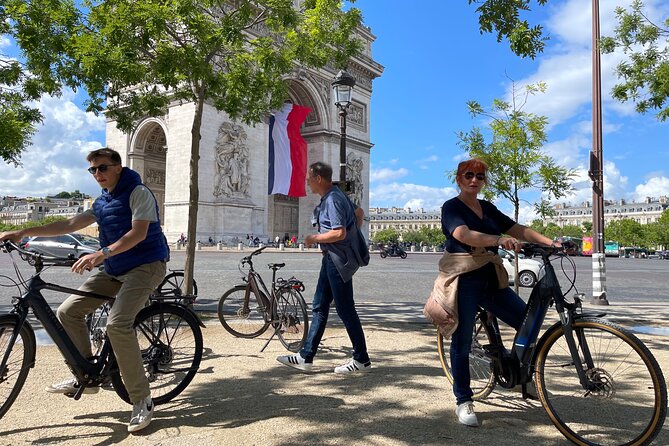
The Arc de Triomphe was built to preserve the memory of the victories of the French army. Its first stone was laid in 1806, and construction took 30 years.
The stop offers time for photographs and a short explanation. Since entrance is not included, you will not climb to the viewing platform or inspect the carved details at close range. Still, seeing the monument from the avenue gives you a strong sense of its scale.
Cycling here requires attention. The Arc is surrounded by a large traffic circle, and the tour’s route will not turn you into a fearless Paris cyclist in one afternoon. You should listen closely to the guide and keep your movements predictable.
This is one reason guide quality matters so much. Jack has been praised for handling crowded streets with humor, while George has been singled out for safe riding and route choices. The ride is not risk-free, but a calm guide can make a big difference.
The Eiffel Tower as the grand finish
The Eiffel Tower is the final major stop on the advertised route. Built for the 1889 World’s Fair, it was intended to be temporary and was not immediately loved by Parisians. It later became the symbol most closely linked with Paris and France.
The five-minute stop is designed for photos and a concise history lesson. Admission is not included, so this is not a tower visit. If you want to go up, buy that experience separately and allow substantial extra time.
The Eiffel Tower works well as the finish because it gives the ride a memorable visual payoff. After several monuments and formal avenues, the open view of the tower helps tie the route together. Guides such as Daniel and Fadwa have been praised for explaining the tower clearly and answering questions.
The activity ends back at the meeting point. That return is practical, though it means the tour does not function as transportation to your next attraction.
What the guides add to the experience
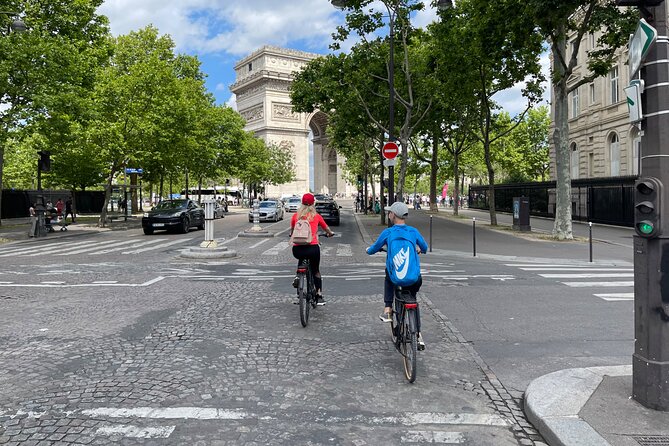
The best part of this tour is not simply the bicycle. It is the guide’s ability to turn a rapid ride into a readable story about Paris.
Kenza has been praised for detailed explanations and a pace that worked for mixed riding abilities. Fadwa has been described as friendly, attentive, and willing to adjust when a bike problem appeared. George has received repeated praise for his history, humor, photography, safety, and flexibility.
Jack has also been singled out for handling road closures and bike problems with patience. Arthur and Hugo have been noted for shaping private rides around the group’s interests. These examples suggest a useful pattern: the guide is expected to manage both the history and the practical side of the outing.
That said, guide assignments can change. You should book this for the structure of the experience, not for a promise that one named guide will lead your departure.
Group size, private upgrades, and riding comfort
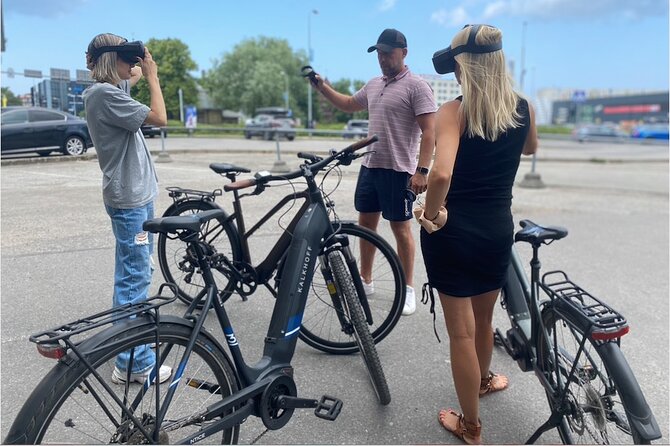
The maximum group size is 25 people. That is still workable for a guide-led city ride, but it is not the same as a small family outing. At full capacity, you may wait longer for everyone to regroup and have less chance to ask extended questions.
The private upgrade is worth considering for couples, families, or groups with a clear wish list. A private guide can focus more closely on your pace and interests, and the route may be easier to adjust. Several private outings were praised for accommodating personal preferences.
The standard option makes more financial sense if you mainly want an overview. At $78.61 per person, the price includes the e-bike, helmet, professional guide, and the sightseeing route. You are paying for transport between major sights, live interpretation, equipment, and the convenience of not planning the route yourself.
I see good value here for a first visit or a short stay. It is less valuable if you already know central Paris well or want long visits inside monuments. Think of it as a moving introduction, not a substitute for museum admission.
Who should book this Paris e-bike tour?
I would recommend it to first-time visitors who want to understand the city’s layout quickly. It also suits families with older children and teenagers, especially those who would rather pedal than spend a half-day walking from one monument to the next.
It works well during the first afternoon of a Paris stay. Several riders found that the route helped them choose what to return to later. You finish with a mental map, a set of photographs, and a better feel for the distances between the famous sights.
The ride is less suitable if you dislike city traffic, have little cycling confidence, or want a slow, intimate look at each monument. One rider felt safe despite imperfect traffic-light habits, but that does not remove the need for alertness.
Most people can participate, and the experience is near public transportation. Still, you should be honest about your comfort on a bicycle before booking. The electric assistance reduces effort, not the need to steer, brake, and watch the road.
Timing, weather, and practical value
The tour lasts about two hours and 30 minutes, though road closures, bike issues, and weather can affect the exact flow. The guide may adjust the route or shorten the outing in poor conditions.
This is an outdoor activity, so weather matters more than it does on a museum visit. If poor weather cancels the experience, you can choose another date or receive a full refund. Normal cancellation allows a full refund when you cancel at least 24 hours before the start time. Within 24 hours, no refund is provided.
The activity is offered in English. Confirmation arrives at booking, and the tour has a maximum of 25 participants. Those details make it easy to fit into a Paris schedule, but leave some breathing room if you have a timed museum entry afterward.
Should you book it?
Book this tour if you want maximum sightseeing in limited time, enjoy an active outing, and can handle normal city cycling. The combination of e-bike assistance, a strong central route, and guides who are often flexible makes it a practical first look at Paris.
Choose the private option if personal pacing matters, or if your group has specific interests. Skip it if you want deep visits inside the Invalides, Arc de Triomphe, or Eiffel Tower, since the stops are brief and admission is not included.
For most first-time visitors, I would schedule it early in the stay, preferably in decent weather. You will see the monuments, learn the basic story behind them, and know exactly where to spend more time afterward.
FAQ
How long does the Paris e-bike tour last?
The tour lasts approximately two hours and 30 minutes.
Where does the tour start and finish?
It starts at 101 Avenue de la Bourdonnais, 75007 Paris, France, and ends back at the same meeting point.
What is included in the tour price?
The price includes use of an e-bike, a helmet, a professional guide, and the guided experience. Admission to the Eiffel Tower and other monuments is not included.
Is the tour offered in English?
Yes. The experience is offered in English.
How many people can join the group?
The tour has a maximum of 25 participants. A private-tour upgrade is available for a more personalized outing.
What happens if the weather is poor?
The experience requires good weather. If the operator cancels because of poor conditions, you can choose another date or receive a full refund.
Newest additions around Paris
- Family escape Game with kids and teens on the Île de la Cité★ 4.5 · 11 reviews
- Private Photoshoot with the Iconic Eiffel Tower in Paris★ 5.0 · 11 reviews
- 2-day Private Mont Saint-Michel, 3 Loire Castles, D-Day Express★ 4.5 · 11 reviews
- Paris: Batobus Hop-On Hop-Off Cruise & Landmarks Audio Tour★ 3.0 · 11 reviews
- Paris Revolutionary Walking Tour: Iconic French Sights & Stories★ 5.0 · 11 reviews
- Guided and Private Tour of 3 hours through Paris aboard a Citroën 2cv★ 5.0 · 11 reviews
- Kids in the Kitchen – CrOisSaNtS★ 4.0 · 11 reviews
- Paris: Ghosts and Dark Stories Guided Walking Tour★ 4.1 · 11 reviews
Cycling Tours, compared.
Versailles Palace Bike Tour with Market & Marie-Antoinette hamlet
Read our review →
Versailles Bike Tour w/ Palace, Gardens, & Picnic
Read our review →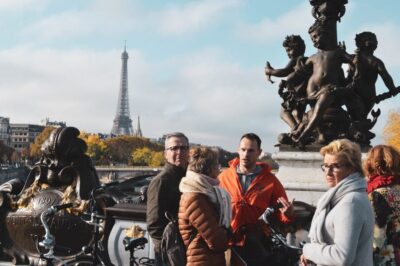
Paris Local Districts and Stories Off the Beaten Track Guided Bike Tour
Read our review →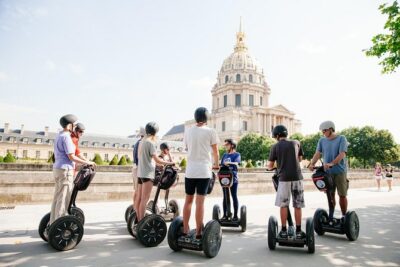
Highlights of Paris Bike Tour w/ a Local Guide (English or Dutch)
Read our review →Browse the lists this tour appears in