
Reviewed · PHOTOGRAPHY SESSIONS
Paris Photography Masterclass – Private Photography Lesson
The best part of this Paris photography lesson is that you do not simply point your camera at famous monuments and move on. Your guide helps you think about composition, light, and exposure while walking from Notre Dame to the Louvre, the Eiffel Tower, and Place de la Concorde. I like the private format and the chance to shape the lesson around your skill level. The main catch is that you must bring your own camera, and transportation, food, and drinks are not included.
I also like that the tour can become a night photography class when you choose a suitable departure time. Guides such as Clara, Michiru, Federica, William, and Alexander have helped participants move from automatic settings toward manual or aperture-priority shooting, work with long exposure, and find better angles. The route covers a lot of ground, so comfortable shoes and realistic expectations matter.
In This Review
- Key points to know before booking
- What this Paris photography lesson really offers
- Starting beside the Seine at Pont Marie
- Notre Dame: building a frame, not just a postcard
- The Louvre courtyard and pyramid
- The Eiffel Tower over the Seine
- Place de la Concorde and the end near the Tuileries
- The night photography option
- How personalized is the teaching?
- Who will get the most from it?
- Walking, transport, and practical limits
- Is $205.59 per person a fair price?
- Should you book the Paris Photography Masterclass?
- FAQ
- How long does the Paris Photography Masterclass last?
- Where does the tour start?
- Where does the tour end?
- Which sights are included?
- Is this a private tour?
- Do I need to bring a camera?
- Is the tour offered in English?
- Can I cancel for a full refund?
Key points to know before booking
- Private instruction for up to four people: You get direct feedback rather than a standard group lecture.
- A lesson built around real Paris scenes: Practice at Notre Dame, the Louvre, the Eiffel Tower, and Place de la Concorde.
- Useful for every skill level: Beginners can learn settings, while experienced photographers can focus on composition and low-light work.
- Night photography can be a highlight: Evening sessions may include tripods, long exposures, sunset light, and city scenes after dark.
- Bring your own camera: A DSLR is requested, though one participant successfully used an iPhone 15 Pro Max.
- Three hours on foot: The start is at Pont Marie, and the walk usually finishes near Place de la Concorde.
What this Paris photography lesson really offers
A standard sightseeing walk tells you what you are looking at. This experience asks you to decide how you want to photograph it. That difference is important. You spend about three hours moving through central Paris, but the lesson is not just about checking off monuments. It is about making stronger pictures of places you may already have planned to see.
The guide is both a local escort and a professional photographer. That combination gives the walk some range. You can ask about camera settings, but you may also hear useful local details as you move between locations. Alexander, for example, was described as adding small stories about the city while helping with shots. That is a nice balance for anyone who wants a lesson that still feels like a Paris outing.
The private setup is the main reason to consider the price. At $205.59 per person, this is not a cheap casual walk. But the cost is easier to justify if you want personal help with your camera, since the guide can focus on your questions instead of dividing attention among a large group. Bookings are limited to a maximum of four people, and you can request group pricing if applicable.
A few more Paris ideas to compare
- Paris: Private Photoshoot at the Eiffel Tower
★ 4.7 · 2,636 reviews - Paris: Photoshoot Around Eiffel Tower with 55 Edited Photos
★ 4.8 · 702 reviews - Photo Session in Paris – Photographer at the Eiffel Tower
★ 5.0 · 422 reviews
Starting beside the Seine at Pont Marie
The meeting point is 3 Pont Marie in the 4th arrondissement. This puts you near the Seine and within reach of Île de la Cité, so the tour begins in a useful part of central Paris rather than at a distant suburban meeting place.
Your guide will want to know what you hope to learn. This matters more than it may sound. One participant arrived with specific goals, and Clara adjusted the session after asking about interests and experience. Another person brought an iPhone rather than a DSLR, and the lesson shifted toward the phone’s native camera controls, exposure adjustments, and low-light options.
If you are a beginner, arrive ready to say so. You can ask for help with basic settings, focusing, exposure, and framing. If you already shoot in manual mode, use the time for more targeted work, such as foreground elements, long exposure, low light, or finding fresh viewpoints of familiar buildings.
Notre Dame: building a frame, not just a postcard
The first planned stop is Notre Dame Cathedral, with about 30 minutes for photography. You will have time to work on the cathedral’s shape, details, and position within the surrounding streets and river setting.
A large building can make a flat photograph if it fills the whole frame without any visual starting point. One particularly useful lesson from the experience is learning to place a foreground element in front of a monument. That can give the image more depth and make a familiar subject feel less ordinary.
This stop is especially useful for beginners because the subject is clear and the setting offers plenty of ways to practice. You can work on vertical framing, exposure, and the balance between architecture and open sky. A guide may also help you compare a direct record shot with a more thoughtful composition.
The 30-minute slot is enough for instruction and several attempts, but not for an exhaustive study of the cathedral. If you become absorbed in one view, you may need to keep moving to stay with the route.
The Louvre courtyard and pyramid
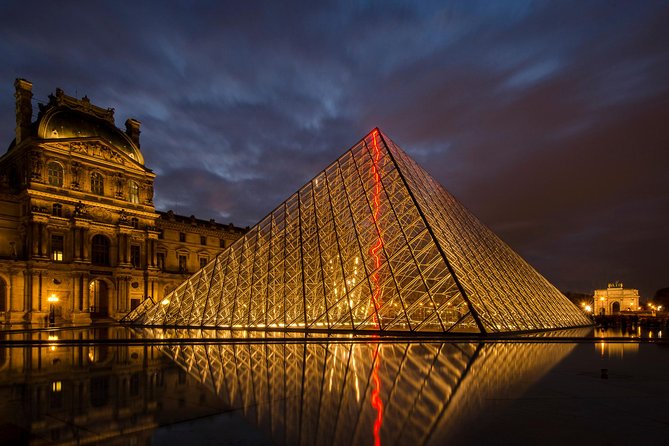
The walk continues to the Louvre, where the focus is on the courtyards and glass pyramid. This is a strong location for learning about lines, symmetry, reflections, and the relationship between modern and historic forms.
The Louvre pyramid can look very different depending on where you stand. A centered composition may emphasize its geometry, while a side angle can bring the surrounding arcades into the picture. Your guide can help you test both approaches rather than settling for the first obvious shot.
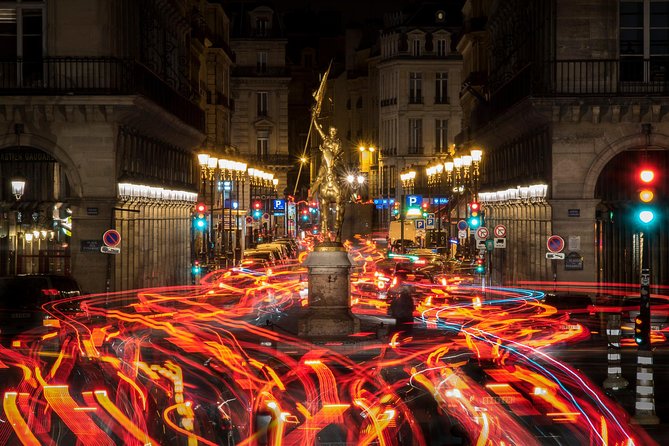
This is also a good place to practice noticing light. During the day, the courtyard offers changing shadows and bright surfaces. Around sunset or after dark, the pyramid and surrounding architecture can take on a more graphic look. Several of the lessons have included evening photography, with participants working on city scenes after sunset.
Do not confuse this activity with a Louvre museum visit. Admission to the courtyards and pyramid is listed as free, but you are not given museum entry or time inside the galleries. The point here is outdoor photography.
A different way to spend the day in Paris:
- Paris: Louvre Museum Timed-Entrance Ticket
★ 4.6 · 71,977 reviews - Disneyland® Paris 1-Day Ticket
★ 4.6 · 49,412 reviews - Paris: Versailles Palace and Gardens Full Access Ticket
★ 4.6 · 41,579 reviews - Paris: Arc de Triomphe Rooftop Tickets
★ 4.6 · 34,264 reviews
The Eiffel Tower over the Seine
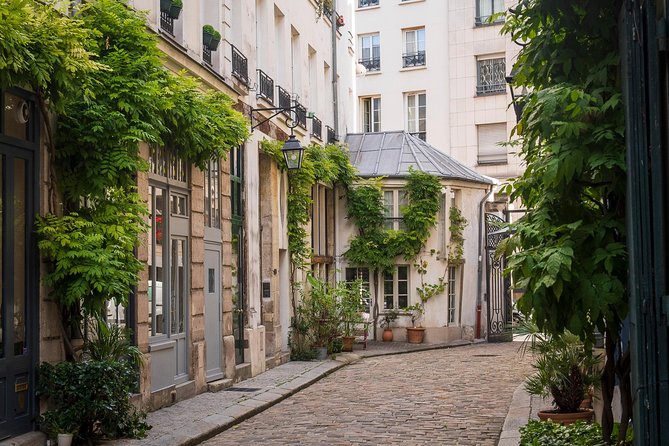
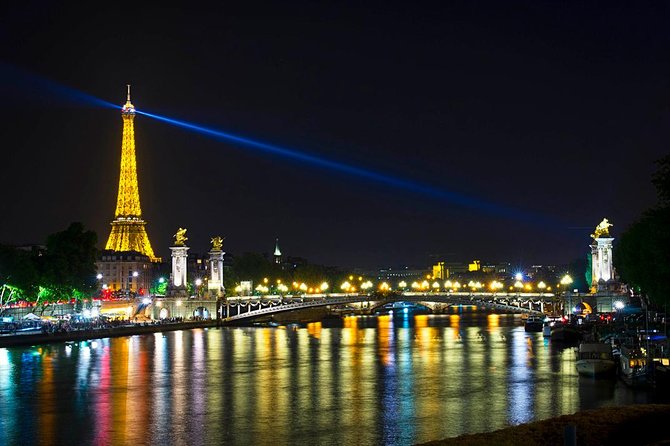
The Eiffel Tower stop gives you one of the classic Paris subjects, but the emphasis is on photographing it with the Seine and nearby surroundings rather than simply taking a front-on souvenir picture. You will spend about 30 minutes working on views over the river.
This is where the guide’s feedback can be especially useful. The tower is so familiar that it is easy to make a predictable image. Changing your position, including part of the river, or using a foreground detail can give the frame more structure. The guide can also help you decide how much sky, water, and architecture belong in the picture.
Evening departures may be particularly appealing here. Paris after sunset creates chances for reflections, brighter points of light, and longer exposures. One session used a tripod to help with long exposure effects, while another taught a first-time night photographer how to get sharper, more memorable images.
A tripod is available upon request, but it is not listed as standard equipment. Ask ahead of time if you want to work with one. You should also understand that the guide does not supply your camera. Bring your own DSLR or other camera, and confirm in advance if you plan to use a phone.
Place de la Concorde and the end near the Tuileries
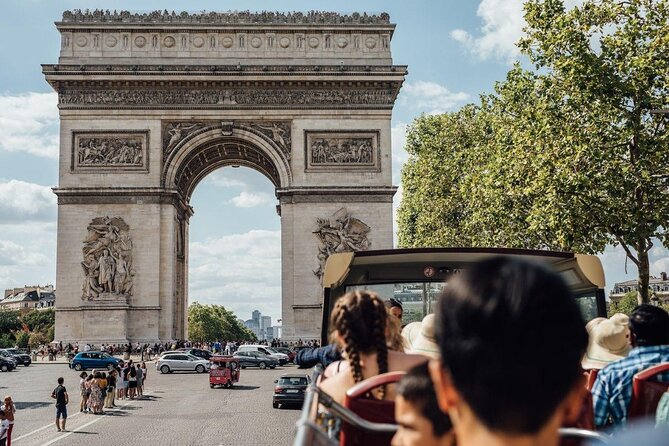
The final planned stop is Place de la Concorde, where you may photograph the fountains or aim toward the Champs-Élysées. The tour generally ends near Concorde, although the exact finish can change depending on walking speed.
This broad square gives you a different kind of lesson from the tighter spaces around the Louvre. You can work with open space, strong perspective lines, fountains, and long views down the avenues. It is a useful place to bring together the ideas introduced earlier: subject placement, foreground interest, exposure, and timing.
Because this is the end of the walk, you may also have a chance to ask final questions about your camera settings or the techniques you practiced. Do not count on the tour ending at an exact minute or at a fixed spot beyond the stated area. The route is on foot, and the pace can vary.
The night photography option
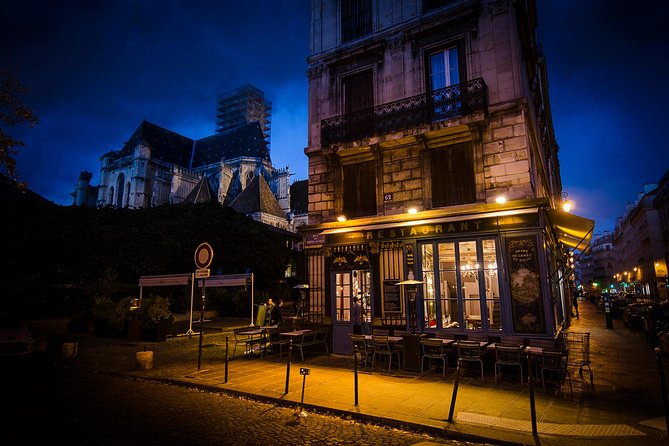
Night photography is one of the strongest reasons to choose this lesson, but you need to select your departure time carefully. The experience offers several start times from morning through early evening, and the correct departure depends on your chosen date. An early evening start may include sunset and later city scenes, while a morning session will suit daylight photography.
Night work can cover practical skills that are hard to learn from a camera manual. Guides have helped participants understand aperture priority, manual settings, exposure in low light, and long exposure with a tripod. The goal is not simply to make a bright picture. It is to learn how to control the balance between artificial light, dark areas, and moving subjects.
If you are new to night photography, this private format is helpful because you can ask basic questions without holding up a group. One participant moved toward manual shooting within an hour. Another arrived with a newly purchased camera and left with more confidence using manual or aperture-priority mode.
Rain does not automatically cancel the experience. The activity operates in all weather, and one guide adapted a very wet session by using the Metro and spending time around Palais Royal, the Louvre, and a café. Still, bad weather can make a long walking lesson tiring and can limit the number of outdoor compositions. Dress for the forecast and do not assume the weather will be part of the fun.
How personalized is the teaching?
The guide should begin by asking about your interests, but you will get more from the session if you explain what you want in clear terms. You might say that you want to understand aperture, improve composition, take better portraits, learn long exposure, or make stronger night photographs.
The instruction can be technical or visual. Some participants focused on camera settings. Others spent more time training their photographic eye and finding unusual viewpoints. One family concentrated on perspective rather than camera controls and came away seeing famous sites in a new way.
The guides named in the experience include Clara, Michiru, Federica, William, and Alexander. The teaching style described across the sessions is patient and encouraging, with room to adjust to a family, a solo participant, or a mixed group in which one person is not taking photographs. If your companion prefers sightseeing, the private format can still work, but the photographer should be clear about wanting dedicated instruction.
Who will get the most from it?
This is a good match for several kinds of visitors:
- Beginners: You can learn the basics while photographing real subjects instead of practicing indoors.
- Intermediate photographers: You can get feedback on composition, exposure, and camera handling.
- Night photography fans: Evening sessions may include sunset, city lights, tripods, and long exposure.
- Solo visitors: A private guide can make a short Paris stay more focused and productive.
- Families or couples: Up to four people can share the booking, though their interests may differ.
- Phone photographers: A DSLR is requested, but the lesson can include advanced phone camera controls if arranged with the guide.
It is less suitable if you want a pure professional photo shoot in which someone else takes polished portraits of you. The main purpose is instruction and location-based photography, although guides may also take some excellent pictures of participants.
Walking, transport, and practical limits
The tour starts at Pont Marie and usually ends around Place de la Concorde. Transportation between attractions is not included, and the route is primarily a walking experience. In poor weather or when conditions require it, the guide may adapt the plan and use public transport, but you should not treat transport as part of the standard price.
Three hours sounds generous, but it passes quickly once you stop to discuss a setting, frame a view, and try the shot again. Comfortable shoes matter. The four main stops each receive about 30 minutes, with the remaining time used for walking and instruction.
The activity is offered in English and operates in all weather. Most people can participate, and no health restrictions are specified, but you should be comfortable walking through central Paris for the duration.
You receive booking confirmation at the time of purchase. Free cancellation is available if you cancel at least 24 hours before the start time. Changes or cancellations made later are not accepted for a refund.
Is $205.59 per person a fair price?
The price makes sense when you treat this as a private lesson with a Paris route, not as a basic sightseeing tour. A large part of the value comes from personal attention. If Clara, Michiru, Federica, William, or another guide spends much of the session correcting your settings and helping you refine each frame, you are receiving instruction that would be hard to get in a group class.
The price is easier to share among two to four people who have similar goals. It is harder to justify if only one person is serious about photography and the others simply want to tag along. Before booking, decide if you want lessons, a photo shoot, or a standard city walk. This experience is strongest when you want to learn.
The high rating, 4.9 from 112 reviews, and 97 percent recommendation rate point to a consistently strong experience, especially for patient teaching, custom planning, night photography, and unusual viewpoints. Still, the outcome depends on your preparation, your camera, the weather, and how clearly you communicate your aims.
Should you book the Paris Photography Masterclass?
Book it if you want to see major Paris sights while learning how to photograph them with more control. I especially recommend it for beginners with a new camera, intermediate photographers trying to improve composition, and anyone interested in night photography.
Choose an evening departure if low-light work is your priority, and request a tripod in advance. Bring your own camera, wear shoes for a three-hour walk, and tell the guide exactly what you want to practice. If you only want someone to take portraits of you, or if you dislike walking between major sights, this may not be the right fit.
For the right photographer, the lasting value is not just a set of Paris pictures. It is the ability to make better pictures after you leave Paris.
FAQ
How long does the Paris Photography Masterclass last?
The experience lasts approximately three hours.
Where does the tour start?
It starts at 3 Pont Marie, 75004 Paris, France.
Where does the tour end?
It typically ends near Place de la Concorde, around Concorde and the Quai des Tuileries. The exact end point can vary depending on walking speed.
Which sights are included?
The planned stops are Notre Dame Cathedral, the Louvre courtyards and pyramid, the Eiffel Tower over the Seine, and Place de la Concorde.
Is this a private tour?
Yes. Only your group participates, with a maximum of four people per booking.
Do I need to bring a camera?
Yes. You are asked to bring your own DSLR camera. A tripod is available upon request, and the experience has also accommodated an iPhone 15 Pro Max.
Is the tour offered in English?
Yes. The experience is offered in English.
Can I cancel for a full refund?
Yes, if you cancel at least 24 hours before the experience start time. Cancellations or changes made less than 24 hours in advance are not accepted for a refund.
Newest additions around Paris
- Family escape Game with kids and teens on the Île de la Cité★ 4.5 · 11 reviews
- Private Photoshoot with the Iconic Eiffel Tower in Paris★ 5.0 · 11 reviews
- 2-day Private Mont Saint-Michel, 3 Loire Castles, D-Day Express★ 4.5 · 11 reviews
- Paris: Batobus Hop-On Hop-Off Cruise & Landmarks Audio Tour★ 3.0 · 11 reviews
- Paris Revolutionary Walking Tour: Iconic French Sights & Stories★ 5.0 · 11 reviews
- Guided and Private Tour of 3 hours through Paris aboard a Citroën 2cv★ 5.0 · 11 reviews
- Kids in the Kitchen – CrOisSaNtS★ 4.0 · 11 reviews
- Paris: Ghosts and Dark Stories Guided Walking Tour★ 4.1 · 11 reviews
Photography Sessions, compared.
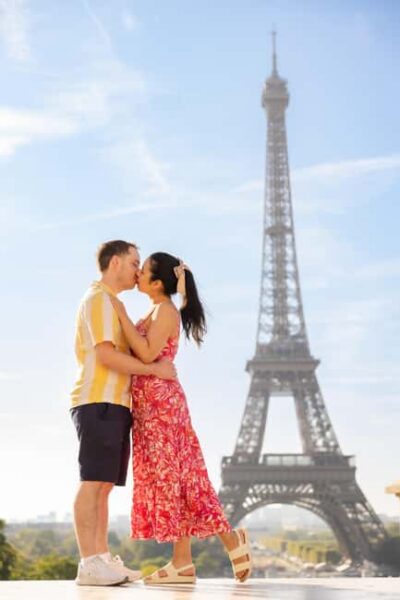
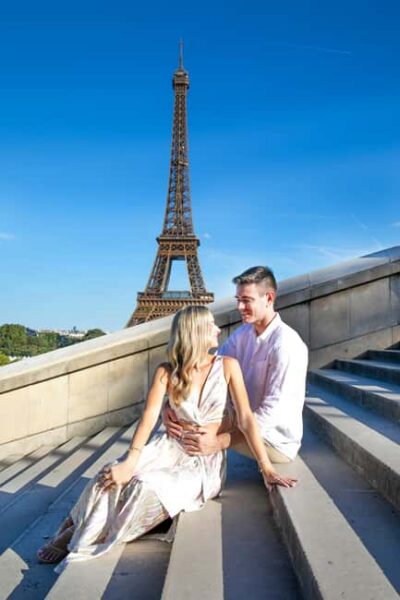
Photo Session in Paris – Photographer at the Eiffel Tower
Read our review →
Private Guided Professional Photoshoot by the Eiffel Tower
Read our review →
Paris Private Walking Tour with a Personal Photographer
Read our review →Browse the lists this tour appears in