
Reviewed · MUSEUMS
Paris: Paradox Museum Entrance Tickets
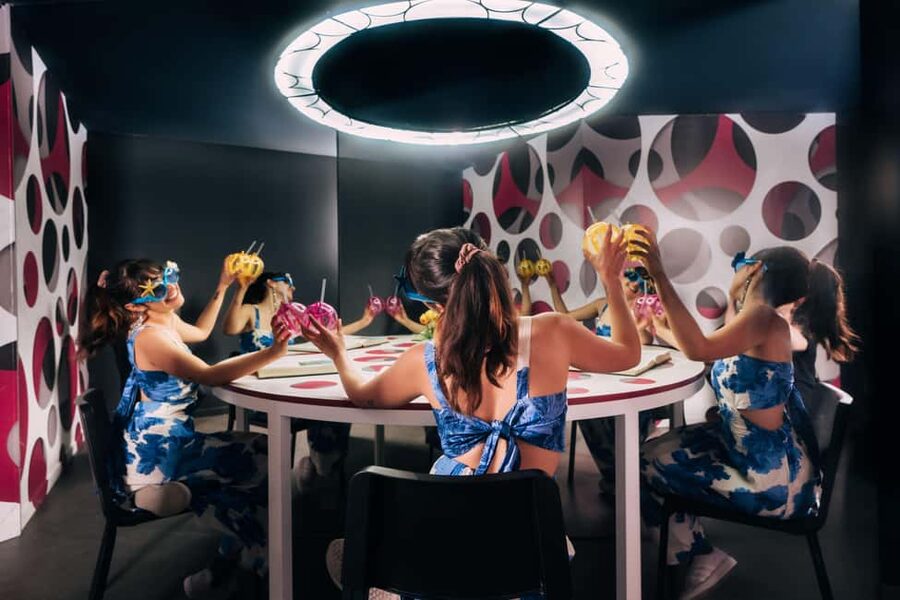
Paris’s Paradox Museum turns optical tricks into a hands-on outing. You walk through about 90 exhibits, following a one-way path where floors, mirrors, rooms, and perspective play games with your eyes and brain. The main attraction is not simply looking. It is figuring out what to do, then taking the photo that proves reality has gone slightly off its rails.
I like the clear photo points and the short explanations beside each display. I also like the broad age appeal: a seven-year-old can have a fine time here, while adults get a chance to think about the science behind each illusion. The main drawback is pace. On a busy day, you may need to wait for your turn at popular installations, and the visit can feel less smooth if you want time to study every exhibit.
In This Review
- Key points
- What the Paradox Museum Paris actually offers
- Following the one-way route through 90 illusions
- Why the photo points matter
- The science behind the tricks
- How long the visit takes and how to plan your pace
- Is $33 a fair price?
- Best for families, couples, and curious adults
- What can make the visit frustrating
- Language, group size, and practical details
- A sensible way to visit
- Should you book the Paradox Museum Paris?
- FAQ
- How long does the Paradox Museum Paris visit last?
- How many exhibits are inside the museum?
- Are photos allowed at the exhibits?
- Is the museum available in English?
- Is the Paradox Museum wheelchair accessible?
- Can I cancel my booking?
Key points
- Ninety interactive illusions: The museum is built around optical tricks that ask you to look, move, pose, and rethink what you see.
- About 84 minutes inside: Most people can see the full collection in roughly an hour and a half.
- Photo points at the exhibits: Marked angles help you get the intended effect in pictures and videos.
- Science beside the fun: Signs explain what to do and why the illusion works, with extra information available through QR codes.
- Good for families and mixed ages: Children can play with the displays while adults enjoy the visual puzzles and explanations.
- Boutique and café included: You can browse paradox-themed games, clothing, accessories, souvenirs, and the café before leaving.
What the Paradox Museum Paris actually offers
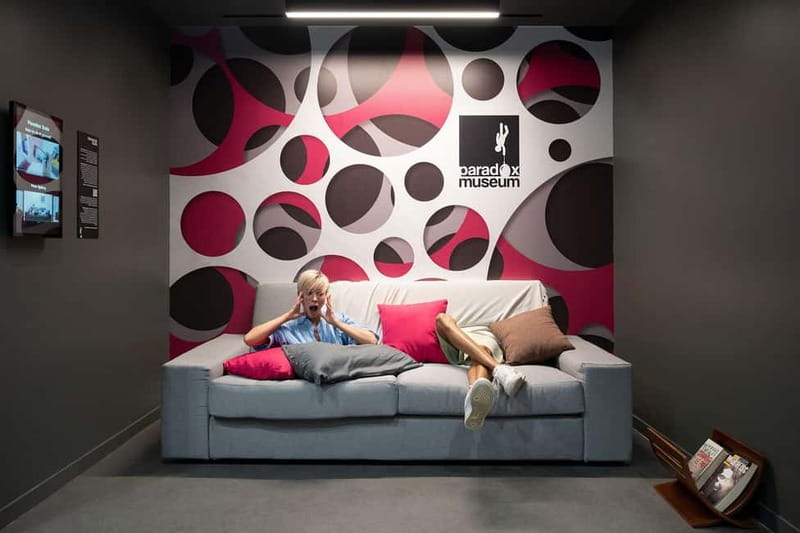
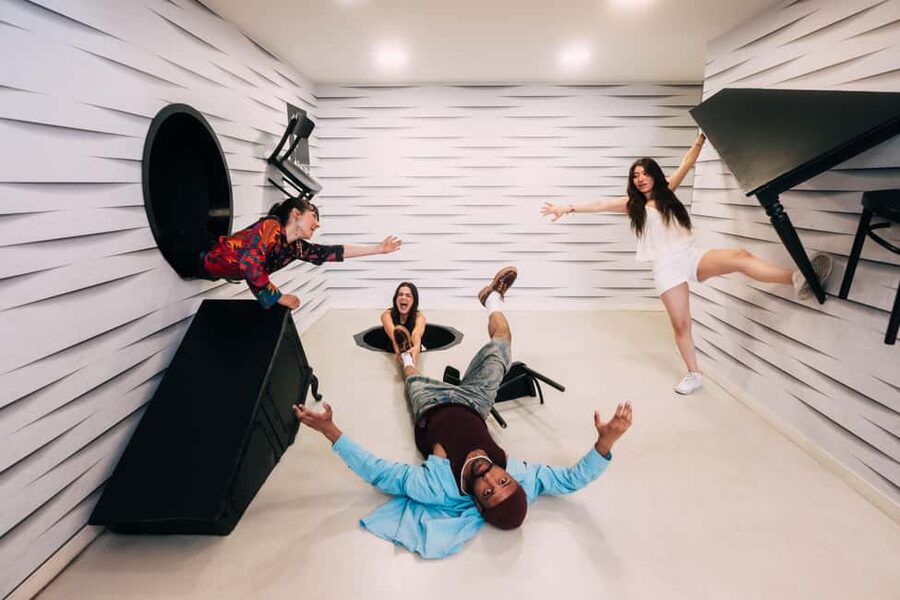
This is not a traditional art museum where you quietly inspect objects from behind a barrier. It is a route of interactive rooms and installations designed to make you part of the illusion. You may need to stand in a certain place, pose at a marked point, or use the camera on your phone to make the visual trick clear.
The collection contains 90 different optical illusions. That number matters because the museum is more than one or two clever photo rooms. You keep moving from one visual puzzle to the next, with each display offering a slightly different challenge.
Some exhibits are best understood through a photograph. Others make more sense when you read the explanation and test the effect yourself. I recommend doing both. If you rush from one photo point to the next, you may leave with a full phone but only a hazy idea of how the tricks work.
The museum presents the exhibits in a one-way flow system. Follow the signs rather than trying to double back. This keeps the route orderly, though it also means you should take your time at each display before moving on.
More Paris museums to visit:
- Paris: Louvre Museum Timed-Entrance Ticket
★ 4.6 · 71,977 reviews - Paris: Orsay Museum Entry Ticket
★ 4.7 · 25,647 reviews - Louvre Museum Masterpieces Guided Tour with Access
★ 4.5 · 12,023 reviews
Following the one-way route through 90 illusions
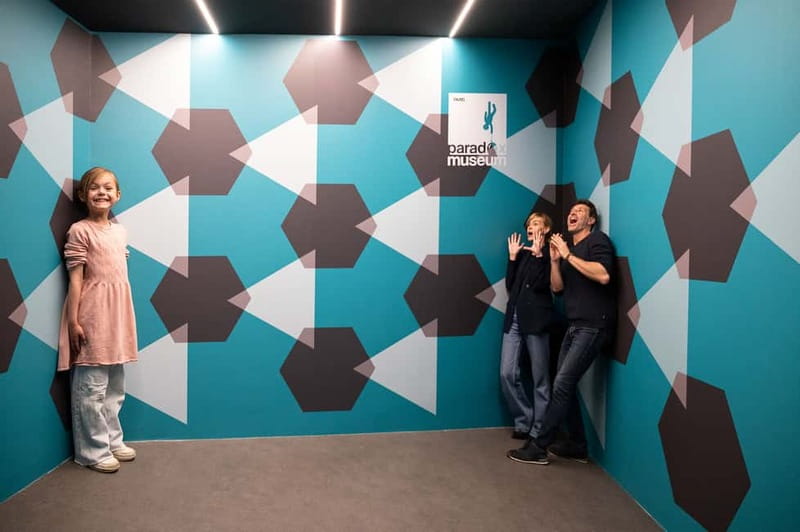
Your visit starts with check-in, followed by signs leading into the exhibition route. The path is arranged like a maze, but it is not meant to be confusing. The one-way design tells you where to go next and helps prevent people from crossing through installations in every direction.
At each stop, look for three things:
- Instructions explaining what action or pose to try
- A marked photo point showing the best camera position
- A short explanation of what is happening and why
That setup is useful for independent visits. You do not need a guide walking beside you to understand the basic purpose of each installation. QR codes offer more information if a particular illusion catches your interest.
Still, do not expect a staff member at every exhibit. Staff can answer questions and may help with group photographs, but one practical weakness is that you may sometimes need to manage your own photos. If you are visiting alone, this can be awkward. With a partner or family group, you can take turns.
The route rewards patience. A quick visit can cover the full collection, but you will get more from it if you pause to read the signs and try each effect more than once. The difference between what your eyes report and what your brain knows is the real point of the museum.
Why the photo points matter
The marked photo spots are one of the smartest features here. Optical illusions often work only from a particular angle, and a few steps in the wrong direction can ruin the effect. The floor markings remove much of the guesswork.
You can use the points for still photos and videos. This is especially handy for families, since you do not need to spend several minutes working out where the camera should go. If you want a group photo, staff may help when available, but you should not count on personal assistance at every stop.
A busy museum changes the experience. Each photo station can become a small queue, especially when a family wants several attempts. On a quiet Sunday afternoon, the route may feel easy and relaxed. At busier times, you may spend more time waiting for the best angles than looking at the displays.
My advice is simple: take the intended shot, then move along. If you keep repeating the same pose, the line behind you will grow. You can always return to the photos later and decide which ones are worth keeping.
The science behind the tricks

The museum works best when you treat it as both a playful photo stop and a simple science lesson. The displays explain what to do and what is going on. That second part gives the visit more substance than a room full of visual jokes.
Paradoxes often expose the gap between seeing and understanding. Your eyes deliver one message, while your brain uses perspective, scale, light, and context to interpret it. The museum lets you test that gap directly instead of reading about it in a book.
The explanations are short enough to keep children involved. Adults who want more detail can scan the QR codes for additional information. This makes the visit flexible. You can keep moving with younger children, or spend longer at the displays that raise more questions.
I would not treat this as a formal science museum visit. The emphasis is on participation, surprise, and photographs. But the educational layer is real, and it helps explain why the illusion works rather than leaving you with only a clever image.
A few more Paris ideas to compare
- Disneyland® Paris 1-Day Ticket
★ 4.6 · 49,412 reviews - Paris: Versailles Palace and Gardens Full Access Ticket
★ 4.6 · 41,579 reviews - Paris: Arc de Triomphe Rooftop Tickets
★ 4.6 · 34,264 reviews - Paris: Eiffel Tower Entry Ticket with Optional Summit Access
★ 4.4 · 20,035 reviews
How long the visit takes and how to plan your pace
The listed duration is 84 minutes, while the practical guidance suggests around 90 minutes for the full collection. Those figures are close enough to use one planning rule: allow about an hour and a half.
The route is long enough to fill a useful part of an afternoon, but short enough to fit between other Paris plans. You do not need to surrender half a day. That makes it a reasonable choice when you want an indoor activity without committing to a major museum complex.
You should not arrive at the last minute. Last entry is at 6 p.m., two hours before closing. Check the available starting times when booking, and give yourself enough room to complete the route without rushing.
The best pace depends on your group. With young children, you may move quickly from one colorful or physical illusion to the next. With adults or older children, the signs and QR codes can add extra time. The 84-minute estimate is a useful average, not a strict timetable.
Is $33 a fair price?
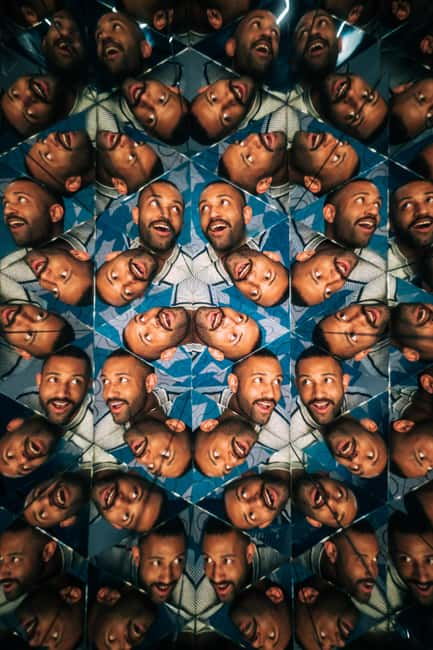
At $33 per person, this is not a bargain basement attraction. The value depends on how actively you use the museum.
You are paying for access to a large collection of 90 interactive displays, not just a single photo room. The visit lasts about 84 minutes, includes the exhibits, and gives you access to the store and café. For a family or small group that wants an activity everyone can share, the price can make sense.
The value is weaker if you plan to rush through, avoid taking photos, or have little interest in visual puzzles. This is an activity built around participation. You need to pose, test, read, and sometimes try again.
The gift shop is a pleasant bonus rather than a reason to buy the ticket. It carries games, clothing, accessories, and souvenirs with a paradox theme. Prices there are not described as excessive, but your decision should rest on the exhibition itself.
I would compare this with the cost of other indoor attractions in your Paris plans. If you want a conventional collection of paintings or historical objects, spend your money elsewhere. If you want a playful activity that works for different ages and produces personal photos, $33 is easier to justify.
Best for families, couples, and curious adults
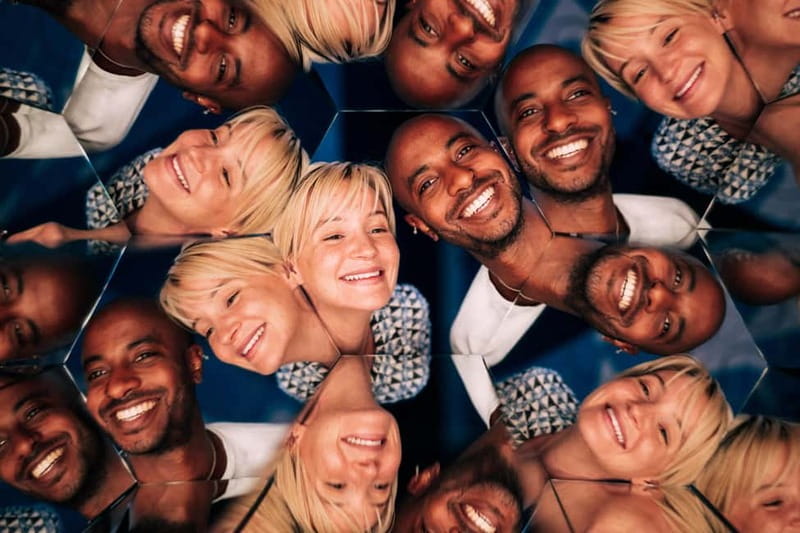
The museum has a wide age range. A seven-year-old can enjoy the action and visual surprises without needing to understand every scientific detail. Adults can read the explanations, discuss why the trick works, and help younger children take their photos.
It also suits couples and friends who enjoy making pictures together. The installations give you a reason to interact rather than simply walk side by side through rooms. The marked angles help, but you still need to cooperate when one person becomes part of the illusion.
Solo visitors can enjoy the exhibits, though photography takes more effort. You may need to ask staff or another person for help with certain shots. Since assistance is not guaranteed at every display, solo visitors should place more weight on the puzzles themselves, not just the final photos.
The museum is wheelchair accessible, which makes the interactive route available to more people. It is not suitable for people with epilepsy, so that restriction deserves attention before booking.
What can make the visit frustrating

The biggest issue is crowding at the photo stations. The museum can feel easygoing when visitor numbers are low, but a busy period may create waiting time. Since the displays are made for photos, one group can occupy a station longer than expected.
The one-way route also limits your options. You cannot freely skip around and return whenever you like. If a display is occupied, you may need to wait or continue until the route allows you to move on.
Staff are present and can help with questions, but do not assume every installation has an attendant. You may need to read the instructions carefully and take responsibility for framing your own shot.
There is also a difference between seeing all 90 exhibits and fully understanding them. If you want to read every explanation and scan every QR code, allow more time and accept a slower pace. If your group includes children who want constant movement, you may not stop at every detail.
These are manageable limits, not deal breakers. Go in expecting an interactive attraction rather than a quiet museum, and the format makes more sense.
Language, group size, and practical details
The available host or greeter support is in English and French. Information at the exhibits is also presented with those language options, making the visit workable for English-speaking and French-speaking visitors.
The activity is described as a small group, limited to 10 participants. That can help keep the experience more controlled than a large organized tour, though the wider museum route can still feel busier at popular times.
You can cancel up to 24 hours in advance for a full refund. The reserve now and pay later option also gives you some flexibility if your Paris schedule is still changing.
The ticket includes the exhibition, the boutique, and the café. It does not turn the shop into part of the main visit, but it gives you a final place to browse before returning to the rest of the city.
A sensible way to visit
I would begin by reading the first instructions instead of racing toward the photo. Learn how the museum’s signs work, then use the same pattern at each stop: test the illusion, read the explanation, take the photo, and move on.
Keep your phone ready, but do not let photography take over the entire visit. Some of the best moments come from watching a friend try to make sense of an effect before seeing the image on the screen.
If you are visiting with children, let them lead at first. They can pose and experiment while you handle the camera. Then slow down at the exhibits with the clearest explanations, especially if your family enjoys asking why something appears to change.
For adults, I would reserve time for the QR codes only when an illusion genuinely interests you. Trying to absorb every extra explanation can make a compact visit feel longer than it needs to be.
Should you book the Paradox Museum Paris?
Book it if you want an indoor Paris activity that is playful, highly visual, and easy for different ages to share. The 90 interactive illusions, marked photo points, and short science explanations give the visit more depth than a simple photo attraction.
Think twice if you dislike waiting, prefer quiet galleries, or want a guide beside you at every installation. The museum is largely self-directed, and busy periods can slow the route.
For families, couples, and friends who enjoy taking photos together, I find the $33 price reasonable when you use the full 84 to 90 minutes. Choose a starting time with room before the 6 p.m. last entry, take your time, and leave space for the boutique at the end.
FAQ
How long does the Paradox Museum Paris visit last?
The listed duration is 84 minutes. You should plan on roughly 90 minutes to make your way through the collection at an average pace.
How many exhibits are inside the museum?
The museum has 90 exhibits based on optical illusions and paradoxes.
Are photos allowed at the exhibits?
Yes. The experience is designed for photos and videos, and marked photo points show you where to stand for the intended effect.
Is the museum available in English?
Yes. Host or greeter support and museum information are available in English and French.
Is the Paradox Museum wheelchair accessible?
Yes, the activity is wheelchair accessible.
Can I cancel my booking?
You can cancel up to 24 hours in advance for a full refund. The reserve now and pay later option lets you book without paying immediately.
Newest additions around Paris
- Family escape Game with kids and teens on the Île de la Cité★ 4.5 · 11 reviews
- Private Photoshoot with the Iconic Eiffel Tower in Paris★ 5.0 · 11 reviews
- 2-day Private Mont Saint-Michel, 3 Loire Castles, D-Day Express★ 4.5 · 11 reviews
- Paris: Batobus Hop-On Hop-Off Cruise & Landmarks Audio Tour★ 3.0 · 11 reviews
- Paris Revolutionary Walking Tour: Iconic French Sights & Stories★ 5.0 · 11 reviews
- Guided and Private Tour of 3 hours through Paris aboard a Citroën 2cv★ 5.0 · 11 reviews
- Kids in the Kitchen – CrOisSaNtS★ 4.0 · 11 reviews
- Paris: Ghosts and Dark Stories Guided Walking Tour★ 4.1 · 11 reviews
Museums, compared.
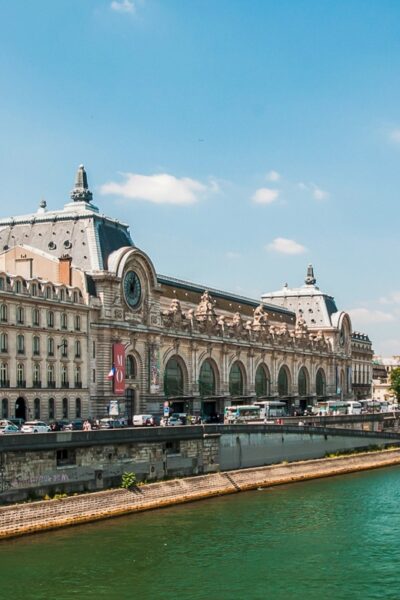
Louvre Museum Masterpieces Guided Tour with Access
Read our review →
Louvre Museum Entry Ticket With Host and River Cruise
Read our review →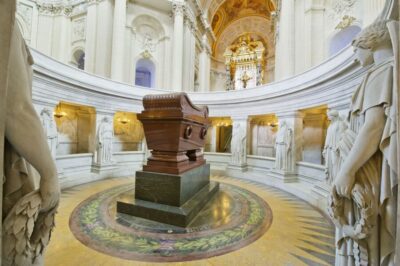
Les Invalides: Napoleon’s Tomb & Army Museum Entry
Read our review →
Louvre Museum – Exclusive Guided Tour (Entry Included)
Read our review →
Louvre Museum Hosted Entry and Mona Lisa Audioguide
Read our review →
Louvre Museum Tour Mona Lisa & Iconic Masterpieces
Read our review →Browse the lists this tour appears in