Reviewed · PANTHéON TICKETS
Paris: Panthéon Admission Ticket
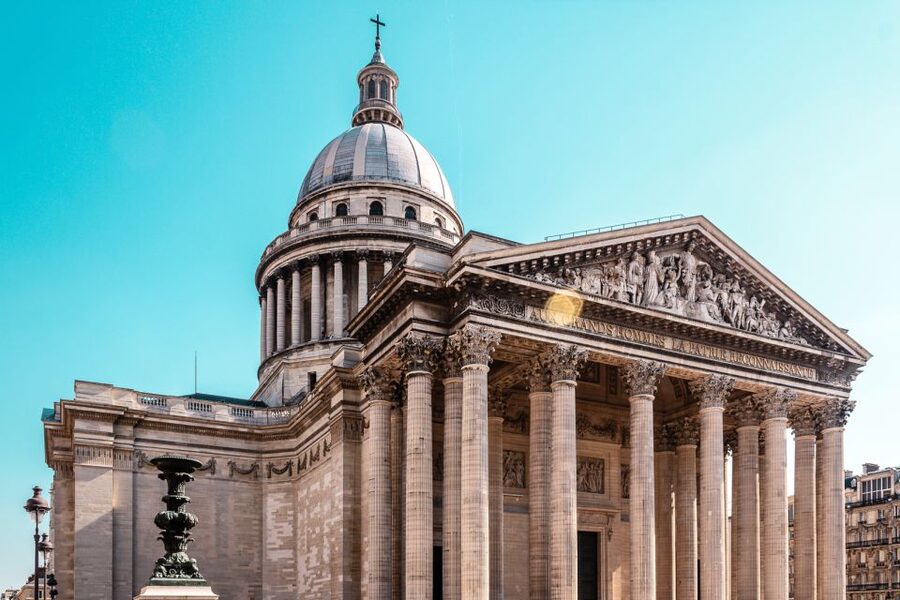
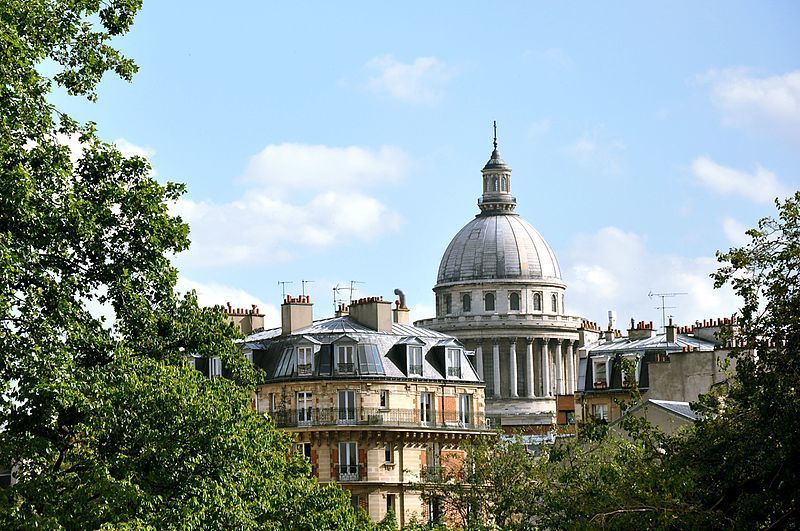
The most striking thing about the Panthéon is its change of purpose. Soufflot designed it as a grand church for Saint Geneviève, meant to glorify Louis XV. The French Revolution turned it into a national mausoleum, and the building still carries both identities: part church, part monument to the French nation.
I like the freedom of a self-guided visit, especially since the ticket can be used at any date and time during its one-day validity. I also like the mix of famous names and grand design. You can see the tombs of Voltaire, Rousseau, Marie Curie, Alexandre Dumas, Victor Hugo, and Émile Zola, then look up at enormous paintings and the soaring dome.
The main drawback is that the experience can feel uneven without added explanation. The information booklet helps, and the optional audio guide costs €3, but some visitors finish in about 10 minutes while others stay an hour or more. If you want the upper-level views, remember that access is available only from April to October and may require more time and effort.
In This Review
- Key Points Before You Go
- Why the Panthéon Feels Different From a Paris Church
- Exploring Soufflot’s Monumental Interior
- The Panthéon Exhibition and Soufflot’s Career
- The Crypt: Famous Names and Quiet Corridors
- Foucault’s Pendulum Adds a Scientific Twist
- The Upper Floors and Paris Views
- How Long Should You Allow?
- Is the $15 Ticket Good Value?
- Choosing Between Self-Guided and Guided Options
- Practical Details for a Smooth Visit
- Who Will Enjoy the Panthéon Most?
- Should You Book the Panthéon Ticket?
- FAQ
- Where is the Panthéon located?
- How much does admission cost?
- How long is the ticket valid?
- Is the visit guided?
- Can I use an audio guide?
- Who can enter free?
- Are large bags allowed?
- Is the Panthéon wheelchair accessible?
- When can I visit the upper floors?
Key Points Before You Go
- See more than 70 French figures in the crypt: The tombs include writers, scientists, politicians, generals, and other national figures.
- Follow Soufflot’s architectural story: A major exhibition explains the career and achievements of the architect behind the building.
- Watch Foucault’s pendulum: The famous scientific display gives the visit something more than statues and memorials.
- Use the flexible ticket to avoid a rushed schedule: Admission is valid on any date and at any time for one day.
- Climb for Paris views from April through October: The restored upper floors offer a different way to see the city.
- Plan around bag rules and closing times: Large bags are not allowed, and the last admission is 45 minutes before closing.
Why the Panthéon Feels Different From a Paris Church
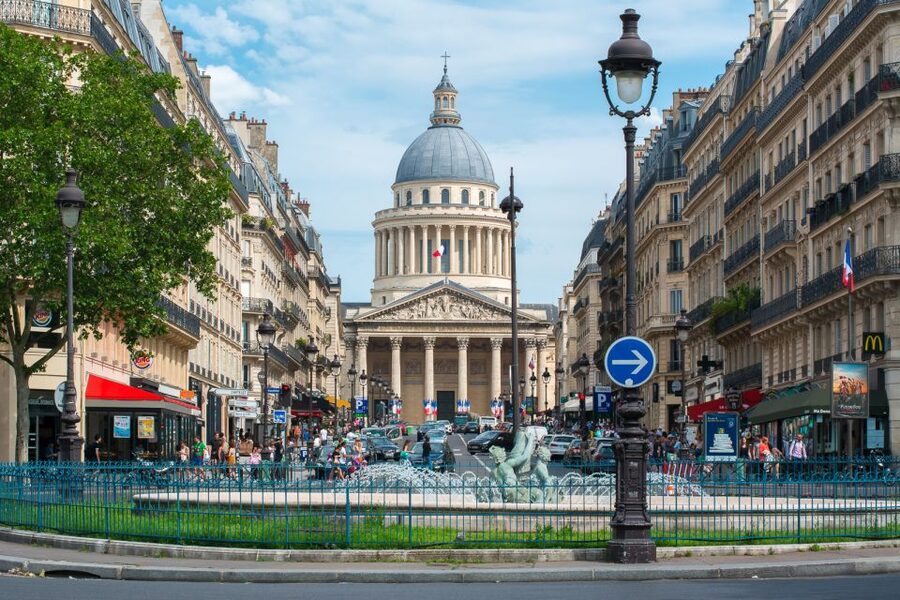
The Panthéon is not simply another beautiful Paris church. Its original purpose was religious, but its present role is civic and patriotic. That shift gives the interior a particular weight. You are looking at a place built for worship, then reshaped into a national memorial during one of France’s most turbulent periods.
Soufflot worked from 1713 to 1780 and aimed to create a monument worthy of Saint Geneviève, the patron saint of Paris. Louis XV wanted a grand church that would glorify the monarchy. The result was a building with the scale and ceremony of a royal statement.
In 1791, during the French Revolution, the church was deconsecrated and renamed the Panthéon. During the 19th century, it moved back and forth between religious and patriotic use. That complicated past is part of what you are seeing. The architecture never fully loses its church-like character, even though the crypt now honors France’s chosen national figures.
Since Victor Hugo’s death in 1885, the Panthéon has been used as a burial place for important French writers, scientists, generals, clergymen, and politicians. The building is therefore both a monument and a selective portrait of French identity.
More Panthéon tickets:
- Treasure Hunt in Paris – From the Panthéon to the Louvre
★ 5.0 · 17 reviews - Paris: Big Bus Hop-on Hop-off Tour and Pantheon entrance
★ 4.1 · 12 reviews - Paris: Notre Dame Exterior, Latin Quarter Tour and Pantheon
★ 5.0 · 10 reviews
Exploring Soufflot’s Monumental Interior
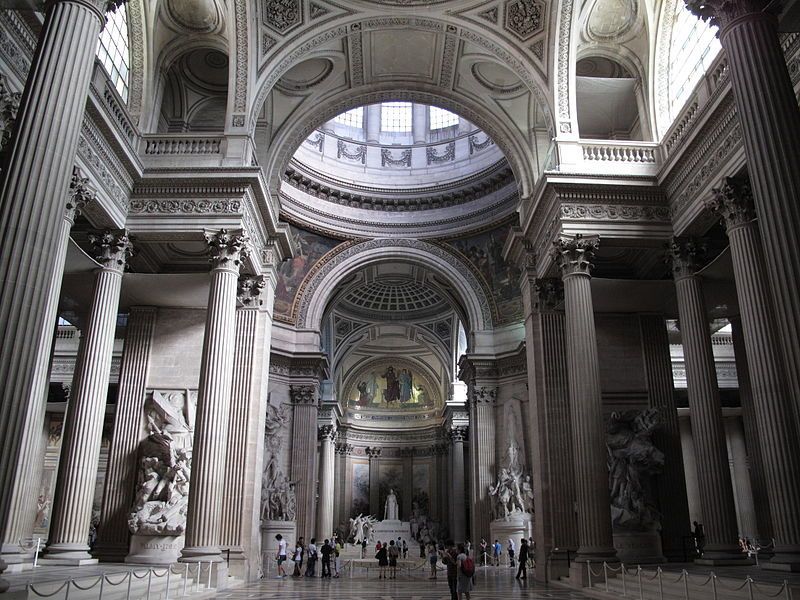
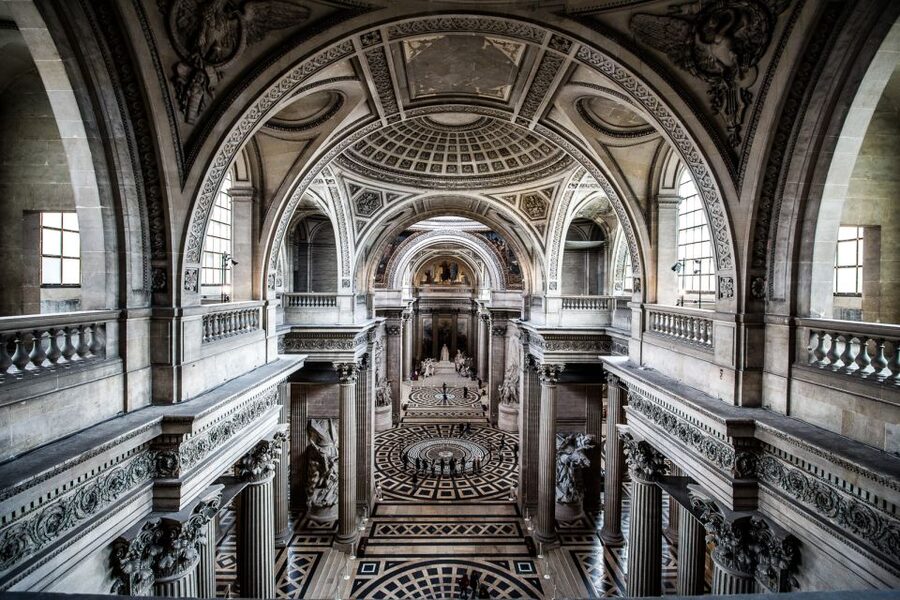
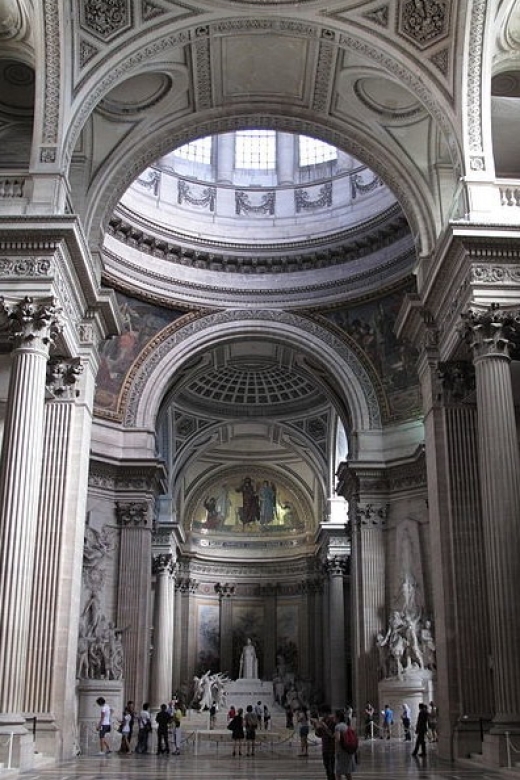
Start by giving yourself a moment in the nave. The sheer size is easy to underestimate from the square outside. Inside, the broad open space, tall columns, dome, sculptures, and massive paintings create a sense of ceremony.
The design is grand, but it is not difficult to explore. You can walk through the main areas at your own pace, stop at the artworks, and read the information provided in the booklet. That makes this a good choice if you prefer to set your own rhythm instead of following a fixed group.
The decorative program can feel repetitive if you are mainly interested in the tombs. Several large paintings and sculptures occupy similar visual territory, and one visitor found the artworks less varied than the building itself. I would not treat that as a reason to skip the Panthéon, but it is useful to know that the monument’s strongest features are its scale, architectural symbolism, and memorial spaces.
A small model of the Panthéon helps you understand the structure. Look for it if you want a clearer sense of how the dome, nave, and upper sections fit together. The building is much easier to appreciate once you can see its overall form rather than only the grand interior from ground level.
The Panthéon Exhibition and Soufflot’s Career
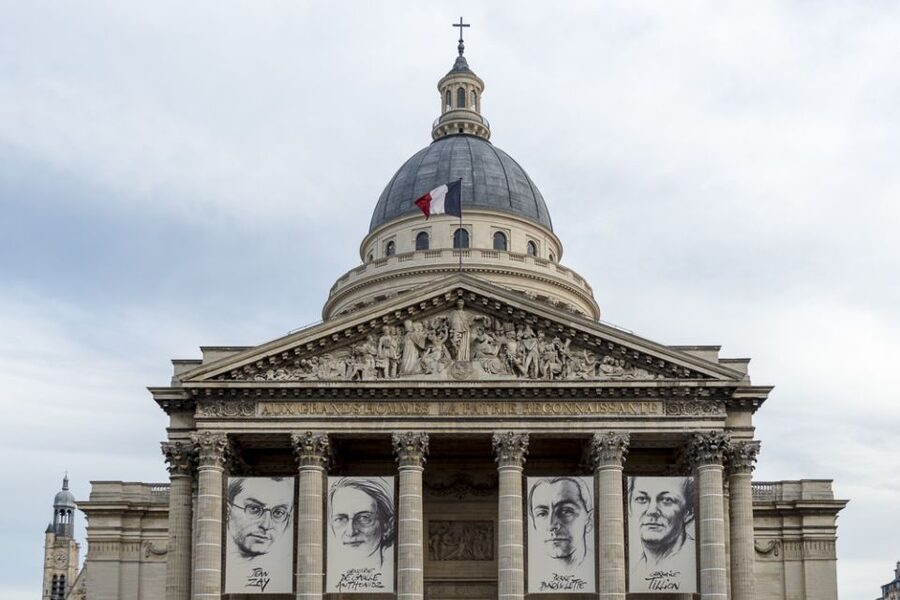
The exhibition devoted to Jacques-Germain Soufflot gives the architecture a human story. Instead of seeing the Panthéon as a finished object, you can follow the architect’s career and the large ambitions behind his work.
The exhibition focuses on Soufflot’s monumental achievements, with the Church of Sainte-Geneviève, now the Panthéon, as the centerpiece. This is especially useful if you have little background in French architecture. You do not need to arrive with technical knowledge to understand the basic goal: create a royal church of unusual scale and visual power.
I find this section most valuable early in the visit, before spending time with the paintings and dome. It explains why the building feels so formal and why its structure combines church traditions with the clean, imposing lines associated with 18th-century classical design.
The exhibition also helps explain the building’s changing identity. The same walls served a royal religious purpose, then became part of a revolutionary national project. That is more interesting than a simple list of dates because it shows how public monuments can change meaning without changing location.
The Crypt: Famous Names and Quiet Corridors
The crypt is the emotional center of the visit for many people. It is not as visually dramatic as the nave or dome, but it rewards slow attention. The corridors and burial chambers hold more than 70 figures associated with French public life.
You can look for Voltaire and Jean-Jacques Rousseau, two major voices of the Enlightenment. Their presence connects the Panthéon to the intellectual changes that challenged old political and religious ideas.
Marie Curie’s tomb is another major reason people come. She is buried here with her husband, Pierre Curie, and her place among France’s honored figures gives the crypt a strong scientific dimension. The Panthéon is not only for poets and politicians. It also recognizes people whose work changed the way we understand the world.
The crypt includes Alexandre Dumas, Émile Zola, Victor Hugo, and Jean Moulin. Each name carries a different story, so I recommend resisting the temptation to search only for the person you already know. The memorial spaces are more rewarding when you pause to read about the less familiar names as well.
One practical point: the crypt is somewhat larger than it first appears, so do not assume you have seen it all after one short corridor. At the same time, it is less spectacular visually than the main level. You go there for the people and the stories, not for decoration on the scale of the nave.
Interactive audio and video stations may help explain the figures buried there. If you want a fuller experience, the optional audio guide can make a noticeable difference. It costs €3 directly at the monument, and it directs you toward the next message as you move through the building. Some visitors found the devices slightly tricky to operate, but the added explanation is useful if you do not want to rely only on printed material.
A few more Paris ideas to compare
- Paris: Louvre Museum Timed-Entrance Ticket
★ 4.6 · 71,977 reviews - Disneyland® Paris 1-Day Ticket
★ 4.6 · 49,412 reviews - Paris: Versailles Palace and Gardens Full Access Ticket
★ 4.6 · 41,579 reviews - Paris: Arc de Triomphe Rooftop Tickets
★ 4.6 · 34,264 reviews
Foucault’s Pendulum Adds a Scientific Twist
The Panthéon’s memorials are solemn, but Foucault’s pendulum gives the visit a different mood. The display demonstrates the rotation of the Earth through a slow, visible scientific experiment.
It is worth checking the pendulum’s position when you arrive and again before you leave. The movement is gradual, so you should not expect a dramatic swing during a quick glance. Give it time, and the display becomes a simple reminder that the enormous building is also a place for scientific thought.
This is one of the best reasons to bring curious children or teenagers. The crypt may appeal to history fans, while the pendulum offers a clear physical idea they can watch unfold. It also connects well with the presence of Marie and Pierre Curie, whose work represents another part of France’s scientific tradition.
The Upper Floors and Paris Views
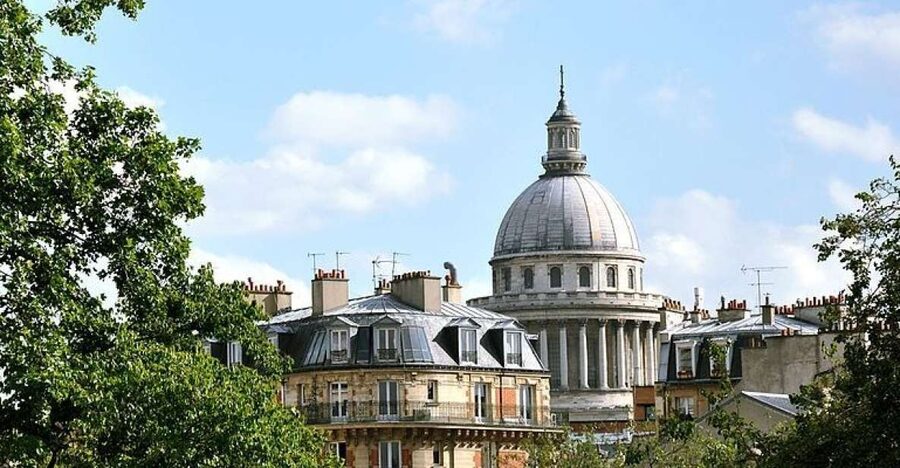
From April to October, the recently restored upper floors open for city views. This turns the visit from a ground-level monument tour into a chance to look across Paris from a major historic building.
The view is a strong bonus, but plan your timing carefully. The admission ticket itself is flexible, yet upper-floor access is seasonal and may involve stairs. One visitor who missed this section specifically wished they had been able to go higher, while others considered the climb one of the best parts of the visit.
The upper floors also help you understand the Panthéon’s position in the Latin Quarter. From above, the monument is no longer just a giant interior. You can see how it relates to the surrounding streets and the wider city.
If the views are important to you, do not arrive near closing time. The last admission is 45 minutes before closing, and you need enough time to see the main level, crypt, and upper areas without rushing.
How Long Should You Allow?
The official duration is one day because the ticket remains valid for a day, not because you need to spend an entire day inside. Most people can see the key areas in about an hour, though a quick visit may take only 10 minutes if you simply walk through the interior.
I would allow 60 to 90 minutes for a satisfying visit. That gives you time to:
- Look carefully at the nave, dome, paintings, and sculptures
- Visit the crypt and find several famous tombs
- Read parts of the Soufflot exhibition
- Watch Foucault’s pendulum
- Use the booklet or audio guide
- Add the upper floors when open
If you are combining the Panthéon with other sights in the Latin Quarter, the flexible entry works well. You can fit it between nearby stops rather than planning your whole day around a fixed tour time.
The ticket can be used on any date and at any time, but it is non-refundable. Check the date carefully before buying, especially if your Paris schedule is still changing.
Is the $15 Ticket Good Value?
At about $15 per person, the ticket is reasonably priced for a major Paris monument. You are paying for access to a large architectural site, the crypt, the permanent displays, and the chance to use the upper floors during the seasonal opening period.
The value is best if you take time to read and explore. If you only want a quick look at the dome and leave after 10 minutes, the price may feel less appealing. If you care about French writers, science, politics, architecture, or national memory, the ticket offers plenty to examine.
The ticket may also save time at busy periods. Many people used it to enter without waiting in the longer general queue, and that convenience matters in Paris. A short visit is still a better use of your day when you are not standing outside for much of it.
The audio guide is extra at €3. I consider that a fair add-on if you want the names and symbols explained as you move through the building. The information booklet is included, so you can skip the audio guide if you prefer a quiet, independent visit.
Choosing Between Self-Guided and Guided Options
The basic experience is self-guided. You receive an information booklet online or at the entrance, then decide how long to spend in each area. This suits you if you like stopping for photographs, moving quickly past familiar material, or lingering over one person’s story.
A guided tour is available in the afternoon, subject to availability. Since it is not guaranteed, do not buy this ticket assuming you will receive a live guide. The ticket includes admission and self-guided access, while a live guide is not included.
The audio guide provides a middle ground. You get structure and explanation without joining a group. It can also help you find the next message in the correct order, which is useful in a building where the memorials and displays do not always explain themselves.
Practical Details for a Smooth Visit
The Panthéon is at Place du Panthéon in the 5th arrondissement. The location makes it easy to combine with a walk through the Latin Quarter or a visit to the Luxembourg Gardens, which are nearby.
Bring a passport or photo ID. Visitors under 18 and European Union citizens under 26 can enter free, but they must first show photo identification at the ticketing station before going to the monument entrance.
Large bags and luggage are not allowed. Pack lightly, especially if you are visiting between hotels or carrying shopping. This rule can affect your plans more than the one-day ticket validity, so leave large items elsewhere.
The monument is wheelchair accessible in part. An exterior ramp provides access to part of the nave, though the upper floors and some areas may not be accessible. If full access is important to you, confirm the current arrangements before visiting.
The Panthéon closes on January 1, May 1, and December 25. On June 5, it opens at noon. On December 24 and December 31, it closes at 4 p.m. The last admission is 45 minutes before closing.
Free entry is offered on the first Sunday of January, February, March, November, and December, as well as during European Heritage Days on the third weekend of September. These dates may be more popular, so expect the free-entry offer to affect queues and timing.
Who Will Enjoy the Panthéon Most?
I recommend this experience if you want more than a quick architectural photograph. It suits anyone interested in French politics, literature, science, religion, architecture, or the way a country chooses its national heroes.
It is particularly good for repeat visitors to Paris. The Panthéon can feel less frantic than the city’s most famous museums, and several people who had visited Paris before found it surprisingly easy to overlook. The large interior gives you room to wander, though the experience is better on a quieter weekday than during a crowded period.
Families can use the pendulum as a starting point, then turn the visit into a search for famous names. Architecture fans will appreciate Soufflot’s design and the exhibition about his career. Readers may want extra time in the crypt for Hugo, Dumas, Zola, Rousseau, and Voltaire.
You may want to skip it if you have very little time and prefer interactive attractions, or if memorials and historical displays do not hold your attention. The building is impressive, but it does not provide a fast-moving program. You need to bring your own curiosity.
Should You Book the Panthéon Ticket?
Book it if you want flexible entry, an important Paris monument, and a self-guided visit that combines architecture with the tombs of major French figures. The $15 price is fair, especially when the ticket helps you avoid a long queue and you take time for the crypt, pendulum, and exhibition.
Add the €3 audio guide if you want the names and symbols explained as you go. Try to visit on a weekday, arrive well before the final admission, and choose April through October if the upper-floor views matter to you.
Skip the ticket if you only plan to look inside for a few minutes or if your schedule cannot accommodate a non-refundable purchase. For most visitors with an interest in Paris beyond the postcard sights, the Panthéon earns its place on the day’s plan.
FAQ
Where is the Panthéon located?
The Panthéon is at Place du Panthéon, 75005 Paris, in the Île-de-France region.
How much does admission cost?
The admission ticket is listed at $15 per person. The optional audio guide costs €3, payable directly at the monument.
How long is the ticket valid?
The ticket is valid for one day and can be used on any date and at any time within its stated validity.
Is the visit guided?
The ticket provides a self-guided visit. An information booklet is available online or at the entrance, and an afternoon guided tour may be available subject to availability. A live guide is not included.
Can I use an audio guide?
Yes. An audio guide is available for an additional €3 at the monument.
Who can enter free?
Visitors under 18 and European Union citizens under 26 can enter free with photo identification. You must show the ID at the ticketing station before going to the monument entrance.
Are large bags allowed?
No. Luggage and large bags are not allowed inside.
Is the Panthéon wheelchair accessible?
The monument has exterior ramp access for disabled visitors, providing access to part of the nave.
When can I visit the upper floors?
The restored upper floors, which provide city views, are available from April to October.
Newest additions around Paris
- Family escape Game with kids and teens on the Île de la Cité★ 4.5 · 11 reviews
- Private Photoshoot with the Iconic Eiffel Tower in Paris★ 5.0 · 11 reviews
- 2-day Private Mont Saint-Michel, 3 Loire Castles, D-Day Express★ 4.5 · 11 reviews
- Paris: Batobus Hop-On Hop-Off Cruise & Landmarks Audio Tour★ 3.0 · 11 reviews
- Paris Revolutionary Walking Tour: Iconic French Sights & Stories★ 5.0 · 11 reviews
- Guided and Private Tour of 3 hours through Paris aboard a Citroën 2cv★ 5.0 · 11 reviews
- Kids in the Kitchen – CrOisSaNtS★ 4.0 · 11 reviews
- Paris: Ghosts and Dark Stories Guided Walking Tour★ 4.1 · 11 reviews
Panthéon Tickets, compared.
Treasure Hunt in Paris – From the Panthéon to the Louvre
Read our review →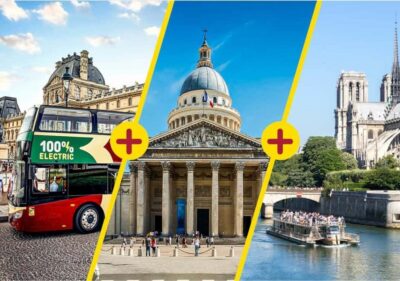
Big Bus Hop-on Hop-off Tour and Pantheon entrance
Read our review →