
Reviewed · TUK-TUKS
Paris: Most Iconic Monuments Guided Tour by Tuk Tuk
Paris is a city where the famous sights are scattered across a wide map. This three-hour private tuk-tuk tour tackles that problem head-on, carrying up to six people from the Champs Elysées and Arc de Triomphe to Montmartre, the Louvre, Notre Dame, and the Latin Quarter. You see a lot without spending half the day on foot or figuring out several metro connections.
I like the small-group format, which keeps your party together and gives you a more personal ride than a large coach. I also like the range of sights, from the grand avenues and palaces to the Sacré-Coeur and St Michel fountain. The main caution is guide quality: Sebastian has earned praise for detailed stories and excellent driving, but one recent experience found the commentary too thin, so your enjoyment may depend heavily on who leads the tuk-tuk.
In This Review
- Key points to know before booking
- Why a tuk-tuk works well for first-day Paris
- Starting at Invalides and heading up the Champs Elysées
- From the Moulin Rouge to Montmartre and Sacré-Coeur
- Opéra Garnier, Place Vendôme, and the Louvre carousel
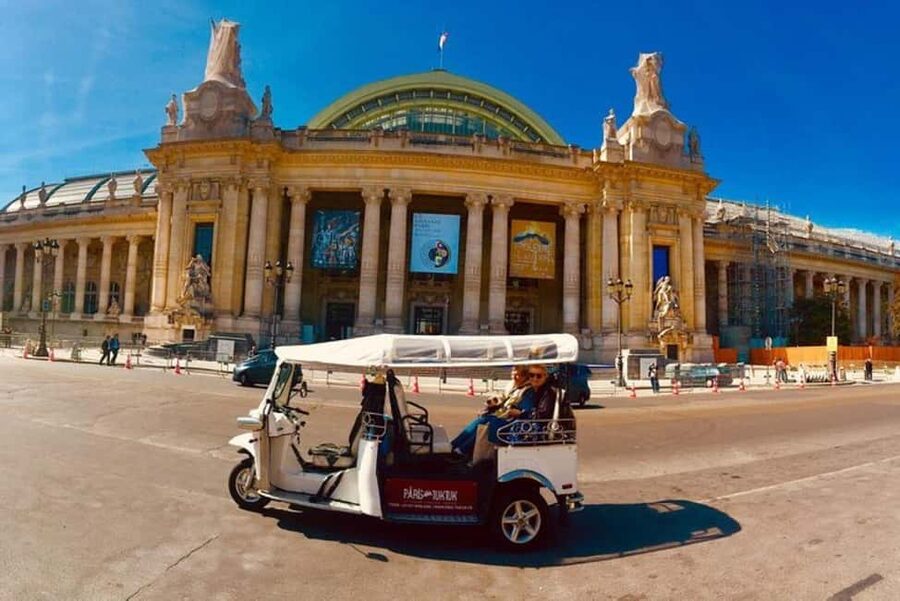
- Musée d’Orsay, Petit Palais, and Grand Palais
- Crossing Alexandre III Bridge toward Invalides
- Invalides, Pantheon, and Notre Dame
- Ending at the St Michel fountain
- What the guide can add to the ride
- Who should book this three-hour Paris tour
- Should you book it?
- FAQ
- How long does the Paris tuk-tuk tour last?
- How many people can ride in one tuk-tuk?
- What is the price of the tour?
- Where does the tour begin?
- Which languages are available?
- What is included in the tour?
Key points to know before booking
- One tuk-tuk carries up to six people, making the flat group price easier to justify for families and friends.
- The route covers a remarkable spread of Paris, from Montmartre in the north to Invalides, Notre Dame, and St Michel.
- You see major landmarks from the road, rather than spending time inside museums or monuments.
- Sebastian is praised for history, anecdotes, and driving, while guide quality may not be perfectly consistent.
- The tour starts at Place Vauban, in front of the Dome des Invalides, and lasts three hours.
- French, English, and Spanish tours are available, with free cancellation up to 24 hours before departure.
Why a tuk-tuk works well for first-day Paris
I think this tour makes the most sense when you want to get your bearings quickly. Paris is compact in feel but broad in distance. The Eiffel Tower area, Montmartre, the Louvre, the Champs Elysées, and Notre Dame are not all next door to one another, and walking between them would take much of your day.
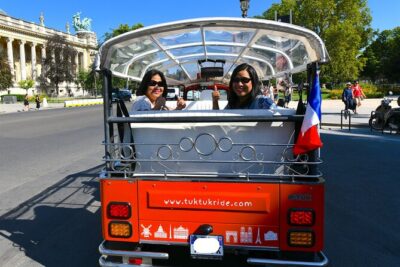
A tuk-tuk gives you an open-sided ride through the city. You remain close to the streets and buildings, rather than looking out from a sealed coach. At the same time, you avoid the long walks that connect one famous sight to the next. That can be useful if you have limited mobility, are traveling with children, or simply want to save your energy for later.
The price is $423 per group of up to six people. With six riders, that works out to $70.50 per person for three hours. For two people, the cost is much steeper, at $211.50 each. The value improves sharply as your group fills the tuk-tuk, so this is best suited to a family or group of friends rather than a solo visitor.
Keep your expectations clear. This is a sightseeing ride, not a museum tour. You will pass important cultural places and hear about them from the guide, but the schedule does not include interior visits to the Musée d’Orsay, Louvre, Pantheon, or other monuments.
A few more Paris ideas to compare
- Paris with a Tuk Tuk – Private 3-Hour TukTuk Tour
★ 4.5 · 104 reviews - Paris: Nighttime Tuk-Tuk Tour
★ 4.2 · 104 reviews - Paris Tuk-Tuk: 2, 4 or 6H First Highlights & Parisian Areas
★ 4.7 · 103 reviews
Starting at Invalides and heading up the Champs Elysées
The meeting point is Place Vauban, in front of the Dome des Invalides. That gives you an impressive beginning, with the grand Invalides complex as your first major Paris setting.
From there, the route heads toward the Champs Elysées. This broad avenue is one of Paris’s best-known urban scenes, lined with shops, restaurants, formal buildings, and heavy traffic. It leads to the Arc de Triomphe, where twelve avenues meet in the great star-shaped junction known as the Étoile.
The tuk-tuk is useful here because you can take in the scale of the avenue without committing to a long walk. The trade-off is that this is a moving view. You should think of the stop as an introduction to the city’s grand style, not as a long visit to each monument.
The Arc de Triomphe also gives your guide a chance to explain how Paris was reshaped around its major axes. If your guide is in the same league as Sebastian, you can expect more than names and dates, including stories and useful context as you move through the city.
From the Moulin Rouge to Montmartre and Sacré-Coeur
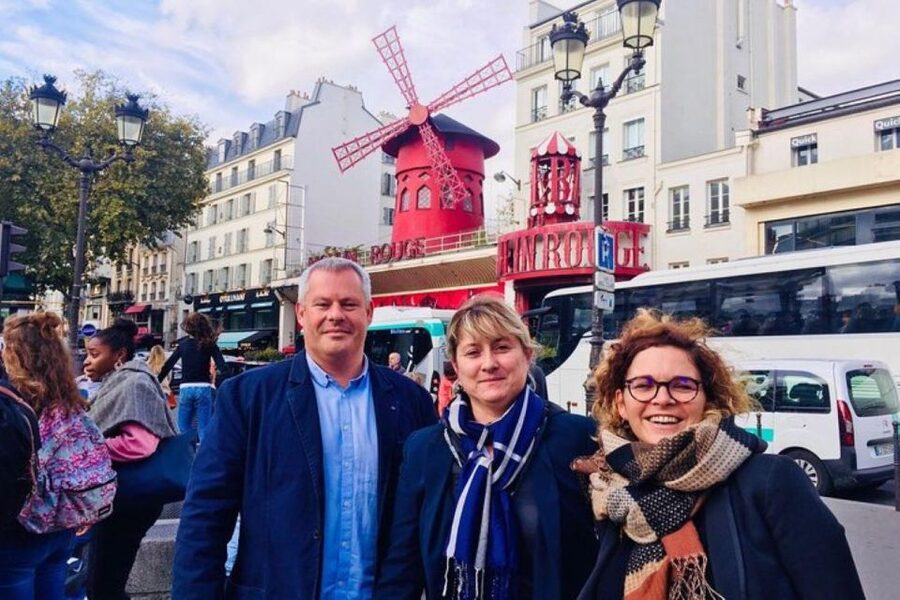
The route then turns toward the Moulin Rouge and Montmartre. The Moulin Rouge is one of Paris’s most recognizable entertainment landmarks, with its famous red windmill and long association with cabaret.
Montmartre offers a different mood from the polished Champs Elysées. Its name brings to mind artists, cafés, steep streets, and the hill crowned by Sacré-Coeur. The district has a strong identity, and seeing it in the same outing as the central monuments helps you understand how varied Paris can be from one neighborhood to the next.
Sacré-Coeur is the spiritual high point of the Montmartre section, both literally and symbolically. The white basilica rises above the city and is one of Paris’s most familiar views. From a tuk-tuk, you can appreciate its position on the hill without making the entire climb on foot.
There is a practical limit here. Three hours is not enough for a slow wander through Montmartre’s side streets, nor does the tour promise time inside Sacré-Coeur. If this is the part of Paris you most want to explore, use the tuk-tuk tour as an overview and return later for a longer walk.
Opéra Garnier, Place Vendôme, and the Louvre carousel
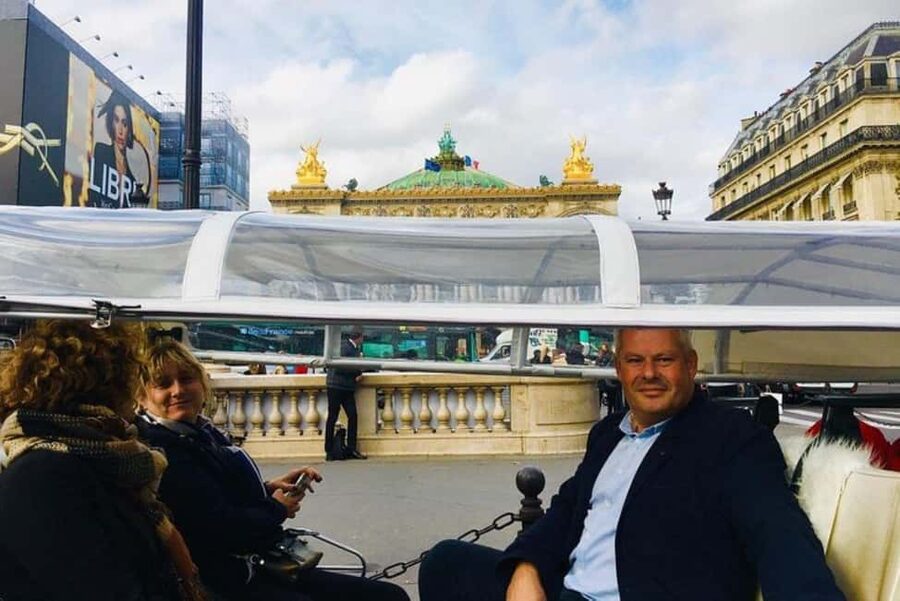
After Montmartre, the tour returns toward the center and reaches the Opéra Garnier. This grand opera house is known for its ornate exterior and lavish Second Empire design. Even from outside, it helps explain the formal, theatrical side of Paris architecture.
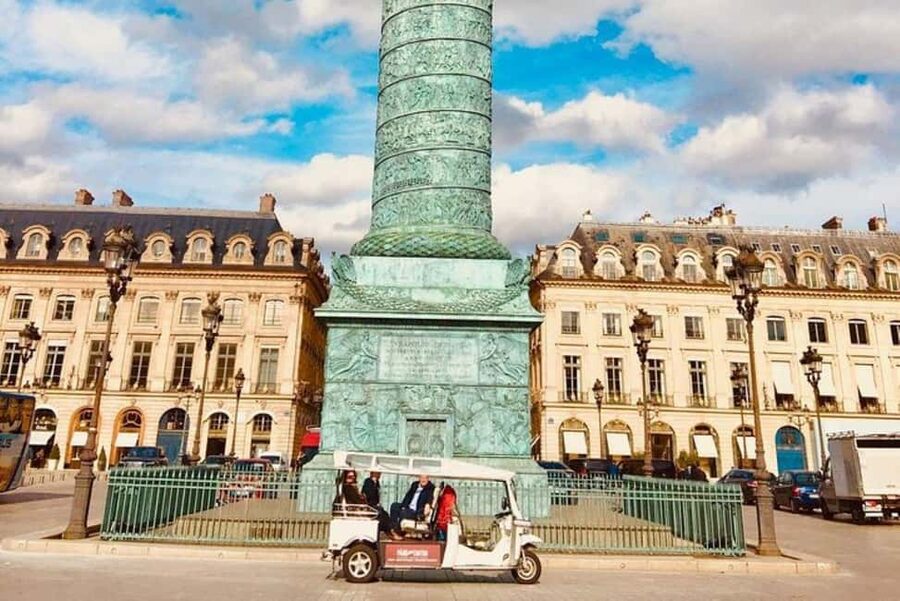
Place Vendôme brings another kind of elegance. The square is associated with luxury, fine jewelry, and carefully arranged classical buildings. It is a small but telling part of the city’s polished center, and it contrasts nicely with the rougher, more artistic character of Montmartre.
The route also includes the Louvre carousel. This is the area beneath and near the Louvre’s famous palace complex, where the scale of the former royal residence becomes clear. You get the visual impact of the Louvre without spending hours inside its galleries.
That distinction matters. The Louvre cannot be meaningfully visited in a few minutes, and this tour does not pretend otherwise. Instead, you receive a city overview that points out where the museum fits into Paris’s larger story. I would book a separate Louvre time slot if you want the paintings, sculpture, and palace interiors.
A different way to spend the day in Paris:
- Paris: Louvre Museum Timed-Entrance Ticket
★ 4.6 · 71,977 reviews - Disneyland® Paris 1-Day Ticket
★ 4.6 · 49,412 reviews - Paris: Versailles Palace and Gardens Full Access Ticket
★ 4.6 · 41,579 reviews - Paris: Arc de Triomphe Rooftop Tickets
★ 4.6 · 34,264 reviews
Musée d’Orsay, Petit Palais, and Grand Palais
The Musée d’Orsay is another major cultural stop on the route. The museum occupies a former railway station and is especially known for its nineteenth-century art collections. From the outside, its large clock and riverfront position make it easy to recognize.
The tuk-tuk then takes in the Petit Palais and Grand Palais. These neighboring buildings near the Champs Elysées are known for their grand façades and exhibition spaces. The glass roof of the Grand Palais is especially distinctive, while the Petit Palais has a more compact, decorative appearance.
This stretch is valuable because it links several important Paris institutions in one sequence. You see how the city placed art, architecture, avenues, and public buildings close together. Once again, though, the experience is about orientation and exterior views. If you want to see the art inside the Musée d’Orsay, this ride cannot replace a museum visit.
I also would not expect long photo sessions at every site. The itinerary covers a great deal of ground, and the vehicle’s main advantage is movement. You get more locations, but less time at each one.
Crossing Alexandre III Bridge toward Invalides
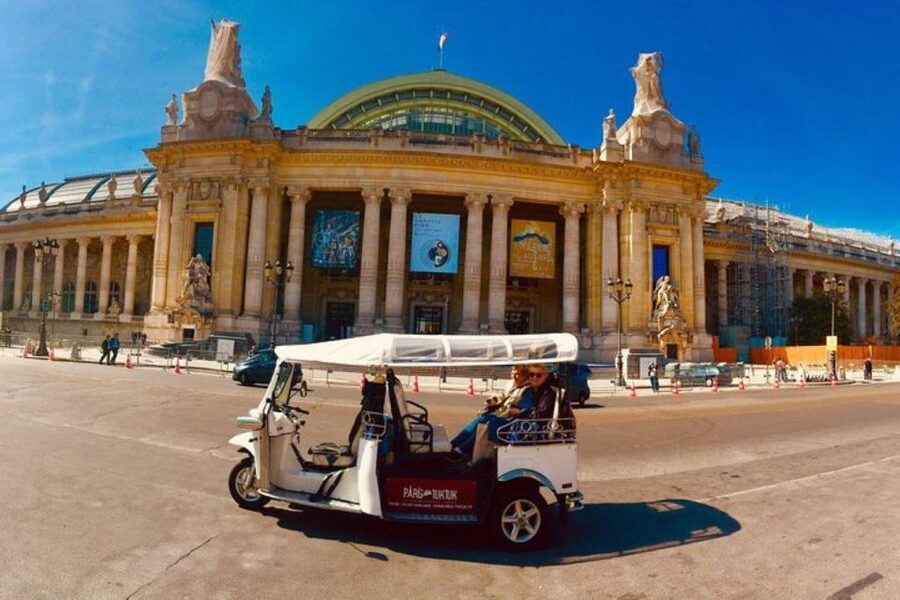
The Alexandre III Bridge is one of the most decorative bridges over the Seine. Its lamps, sculptures, and ornate details make it a memorable crossing, with strong views toward the Invalides dome and surrounding riverfront buildings.
This is one of the route’s most satisfying transitions. The bridge connects the monumental center with the Invalides area, and it gives you a sense of Paris as a city shaped by the Seine. You move from grand public buildings to open river views, then back into the historic core.
The bridge can also be a good moment to listen rather than simply collect another landmark. A good guide can explain why the bridge was built and how it fits into the city’s ceremonial avenues. The quality of that explanation matters, which is why the guide question is not a minor detail on this tour.
Invalides, Pantheon, and Notre Dame
The route returns to Invalides, whose large gold dome is among Paris’s most recognizable landmarks. The complex is tied to France’s military past and includes Napoleon’s tomb. The meeting point in front of the Dome des Invalides means you begin and end near a major monument rather than an anonymous side street.
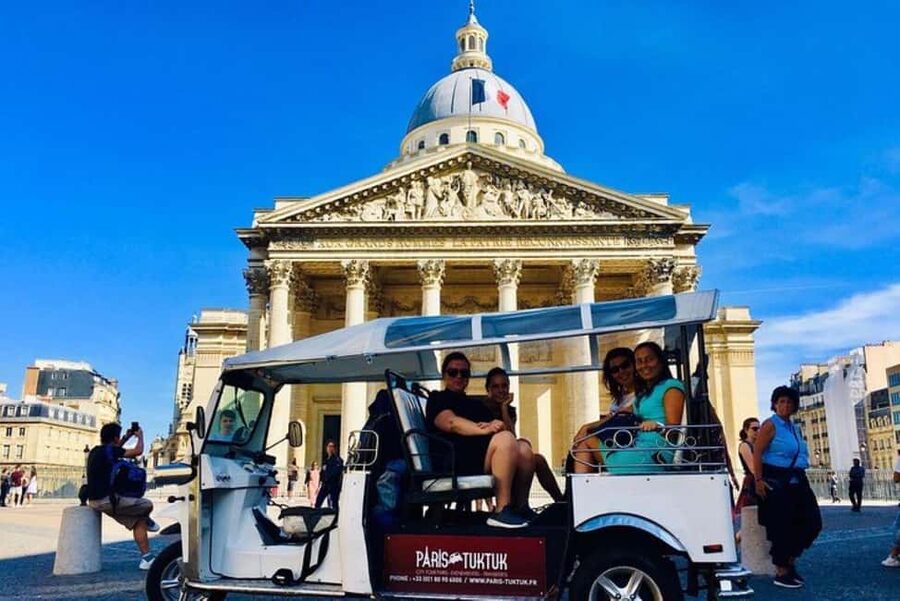
The Pantheon adds a civic and intellectual note. Its huge classical dome and columns give it a different character from the churches and palaces on the route. It is associated with major French figures and national memory, though the tour gives you a view and explanation rather than an extended interior visit.
Notre Dame provides the emotional centerpiece for many first-time visitors. The cathedral sits on Île de la Cité, at the heart of the old city, and its position makes clear how much Paris grew around the Seine. Seeing Notre Dame in the same tour as the Louvre, Invalides, and Sacré-Coeur helps you connect the city’s religious, royal, artistic, and political landmarks.
With so many stops, the guide’s pacing becomes important. The best version of this tour gives you a clear sense of what you are seeing and which places deserve a return visit. A less informative guide may leave you with a long list of names but little understanding. One recent booking reported exactly that problem, so I would ask questions during the ride if you want more detail.
Ending at the St Michel fountain
The tour concludes at the St Michel fountain. This is a convenient central finish, near the Latin Quarter and the Seine, rather than back at the starting point in front of Invalides.
That ending can work well if you want to continue sightseeing, find lunch, or explore the Left Bank on your own. It also means you should plan your next step before setting off. The tour does not include food or drinks, and there is no meal stop built into the three-hour schedule.
Ending away from the starting point is not a flaw, but it is worth noting. If you have luggage, a timed reservation elsewhere, or a car waiting at Place Vauban, allow time to get back across the city.
What the guide can add to the ride
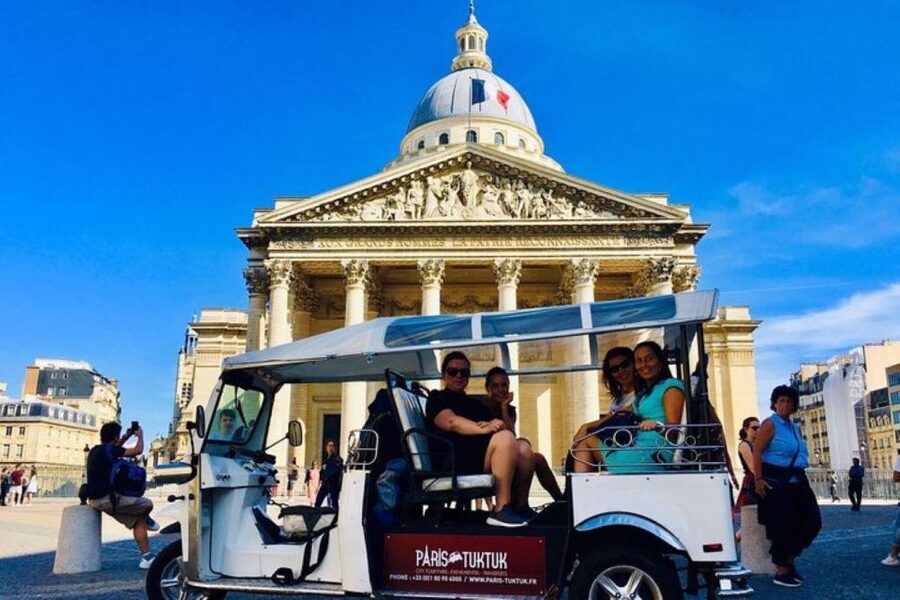
The guide is the main variable in this experience. Tours are available in French, English, and Spanish, and the private format allows the guide to speak directly to your group.
Sebastian has been specifically praised for being an excellent driver and for sharing plenty of history, anecdotes, and useful information while moving through Paris. That combination is exactly what this tour needs. Smooth driving helps you enjoy the ride, while stories turn a parade of façades into a readable city.
At the same time, you should not assume every guide will offer the same level of commentary. One account described the information as sparse and found the experience less meaningful as a result. Since the tour covers many landmarks quickly, a quiet guide can make the outing feel like transportation with a view.
The private setting gives you one useful advantage: you can ask for clarification. Ask about the buildings you care about, and say so if you want more context rather than a fast roll past another monument.
Who should book this three-hour Paris tour
I would consider this tour for:
- First-time visitors who want to see the major sights before choosing where to return.
- Families who want to limit long walks and keep everyone in one vehicle.
- Groups of up to six who can share the flat price.
- People with mobility concerns, since the ride reduces the distance between landmarks.
- Visitors with only a short stay in Paris.
- Anyone who prefers a private guide over a large group.
I would be more cautious if your main goal is museum time, detailed neighborhood walks, or long visits inside monuments. The tour gives you breadth, not depth. It is also less attractive financially for only one or two people unless saving time matters more to you than the price per person.
The booking terms are traveler-friendly. You can reserve now and pay later, and cancellation is free up to 24 hours before departure. Starting times vary, so you need to check availability for your date.
Should you book it?
Book this tuk-tuk tour if you want a fast, private introduction to Paris and your group includes enough people to make the price sensible. The route covers an impressive list of landmarks, and the ride is especially useful when walking long distances is difficult or when your Paris schedule is tight.
I would book it with realistic expectations: you will see the outside of many famous places, not tour their interiors. I would also treat the guide as the deciding factor. Sebastian’s strong mix of driving skill, facts, and anecdotes shows how good this experience can be, but the uneven commentary reported elsewhere means the ride is not equally reliable with every guide.
For six people, it can be a practical way to get a citywide overview in three hours. For two people, compare the cost with a walking tour or public transport before committing. If you want a broad first look at Paris, this is a sensible choice. If you want to study one neighborhood or museum closely, save your money for a slower, more focused experience.
FAQ
How long does the Paris tuk-tuk tour last?
The tour lasts three hours.
How many people can ride in one tuk-tuk?
The private tuk-tuk is designed for a group of one to six people.
What is the price of the tour?
The price is $423 per group of up to six people.
Where does the tour begin?
The meeting point is Place Vauban, 75007 Paris, in front of the Dome des Invalides.
Which languages are available?
The live guide is available in French, English, and Spanish.
What is included in the tour?
A guided tour is included. Food and drinks are not included.
Newest additions around Paris
- Family escape Game with kids and teens on the Île de la Cité★ 4.5 · 11 reviews
- Private Photoshoot with the Iconic Eiffel Tower in Paris★ 5.0 · 11 reviews
- Paris: Batobus Hop-On Hop-Off Cruise & Landmarks Audio Tour★ 3.0 · 11 reviews
- Paris Revolutionary Walking Tour: Iconic French Sights & Stories★ 5.0 · 11 reviews
- 2-day Private Mont Saint-Michel, 3 Loire Castles, D-Day Express★ 4.5 · 11 reviews
- Guided and Private Tour of 3 hours through Paris aboard a Citroën 2cv★ 5.0 · 11 reviews
- Kids in the Kitchen – CrOisSaNtS★ 4.0 · 11 reviews
- Paris: Ghosts and Dark Stories Guided Walking Tour★ 4.1 · 11 reviews
Tuk-Tuks, compared.
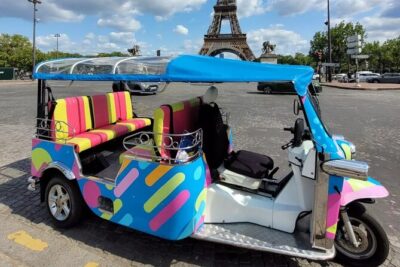
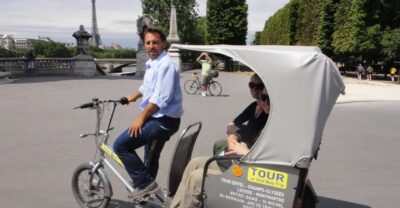
Paris Tuk-Tuk: 2, 4 or 6H First Highlights & Parisian Areas
Read our review →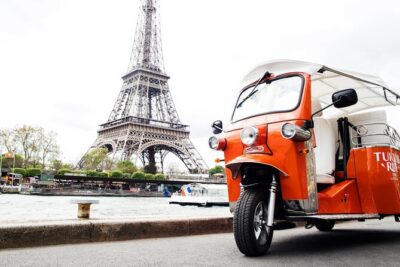
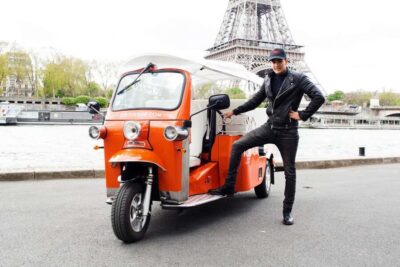
Premium private tour of Paris in an Electric TukTuk (4 hours)
Read our review →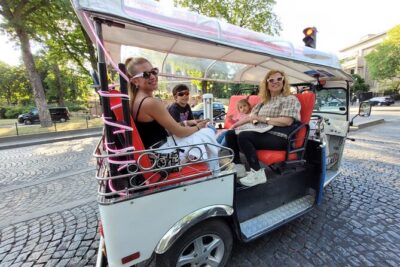
Browse the lists this tour appears in