
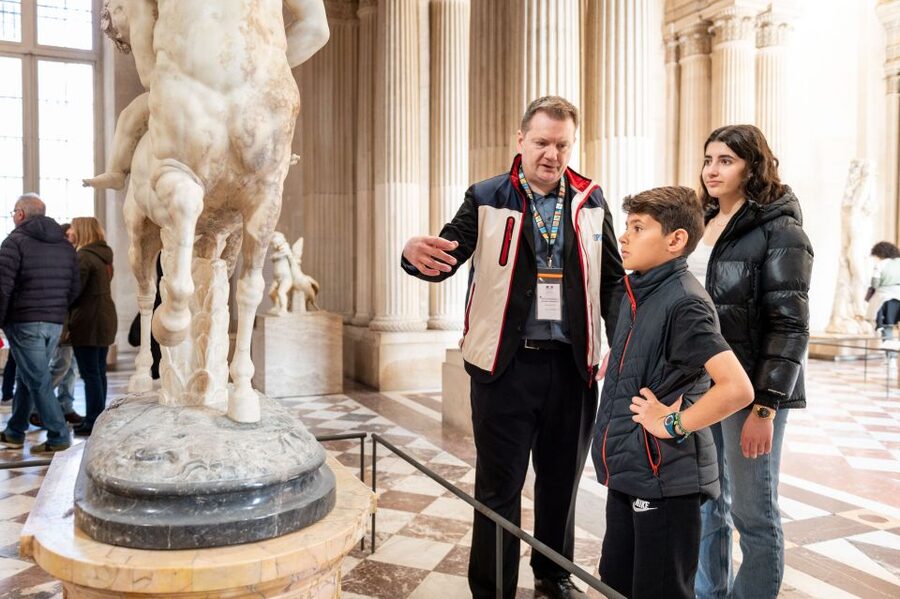
Reviewed · LOUVRE MUSEUM TOURS
Paris: Louvre Private Family Tour for Kids + Reserved Entry
The Louvre can swallow a whole day, especially with children in tow. This two-hour private tour cuts through the maze and takes your family to the museum’s headline works, including the Mona Lisa, Venus de Milo, and Winged Victory. The child-focused format uses questions, deduction, and stories to turn famous paintings and statues into a family activity rather than a long march through galleries.
I like the one-guide-for-your-family format, since the guide can adjust the pace and explain art at a level your children understand. I also like the reserved entry and efficient route, which matter in a museum this large. The catch is the price, $294 per person, and the child-friendly style depends heavily on your particular guide and on telling the operator your children’s ages before the visit.
In This Review
- Key points to know before booking
- Why a private Louvre visit works better for families
- Meeting at the Louis XIV statue
- Inside the Louvre: a fast route through a huge museum
- The Mona Lisa: famous, crowded, and still worth seeing
- Venus de Milo and the appeal of Greek sculpture
- Winged Victory at the Daru staircase
- Egyptian art, French royal power, and more
- What the guides do best
- Is $294 per person a fair price?
- The two-hour limit and family stamina
- Who should book this Louvre experience?
- Practical details that make the visit easier
- Should you book this private Louvre tour?
- FAQ
- How long is the private Louvre family tour?
- What works of art are included?
- Is the Louvre entrance ticket included?
- Does the tour include temporary exhibitions?
- How many people can join the private group?
- What ages are suitable for this tour?
- Where do I meet the guide?
- What should I bring and what bags are allowed?
Key points to know before booking
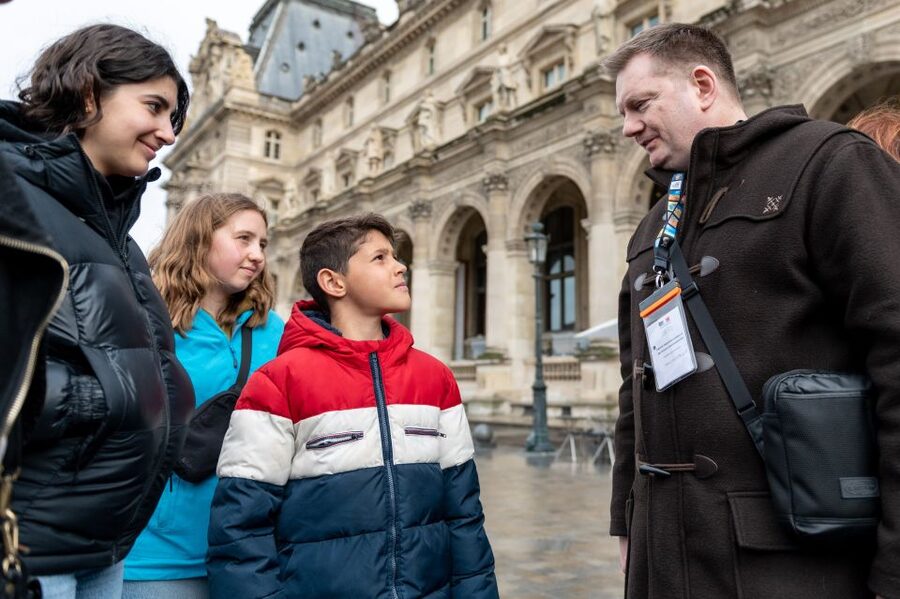
- The tour is limited to six people, so your guide can respond to your family instead of delivering a fixed speech to a crowd.
- The main route includes the Mona Lisa, Venus de Milo, and Winged Victory, with additional stops drawn from Egyptian, Renaissance, royal, and Revolutionary collections.
- Children up to age 15 are the target audience, and you should provide every child’s age so the guide can adjust the visit.
- Reserved entry uses a separate entrance, helping you spend more of your two hours looking at art rather than waiting.
- The best guides make the art feel like a game, using questions and stories. Corinne, Nadia, Astrid, Martin, Clément, and others have earned especially warm praise for working with children.
- Two hours is a smart limit for younger children, but it is also short for a museum of this size. You will see highlights, not the whole Louvre.
Why a private Louvre visit works better for families

The Louvre is not simply a large museum. It is a former royal palace with miles of galleries and collections covering thousands of years. For a first visit, the problem is rarely finding something interesting. The problem is deciding what to skip.
A private guide solves that problem quickly. Instead of studying a map and debating which wing to visit, you follow a route built around the museum’s most important works. The guide can also connect the art to bigger ideas: Greek mythology, Egyptian beliefs, the French monarchy, the Renaissance, and the political changes that shaped France.
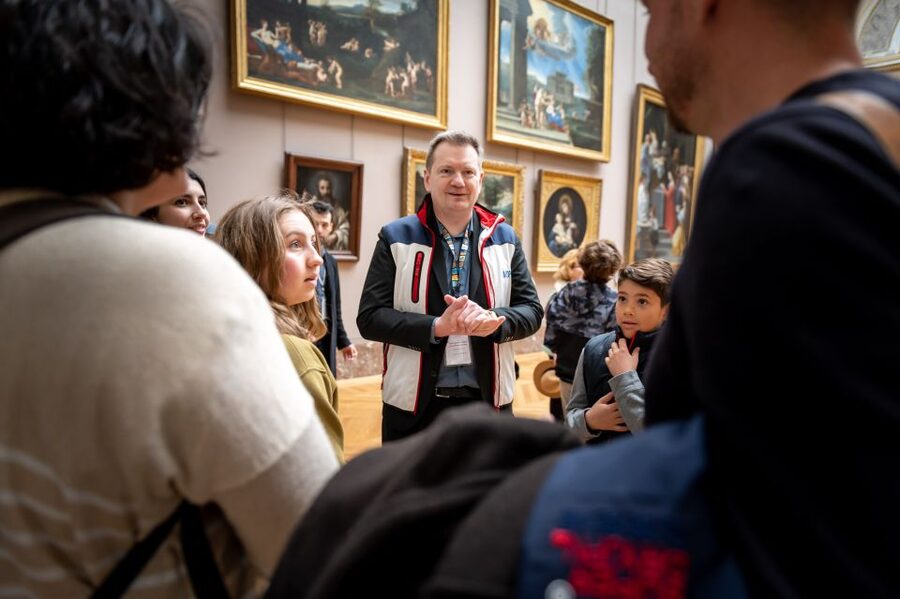
The family focus is the real reason to choose this tour over a standard art walk. Your children may be asked to spot clues, work out what a figure is doing, or explain what they notice in a painting. That approach gives younger visitors a job. They are not expected to stand quietly while an adult recites dates.
The strongest family experiences described by the guides named above share a pattern: short explanations, frequent questions, plenty of stories, and a willingness to change pace. Corinne was praised for keeping young children involved and even pointing out useful facilities. Nadia was especially effective with children aged 11 and 13, while Astrid adjusted to a group with children aged seven, seven, and nine.
Still, do not assume every guide will run a full scavenger hunt. One family expected games and detective tasks but received a more traditional explanation of the art. The guide was pleasant and effective with the Louvre’s highlights, yet the children became bored. When you book, give clear details about your children’s ages, interests, and attention spans.
More ways into the Louvre:
- Paris: Louvre Museum Timed-Entrance Ticket
★ 4.6 · 71,977 reviews - Paris: Louvre Guided Tour with Reserved Access & Boat Cruise
★ 4.3 · 16,353 reviews - Louvre Museum Masterpieces Guided Tour with Access
★ 4.5 · 12,023 reviews
Meeting at the Louis XIV statue
You meet at 8 Place du Carrousel, in front of the Louis XIV statue in Napoleon Square. The statue is listed on Google Maps as Louis XIV sous les traits de Marcus Curtius (copie).
This is a useful detail because the Louvre has several entrances, courtyards, statues, and large open spaces. Do not simply arrange to meet outside the Louvre and hope you find one another. Use the exact statue name and arrive with enough time to locate the meeting point.
The tour returns to the same general location after two hours. The guide handles the museum route, but you still need to arrive ready for security and museum entry procedures. Bring a passport or identity card. Large bags, luggage, and oversize luggage are not allowed, so pack lightly.
Reserved entry is one of the most useful practical features. It does not mean the museum will be empty. The Louvre can remain crowded, particularly around the Mona Lisa. It does mean your family can use a separate entrance and avoid wasting as much of the visit in the main admission line.
Inside the Louvre: a fast route through a huge museum

The two-hour schedule is built around major works rather than a complete survey. That is the right choice for most families. You will get a clear introduction to the museum and its best-known art, but you should not expect to see every department.
Guides praised in family visits have taken groups through 12 to 14 recognizable pieces in an efficient yet relaxed manner. That gives you a sense of scale. The tour may include more than the three named masterpieces, but the exact route can change with crowd levels, museum conditions, and the ages of your children.
You will also hear about the Louvre building itself. One guide explained the palace and the history of the French monarchy, adding a useful layer for adults who have already seen the art on a previous visit. That sort of context helps you understand why the museum feels more like a city than a single gallery.
The best part is the balance. Adults get art and history; children get stories, clues, and direct questions. The guide may spend longer at a sculpture your child finds interesting and move faster through a room that loses everyone’s attention.
The Mona Lisa: famous, crowded, and still worth seeing
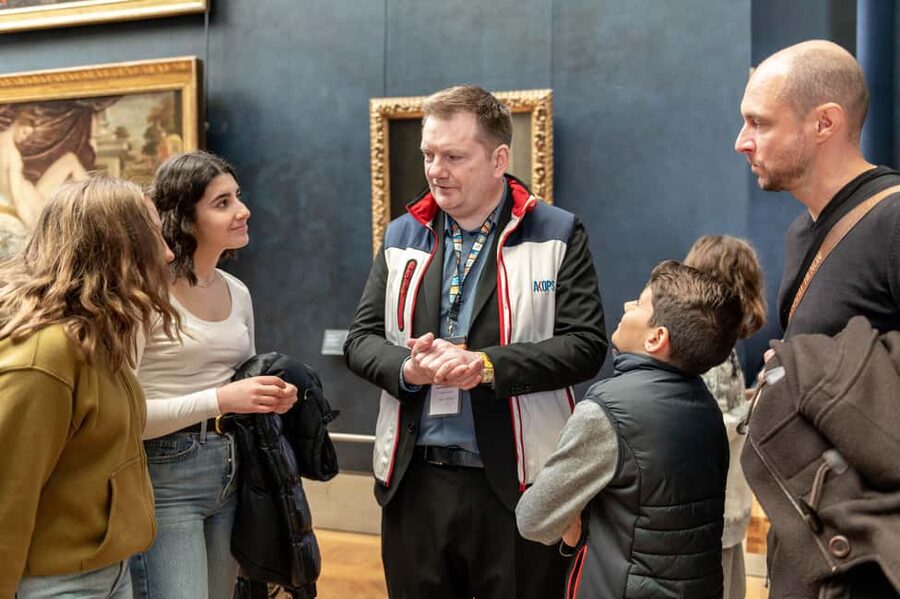
The Mona Lisa is the stop most children already know. It is also the point where many visitors discover that fame brings crowds. You will likely see a line or gathering around the painting, even with reserved entry into the museum.
A guide helps here by giving the painting a place in the larger story rather than treating it as a quick photo stop. Children can think about the famous expression, the sitter’s pose, the landscape, and why the work became such a cultural icon. The interactive format uses the painting as a puzzle, asking your young detectives to look closely rather than simply wait for a turn at the front.
Manage expectations before you arrive. You may not get a long, quiet look. The value comes from reaching the room efficiently, understanding what you are seeing, and moving on before the children lose patience.
A few more Paris ideas to compare
- Paris: Private Photoshoot at the Eiffel Tower
★ 4.7 · 2,636 reviews - Top Private Cruises in Paris with French Champagne and surprises
★ 5.0 · 1,553 reviews - Private Paris Airport Arrival Transfer – CDG & ORLY Airports
★ 4.5 · 1,119 reviews - Paris Private Arrival Transfer from Charles de Gaulle (CDG) or Orly (ORY)
★ 4.0 · 1,084 reviews
Venus de Milo and the appeal of Greek sculpture
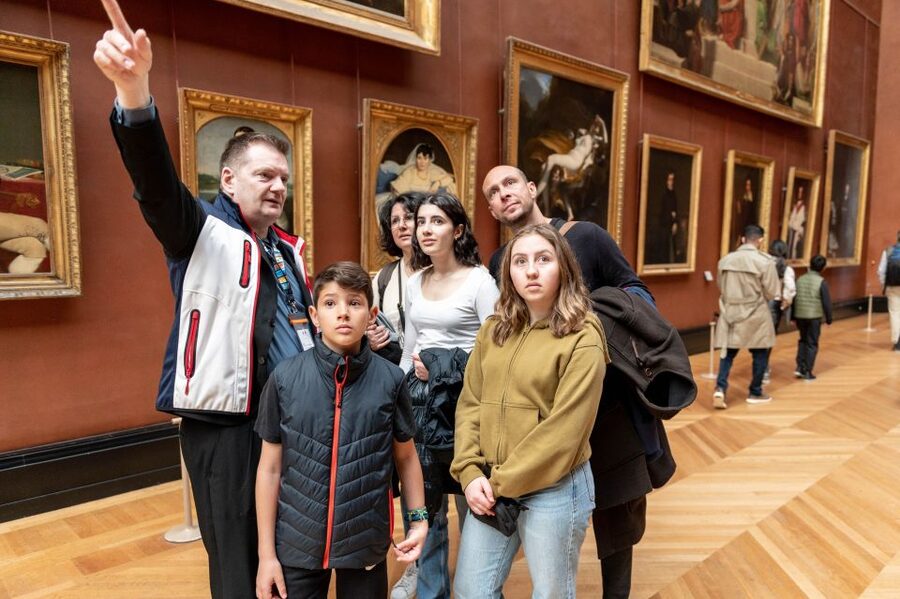
The Venus de Milo offers a change of mood from the Mona Lisa. This ancient Greek statue is large, instantly recognizable, and easy for children to approach through questions about the missing arms, body position, and original appearance.
A good explanation can make sculpture feel active. Your guide might ask what the figure is doing, how the artist created movement, or what clues reveal the statue’s identity. Children do not need a long lecture on classical art to understand that a damaged statue can still be one of the most famous objects in the museum.
This is also a good stop for families with mixed ages. Younger children can focus on the visible mystery of the missing arms, while older children and adults can consider mythology, artistic ideals, and the way ancient works were later admired and collected.
Winged Victory at the Daru staircase
The Winged Victory of Samothrace, also called Nike, is one of the Louvre’s most dramatic displays. Positioned at the top of the Daru staircase, it has a strong sense of movement even though the head and arms are missing.
The setting does much of the work. Your family sees the statue from below, then approaches it from different angles. A guide can point out the wings, flowing clothing, and forward motion, helping children understand how a sculpture can suggest wind and speed without moving.
This stop often works well late in a short route because it feels like a grand finale. It also gives the guide an easy way to explain how museums display large works and why the staircase matters to the experience.
Egyptian art, French royal power, and more
The tour is not limited to three famous works. It also introduces the Egyptian collection, Italian Renaissance art, French royal treasures, and subjects connected with the French Revolution.
Egyptian material can be particularly effective with children. Stories about rulers, gods, burial customs, and ancient objects give the guide plenty of ways to ask questions and encourage observation. One family booked with two boys aged six and ten specifically to see the Egyptian collection, and the guide kept them engaged with stories and facts about ancient Egypt.
Italian Renaissance works provide a chance to discuss painting, portraiture, religion, and the people who commissioned art. The French royal material links the museum to the palace that came before it, while the French Revolution adds a sharper political chapter.
You will not study each subject in depth during a two-hour visit. Instead, the route gives you a connected outline of the Louvre: ancient civilizations, Greek sculpture, Renaissance painting, French monarchy, and political change. For a first family visit, that structure is more useful than wandering without a plan.
What the guides do best
The guide is the main variable in this experience. The highest praise goes to guides who combine subject knowledge with a lively teaching style.
Martin has been praised for explaining both the Louvre and its history while keeping a family involved. Eric was credited with fitting a great deal into two hours, including the building and Parisian royal history. Thyago made a visit work for adults and a 10-year-old granddaughter, while Erwan used stories to make history easier for children.
Clément appears repeatedly in family accounts for his energy, flexibility, and ability to adjust to children. He handled a last-minute timing problem for one family and adapted another visit for a 10-year-old Norwegian child and a 73-year-old grandmother.
Nadia is another strong name to request if the booking system allows it. Families with boys aged 11 and 13 found her stories and fun facts held their attention for more than two hours. Astrid was praised for noticing when children were tired and changing the pace.
These examples also show what you should ask for. Tell the operator the ages of every child, not just the number of children. A six-year-old, a 10-year-old, and a 15-year-old need different explanations. If your child loves mythology, Egypt, royal history, or detective-style questions, say so before the tour.
Is $294 per person a fair price?
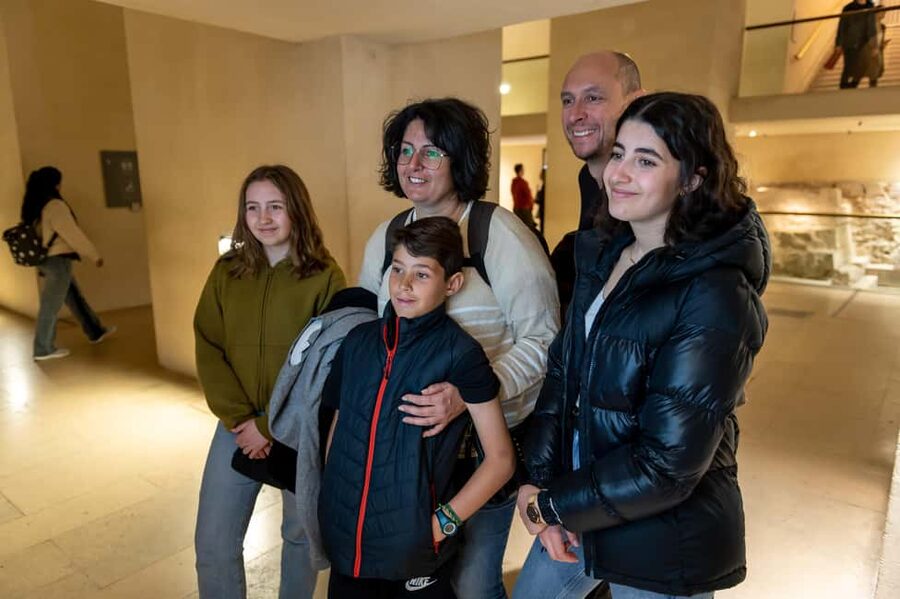
At $294 per person, this is not a budget museum visit. The price includes a private guide and the Louvre permanent collection ticket, listed at €28 per adult. It does not include temporary exhibitions or the optional audio guide, which costs €4.80.
The value depends on your group size and priorities. For a family of four, you are paying for a focused route, reserved entry, and two hours of one-on-one attention from a guide. That can be worthwhile if you have limited time, young children, or no interest in planning your own Louvre strategy.
The price is harder to justify if you are happy to wander, already know the museum well, or have older teenagers who prefer independent viewing. It is also worth remembering that two hours goes quickly. You are paying for efficiency and family teaching, not for a full day inside the museum.
A private tour can also prevent a common family mistake: spending the first hour finding the right wing, then reaching the famous works when everyone is tired. Several guides have been praised for avoiding lines and taking families directly to the most important rooms.
The two-hour limit and family stamina
Two hours is usually a sensible length for children aged seven to 12. It gives you enough time for the main works without asking young visitors to spend half a day on their feet.
It can feel rushed for adults who want a serious art study. One family specifically noted that the guide reached the key works and periods, but the schedule felt tight. That is the tradeoff. You will see the Louvre’s greatest hits, not settle into every gallery.
If your children are tired, hungry, or already museum-weary, even a private format cannot solve everything. The guide can adjust the route, but you should treat the tour as a focused introduction. If the family still has energy afterward, you can continue independently.
Groups are capped at six people. If your party is larger, you need a second booking. That may mean two guides or separate arrangements, so check the details before paying if you are traveling with an extended family.
Who should book this Louvre experience?
I would choose this tour for a first family visit with children up to age 15, especially if your Paris schedule is tight. It is also a good match for parents who want their children to see major art but do not want to spend hours managing maps, crowds, and gallery decisions.
It suits families with children aged seven to 13 particularly well, based on the way guides have handled those age groups. Younger children can enjoy the stories and visual puzzles, while older children can take on more difficult questions about history and art.
Families with children above 15 should choose the separate Louvre Masterpieces Private Tour with Reserved Entry instead. This child-focused tour is designed for groups that include children up to age 15.
The experience is less suitable if you want a quiet, scholarly examination of a small number of works. It is also a poor fit for anyone who cannot manage a large museum route. The activity information says it is wheelchair accessible, but it also lists people with mobility impairments as unsuitable. If mobility is a concern, contact the operator before booking and ask exactly what route and assistance are possible.
Practical details that make the visit easier
Book an earlier start if you can choose among several times. One family wished it had arrived earlier, since the Louvre is so large that every minute matters. An earlier visit may also help you begin before the busiest part of the day, though crowd levels can change.
Wear comfortable shoes and keep bags small. You must bring a passport or identity card, and large bags or luggage are not allowed.
The activity offers free cancellation up to 24 hours before the start time and a reserve-now, pay-later option. Those terms are useful if your Paris plans are still moving, but check the final booking conditions for your selected date and time.
The guide can speak English, French, German, Italian, Portuguese, Spanish, Chinese, Russian, or Japanese. Confirm your preferred language when booking. The tour is private, so you are not sharing the guide with unrelated groups.
Should you book this private Louvre tour?
Book it if you want the Louvre’s key works without turning your family into a tired expedition team. The reserved entry, private route, and child-focused questions solve the museum’s biggest problems: its size, its crowds, and the short attention spans that come with family sightseeing.
I would be more cautious if your budget is tight or if your children expect a formal scavenger hunt. The guide makes a major difference, and the two-hour format leaves little room for lingering. Provide accurate ages and specific interests before the tour, then ask for an interactive approach.
For most first-time Paris families, the tour offers a practical way to meet the Mona Lisa, Venus de Milo, Winged Victory, and several major periods without wandering blindly. It costs a lot, but for a family that values time and a good guide, it can be money well spent.
FAQ
How long is the private Louvre family tour?
The guided visit lasts two hours. Starting times depend on availability for your chosen date.
What works of art are included?
The planned route includes the Mona Lisa, Venus de Milo, and Winged Victory of Samothrace. The visit also covers selected works from the Italian Renaissance, Egyptian collections, French royal history, and the French Revolution.
Is the Louvre entrance ticket included?
Yes. Entry to the Louvre’s permanent collection is included, with the adult ticket listed at €28. Temporary exhibitions are not included.
Does the tour include temporary exhibitions?
No. Access to temporary exhibitions is not included in this activity.
How many people can join the private group?
The maximum is six people per group. Groups larger than six require a second booking.
What ages are suitable for this tour?
The activity is designed for groups with children up to age 15. You should provide the age of every child so the guide can adjust the explanations and pace.
Where do I meet the guide?
Meet in front of the Louis XIV statue in Napoleon Square, near the Louvre’s outside entrance at 8 Place du Carrousel. The statue appears on Google Maps as Louis XIV sous les traits de Marcus Curtius (copie).
What should I bring and what bags are allowed?
Bring a passport or identity card. Luggage, large bags, and oversize luggage are not allowed.
Newest additions around Paris
- Family escape Game with kids and teens on the Île de la Cité★ 4.5 · 11 reviews
- Private Photoshoot with the Iconic Eiffel Tower in Paris★ 5.0 · 11 reviews
- 2-day Private Mont Saint-Michel, 3 Loire Castles, D-Day Express★ 4.5 · 11 reviews
- Paris: Batobus Hop-On Hop-Off Cruise & Landmarks Audio Tour★ 3.0 · 11 reviews
- Paris Revolutionary Walking Tour: Iconic French Sights & Stories★ 5.0 · 11 reviews
- Guided and Private Tour of 3 hours through Paris aboard a Citroën 2cv★ 5.0 · 11 reviews
- Kids in the Kitchen – CrOisSaNtS★ 4.0 · 11 reviews
- Paris: Ghosts and Dark Stories Guided Walking Tour★ 4.1 · 11 reviews
Louvre Museum Tours, compared.


Louvre Guided Tour with Reserved Access & Boat Cruise
Read our review →
Louvre Museum Masterpieces Guided Tour with Access
Read our review →
Louvre Museum Entry Ticket With Host and River Cruise
Read our review →
Priority Access Louvre with Host -Direct to Mona Lisa
Read our review →
Mona Lisa & Louvre Masterpieces Tour with Reserved Access
Read our review →
Louvre Museum – Exclusive Guided Tour (Entry Included)
Read our review →
Louvre Reserved Ticket and River Cruise Combo
Read our review →Browse the lists this tour appears in