
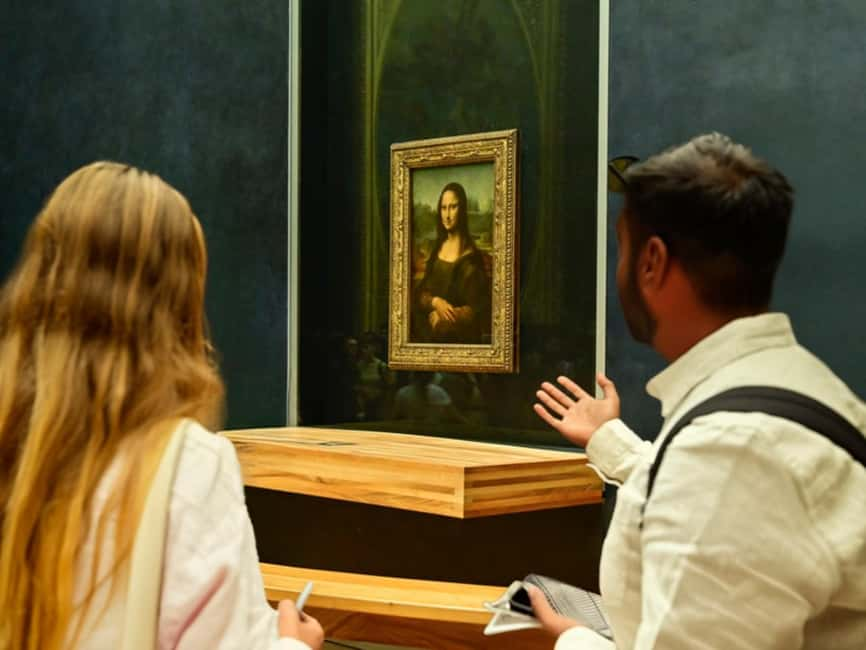
Reviewed · LOUVRE MUSEUM TOURS
Paris: Louvre Museum Guided Tour with Skip-the-Ticket-Line
The Louvre is too large for a casual wander, especially on a first visit. This 2 to 2.5-hour guided tour gives you a clear route through its essential works, from the Venus de Milo to Leonardo’s Mona Lisa, without leaving you to hunt for them alone.
I like the fast-track museum entry and the small-group format. A strong guide can explain why a painting matters, point out details you would miss, and keep the visit moving through the crowds. The main drawback is time: two hours covers the famous highlights, not the whole Louvre, and the Mona Lisa can still be surrounded by a slow-moving crowd.
In This Review
- Key points at a glance
- Why a guided Louvre visit makes sense
- Meeting at Louis XIV beneath the Pyramid
- Fast-track entry does not mean no security wait
- A two-hour route through the Louvre’s greatest hits
- Venus de Milo, beauty with an unanswered question
- Winged Victory of Samothrace and the power of movement
- The Mona Lisa, famous and often hard to see
- Italian Renaissance rooms with Botticelli and Raphael
- The guide makes or breaks the experience
- What happens when the tour ends
- Who should book this Louvre tour?
- Should you book it?
- FAQ
- How long does the Louvre guided tour last?
- What language is the tour offered in?
- Where do I meet the guide?
- Does the tour include museum admission?
- Can I stay in the Louvre after the tour?
- Will I skip the security line?
- Can I bring luggage or a large backpack?
- Is the tour suitable for people with mobility impairments?
Key points at a glance

- Meet by the Louvre Pyramid: Find the equestrian statue of Louis XIV and look for the guide holding a The Tour Guy sign.
- See the essential masterpieces: The route includes the Mona Lisa, Venus de Milo, Winged Victory of Samothrace, and major Italian Renaissance works.
- Get more than a photo stop: Guides explain the stories, symbolism, artists, and changing role of the Louvre.
- Small groups help: You can hear the guide without relying on earbuds, and questions are easier to ask.
- Leave bags at your hotel: Large backpacks, luggage, umbrellas, tripods, and items over 55 by 35 by 20 centimeters are not allowed.
- Stay after the tour: Once the guided portion ends, you may continue exploring until the museum closes, but you cannot re-enter after leaving the artwork area.
Why a guided Louvre visit makes sense

The Louvre is not simply a large art museum. It is a former royal palace with thousands of rooms, several wings, and more than 38,000 works in its collection. On your own, it is easy to spend twenty minutes finding a gallery and then miss the painting you came to see.
A guide gives your visit shape. Instead of treating the museum like a checklist, you get a running explanation of how the Louvre developed and why certain works became cultural icons. The tour also helps you make sense of the building itself, which can otherwise feel like a maze of staircases, corridors, and grand rooms.
I especially like this format for a first visit. You see the major attractions early, learn how to read some of the art, and then have the option to stay and explore at your own pace. It is a good balance between expert direction and free time.
The price is $76 per person. That is more than basic museum admission, but you are paying for entry, a reserved access arrangement, and a live English or Spanish-speaking guide. For someone with limited time in Paris, the value comes from reducing confusion and helping you see the works that matter most.
If you already know the Louvre well, or want to spend several hours studying one department, a self-guided visit may suit you better. This experience is built for orientation and highlights, not slow, specialist viewing.
More ways into the Louvre:
- Paris: Louvre Museum Timed-Entrance Ticket
★ 4.6 · 71,977 reviews - Paris: Louvre Guided Tour with Reserved Access & Boat Cruise
★ 4.3 · 16,353 reviews - Louvre Museum Masterpieces Guided Tour with Access
★ 4.5 · 12,023 reviews
Meeting at Louis XIV beneath the Pyramid
The meeting point is the equestrian statue of Louis XIV in front of the Louvre Pyramid. Look for a guide carrying a sign marked The Tour Guy.
Allow enough time to find the statue and group. The Pyramid is a busy meeting area, so do not rely on spotting a person instantly. Have your booking details ready, and keep your passport or identification card with you, since identification is listed among the items to bring.
The Pyramid is more than a useful landmark. It provides a memorable first view of the Louvre, linking the old palace buildings around the courtyard with the modern glass entrance. The tour includes a photo stop and passes by the Pyramid before entering the museum.
Wear comfortable shoes. Even with a planned route, the Louvre involves plenty of walking and some stairs. One guide received praise for allowing extra time to handle stairs, but you should still expect an active visit rather than a seated lecture.
Fast-track entry does not mean no security wait

The tour includes skip-the-ticket-line access through the Louvre’s glass Pyramid entrance. This is one of the strongest practical reasons to book a guided visit, particularly during the busy season.
There is an important distinction, though. You skip the ticket queue, but everyone still passes through security. The wait can reach about 20 minutes during high season. That is still much better than assuming every line disappears, and it helps explain why you should arrive on time rather than cutting it close.
Large bags create a real problem. The Louvre does not allow luggage, large backpacks, umbrellas, tripods, or any item larger than 55 by 35 by 20 centimeters. There is no coat check on site, and the lockers are not accessible to this small-group operation. Leave oversized belongings at your accommodation.
Weapons and sharp objects are prohibited. Smoking is not allowed, and baby strollers are not suitable for this activity. The experience is also not recommended for people with mobility impairments.
A two-hour route through the Louvre’s greatest hits
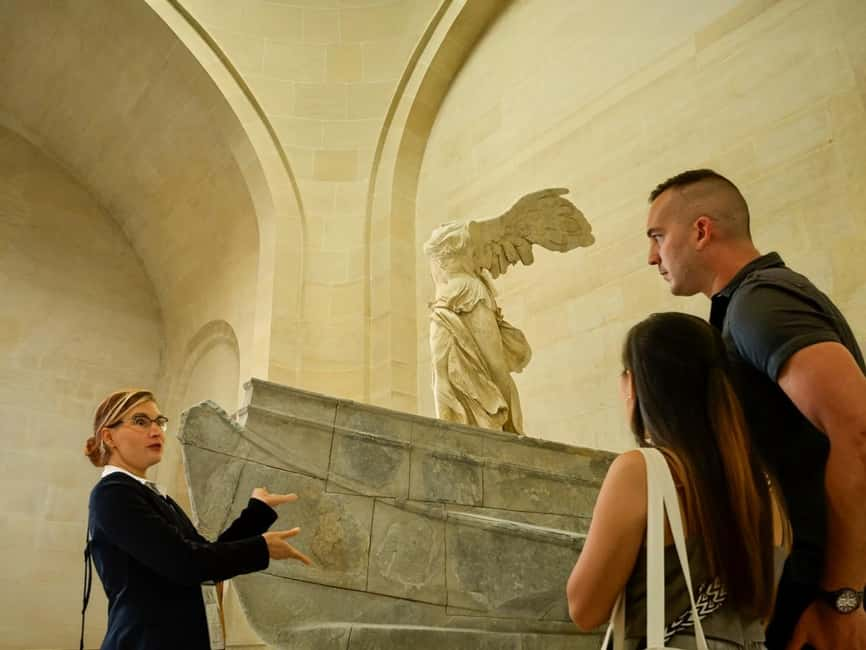
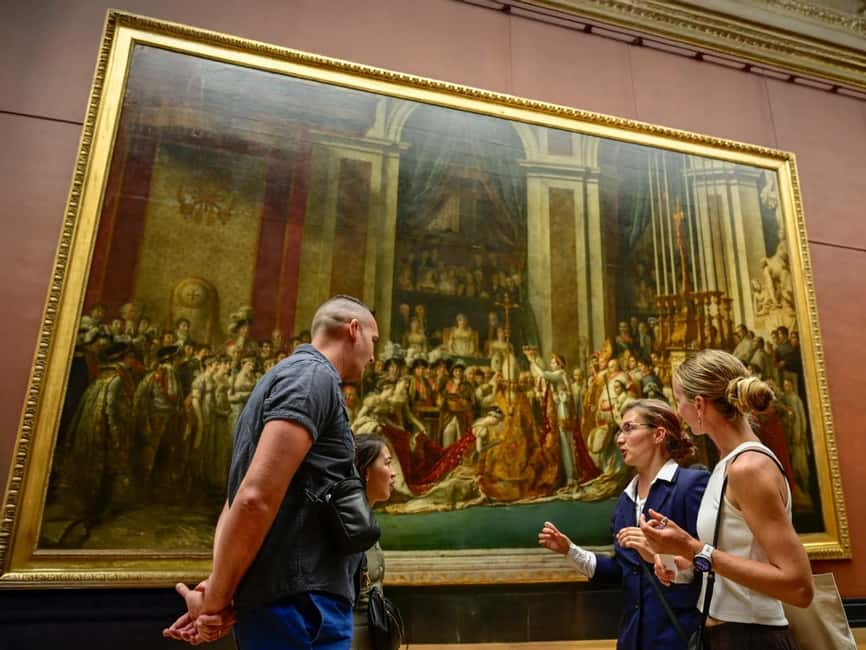
Once inside, the guide leads a roughly two-hour walk through the museum’s major rooms and works. The exact order can change with crowd levels and museum conditions, but the purpose remains the same: help you see the best-known pieces without wasting time on a wrong turn.
The route also includes some less expected installations and works beyond the standard postcard list. That matters because the Louvre can feel overly focused on three famous names from the public areas. A good guide widens your view just enough to show how the celebrated pieces fit into a much larger collection.
The guide’s role is central. Joe, Avi, Martin, Will, Flor, Astrid, Marianne, and others have led tours described as clear, funny, patient, and strong on French history and art. Astrid used treasure hunts and facts to keep children aged four and six involved, while other guides adjusted explanations for adults with very different levels of art background.
That range is useful. You do not need to arrive with a vocabulary of art terms. The best explanations here connect a detail in a painting to a larger idea, then move on before the talk becomes a lecture.
More Paris museums to visit:
- Paris: Orsay Museum Entry Ticket
★ 4.7 · 25,647 reviews - Paris: Louvre Museum Entry Ticket With Host and River Cruise
★ 4.6 · 9,926 reviews - Les Invalides: Napoleon’s Tomb & Army Museum Entry
★ 4.6 · 9,185 reviews - Louvre Museum – Exclusive Guided Tour (Entry Included)
★ 5.0 · 6,296 reviews
Venus de Milo, beauty with an unanswered question
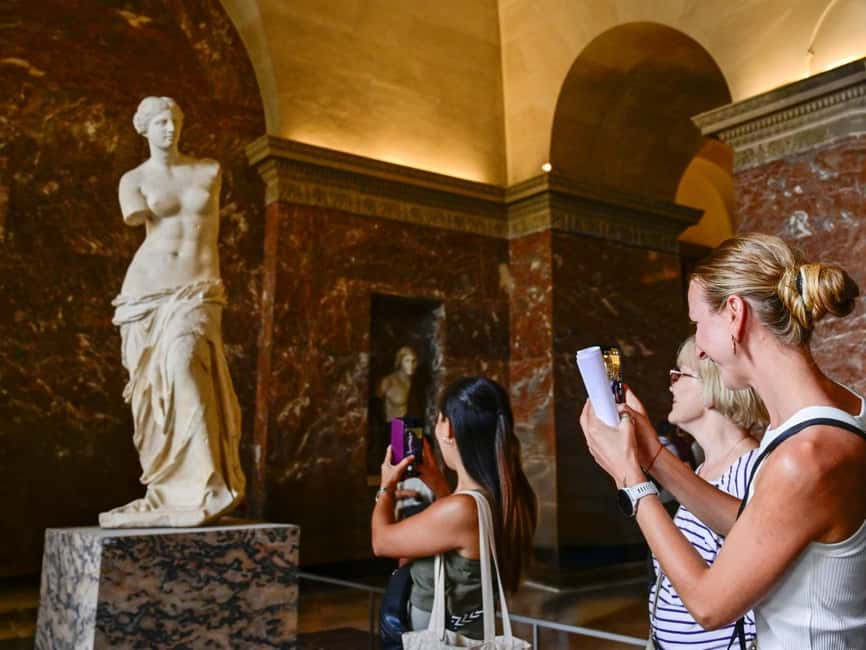
The Venus de Milo is one of the tour’s major sculpture stops. This ancient Greek statue has inspired artists for generations, and its missing arms are part of its lasting mystery.
You will not just be shown the sculpture and hurried along. The guide puts it into the wider story of classical art and explains why its pose, proportions, and surviving form have mattered so much. This is where a guide can change the experience. Without context, you may simply register a famous marble figure. With context, you begin to notice how the body is balanced, how the figure turns, and why the work has held attention for so long.
Crowds can gather around popular sculptures, so your viewing time may be shared with many other people. Bring patience and listen closely. You may not get a quiet room, but the guide helps you focus on the details in front of you.
Winged Victory of Samothrace and the power of movement
The Winged Victory of Samothrace, also called Nike, is another centerpiece. The Hellenistic statue portrays the Greek goddess of victory and is displayed at the top of a broad staircase.
Its impact comes from movement. The wings, forward-driving stance, and folds of the clothing suggest wind and momentum, even though the statue is made of stone. A guide can direct your attention to those choices instead of letting the staircase become just another photo stop.
This was a favorite work for at least one family on the tour, and it is easy to see why. The sculpture communicates quickly, even if you know little about ancient art. The explanation adds meaning without taking away the immediate visual effect.
The staircase also reinforces the need for comfortable footwear and steady pacing. If stairs are difficult for you, consider the mobility note carefully before booking.
The Mona Lisa, famous and often hard to see
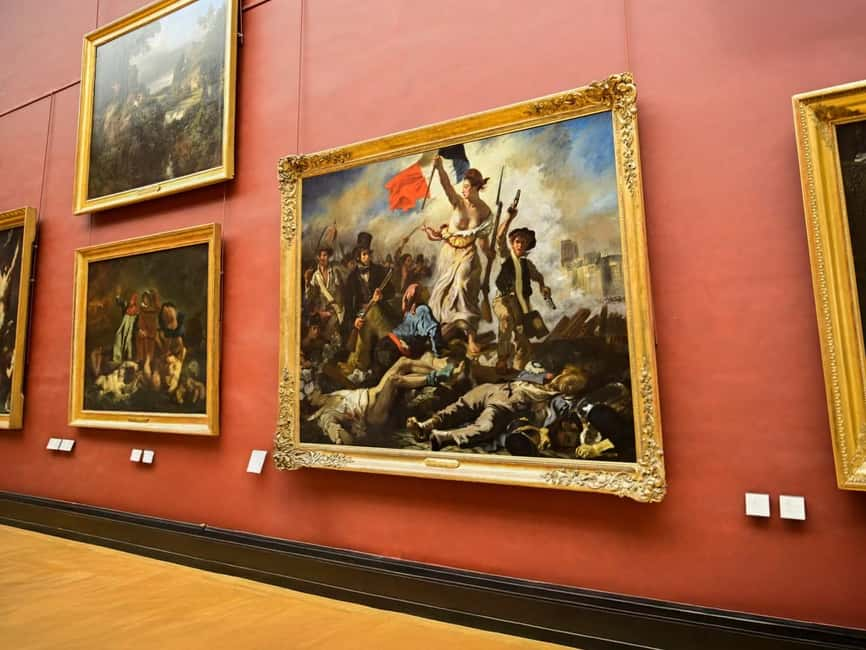
Leonardo da Vinci’s Mona Lisa is the tour’s biggest draw, but it is also the stop that requires the most realistic expectations.
The guide explains the story of Lisa Gherardini, the painting’s fame, and the long-running question about her expression. Is she happy, sad, amused, or simply looking at us in a way that changes with the viewer? You get useful background instead of only a quick glance and a photograph.
The room can be crowded, and the line or viewing area may prevent you from getting close. Skip-the-ticket-line entry does not mean you receive a private viewing space. The museum controls the artwork area, and the crowds around this single painting can be frustrating.
I recommend treating the Mona Lisa as one part of the visit, not the entire reason to go. Listen to the explanation, take in the painting if you can, and then give equal attention to the works that surround it. Several guides have made this point in practice by showing how much more the Louvre offers beyond its most famous portrait.
Photography and filming are strictly prohibited in temporary exhibition rooms. Follow signs and staff instructions throughout the museum, since rules can differ between galleries.
Italian Renaissance rooms with Botticelli and Raphael
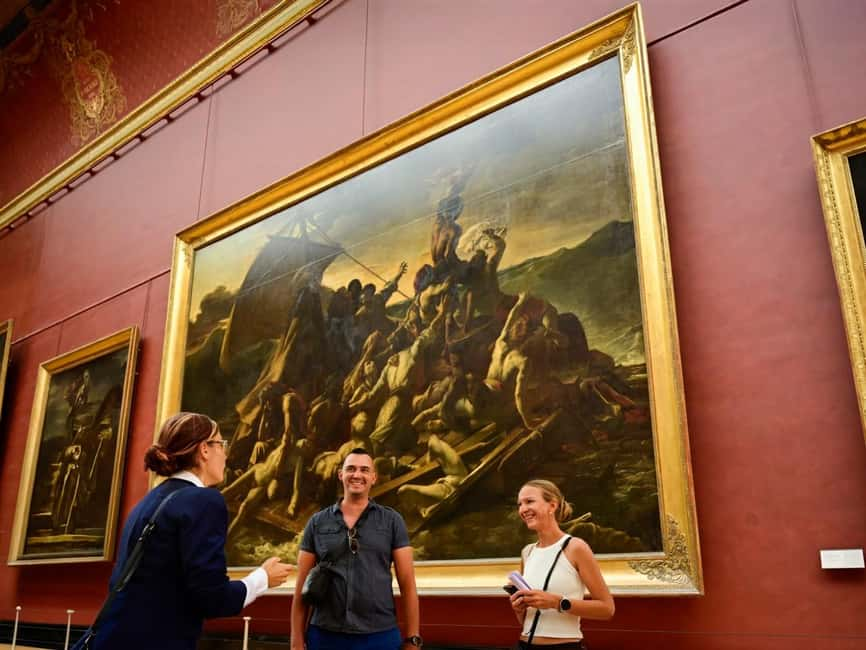
The tour continues through the Italian Renaissance collection, including work by Leonardo, Botticelli, Veronese, and Raphael. This section gives the visit artistic range after the ancient sculptures and the Mona Lisa.
You will see how artists used composition, color, gesture, and religious or mythological stories to guide the eye. If you are not an art specialist, the guide’s job is to identify what to look at first. A raised hand, a line of sight, a small figure in the background, or a change in light can tell you how the artist built the scene.
This is one of the tour’s best uses of time. You do not merely collect famous names. You learn a few practical ways to look at paintings, which can make the rest of your museum visit more rewarding.
The Louvre’s scale remains the catch. Even a well-planned highlights route cannot cover everything in two hours. One visitor felt the tour could have lasted longer, while another found the scheduled length ideal for a family. Your best choice depends on your stamina and plans for the day.
The guide makes or breaks the experience
The tour depends heavily on the person leading it. The strongest guides combine art history with stories, humor, and a sense of when to move on.
Joe has been praised for energetic storytelling and clear explanations of both art and the museum. Avi is known for mixing French history with humor, while Martin has been described as helpful and strong on the Louvre’s development from its early beginnings into a museum. Will has guided families through the highlights with wit and detail.
For children, Astrid’s treasure-hunt approach is a useful example of what makes a family visit work. A long stream of dates and artist names can lose a young audience quickly. Short challenges and visual clues give children something to do while adults listen.
Small groups also make a difference. You can usually hear the guide more easily than in a large group, and you have a better chance to ask questions. One visitor specifically valued not needing earbuds. Group sizes can vary because private and small-group options are available, so check the option you select when booking.
The guides speak English or Spanish. If you want a detailed conversation in one of those languages, choose accordingly.
What happens when the tour ends
After the guide says goodbye, you may remain inside the museum until closing time. This is a valuable part of the package because the guided route gives you a foundation, then lets you return to a room or department that caught your attention.
Plan this carefully. Once you leave the area where the artwork is displayed, you cannot re-enter. Do not exit to retrieve a forgotten item or meet someone outside unless you are ready to finish your museum visit.
Use the final minutes with the guide to ask for suggestions for the rest of your time in Paris. Several guides have helped guests find an additional department or offered a walk toward another section of the museum. That small exchange can help you decide what to see next instead of wandering until your energy runs out.
Food and drinks are not included. Since the activity lasts two to two and a half hours, plan refreshments before or after, while keeping in mind that you cannot bring large bags into the museum.
Who should book this Louvre tour?
I would choose this tour for a first-time visitor, a family, or anyone with one Paris afternoon and no desire to study a museum map. It is also a good fit if the Mona Lisa, Venus de Milo, and Winged Victory are on your must-see list.
The tour is especially useful if you want art explained in plain language. Guides have successfully handled groups with mixed experience, from people who know little about art to those who already have a strong interest.
I would hesitate if you need step-free access, want to bring a stroller, or plan to carry luggage. I would also choose a longer or more specialized experience if your main goal is one department rather than the Louvre’s signature works.
The $76 price is fair when you value time, direction, and a live guide. It is less compelling if you already have museum expertise, plenty of time, and the patience to navigate independently.
Should you book it?
Book this tour if you want to see the Louvre’s major works with a clear route and useful explanations. The fast-track ticket arrangement saves time at the ticket queue, though security can still take up to 20 minutes and the Mona Lisa area remains crowded.
You will not see the whole museum. That is not a failure of the tour, it is the honest limit of a two-hour visit to one of the world’s largest museums. You will see the essential works, learn how to look at them, and still have the choice to continue on your own. For many first visits, that is a sensible and good-value way to meet the Louvre.
FAQ
How long does the Louvre guided tour last?
The tour lasts approximately two to two and a half hours, including the guided museum visit.
What language is the tour offered in?
Live guides are available in English and Spanish.
Where do I meet the guide?
Meet at the equestrian statue of Louis XIV in front of the Louvre Pyramid. Look for someone holding a sign marked The Tour Guy.
Does the tour include museum admission?
Yes. Admission and skip-the-ticket-line access are included.
Can I stay in the Louvre after the tour?
Yes. You may remain inside until closing time after the guide leaves. Once you exit the artwork area, you cannot re-enter.
Will I skip the security line?
You skip the ticket line, but you still have to pass through security. During high season, the security wait can reach about 20 minutes.
Can I bring luggage or a large backpack?
No. Luggage, large backpacks, umbrellas, tripods, and items larger than 55 by 35 by 20 centimeters are not allowed. There is no coat check on site, and the lockers are not accessible to this small-group tour.
Is the tour suitable for people with mobility impairments?
The activity is not considered suitable for people with mobility impairments. Comfortable shoes are recommended because the visit involves substantial walking and stairs.
Newest additions around Paris
- Family escape Game with kids and teens on the Île de la Cité★ 4.5 · 11 reviews
- Private Photoshoot with the Iconic Eiffel Tower in Paris★ 5.0 · 11 reviews
- 2-day Private Mont Saint-Michel, 3 Loire Castles, D-Day Express★ 4.5 · 11 reviews
- Paris: Batobus Hop-On Hop-Off Cruise & Landmarks Audio Tour★ 3.0 · 11 reviews
- Paris Revolutionary Walking Tour: Iconic French Sights & Stories★ 5.0 · 11 reviews
- Guided and Private Tour of 3 hours through Paris aboard a Citroën 2cv★ 5.0 · 11 reviews
- Kids in the Kitchen – CrOisSaNtS★ 4.0 · 11 reviews
- Paris: Ghosts and Dark Stories Guided Walking Tour★ 4.1 · 11 reviews
Louvre Museum Tours, compared.


Louvre Guided Tour with Reserved Access & Boat Cruise
Read our review →
Louvre Museum Masterpieces Guided Tour with Access
Read our review →
Louvre Museum Entry Ticket With Host and River Cruise
Read our review →
Priority Access Louvre with Host -Direct to Mona Lisa
Read our review →
Mona Lisa & Louvre Masterpieces Tour with Reserved Access
Read our review →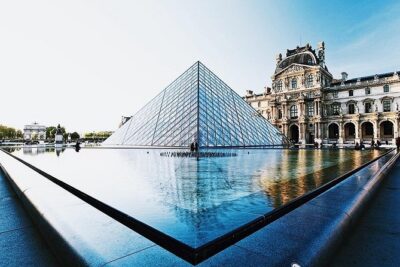
Louvre Museum – Exclusive Guided Tour (Entry Included)
Read our review →
Louvre Reserved Ticket and River Cruise Combo
Read our review →Browse the lists this tour appears in