
Reviewed · CYCLING TOURS
Paris Guided Bike Tour
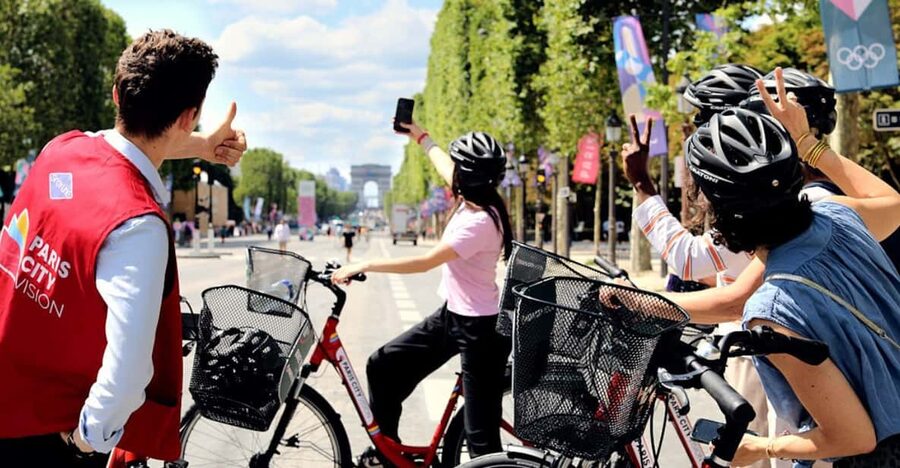
Paris reveals itself differently from a bicycle. In three hours, you move from the Louvre and Pont Neuf to Notre-Dame, the Latin Quarter, the Eiffel Tower, and the Champs-Élysées, while still slipping through quieter Parisian streets. I like the small groups of up to 12 and the chance to hear local stories from guides such as Andrea and Hugo. I also like that the guide can adjust the number of stops to suit the group.
The main drawback is simple: this is a sightseeing ride, not a series of museum visits. You will pass the Louvre, Orsay, and other major landmarks without going inside, and the food tips are useful, but tastings cost extra. You also need to be comfortable cycling in central Paris for three hours.
In This Review
- Key points to know
- Why a bicycle works so well in central Paris
- Starting beside the Louvre at Place des Pyramides
- From Pont Neuf to Notre-Dame and the Île de la Cité
- The Latin Quarter and Fontaine Saint-Michel
- Along the Seine toward the Invalides and Eiffel Tower
- The grand route: Alexandre III Bridge, Arc de Triomphe, and the Champs-Élysées
- Grand Palais, Petit Palais, and Place de la Concorde
- Saint-Germain-des-Prés and the return to the Louvre
- What the guides add to the ride
- Price, group size, and what you actually receive
- Who should book this bicycle tour?
- Should you book it?
- FAQ
- Where does the Paris bike tour begin?
- Where does the tour finish?
- How long does the tour last?
- How much does the tour cost?
- What languages are available?
- How large is the group?
- Does the tour enter the monuments?
- Are food tastings included?
- What is the minimum age?
- Is the tour suitable for wheelchair users?
Key points to know
- A long list of landmarks in one ride: See the Louvre, Notre-Dame, the Eiffel Tower, Arc de Triomphe, Concorde, and more without spending the day underground on the Metro.
- Small groups matter: With no more than 12 people, it is easier to hear the guide and ask questions.
- Guides add personality: Andrea and Hugo are noted for mixing solid facts with amusing stories and present-day Paris tips.
- The route includes quieter corners: You get more than the postcard sights, with alleys and streets that give Paris a village-like feel.
- Plan for active sightseeing: A reasonable level of cycling skill is required, and the minimum age is 13.
- The value is in orientation: At $43 per person, the tour can be a good first look at central Paris, but it does not include entry tickets or food.
Why a bicycle works so well in central Paris
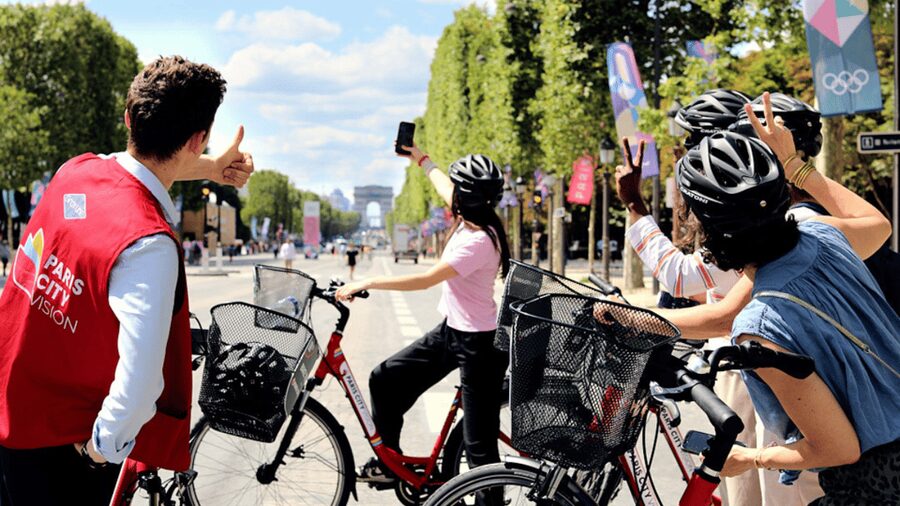
Paris is compact in its central districts, but the sights do not always line up neatly for a walking tour. A bicycle lets you cover a large stretch of the city while keeping the streets, bridges, river, and buildings in view.
You are not simply transported from one monument to the next. You pedal beside the Seine, cross or pass historic bridges, stop for photographs, and hear short explanations before moving on. That rhythm gives you a better sense of how the city fits together.
The ride also combines famous places with less obvious streets. This matters because Paris can feel very different from one block to the next. The Louvre and Champs-Élysées show off the city’s grand scale, while the Latin Quarter, Saint-Germain-des-Prés, and smaller lanes offer a more local and intimate mood.
The group size helps here. A guide can pause when the group wants a photograph, answer questions, or keep the ride moving when everyone has seen enough. You are not locked into a rigid schedule with a large crowd.
A few more Paris ideas to compare
- Versailles Palace Bike Tour with Market & Marie-Antoinette hamlet
★ 5.0 · 2,680 reviews - Paris: Charming Nooks and Crannies Bike Tour
★ 4.8 · 2,585 reviews - From Paris: Versailles Bike Tour w/ Palace, Gardens, & Picnic
★ 5.0 · 2,150 reviews
Starting beside the Louvre at Place des Pyramides
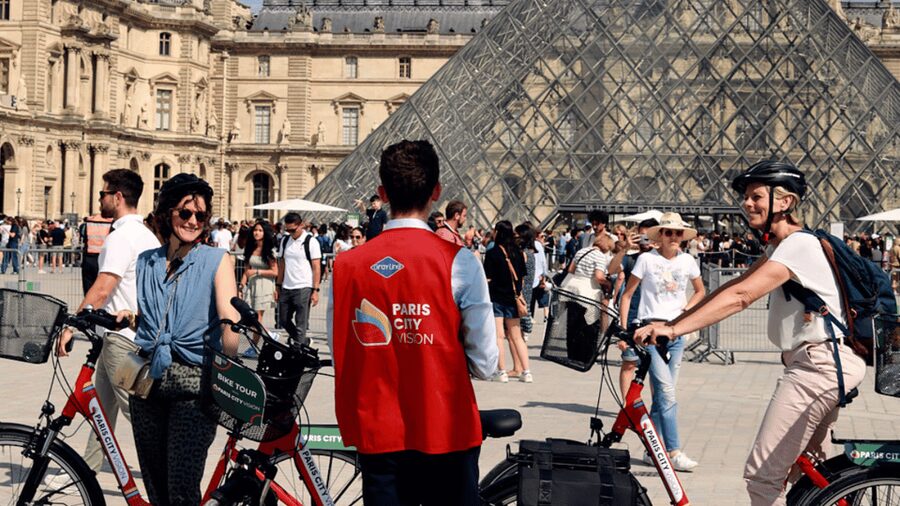
The meeting point is the ParisCityVision agency at 3 Place des Pyramides, in the heart of Paris. You should arrive 15 minutes early. The tour begins near the Louvre and finishes at the Musée du Louvre, so the location is useful if you are spending the rest of the day around the museum or central Paris.
The Louvre is one of those places that can swallow an entire day. On this tour, you see it from the outside and gain context about its role in the city, but you do not enter. That makes the ride a useful orientation before a separate museum visit, not a substitute for one.
The route also passes the Palais-Royal and the Comédie-Française. These early sights help set the tone: royal Paris, theatrical Paris, and the monumental center are all close together. The guide’s anecdotes are likely to be most useful here, since a few concise stories can make familiar facades easier to remember.
From Pont Neuf to Notre-Dame and the Île de la Cité
The ride continues to Pont Neuf, Place Dauphine, Notre-Dame, and the Île de la Cité. This is one of the strongest parts of the route because the city’s oldest central setting is packed into a short stretch.
Pont Neuf is the oldest standing bridge across the Seine, and Place Dauphine offers a quieter contrast nearby. You get a taste of how Paris can shift from grand public spaces to tucked-away corners in only a few minutes.
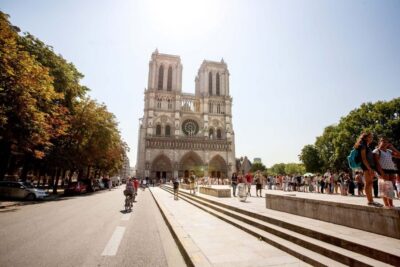
Notre-Dame is viewed from outside. The tour does not include entry, and access rules around the cathedral can change, so you should treat this stop as an exterior viewing and photo opportunity. The guide can add historical and cultural context, but you should not expect a full cathedral visit.
The Île de la Cité is especially well suited to a bicycle tour because you can see the relationship between the river, the island, and the surrounding neighborhoods without spending too much time walking between viewpoints. You will have to stay alert around city traffic and other cyclists, but the payoff is a clear sense of Paris as a river city.
The Latin Quarter and Fontaine Saint-Michel
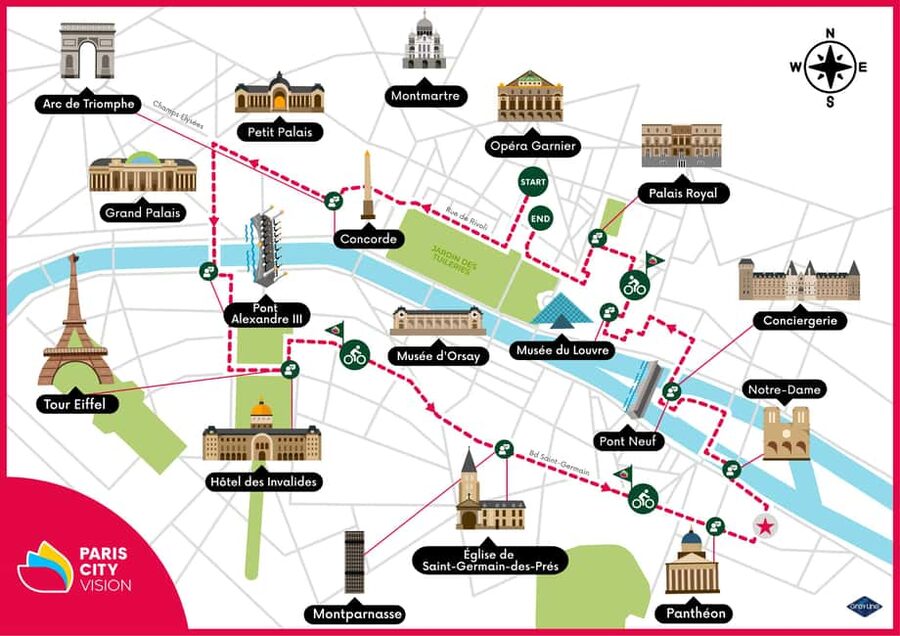
The Latin Quarter brings a different side of Paris. The route includes the Sorbonne area and Fontaine Saint-Michel, with a stop at or near Restaurant La Fontaine Saint Michel listed as a sightseeing point.
This section is valuable for travelers who want more than a checklist of monuments. The Latin Quarter is associated with student life, old streets, cafés, and long-running Parisian traditions. The guide also shares information about everyday habits and places connected with films, which can make the neighborhood feel less like a museum setting.
Do not confuse the food references with a paid tasting. The guide may suggest where to find a good croissant, ice cream, or other Parisian treat, but tastings are not included in the $43 price. That is not a serious flaw, since you can choose what to buy and when, but you should budget separately if the culinary stops appeal to you.
The cycling pace is described as calm, and that is important in this district. You are there to notice the streets and listen, not race from one point to the next. Still, the tour requires basic cycling ability and enough confidence to ride in an urban setting.
A different way to spend the day in Paris:
- Paris: Louvre Museum Timed-Entrance Ticket
★ 4.6 · 71,977 reviews - Disneyland® Paris 1-Day Ticket
★ 4.6 · 49,412 reviews - Paris: Versailles Palace and Gardens Full Access Ticket
★ 4.6 · 41,579 reviews - Paris: Arc de Triomphe Rooftop Tickets
★ 4.6 · 34,264 reviews
Along the Seine toward the Invalides and Eiffel Tower
After the Latin Quarter, the route moves toward Les Invalides and the Seine quays. These sections give you some of the best opportunities to understand Paris as a sequence of grand axes, open river views, and formal buildings.
Les Invalides is easy to recognize by its large dome and military associations. Again, you pass by rather than enter. The guide can explain the site’s significance, but if you want to see the interior or museum collections, plan a separate visit.
The quayside ride changes the mood. Pedaling beside the Seine gives you a break from dense streets and offers useful photo angles. The Eiffel Tower appears later in the route, and seeing it as part of the riverfront rather than as an isolated attraction gives you a stronger sense of its place in the city.
The itinerary lists the Eiffel Tower as a sightseeing stop, but no detailed stop length is promised. Your guide controls the timing based on traffic, weather, and the group. If you have a must-have photograph, mention it early so the guide knows what matters to you.
The grand route: Alexandre III Bridge, Arc de Triomphe, and the Champs-Élysées
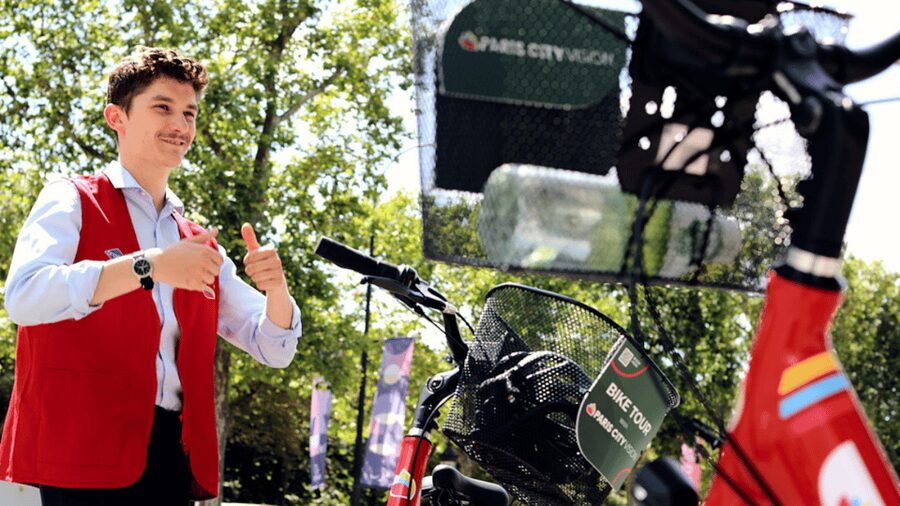
The ride then reaches the Alexandre III Bridge, Pont d’Alma, Arc de Triomphe, and Champs-Élysées. This is Paris at its most ceremonial.
The Alexandre III Bridge is famous for its ornate decoration and broad views toward the Invalides and the Seine. It is a natural place for a brief stop and photograph, though bridge traffic and crowds can affect how long you remain there.
Pont d’Alma adds another river crossing and another view of the city’s formal avenues. From there, the route heads toward the Arc de Triomphe and Champs-Élysées. You see how Parisian planning uses long, direct avenues to connect major monuments.
The Arc de Triomphe is viewed from outside, and the same applies to the Champs-Élysées. You will not climb the monument or enter any attraction during this tour. That limitation keeps the ride moving, but it also means you should book this experience for city orientation and outdoor sightseeing.
For a first day in Paris, this stretch can be especially useful. You get a mental map of several places that are often visited separately. Later, you can return to the Arc, the Eiffel Tower, or the Champs-Élysées with a better idea of how they relate to one another.
Grand Palais, Petit Palais, and Place de la Concorde
The Grand Palais and Petit Palais follow, along with Place de la Concorde. These buildings and spaces show off the city’s grand public design, with broad avenues and formal architecture.
The two palais are close to the Champs-Élysées and offer a useful comparison from the outside. You may appreciate the scale and decorative details more when the guide points them out than when you pass them alone. Since entry is not included, check your own museum plans if you want time inside either building.
Place de la Concorde is another major open space on the route. It links the Tuileries, the Champs-Élysées, and the Seine, so it helps explain the structure of central Paris. The stop also gives you a chance to pause after the busier avenue riding.
The tour’s flexible stopping pattern is a real advantage here. Some groups want more photographs, while others prefer to keep pedaling. A guide who adjusts the pace can make the three hours feel relaxed rather than crammed.
Saint-Germain-des-Prés and the return to the Louvre
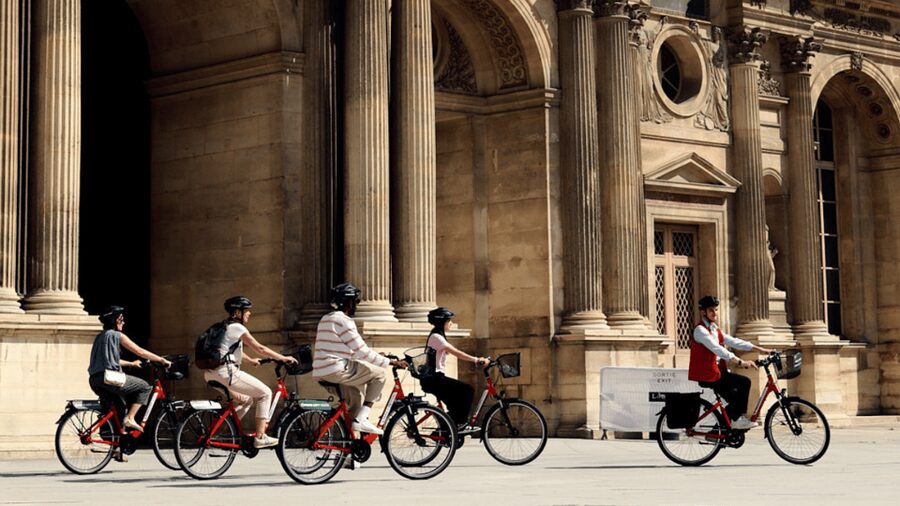
Saint-Germain-des-Prés and the Comédie-Française add two more cultural notes before the tour returns to the Louvre. Saint-Germain-des-Prés is a good counterpoint to the formal monuments, with its long connection to cafés, writers, artists, and intellectual life.
The Comédie-Française brings the focus back to performance and French culture. These final stops help round out the tour. You are not seeing only royal buildings and famous monuments, but also places tied to daily city life and the arts.
The finish is at the Musée du Louvre. That makes the tour convenient if you want to visit the museum afterward, though you should allow plenty of time for a proper museum visit. Three hours on a bicycle will give you an overview, not the energy for every gallery.
What the guides add to the ride
A good guide is the difference between a pleasant bicycle route and a useful Paris introduction. The strongest feedback centers on guides Andrea and Hugo. Andrea is described as warm, attentive, and able to explain the city without overloading the group. Hugo is noted for combining facts with fun stories and for speaking about both Paris’s past and its present.
That balance is exactly what I want on a city ride. Too many dates turn a tour into a lecture, while too few details leave you with little more than photographs. Here, the guide is expected to explain historical points, Parisian customs, filming locations, and food addresses, then respond to your questions.
The language options are English, French, and Spanish. If you care about a particular language, confirm availability when you select a departure time. Live guiding also means the experience can respond to the group, unlike an audio recording that gives every person the same fixed script.
Price, group size, and what you actually receive
At $43 per person, this is a reasonable price for a three-hour guided ride through a large part of central Paris. You are paying for the guide, the route planning, and the ability to cover sights that would take much longer on foot.
The value is strongest if you are new to Paris, have limited time, or want a clear first look before choosing which monuments deserve a full visit. It is less attractive if you already know central Paris well or want extended time inside museums.
The group limit of 12 is important. A cheaper ride with a much larger group could make it harder to hear explanations, stay together, or get help with photographs. This smaller format should feel more personal, though the exact character will depend on your guide and the people riding with you.
No monument admission is included. No tastings are included either. Bring money if you want to follow the guide’s suggestions for a croissant, artisan ice cream, or another sweet.
Free cancellation is available up to 24 hours before departure for a full refund, and you can reserve now and pay later. Those policies are helpful when your Paris schedule is still changing.
Who should book this bicycle tour?
I would recommend it most strongly to first-time visitors, active couples, families with older children, and anyone who wants a fast but human introduction to Paris. It suits you if you enjoy moving outdoors, taking photographs, and asking questions as you go.
The minimum age is 13. Children’s bikes are suitable for ages 13 to 17, or for the required height of about 130 centimeters and the necessary cycling ability. The tour is not suitable for wheelchair users.
You should also check the forecast and dress for a bicycle ride. Paris weather can change, and three hours outside feels very different from three hours in a museum. Wear clothing that lets you pedal comfortably and be prepared for a mix of open riverfront areas and city streets.
Should you book it?
Book this tour if you want to see a large share of Paris in one morning or afternoon, with a guide who can connect monuments to local stories, food, film, and daily life. The route is broad, the group is limited to 12, and the price is fair for three hours of guided sightseeing.
Skip it if your main goal is interior access to the Louvre, Notre-Dame, Orsay, or another monument. Also think twice if you are uneasy on a bicycle or want a slow, stationary tour.
For many visitors, the best plan is to take this ride early in your stay. You will finish with a working map of central Paris, a list of places to revisit, and a few ideas for finding a better croissant or ice cream than the one nearest your hotel.
FAQ
Where does the Paris bike tour begin?
The tour begins at the ParisCityVision agency at 3 Place des Pyramides, 75001 Paris.
Where does the tour finish?
The tour finishes at the Musée du Louvre.
How long does the tour last?
The guided bicycle tour lasts three hours.
How much does the tour cost?
The listed price is $43 per person.
What languages are available?
Live guiding is available in English, Spanish, and French.
How large is the group?
The group is limited to a maximum of 12 people.
Does the tour enter the monuments?
No. The Louvre, Notre-Dame, Orsay Museum, Eiffel Tower, Arc de Triomphe, and other sights are passed by or viewed from outside. Monument entrance is not included.
Are food tastings included?
No. Food tastings are not included, although the guide may share suggestions for croissants, ice cream, and other Parisian sweets.
What is the minimum age?
The minimum age is 13. Children’s bicycles are intended for ages 13 to 17, or for children meeting the required height of about 130 centimeters and the needed cycling ability.
Is the tour suitable for wheelchair users?
No. The tour is not suitable for wheelchair users.
Newest additions around Paris
- Family escape Game with kids and teens on the Île de la Cité★ 4.5 · 11 reviews
- Private Photoshoot with the Iconic Eiffel Tower in Paris★ 5.0 · 11 reviews
- 2-day Private Mont Saint-Michel, 3 Loire Castles, D-Day Express★ 4.5 · 11 reviews
- Paris: Batobus Hop-On Hop-Off Cruise & Landmarks Audio Tour★ 3.0 · 11 reviews
- Paris Revolutionary Walking Tour: Iconic French Sights & Stories★ 5.0 · 11 reviews
- Guided and Private Tour of 3 hours through Paris aboard a Citroën 2cv★ 5.0 · 11 reviews
- Kids in the Kitchen – CrOisSaNtS★ 4.0 · 11 reviews
- Paris: Ghosts and Dark Stories Guided Walking Tour★ 4.1 · 11 reviews
Cycling Tours, compared.
Versailles Palace Bike Tour with Market & Marie-Antoinette hamlet
Read our review →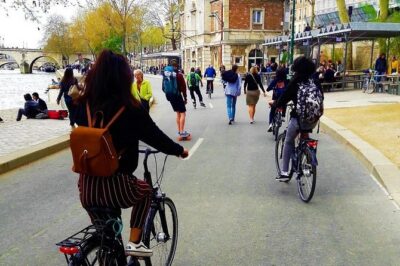
Versailles Bike Tour w/ Palace, Gardens, & Picnic
Read our review →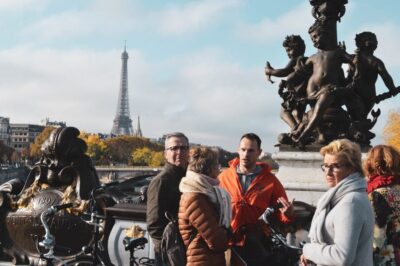
Paris Local Districts and Stories Off the Beaten Track Guided Bike Tour
Read our review →
Highlights of Paris Bike Tour w/ a Local Guide (English or Dutch)
Read our review →Browse the lists this tour appears in