Reviewed · TICKETS
Paris : Atelier des Lumières admission ticket
The most striking thing about the Atelier des Lumières is the building itself: a former foundry turned into a giant digital art hall. Instead of standing in front of one painting, you walk through moving images of Picasso and Henri Rousseau projected across walls and floors.
I like the two exhibitions on one ticket, which gives you both Picasso’s sharp, restless forms and Rousseau’s dreamlike jungles. I also like the continuous broadcasts, since you are not tied to a tour guide or one exact start time. The main drawback is that this is a digital art show, not a traditional museum. If you want original canvases, labels, and quiet close study, this may feel too loud and theatrical.
In This Review
- Key points to know before you go
- A former foundry with room for art in motion
- Picasso’s Spain, Paris, and changing forms
- Rousseau’s dream country of plants and animals
- How the continuous broadcast affects your visit
- Atelier des Enfants for ages 4 to 12
- Is the $20 ticket good value?
- Practical limits that matter
- Who will enjoy this most?
- Should you book the Atelier des Lumières?
- FAQ
- Where is the Atelier des Lumières located?
- How much does admission cost?
- How long is the ticket valid?
- What exhibitions are included?
- Do the exhibitions run continuously?
- Is the Atelier open every day?
- Is Atelier des Enfants included?
- Can I bring a stroller or baby carriage?
- Can I bring luggage or a large bag?
- Is the experience wheelchair accessible?
- Can I cancel my booking?
Key points to know before you go
- A former foundry becomes the art space: High walls and open industrial rooms give the projections room to spread across your view.
- Two artists, two very different moods: Picasso brings bullrings, Paris nightlife, and Guernica. Rousseau brings plants, animals, and dreamlike scenes.
- Continuous broadcasts help with timing: Your admission is valid for one day, with starting times based on availability.
- The child-focused Atelier des Enfants is included: Children ages 4 to 12 can create their own digital art inspired by Rousseau.
- The $20 price buys more than one display: You receive access to both current exhibitions and the children’s area.
- Plan around the restrictions: Strollers, baby carriages, luggage, and large bags are not allowed, and the show is not suitable for people with epilepsy.
A former foundry with room for art in motion
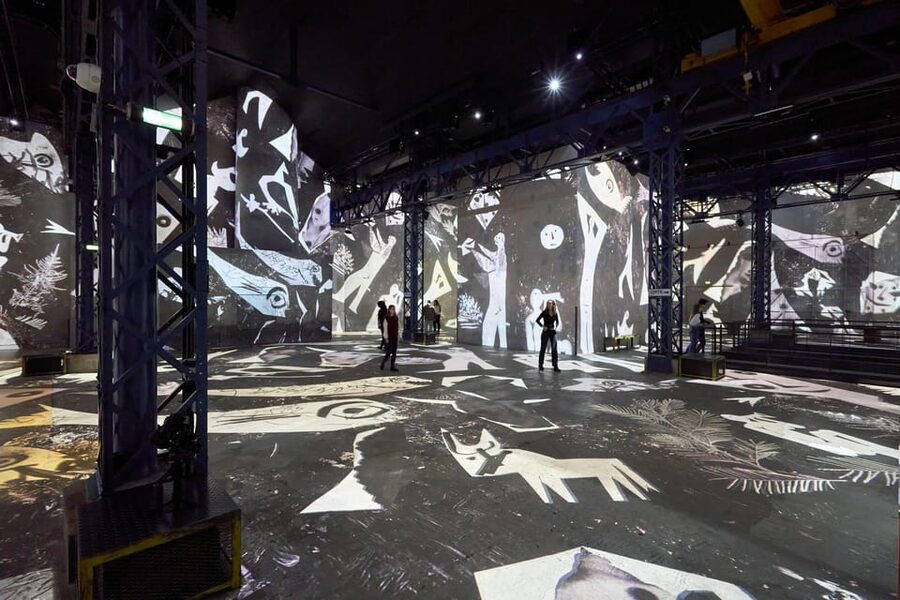
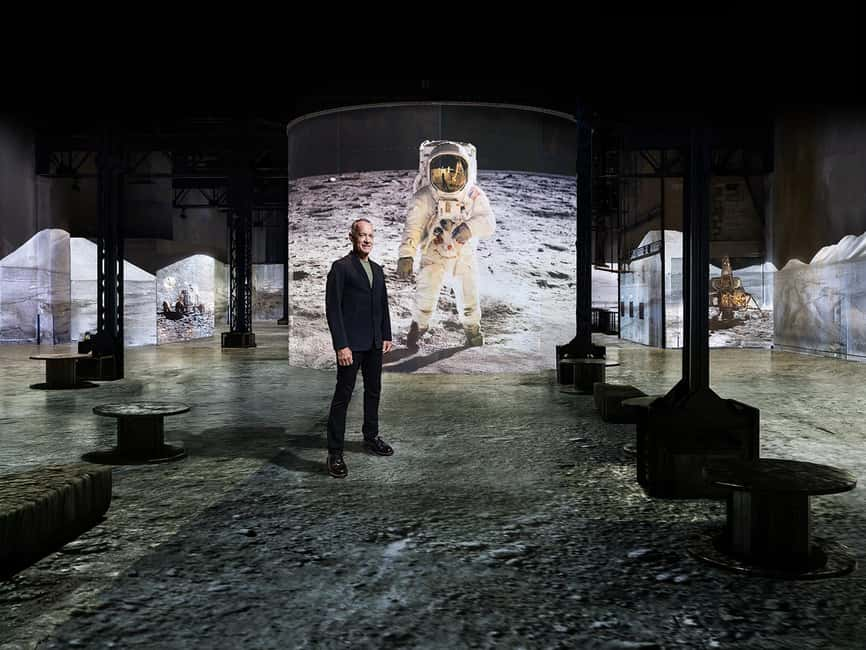
The Atelier des Lumières is in the Île-de-France region of Paris, inside a former foundry. That industrial setting matters. This is not a small gallery where you shuffle from frame to frame. The building gives the digital work space to spread over large walls and across the floor.
The result is closer to walking through a moving painting than visiting a standard exhibition. Images change continuously, so the room itself becomes part of the show. You can look up, turn around, or watch colors run across the floor beneath you.
I would think of this as a visual performance with art at its center. It is designed to give you a broad sense of each artist’s world, rather than a detailed lesson about every painting. You will see familiar works and themes, but you will see them in motion and at a huge scale.
That makes the visit easy to share with someone who does not usually enjoy museums. It also makes the experience less suited to someone who wants silence, precise dates, and close inspection of brushwork.
A few more Paris ideas to compare
- Paris: Louvre Museum Timed-Entrance Ticket
★ 4.6 · 71,977 reviews - Disneyland® Paris 1-Day Ticket
★ 4.6 · 49,412 reviews - Paris: Versailles Palace and Gardens Full Access Ticket
★ 4.6 · 41,579 reviews
Picasso’s Spain, Paris, and changing forms
The Picasso exhibition follows the artist from his native Spain to France, where he spent most of his life. Its route moves through several parts of his career and imagination, including the bullring, Parisian cabarets, and the forceful shapes of Les Demoiselles d’Avignon.
You can also expect a presentation of Guernica, one of Picasso’s most powerful and recognizable works. In a traditional museum, a painting such as this demands stillness and close attention to detail. Here, digital projection gives it a different effect by placing its shapes and contrasts around you.
The show also includes Picasso’s Portrait de jeune fille, d’après Cranach le jeune. II, a 1958 linocut connected with the Musée National Picasso in Paris. That detail is useful because the exhibition is not limited to one famous period or one painting style. Picasso worked across painting, printmaking, drawing, and changing forms, and the digital format can move quickly between them.
I like the way this approach can help you see Picasso as an artist constantly testing new ways to represent the world. You are not simply shown a timeline with dates. You are given a fast visual path through recurring ideas: the body, the face, performance, violence, color, and distortion.
The tradeoff is pace. The exhibition gives you an emotional and visual overview, but it does not promise the kind of wall text that explains every work in depth. If you know little about Picasso, you may leave with strong impressions but a limited grasp of the exact sequence of his career.
Rousseau’s dream country of plants and animals
The second exhibition focuses on Henri Rousseau and the early development of naive art in France. Rousseau was self-taught, and his work is known for its dreamlike, sometimes childlike quality.
His inspiration came from detailed observations of plants and animals, including those seen at the greenhouses and menagerie of Paris’s Jardin des Plantes. The exhibition uses that connection to build a visual world of vegetation, creatures, and imagined places.
Compared with Picasso, Rousseau offers a gentler and more playful mood. You may find the pictures easier for children to approach, since the subjects are clear and the scenes feel like a storybook world. That does not make the work simple. Rousseau’s plants and animals show careful attention, even when the final scenes look imaginary.
The digital setting is particularly well matched to this material. A forest or animal can grow across the walls in a way that makes the room feel enclosed by the artwork. You can watch details appear at a scale that a framed painting cannot provide.
Still, the presentation may blur the line between Rousseau’s actual paintings and the digital effects built around them. If you want to study his composition or brushwork, use this visit as an introduction, then seek out original works elsewhere. If you want a sensory way to understand his recurring subjects, this part of the program should work well.
How the continuous broadcast affects your visit
The exhibitions run as continuous broadcasts, and admission is valid for one day. Check availability for the starting time connected with your ticket. This format gives you more freedom than a fixed guided tour, since you do not need to follow a person from room to room.
You can settle into the space and watch the sequence from the point where you enter. If you arrive partway through, you do not need to panic. The material continues and repeats, allowing you to see the full presentation during your visit.
I suggest allowing enough time to watch both exhibitions without rushing. The ticket covers two separate programs, and their contrast is part of the value. Picasso’s fractured energy and Rousseau’s imagined natural world deserve different kinds of attention.
The continuous format also helps families. Children may not want to stand quietly through a long chronological display. Here, movement and scale provide something to watch right away. Adults can focus on the art, while younger visitors respond to color, sound, and changing images.
The program is open seven days a week, which is useful if your Paris schedule is tight. The available starting times still matter, so do not assume you can arrive at any moment without checking first.
A different way to spend the day in Paris:
- Paris: Arc de Triomphe Rooftop Tickets
★ 4.6 · 34,264 reviews - Paris: Orsay Museum Entry Ticket
★ 4.7 · 25,647 reviews - Paris: Evening River Cruise with Music
★ 4.4 · 22,721 reviews - Paris: Eiffel Tower Entry Ticket with Optional Summit Access
★ 4.4 · 20,035 reviews
Atelier des Enfants for ages 4 to 12
Families receive access to Atelier des Enfants, a space designed for children from 4 to 12 years old. The area introduces digital art through the work of Le Douanier Rousseau and lets children become creators of their own digital exhibitions.
This is more than a place to wait while adults look at art. It gives children a direct way to experiment with the same basic idea behind the main show: images can be arranged, changed, and projected to create a larger world.
That makes the ticket more useful for families than a standard admission focused only on adult viewing. You can connect Rousseau’s plants and animals with a hands-on creative activity, giving children a reason to look more closely at the main exhibition.
Children under 2 are not considered suitable for the activity. Baby strollers and baby carriages are not allowed, so families with very young children need to plan carefully. Large bags and luggage are also prohibited. These rules can affect your day more than the art itself, especially if you are visiting Paris with children and carrying supplies.
Is the $20 ticket good value?
At $20 per person, the price is reasonable if you want a modern art experience rather than a conventional museum visit. Your ticket includes the Atelier des Lumières, both current digital exhibitions, and access to Atelier des Enfants.
The value is strongest when you watch both Picasso and Rousseau. Paying the same price for one short projection would be harder to justify, but two artists with very different styles give the visit more range.
It is also a practical choice for a mixed group. One person can respond to Picasso’s cultural references, another can enjoy Rousseau’s imagined forests, and children have their own creative space. The ticket is less attractive if your main goal is to see original paintings. The works are presented through digital technology, not as the physical canvases themselves.
The flexible, one-day validity adds some value. You can fit the visit into a busy Paris plan without committing to a long guided outing. Since the broadcasts continue, the admission does not depend on one performance at one exact moment, though you still need to check the available starting times.
Practical limits that matter
The Atelier des Lumières is wheelchair accessible, which makes the former industrial venue easier to consider for visitors with mobility needs. You should still account for the site’s restrictions on luggage and large bags.
Do not arrive with a stroller, baby carriage, suitcase, or large bag and expect to bring it inside. The information provided does not list a storage service, so travel light and arrange your belongings before arriving.
The show is not suitable for people with epilepsy. Digital projections, changing images, and the visual intensity of the programs can be a serious concern. This is not a minor footnote. Check the suitability of the experience for everyone in your party before booking.
Because the exhibitions use continuous broadcasts, you may be standing or moving through a large room for part of the visit. The format is casual, but it is still worth choosing comfortable clothing and shoes if you plan to take your time.
Free cancellation is available up to 24 hours in advance for a full refund. You can also reserve now and pay later, which helps if your Paris schedule is still shifting.
Who will enjoy this most?
I would recommend the Atelier des Lumières to you if you like art presented in a bold, modern way. It is especially suitable if you want to see famous themes from Picasso without committing to a long museum study, or if Rousseau’s plants and animals appeal to your imagination.
Families with children ages 4 to 12 have a strong reason to consider it because Atelier des Enfants is included. The child-focused area gives the visit a clear purpose beyond asking young children to look at walls of artwork.
This also suits first-time Paris visitors who want one art stop that feels different from the Louvre or Musée d’Orsay. You will not receive the same type of original-object experience, but you will get a large-scale presentation that is easy to share with a group.
I would hesitate if you dislike loud visual effects, need quiet concentration, or want extensive historical information beside each work. The show is built around mood, scale, motion, and atmosphere. Those qualities are the point, but they are not right for everyone.
Should you book the Atelier des Lumières?
Book it if you want two digital art programs for one $20 admission, especially when your group includes children. Picasso’s movement from Spain to France and Rousseau’s dreamlike natural scenes provide a useful contrast, while continuous broadcasts make the day easier to plan.
Skip it if you are looking for original paintings, a quiet gallery, or a detailed academic tour. The Atelier des Lumières offers a big visual encounter, not a traditional museum lesson. For many people, that difference is exactly why it belongs on a Paris itinerary.
FAQ
Where is the Atelier des Lumières located?
The Atelier des Lumières is in the Île-de-France region of France, in a former foundry converted into a digital art venue.
How much does admission cost?
Admission is listed at $20 per person.
How long is the ticket valid?
The ticket is valid for one day. Check availability for the starting times connected with the booking.
What exhibitions are included?
Admission includes the current digital exhibitions on Pablo Picasso and Henri Rousseau. The programs are titled Picasso, art in motion and Le Douanier Rousseau, au pays des rêves.
Do the exhibitions run continuously?
Yes. The two digital exhibitions use continuous broadcasts, so you are not limited to one fixed guided presentation.
Is the Atelier open every day?
Yes. The Atelier des Lumières is open seven days a week.
Is Atelier des Enfants included?
Yes. Admission includes access to Atelier des Enfants, a creative digital art space for children ages 4 to 12.
Can I bring a stroller or baby carriage?
No. Baby strollers and baby carriages are not allowed.
Can I bring luggage or a large bag?
No. Luggage and large bags are not allowed inside.
Is the experience wheelchair accessible?
Yes. The activity is wheelchair accessible. It is not suitable for people with epilepsy or children under 2 years old.
Can I cancel my booking?
Yes. You can cancel up to 24 hours in advance for a full refund. Reserve now and pay later is also available.
Newest additions around Paris
- Family escape Game with kids and teens on the Île de la Cité★ 4.5 · 11 reviews
- Private Photoshoot with the Iconic Eiffel Tower in Paris★ 5.0 · 11 reviews
- 2-day Private Mont Saint-Michel, 3 Loire Castles, D-Day Express★ 4.5 · 11 reviews
- Paris: Batobus Hop-On Hop-Off Cruise & Landmarks Audio Tour★ 3.0 · 11 reviews
- Paris Revolutionary Walking Tour: Iconic French Sights & Stories★ 5.0 · 11 reviews
- Guided and Private Tour of 3 hours through Paris aboard a Citroën 2cv★ 5.0 · 11 reviews
- Kids in the Kitchen – CrOisSaNtS★ 4.0 · 11 reviews
- Paris: Ghosts and Dark Stories Guided Walking Tour★ 4.1 · 11 reviews
Tickets, compared.
Versailles Palace and Gardens Full Access Ticket
Read our review →
Eiffel Tower Entry Ticket with Optional Summit Access
Read our review →
Moulin Rouge Cabaret Show Ticket with Champagne
Read our review →