
Reviewed · CITY TOURS
Paris: 2-Hour Passages Private City Tour in German
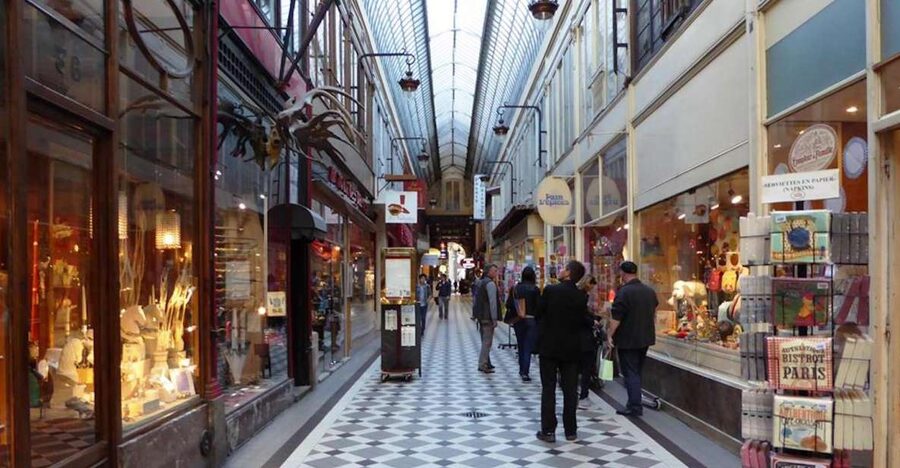
Paris keeps some of its best stories behind ordinary doorways. This private German-language walk through Parisian passages leads you from Le Peletier to Palais-Royal through elegant covered arcades that once offered shelter, light, and a cleaner way to shop in a grimy 19th-century city.
I like two things right away: the route visits places many first-time visitors miss, and the private format lets the guide shape the pace and explanations for your group. The two-hour length also works well beside a busy Paris schedule. The main drawback is that the tour runs only Monday through Saturday, and the $94 price is easier to justify for a small private group than for one or two people.
- Passage Verdeau: A quiet starting point for understanding how Parisian arcades worked.
- Passage Jouffroy: A particularly charming covered passage with a strong old-Paris atmosphere.
- Passage des Panoramas: One of the key stops for seeing how these arcades linked commerce, shelter, and city life.
- Grands Boulevards: The route places the passages in the wider setting of 19th-century Paris.
- German-speaking guide: You receive the full two-hour tour in German, with guides such as Solene explaining details and connections.
- Palais-Royal finish: The walk ends in a central quarter that is useful for continuing your Paris day.
In This Review
- Why Parisian passages tell a different city story
- Starting at Le Peletier on Metro Line 7
- Passage Verdeau and the first look at old Paris
- Passage Jouffroy and the charm of the covered arcade
- Passage des Panoramas and the commercial side of Paris
- Grands Boulevards puts the passages in context
- Reaching the Palais-Royal Quarter
- What the private German format adds
- Is $94 per person a fair price?
- Practical details before you book
- Who will enjoy this Paris passage walk?
- Should you book this private German tour?
- FAQ
- Where does the tour start?
- Where does the tour finish?
- How long does the tour last?
- What language is the tour in?
- Is this a private tour?
- Which passages are included?
- Does the tour visit the Grands Boulevards?
- Does the tour include Palais-Royal?
- Is hotel pickup included?
- Are food and entrance fees included?
- Does the tour operate every day?
- Can you cancel for a full refund?
- Do you have to pay when booking?
Why Parisian passages tell a different city story
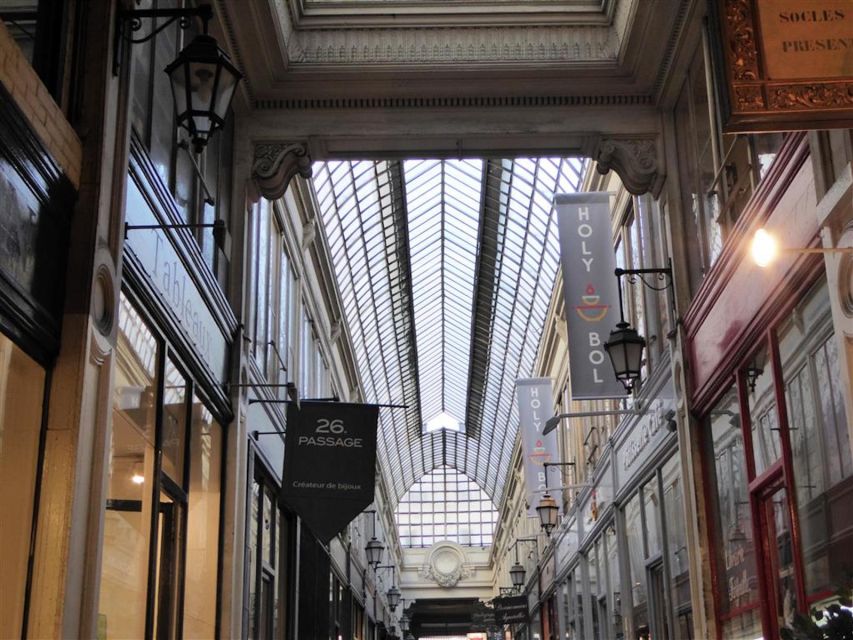
The covered passages are easy to miss because they do not announce themselves like the Eiffel Tower, the Louvre, or Notre-Dame. You may pass close to one without realizing that a narrow entrance opens into a graceful interior street of glass, iron, shops, and patterned floors.
That hidden quality is part of the pleasure. You are not simply walking between famous monuments. You are learning how ordinary Parisians moved, shopped, and sought shelter before the city became the polished capital you know today.
In the early 19th century, Paris had a dirty and crowded reputation. The covered passages answered some of those problems. They offered pedestrians a more protected route through the city and brought shops together in one place.
Today, the passages can feel refined and decorative. Their original purpose was more practical. They helped create a new kind of urban shopping area, one that later pointed toward the large department stores of Paris.
That contrast gives the tour its central idea. The passages are attractive, but they are also evidence of changing city life. Your guide connects the pretty details to the less tidy Paris that came before them.
Starting at Le Peletier on Metro Line 7
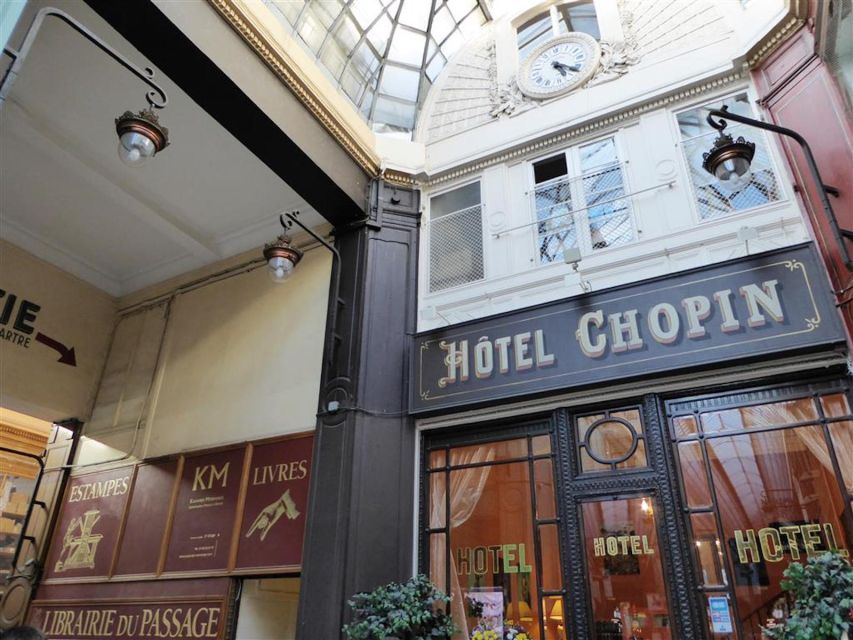
The meeting point is Le Peletier Metro station on Line 7. Look for the guide carrying a HelpTourists bag. This is a sensible place to begin because the route quickly moves into the northern section of the passage district.
You will want to arrive with enough time to find the correct exit and identify the guide. The information provided does not specify a hotel pickup, so you make your own way to Le Peletier.
The starting point also keeps the tour practical for a day spent in central Paris. Metro Line 7 connects with several important parts of the city, although your best route depends on where you are staying. Since the tour ends at Palais-Royal, you finish near another useful central transport area rather than returning to the starting point.
This is a walking tour, so comfortable shoes make sense. The route includes several passages and city streets, and the two-hour format gives you time to look around without turning the walk into an exhausting half-day commitment.
A few more Paris ideas to compare
- The Père Lachaise Cemetery: Guided 2-Hour Small-Group Tour
★ 4.7 · 1,065 reviews - Paris: 2-Hour Perfume Creation Workshop
★ 4.8 · 731 reviews - Paris Louvre: 2-Hour Private Tour for Groups or Families
★ 4.6 · 639 reviews
Passage Verdeau and the first look at old Paris
Passage Verdeau is the first named stop. It helps set the tone because you enter the world of Parisian arcades before the route reaches some of the better-known passages.
The value here is not just visual. You begin to see why a covered walkway mattered in the 19th century. A passage could provide a more pleasant route through a city that was not yet known for broad, clean boulevards and carefully planned public spaces.
You should pay attention to the difference between seeing a passage alone and having its purpose explained. Without context, you may notice only the decoration. With a guide, the arcade becomes part of a larger story about commerce, movement, and urban change.
Passage Verdeau is also a good reminder that this tour does not focus on the standard Paris checklist. If your main goal is to collect major landmarks, this route will feel like a change of pace. If you enjoy overlooked corners and city details, it gives you a more unusual way to read Paris.
Passage Jouffroy and the charm of the covered arcade
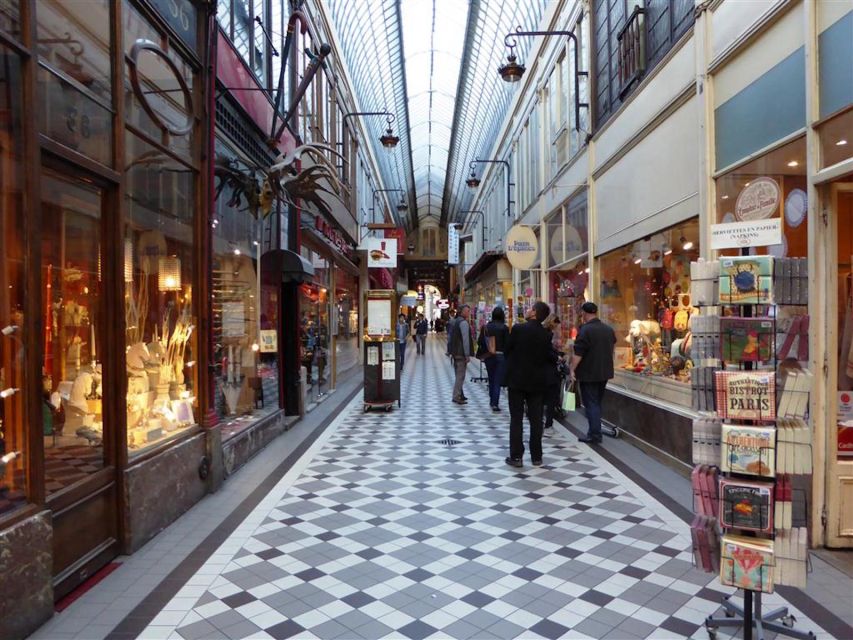
The walk continues to Passage Jouffroy, one of the most appealing stops on the route. Here, the covered passage idea becomes easier to appreciate as a complete experience rather than a historical footnote.
The charm comes from the feeling of entering a small interior street inside a much larger city. The passage creates a change of mood within a few steps. Outside, you are on Paris streets. Inside, the scale is more intimate and the architecture directs your attention along the corridor.
Your guide can help you notice the connections between the passage and the wider development of Paris shopping. These arcades were not yet the department stores that would later dominate Paris retail. They were an earlier answer to the need for a cleaner, sheltered, more organized place to browse and buy.
One strong point of this stop is its atmosphere. You do not need a long lecture to understand why the passages have become fashionable again. Their appeal is immediate, but the historical explanation keeps the visit from becoming a simple photo stop.
Passage des Panoramas and the commercial side of Paris
Passage des Panoramas adds another layer to the route. By this point, you have seen the passage form twice, and you can compare the spaces rather than treating each one as an isolated attraction.
That comparison is one reason a guide adds real value here. You can ask why the passages were built, how they related to the surrounding streets, and why a style that was once practical later became something people sought out for its charm.
The tour information does not promise entrance to paid attractions, meals, or special access. The point is the passage walk itself, along with the guide’s explanation. This keeps the tour focused, but it also means you should not expect a full shopping or food experience built into the price.
For me, Passage des Panoramas works best as part of the sequence. The three passages together show a pattern. Paris created sheltered commercial corridors, and these spaces helped shape the habits and expectations that later made large department stores so successful.
A different way to spend the day in Paris:
- Paris: Louvre Museum Timed-Entrance Ticket
★ 4.6 · 71,977 reviews - Disneyland® Paris 1-Day Ticket
★ 4.6 · 49,412 reviews - Paris: Versailles Palace and Gardens Full Access Ticket
★ 4.6 · 41,579 reviews - Paris: Arc de Triomphe Rooftop Tickets
★ 4.6 · 34,264 reviews
Grands Boulevards puts the passages in context
The route then reaches the Grands Boulevards. This is important because the passages make more sense when you see the broad city setting around them.
You are no longer looking only at a narrow arcade. The boulevards help explain how Paris changed from a dirtier, less modern city into the grand capital associated with wide streets and formal urban planning.
The contrast is useful. The passages are small and enclosed, while the boulevards open the route back into the larger city. Your guide can connect these different spaces and show how they served different needs.
This part may appeal most to anyone who likes urban history. You are not just hearing dates or famous names. You are looking at how a city responds to daily problems, then watching those solutions become part of its identity.
The route does not promise a detailed tour of every major boulevard attraction. Instead, the Grands Boulevards function as a bridge between the passages and the next part of the walk. That makes the itinerary feel coherent rather than like a random list of stops.
Reaching the Palais-Royal Quarter
The final section takes you into the Palais-Royal Quarter. This gives the walk a strong finish in one of central Paris’s most recognizable areas.
The setting shifts again. After the close, sheltered passages and the broader Grands Boulevards, Palais-Royal offers a different sense of Parisian space. The quarter also makes a practical ending point because you can continue sightseeing from here.
The tour ends at Palais-Royal rather than returning to Le Peletier. That matters when planning your day. You can arrange the walk before other central sightseeing, or use it to place yourself closer to the Louvre and nearby areas afterward. The experience does not include hotel drop-off, so plan your next move from the finish.
This final stop also reinforces the tour’s theme. Paris is not one single city experience. It is a collection of districts, corridors, courtyards, boulevards, and public spaces that developed at different times and for different reasons.
What the private German format adds
The tour is designed for a private group, with a live guide speaking German. That format is especially useful if you want to ask questions or need explanations that go beyond a standard recorded audio guide.
A private group can also make a short walking tour feel more personal. The guide can spend more time on the details that interest you, although the exact flexibility is not specified. You should still expect the walk to follow the planned route through the passages and central quarters.
German-speaking travelers who prefer to discuss history in their first language may find this more comfortable than joining a larger multilingual tour. The experience provider is HelpTourists, a group of German guides who work in Paris and present their own view of the city.
One guide named in the supplied information is Solene. Her explanations were described as friendly and full of interesting details and connections. Another booking praised the guide, the amount of information, the pleasant atmosphere, and the tour’s well-chosen length.
That combination matters. A history walk can become tiring if every doorway receives a long explanation. Here, the two-hour duration appears to keep the content focused while still giving you enough background to understand what you are seeing.
Is $94 per person a fair price?
The listed price is $94 per person. That is not a bargain for a basic walk, so the value depends heavily on group size and your interest in the subject.
For a larger private group, the price can make good sense. You are paying for a dedicated German-speaking guide, a specialized route, and the ability to explore a part of Paris that is easy to miss. The more people sharing the private booking, the easier it is to see the cost as a useful group experience.
For one person or a couple, the calculation is harder. You do not receive food, hotel pickup, entrance fees, or a longer sightseeing program. The price is for two hours of guided walking and interpretation.
I would compare it with the cost of a general city tour. This experience covers less ground but offers a sharper subject. If you have already seen the major monuments and want a different side of Paris, the focused route can be worth the premium.
If this is your first and only Paris tour, think carefully. You will not see the Eiffel Tower, the Louvre interiors, or other headline sights. You are buying context and atmosphere, not a broad overview.
The strong rating of 4.9 from 30 reviews suggests the format has worked well for many bookings, but the best fit still depends on your plans. The most consistent praise centers on the guide, the information, the friendly mood, and the two-hour length.
Practical details before you book
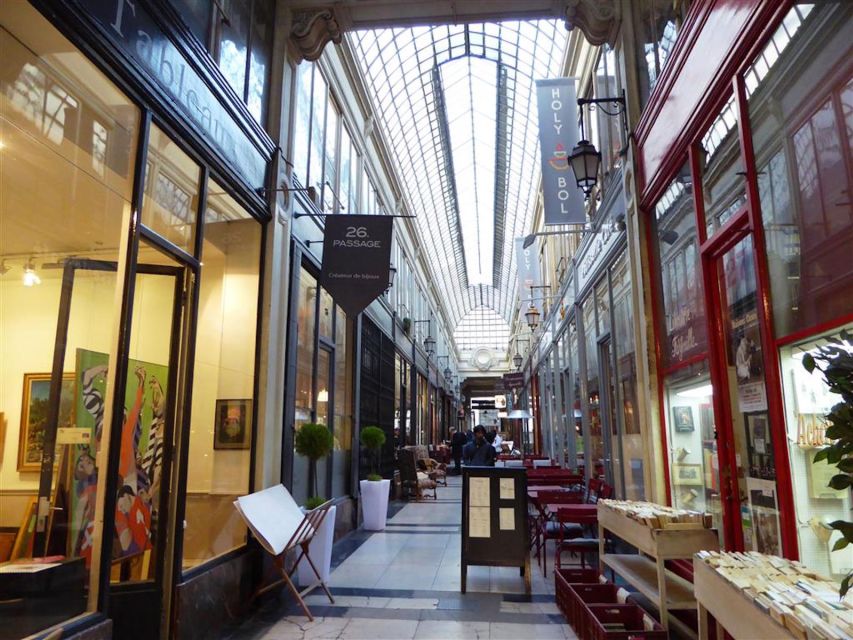
The tour lasts two hours and operates Monday through Saturday. There are no stated departures on Sunday, so do not build your only available Paris day around it if that day is Sunday.
The meeting point is Le Peletier Metro station on Line 7. Find the guide with a HelpTourists bag. Since pickup from your hotel is not included, allow time for the Metro and for locating the meeting point.
The tour is in German, and the group type is private. Food is not included, and the information does not list any included entrance fees. The route is primarily about seeing the passages and quarters with a guide.
You can cancel up to 24 hours before the start for a full refund. A reserve-now, pay-later option is also available, which helps if you are still arranging the rest of your Paris schedule.
The passages themselves are the focus, but conditions inside covered arcades can differ from those on open streets. The available information does not provide detailed accessibility guidance, so ask the provider directly if you need specific support with surfaces, steps, or walking distance.
Who will enjoy this Paris passage walk?
I would recommend this tour to someone who has already seen the major sights, or to anyone who prefers small-scale city discoveries to famous photo stops.
It suits German-speaking visitors who want a private experience with a live guide. It also works well for couples, families, or friends who enjoy asking questions and setting their own conversational rhythm.
History fans will get the most from the explanation of how the passages grew out of 19th-century city problems. Architecture lovers will appreciate the covered arcades and the shift from enclosed corridors to the Grands Boulevards and Palais-Royal.
You may want to skip it if your Paris time is extremely short and you need a broad introduction to the city. You may also find the price high if you are booking alone and mainly want to wander through the passages without historical explanation.
Should you book this private German tour?
Book it if you want a focused, less obvious side of Paris, especially in German and with a private guide. The route has a clear story, the two-hour length is manageable, and the finish at Palais-Royal fits neatly into a central sightseeing day.
I would be most comfortable recommending it to a small group that can share the $94-per-person cost. For a solo visitor or couple, book only if the passages genuinely interest you and you value a guide’s connections more than a cheaper self-guided walk.
FAQ
Where does the tour start?
The tour starts at Le Peletier Metro station on Line 7. Look for the guide carrying a HelpTourists bag.
Where does the tour finish?
The tour finishes at Palais-Royal.
How long does the tour last?
The city tour lasts two hours.
What language is the tour in?
The tour is conducted in German by a German-speaking live guide.
Is this a private tour?
Yes. The activity is offered for a private group.
Which passages are included?
The route includes Passage Verdeau, Passage Jouffroy, and Passage des Panoramas.
Does the tour visit the Grands Boulevards?
Yes. The Grands Boulevards are one of the sightseeing stops on the route.
Does the tour include Palais-Royal?
Yes. The route continues into the Palais-Royal Quarter and ends at Palais-Royal.
Is hotel pickup included?
No. Hotel pickup is not included. You need to reach the meeting point at Le Peletier Metro station yourself.
Are food and entrance fees included?
No. Food and entrance fees are not included.
Does the tour operate every day?
No. The tour operates from Monday through Saturday.
Can you cancel for a full refund?
Yes. You can cancel up to 24 hours in advance for a full refund.
Do you have to pay when booking?
A reserve-now, pay-later option is available, so you can book without paying immediately.
Newest additions around Paris
- Family escape Game with kids and teens on the Île de la Cité★ 4.5 · 11 reviews
- Private Photoshoot with the Iconic Eiffel Tower in Paris★ 5.0 · 11 reviews
- Paris: Batobus Hop-On Hop-Off Cruise & Landmarks Audio Tour★ 3.0 · 11 reviews
- Paris Revolutionary Walking Tour: Iconic French Sights & Stories★ 5.0 · 11 reviews
- 2-day Private Mont Saint-Michel, 3 Loire Castles, D-Day Express★ 4.5 · 11 reviews
- Guided and Private Tour of 3 hours through Paris aboard a Citroën 2cv★ 5.0 · 11 reviews
- Kids in the Kitchen – CrOisSaNtS★ 4.0 · 11 reviews
- Paris: Ghosts and Dark Stories Guided Walking Tour★ 4.1 · 11 reviews
City Tours, compared.

Eiffel Tower Summit Option with Seine River Cruise and City Tour
Read our review →
Paris in a Day: Louvre or Orsay, Eiffel Tower, City Walk & Cruise
Read our review →

Eiffel Tower Hosted Tour, Seine Cruise and City Tour
Read our review →

City and River Seine Tour on an Amphibious Bus
Read our review →
Eiffel Tower and City Tour by Bus with Seine River Cruise Option
Read our review →
Openair Double Decker Bus Audio-Guided City Tour
Read our review →Browse the lists this tour appears in