
Reviewed · PèRE LACHAISE & CEMETERY TOURS
Normandy D-Day Beaches with Juno Beach, bunkers & Canadian Cemetery from Paris
Juno Beach is where this day earns its keep. You walk the sand where Canadian troops came ashore, then enter two German bunkers normally closed to the public. I like that the tour stays firmly focused on Canada’s role in D-Day, and I like the small van, which gives you room to ask questions and hear the guide. The main catch is the long day: about 12 hours, with a roughly two-hour drive each way from Paris.
I also appreciate the visit to Beny-sur-Mer Canadian War Cemetery, a quiet stop that gives the military story a human face. Guides including Julian, Clement, Brune, Olivier, Mathieu, and HP have been praised for clear stories and personal attention. Still, time is tight. Some people want longer at the museum, while others would gladly trade museum minutes for more time on the beach or in Courseulles-sur-Mer.
In This Review
- Key points to know before booking
- Why Juno Beach deserves its own day
- Leaving Paris at 7:00 a.m.
- Walking the sand at Juno Beach
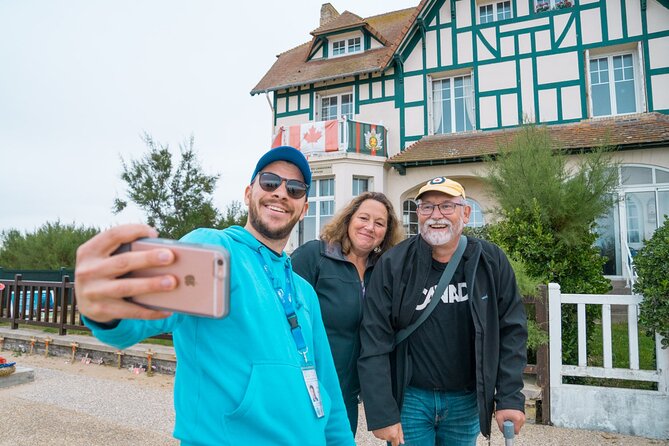
- Canada House in Bernières-sur-Mer
- Entering the two German bunkers
- Spending an hour at the Juno Beach Centre
- Lunch and free time in Courseulles-sur-Mer
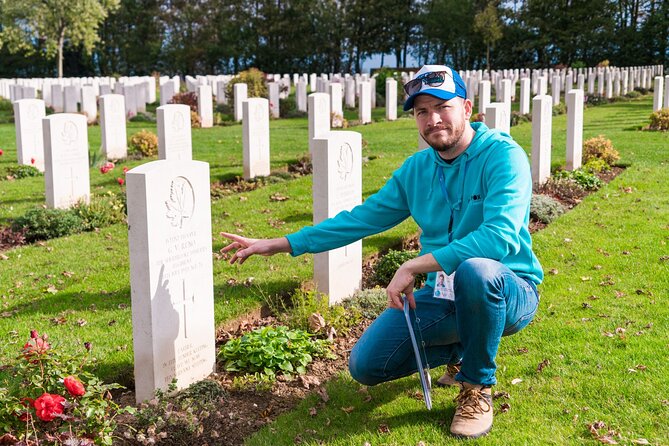
- Beny-sur-Mer Canadian War Cemetery
- Hell’s Corner and the furthest Canadian advance
- Abbey d’Ardenne and a darker chapter
- Is $290.36 a fair price?
- The guides shape the day
- Who should book this Juno Beach tour?
- Should you book it?
- FAQ
- How long does the Normandy Juno Beach tour last?
- Where does the tour begin?
- What is the maximum group size?
- Is transportation from Paris included?
- Is lunch included in the price?
- Which Canadian sites are included?
- Can you enter the German bunkers?
- What language is the tour offered in?
- What is the cancellation policy?
Key points to know before booking
- Two German bunkers open to your group: An official Juno Beach Center guide leads this special 45-minute visit.
- A Canadian focus from start to finish: The route covers Juno Beach, Canada House, the Canadian cemetery, Hell’s Corner, and Abbey d’Ardenne.
- A true small-group format: The minivan holds no more than eight people, making conversation with your guide much easier.
- A full day from Paris: Departure is at 7:00 a.m., and the return can be around 7:40 p.m.
- Lunch is your responsibility: You get one hour in Courseulles-sur-Mer, but food is not included.
- Best for people with a personal or national connection: The cemetery and beach can be especially powerful for Canadian families.
Why Juno Beach deserves its own day
Many Normandy trips try to cover several beaches in one sweep. This one takes a different path. It concentrates on the Canadian landing at Juno, then follows the Canadian advance inland through several places tied to the first days of the invasion.
That focus matters. You are not simply stopping for a photograph and moving on. The guide explains what you are seeing, then the official Juno Beach Center staff add another layer during the bunker visit. I like this combination because the driver-guide provides the day’s broad story, while the center’s guide handles the beach defenses with site-specific detail.
You also get a mix of settings. There is the open shore at Juno, a seaside town, a museum, a military cemetery, a rural point marking the furthest Canadian advance, and an abbey tied to a wartime crime. The variety keeps the day from becoming a string of similar monuments.
The emotional tone changes as you go. Walking the beach can feel expansive and almost peaceful. The cemetery is quiet and personal. Abbey d’Ardenne is harder to process because of the execution of 20 Canadian soldiers in June 1944. I would not treat this as a light sightseeing day. It is a history tour, but it is also a day of remembrance.
More Père Lachaise and cemetery walks:
- Normandy D-Day Sites & Cemetery Day Trip from Paris with Lunch
★ 5.0 · 6,877 reviews - Paris: Haunted Père Lachaise Cemetery Guided Tour
★ 4.6 · 3,591 reviews - Normandy D-Day Small-Group Day Trip with Omaha Beach, Cemetery & Cider Tasting
★ 5.0 · 2,786 reviews
Leaving Paris at 7:00 a.m.
The meeting point is Dada12 at 12 Avenue des Ternes in Paris. The early start is necessary. Normandy is a long way from the capital, and the route includes more than just Juno Beach.
A round-trip minivan transfer saves you from arranging trains, local transport, and a rental car. It also lets you rest during the long ride. The best guides use that time well, offering background on D-Day, then allowing quiet stretches when people need a break. That balance was singled out in the most detailed feedback about the drive with Enzo.
The vehicle is air-conditioned, though one report described a problem with the air conditioning on a hot day. That appears to be an exception, but it is worth remembering that comfort can vary with the vehicle and weather.
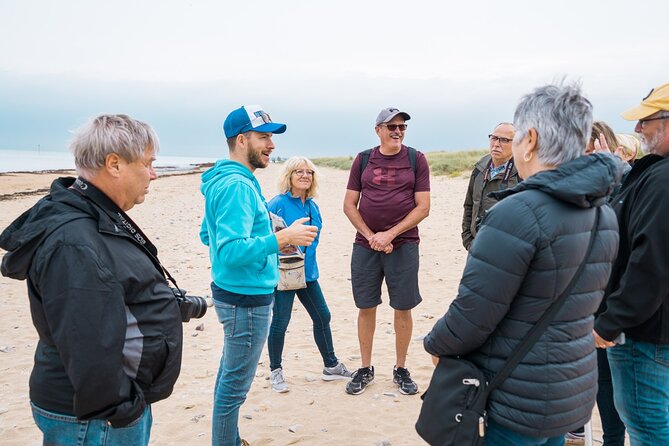
The maximum group size is eight. This is one of the tour’s strongest practical features. In a large coach, a question can disappear into the crowd. In this van, you can ask about a relative, request clarification, or point out something you noticed. Several guides, including Julian and HP, have been praised for being friendly and easy to talk with.
Bring water, dress for changing weather, and wear shoes suitable for walking on sand and uneven ground. The tour operates in all weather, so Normandy’s wind and rain are part of the bargain.
Walking the sand at Juno Beach
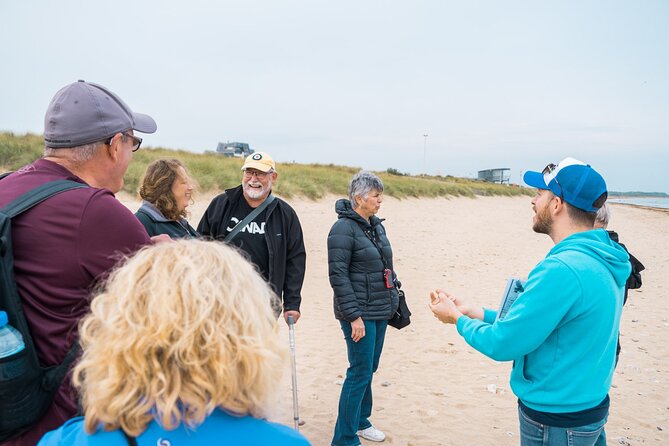
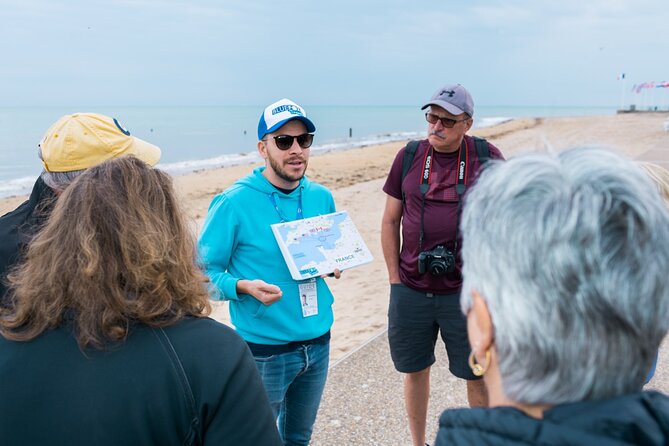
The first beach visit lasts about 30 minutes. That may sound brief, but it gives you enough time to walk onto the sand, look back toward the shore, and consider the physical challenge faced by the Canadian troops on June 6, 1944.
I would use this first stop to get your bearings rather than rush for photographs. Listen closely as your guide connects the beach to the events you will see explained later at the center. The experience works best when you let the place be quiet for a moment.
This is also the part of the day many Canadians anticipate most. The Canadian emphasis makes the visit feel personal for people whose parents, grandparents, or relatives served during the war. One family used time at the cemetery to locate a grandfather’s grave, something that can turn a historical visit into a deeply private one.
The limitation is time. A half-hour passes quickly, especially if the tide, weather, or your own emotions slow you down. If you want a long, solitary walk along Juno Beach, this schedule may feel too brisk.
Canada House in Bernières-sur-Mer
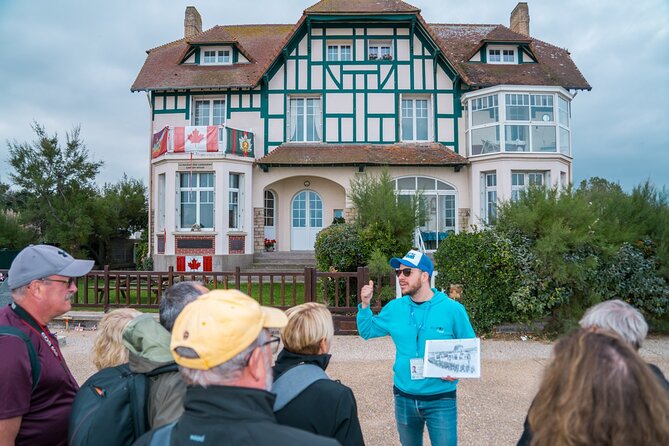
In nearby Bernières-sur-Mer, you see the house often called Canada House. It is said to have been the first house liberated in Normandy, which gives this ordinary-looking seaside building unusual weight.
The stop lasts about 30 minutes and helps connect the invasion to the town itself. D-Day was not only a military operation viewed from maps. Troops moved through real streets, past real homes, and into communities whose residents had lived under German occupation.
This stop also gives your guide a chance to explain the first hours of liberation in a setting that is easier to picture than a museum display. Keep your camera ready, but give the story priority. One person reported that the stop was missed, so it is sensible to confirm with your guide that Canada House is included as the van moves through Bernières-sur-Mer.
More Normandy and D-Day remembrance visits:
- Normandy D-Day Beaches and American Cemetery Day Trip from Paris
★ 4.5 · 2,673 reviews - Paris: Normandy D-Day Sites Guided Day Trip with Lunch
★ 4.7 · 1,082 reviews - From Paris: Normandy D-Day Landing Beaches Full-Day Tour
★ 4.8 · 698 reviews - From Paris: Normandy D-Day Beaches Day Trip
★ 4.6 · 566 reviews
Entering the two German bunkers
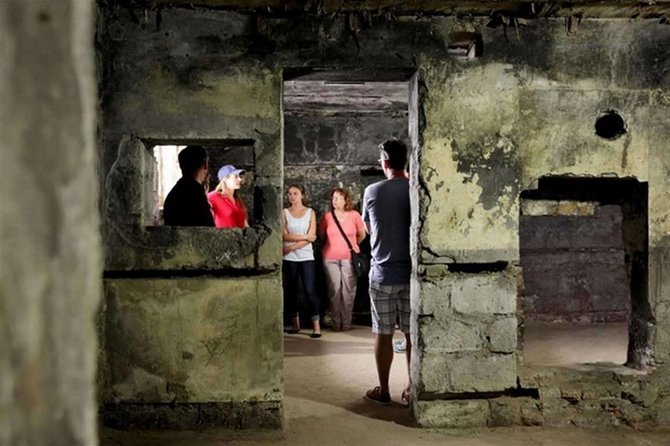
The 45-minute bunker visit is the tour’s most unusual access. An official Juno Beach Center guide takes your group into two German bunkers that are closed to the general public.
This is more than a quick look at concrete walls. A bunker gives you a physical sense of the defensive system that Canadian troops faced. You can see how enclosed and restricted these positions were, while also considering how exposed the attacking soldiers were on the beach below.
The special access makes the small-group limit especially useful. Eight people can gather around a guide without the noise and crowding common at major military sites. The bunker tour has been called unforgettable by people who value direct contact with the place rather than only reading about it.
Expect the space to feel sober and perhaps uncomfortable. This is a military structure, not a polished attraction. The official guide’s role is important here, since the meaning comes from the explanation of what the bunkers did and how they fit into the landing.
Spending an hour at the Juno Beach Centre
The Juno Beach Centre is described as the most extensive museum devoted to the Canadian landings in Normandy. Your visit lasts about one hour, and admission is included.
The museum gives you context that a beach walk cannot. Exhibits trace the Canadian contribution and place Juno within the wider Allied operation. Several people found the museum presentation and film moving, while others wished for more time to read everything. Both reactions make sense.
An hour is enough for an overview, but not enough to examine every display at a slow pace. If you are a museum reader, plan your priorities before entering. Focus on the sections most important to you, then avoid trying to absorb every panel. One practical tip is to listen carefully to the guide’s introduction, because it can help you decide where to spend your limited time.
The schedule may feel slightly uneven depending on your interests. Some people prefer the beach, cemetery, and smaller historical sites. Others could spend half a day at the center. If you want a museum-heavy Normandy visit, a separate visit to the Juno Beach Centre would give you more freedom. On this tour, the museum is one part of a much broader day.
Lunch and free time in Courseulles-sur-Mer
You receive one hour of free time in Courseulles-sur-Mer. Lunch is not included, so you pay for your own meal.
This break is useful because the morning is tightly scheduled. You can sit down for food, buy something quick, or use the time to walk around town. One smart approach is to pick up lunch from a local grocery store and spend part of the hour exploring rather than using the whole break in a restaurant.
Do not expect a leisurely seaside afternoon. Some people wanted an extra 15 minutes to browse shops, but the fixed schedule must also protect the return to Paris. If lunch matters a great deal to you, keep it simple and watch the time.
Courseulles-sur-Mer is also a good moment to reset emotionally. After the beach, bunkers, and museum, a short ordinary-town break can help you absorb the day before the cemetery and final sites.
Beny-sur-Mer Canadian War Cemetery
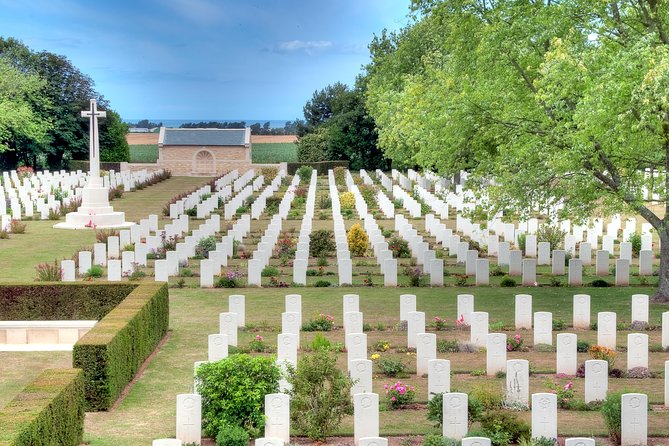
The visit to Beny-sur-Mer Canadian War Cemetery lasts about 30 minutes. It is one of the most important stops, even though it requires no admission ticket.
Rows of graves create a quiet contrast with the military story told at Juno. The cemetery is where names, ages, and individual lives replace broad numbers. For Canadians with family connections to the war, this can be the defining stop of the day. The tour may also help you locate a particular grave if you have the details with you, though the supplied information does not promise a dedicated genealogy service.
Give yourself time to walk slowly and read. Thirty minutes is enough to pay respects, but it may not feel like enough if you are searching for a relative. If that possibility matters to you, bring the person’s full name and any other grave information you have.
This is not a stop for loud conversation or rushed sightseeing. Your guide can provide context, but the cemetery itself does much of the speaking.
Hell’s Corner and the furthest Canadian advance
At Villons-les-Buissons, the tour visits Hell’s Corner. This point marks the furthest inland advance made by Canadian troops on D-Day, about five miles from Caen.
The visit lasts only 15 minutes, so expect a brief explanation rather than a long walk. Its value lies in showing that the Canadian action did not end at the shoreline. The route helps you understand the distance troops pushed inland and the pressure of the operation beyond the beach.
Because this is a short stop, listen for the location’s connection to the larger movement toward Caen. The stop is most useful after you have seen Juno and the cemetery, since you can now place the advance in both geographic and human terms.
Abbey d’Ardenne and a darker chapter
The final historical stop is Abbey d’Ardenne, visited for about 20 minutes. In June 1944, 20 Canadian soldiers were illegally executed there by members of the Hitler Youth.
This is a difficult place, and the short visit is likely intentional. You receive the essential account, see the setting, and have a moment to reflect. The abbey adds an important warning to the day: liberation did not bring an end to danger, and the conduct of war could become brutally personal.
The stop may be especially affecting after the cemetery. At Beny-sur-Mer, you see a formal place of remembrance. At the abbey, you confront the circumstances of a specific atrocity. Together, they give the Canadian story more depth than a simple account of military success.
Is $290.36 a fair price?
At $290.36 per person, this is not a budget outing. The price includes return transport from Paris in an air-conditioned minivan, a driver-guide, the small-group format, the bunker visit, and museum admission.
The value comes from what you avoid organizing yourself. Driving from Paris requires a car, fuel, parking, route planning, and a long day behind the wheel. Public transport would require additional connections to reach the beach sites and cemetery. This tour puts the major Canadian locations into one carefully timed route.
The maximum of eight people also changes the value. You are paying for a more personal format, not merely a seat on a bus. Strong guides such as Julian, Clement, Brune, HP, Olivier, and Mathieu have been praised for clear explanations, historical pictures, patience, and a good sense of when to let people rest.
The price is harder to justify if you only want to stand on the beach for a long time or browse the museum at your own pace. For that kind of visit, an overnight stay in Normandy or an independent rental-car trip may suit you better. For a single day from Paris with a Canadian focus, the included transport and access make the cost reasonable.
The tour is rated 4.9 from 296 ratings, with 97 percent recommending it. Those numbers point to a very reliable experience overall, but they do not remove the practical tradeoffs: one long day, limited museum time, and a fixed lunch break.
The guides shape the day
This experience depends heavily on who leads it. The strongest guide feedback centers on clear English, Canadian D-Day knowledge, personal stories, visual materials, and a calm manner during the long drive.
Julian brought historical photographs to share. Enzo used a binder of images to prepare the group before the Juno Beach Center visit. Clement was praised for storytelling and a strong grasp of Canada’s role. Brune was noted for personal stories and for giving people enough time at each stop. HP was described as professional, friendly, and good at explaining the background of events.
That range of names suggests the company uses several guides, so you may not know in advance who will lead your departure. Most reports describe the guides in warm terms, but one person found the English difficult to follow and felt the guide was disorganized. Another felt the guide rushed toward lunch and the return to Paris, leaving too little museum time.
My advice is simple: ask questions early, say if you want a little more context, and keep an eye on the schedule. A good guide can make the long drive feel worthwhile. A weaker match can make the same tight timing feel hurried.
Who should book this Juno Beach tour?
I would choose this tour if you are Canadian, have a family connection to the Second World War, or want to understand the Canadian part of D-Day rather than only visit the best-known American sites.
It also suits you if you have only one free day from Paris. The route covers a lot without asking you to arrange several separate visits. The maximum age requirement is seven, and most people can participate, but the emotional subject matter may be more important to consider than the minimum age.
You should think twice if you dislike early starts, long van rides, fixed schedules, or short museum visits. The tour operates in all weather, and the beach can be windy or wet. Bring suitable clothing and accept that the day is built around coverage, not lingering.
Free cancellation is available if you cancel at least 24 hours before the start time. Changes or cancellations made later are not accepted for a refund.
Should you book it?
Book this tour if you want a Canadian-centered Normandy day with a small group, included transport, special bunker access, and a guide who can connect the beach to the cemetery and inland sites.
I would not book it expecting a relaxed beach holiday or an unhurried museum visit. You will spend much of the day in transit, and the schedule asks you to keep moving. But for a focused introduction to Juno Beach from Paris, the combination of Canada House, the bunkers, the Juno Beach Centre, Beny-sur-Mer, Hell’s Corner, and Abbey d’Ardenne gives you a meaningful day that is difficult to reproduce on your own.
FAQ
How long does the Normandy Juno Beach tour last?
The experience lasts about 12 hours. It starts at 7:00 a.m. in Paris and ends back at the meeting point.
Where does the tour begin?
The meeting point is Dada12, 12 Avenue des Ternes, 75017 Paris, France.
What is the maximum group size?
The tour has a maximum of eight people.
Is transportation from Paris included?
Yes. Return transportation from Paris is provided in an air-conditioned minivan.
Is lunch included in the price?
No. You receive one hour of free time in Courseulles-sur-Mer, but you pay for your own lunch.
Which Canadian sites are included?
The route includes Juno Beach, Canada House in Bernières-sur-Mer, the Juno Beach Centre, Beny-sur-Mer Canadian War Cemetery, Hell’s Corner, and Abbey d’Ardenne.
Can you enter the German bunkers?
Yes. An official Juno Beach Center guide leads your group into two German bunkers that are closed to the public.
What language is the tour offered in?
The tour is offered in English.
What is the cancellation policy?
You can cancel at least 24 hours before the start time for a full refund. Cancellations or changes made less than 24 hours before the start time are not accepted.
Newest additions around Paris
- Family escape Game with kids and teens on the Île de la Cité★ 4.5 · 11 reviews
- Private Photoshoot with the Iconic Eiffel Tower in Paris★ 5.0 · 11 reviews
- 2-day Private Mont Saint-Michel, 3 Loire Castles, D-Day Express★ 4.5 · 11 reviews
- Paris: Batobus Hop-On Hop-Off Cruise & Landmarks Audio Tour★ 3.0 · 11 reviews
- Paris Revolutionary Walking Tour: Iconic French Sights & Stories★ 5.0 · 11 reviews
- Guided and Private Tour of 3 hours through Paris aboard a Citroën 2cv★ 5.0 · 11 reviews
- Kids in the Kitchen – CrOisSaNtS★ 4.0 · 11 reviews
- Paris: Ghosts and Dark Stories Guided Walking Tour★ 4.1 · 11 reviews
Père Lachaise & Cemetery Tours, compared.

Normandy D-Day Sites & Cemetery Day Trip from Paris with Lunch
Read our review →

Normandy D-Day Small-Group Day Trip with Omaha Beach, Cemetery & Cider Tasting
Read our review →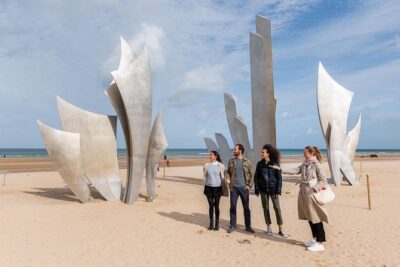
Normandy D-Day Beaches and American Cemetery Day Trip from Paris
Read our review →
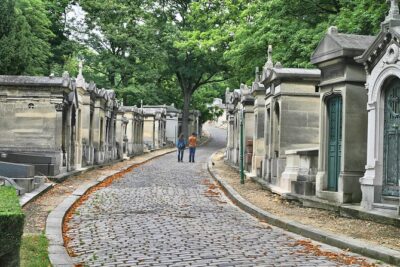
Famous Graves of Pere Lachaise Cemetery Guided Tour
Read our review →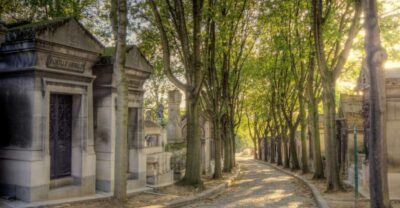
The Père Lachaise Cemetery: Guided 2-Hour Small-Group Tour
Read our review →Famous Graves of Pere Lachaise Cemetery Guided Tour
Read our review →Browse the lists this tour appears in