

Reviewed · LOUVRE MUSEUM TOURS
Murders and Mysteries of the Louvre Museum
The Louvre is easier to understand when someone gives its art a human, and sometimes grim, backstory. This two-hour tour connects the Mona Lisa, Venus de Milo, Egyptian objects, royal jewels, and medieval fortress remains with tales of magic, betrayal, scandal, and murder.
I like the small group of up to eight, which gives your guide room to adjust the route and answer questions. I also like the combination of famous sights and overlooked corners, especially if you have limited time. The main caution is that the experience depends heavily on your guide’s English, voice, and ability to keep the dark theme running through the visit.
In This Review
- Key points to know before booking
- Why the Louvre works so well for a mystery tour
- Meeting beneath the glass pyramid
- Medieval fortress remains and the old Louvre
- Ancient Egypt, magic, and forgotten rituals
- Venus de Milo and the stories behind famous beauty
- Royal jewels, French masterpieces, and power on display
- The Mona Lisa with a darker question
- Does two hours provide enough time?
- The $200 price and the value of a small group
- Who should book this Louvre experience?
- Booking details that matter
- Should you book Murders and Mysteries of the Louvre?
- FAQ
- Where does the tour meet?
- How long does the experience last?
- Is Louvre admission included?
- Can I stay at the Louvre after the tour?
- Does skip-the-line access include security?
- How large is the group?
- What languages are available?
- What should I bring?
- Can I bring luggage?
- Can I cancel the booking?
Key points to know before booking
- The tour starts at the Louis XIV statue by the Louvre Pyramid, with the precise meeting instructions shown on your voucher.
- Security is not skipped, even though the guide provides skip-the-ticket-line access to the museum.
- The route mixes headline works with lesser-known art, including medieval remains, Egyptian pieces, royal jewelry, and French masterpieces.
- The murder and mystery theme is interpretive, so the tour may include selected scenes of violence and scandal rather than a nonstop crime story.
- The group is limited to eight people, a useful size in crowded galleries.
- Your museum ticket lets you continue exploring alone after the guided two-hour visit.
Why the Louvre works so well for a mystery tour

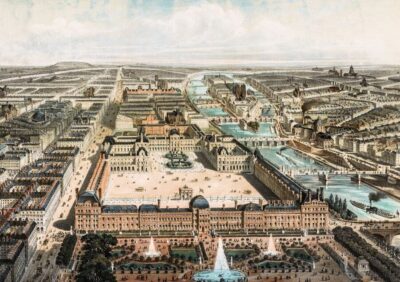
The Louvre is not simply a place filled with famous paintings. It began as a fortress, later became a royal residence, and eventually turned into one of the world’s great museums. Those changes left behind a building full of different eras, conflicting ambitions, and stories of power.
That makes this route more interesting than a simple greatest-hits walk. You are not only looking at art. You are also hearing how royal life, religion, warfare, superstition, and personal betrayal shaped what appears on the walls and in the display cases.
I like this approach for a first Louvre visit because the museum can otherwise feel like a giant catalogue. You walk past hundreds of works, many of them important, without knowing where to pause. A strong guide gives you a reason to look closely.
The theme also adds a useful question to the usual art-tour routine: what is happening beneath the polished surface? Ancient objects can point to magic or rituals. A dramatic painting may preserve a story of punishment or political violence. Even the Mona Lisa becomes less familiar when you consider the mystery built around her expression.
Still, you should book this with the right expectations. The title suggests a tightly plotted investigation through the Louvre. In practice, the guide may select a group of works with disturbing or unusual stories and connect them to the museum’s past. One visitor found the guide warm and helpful but felt the murder theme was only lightly developed. That is a fair warning. The tour is best viewed as a Louvre highlights tour with a dark twist, not as a theatrical crime performance.
More ways into the Louvre:
- Paris: Louvre Museum Timed-Entrance Ticket
★ 4.6 · 71,977 reviews - Paris: Louvre Guided Tour with Reserved Access & Boat Cruise
★ 4.3 · 16,353 reviews - Louvre Museum Masterpieces Guided Tour with Access
★ 4.5 · 12,023 reviews
Meeting beneath the glass pyramid
You meet at the Statue of Louis XIV in front of the Louvre Pyramid on Rue de Rivoli. Your voucher provides the precise meeting instructions, so check them before leaving your hotel. The pyramid is enormous and surrounded by people, making a clear landmark useful, but do not wait until the last minute to locate the statue.
The security check is an important practical detail. Skip-the-ticket-line access does not mean you walk straight through every queue. You still need to wait for security, and the timing can vary with the crowd.
Bring a passport or identity card. Large bags and luggage are not allowed, and anything larger than 55 by 35 by 20 centimeters cannot enter the museum. A small day bag is the sensible choice. If you arrive with a suitcase, you may have a problem before the art portion even begins.
Once inside, your guide handles the museum entry and begins shaping the visit around the selected works. The small group matters here. With no more than eight people, it should be easier to hear explanations, stay together, and ask questions than in a large coach-style tour.
That said, the Louvre is a noisy and crowded place. One person found it hard to hear a soft-spoken guide in the galleries and felt that an audio device would have helped. If hearing every word is important to you, stay near the guide and speak up early if the group begins to spread out.
Medieval fortress remains and the old Louvre
The first part of the experience may take you below the polished public rooms to the medieval remains of the old royal castle. These foundations show that the Louvre was not designed as a museum from the start.
This is one of the most valuable parts of the tour because it changes your sense of scale. Above ground, the Louvre feels like an endless palace. Below, the older stonework suggests defense, confinement, and royal control.
The medieval section also gives the mystery theme a proper setting. Before the Louvre became a home for paintings and sculpture, it was tied to military power and the monarchy. The building itself carries stories of changing rulers, political danger, and decisions made behind closed doors.
You may not spend a long time in this area, since two hours must cover a broad selection of the museum. Even a short visit helps you read the Louvre as a historical building rather than a neutral container for art.
Ancient Egypt, magic, and forgotten rituals
The Egyptian collection provides some of the best material for the tour’s supernatural side. Ancient objects often carry links to burial practices, magic, protective symbols, and rituals that can seem strange to modern eyes.
Your guide uses these collections to explain how people in the ancient world tried to understand death, danger, and forces beyond ordinary life. The value here is not simply learning a shocking fact. It is seeing how an object’s purpose affects the way you view it.
A statue or ritual item may appear beautiful in a glass case, yet its original meaning could have involved protection, mourning, or contact with the dead. That contrast fits the tour well. The Louvre’s most polished rooms can contain objects connected to fear and loss.
The Egyptian galleries are also a good reminder that mystery does not always mean murder. Some stories are about belief, ritual, and the unknown. If you enjoy ancient cultures and symbolic objects, this portion may be more rewarding than the gruesome paintings.
More Paris museums to visit:
- Paris: Orsay Museum Entry Ticket
★ 4.7 · 25,647 reviews - Paris: Louvre Museum Entry Ticket With Host and River Cruise
★ 4.6 · 9,926 reviews - Les Invalides: Napoleon’s Tomb & Army Museum Entry
★ 4.6 · 9,185 reviews - Louvre Museum – Exclusive Guided Tour (Entry Included)
★ 5.0 · 6,296 reviews
Venus de Milo and the stories behind famous beauty
The Venus de Milo is one of the Louvre’s best-known sculptures, and it is easy to glance at the statue, take a photograph, and move on with the crowd. A guide gives you a reason to stop and consider what makes the work so powerful despite its missing arms.
The tour does not treat famous art as decoration. It places major works inside larger questions about beauty, identity, interpretation, and the way later generations build legends around old objects.
That is especially useful at the Louvre, where fame can create its own kind of confusion. You may recognize a work without understanding why it matters. A short explanation about artistic technique, relationships between artists, or the work’s story can turn recognition into real appreciation.
One of the strongest elements of the experience is the attention to technique and connections between artists. If your guide brings that same care to the Venus de Milo, you will gain more than a dramatic anecdote. You will have a better way to look at sculpture.
Royal jewels, French masterpieces, and power on display
The crown jewelry collection brings the monarchy into sharp focus. Jewels are not only precious objects. They also communicate rank, wealth, ceremony, and control.
In a murder-and-scandal tour, these displays offer a natural route into royal ambition and political tension. The objects can suggest the distance between court life and ordinary life, as well as the cost of maintaining royal image and authority.
French masterpieces add another layer. Paintings of battles, religion, punishment, or public drama can preserve dark events in highly polished form. Your guide may point out how artists used gesture, color, composition, and facial expression to shape your response.
This is where guide quality matters most. One guide can make a violent scene feel like a window into its period, explaining who commissioned it and how the artist directed your attention. Another may simply point to the bloodiest detail and move on.
The positive reports about this experience consistently center on guides who explain more than the basic facts. The best version of the tour helps you understand how artists worked and how different figures were connected. That kind of explanation is worth more than a long list of dates.
The Mona Lisa with a darker question
The Mona Lisa is usually the busiest stop, and the viewing area can feel rushed. You will see the painting, but you should not expect a quiet, private encounter.
The guide’s contribution here is not to promise a secret answer to the famous smile. Instead, you are encouraged to consider why the expression has remained so uncertain and why the painting has gathered so many stories around it.
That shift is helpful. You already know the Mona Lisa is famous. What you may not have is a fresh way to look at her. The tour uses the painting’s mystery to ask how reputation, interpretation, and imagination affect the way we see art.
If the museum is crowded, listen closely before you reach the painting. You may have only a short moment at the front of the room. Afterward, you can continue exploring alone with the museum ticket, giving you another chance to return to the painting if the crowd allows.
Does two hours provide enough time?
Two hours is short for the Louvre, but that is also the point. You cannot see everything, and trying to do so would leave you exhausted and confused.
The route gives you a guided introduction to several major areas: medieval remains, Egyptian works, ancient sculpture, royal jewelry, French art, and the Mona Lisa. It is broad rather than slow. You should expect a purposeful highlights visit, not a close reading of every gallery.
I would choose this length if you have only part of a day in Paris or if the Louvre feels intimidating. A focused route helps you get your bearings quickly, then you can remain inside and explore at your own pace.
The included ticket is valuable because the visit does not end when the guide says goodbye. You can stay in the museum and continue through other rooms. The two-hour tour is therefore a starting structure, not necessarily your entire Louvre day.
If you already know the museum well, the route may feel too basic unless the mystery angle and guide’s storytelling appeal to you. In that case, a more specialized art topic might suit you better.
The $200 price and the value of a small group
At $200 per person, this is an expensive two-hour activity. The price includes museum entrance, a live English or French-speaking guide, and skip-the-ticket-line access for the museum entrance. Tips are optional and not included.
The strongest value comes from the group limit of eight. You are paying for a guided visit with room for questions and some flexibility, not simply for admission. If you have limited time, an expert-led route can prevent you from spending your first hour wandering through corridors without a plan.
The value is less convincing if you mainly want entry to the Louvre. The museum ticket alone does not justify this price, and you can stay afterward to explore on your own. You are paying for interpretation, structure, and the chance to connect famous works with unusual stories.
For couples, families with older children, or first-time visitors who want a memorable framework, the cost may feel reasonable. Solo visitors and budget-focused couples should think harder, especially if they are comfortable using a museum map and reading labels independently.
Who should book this Louvre experience?
I would recommend it to first-time Louvre visitors who want the major sights but have little interest in a dry art lecture. The unusual theme can make a huge museum easier to remember.
It also suits people who enjoy ancient rituals, royal scandal, dramatic paintings, and the uncertain boundary between history and legend. The guide’s skill is central, so you should be ready for some variation in how strongly the mystery theme is handled.
You may want another option if you need a very quiet, slow-paced tour or if understanding every spoken word is essential. The Louvre is loud, crowds can split a group, and one experience suffered because the guide spoke softly and was difficult to understand in English.
The small-group format helps, but it does not remove the basic problems of a busy museum. Stay close, listen carefully, and ask the guide to repeat anything you miss.
Booking details that matter
You can cancel up to 24 hours before the activity for a full refund. The reserve-now, pay-later option also gives you some flexibility when your Paris schedule is still changing.
The tour is offered in English and French. Museum entrance fees are included, and your ticket remains valid for further independent exploration after the two-hour guided visit.
Make security part of your arrival plan. The guide can help you skip the ticket line, but not the security queue. Bring identification, leave large luggage behind, and check the voucher for the exact meeting instructions at the Louis XIV statue.
Should you book Murders and Mysteries of the Louvre?
Book this tour if you want a brisk introduction to the Louvre’s famous works, with extra attention to medieval power, ancient rituals, royal intrigue, and unsettling scenes in art. The small group and strong guide can make the museum far more approachable, especially when your time is limited.
Think twice if you expect every stop to reveal a murder or if you need flawless audio in a noisy gallery. The experience can lean toward a general highlights tour with a dark flavor rather than a tightly focused mystery investigation.
For the right reader, the $200 price buys more than entry. It buys a clear route through an overwhelming museum and a set of stories that may stay with you after the paintings blur together. I would choose it for a first Louvre visit when you want structure, drama, and the freedom to keep exploring once the guide has finished.
FAQ
Where does the tour meet?
Meet your guide at the Statue of Louis XIV in front of the Louvre Pyramid, at the Louvre Museum on Rue de Rivoli in Paris. Check your voucher for the precise meeting instructions.
How long does the experience last?
The guided visit lasts two hours.
Is Louvre admission included?
Yes. Museum entrance fees are included in the ticket price.
Can I stay at the Louvre after the tour?
Yes. Your ticket allows you to remain in the Louvre and explore the rest of the museum independently after the guided visit.
Does skip-the-line access include security?
No. Skip-the-ticket-line access does not include the museum security queue.
How large is the group?
The activity is a small-group tour limited to eight participants.
What languages are available?
The tour is offered in English and French.
What should I bring?
Bring a passport or identity card.
Can I bring luggage?
No. Luggage and large bags are not allowed. Items larger than 55 by 35 by 20 centimeters cannot enter the museum.
Can I cancel the booking?
Yes. You can cancel up to 24 hours in advance for a full refund. You can also reserve now and pay later.
Newest additions around Paris
- Family escape Game with kids and teens on the Île de la Cité★ 4.5 · 11 reviews
- Private Photoshoot with the Iconic Eiffel Tower in Paris★ 5.0 · 11 reviews
- 2-day Private Mont Saint-Michel, 3 Loire Castles, D-Day Express★ 4.5 · 11 reviews
- Paris: Batobus Hop-On Hop-Off Cruise & Landmarks Audio Tour★ 3.0 · 11 reviews
- Paris Revolutionary Walking Tour: Iconic French Sights & Stories★ 5.0 · 11 reviews
- Guided and Private Tour of 3 hours through Paris aboard a Citroën 2cv★ 5.0 · 11 reviews
- Kids in the Kitchen – CrOisSaNtS★ 4.0 · 11 reviews
- Paris: Ghosts and Dark Stories Guided Walking Tour★ 4.1 · 11 reviews
Louvre Museum Tours, compared.

Louvre Guided Tour with Reserved Access & Boat Cruise
Read our review →
Louvre Museum Masterpieces Guided Tour with Access
Read our review →
Louvre Museum Entry Ticket With Host and River Cruise
Read our review →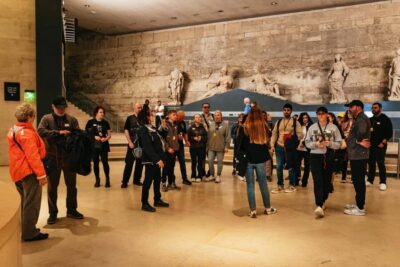
Priority Access Louvre with Host -Direct to Mona Lisa
Read our review →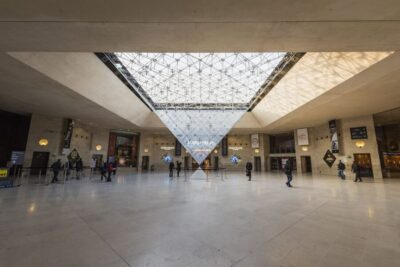
Mona Lisa & Louvre Masterpieces Tour with Reserved Access
Read our review →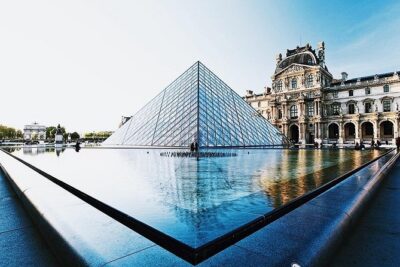
Louvre Museum – Exclusive Guided Tour (Entry Included)
Read our review →
Louvre Reserved Ticket and River Cruise Combo
Read our review →Browse the lists this tour appears in