
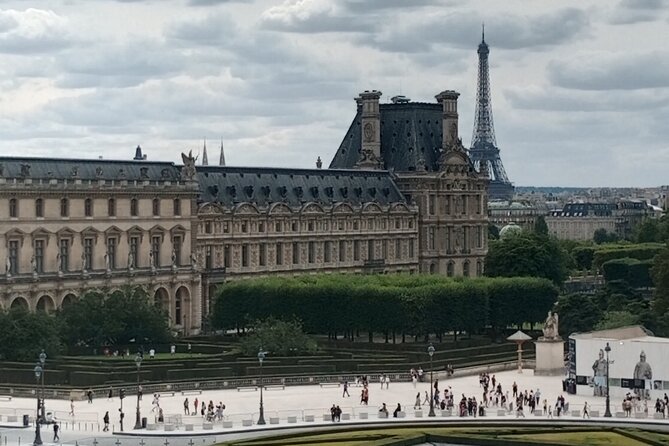
Reviewed · LOUVRE MUSEUM TOURS
Guided tour of the Louvre Museum with tickets included
The best thing about this Louvre tour is its tight two-hour route through the museum’s greatest hits. Matteo Allavena leads a small English-speaking group from the medieval foundations to the Mona Lisa, then on to major French paintings, adding the stories and visual clues that can turn a famous image into something you actually understand.
I like the small maximum of six, which gives the visit a personal feel and leaves room for questions. I also like the way the route includes more than the Mona Lisa and Venus de Milo: you get ancient Egypt, Greek sculpture, Italian painting, royal decoration, and French Romanticism in one brisk visit.
The main consideration is time. The Louvre is enormous, and this is an introduction, not a full museum day. The meeting point is also a place to handle carefully, since one booking went wrong and another group had trouble locating the guide in the crowd.
In This Review
- Key Points at a Glance
- Why a Short Louvre Tour Can Be a Smart Choice
- Meeting Matteo at Café Marly
- Starting Below Ground at the Medieval Louvre
- Ancient Egypt and Greece in One Strong Sequence
- The Galerie Apollon and a Glimpse of Royal Splendor
- Giotto and the Italian Painting Route
- The Grande Galerie and Leonardo’s Mona Lisa
- French Painting: Napoleon, Leonidas, and Revolution
- What the Price Includes, and What It Means
- Timing, Group Size, and a Booking Caution
- Who Will Get the Most From This Louvre Visit
- Should You Book This Louvre Tour?
- FAQ
- Where does the Louvre tour begin?
- Where does the activity end?
- How long does the Louvre tour last?
- Is museum admission included?
- What language is the tour offered in?
- How many people can join the tour?
Key Points at a Glance

- A focused two-hour route: Cover the Louvre’s medieval remains, ancient sculpture, Italian painting, royal rooms, and major French works without wandering aimlessly.
- A group capped at six: Expect a more personal format than a large museum procession, with a better chance to ask Matteo questions.
- Entry and line-skipping included: The €28 museum admission is part of the booking, and the tour is designed to get you past long waits.
- The Mona Lisa with context: Leonardo’s famous portrait is discussed as part of the museum’s wider collection, not as an isolated photo stop.
- An English-only experience: Confirm that your group is comfortable with English before booking.
- A useful first look at the Louvre: The tour suits first-time visitors who want structure, essential works, and a clear sense of the building.
Why a Short Louvre Tour Can Be a Smart Choice
The Louvre can swallow an entire day before you have found the rooms you came to see. A map helps, but a map does not explain why the building began as a fortress, how royal collecting shaped the galleries, or why one painting matters beside another.
This tour solves that problem with a clear route. You are not promised every wing or every famous object. Instead, you move through a selected group of rooms with a guide who provides context and keeps the visit moving.
That is especially useful if Paris is part of a larger trip and you have only a morning or afternoon for the museum. Two hours gives you a strong first look without demanding that you spend the whole day indoors.
The small-group limit matters here. A maximum of six people is far easier to manage in narrow gallery spaces than a large organized group. It also lets you stop for questions, adjust the pace to your group, and hear the guide without fighting a crowd.
Still, I would not treat this as the final word on the Louvre. If you already know you want hours with Dutch painting, Egyptian antiquities, Islamic art, or the decorative arts, plan extra museum time after the tour. The guided portion is a well-chosen sampler.
More ways into the Louvre:
- Paris: Louvre Museum Timed-Entrance Ticket
★ 4.6 · 71,977 reviews - Paris: Louvre Guided Tour with Reserved Access & Boat Cruise
★ 4.3 · 16,353 reviews - Louvre Museum Masterpieces Guided Tour with Access
★ 4.5 · 12,023 reviews
Meeting Matteo at Café Marly
The tour begins at Le Café Marly, 93 Rue de Rivoli, 75001 Paris. This is a practical location near the Louvre, but it is also a busy area, so give yourself enough time to locate the exact meeting point.
One useful tip is to check your booking messages before leaving your hotel. Matteo has contacted participants through WhatsApp and the booking app, and a lack of phone service can mean missing an important message. One group also suggested having a clear sign at the meeting point, since the surrounding crowd made identification less certain.
Once the group is together, the compact size should help. The tour ends back at the meeting point, so you are not left at a distant exit trying to work out where you are.
The experience is offered in English only. Most people can participate, and service animals are allowed. The museum is near public transportation, but transport to or from the Louvre is not included, and neither are coffee, tea, food, or drinks.
Starting Below Ground at the Medieval Louvre
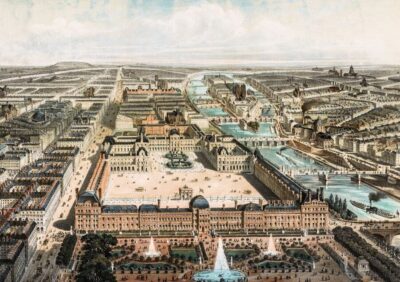
The route begins with the 13th-century walls of the Medieval Louvre. This is one of the smartest stops because it gives you a sense of what stood here before the palace became a grand royal residence and then a museum.
The stone remains help make the building’s long development easier to follow. Instead of seeing the Louvre as a collection of impressive rooms with no connection, you begin with its defensive past and then move toward its later roles.
For me, this is the kind of stop that makes a guided visit worthwhile. You may walk past architectural remains on your own without knowing what you are seeing. A short explanation can turn a basement wall into the opening chapter of the museum.
The drawback is that a quick tour cannot spend long on every stage of the building. If architecture is your main interest, you may want to return for a slower look after the guided route.
Ancient Egypt and Greece in One Strong Sequence
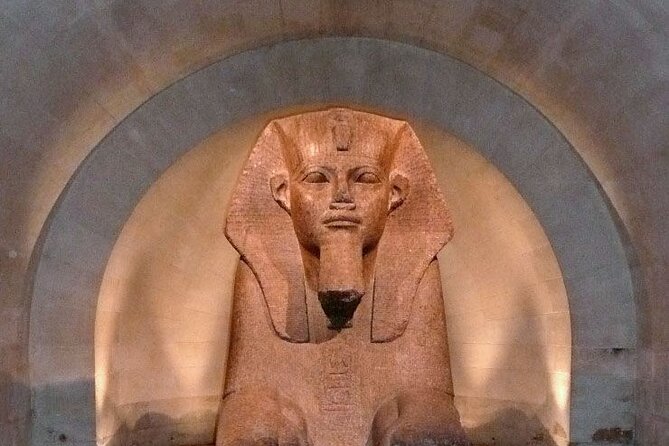
The Tanis Sphinx brings you face to face with an object roughly 4,000 years old. It is a useful reminder that the Louvre is not only a palace of European paintings. Its collections reach across several civilizations and thousands of years.
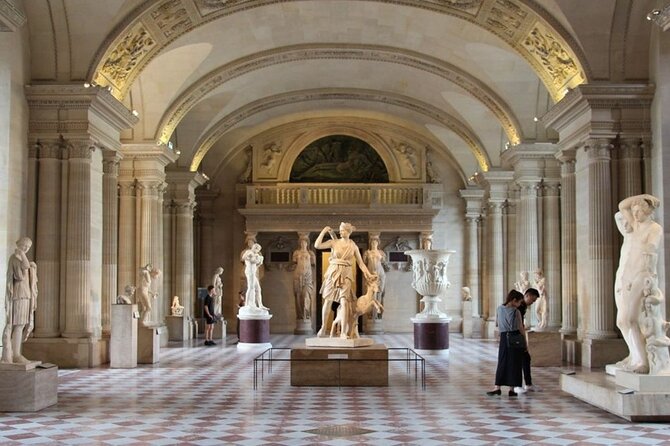
From there, the route moves to the Greek department and three essential works: the Athena of Velletri, the Venus de Milo, and the Victory of Samothrace. These sculptures are famous, but fame alone does not explain their appeal.
A guide can point out how each work presents the human figure differently, how movement is suggested in stone, and how missing parts affect the way we see the statues today. The Victory of Samothrace, placed dramatically at the top of a staircase, is especially effective when you understand how its setting and pose work together.
The Venus de Milo is likely to draw a crowd, and the popularity of these rooms can slow the group down. A guide helps you make the most of the stop without waiting for perfect silence or an empty gallery.
More Paris museums to visit:
- Paris: Orsay Museum Entry Ticket
★ 4.7 · 25,647 reviews - Paris: Louvre Museum Entry Ticket With Host and River Cruise
★ 4.6 · 9,926 reviews - Les Invalides: Napoleon’s Tomb & Army Museum Entry
★ 4.6 · 9,185 reviews - Louvre Museum – Exclusive Guided Tour (Entry Included)
★ 5.0 · 6,296 reviews
The Galerie Apollon and a Glimpse of Royal Splendor
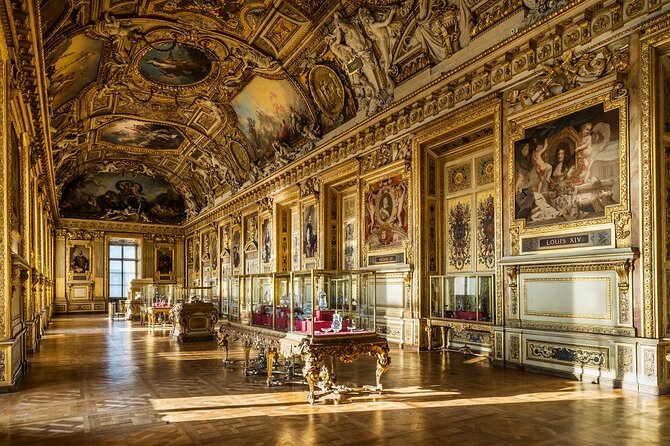
The Galerie Apollon offers a change of mood. Its ornate decoration reflects the Louvre’s royal past and the taste for theatrical interiors that later influenced other French palaces.
The tour describes it as the finest piece in the Louvre and connects its design to Versailles. That makes the gallery more than a pretty corridor. It helps explain the relationship between royal display, architecture, painting, and political power.
This is also a useful counterpoint to the museum’s older stone foundations. Within a short walk, you move from a medieval fortress to elaborate palace decoration. That contrast shows why the Louvre can feel confusing when you visit without a plan.
You should expect only a brief introduction here, given the tour’s two-hour limit. The reward is a clear visual example of royal taste rather than a long study of every decorative detail.
Giotto and the Italian Painting Route
The Italian section includes Giotto’s Saint Francis Receiving the Stigmata, an important work from the Middle Ages. This stop gives the tour a chance to explain how Italian painting changed and why Giotto is such a key figure in that story.
The point is not simply to identify the saint or repeat the title. You get a way to look at the painting, its setting, its figures, and its place in the development of European art.
This kind of explanation is particularly helpful if you do not normally spend much time with medieval painting. The works can seem distant or unfamiliar at first, and a few well-chosen details can make them easier to read.
The Italian galleries are also part of the route toward the Grande Galerie, where the focus shifts from one major work to the enormous scale of the Louvre itself. The movement through different periods helps you see art history as a sequence rather than a pile of disconnected masterpieces.
The Grande Galerie and Leonardo’s Mona Lisa
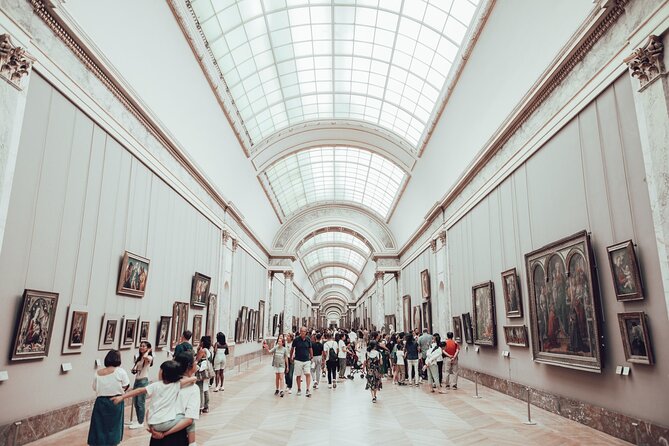
The Grande Galerie is one of the museum’s defining spaces. Its great length and density of paintings show the scale of the Louvre’s collection, but they can also leave you unsure where to look first.
The tour includes Ghirlandaio’s The Child and the Old Man, Veronese’s The Wedding Feast at Cana, and Leonardo da Vinci’s Mona Lisa. These works offer three very different experiences.
Ghirlandaio’s painting rewards close attention to faces and expression. Veronese’s enormous Wedding Feast at Cana demands a wider view, since the many figures and architectural details unfold across a huge canvas. The Mona Lisa is smaller and more crowded, which makes the contrast especially striking.
A guide is useful at the Mona Lisa because the room can encourage a quick photo and an even quicker exit. Matteo’s role is to provide context about the painting and help you look beyond its celebrity.
Do not expect a private viewing. The museum’s most famous painting attracts attention, and your time in front of it may be limited by crowd movement. The value here is not solitude. It is arriving with a framework for understanding what you are seeing.
French Painting: Napoleon, Leonidas, and Revolution

The classicism section features Jacques-Louis David’s The Coronation of Napoleon and Leonidas at Thermopylae. These are large, carefully arranged history paintings, and they show how art could serve political ideas, national pride, and public memory.
The Coronation of Napoleon is particularly useful for understanding how rulers present themselves. The scale, ceremony, costumes, and placement of figures all carry meaning. A guide can help you notice those choices instead of seeing only a grand crowd in a grand room.
Leonidas at Thermopylae shifts the focus toward heroic sacrifice and the ideals associated with classical Greece. Together, the two paintings show how French artists used ancient themes and contemporary events to shape public messages.
The Romanticism rooms then bring you to Théodore Géricault’s The Raft of the Medusa and Eugène Delacroix’s Liberty Guiding the People. These paintings are emotionally direct and politically charged.
The contrast with classicism is worth the short walk. You move from ordered composition and official ceremony toward drama, suffering, movement, and revolution. This is one of the strongest parts of the itinerary for anyone who wants more than a checklist of famous names.
What the Price Includes, and What It Means
The listed price is $114.93 per person. It includes the guide, the museum entrance fee valued at €28, and skip-the-line access.
That leaves a substantial portion of the price paying for planning, interpretation, and time saved. If you are comfortable navigating the Louvre alone, buying admission separately may cost less. But the comparison should include the hours you could lose in a long queue and the effort needed to build your own route through a huge building.
For a first visit, I see the value most clearly in the structure. You are paying to avoid the classic Louvre problem: spending too much time finding the entrance, getting oriented, and crossing galleries before discovering that the room you wanted is far away.
The value is also stronger for families. Matteo has handled children’s questions and kept an 11-year-old engaged during the visit. That does not mean every child will enjoy two hours of art, but the guide’s flexibility can make the difference between a useful museum stop and a tired march through rooms.
The price is less attractive if you want to linger. A two-hour guided visit followed by independent museum time may be the best approach, but you should allow for the extra energy and time required.
Timing, Group Size, and a Booking Caution
The tour lasts about two hours and is generally booked well in advance, with an average booking time of 57 days. That pattern suggests you should not wait until the last minute if this specific English tour matters to your plans.
One booking had a serious scheduling problem: the guide was unavailable because of another French-language reservation. The guide helped the group enter more quickly and provided a full refund, but the experience still fell short because the group had to explore the museum alone.
That appears to have been an exception, not the normal arrangement, but it is a useful warning. Check your confirmation carefully, keep an eye on messages, and avoid booking at the last possible moment if you have fixed plans around the visit.
The cancellation terms are straightforward. You can cancel for a full refund up to 24 hours before the start time. Changes or cancellations inside that 24-hour window are not refunded, and the tour may be rescheduled or refunded if the minimum number of participants is not met.
Who Will Get the Most From This Louvre Visit
I would choose this tour if you are visiting the Louvre for the first time, have limited time, or feel uneasy about building your own route. It is also a good match for families who want a guide able to answer unexpected questions without losing the main thread.
It suits you if you want famous works placed in a wider story. The route moves from ancient Egypt and Greek sculpture to medieval Italian painting, royal interiors, Leonardo, David, Géricault, and Delacroix. That range gives you a useful outline of the collection.
I would think twice if you prefer to set your own pace or spend a long time with a single gallery. The itinerary is focused and fast. You will see a lot, but you will not study every work in detail.
Free admission applies to visitors under 18 and to EEA residents under 26 with valid identification and proof of residency. If you qualify, confirm how the admission portion is handled before paying for a package that includes a €28 ticket.
Should You Book This Louvre Tour?
Book it if you want a well-planned first encounter with the Louvre, especially in a group no larger than six. Matteo’s strongest qualities are his clear explanations, flexible pacing, and ability to connect the building’s past with the art inside it.
The tour earns its price through time saved and decisions made for you. Just keep your expectations realistic: two hours can cover the essential route, not the entire museum. Arrive early at Café Marly, monitor your messages, and add independent museum time if you want to explore beyond the highlights.
FAQ
Where does the Louvre tour begin?
It begins at Le Café Marly, 93 Rue de Rivoli, 75001 Paris, France.
Where does the activity end?
The tour ends back at the meeting point.
How long does the Louvre tour last?
The experience lasts approximately two hours.
Is museum admission included?
Yes. The package includes the entrance fee, listed as a €28 ticket, along with the guide and skip-the-line access.
What language is the tour offered in?
The tour is offered in English.
How many people can join the tour?
The activity has a maximum of six participants.
Newest additions around Paris
- Family escape Game with kids and teens on the Île de la Cité★ 4.5 · 11 reviews
- Private Photoshoot with the Iconic Eiffel Tower in Paris★ 5.0 · 11 reviews
- 2-day Private Mont Saint-Michel, 3 Loire Castles, D-Day Express★ 4.5 · 11 reviews
- Paris: Batobus Hop-On Hop-Off Cruise & Landmarks Audio Tour★ 3.0 · 11 reviews
- Paris Revolutionary Walking Tour: Iconic French Sights & Stories★ 5.0 · 11 reviews
- Guided and Private Tour of 3 hours through Paris aboard a Citroën 2cv★ 5.0 · 11 reviews
- Kids in the Kitchen – CrOisSaNtS★ 4.0 · 11 reviews
- Paris: Ghosts and Dark Stories Guided Walking Tour★ 4.1 · 11 reviews
Louvre Museum Tours, compared.
Louvre Guided Tour with Reserved Access & Boat Cruise
Read our review →
Louvre Museum Masterpieces Guided Tour with Access
Read our review →
Louvre Museum Entry Ticket With Host and River Cruise
Read our review →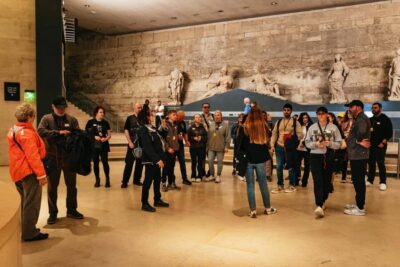
Priority Access Louvre with Host -Direct to Mona Lisa
Read our review →
Mona Lisa & Louvre Masterpieces Tour with Reserved Access
Read our review →
Louvre Museum – Exclusive Guided Tour (Entry Included)
Read our review →
Louvre Reserved Ticket and River Cruise Combo
Read our review →Browse the lists this tour appears in