
Reviewed · CHAMPAGNE DAY TRIPS
French Wine and Champagne Tasting in Paris
French wine can feel like a code written in small print. This two-hour evening class helps you read that code while tasting six wines from across France, including Champagne, in a renovated cellar at Ô Chateau near the Louvre. You learn about terroir, appellations, grapes, labels, and proper tasting technique without needing a wine degree.
I like two things here. First, the format gives you a broad look at French wine in one sitting: Champagne, white, rosé, and red wines can all make an appearance. Second, the sommelier-led setting feels social rather than stiff. Guides such as Willy, Kim, Jasmina, Pierre, Paul, Clement, and Laury have each been praised for mixing clear instruction with humor and easy conversation.
The main consideration is the group size. The published details describe groups that can range from 6 to 25 people, while also listing a maximum of 10, so the exact setup may vary. At $90.70 per person, the optional cheese or charcuterie plate also affects the final value.
In This Review
- Key points at a glance
- A French wine lesson beneath central Paris
- What happens during the six-wine tasting
- Learning to read a French wine label
- Bread, cheese, and charcuterie choices
- The setting and the role of the sommelier
- Group size and how personal the experience feels
- Is $90.70 a fair price?
- Practical details for planning your evening
- Who will enjoy this most
- Should you book the Ô Chateau tasting?
- FAQ
- Where does the French wine and Champagne tasting take place?
- What time does the tasting start?
- How long does the experience last?
- How many wines are included?
- Is the presentation offered in English?
- Is food included with the tasting?
- Is hotel pickup or drop-off included?
- What is the minimum age?
- Can I cancel for a full refund?
Key points at a glance
- Six French wines in two hours: Expect a countrywide introduction that includes Champagne and several still wines.
- Ô Chateau near the Louvre: The tasting takes place at a renovated central Paris wine cellar, not at a vineyard.
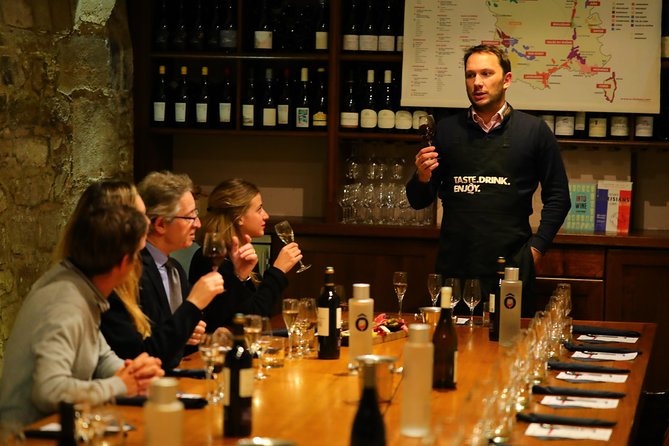
- English-speaking sommelier: Guides explain tasting methods, French regions, wine labels, grapes, and production.
- Bread is included: Freshly baked bread and water help pace the tasting, while cheese or charcuterie can be added.
- Useful early-trip lesson: You leave with the names of the wines and more confidence reading a French wine list.
- Adult evening activity: The minimum age is 18, and the start time is 5:00 pm.
A French wine lesson beneath central Paris
Ô Chateau, at 68 Rue Jean-Jacques Rousseau in the first arrondissement, gives this experience a useful sense of place. You are close to the Louvre and central Paris sights, but the tasting itself happens indoors, in a renovated wine cellar rather than in a formal museum room or countryside vineyard.
That distinction matters. This is not a day trip to Champagne, Burgundy, Bordeaux, or the Loire Valley. You will not see vines, meet a grower, or visit a production site. Instead, the value comes from comparison. Six glasses let you notice how French wines differ by region, grape, climate, and method without spending a full day away from Paris.
The evening begins at 5:00 pm and lasts about two hours. That timing works well after sightseeing. You can spend the afternoon at the Louvre or along the Seine, then settle in for an indoor activity that asks you to sit, listen, taste, and talk.
More Champagne trips and tastings:
- Paris: Moulin Rouge Cabaret Show Ticket with Champagne
★ 4.7 · 16,088 reviews - Paris: Paradis Latin Cabaret Show with Optional Champagne
★ 4.6 · 2,231 reviews - Paris 3-Courses Gourmet Dinner Seine River Cruise with Champagne
★ 4.0 · 1,659 reviews
What happens during the six-wine tasting
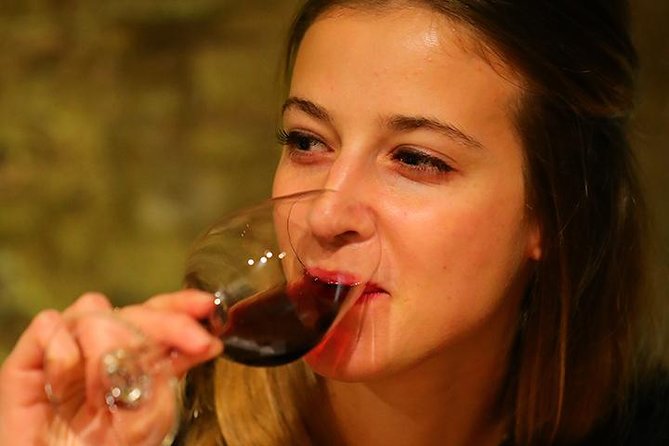
The tasting follows a masterclass format, with a professional sommelier guiding the group through the wines. You will learn how to look at a wine, smell it, taste it, and describe it with more precision. The goal is not to turn you into a sommelier in one night. It is to make wine less intimidating.
The exact selection can change, but the tasting has included a Champagne, two white wines, a rosé, and two red wines. That lineup gives you a sensible progression through several common French styles. You can compare sparkling wine with still wine, lighter bottles with fuller reds, and different regional approaches.
You also receive an explanation of how Champagne is made and why the drink differs from other sparkling wines. This is one of the most useful parts for a first-time visitor to France. Champagne is not simply a generic word for bubbles. The name refers to wine from the Champagne region, and production methods, grape choices, aging, and regional rules all shape the result.
The class also explains terms such as appellation and terroir. Those words appear on French labels and wine lists, but they can be hard to understand when you are standing in a restaurant trying to order dinner. Here, you can ask questions and connect the vocabulary to the wine in your glass.
Learning to read a French wine label
French wine labels often emphasize the place where the wine was made rather than the grape variety. That can confuse anyone used to labels led by names such as Cabernet Sauvignon or Chardonnay.
Your sommelier explains how to work through a French label and what regional terms mean. You learn to pay attention to the appellation, the region, and the producer. That lesson has practical value beyond the tasting room because it gives you a better chance of ordering something you will enjoy later in your trip.
The regional overview is another strong feature. Instead of tasting six unrelated wines, you hear how different parts of France have their own grapes, rules, traditions, and styles. The guides have also explained the grape varieties used in the wines, helping connect the information to what you are drinking.
I especially like this approach for people who want to understand French food and wine together. You do not need to memorize every region. It is enough to leave with a few anchors, such as the difference between a sparkling wine and Champagne, the meaning of an appellation, and the way local conditions affect taste.
Bread, cheese, and charcuterie choices
Freshly baked bread is included, giving you something to eat between pours. Bread also helps clear your palate and makes the two-hour session more comfortable.
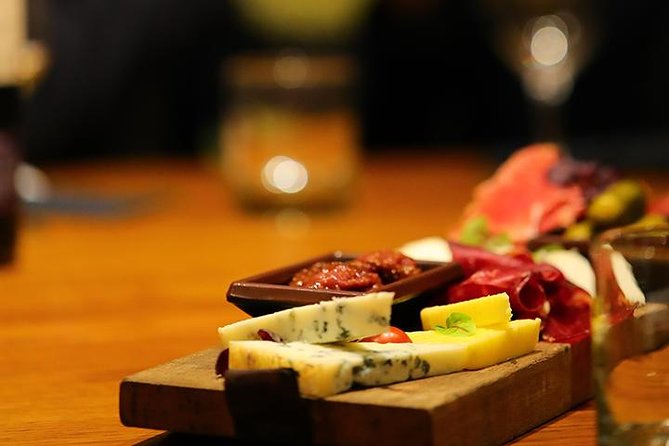
You can add cheese, charcuterie, or both. The optional plates make the experience more substantial, especially if you are treating it as an early dinner. The cheese and cured meats have been singled out as a strong match for the wines, and one useful ordering tip is to choose cheese and charcuterie together if you want a mixed plate.
The food option is not essential if your main aim is wine education. Bread is provided, and the tasting itself is the focus. But I would consider adding at least one pairing if you enjoy French food or want a more relaxed evening. Cheese and cured meat show how a wine changes when tasted with salt, fat, and texture.
Do not expect a full meal. The activity description presents the food as a snack or pairing plate, not dinner. Plan another meal if you need something hearty afterward.
More wine experiences around Paris:
- Authentic Parisian Gourmet Food Tour with 10 Local Dishes & Wines
★ 5.0 · 4,754 reviews - Loire Valley Castles Day Trip from Paris with Complementary Wine
★ 4.5 · 3,907 reviews - Montmartre Hill French Gourmet Food and Wine Tasting Walking Tour
★ 5.0 · 2,588 reviews - Paris: Montmartre Cheese, Wine & Pastry Guided Walking Tour
★ 4.8 · 2,255 reviews
The setting and the role of the sommelier
The cellar setting is central to the mood. A comfortable, intimate room suits this type of class better than a bright lecture hall. You sit with other people, taste at the same pace, and have room for conversation.
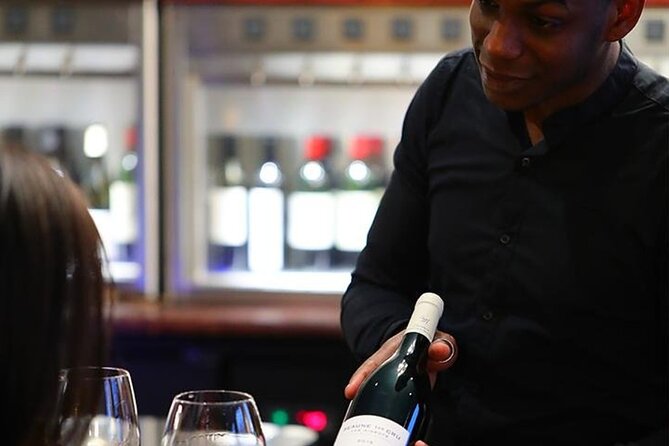
The guide makes a large difference, and the named hosts bring different personalities. Willy has been praised for clear explanations of winemaking and regional styles. Kim has focused on grape varieties and has offered detailed instruction. Jasmina combines humor with wine expertise, while Pierre has been appreciated for practical suggestions and friendly conversation.
Other named hosts include Paul, Clement, and Laury. Since the guide may change, you should book this for the structure and setting rather than expecting one particular person. The common thread is an English presentation designed to be informative without becoming too formal.
This is also a good activity for couples, families with adult children, and solo visitors who like meeting people over food and drink. The social side is not forced, but the shared table makes conversation easy. You may find yourself discussing favorite wines, restaurants, or food pairings with people from different countries.
Group size and how personal the experience feels
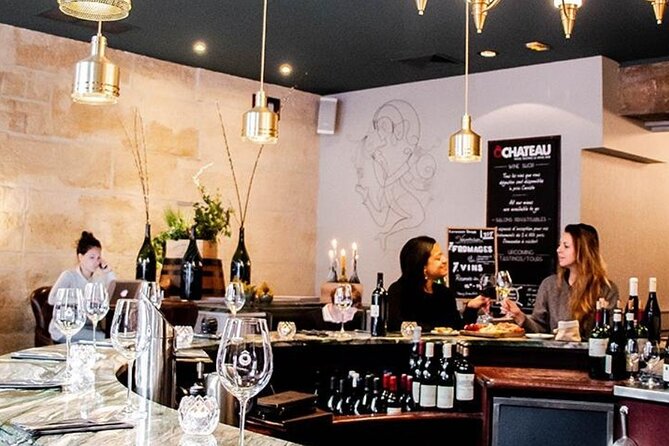
The published information needs a little care here. It says groups may vary from 6 to 25 participants, while another detail gives a maximum of 10 travelers. Because those figures do not match, confirm the group size when booking if a small class is important to you.
A smaller group usually means more chances to ask questions and more direct contact with the sommelier. A larger group can feel livelier, but you may have less time for individual advice. The experience is designed as a small-group evening, yet the exact feel depends on the date and attendance.
You should also expect a shared class, not a private tasting. That is part of the appeal for many people, but it is worth knowing before you book. If you want a quiet, private lesson for a special celebration, check the group arrangements first.
Is $90.70 a fair price?
At $90.70 per person, this is not a cheap glass-of-wine stop. You are paying for six tastings, an English-speaking sommelier, a guided lesson, bread, the central Paris location, and roughly two hours of instruction and social time.
The value is strongest if you are curious about French wine and would otherwise pay for several separate glasses without understanding what you are drinking. The class gives you a framework that can improve the rest of your trip. Afterward, a French wine list should look less like a puzzle.
The price is easier to justify with the cheese or charcuterie option, especially if you use the tasting as a pre-dinner activity. If you only want to sample Champagne and a few French wines, a wine bar may cost less. A bar, however, will not necessarily explain appellations, terroir, tasting technique, and label reading in a planned sequence.
Think of it as a short class with drinks, not simply a tasting flight. That is the right comparison.
Practical details for planning your evening
The meeting point is Ô Chateau, 68 Rue Jean-Jacques Rousseau, 75001 Paris. The activity ends at the same location, so you do not need to arrange a return transfer. Hotel pickup and drop-off are not included.
The venue is near public transportation, which helps if you are coming from another part of Paris. Build in enough time to reach the address, since the session starts at 5:00 pm. A mobile ticket is accepted, and confirmation is provided when you book.
The presentation is in English. The minimum age is 18, making this an adults-only wine activity. Service animals are allowed, and the published information says most people can participate.
Free cancellation is available up to 24 hours before the start time for a full refund. Changes or cancellations made less than 24 hours before the local start time are not refunded. The activity also requires a minimum number of participants, so if the provider cancels because that minimum is not met, you are offered another date or experience, or a full refund.
Who will enjoy this most
I would recommend this to you if French wine feels interesting but confusing. It is especially useful early in a Paris stay, before you have faced several unfamiliar wine lists. The lesson gives you vocabulary and confidence you can use at dinner.
It also suits anyone who wants a break from museums and long walks. The two-hour format is long enough to feel worthwhile but short enough to fit into an evening. Couples can treat it as a date, while solo visitors have a natural setting for conversation.
The experience may not suit you if you want to visit vineyards or see how wine is made on site. It also may not be the best pick if you dislike group activities, do not drink alcohol, or want a full meal rather than bread and optional pairing plates.
Wine beginners will likely get the most from it. People who already know French regions and grape varieties may still enjoy the selection and cellar setting, but the instructional material could cover familiar ground.
Should you book the Ô Chateau tasting?
Book it if you want an approachable introduction to French wine without leaving Paris. The strongest reasons are the six-wine range, the Champagne lesson, the practical label advice, and the chance to ask questions in English. Add cheese or charcuterie if you want the evening to feel closer to a light meal.
Skip it if your priority is a vineyard visit, a producer-led tasting, or the lowest possible drink cost. Also confirm the expected group size if personal attention is important to you.
For most adults who enjoy food, wine, and a little guided learning, this is a sensible Paris evening. It gives you more than six pours, but it does not pretend to replace a trip through France’s wine regions.
FAQ
Where does the French wine and Champagne tasting take place?
It takes place at Ô Chateau, 68 Rue Jean-Jacques Rousseau, 75001 Paris, France, near the Louvre Museum and public transportation.
What time does the tasting start?
The tasting starts at 5:00 pm.
How long does the experience last?
The session lasts approximately two hours.
How many wines are included?
Six French wines are included, including Champagne.
Is the presentation offered in English?
Yes. The presentation is in English and led by a professional sommelier.
Is food included with the tasting?
Freshly baked bread is included. Cheese or charcuterie can be added as an option.
Is hotel pickup or drop-off included?
No. You must make your own way to Ô Chateau, and the activity ends at the meeting point.
What is the minimum age?
The minimum age is 18.
Can I cancel for a full refund?
Yes. You can cancel at least 24 hours before the local start time for a full refund. Cancellations or changes made less than 24 hours before the start time are not refunded or accepted.
More Paris food tours
- Paris: Seine Cruise & Crepe Tasting near the Eiffel Tower
★ 4.4 · 11,231 reviews - Normandy D-Day Small-Group Day Trip with Omaha Beach, Cemetery & Cider Tasting
★ 5.0 · 2,786 reviews - Paris: Illuminated Evening River Cruise & Waffle Tasting
★ 4.1 · 2,697 reviews - Devour Paris Ultimate Food Tour
★ 5.0 · 2,087 reviews
Newest additions around Paris
- Family escape Game with kids and teens on the Île de la Cité★ 4.5 · 11 reviews
- Private Photoshoot with the Iconic Eiffel Tower in Paris★ 5.0 · 11 reviews
- 2-day Private Mont Saint-Michel, 3 Loire Castles, D-Day Express★ 4.5 · 11 reviews
- Paris: Batobus Hop-On Hop-Off Cruise & Landmarks Audio Tour★ 3.0 · 11 reviews
- Paris Revolutionary Walking Tour: Iconic French Sights & Stories★ 5.0 · 11 reviews
- Guided and Private Tour of 3 hours through Paris aboard a Citroën 2cv★ 5.0 · 11 reviews
- Kids in the Kitchen – CrOisSaNtS★ 4.0 · 11 reviews
- Segway tour Capital sites★ 5.0 · 11 reviews
Champagne Day Trips, compared.
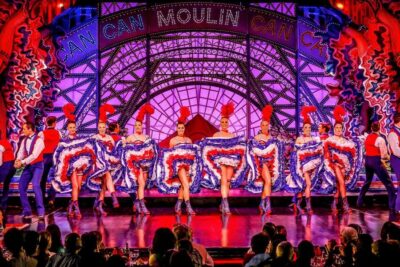
Moulin Rouge Cabaret Show Ticket with Champagne
Read our review →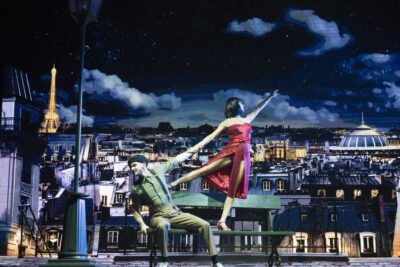
Paradis Latin Cabaret Show with Optional Champagne
Read our review →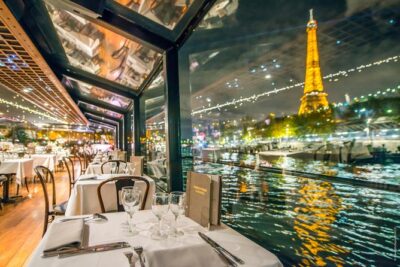
Paris 3-Courses Gourmet Dinner Seine River Cruise with Champagne
Read our review →
Top Private Cruises in Paris with French Champagne and surprises
Read our review →
Day Trip to Champagne with 8 Tastings & Lunch
Read our review →
Champagne at the Moulin Rouge & Seine River Cruise
Read our review →
Champagne Day Trip with 6 Tastings, Reims and Winery from Paris
Read our review →Browse the lists this tour appears in