
Reviewed · MUSEUMS
Entry Ticket for Paradox Museum Paris
Paradox Museum Paris turns science into a playful series of puzzles. Across more than 90 interactive exhibits, you will watch your eyes, balance, and sense of scale get tricked by rooms built around famous paradoxes. The Ames Room and hanging rooms are especially good at producing the kind of photos that make friends ask how you did it.
I like the freedom to choose your time and move at your own speed. I also like the mix of laughing, posing, and learning, which makes this an easy fit for families and couples. The main drawback is that the museum can feel less rewarding if you want detailed explanations or hands-on help at every exhibit. Staff support has been uneven, and some displays are unsuitable for people sensitive to flashing or unusual light.
In This Review
- Paradox Museum Paris at a glance
- What kind of Paris attraction is this?
- Inside the Ames Room and hanging rooms
- More than photo props
- How the 90-minute visit works
- Who will enjoy Paradox Museum Paris?
- Is the $33.11 admission good value?
- Timing, access, and practical planning
- How to make the most of the exhibits
- Should you book Paradox Museum Paris?
- FAQ
- Where is Paradox Museum Paris located?
- How long does a visit to Paradox Museum Paris take?
- How much does admission cost?
- Is the ticket mobile?
- Can I choose my visit time?
- Is this a guided tour?
- Is the experience offered in English?
- Are service animals allowed?
- Can people with light sensitivity or epilepsy visit?
- What is the cancellation policy?
Paradox Museum Paris at a glance
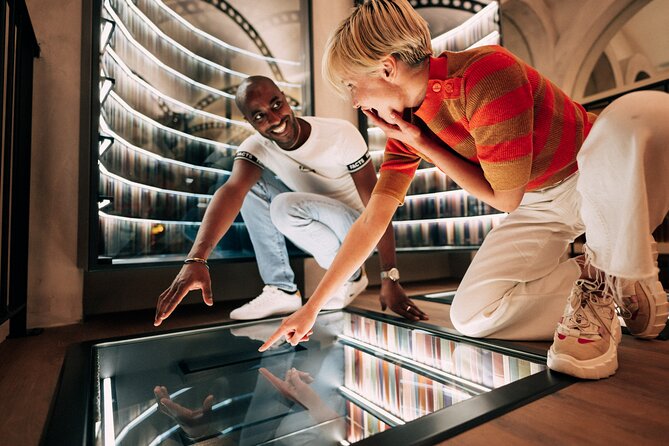
- More than 90 exhibits: Expect visual tricks, altered rooms, and displays built around scientific ideas about perception.
- Ames Room and hanging rooms: These are two particularly memorable stops for families and creative photographs.
- About 90 minutes: The visit fits neatly into an open afternoon or a spare hour between other Paris plans.
- Self-paced admission: You choose a time and explore without being tied to a guide or fixed group schedule.
- Good for photos and family fun: The exhibits invite you to pose, test your senses, and create your own scenes.
- Check the light warnings: Certain displays are not suitable for people with light sensitivity or epilepsy.
What kind of Paris attraction is this?
Paradox Museum Paris is not a traditional museum filled with paintings, artifacts, or long historical labels. It is a playful science attraction where the main subject is your own perception.
You look at a room and try to work out why it seems wrong. You stand in a space designed to make people appear different sizes. You test an exhibit with your hands or body and then compare what your senses tell you with what you know must be true.
That makes the visit active from the start. You are not simply walking past displays. You are asked to pose, touch, observe, question, and take pictures. The best moments come when your brain gives you an answer that your eyes later prove false.
I would describe the tone as family entertainment with a science lesson tucked inside. Children usually have plenty to do, but adults are not left out. The ideas are simple enough to grasp quickly, and the visual results can be funny for everyone.
The museum also works well for a short break from more serious sightseeing. After churches, galleries, monuments, and crowded streets, an hour and a half of optical tricks offers a change of pace. You do not need to prepare by reading about physics or psychology first.
More Paris museums to visit:
- Paris: Louvre Museum Timed-Entrance Ticket
★ 4.6 · 71,977 reviews - Paris: Orsay Museum Entry Ticket
★ 4.7 · 25,647 reviews - Louvre Museum Masterpieces Guided Tour with Access
★ 4.5 · 12,023 reviews
Inside the Ames Room and hanging rooms
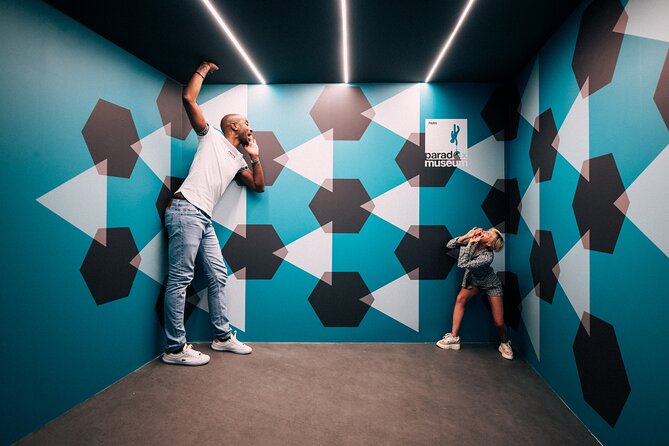
The Ames Room is one of the museum’s most useful examples of how perception can be manipulated. The room is built so that people standing in different positions appear to have dramatically different heights. A person can look unusually tall while another seems tiny, even though the room itself is doing the trick.
This is more than a quick photo stop. It shows why your eyes do not simply record facts. They interpret shapes, angles, and distance based on assumptions that usually help you move through the world. In a carefully altered space, those assumptions can produce a very strange result.
The hanging rooms provide a different kind of visual confusion. Furniture and room elements are arranged to make the space appear tilted or suspended. Your photograph can look as if gravity has stopped working, even though the effect comes from the way the scene is constructed.
Plan to pause at these exhibits rather than rushing through. You may need a moment to understand where to stand and how to frame the picture. If staff are available, they may help with photos, but you should not assume that someone will be stationed at every display. One practical criticism of the museum is that there may not be enough staff to explain each exhibit or take photographs for every group.
That is worth keeping in mind if you are visiting alone. The attraction is still possible to enjoy, but your photographs may require a little more planning. Couples and families can take turns behind the camera.
More than photo props
The photo opportunities are an important part of the appeal, but the museum is not only a collection of social media backdrops. Its central idea is that your senses can be deceived by a combination of visual and tactile information.
Some displays ask you to trust your eyes. Others make you question balance, size, direction, or the connection between what you see and what you feel. The experience encourages you to ask why an exhibit works, even if the explanation is brief.
That balance matters. If you enjoy science presented in a formal museum, you might find the information here too light. If you prefer to learn by testing something yourself, the format is more inviting than a display case and a paragraph of text.
You can also make the visit as serious or silly as you like. One person may focus on the scientific concept. Another may simply want a funny family photograph. Both approaches fit the attraction.
The strongest exhibits are the ones that produce an immediate reaction. You see something that looks impossible, try it yourself, and then understand that your brain has made a reasonable but incorrect guess. That small shock is the point.
How the 90-minute visit works
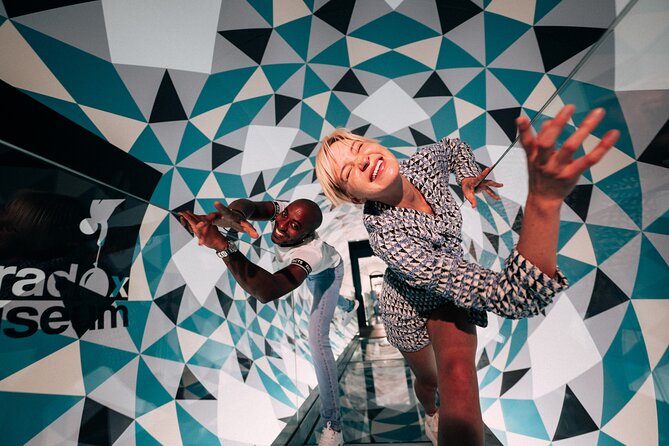
Your admission is for Paradox Museum Paris, with a mobile ticket and a selected visit time. Once inside, you can proceed at your own pace rather than following a guide through a fixed itinerary.
The expected visit lasts about one hour and 30 minutes. That is long enough to try a broad range of displays without making the attraction an all-day commitment. I would allow the full 90 minutes if you want photographs, since posing and taking turns can slow your progress.
A quick visit may be possible if you are mainly interested in the biggest visual effects. A family with children may need longer at the exhibits that invite repeated attempts. The exact pace depends on how much time you spend taking photos and reading or discussing the science.
Because the admission is self-paced, you can fit it around other Paris plans more easily than a guided tour. You are not waiting for a group to finish a stop, and you can linger at an exhibit that catches your attention.
At the same time, the attraction is not a substitute for a full guided science presentation. No named guide is provided, and the booking information presents this as timed admission rather than a tour led by a person. If explanations are important to you, expect to learn mainly through the displays and your own observations.
A few more Paris ideas to compare
- Disneyland® Paris 1-Day Ticket
★ 4.6 · 49,412 reviews - Paris: Versailles Palace and Gardens Full Access Ticket
★ 4.6 · 41,579 reviews - Paris: Arc de Triomphe Rooftop Tickets
★ 4.6 · 34,264 reviews - Paris: Eiffel Tower Entry Ticket with Optional Summit Access
★ 4.4 · 20,035 reviews
Who will enjoy Paradox Museum Paris?
Families are the clearest match. Children can move, pose, and test what they see, while adults can join the fun instead of standing on the sidelines. The Ames Room and hanging rooms give families a shared activity, and the photographs help preserve the moment.
Couples can enjoy it too, especially if you want a light, playful stop. The attraction gives you something to do together instead of simply looking at the same objects. It is also a reasonable choice when rain or a gap in your schedule calls for an indoor activity, though the stated cancellation terms make weather worth checking before you go.
Friends who like taking photographs may find plenty of material here. The exhibits are made for visual results, but you should be ready to take your own pictures if staff are busy.
I would be more cautious about recommending it to someone who wants quiet contemplation, long historical context, or a traditional art collection. The museum is built around participation and surprise. It succeeds best when you are willing to play along.
People with light sensitivity or epilepsy should read the warnings carefully before booking. Some exhibits are not suitable for those conditions, and the displays are marked with warnings. Service animals are allowed, and most people can participate.
Is the $33.11 admission good value?
At about $33.11 per person, this is not a bargain attraction in the same category as a quick public park or free gallery. The value depends on how actively you use the museum.
You are paying for more than a short look at unusual rooms. The ticket gives you access to over 90 interactive displays, the freedom to explore at your own pace, and a photo-friendly activity that can occupy roughly 90 minutes. For a family, the shared entertainment may justify the price more easily than it would for someone making a very brief visit.
The cost is harder to defend if you rush through or skip the hands-on parts. You get the most from the ticket when you try the exhibits, take turns photographing one another, and spend time asking how each illusion works.
Pre-booking can also have practical value in Paris. You know your admission is arranged before you arrive, and the mobile ticket keeps the booking in your phone. Since the visit is usually booked around 17 days ahead, popular times may be worth arranging before your sightseeing day is full.
The overall public rating is 3.1 from 167 ratings, which suggests a mixed experience rather than universal approval. The praise centers on family fun, memorable pictures, clever science, and helpful staff on some days. The criticism focuses mainly on staffing and the lack of explanation at certain exhibits.
That pattern gives you a useful way to judge the price. Book it for the activity itself, not for a polished guided lesson. If you value playful participation and photos, the cost may feel fair. If you expect a large museum with detailed interpretation at every stop, you may leave feeling that the ticket is expensive.
Timing, access, and practical planning
The experience is offered in English, and confirmation is received when you book. It is near public transportation, which makes it easy to connect with the rest of your day in Paris, although the supplied information does not specify a particular station or route.
Choose a time that gives you room to arrive without rushing. The ticket is tied to a selected visit time, and the attraction itself lasts about 90 minutes. A little breathing space before or after is sensible if you are linking it with another timed activity.
The museum is presented as a private experience, meaning you choose your own visit time and are not placed into a fixed guided group. That does not mean the whole museum is reserved only for your party. It means your visit is arranged around your selected admission rather than a shared tour schedule.
The cancellation terms are useful but strict close to the visit. You can cancel at least 24 hours before the start time for a full refund. Cancellations or changes made inside that 24-hour window are not accepted for a refund.
The booking information also says the experience requires good weather. If poor weather causes the museum to cancel, you will be offered another date or a full refund. Since the attraction is indoors, this condition may seem surprising, so check the operator’s instructions if the forecast is poor.
How to make the most of the exhibits
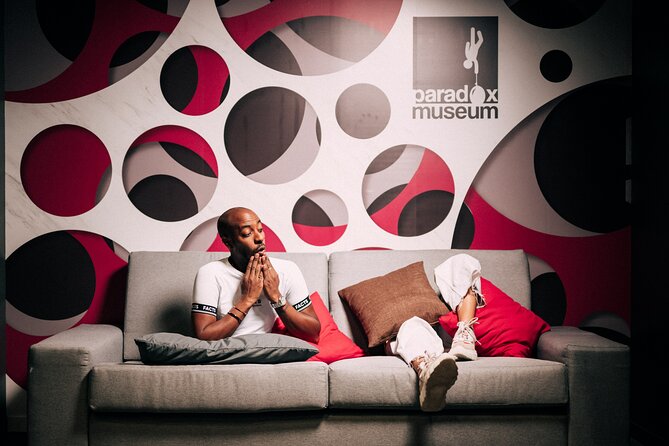
Go in ready to participate. The displays are more rewarding when you test them instead of walking through and looking from a distance.
Take photos as you go, but avoid turning the entire visit into a hurried photo session. First work out what the exhibit is showing, then take the picture. You will get better results when you understand where people need to stand and how the room’s angles create the illusion.
At the Ames Room, compare the people in the picture and then look closely at the room itself. At the hanging rooms, frame enough of the surroundings to make the strange angle clear. These photos work because the background helps sell the illusion.
If staff are available, ask for help with an exhibit that is difficult to understand. Still, keep your expectations realistic. Staffing levels may vary, and there may not be someone ready to explain every display or take your picture.
Children may want to repeat the same exhibit several times. That is not wasted time. Repetition helps them see the difference between what their eyes report and what the room is actually doing.
You should also take the light warnings seriously. If you have sensitivity to light or epilepsy, review the marked exhibits and decide in advance which areas to avoid.
Should you book Paradox Museum Paris?
Book it if you want a short, playful Paris activity built around optical illusions, family interaction, and unusual photographs. The flexible timing and self-paced format make it easy to fit into a busy day, and the Ames Room and hanging rooms provide clear highlights.
Think twice if you want a traditional museum, a named guide, or detailed explanations at every stop. The experience depends on your willingness to experiment, and staff may not always be available to help with photos or explain each display.
For families, couples, and anyone with a spare 90 minutes, I think it is a reasonable choice when you value shared fun more than formal museum depth. Check the light warnings, allow enough time for photographs, and book only if the price fits your plans. That is the best way to get what this attraction does well: making you laugh first, then wonder why your own senses got the answer wrong.
FAQ
Where is Paradox Museum Paris located?
It is located in Paris, France. The museum is near public transportation.
How long does a visit to Paradox Museum Paris take?
The visit lasts approximately one hour and 30 minutes.
How much does admission cost?
The listed price is $33.11 per person.
Is the ticket mobile?
Yes. A mobile ticket is provided.
Can I choose my visit time?
Yes. You can choose the time you want to visit when booking.
Is this a guided tour?
The experience is presented as private, self-paced admission. You visit the exhibits at your own speed, and no guide name is provided.
Is the experience offered in English?
Yes. It is offered in English.
Are service animals allowed?
Yes. Service animals are allowed.
Can people with light sensitivity or epilepsy visit?
Some exhibits are not suitable for people with sensitivity to light or epilepsy. Warnings are displayed at the relevant exhibits.
What is the cancellation policy?
You can cancel at least 24 hours before the experience start time for a full refund. Cancellations or changes made less than 24 hours before the start time are not accepted for a refund. If the experience is canceled because of poor weather, you will be offered another date or a full refund.
Newest additions around Paris
- Family escape Game with kids and teens on the Île de la Cité★ 4.5 · 11 reviews
- Private Photoshoot with the Iconic Eiffel Tower in Paris★ 5.0 · 11 reviews
- 2-day Private Mont Saint-Michel, 3 Loire Castles, D-Day Express★ 4.5 · 11 reviews
- Paris: Batobus Hop-On Hop-Off Cruise & Landmarks Audio Tour★ 3.0 · 11 reviews
- Paris Revolutionary Walking Tour: Iconic French Sights & Stories★ 5.0 · 11 reviews
- Guided and Private Tour of 3 hours through Paris aboard a Citroën 2cv★ 5.0 · 11 reviews
- Kids in the Kitchen – CrOisSaNtS★ 4.0 · 11 reviews
- Segway tour Capital sites★ 5.0 · 11 reviews
Museums, compared.
Louvre Museum Masterpieces Guided Tour with Access
Read our review →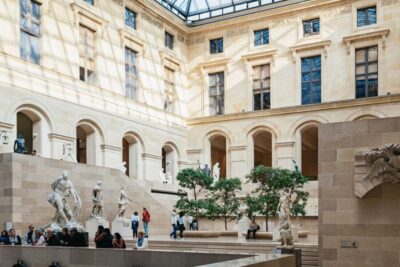
Louvre Museum Entry Ticket With Host and River Cruise
Read our review →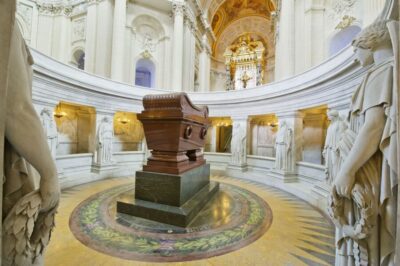
Les Invalides: Napoleon’s Tomb & Army Museum Entry
Read our review →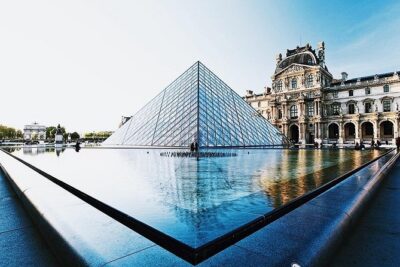
Louvre Museum – Exclusive Guided Tour (Entry Included)
Read our review →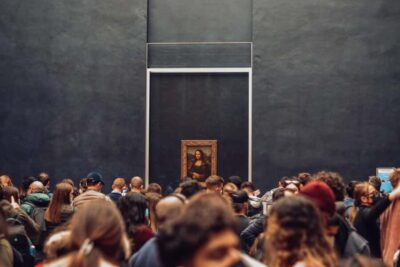
Louvre Museum Hosted Entry and Mona Lisa Audioguide
Read our review →
Louvre Museum Tour Mona Lisa & Iconic Masterpieces
Read our review →Browse the lists this tour appears in