
Reviewed · PARIS
Discover Secret Passages in Paris
Paris keeps some of its best surprises just off the grand boulevards. On this three-hour walk, you follow a local guide through five covered passages near the Louvre, arcades built for strolling, shopping, and shelter from the weather.
I like the small group, limited to eight people, and the chance to see a quieter side of central Paris. I also like the pause at a historic wine bar, where your tasting comes with a glass of wine and pastries. The main caution is pace: if you prefer a short walk, three hours may feel long, and these are covered walkways rather than secret tunnels.
- Five passages near the Louvre: Visit a cluster of covered arcades on Paris’s Right Bank.
- A small group of eight: The format gives you a better chance to ask questions and keep up with your guide.
- Guides with local character: Simone and Anthony M. have both led especially well-regarded versions of this walk.
- A 19th-century-style break: Stop at a wine bar inside the passages for a glass of wine and pastries.
- More than shopping: The route can include art galleries, cafes, libraries, and parks near the arcades.
- A useful central meeting point: Begin at the Louvre metro exit, in front of 8 rue de l’Amiral de Coligny.
In This Review
- Why Paris Built Covered Passages
- Starting at the Louvre Metro Exit
- Five Arcades on the Right Bank
- Shops, Galleries, and Cafes Along the Way
- The Wine Bar Stop
- Libraries and Parks Near the Route
- Simone, Anthony M., and the Guide’s Role
- How the Three-Hour Length Feels
- Is $159 a Fair Price?
- Who Will Enjoy This Paris Walking Tour
- Practical Details Before You Book
- Should You Book Discover Secret Passages in Paris?
- FAQ
- Where does the tour meet?
- How long does the experience last?
- How many people are in the group?
- How many covered passages will I visit?
- Is a wine tasting included?
- Are pastries included?
- Which languages are available?
- Can I cancel for a full refund?
- Can I reserve now and pay later?
Why Paris Built Covered Passages
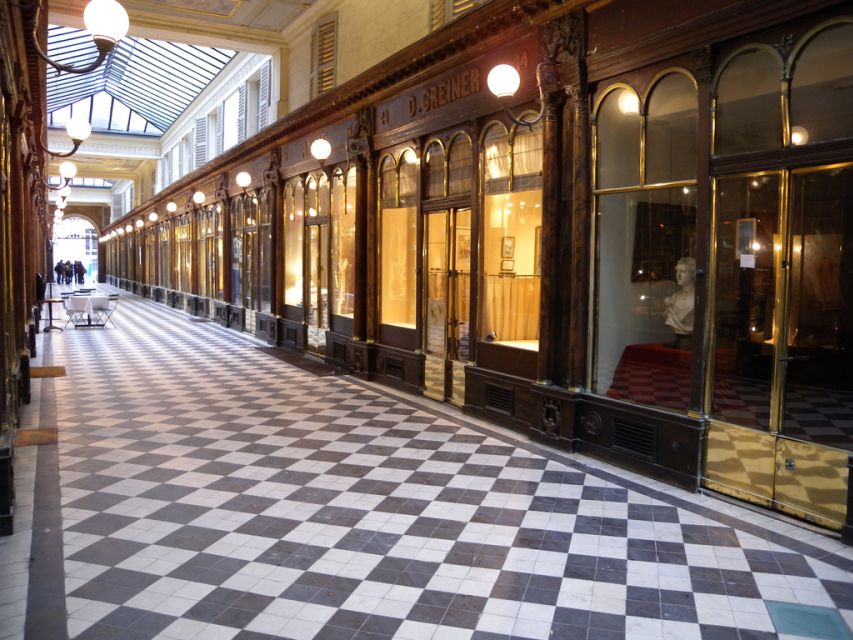
The covered passages offer a different view of Paris than the grand avenues and major monuments. You still have the city’s polished stone, elegant facades, and busy central setting, but the mood changes as you step into a narrower arcade lined with shops and cafes.
These passages were once far more common. About 130 existed at one time, while only around 20 remain today. Many disappeared as Paris changed, but the surviving arcades have been restored while keeping much of their old character.
I find that context useful because the passages are easy to dismiss as pretty shopping corridors. They were also early commercial spaces designed for pedestrians. Glass roofs offered light, covered walkways gave shoppers shelter, and the concentration of small businesses created a social setting that was different from an ordinary street.
Your guide explains this development as you walk. The history arrives in small portions, tied to the places in front of you rather than delivered as one long lecture. That works well for a three-hour outing, since you can keep moving while learning how the arcades fit into Paris life.
Starting at the Louvre Metro Exit
The meeting point is at the exit of the Louvre metro station, in front of 8 rue de l’Amiral de Coligny, 75001 Paris. This is a practical place to begin because you are already in the Right Bank area and close to the route.
I would arrive with enough time to identify the correct metro exit and settle in before the start. The meeting point is a street address rather than a famous monument entrance, so check the exact location before you leave your hotel.
From there, the walk heads toward the covered passages. The route is built around discovery, but do not expect a wilderness-style search for an unknown entrance. The passages are tucked behind major streets and may be easy to miss if you are not looking for them.
That is part of the appeal. Paris can put a quiet arcade only a few steps from a major boulevard, and a guide helps you notice the change in atmosphere.
More of the most booked days out in Paris:
- Paris: Louvre Museum Timed-Entrance Ticket
★ 4.6 · 71,977 reviews - Disneyland® Paris 1-Day Ticket
★ 4.6 · 49,412 reviews - Paris: Versailles Palace and Gardens Full Access Ticket
★ 4.6 · 41,579 reviews
Five Arcades on the Right Bank
The central part of the walk covers five passages near the Louvre. The exact names of every passage are not specified, so I would book this for the overall district and style of the experience rather than for a guaranteed list of individual arcades.
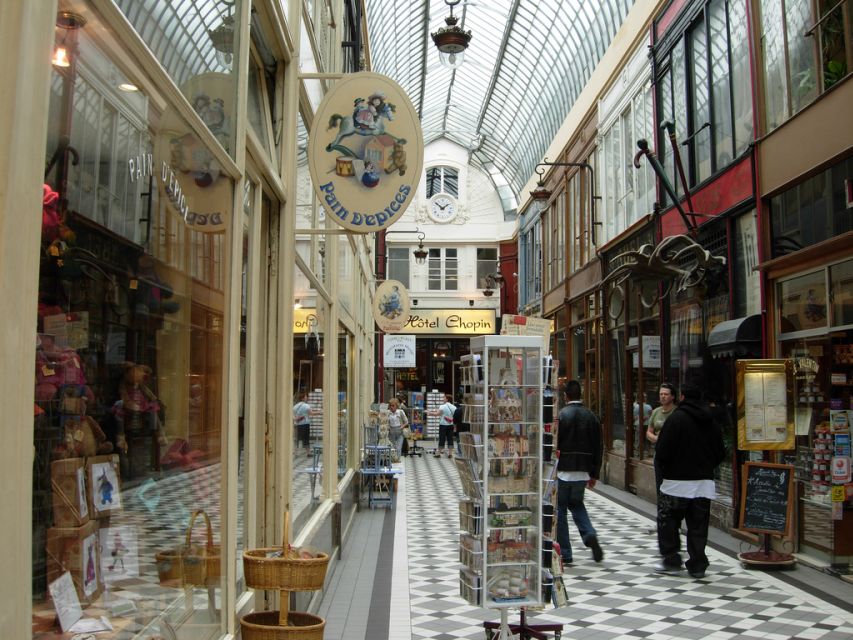
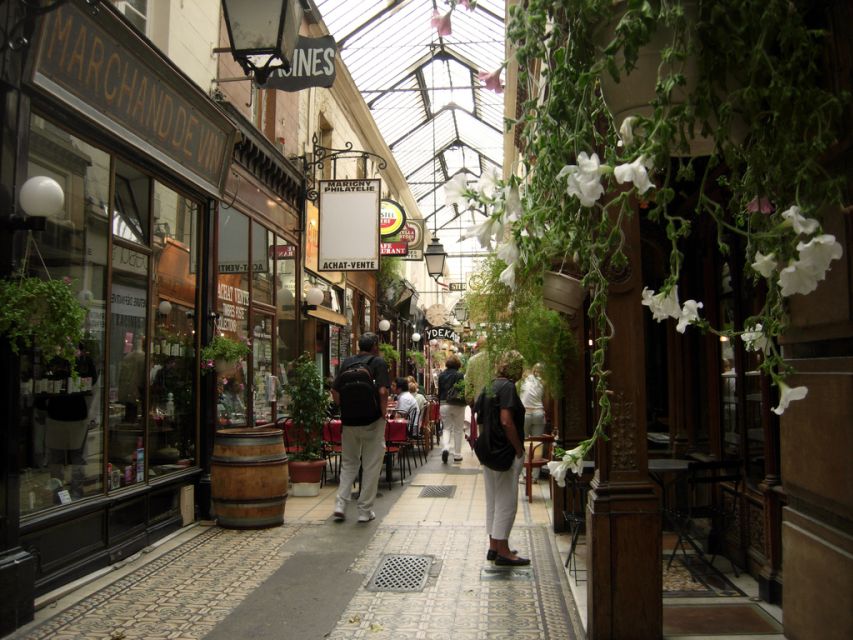
Each passage offers a slightly different mix of details. You might find old storefronts, small specialty shops, art galleries, cafes, and restored architectural features. Some businesses have reportedly kept the same character for roughly 150 years, giving the route a sense of continuity that a modern shopping center cannot easily copy.
The passages are not all frozen in the past. They are working commercial spaces, and that makes the walk more useful than a simple architecture tour. You can browse, take photographs, and see how these arcades function today.
I would bring a camera, but I would also leave room in your attention for the guide. The buildings are attractive, yet the best part is understanding why these spaces were created and why only a fraction survived.
The atmosphere has been compared to a stylish village. That description makes sense in practical terms: the passages group small businesses close together, create a slower walking rhythm, and offer places to pause. You can move from a quiet gallery to a cafe or shop without crossing a broad road.
Shops, Galleries, and Cafes Along the Way
Shopping is part of the experience, but I would not book this as a dedicated shopping tour. The value comes from seeing the businesses in their historic setting and learning how the passages developed.
The shops are described as cool and high-end, with art galleries and specialty businesses adding variety. You might find something worth buying, but the tour’s three-hour schedule means you should not expect long, independent browsing at every stop.
If you enjoy window-shopping, the format should suit you. Your guide can point out details that you might otherwise pass without noticing, while the small group keeps the walk personal. If you want to spend 20 minutes in each store, you may find the group itinerary restrictive.
The cafe element also helps break up the architecture. A covered passage feels less like a museum when people are eating, drinking, and conducting ordinary business around you. That everyday use is one of the strongest reasons to choose this walk over a standard monument visit.
The Wine Bar Stop
The wine tasting is included, and your guide takes you to a charming wine bar tucked inside one of the passages. You sit down for a glass of wine in a setting connected to the old shopping culture of the arcades.
This is a well-chosen pause in a walking tour. Three hours on foot can feel long if every minute is spent moving and listening. A seated drink gives you time to rest, ask your guide questions, and absorb the setting.
Pastries are also included. One account describes the pastries as optional during the stop, so I would treat them as an included offering rather than assume you will receive a full snack or meal. The activity is a tasting, not lunch.
The wine bar adds a social touch without taking the tour far from its main subject. You are not leaving the passages for a separate restaurant experience. Instead, the break shows how these arcades still support places to eat and drink.
If you do not drink wine, check with the provider before booking if that matters to you, since the stated inclusion is a wine tasting. The tour information does not specify an alternative beverage.
A different way to spend the day in Paris:
- Paris: Arc de Triomphe Rooftop Tickets
★ 4.6 · 34,264 reviews - Paris: Orsay Museum Entry Ticket
★ 4.7 · 25,647 reviews - Paris: Evening River Cruise with Music
★ 4.4 · 22,721 reviews - Paris: Eiffel Tower Entry Ticket with Optional Summit Access
★ 4.4 · 20,035 reviews
Libraries and Parks Near the Route
The main promise is the covered passages, but the walk can include more than shops and arcades. One especially useful possibility is a stop near the National Library, including its beautiful oval study room.
This extra visit is not described as a fixed part of every departure, so you should think of it as something your guide may suggest rather than a guaranteed stop. Still, it shows the kind of wider Paris context that can make the outing worthwhile.
The route may also bring in libraries and parks near the passages. These additions help connect the arcades to the surrounding city. Instead of treating the walk as a sealed-off tour of storefronts, your guide can show how the neighborhood shifts from commercial spaces to public institutions and open areas.
Simone, one of the named guides, was praised for suggesting a quick visit to the adjacent National Library during a tour. That sort of recommendation can be useful when you have limited time in Paris and want to turn a short detour into part of a larger day.
I would ask your guide at the start whether the library or park stops fit that day’s timing. The walk is small-group and guide-led, but the exact flow can vary.
Simone, Anthony M., and the Guide’s Role
The guide makes a major difference here. This is not a tour where you simply follow a route and read plaques. You rely on the guide to explain the passages, connect them to Paris’s past and present, and point out nearby places worth a look.
Simone has been singled out for her charm and passion for less familiar parts of the city. Anthony M. has also been praised for an informative and engaging approach to Parisian history. Their names are useful to know, but guides can vary by departure, so do not assume that one particular person will lead your date.
The available languages are English, French, Japanese, Spanish, German, and Italian. That broad choice is helpful, but you should confirm the language when booking because the activity information does not say that every departure offers all six languages at once.
A good guide should keep the history connected to what you can see. The best moments are likely to come when a detail on a facade, a shop, or a roof leads into a short explanation of how Paris changed.
How the Three-Hour Length Feels
Three hours gives the guide enough time to cover five passages, explain their background, include shopping and gallery stops, and make room for wine and pastries. You are not rushing from one photo stop to the next.
That length is also the tour’s main point of tension. If you enjoy a leisurely walk with frequent pauses, it should feel well paced. If you want a quick introduction to covered arcades, three hours may be more than you need.
One disappointed participant felt that the walk could have been reduced to about 90 minutes. That criticism is fair for a certain kind of visitor. The passages are close enough together that the route can feel repetitive if you are mainly interested in seeing the architecture.
I would book it if you want stories, local recommendations, and time to notice small details. I would skip it if you want a brisk photo walk or a tightly edited list of the city’s major sights.
The walk also requires standing and moving for much of the time, though the wine bar provides a seated break. The supplied details do not specify accessibility conditions, so ask the provider directly if stairs, walking surfaces, or mobility support are important to you.
Is $159 a Fair Price?
At $159 per person, this is not a budget stroll. The group is limited to eight, the guide leads the full three-hour route, and the price includes wine and pastries.
The value depends on how much you want from the guide. For a self-guided visit, you could walk through public passages on your own and spend much less. The paid element is the explanation, structure, local perspective, and chance to connect five arcades into one coherent outing.
The small group improves that value. Eight participants is still enough for conversation, but it is far more personal than a large walking group. You should have a better chance to hear the guide, ask about the area, and get a suggestion for a nearby library, park, gallery, or cafe.
The wine stop also adds something tangible, though I would not let one glass of wine determine the booking decision. The strongest reason to pay is access to a focused introduction to a part of Paris that many people pass without noticing.
For a first-time visitor, the price is easier to justify if you have already seen the Louvre and the main boulevards and want a slower neighborhood experience. For a repeat visitor, the route may offer more value because you are likely to appreciate a less familiar side of central Paris.
Who Will Enjoy This Paris Walking Tour
I would recommend this experience to you if you enjoy architecture, small shops, local history, and walks that mix sightseeing with conversation. It works particularly well for visitors who want to see Paris beyond its famous monuments without leaving the city center.
It also suits solo visitors and couples who like small groups. With no more than eight people, the outing should feel less anonymous than a large city tour.
The route may appeal to photographers because the glass roofs, storefronts, galleries, and narrow arcades create plenty of visual detail. Bring a camera, but remember that the tour is not designed as a long, independent photo session.
I would be more cautious about booking it for young children who need constant movement or for anyone who dislikes shopping areas. The walk includes shops and cafes, and the pace is built around looking, listening, and pausing.
It is also not the best choice if you need a major monument tour. You will be near the Louvre, but the experience focuses on covered passages and their surrounding streets, not on touring the museum itself.
Practical Details Before You Book
The activity runs for three hours, with starting times available according to the date you select. It is offered in English, French, Japanese, Spanish, German, and Italian.
The meeting point is at the Louvre metro station exit, in front of 8 rue de l’Amiral de Coligny, 75001 Paris. I would save the address and allow time to find the correct exit.
The group is limited to eight people. Wine tasting and pastries are included, while additional purchases in the shops, galleries, or cafes are not stated as included.
You can reserve now and pay later, which helps if you are still arranging your Paris schedule. Free cancellation is available up to 24 hours before the activity for a full refund. Since the route may vary in its extra stops, ask at the beginning whether the National Library or nearby parks are part of that day’s plan.
Should You Book Discover Secret Passages in Paris?
Book this tour if you want a guided look at Paris’s covered arcades, prefer a small group, and enjoy a relaxed walk with time for wine, pastries, shops, and local stories. Simone and Anthony M. have shown the kind of personal interest that can make this subject come alive, though your guide will depend on the date.
Think twice if you want a short tour, a major monument, or a literal search for secret tunnels. These are historic covered walkways between city streets, not underground passages, and three hours gives the subject plenty of room.
For the right pace, this is a pleasant way to see central Paris from a different angle. You leave the grand boulevard, step under a glass roof, and find a quieter city still carrying on its old habits.
FAQ
Where does the tour meet?
The meeting point is at the exit of Louvre metro station, in front of 8 rue de l’Amiral de Coligny, 75001 Paris.
How long does the experience last?
The walking tour lasts three hours.
How many people are in the group?
The group is limited to eight participants.
How many covered passages will I visit?
The route visits five covered passages near the Louvre on Paris’s Right Bank.
Is a wine tasting included?
Yes. A wine tasting, including a glass of wine, is included in the experience.
Are pastries included?
Yes, pastries are listed as included. One description presents them as optional during the wine stop.
Which languages are available?
The tour is available in English, French, Japanese, Spanish, German, and Italian.
Can I cancel for a full refund?
Yes. You can cancel up to 24 hours in advance for a full refund.
Can I reserve now and pay later?
Yes. The reserve-now, pay-later option lets you book without paying immediately.
Newest additions around Paris
- Family escape Game with kids and teens on the Île de la Cité★ 4.5 · 11 reviews
- Private Photoshoot with the Iconic Eiffel Tower in Paris★ 5.0 · 11 reviews
- 2-day Private Mont Saint-Michel, 3 Loire Castles, D-Day Express★ 4.5 · 11 reviews
- Paris: Batobus Hop-On Hop-Off Cruise & Landmarks Audio Tour★ 3.0 · 11 reviews
- Paris Revolutionary Walking Tour: Iconic French Sights & Stories★ 5.0 · 11 reviews
- Guided and Private Tour of 3 hours through Paris aboard a Citroën 2cv★ 5.0 · 11 reviews
- Kids in the Kitchen – CrOisSaNtS★ 4.0 · 11 reviews
- Paris: Ghosts and Dark Stories Guided Walking Tour★ 4.1 · 11 reviews