
Reviewed · PARIS
A Day of Exploring Black Paris
Paris looks different when you follow the people, places, and ideas that shaped its Black communities. This six-hour tour moves from Les Deux Magots in Saint-Germain-des-Prés to Pigalle and La Goutte d’Or, linking writers, performers, activists, Caribbean culture, and present-day African life.
I like the way the day joins history to ordinary places: a famous café, a bookstore, a rum house, a Metro ride, neighborhood shops, and a West African restaurant. I also like the small group, capped at 10 people, which gives you time to ask questions and talk with Knight, the guide.
The main caution is simple: this is a walking tour with public transit, not a gentle sightseeing ride. You should expect several hours on your feet, Metro stations with stairs, and a full day of movement. Comfortable shoes are essential.
In This Review
- Key Points to Know Before You Book
- Why This Tour Gives You a Different Paris
- Starting at Les Deux Magots with French Breakfast
- Présence Africaine and the Ideas That Crossed Borders
- La Rhumerie and Parisian Caribbean Connections
- Pigalle, Jazz, Cabaret, and Black Montmartre
- La Goutte d’Or and Everyday African Paris
- Literary Addresses and Extra Context Along the Way
- Ending at BMK Paris-Bamako
- Is the $216.48 Price Fair?
- Walking, Metro Stairs, and What to Bring
- Who Will Get the Most from This Day?
- Should You Book A Day of Exploring Black Paris?
- FAQ
- Where does the tour begin?
- Where does the tour end?
- How long does the tour last?
- Is breakfast included?
- Is lunch included?
- Is transportation included?
- How large is the group?
- What is the cancellation policy?
Key Points to Know Before You Book
- Black Paris takes center stage: The route explores African American, Caribbean, African, and Afro-European connections to the city.
- Knight leads the day: His storytelling connects figures such as Josephine Baker, Langston Hughes, Richard Wright, James Baldwin, Malcolm X, and Martin Luther King Jr.
- Breakfast is included: You begin with a croissant, bread, Poitou-Charentes butter, and a hot drink at Les Deux Magots.
- You use Paris transit: An all-day Metro pass is included, but stations may involve stairs and the day requires plenty of walking.
- Lunch is optional and extra: The tour ends at BMK Paris-Bamako, where you can order West African food and drinks at your own cost.
- Respect matters: In La Goutte d’Or and Château Rouge, listen carefully about photography and ask before taking pictures of people.
Why This Tour Gives You a Different Paris
Most first-time sightseeing routes focus on monarchs, Impressionist painters, grand boulevards, and famous monuments. This experience follows another line through the city, one shaped by migration, literature, music, colonial connections, political thought, and neighborhood life.
That does not mean you skip Parisian landmarks altogether. You still begin in one of the city’s best-known café districts, then move through areas with their own familiar reputation. The difference is the lens. A café becomes a meeting place for Black writers. Pigalle becomes part of the story of jazz and cabaret. La Goutte d’Or becomes more than a food stop or shopping district.
Knight is central to the experience. His approach combines facts with personal connection, humor, and practical care for the group. He is described as attentive to comfort and willing to adjust the pace when someone has difficulty keeping up. That matters on a route with a lot of walking.
The small group also changes the mood. With no more than 10 people, you can ask about a writer, a neighborhood, a family connection, or something you notice on the street. The day has an easy social side too, since breakfast, public transit, shops, and lunch create natural chances to talk with the people beside you.
More of the most booked days out in Paris:
- Paris: Louvre Museum Timed-Entrance Ticket
★ 4.6 · 71,977 reviews - Disneyland® Paris 1-Day Ticket
★ 4.6 · 49,412 reviews - Paris: Versailles Palace and Gardens Full Access Ticket
★ 4.6 · 41,579 reviews
Starting at Les Deux Magots with French Breakfast
The meeting point is at 6 Place Saint-Germain-des-Prés, with a 10:00 a.m. start. You begin inside Les Deux Magots, the historic café associated with Parisian literary and intellectual life.
Breakfast is modest but useful: a croissant, bread with Poitou-Charentes butter, and your choice of hot drink. This is not a full hotel breakfast, but it gives the group time to settle in without adding another café bill at the start of the morning.
The café matters for more than its name. The opening discussion places Black writers within the wider story of Parisian intellectual life. James Baldwin and Richard Wright are among the figures connected with the city’s literary circles, and the café setting helps explain how writers from different countries met, argued, worked, and built friendships in Paris.
I like this opening because it avoids rushing straight into a checklist of addresses. You get a seat, a drink, and a clear sense of the themes ahead. If you have already eaten, you can still enjoy the setting and use breakfast as a chance to meet the group.
Présence Africaine and the Ideas That Crossed Borders
The next stop is Présence Africaine, a bookstore and publishing house founded in 1949. Its importance reaches well beyond the shelves. The space has helped connect African, Caribbean, African American, and European writers and thinkers.
Here, the tour turns from individual stories to wider movements. You learn why Paris became an important meeting point for Pan-African thought, decolonization, and the Négritude movement. The bookstore gives those subjects a physical home, which makes the discussion easier to grasp than a lecture delivered beside a random monument.
Allow about 30 minutes for this stop. You are not being sent off for an extended shopping session. The value is in understanding how books, publishing, and debate helped ideas travel between continents.
This is a good part of the tour for readers who want political and literary context. It also adds balance to the entertainment-focused parts of the route. Black Paris is not presented only through music, nightlife, or food. Intellectual life gets its proper place.
La Rhumerie and Parisian Caribbean Connections
At La Rhumerie, a rum house founded in 1932, the focus shifts toward the French Caribbean. The business has roots in the Caribbean and offers a way to talk about the ties between Paris, Martinique, and other parts of the French colonial world.
The stop lasts about 45 minutes. The setting helps connect economic history with daily life. Rum, restaurants, migration, and family businesses all form part of the story. You may also encounter Caribbean food or a small taste along the way, though the included meal listed for the day is breakfast, not lunch.
This is one of the tour’s more unusual choices. You are not simply looking at a plaque or taking a photograph. You are entering a working establishment and hearing how a business can carry cultural memory across generations.
Be ready for a stop that feels social rather than museum-like. The group may be standing, seated, or moving through a busy public setting. That variety is part of the appeal, but it also means the day does not follow the quiet rhythm of a traditional guided museum visit.
A different way to spend the day in Paris:
- Paris: Arc de Triomphe Rooftop Tickets
★ 4.6 · 34,264 reviews - Paris: Orsay Museum Entry Ticket
★ 4.7 · 25,647 reviews - Paris: Evening River Cruise with Music
★ 4.4 · 22,721 reviews - Paris: Eiffel Tower Entry Ticket with Optional Summit Access
★ 4.4 · 20,035 reviews
Pigalle, Jazz, Cabaret, and Black Montmartre
Pigalle brings music and nightlife into the story. In the early 20th century, the area was shaped by performers, clubs, migration, and cultural exchange. The route explores its connection to Black artists and to the energy that linked Paris with Harlem and other centers of Black culture.
Josephine Baker is an important figure here. Her performances made her one of the most famous Black entertainers in France, while the district’s clubs and cabarets offered spaces where music and identity crossed national lines.
The Pigalle portion lasts around 45 minutes. You should expect street-level storytelling rather than a formal indoor attraction. Knight’s strength is making the neighborhood readable: a street, venue, or district becomes part of a larger story about who arrived, who performed, who found work, and who changed the mood of Paris.
This section will suit you if you enjoy cultural history told in place. It may be less satisfying if you want entry into every historic venue or a long period of free time. The emphasis is on explanation and movement.
La Goutte d’Or and Everyday African Paris
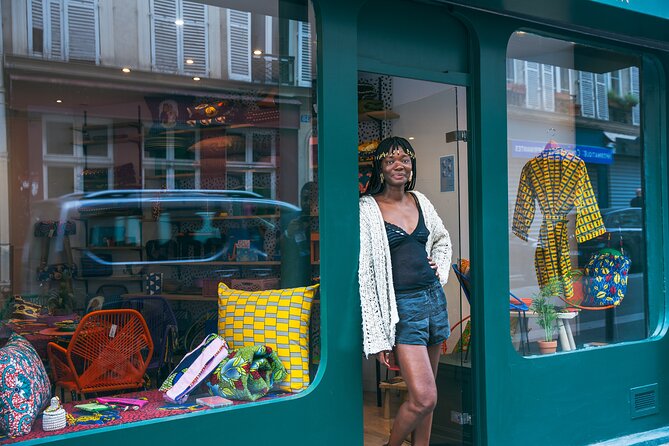
The route then heads north to La Goutte d’Or, an area shaped by African communities and often known through its local market streets, shops, textiles, food, and social life. The tour gives you about an hour here.
This is where the experience feels most connected to present-day Paris. You see a neighborhood where people live and work, not a preserved historical exhibit. African businesses and local commerce help show how migration becomes part of a city over time.
The district is sometimes described as Château Rouge or Little Africa in popular travel talk. Yet you should approach it with respect. This is not a backdrop designed for tourists. Knight specifically encourages the group not to photograph people without consent. Follow that advice, keep your camera down when asked, and pay attention to the neighborhood as a real community.
The stop may include African textile shops, design businesses, cafés, and other local places. Examples mentioned during the experience include African Textiles, Keur Coffee Shop, and Peulh Vagabond. The focus is not simply on buying something. You learn how fabric, fashion, coffee, design, and food connect Paris with African cities and traditions.
This part also brings useful texture to the history. A discussion of Dutch wax prints, for example, can lead to questions about trade, imitation, African fashion, and what people mean when they call a textile African. That kind of exchange is more memorable than a string of dates.
Literary Addresses and Extra Context Along the Way
The main route includes several themes that may be expanded through nearby sites and street discussions. At the Sorbonne, you may hear about Anna Julia Cooper, a Black American scholar who earned a doctorate there in 1925 after being born into slavery in North Carolina.
Her story shows how Paris could serve as a place of study and debate for Black intellectuals who faced limits elsewhere. Her work on France’s attitude toward slavery, along with her role as an educator and host, adds a strong connection between academic life and political organizing.
You may also see the plaque marking Richard Wright’s former apartment at 14 Rue Monsieur le Prince. Wright’s years in Paris connect with the wider story of Black American writers who found distance, freedom, conflict, and new creative ground in France.
The route also touches the relationships and disagreements among major writers. Baldwin, Wright, and other figures did not all think alike, and the experience is strongest when it presents them as real people with friendships, tensions, ambition, and political differences.
Exact street discussions can vary with the group and the day. Think of these references as part of the historical thread, not as a promise of a separate museum visit or a long stop at every address.
Ending at BMK Paris-Bamako
The final stop is BMK Paris-Bamako at 14 Rue de la Fidélité in the 10th arrondissement. The day ends with time to sit, eat, and talk about what you have seen.
Lunch is not included in the $216.48 price, so plan to pay for your own meal and drinks. That separation is worth knowing before you book. The restaurant gives the tour a satisfying communal finish, but your total cost will be higher if you order a full meal.
The food reflects West African cooking, with Malian and Senegalese influences mentioned during the experience. A hibiscus mint drink is one appealing option, though menu choices and prices are not provided here.
Ending over food works well. After several hours of walking and public transit, you have time to slow down. You can compare notes with the group, ask Knight follow-up questions, and consider how the morning’s literary and political history connects with the food, shops, and neighborhoods you have just seen.
Is the $216.48 Price Fair?
At $216.48 per person, this is not a budget walking tour. Its value depends on what you want from Paris.
The price includes a six-hour, small-group experience, breakfast, Knight’s guiding, and an all-day Metro pass. You are paying for a focused route that would be difficult to assemble on your own, especially if you do not speak French or know where to find the relevant literary and cultural addresses.
The included breakfast is simple, and lunch costs extra. The tour also does not list admission to paid attractions, because the stops are primarily cafés, businesses, streets, neighborhoods, and public places. If you measure value by the number of ticketed sights entered, the price may feel high.
If you measure it by access to context, local connections, and a carefully linked story, the cost makes more sense. The guide’s role is especially important. A map can take you to Pigalle or Présence Africaine, but it cannot easily explain how writers, performers, activists, businesses, and migrants fit into one larger account of Paris.
The tour is usually booked about 35 days ahead. That suggests you should reserve early if your dates are fixed, especially if you want a small group.
Walking, Metro Stairs, and What to Bring
Plan for a physically active day. The route includes long walks between points, several Metro trips, and stairs in stations. Some parts of La Goutte d’Or and Pigalle involve ordinary city streets rather than smooth museum floors.
Wear shoes you can trust for six hours. Bring water, keep your bag manageable, and allow room for a quick change in weather. The experience requires good weather, and poor conditions can lead to a new date or a full refund.
The all-day Metro pass is helpful. You do not need to buy separate tickets as the tour moves across Paris, and public transit is part of the city experience rather than an interruption. Still, the pass does not remove the physical demands of stairs, platforms, transfers, and walking to each stop.
Service animals are allowed, and the tour is near public transportation. The stated maximum is 10 people, which keeps the group small enough for conversation and easier movement through local businesses.
Who Will Get the Most from This Day?
I would choose this tour if you want a Black-centered view of Paris that includes both historic figures and present-day communities. It suits first-time visitors who want more than the usual monuments, as well as repeat visitors looking for a fresh route through familiar neighborhoods.
It is also a strong choice for solo visitors. The breakfast and small group make it easy to meet people, while Knight’s steady attention helps you feel connected to the day. Couples, families with older children, and anyone interested in literature, music, migration, food, or African diaspora history can find plenty to discuss.
You should think twice if you dislike walking, struggle with stairs, or prefer a slow day in one indoor site. The route can be adjusted when someone needs help, but it remains an active six-hour outing.
You should also be ready to listen about photography. Respect for residents is not a minor rule here. It is part of seeing La Goutte d’Or honestly and avoiding the habit of treating a living neighborhood as a photo set.
Should You Book A Day of Exploring Black Paris?
Book it if you want history tied to real streets, businesses, cafés, and communities, and if you are comfortable using the Metro and walking for much of the day. Knight’s warm, informed style appears to be the experience’s greatest strength, and the small group gives his storytelling room to work.
Skip it if your main goal is a relaxed café crawl, a bus tour, or included fine dining. Lunch costs extra, the breakfast is light, and the route demands energy.
For the right reader, this is a meaningful way to see Paris through writers, performers, scholars, migrants, and entrepreneurs whose stories often sit outside the standard sightseeing script. With a 5.0 rating from 125 reviews and 100 percent recommendation, it is a strong pick for a thoughtful, active day with a clear cultural focus.
FAQ
Where does the tour begin?
The tour begins at Les Deux Magots, 6 Place Saint-Germain-des-Prés, 75006 Paris. The start time is 10:00 a.m.
Where does the tour end?
The experience ends at BMK Paris-Bamako, 14 Rue de la Fidélité, 75010 Paris.
How long does the tour last?
The tour lasts approximately six hours.
Is breakfast included?
Yes. Breakfast includes a croissant, bread with Poitou-Charentes butter, and a choice of hot drink.
Is lunch included?
No. Lunch at BMK Paris-Bamako is optional and must be paid for separately.
Is transportation included?
Yes. An all-day Metro pass is included. You should still expect walking and stairs during the public-transit portions of the day.
How large is the group?
The maximum group size is 10 people.
What is the cancellation policy?
You can cancel up to 24 hours before the start time for a full refund. Changes or cancellations made less than 24 hours in advance are not accepted for a refund. If poor weather cancels the experience, you will be offered another date or a full refund.
Newest additions around Paris
- Family escape Game with kids and teens on the Île de la Cité★ 4.5 · 11 reviews
- Private Photoshoot with the Iconic Eiffel Tower in Paris★ 5.0 · 11 reviews
- Paris: Batobus Hop-On Hop-Off Cruise & Landmarks Audio Tour★ 3.0 · 11 reviews
- Paris Revolutionary Walking Tour: Iconic French Sights & Stories★ 5.0 · 11 reviews
- 2-day Private Mont Saint-Michel, 3 Loire Castles, D-Day Express★ 4.5 · 11 reviews
- Guided and Private Tour of 3 hours through Paris aboard a Citroën 2cv★ 5.0 · 11 reviews
- Kids in the Kitchen – CrOisSaNtS★ 4.0 · 11 reviews
- Paris: Ghosts and Dark Stories Guided Walking Tour★ 4.1 · 11 reviews